Ericaceae

Wall. ex G. Don

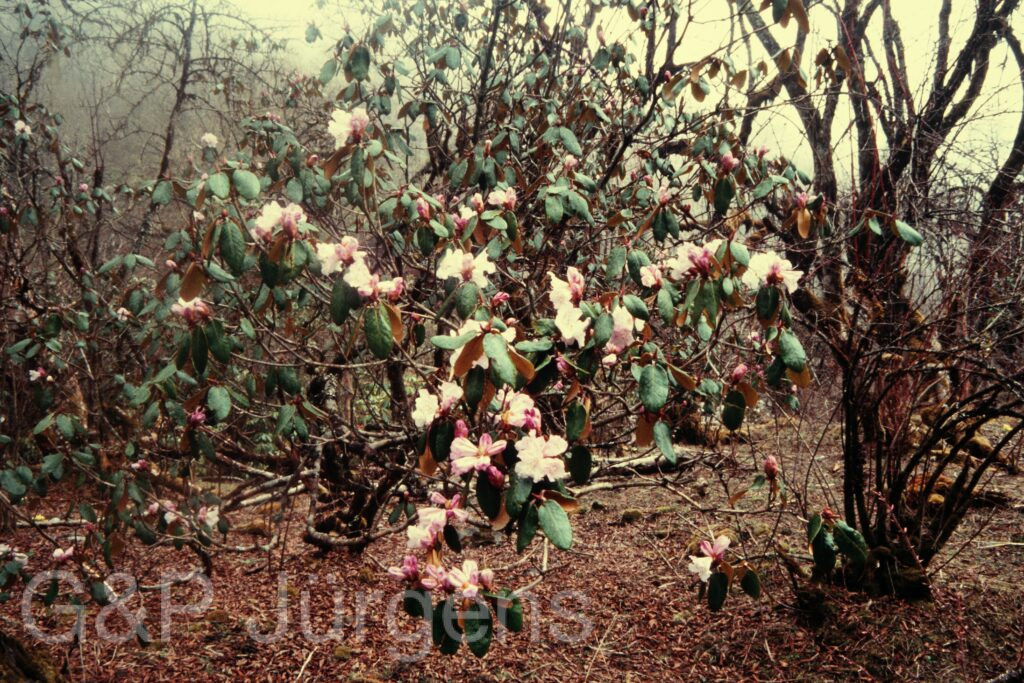
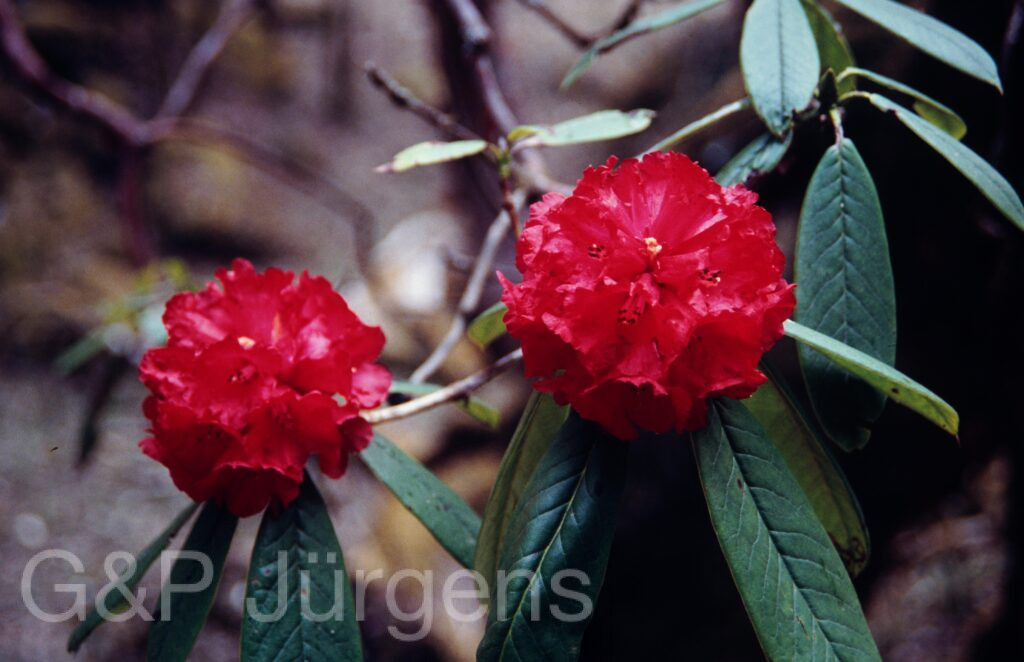
Bhutan2014 592
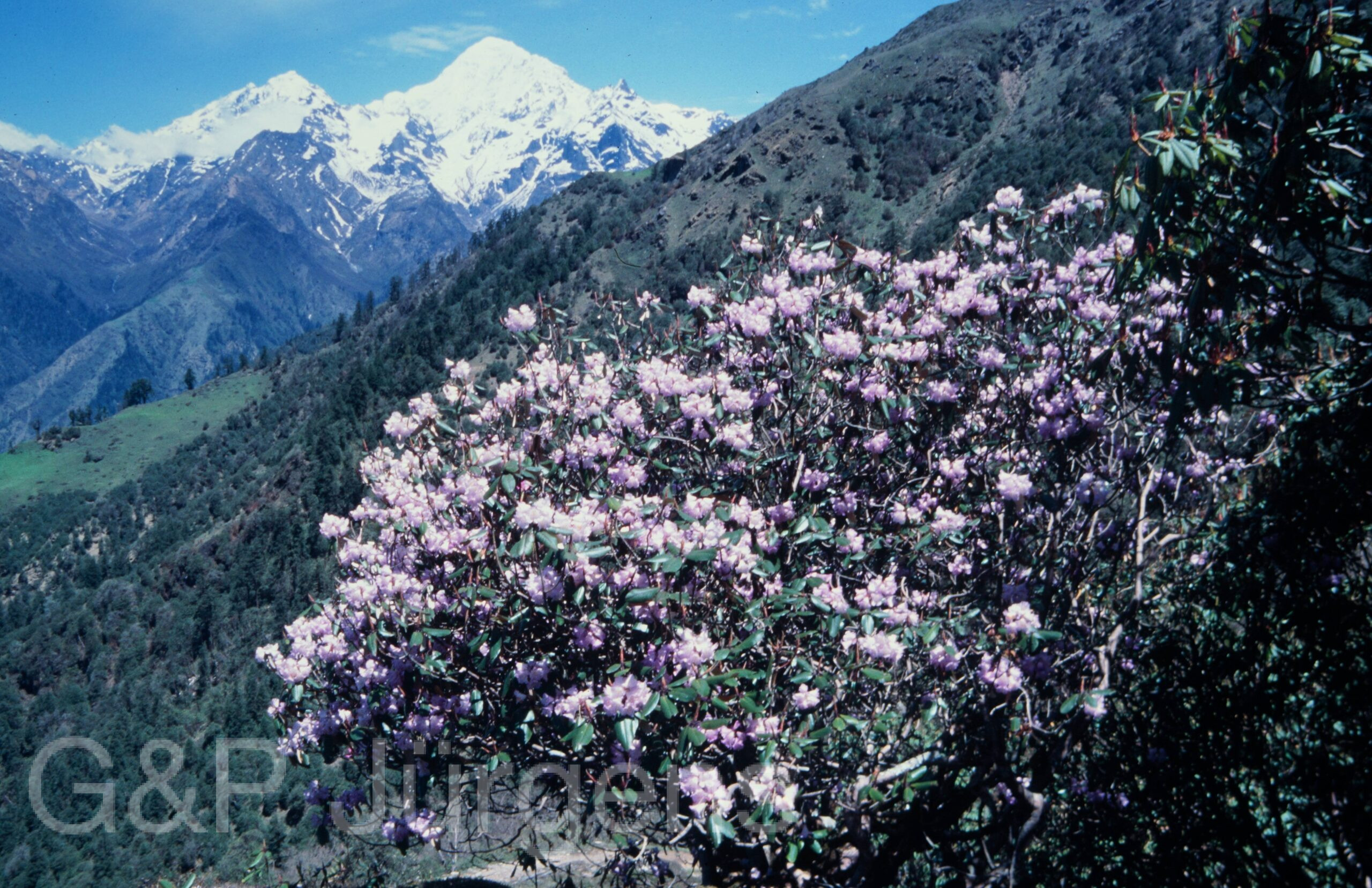
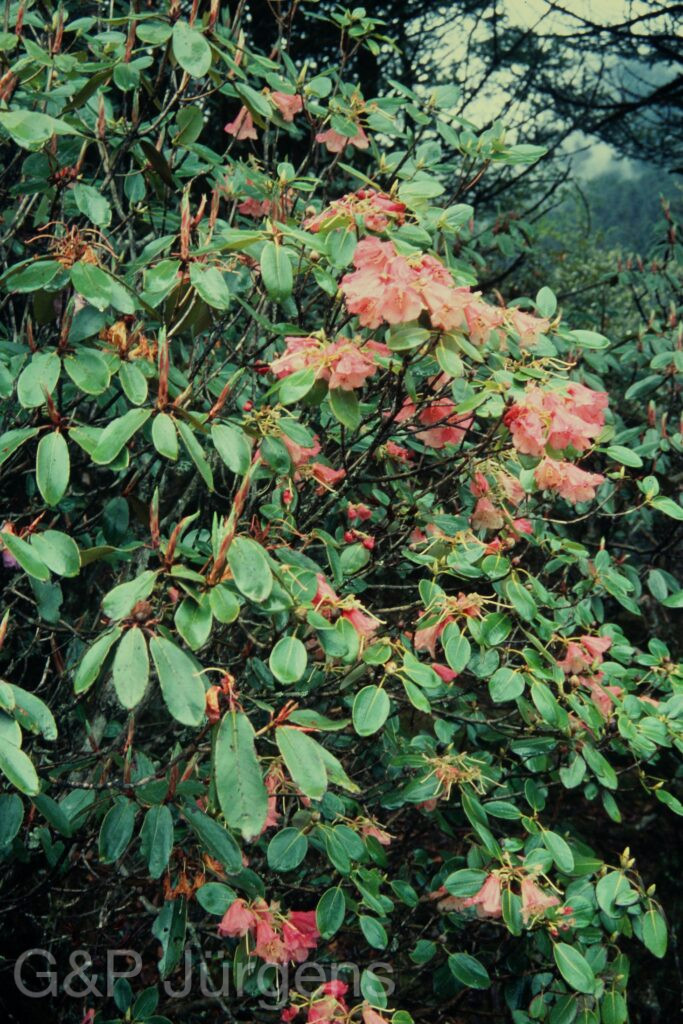
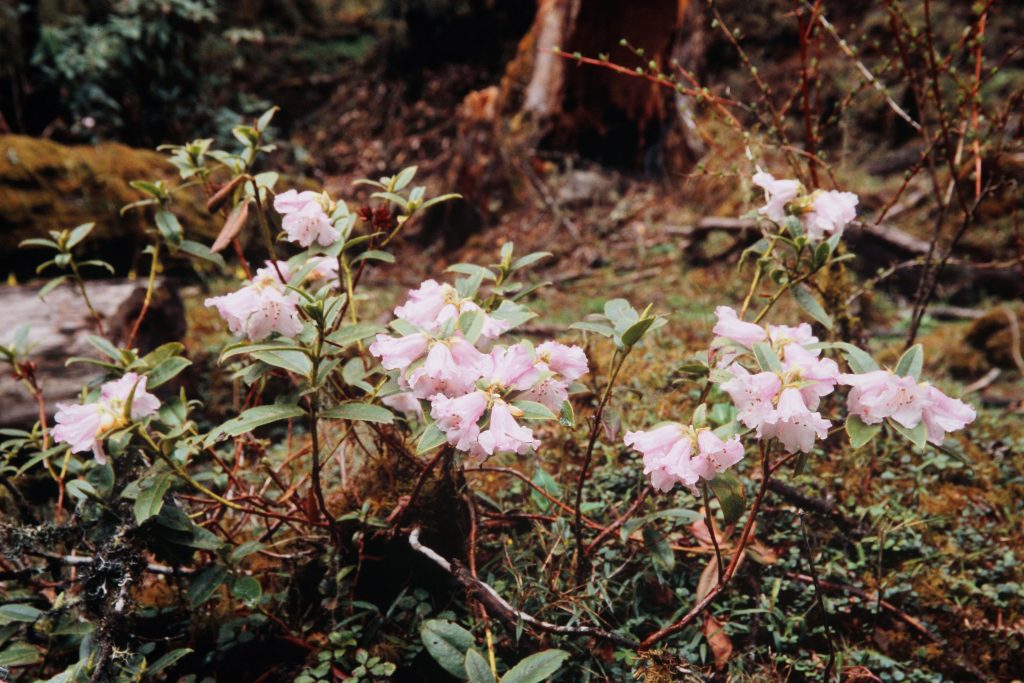
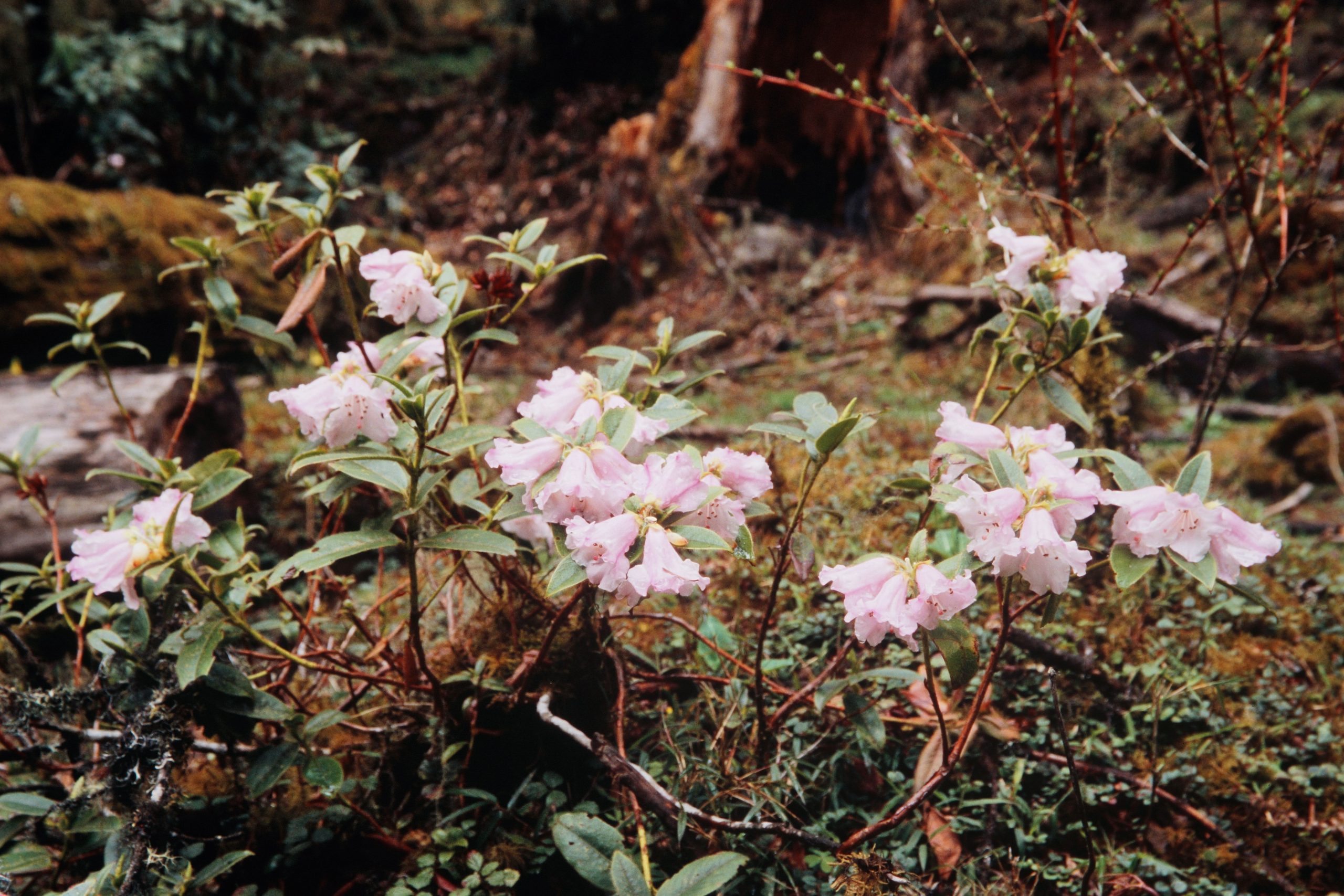
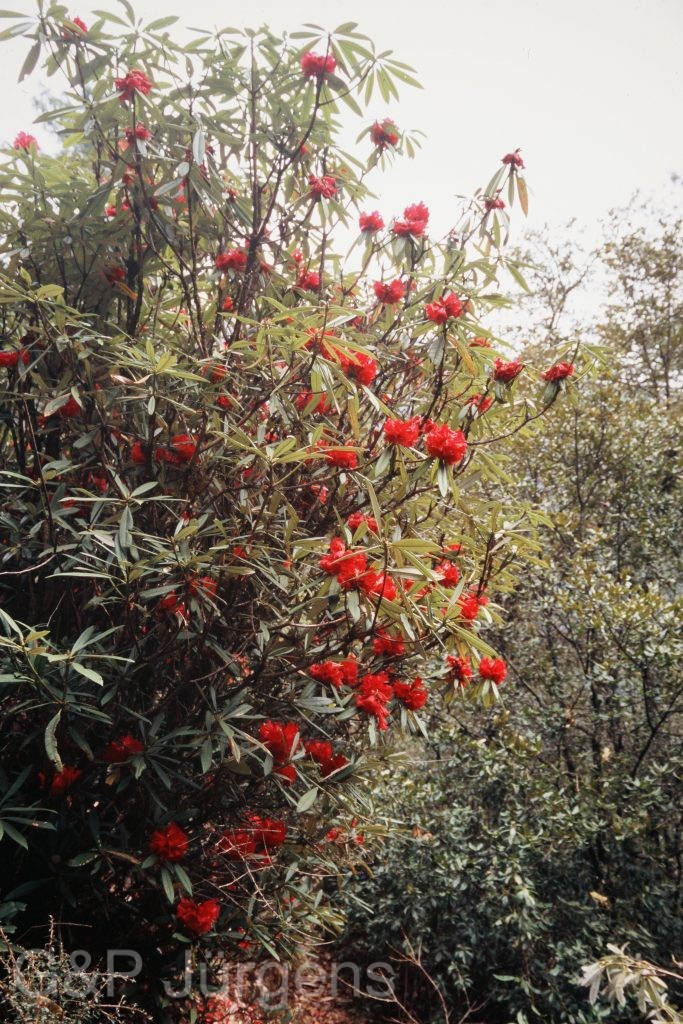
Bhutan Gogona 2950m, May
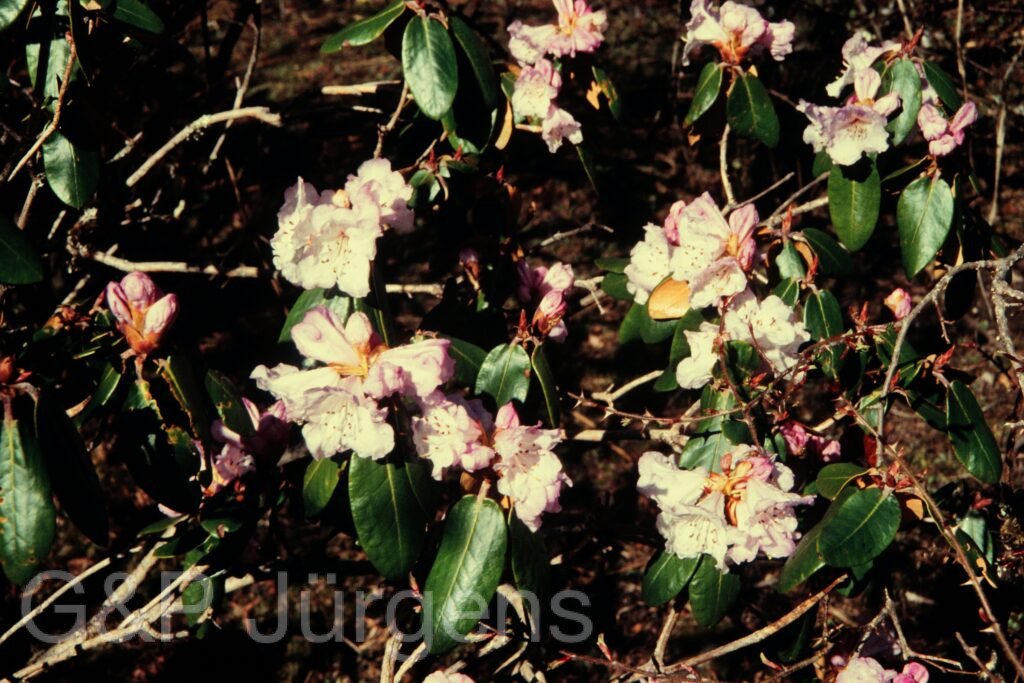
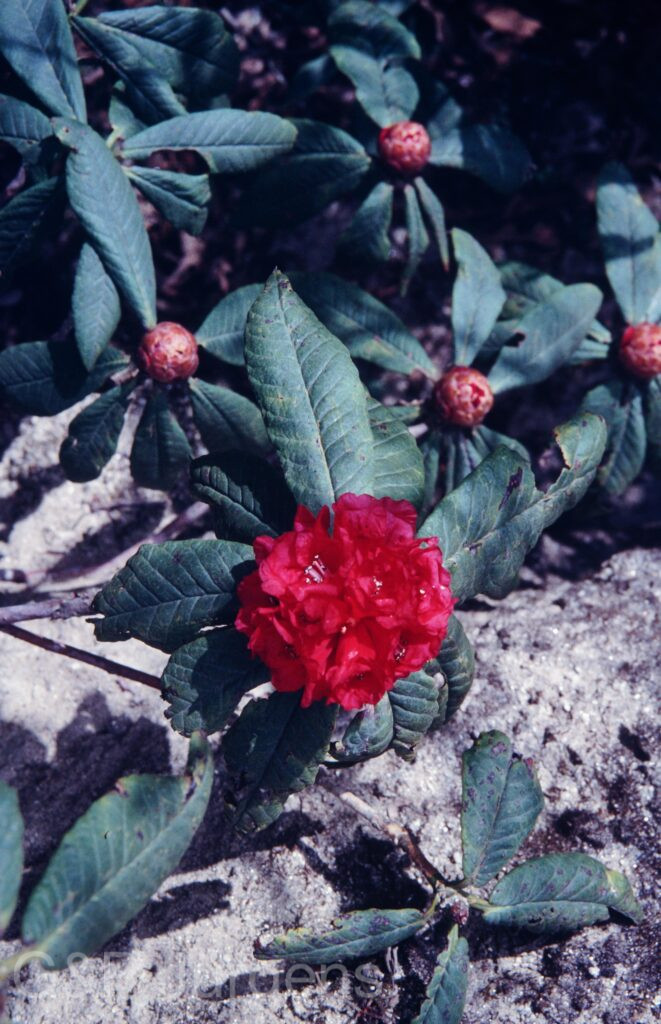
Nepal 97 133 P245
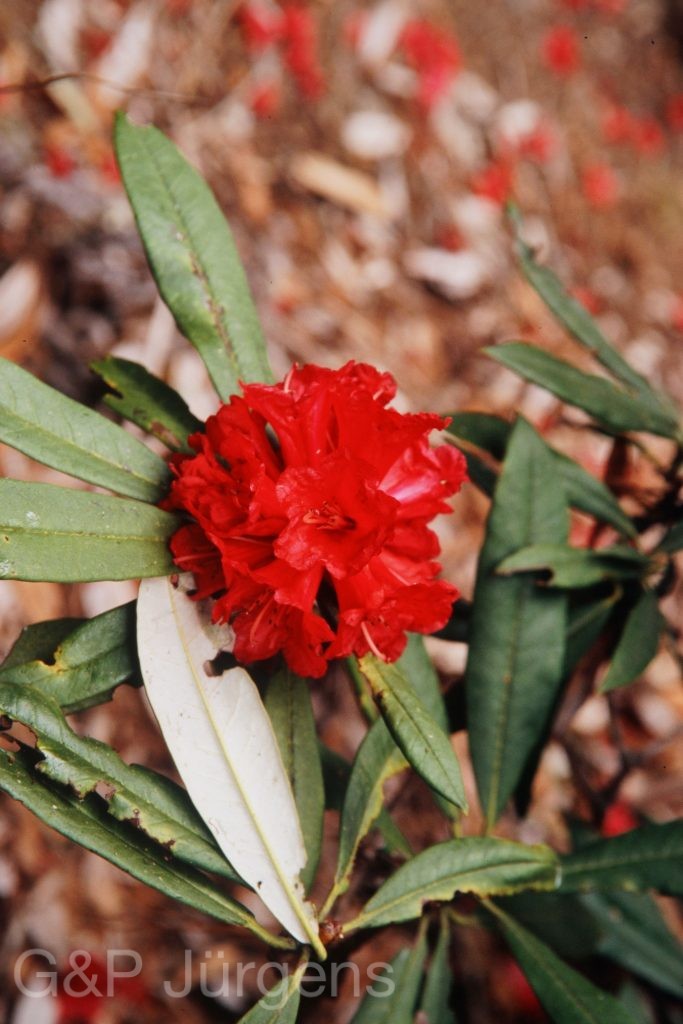
Nepal Mewa-Khola 2800m April
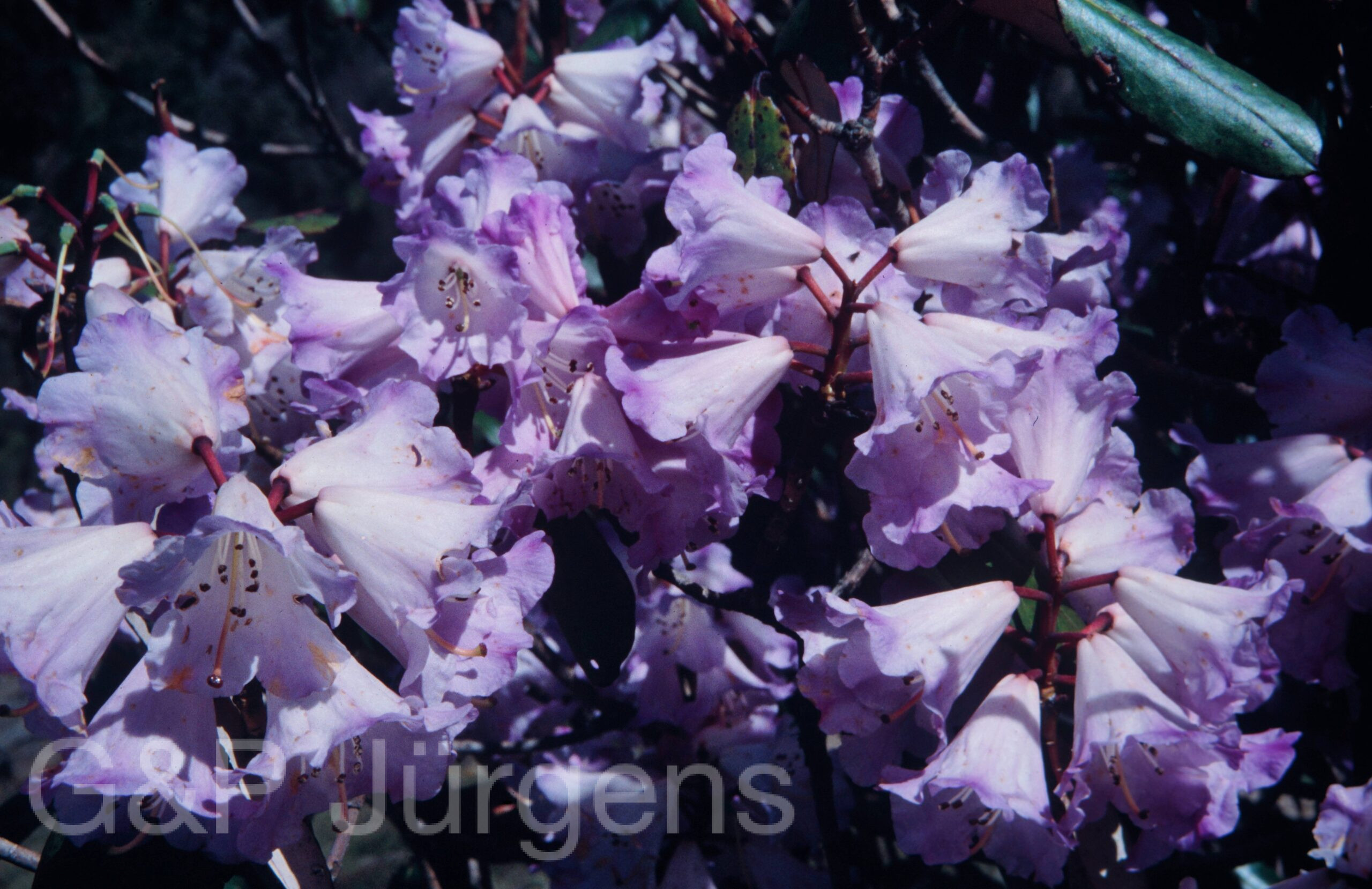
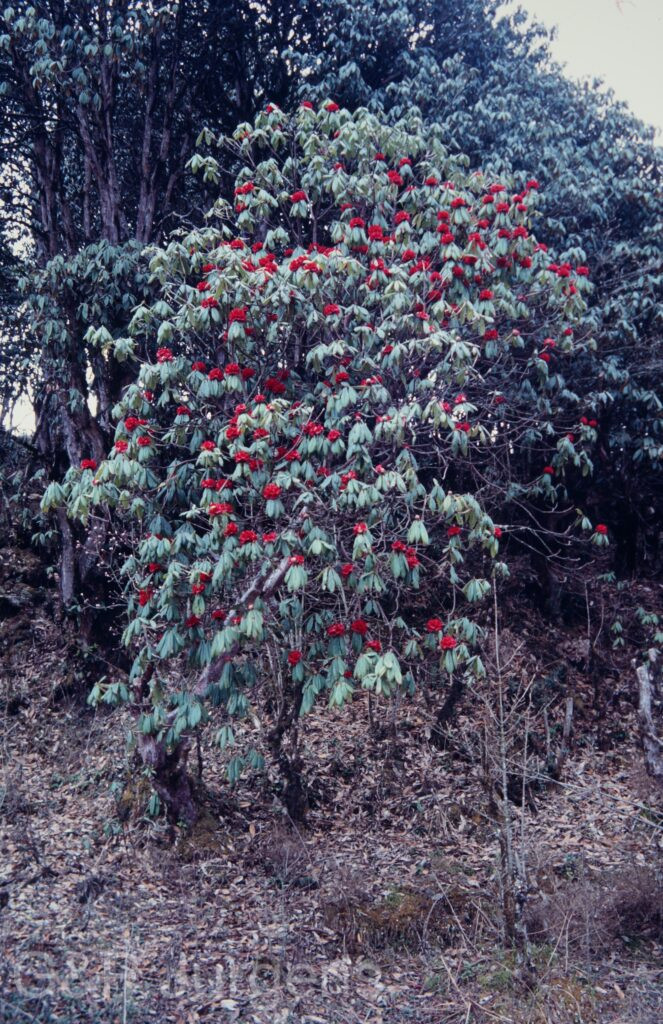
Nepal1992 139 P199 ergebnis
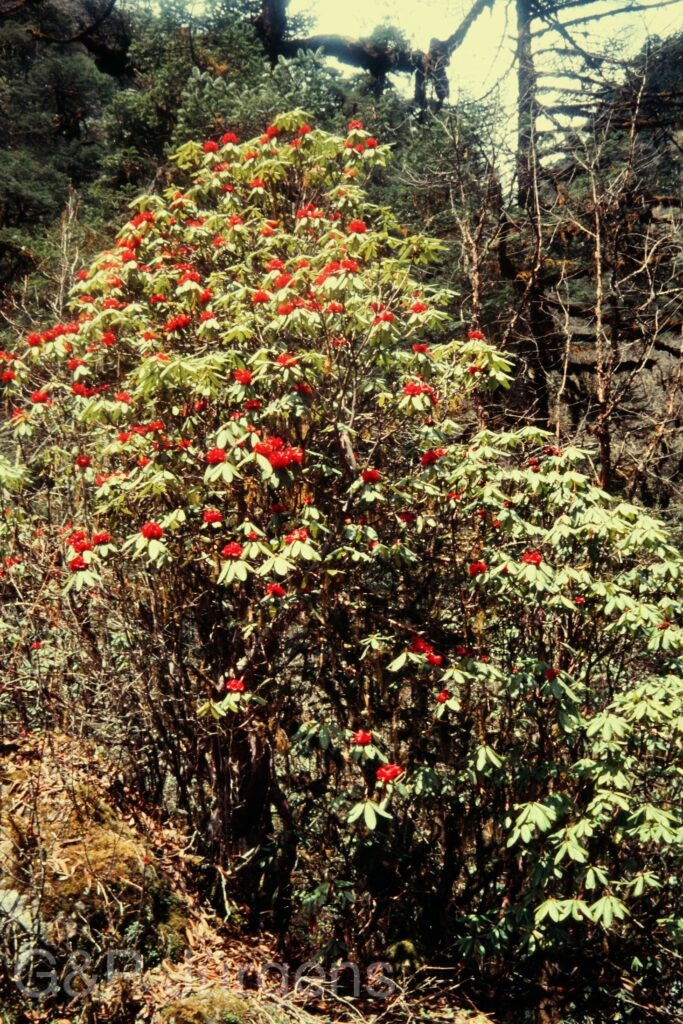
Nepal Milka Danda 2800m March 
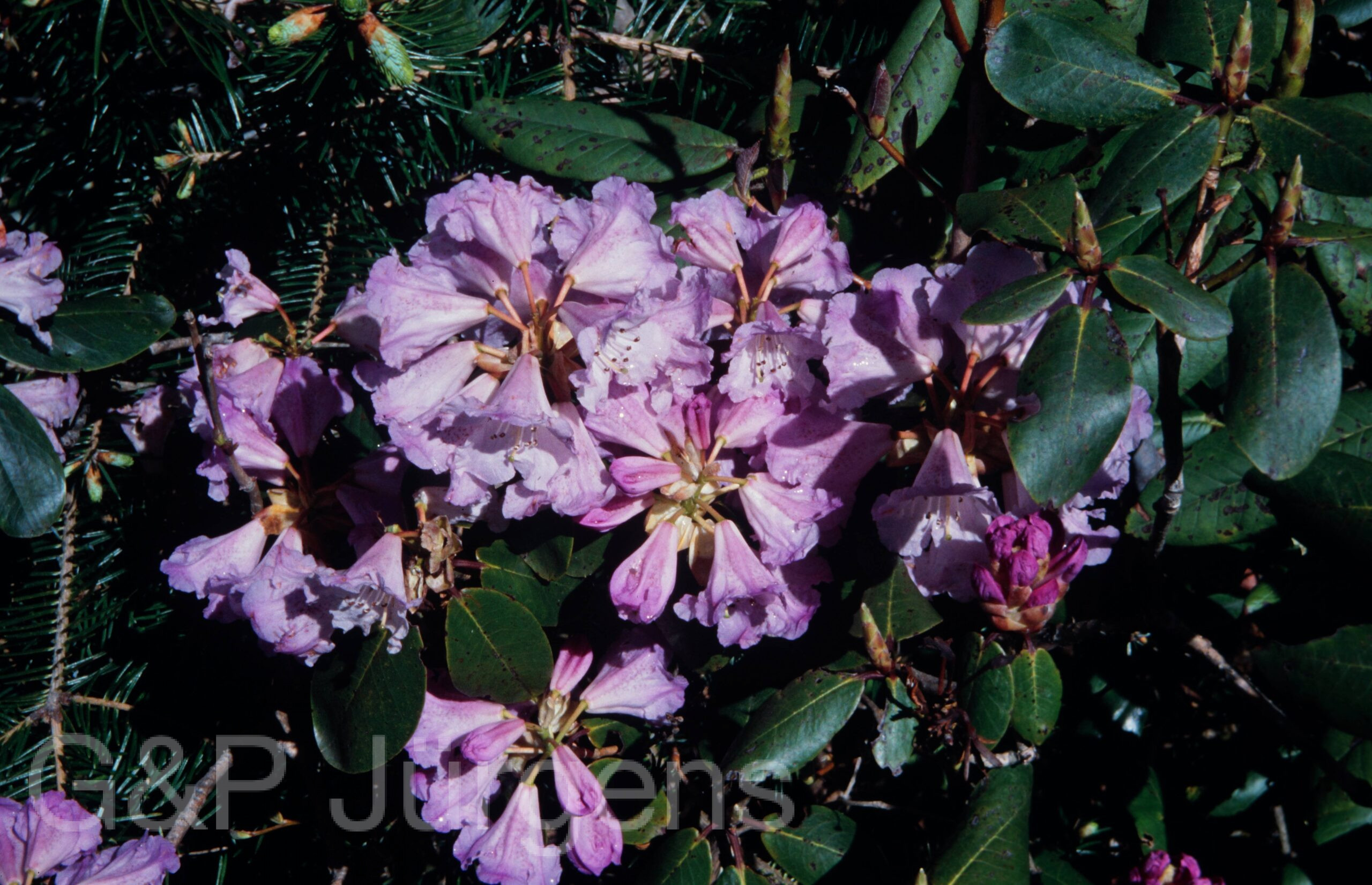
Nepal1992 47 P68 ergebnis
Nepal Milka Danda 2800m March 
Nepal1992 49 P73 ergebnis
Nepal Milka Danda 2800m March 

Description

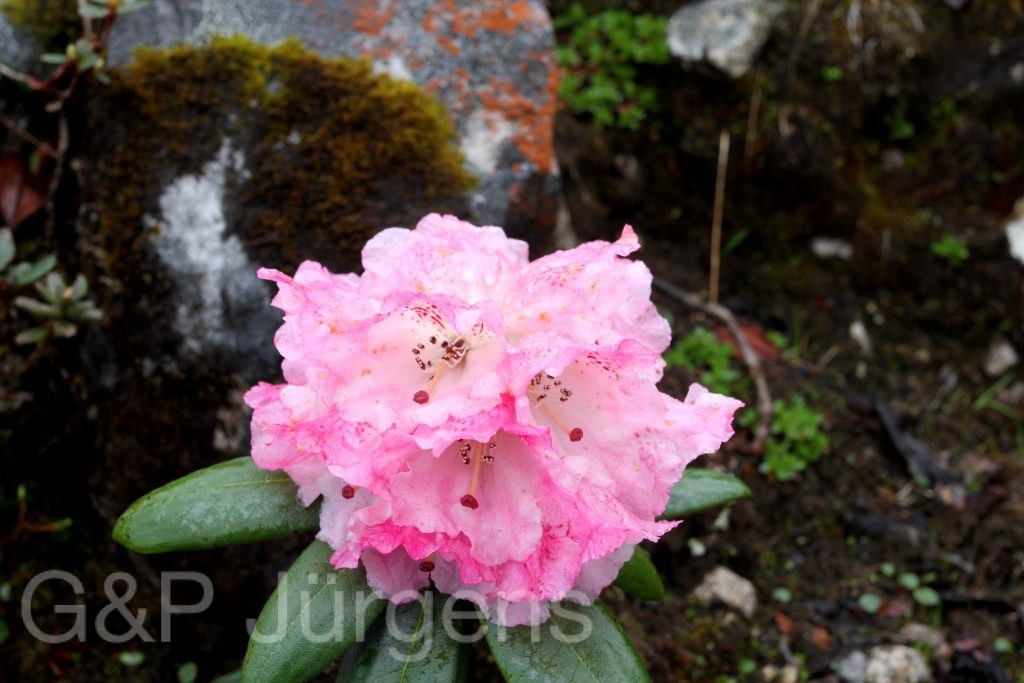
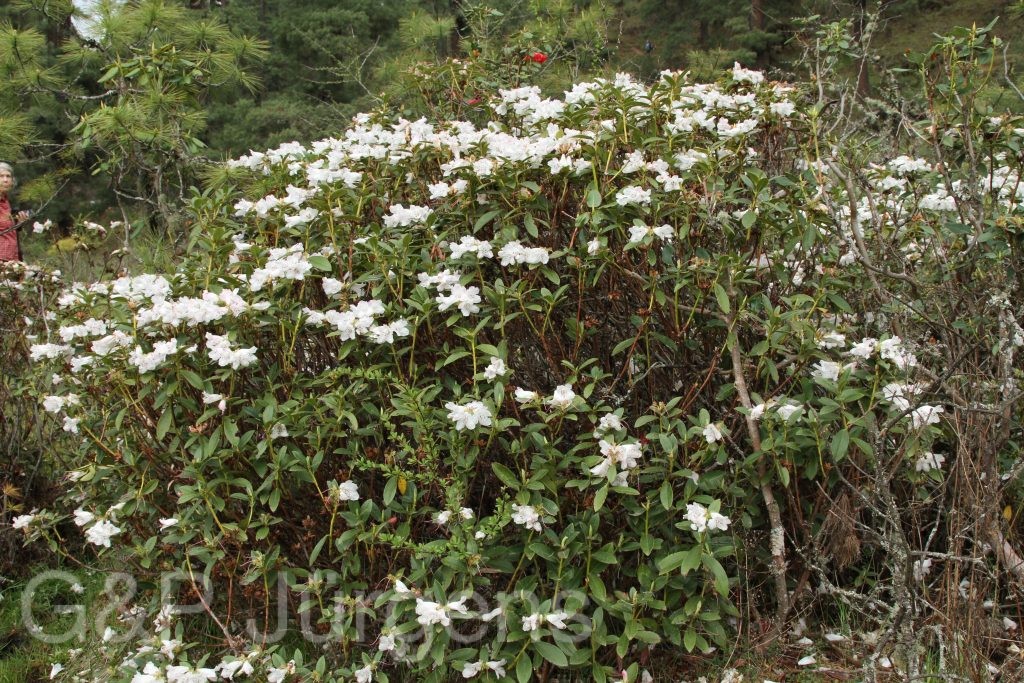
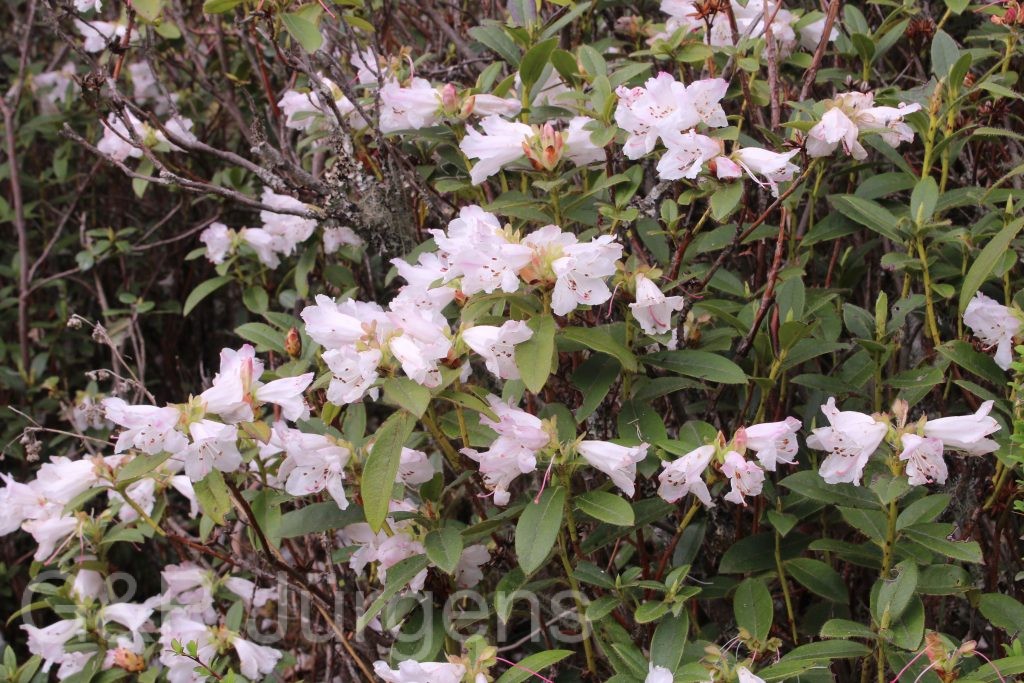
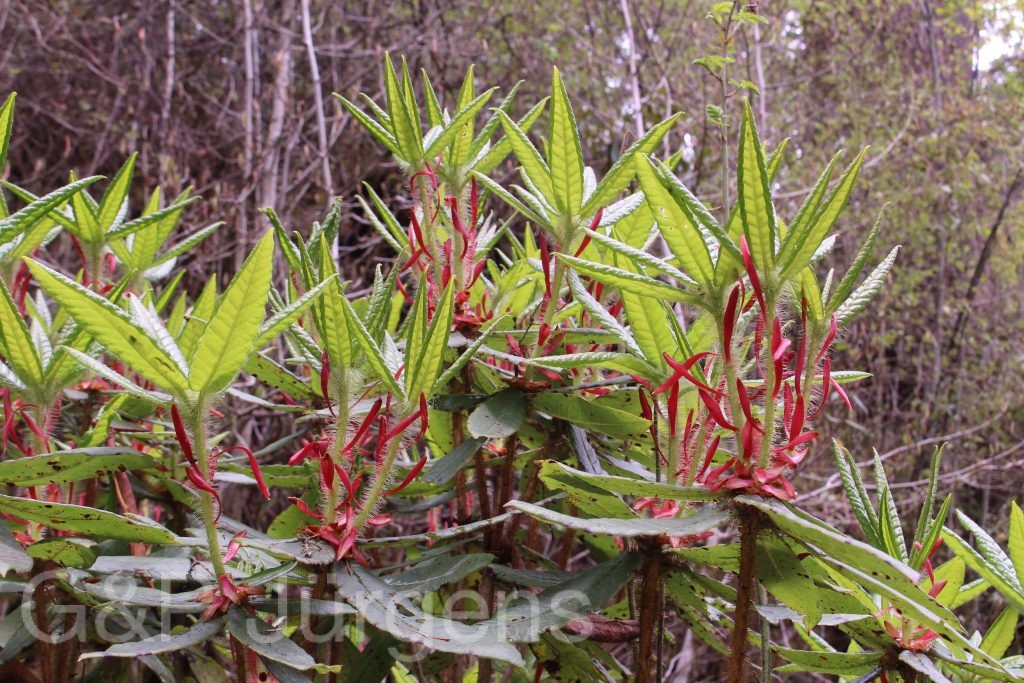
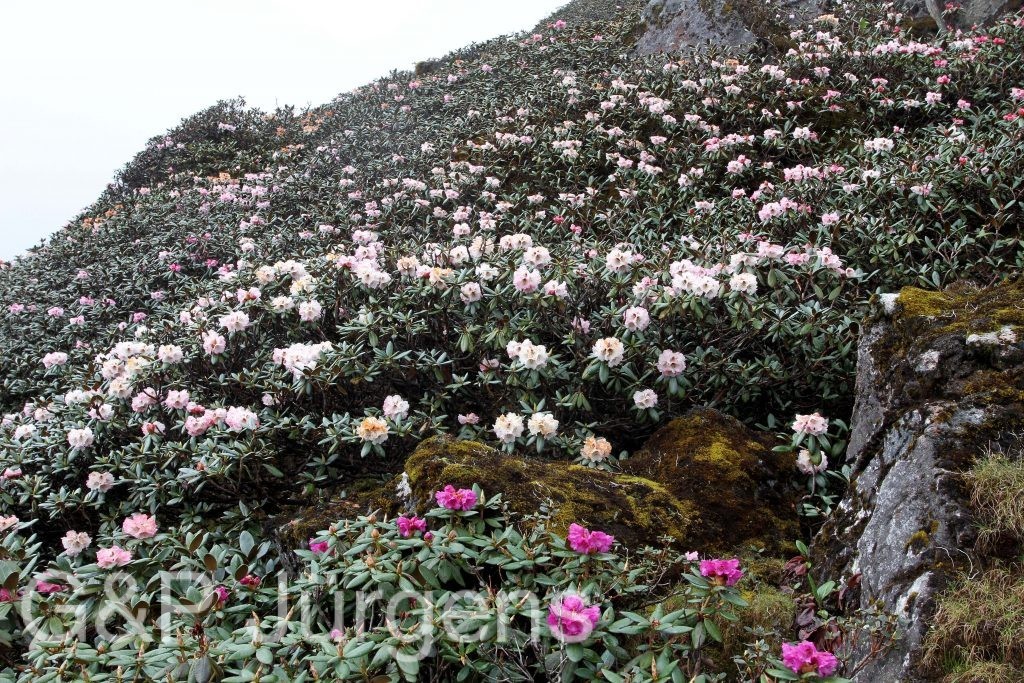
Rhododendron barbatum is a tree-forming rhododendron of the central and eastern Himalaya, distributed through Nepal, India, China and Bhutan, with about 509 occurrence records (those reported from Britain, North America and Korea reflecting its long history in cultivation). It forms a major component of temperate broadleaf and conifer forests, often dominating moist, north-facing slopes and ridge crests, generally between about 2400 and 3700 m. The photographed plants—Gogona in Bhutan at 2950 m in May, and Mewa-Khola and Milka Danda in eastern Nepal at 2800 m in March and April—illustrate its early-spring flowering in these mid-montane forests.

It is an evergreen shrub or small tree with smooth, peeling, reddish-brown to purplish bark, a striking feature of mature trunks. Young shoots and petioles bear conspicuous stiff bristles, the "barbate" character giving the species its name. The leaves are leathery, oblong-elliptic to obovate, glabrous and dark green above and pale beneath. The flowers are borne in dense, rounded terminal trusses; the corolla is tubular-campanulate and a vivid blood-red, with darker nectar pouches at the base, and the calyx is enlarged and coloured. The fruit is a woody, curved, several-valved capsule releasing many minute seeds.

Rhododendron barbatum, described from Wallich's material by G. Don, belongs to subgenus Hymenanthes, the large-leaved "true" rhododendrons, and hybridises in cultivation with allied red-flowered species. Its early bloom is an important nectar source for high-altitude birds and insects. Although widespread and locally abundant, Himalayan forest rhododendrons face pressure from fuelwood cutting, grazing and a warming climate altering the temperate forest belt.

Author: Wall. ex G. Don · Sources: POWO (Kew), GBIF, Flora of China (Ericaceae), Annotated Checklist of the Flowering Plants of Nepal, Grierson & Long Flora of Bhutan, Royal Botanic Garden Edinburgh's Revision of the Genus Rhododendron
D.G.Long & S.Bowes-Lyon

BhutanPG2011 510
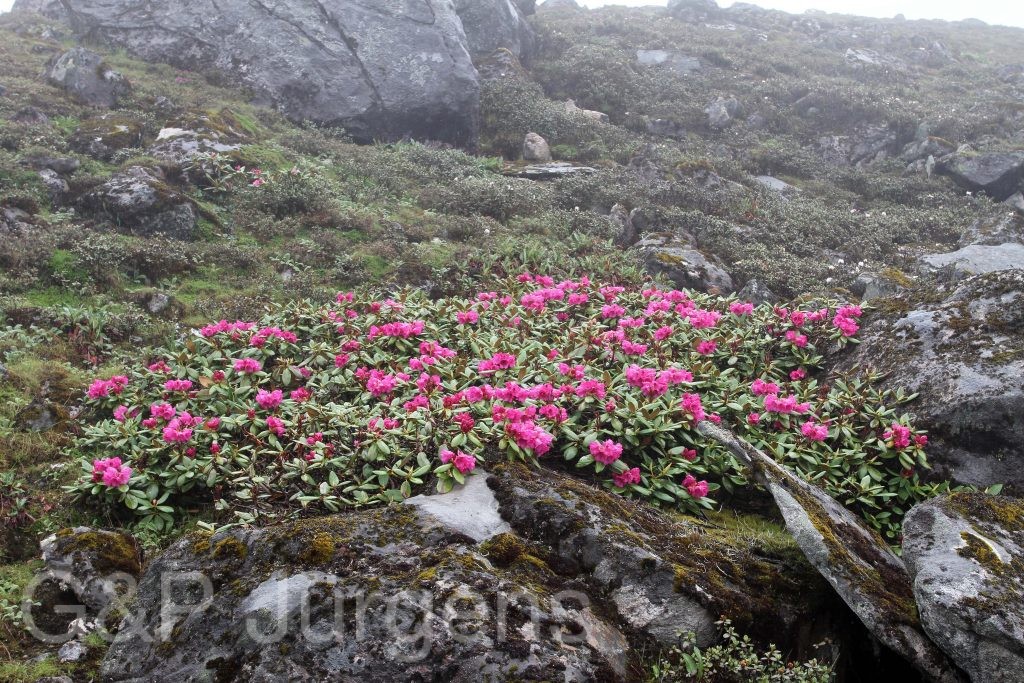
Bhutan Ludlow-Sherriff-Trail Warrtlang-La, 4500m June
BhutanPG2011 412
Bhutan Ludlow-Sherriff-Trail Warrtlang-La, 4500m June
BhutanPG2011 511
Bhutan Ludlow-Sherriff-Trail Warrtlang-La, 4500m June

Description

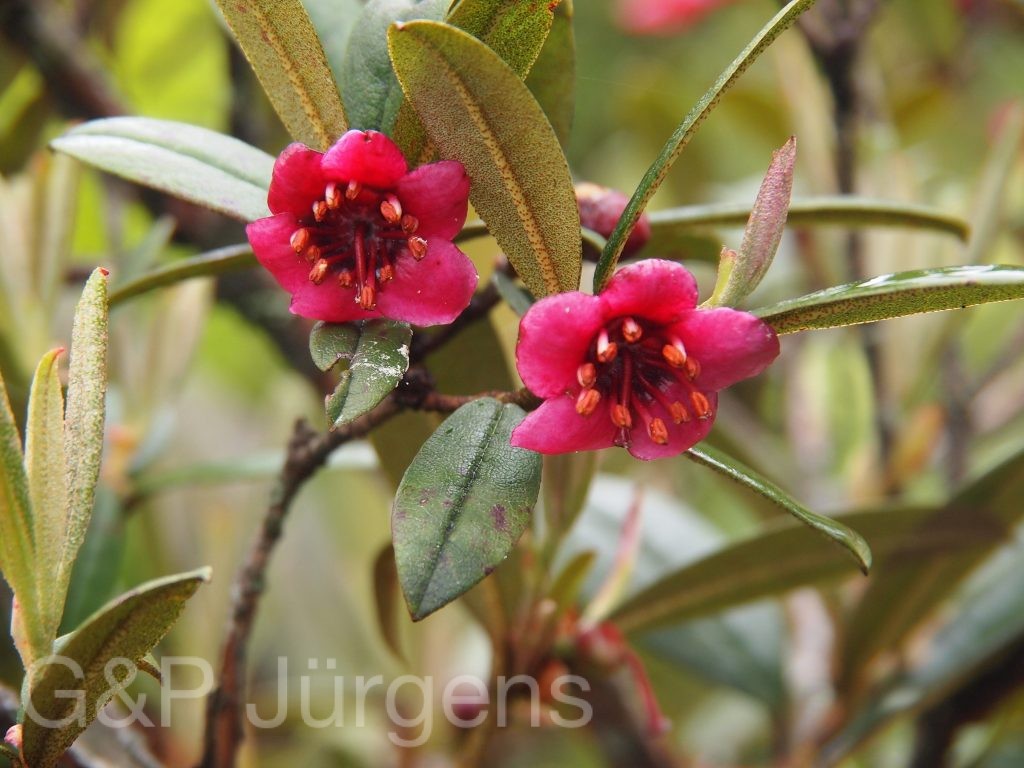
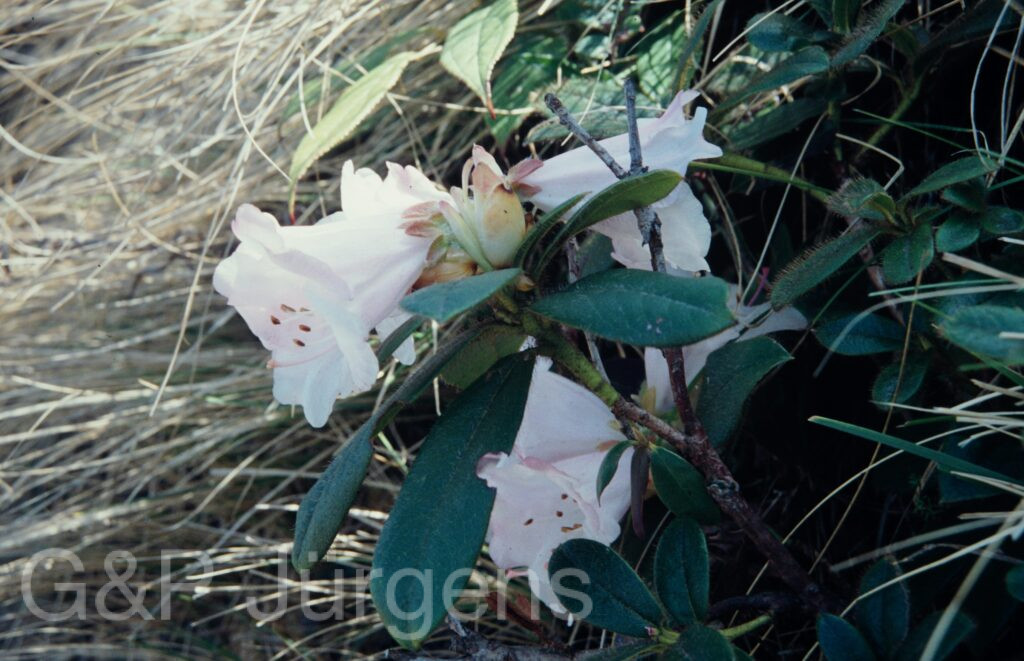
Rhododendron bhutanense is a high-alpine shrub endemic to the eastern Himalaya, centred on Bhutan and adjacent India, with only about 59 GBIF records reflecting its restricted range. It is a component of the dwarf rhododendron heath and open alpine scrub that clothes exposed slopes near and above the treeline, typically between about 3500 and 4500 m. The photographed plant on the historic Ludlow–Sherriff trail at the Warrtlang La pass at 4500 m, flowering in June, exemplifies its occupancy of the highest shrub zone, where it endures intense irradiation, wind and frost on thin, acidic, peaty soils in the early summer flowering season.

The species is a low to medium evergreen shrub with stout branchlets. Its leaves are coriaceous, oblong to elliptic, with the lower surface bearing a dense indumentum (a felted tomentum) characteristic of the section to which it belongs, an adaptation reducing water loss and radiation damage at altitude. The flowers are borne in compact terminal trusses; the corolla is campanulate to funnel-campanulate, pink to pale rose or purplish, often with darker spotting within. Stamens are typically ten, and the ovary is densely hairy, maturing into a woody, septicidal capsule that releases numerous small seeds.

Rhododendron bhutanense was described by D.G.Long and S.Bowes-Lyon and is placed in subgenus Hymenanthes, allied to the indumented R. campanulatum group, its tomentose leaf undersides being a key diagnostic. As a narrow eastern-Himalayan endemic confined to a thin alpine band, it is of particular biogeographic and conservation interest: such high-altitude endemics are especially exposed to upslope habitat loss under climate warming, making monitoring of its limited Bhutanese populations worthwhile.

Author: D.G.Long & S.Bowes-Lyon · Sources: POWO (Kew), GBIF, Flora of Bhutan, Rhododendrons of Bhutan, Cullen & Chamberlain Revision of Rhododendron

Hook.f.

BhutanPG2011 31
Bhutan Pele-La, 2800m June
BhutanPG2011 693 1
Bhutan Luksor, 2900m July

Description

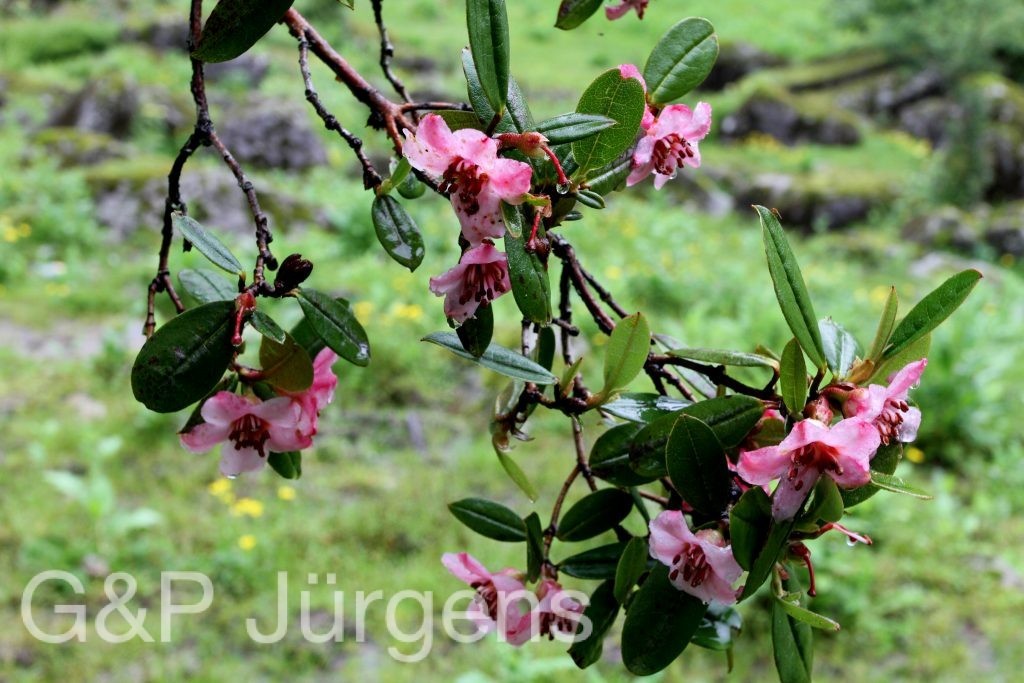
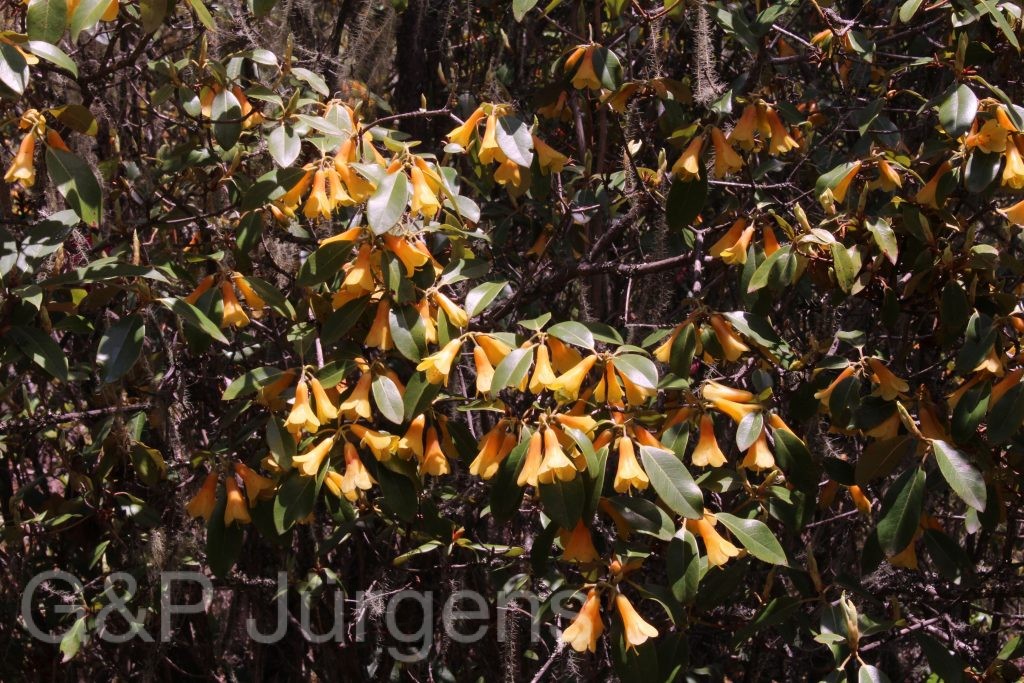
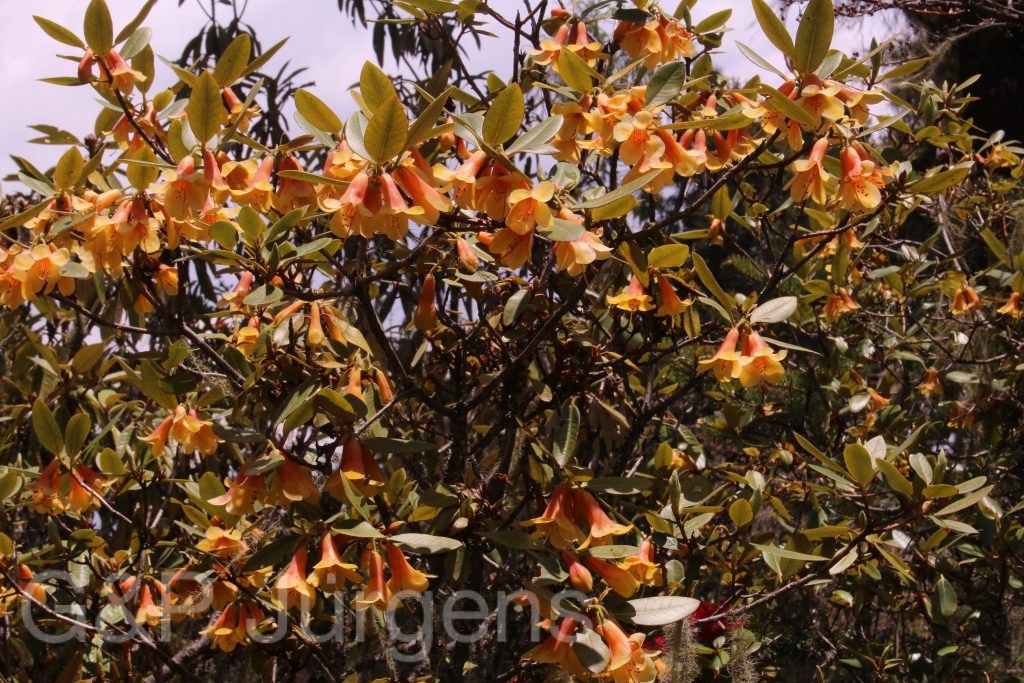
Rhododendron camelliiflorum is a Himalayan endemic shrub restricted to the moist temperate belt of Nepal, India, Bhutan and adjacent China (Xizang), with 165 GBIF occurrences. It is characteristically epiphytic or lithophytic, growing on mossy tree trunks, rocks and banks within humid Abies, Tsuga and broadleaved forest, typically between about 2500 and 3500 m. The photographs were taken in Bhutan at Pele-La at 2800 m in June and at Luksor at 2900 m in July, cool cloud-forest sites where persistent mist and abundant epiphytic moss create the damp microhabitats this species favours.

It is a small, straggling evergreen shrub with scaly young shoots and coriaceous, elliptic to oblanceolate leaves that are dark green and lepidote (densely scaly) beneath, with revolute margins and an acute, mucronate apex. The flowers are borne singly or in small terminal clusters and are notably fleshy; the campanulate to broadly tubular, five-lobed corolla is waxy white, often flushed with pink or rose, recalling a small camellia, whence the epithet. The stamens are typically ten, with the ovary and style densely scaly. The fruit is a dry, scaly, septicidal capsule releasing numerous minute seeds.

The species belongs to subgenus Rhododendron, section Rhododendron (the lepidote rhododendrons), and its thick-textured flowers and epiphytic tendency distinguish it within the Himalayan assemblage. Its summer flowering and inaccessible epiphytic habit have kept it scarce in cultivation. Though confined to a narrow elevational band, it remains locally frequent in intact forest and is not currently considered globally threatened, but it is vulnerable to forest degradation across the eastern Himalaya.

Author: Hook.f. · Sources: POWO (Kew), GBIF, Flora of Bhutan, Flora of China, The Genus Rhododendron (Royal Botanic Garden Edinburgh), Rhododendrons of the Himalaya
D. Don

Sikkim2004 128 P223
Sikkim/India Singalila 2600m April
Nepal 97 229 P476
Nepal Thudam 3800m April
Nepal 97 239 W494
Nepal Thudam 3800m April

Description

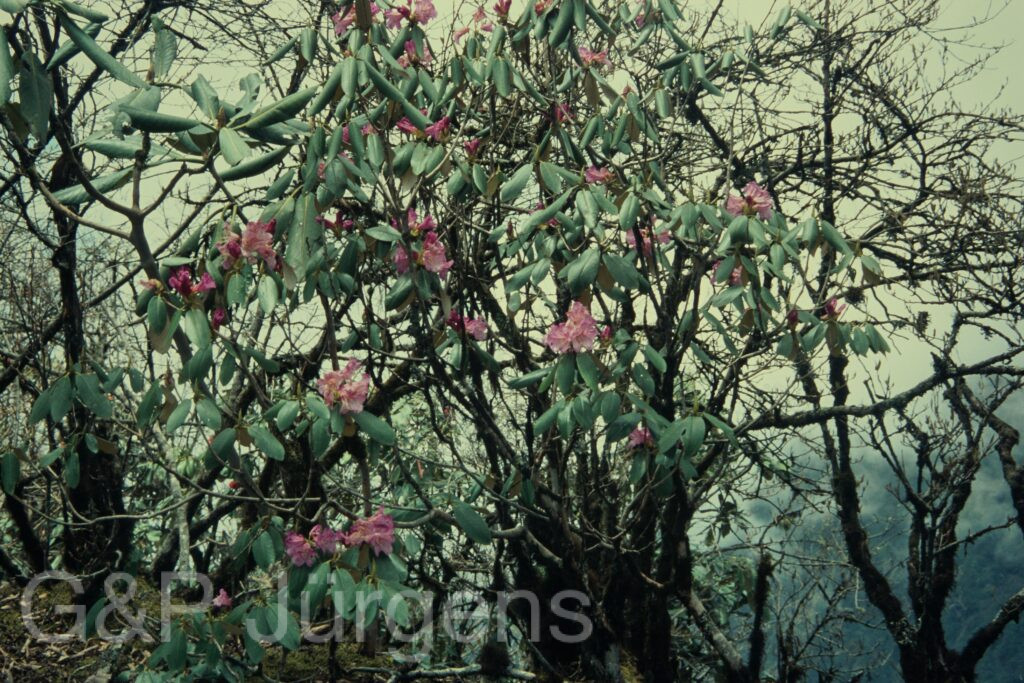
Rhododendron campanulatum D. Don is an evergreen Himalayan shrub or small tree distributed through Nepal (NP), India (IN), Bhutan (BT) and southern China (CN), with GBIF logging 1357 occurrences plus numerous cultivated records from Britain, North America and Europe. It forms dense thickets at and above the temperate treeline, in subalpine fir and birch forest and on open alpine slopes. The image documents populations across its range: Singalila on the Sikkim-India ridge at 2600 m in April, Thudam in Nepal at 3800 m in April, and the Rupina-La in Gorkha at 3250 m in May, reflecting the species' role as a dominant of the upper forest belt.

The plant is a much-branched shrub with stout twigs and a characteristically thick, rufous indumentum of dendroid hairs on the lower leaf surface. The leaves are coriaceous, elliptic to oblong, dark green and glabrous above, the undersurface densely felted with cinnamon-brown to fawn tomentum. The flowers are borne in compact terminal trusses; each has a broadly campanulate corolla, pale lilac to rose-purple or whitish, often spotted within, with five lobes and ten stamens. The fruit is a curved, woody, septicidal capsule releasing numerous small winged seeds.

Rhododendron campanulatum belongs to subgenus Hymenanthes, the large-leaved tomentose-leaved alliance, and includes subsp. aeruginosum with strikingly glaucous young foliage. As a treeline dominant it strongly influences alpine ecology, and recent studies have documented its upslope migration and densification in response to warming, with implications for fragile alpine meadows. It is widely cultivated and has contributed to garden hybrids. The species remains common and is not considered threatened.

Author: D. Don · Sources: POWO (Kew), GBIF, Flora of Nepal, Flora of Bhutan, Rhododendron monograph (Davidian; Royal Botanic Garden Edinburgh revision)

Sikkim2004 404 P689
Sikkim/India Lachung 3400m May

Description

This plant is a natural hybrid between Rhododendron campylocarpum and Rhododendron thomsonii, both subalpine to alpine shrubs of the Eastern Himalaya whose ranges overlap broadly in Sikkim, Bhutan, eastern Nepal and southern Tibet. Because it is a hybrid rather than a described species, it carries no meaningful GBIF distribution of its own — the apparent global record set and the placeholder accepted name 'Plantae' reflect database artefacts, not a real occurrence pattern. Such intermediates arise wherever the two parents grow intermingled in mossy fir and Rhododendron forest and on open subalpine slopes. The photographed plant from Lachung in northern Sikkim, near 3400 m and flowering in May, lies squarely within the elevational overlap zone of about 3000-4000 m where natural hybridisation is frequent.

Morphologically the hybrid is intermediate between its parents. From R. thomsonii it tends to inherit smooth, often peeling, reddish bark, rounded to obovate-orbicular leaves glaucous beneath, and a calyx that is enlarged and cupular; from R. campylocarpum it derives a more campanulate corolla and a tendency toward yellow pigmentation. The resulting flowers are typically campanulate and pale yellow to creamy, frequently flushed or blotched pink to rose, borne in loose terminal trusses; the curved capsule shows the influence of campylocarpum (the 'curved-fruited' parent). Stamens number ten and the style is glabrous.

Both parents belong to Rhododendron subgenus Hymenanthes (the elepidote rhododendrons), and their hybrid swarms are a classic example of natural introgression, long noted in Sikkim by J. D. Hooker. These intermediates blur species limits in the field and are of horticultural importance, both parents being foundational in the breeding of yellow- and red-flowered garden hybrids.

Sources: POWO (Kew), GBIF, Flora of Bhutan, The Rhododendron Handbook (Royal Horticultural Society), Cox & Cox A Encyclopedia of Rhododendron Species, Hooker The Rhododendrons of Sikkim-Himalaya

Hook. f.

Bhutan2014 551
Bhutan Phobjika 2810, May
Bhutan2014 553
Bhutan Phobjika 2810, May
Bh2008 404 P634
Bhutan Phobjika, 3100m April
Bh2008 404 P634 scaled
Bhutan Phobjika, 3100m April
Nepal 1994 70 ergebnis
Ost-Nepal Jaljale Himal, 2800m April

Description

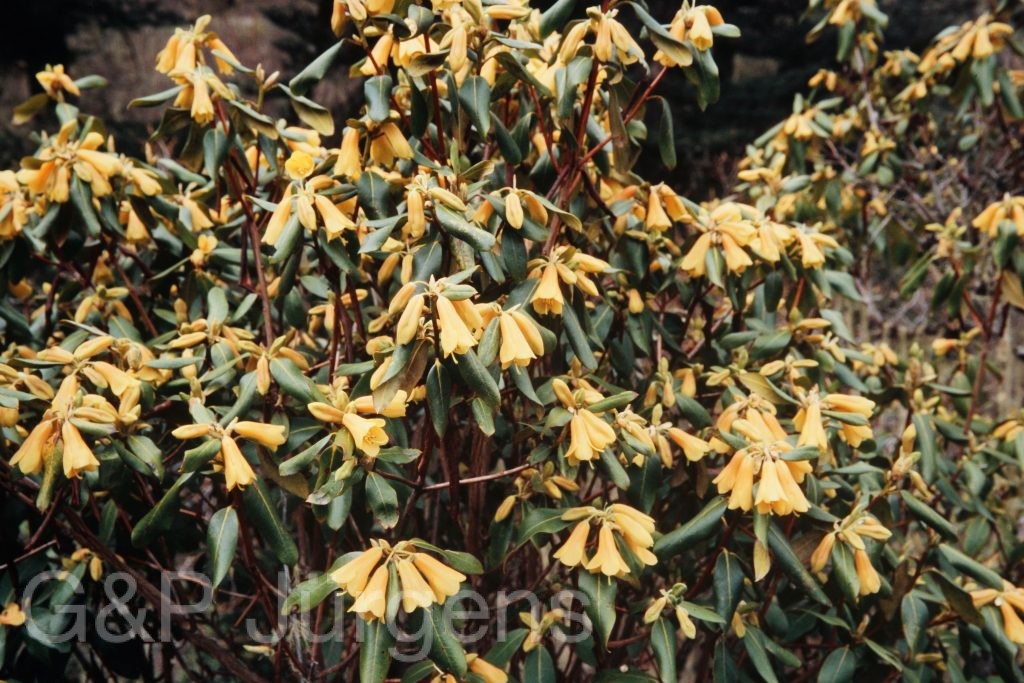
Rhododendron ciliatum is a low evergreen shrub of the Eastern Himalaya, with verified native occurrences in India, Nepal, Bhutan and China; numerous further GBIF records from Britain, North America, Austria, Italy, New Zealand and elsewhere reflect its wide cultivation. It grows on open hillsides, rocky slopes and forest margins, often epiphytically on mossy trunks, in the upper-temperate and subalpine zones between about 2700 and 3700 m. The cited material from Phobjika in Bhutan (2810-3100 m, April-May) and the Jaljale Himal of eastern Nepal (2800 m, April) shows the species in its characteristic early-spring flowering.

It forms a compact, rounded shrub usually under 1.5 m with peeling reddish-brown bark and bristly young shoots. The elliptic to oblong leaves are leathery and dark green, conspicuously fringed at the margins and on the midrib beneath with long stiff cilia, the feature giving the species its name, and scaly below. The flowers are borne in small terminal trusses of two to five; the corolla is broadly funnel-campanulate, white to pale pink, often deeper rose in bud, with a slightly nodding posture. The fruit is a small ovoid scaly capsule that splits to release abundant minute winged seeds.

Rhododendron ciliatum belongs to subgenus Rhododendron, subsection Maddenia, a lepidote (scaly) group, and was described by J.D. Hooker from his Sikkim collections; it has contributed extensively to horticultural hybridisation for its hardiness and early bloom. Ecologically it is an early-spring nectar source in the high forest. Widespread and locally common across its native range and abundant in cultivation, it is not regarded as threatened.

Author: Hook. f. · Sources: POWO (Kew), GBIF, Flora of Bhutan, The Genus Rhododendron (Royal Botanic Garden Edinburgh), Flora of China
Hook. f.

Bhutan2014 877
Bhutan Chele-La 2850m, May
Bhutan2014 882
Bhutan Chele-La 2850m, May
Bh2008 221 P349
Bhutan Tumching-La, 3400m April
Bh2008 222 G350
Bhutan Tumching-La, 3400m April
Sikkim2003 191 G262
Sikkim Dzongri 3900m 08.2003

Description

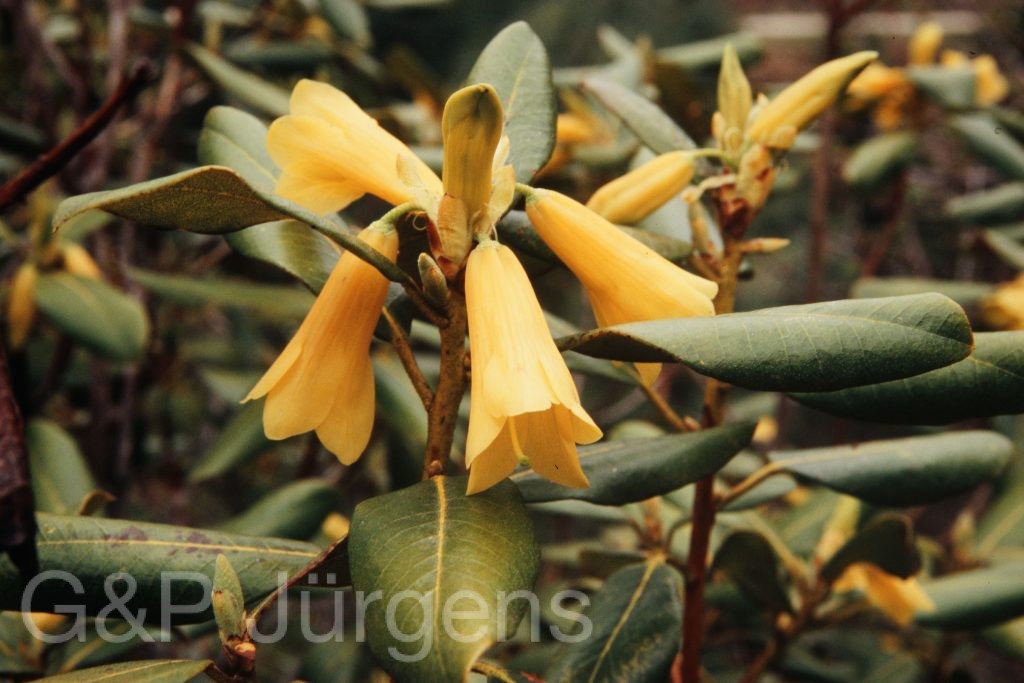
Rhododendron cinnabarinum is an Eastern Himalayan species native to Bhutan, Sikkim and adjacent northeastern India, Nepal and southern Tibet (China), the nearly 768 records also reflecting its popularity in cultivation in Britain, North America and elsewhere. It is a shrub of the cool temperate to subalpine zone, the images documenting plants on the Chele-La in Bhutan at about 2850 m in May, the Tumching-La at about 3400 m in April, and Dzongri in Sikkim near 3900 m. It grows in fir and mixed forest, rhododendron thickets, forest margins and open subalpine scrub on moist, acidic, humus-rich slopes within the monsoon-influenced humid belt of the range.

It is an evergreen shrub reaching one to several metres, with smooth bark and aromatic foliage. The leaves are elliptic to obovate, conspicuously glaucous-blue when young and densely scaly (lepidote) beneath, the scales being diagnostic of the lepidote rhododendrons. The pendulous, tubular-campanulate to narrowly funnel-shaped flowers are borne in small terminal trusses and are noted for their waxy texture and remarkable colour range, from cinnabar-red and orange to plum and yellow; the ten stamens and the style are enclosed within the elongate corolla tube, which matures into a scaly capsule.

Described by J.D. Hooker, the species is placed in subgenus Rhododendron, subsection Cinnabarina, the only members of the lepidote group with markedly tubular, drooping corollas suited to pollination by birds and long-tongued insects. It is variable across its range, with several recognised subspecies and varieties differing in flower colour and foliage, and is an important parent in horticulture. Locally common in suitable habitat and widely cultivated, it is not regarded as globally threatened, though parts of its native forest are under pressure.

Author: Hook. f. · Sources: POWO (Kew), GBIF, Flora of Bhutan, Flora of China, The Genus Rhododendron (Royal Botanic Garden Edinburgh)
Hook. f.

Bh09 237 P397
Bhutan Wangdi 1950m, June
Bh09 238 G399
Bhutan Wangdi 1950m, June
Nepal 97 314 P620
Nepal Honggaon 2360m May
Nepal 97 418 P807
Nepal Taskigaon 3000m May

Description

Rhododendron dalhousieae is an epiphytic or terrestrial shrub of the eastern Himalaya, distributed across India, Nepal, Bhutan and adjacent China; its c. 149 georeferenced records track the wet temperate forest belt (records from Britain and New Zealand reflect its long history in cultivation). It grows in humid broadleaf and Rhododendron-rich forest, often perched on mossy trunks and rocks or on steep banks, chiefly between 1800 and 3000 m. The image documents populations across its range, from Wangdi in Bhutan at 1950 m to Nepal's Honggaon and Taskigaon (2360-3000 m) and Samadan in West Bengal at 2400 m, flowering from May into June in the cloud-forest zone.

It is a straggling, sparsely branched shrub 1-3 m tall, frequently epiphytic, with peeling bark and large, obovate to elliptic leaves clustered toward the branch tips, glaucous beneath and bearing scattered scales. The flowers are among the most spectacular of Himalayan rhododendrons: borne in lax trusses of two to six, each broadly funnel-campanulate, 7-12 cm long, fragrant, white often flushed with pale yellow or pink, with a long tube. The ten stamens and slender style are enclosed within the corolla, and the scaly ovary matures into an elongate capsule splitting to release numerous minute winged seeds.

Described by Hooker f. (Hook. f.) from his Sikkim explorations, R. dalhousieae belongs to Rhododendron subgenus Rhododendron, section Rhododendron (the lepidote or scaly-leaved rhododendrons), and is named for Lady Dalhousie. Its large, fragrant, pale flowers suggest pollination by moths and large bees. Long prized in horticulture, it is widespread but locally uncommon and dependent on intact humid forest; habitat loss makes some populations vulnerable, though it is not formally threatened.

Author: Hook. f. · Sources: POWO (Kew), GBIF, Flora of Bhutan, Flora of China, Flora of Bhutan and Sikkim, The Genus Rhododendron monograph (Edinburgh, Ericaceae)
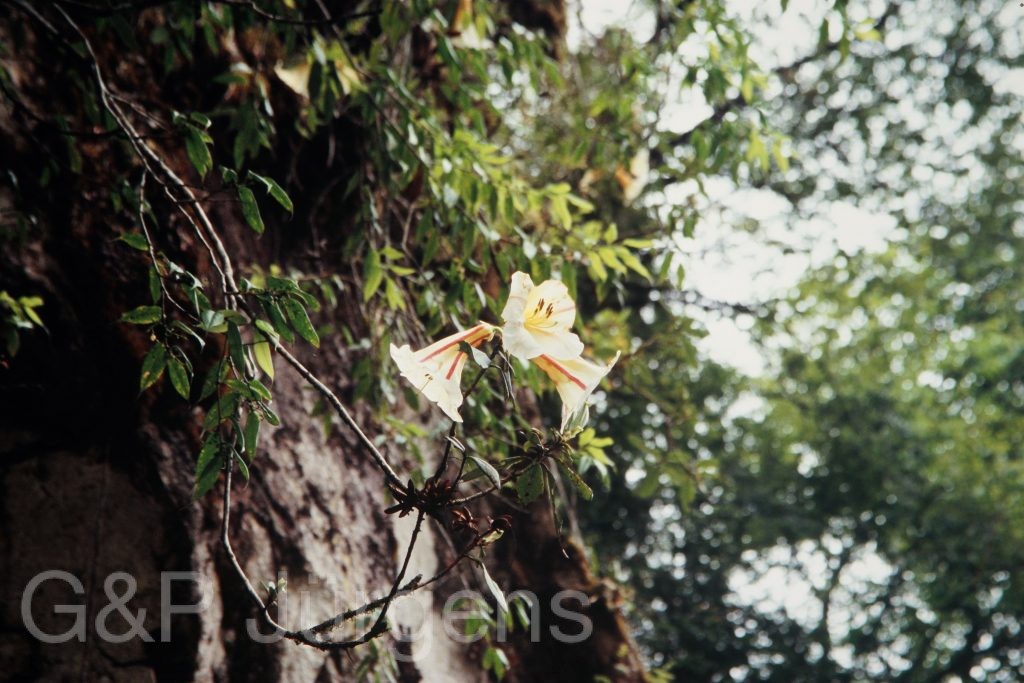
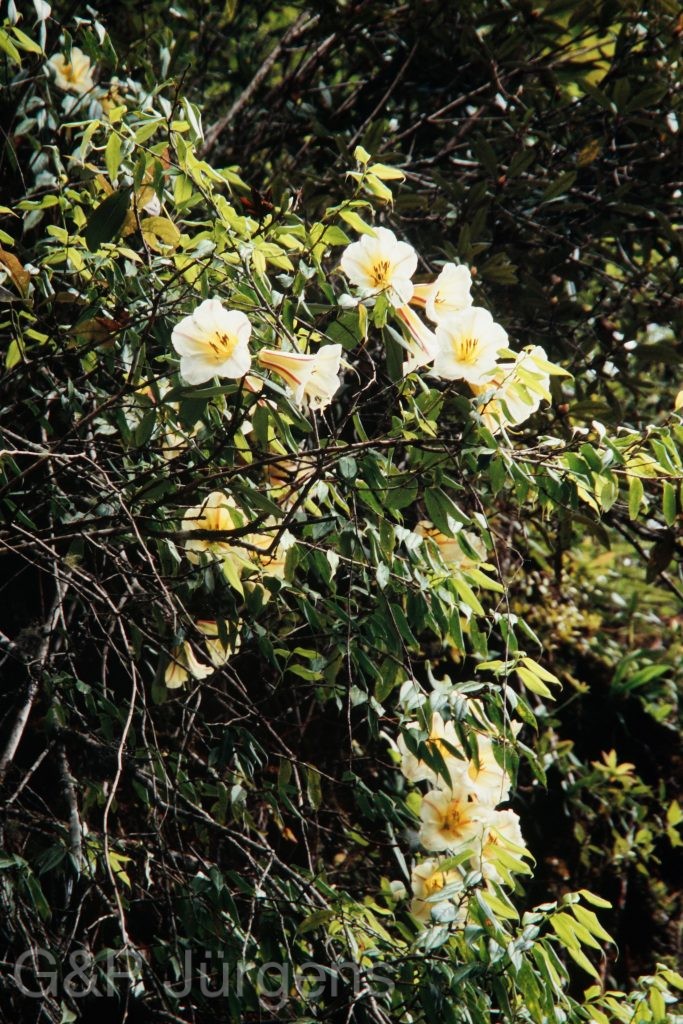
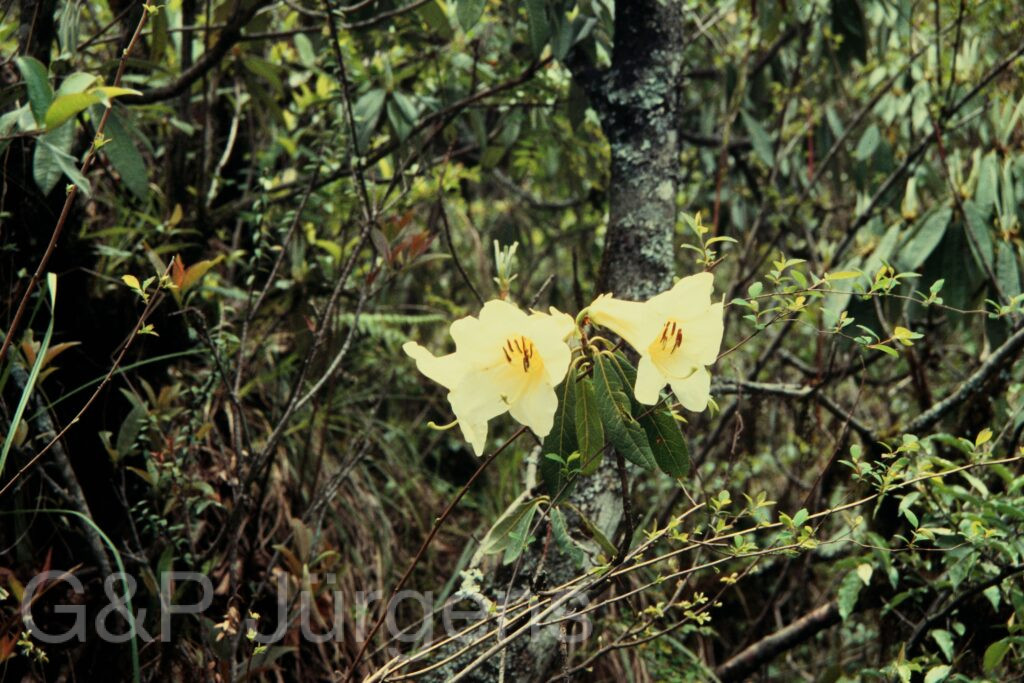
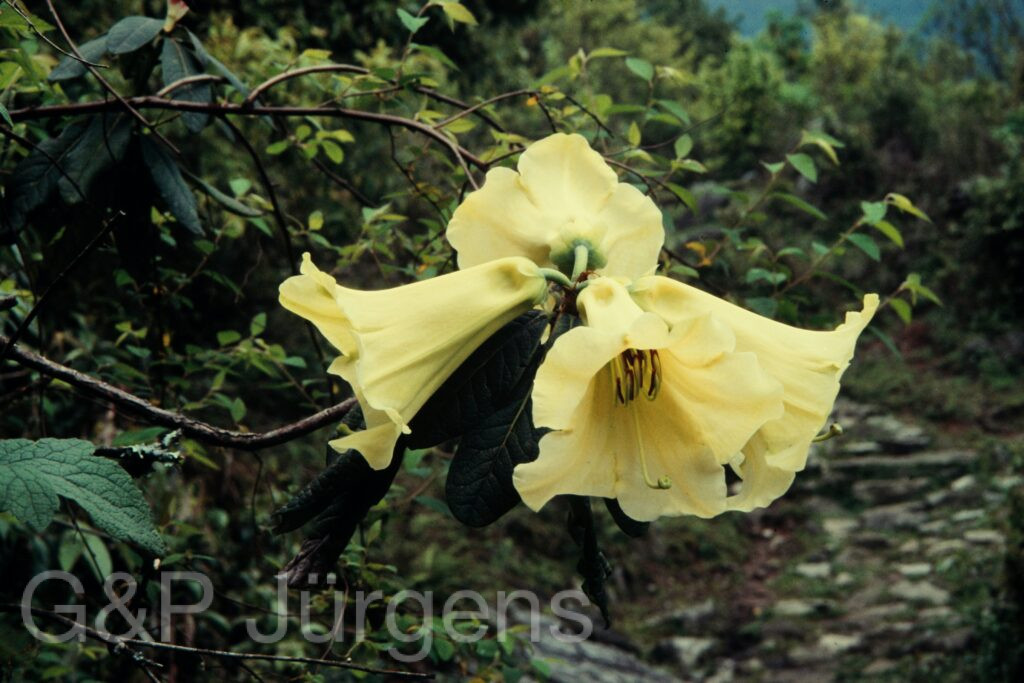
(Balf. f. & R.E. Cooper) Cullen

Bhutan2014 305
Bhutan Tritangbi 2250m, May
Bhutan2014 308
Bhutan Tritangbi 2250m, May

Description

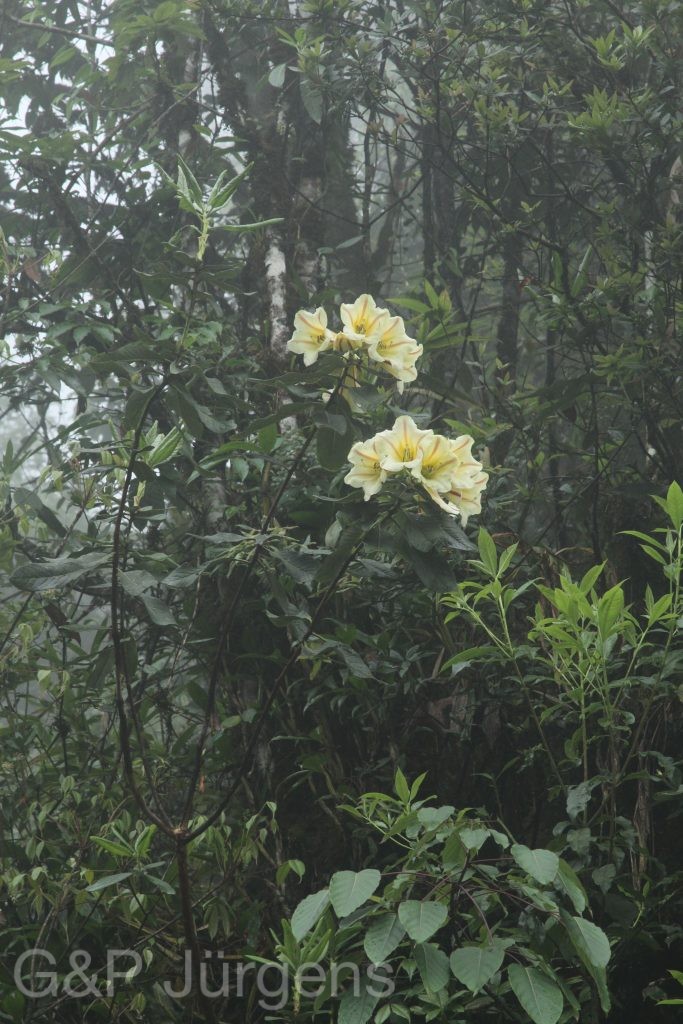
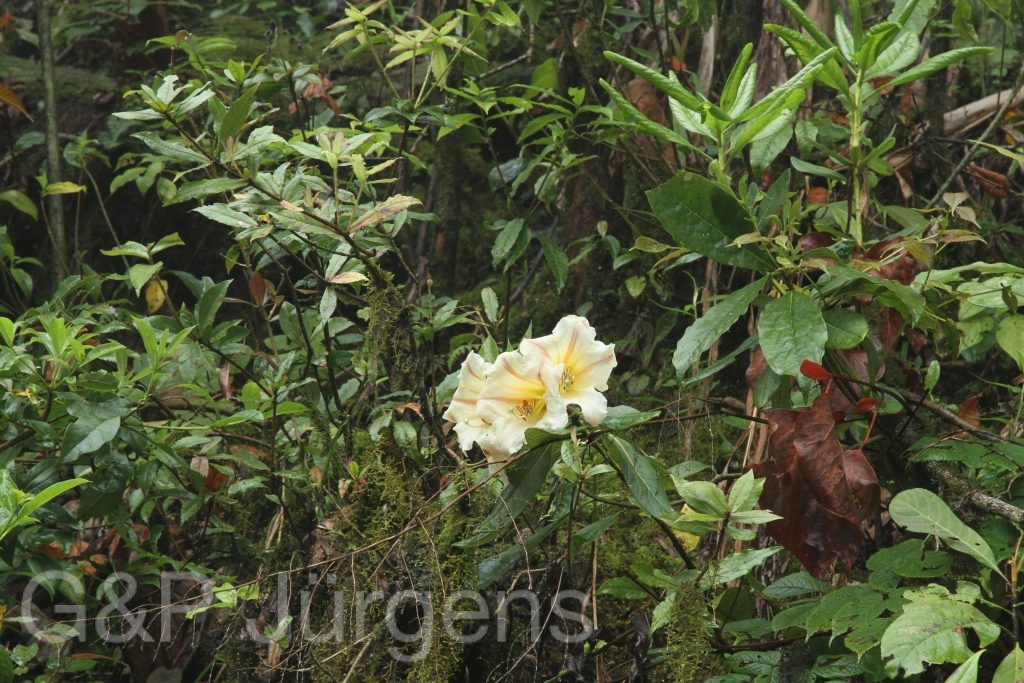
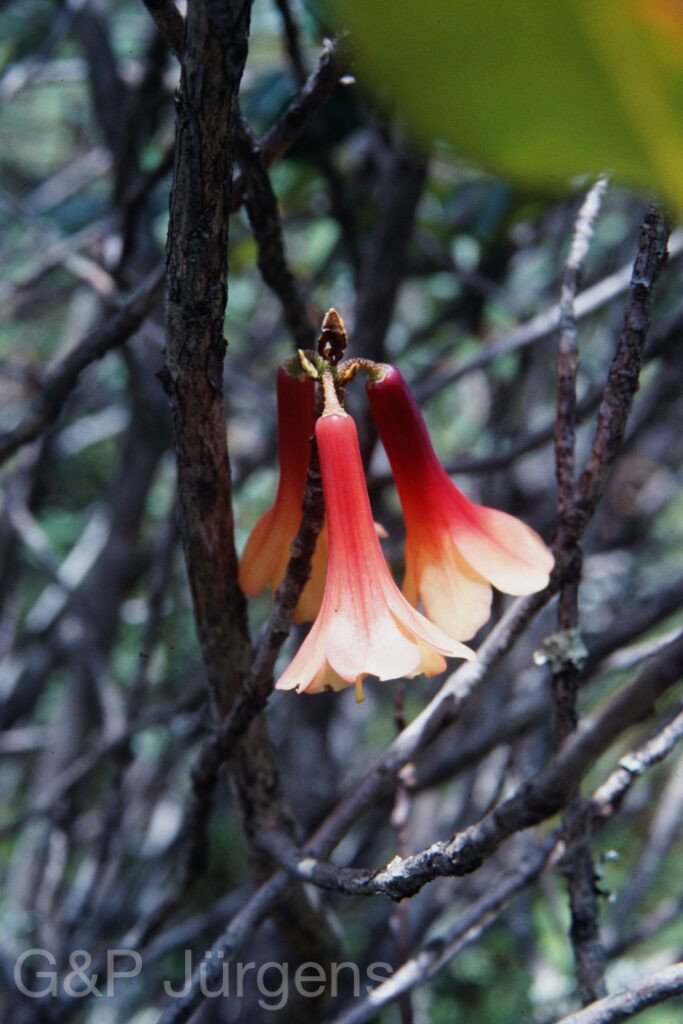
Rhododendron dalhousieae var. rhabdotum is a striking epiphytic rhododendron of the eastern Himalaya. GBIF records this taxon from Bhutan, India and China, with only around 16 occurrences, reflecting its restricted range in the moist temperate forests of the eastern Himalaya. It grows chiefly as an epiphyte on mossy trunks, or on cliffs and steep banks, in humid broadleaved and conifer forest, generally between about 2000 and 3000 m. The plant illustrated was photographed at Tritangbi in Bhutan at 2250 m in May, flowering in late spring within the cloud-forest belt where high humidity and abundant moss support its epiphytic habit.

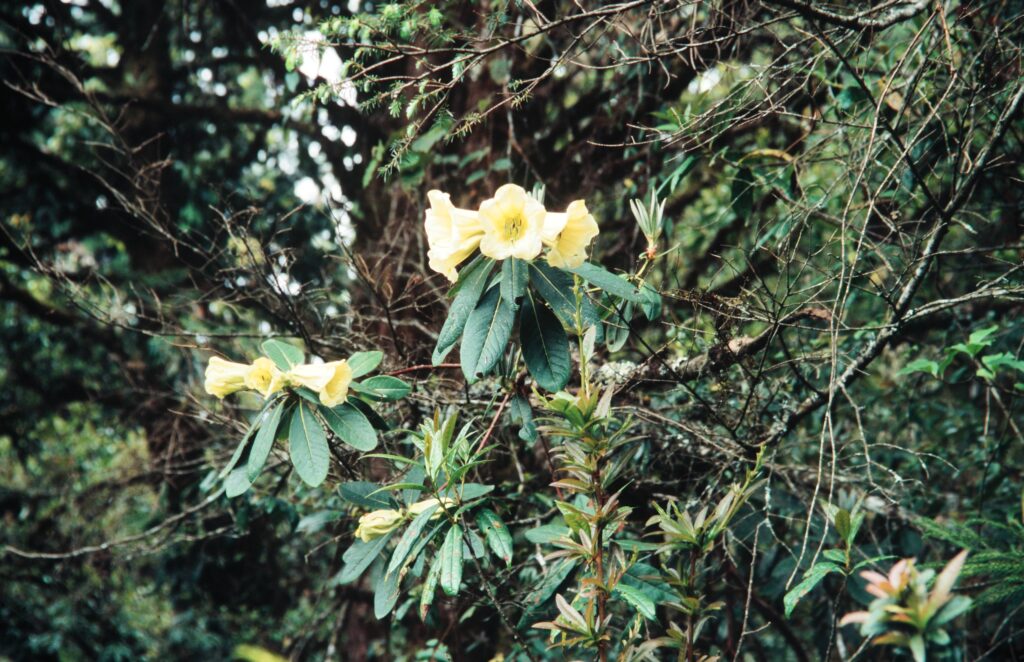
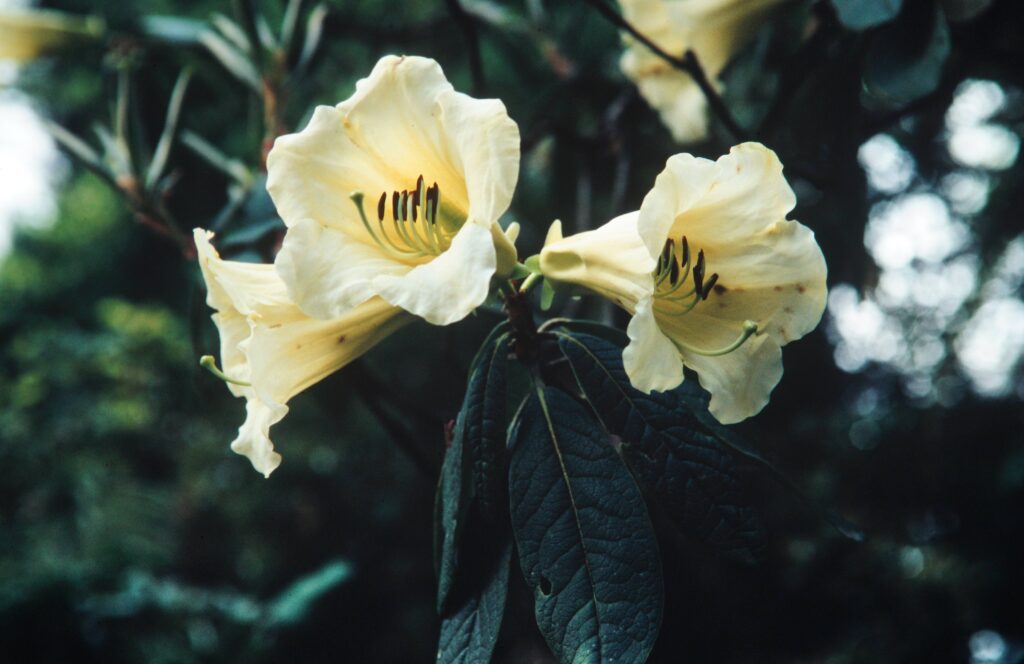
It is a straggling, sparsely branched shrub with large, leathery, oblong-elliptic leaves clustered toward the branch tips. The flowers are borne in a loose terminal truss of a few very large, fragrant, broadly funnel-form to campanulate blooms 8-10 cm long. The corolla is creamy white to pale yellow, and the diagnostic feature distinguishing var. rhabdotum from typical R. dalhousieae is the presence of bold longitudinal red stripes running down the outside of the corolla tube (the epithet rhabdotum, striped). The fruit is a dry septicidal capsule releasing numerous minute winged seeds suited to dispersal onto epiphytic perches.

The taxon belongs to Rhododendron section Maddenia, a group of large-flowered, often epiphytic and fragrant species centred on the eastern Himalaya. Cullen treated rhabdotum as a variety of R. dalhousieae, a placement some authorities raise to species rank as R. rhabdotum. Its large fragrant flowers are adapted to moth pollination. With a narrow range, specialised epiphytic ecology and dependence on intact humid forest, it is vulnerable to deforestation and is a prized but localised eastern Himalayan rhododendron.

Author: (Balf. f. & R.E. Cooper) Cullen · Sources: POWO (Kew), GBIF, Flora of China, Flora of Bhutan, Annotated Checklist of the Flowering Plants of Nepal, The Genus Rhododendron: its classification and synonymy (Cullen, RBGE)

Franch.

Bh2008 21 P38
Bhutan Thimphu-Chu, 2800m
Bh2008 23 P40
Bhutan Thimphu-Chu, 2800m

Description

Rhododendron delavayi Franch. is a shrub or small tree of the Sino-Himalayan region, distributed through south-western China (Yunnan, Guizhou, Sichuan, Xizang), Myanmar, Thailand, Vietnam, north-eastern India, Bhutan and Nepal, with horticultural records from the United Kingdom, United States, Canada and Belgium contributing to a GBIF total of around 1,290 occurrences. It grows in evergreen broadleaf forest, pine forest, open thickets and on rocky montane slopes, typically on acidic soils in the warm-temperate to lower montane belt. The illustrated plant comes from the Thimphu-Chu valley in Bhutan at about 2800 m, an elevation characteristic of the species where it forms a conspicuous element of the forest canopy and understorey and flowers in spring.

It is an evergreen shrub to small tree with stout branches and a thick, often flaking bark. The leaves are leathery, oblong-lanceolate to oblanceolate, dark green and glabrous above, the lower surface densely covered with a felted, persistent, fawn to greyish or whitish tomentum (indumentum) that is diagnostic of the species. The flowers are borne in dense, rounded, terminal trusses; each is broadly campanulate with a deep crimson to scarlet corolla of about five lobes, marked at the base with darker nectar pouches, and contains about ten stamens and a glabrous or hairy ovary with a long style. The fruit is a woody, cylindrical, ribbed capsule dehiscing by valves to release numerous minute seeds.

Rhododendron delavayi is the type species of subsection Arborea and is closely related to the Himalayan R. arboreum, with which it intergrades and shares the tree habit and red flowers; it is distinguished by its compact indumentum and floral details. Ecologically it is bird- and insect-pollinated and is a dominant component of warm broadleaf forest, while in cultivation it is valued as a parent of many hybrids. Although widespread, it is locally affected by deforestation and habitat conversion in parts of its range, but overall it remains common and is not regarded as globally threatened.

Author: Franch. · Sources: POWO (Kew), GBIF, Flora of China, Flora of Bhutan, The Genus Rhododendron (Edinburgh, Chamberlain et al.)