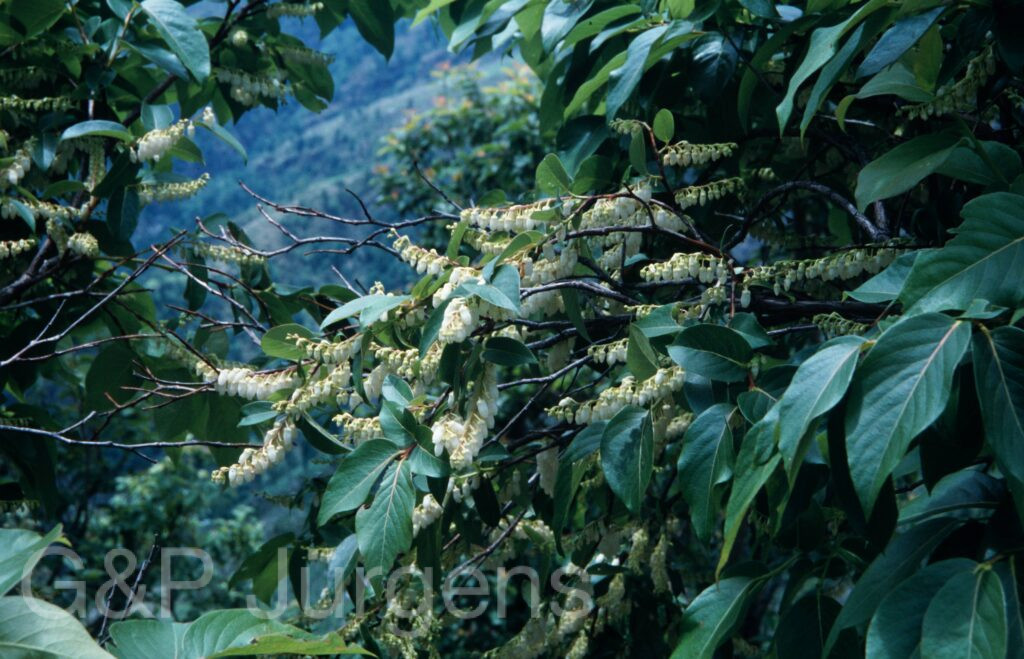
Ericaceae

(Wall.) Drude

Nepal 97 517 P1015
Nepal Chinchilla 1950m May
Nepal 2001 521 ergebnis ergebnis
Nepal (Gorkha) Mulabari 1360m, May

Description

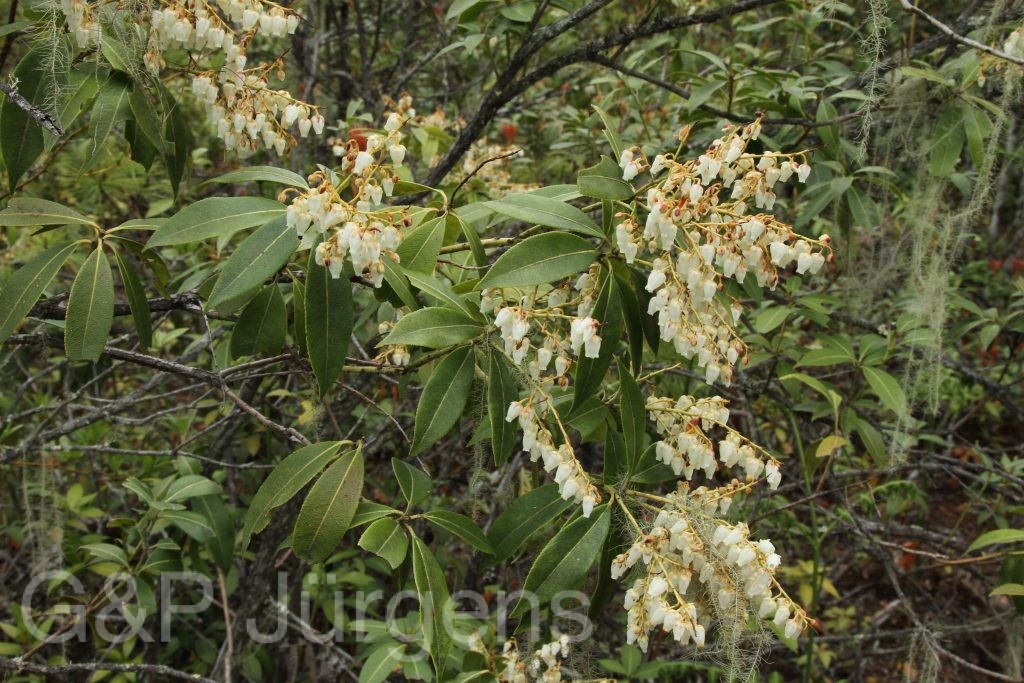
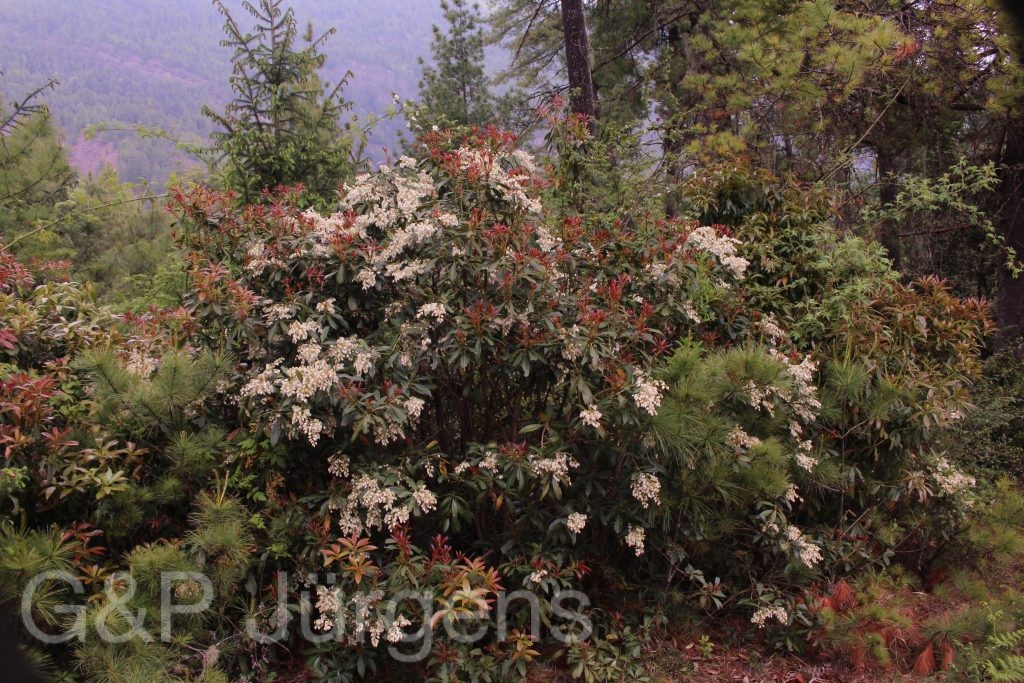
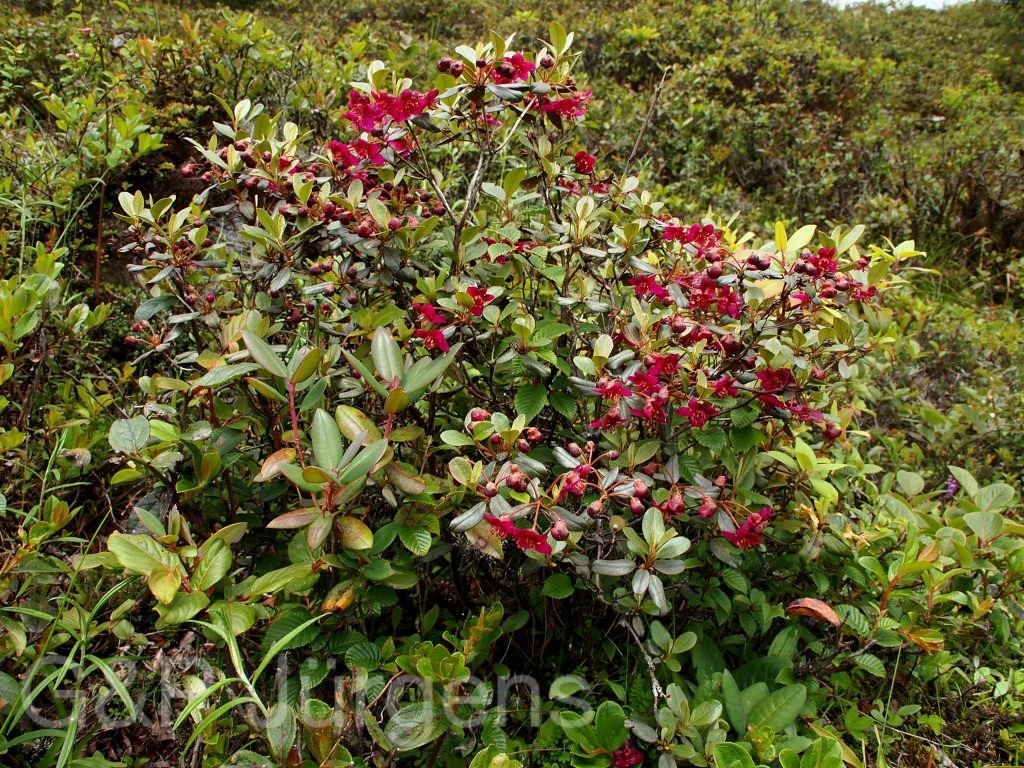
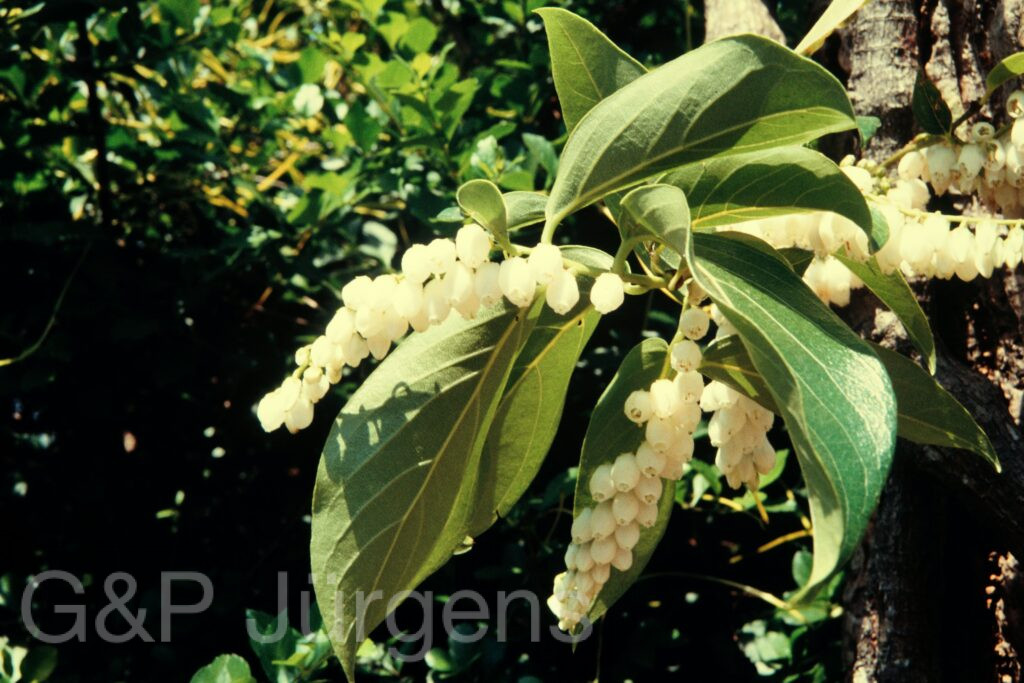
Lyonia ovalifolia is a widespread Sino-Himalayan and East Asian shrub or small tree distributed from China, Japan and Taiwan through Nepal, India, Bhutan, Pakistan, Myanmar, Thailand and Indochina, with a large GBIF dataset of over 13000 records. It grows on open hillsides, forest margins, thickets and in pine and oak forest understorey, typically between about 1000 and 3000 m. The illustrated plants from Chinchilla at 1950 m and Mulabari in Gorkha at 1360 m in Nepal, both flowering in May, are typical of its subtropical to temperate montane habitats, where it is a common component of the secondary scrub and open forest of the Himalayan midlands.

It is a deciduous to semi-evergreen shrub or small tree with reddish-brown, often somewhat zigzag young branchlets. The leaves are alternate, ovate to ovate-elliptic or ovate-lanceolate, with an entire margin, an acuminate apex and a rounded to subcordate base, with pinnate venation. The flowers are borne in axillary racemes along the shoots, each with a small five-lobed calyx and an urceolate (urn-shaped) white corolla with five short recurved lobes, ten included stamens and a superior ovary. The fruit is a small, ovoid, woody, five-valved loculicidal capsule with a persistent thickened placental axis, releasing numerous minute seeds.

Lyonia belongs to the subfamily Vaccinioideae of the Ericaceae and, in common with many members of that family, contains grayanotoxin-type diterpenes, making the foliage toxic to livestock; the plant has local uses as an insecticide and in folk medicine. The urn-shaped flowers are pollinated by bees and other insects, and the tiny seeds are wind-dispersed from the dehiscing capsules. As an abundant and ecologically tolerant species across a vast range, L. ovalifolia is of least conservation concern.

Author: (Wall.) Drude · Sources: POWO (Kew), GBIF, Flora of China Vol. 14, Flora of Bhutan Vol. 2, Flora of Nepal, Flora of Pakistan, Judd Revision of Lyonia (Ericaceae) monograph
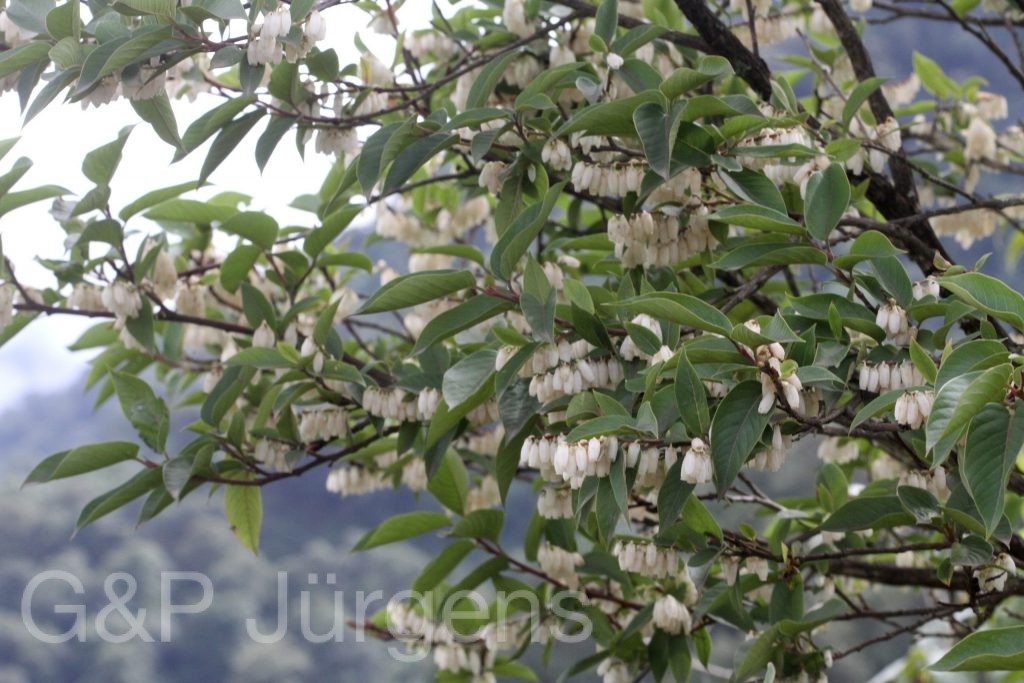
(Wall. ex C.B. Clarke) Hand.-Mazz.

Lyonia villosa ergebnis scaled
Bhutan Wangdi, 2400m June

Description

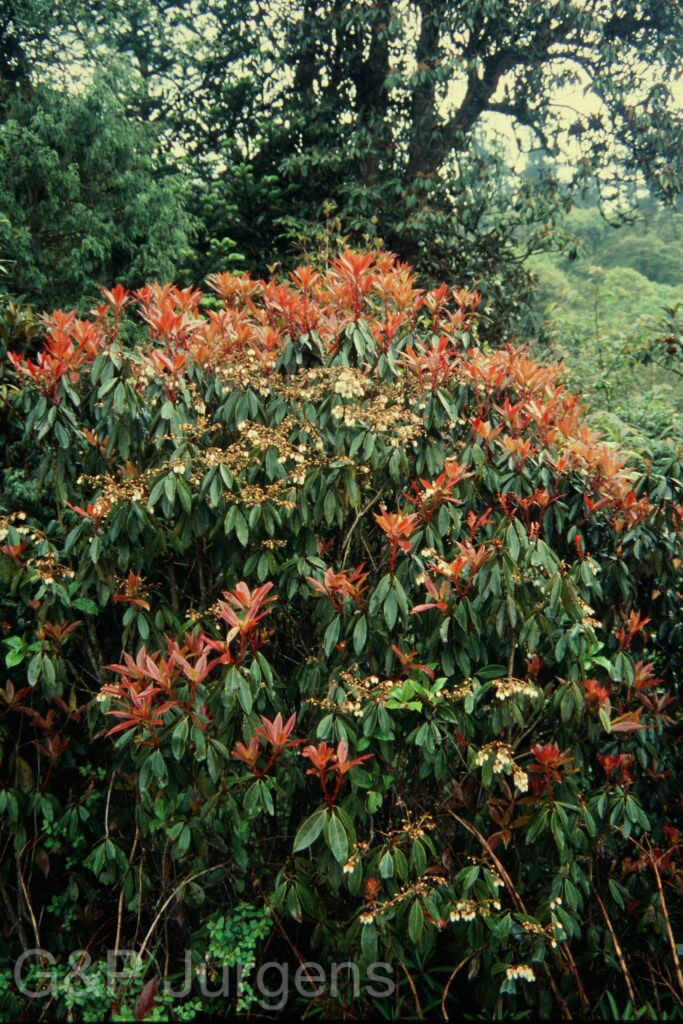
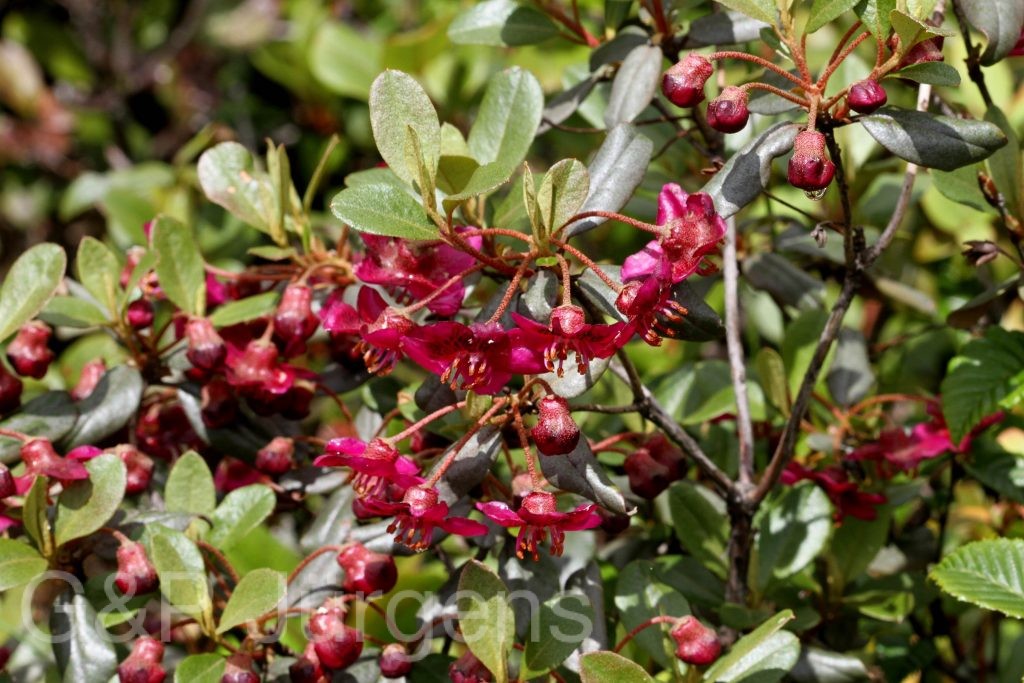
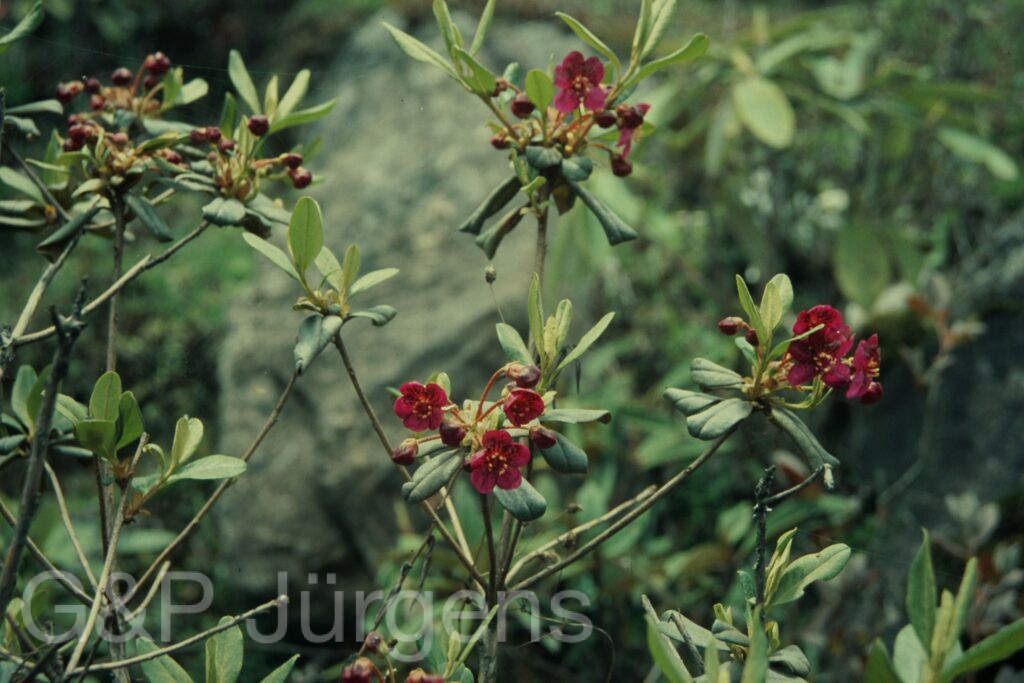
Lyonia villosa (Wall. ex C.B.Clarke) Hand.-Mazz. is a widely distributed Sino-Himalayan shrub recorded from China, Nepal, Bhutan, India, Myanmar, Vietnam and Japan, with more than 1300 georeferenced occurrences in GBIF, reflecting its broad range across the eastern Himalaya and southern China. It grows in temperate forest, forest margins, thickets and open rocky hillsides, commonly between about 1500 and 3500 m. The plant photographed near Wangdi at 2400 m in June is characteristic of its mid-elevation habitat, where it forms part of the understorey and scrub of mixed broadleaved and conifer woodland.

It is a deciduous shrub or small tree with villous to tomentose young branchlets, the indumentum giving rise to the epithet. The leaves are alternate, ovate to elliptic, entire, with a pubescent surface and prominent venation. The white, urceolate (urn-shaped) flowers are borne in axillary racemes or fascicles along the branches; each corolla is shortly five-lobed at the contracted mouth, with included stamens whose anthers bear awns, and a superior ovary maturing into a woody, dehiscent, five-valved capsule. The capsule has thickened sutures, a diagnostic feature of the genus, and releases numerous small seeds.

Lyonia belongs to the tribe Lyonieae of the Ericaceae and is allied to Pieris and Agarista; the thickened capsule sutures and awned anthers separate it from these relatives. Several varieties have been recognised within L. villosa on the basis of indumentum density and leaf shape. As in many Ericaceae the foliage is reported to be toxic to livestock. The species is common and widespread and is not considered threatened.

Author: (Wall. ex C.B. Clarke) Hand.-Mazz. · Sources: POWO (Kew), GBIF, Flora of China, Flora of Bhutan, Judd revision of Lyonia (Ericaceae)

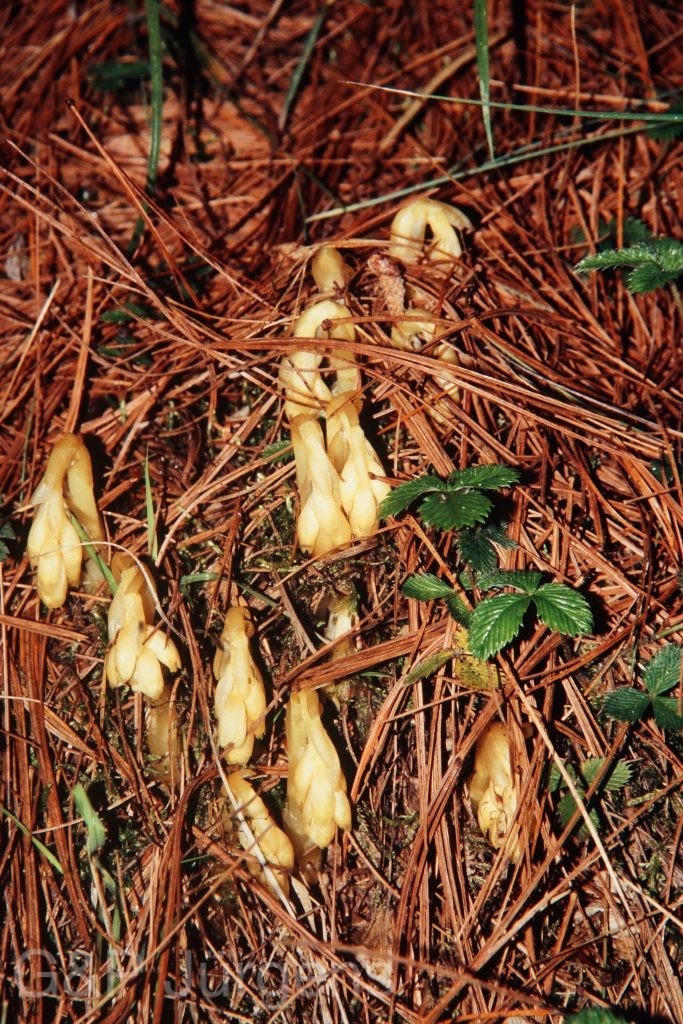
L.

Bh09 307 G504
Bhutan Yetong-La, 3050m June
Nepal 99 882 ergebnis
West-Nepal Suli-Khola 3000m, July

Description

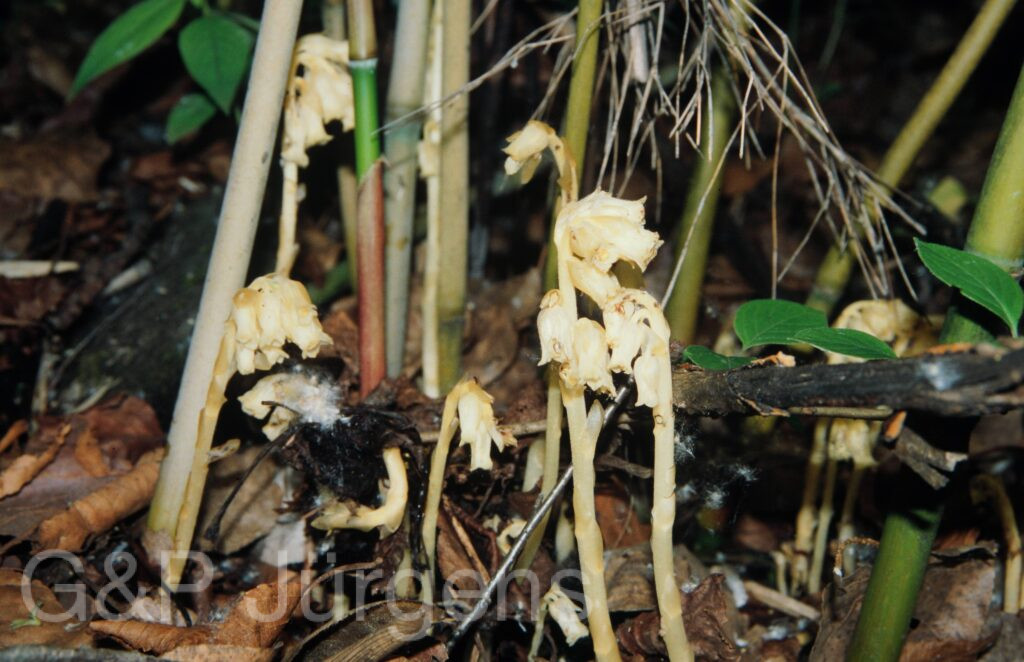
Monotropa hypopitys, the yellow bird's-nest, is a circumboreal mycoheterotroph of remarkably broad distribution, with GBIF amassing over 56,000 occurrences spanning North America, Europe and temperate Asia, including the United States, France, Canada, Russia, Germany, Scandinavia and Japan. It grows in the deep shade and leaf litter of coniferous and broadleaved forests, lacking chlorophyll and obtaining its carbon indirectly from surrounding trees via shared ectomycorrhizal fungi. The Himalayan records from Yetong-La in Bhutan at about 3050 m in June and Suli-Khola in western Nepal near 3000 m in July document its occurrence in shaded temperate fir, oak and rhododendron forest along the southern margin of its vast range. Here gbif_status is SYNONYM, with Monotropa hypopitys taken as the accepted name (often referred to Hypopitys monotropa).

The entire plant is a waxy, fleshy herb of pale yellow, ivory or pinkish-brown colour, wholly devoid of green pigment. The simple, unbranched stem is clothed in scale-like, alternate, bract-form leaves in place of true foliage. At anthesis the stem nods at the apex, bearing a short, secund, few-flowered raceme of pendent, urn-shaped to campanulate flowers; the lateral flowers are usually 4-merous and the terminal 5-merous, with free or loosely cohering petals and eight to ten stamens. After pollination the inflorescence becomes erect, the ovary maturing into an ovoid capsule releasing enormous numbers of minute, dust-like seeds.

Long placed in its own family Monotropaceae, M. hypopitys is now firmly embedded within Ericaceae subfamily Monotropoideae, a lineage of obligate mycoheterotrophs whose nutrition depends entirely on a tripartite plant-fungus-tree relationship. Its dust seeds require fungal infection to germinate, tying its distribution closely to suitable mycorrhizal hosts. Despite its enormous global range it is inconspicuous and of least concern overall, though sensitive to forest clearance that severs its underground fungal connections.

Author: L. · Sources: POWO (Kew), GBIF, Flora of China, Flora Europaea, Flora of Bhutan, Wallace monograph of Monotropoideae

Pieris formosa

by G & P Jürgens

(Wall.) D. Don

Bhutan2014 861
Bhutan Chele-La 3000m, May
Bhutan2014 859
Bhutan Chele-La 3000m, May
Sikkim2004 381 658
Sikkim/India Lachung 3000m May

Description

Pieris formosa is an evergreen ericaceous shrub native to the Himalaya and southwestern China, recorded from China, Nepal, India, Bhutan and Myanmar, with cultivated and naturalised records elsewhere accounting for the European, North American, Japanese and other points among its substantial 2971 GBIF occurrences. It occurs in temperate forest, forest margins, thickets and open rocky slopes, generally between 900 and 3300 m. The localities in the caption, Chele-La in Bhutan and Lachung in Sikkim, both around 3000 m in May, represent the cool, humid upper montane forest where the species flowers profusely in spring.

The plant is a much-branched evergreen shrub or small tree reaching several metres, with leathery, oblong-lanceolate to elliptic leaves that are finely serrate, glossy dark green above and frequently flushed bronze or coppery-red when young. The flowers are borne in large, terminal, much-branched panicles; each corolla is small, white, urceolate (urn-shaped) and five-toothed at the mouth, with the stamens enclosed and the ovary superior. Fruit is a small erect, woody, five-valved dehiscent capsule containing numerous minute seeds, the persistent panicles remaining conspicuous after flowering.

Pieris (tribe Lyonieae, subfamily Vaccinioideae) is a small genus of Asian and North American shrubs, and P. formosa is its most robust Himalayan representative, widely grown as an ornamental, notably the form 'Forrestii' selected for its vivid red young growth. Like many Ericaceae it favours acidic, humus-rich soils and harbours grayanotoxins, rendering its foliage poisonous to livestock. Its urn-shaped flowers are pollinated chiefly by bees, and the dust-like seeds are wind-dispersed. The species is common and not threatened across its native range.

Author: (Wall.) D. Don · Sources: POWO (Kew), GBIF, Flora of China, Flora of Bhutan, Bean Trees and Shrubs Hardy in the British Isles

D. Don

Sikkim2011 95
Sikkim Chopra-valley 4200m, June
Sikkim2011 96
Sikkim Chopra-valley 4200m, June

Description

Rhododendron anthopogon is a dwarf, aromatic alpine shrub of the Himalaya, recorded in GBIF (around 1052 occurrences) from Nepal, India, China, Bhutan and Pakistan. It dominates open alpine slopes, moorland, rocky ridges and the upper limit of shrub vegetation, generally between 3000 and 5000 m, often forming extensive low thickets above the tree line together with junipers and other dwarf rhododendrons. The photographed population in the Chopra valley of Sikkim at 4200 m in June represents this typical high-alpine, exposed habitat, where it flowers as snow recedes in early summer.

It is a low, much-branched, evergreen shrub usually under 1 m tall, with young shoots bearing peltate scales. The small, alternate, leathery leaves are elliptic to ovate, aromatic when crushed, densely brown-scaly (lepidote) beneath and with a slightly recurved margin. The flowers are borne in compact terminal clusters; each has a narrowly tubular corolla, white to pale pink or cream, with a short spreading limb of five lobes and a hairy throat, and characteristically only five to ten included stamens. The fruit is a small, scaly, dehiscent capsule releasing minute seeds.

Rhododendron anthopogon is the type of subsection Pogonanthum within section Rhododendron (the lepidote rhododendrons), a group of aromatic, scaly, tubular-flowered dwarf alpines centred on the Himalaya and western China. Its foliage is rich in essential oils and is harvested as the incense and herbal medicine sunpati. Widespread and often locally abundant across the high Himalaya, it is assessed as Least Concern, functioning as a key soil-stabilising and structural component of alpine heath ecosystems.

Author: D. Don · Sources: POWO (Kew), GBIF, Flora of Bhutan, The Rhododendrons of Sikkim-Himalaya, Annotated Checklist of the Flowering Plants of Nepal, Cullen revision of lepidote Rhododendron

(Balf. f.) Cullen

Nepal 99 146 ergebnis
West-Nepal South of Rara-Lake 3700m, June

Description

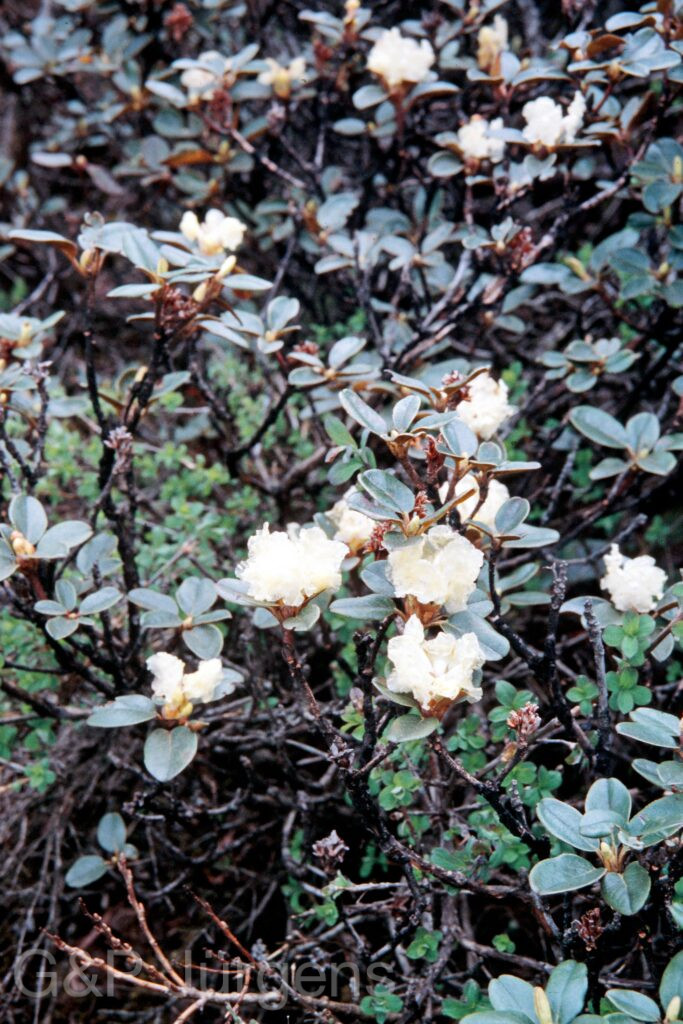
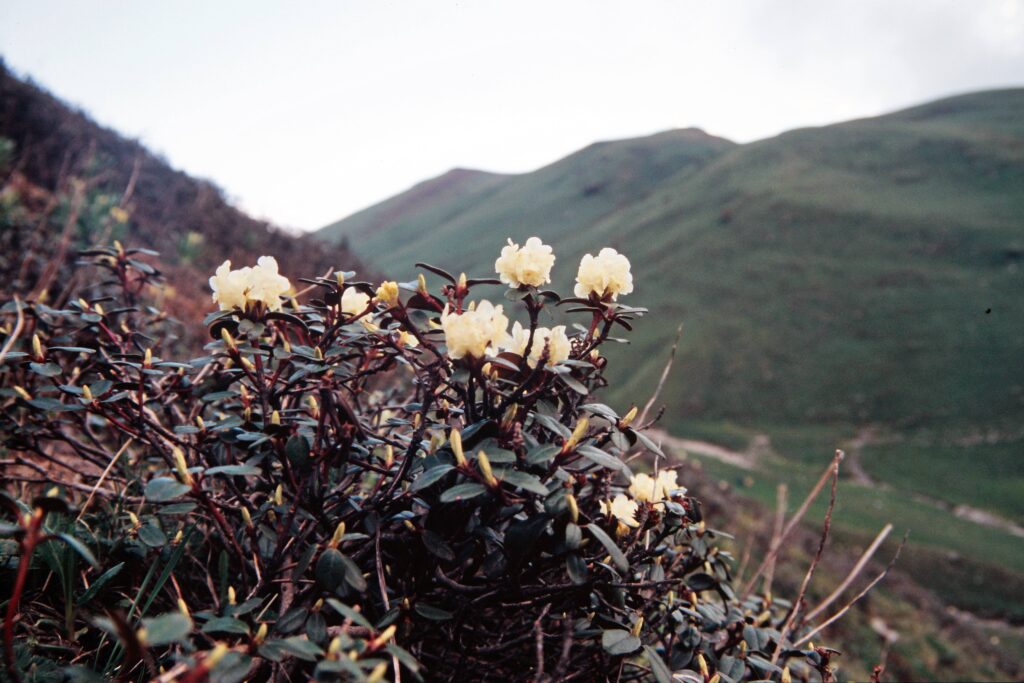
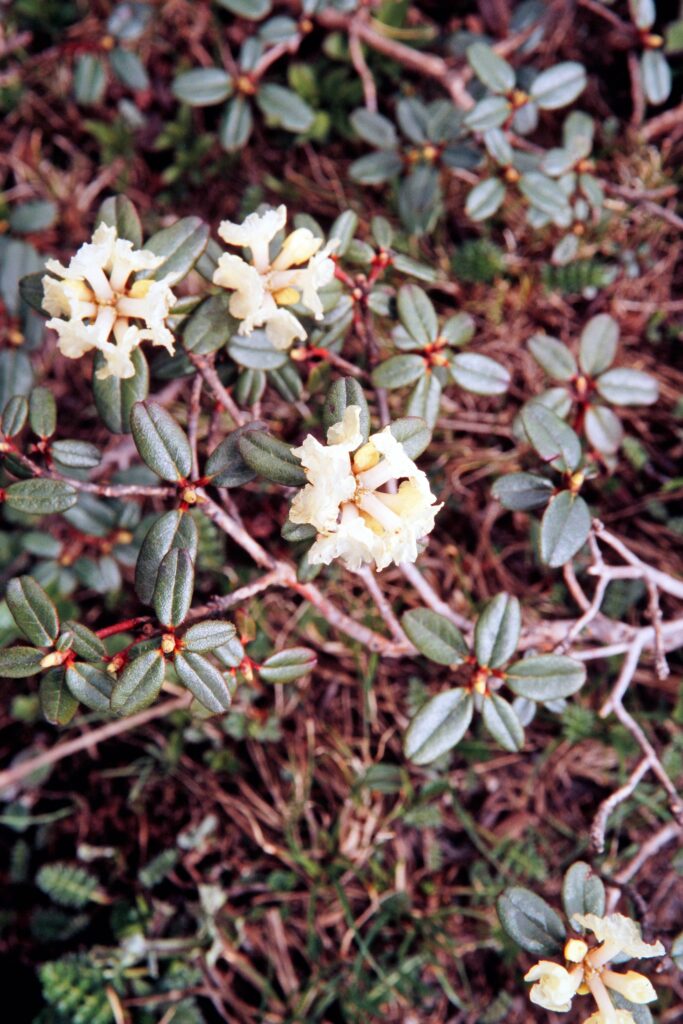
Rhododendron anthopogon subsp. hypenanthum is a dwarf alpine shrub of the high Himalaya and adjacent Tibetan ranges, recorded from China, India, Pakistan, Nepal and Bhutan. It is a characteristic component of the dwarf-rhododendron heath that clothes open slopes, rocky moorland and the margins of alpine meadows above the treeline, frequently forming dense aromatic mats over granite and schist. The taxon ascends from roughly 3300 to over 4500 m; the photographed populations occur south of Rara Lake in West Nepal at about 3700 m and at Khiar Kutti in Indian Garhwal near 4000 m, both flowering in June as the snow retreats. With around 169 records it is a well-documented element of the subnival zone.

It forms a low, much-branched, intricate evergreen shrublet, the twigs densely scaly and the bark flaking. The small leaves are aromatic, elliptic to oblong, leathery, dark green and glabrous above, the lower surface densely covered by overlapping rusty-brown peltate scales, the margins often recurved. The flowers are borne in compact terminal capitate heads; the corolla is narrowly tubular with a short spreading limb of five lobes and is here a clear pale yellow, distinguishing this subspecies from the usually pink to cream typical race. Stamens are included within the tube. The fruit is a small scaly capsule splitting septicidally to release minute seeds.

Within section Pogonanthum, subsp. hypenanthum is separated from the more eastern subsp. anthopogon chiefly by its yellow corolla and western Himalayan distribution. The fragrant foliage is harvested locally for incense and traditional medicine. As a widespread, abundant alpine taxon it is of least conservation concern, though high-altitude grazing and a warming climate may shift the lower limits of its heathland communities.

Author: (Balf. f.) Cullen · Sources: POWO (Kew), GBIF, Flora of China, Flora of Bhutan, The Plant-Book (Cullen, Revision of Rhododendron section Pogonanthum)

Sm.

Bh2008 31 G54
Bhutan
Nepal1992 220 P322 ergebnis
Nepal Nundhaki 1400m March 
Nepal1992 228 P337 ergebnis
Nepal Nundhaki 1400m March 
Nepal1992 237 P348 ergebnis
Nepal Nundhaki 1400m March 

Description

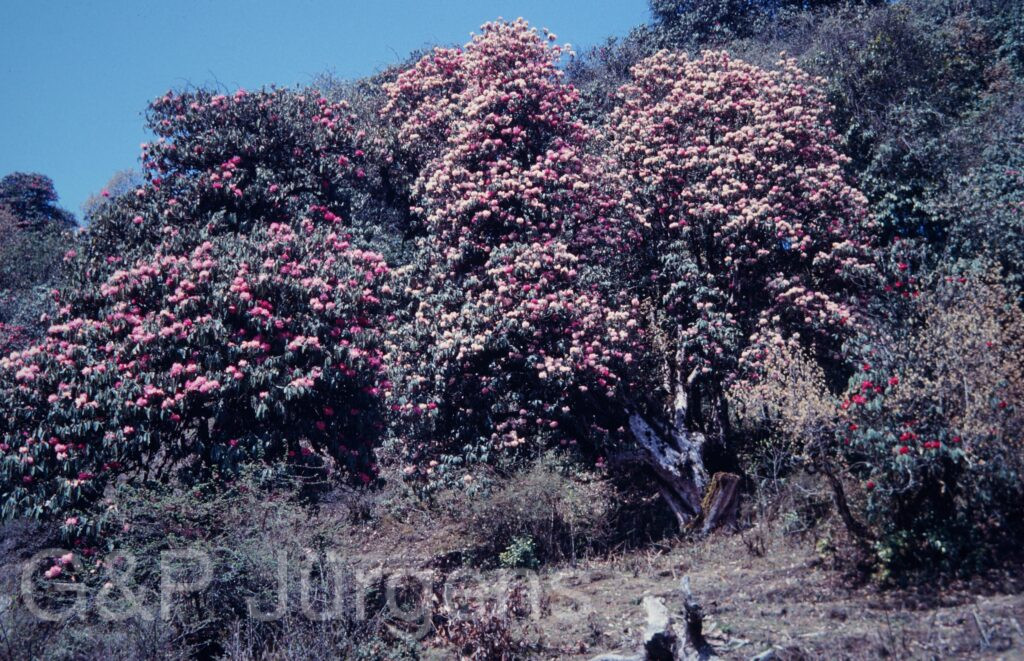
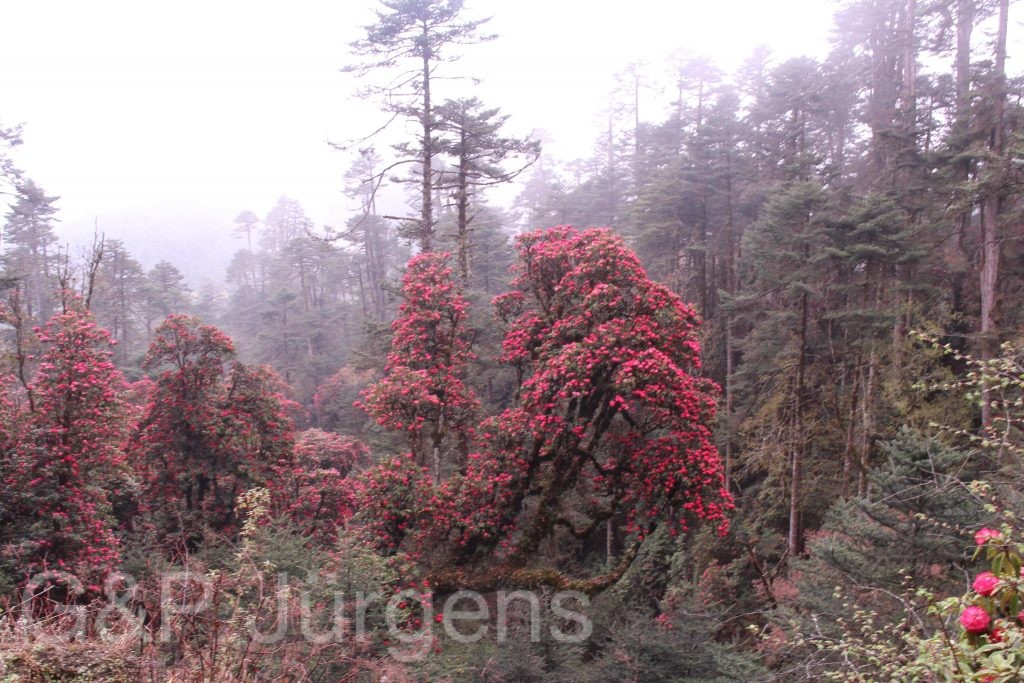
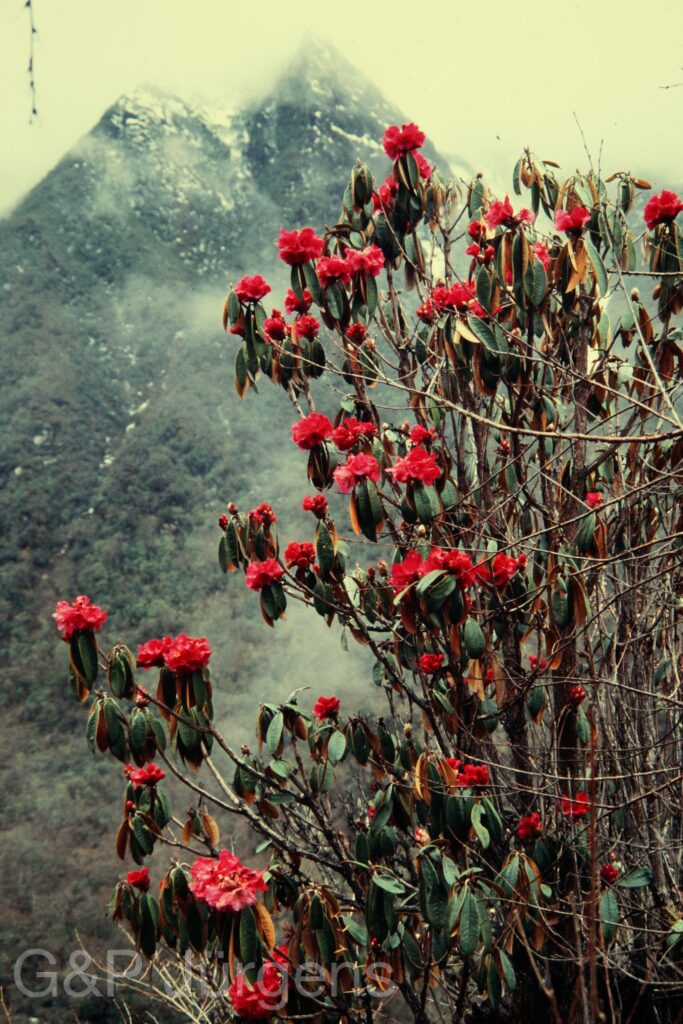
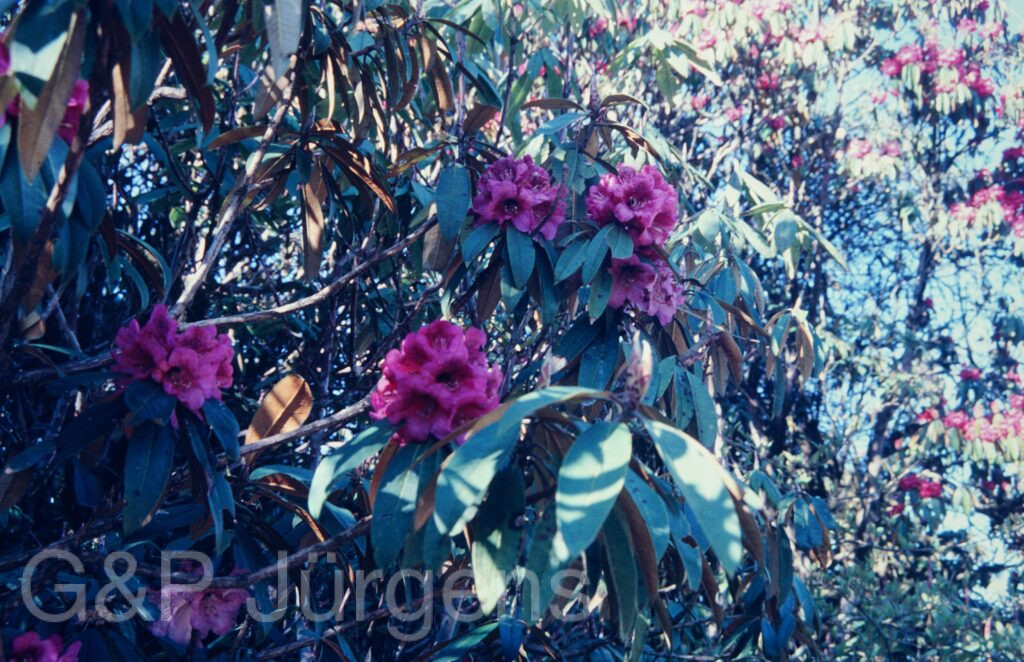
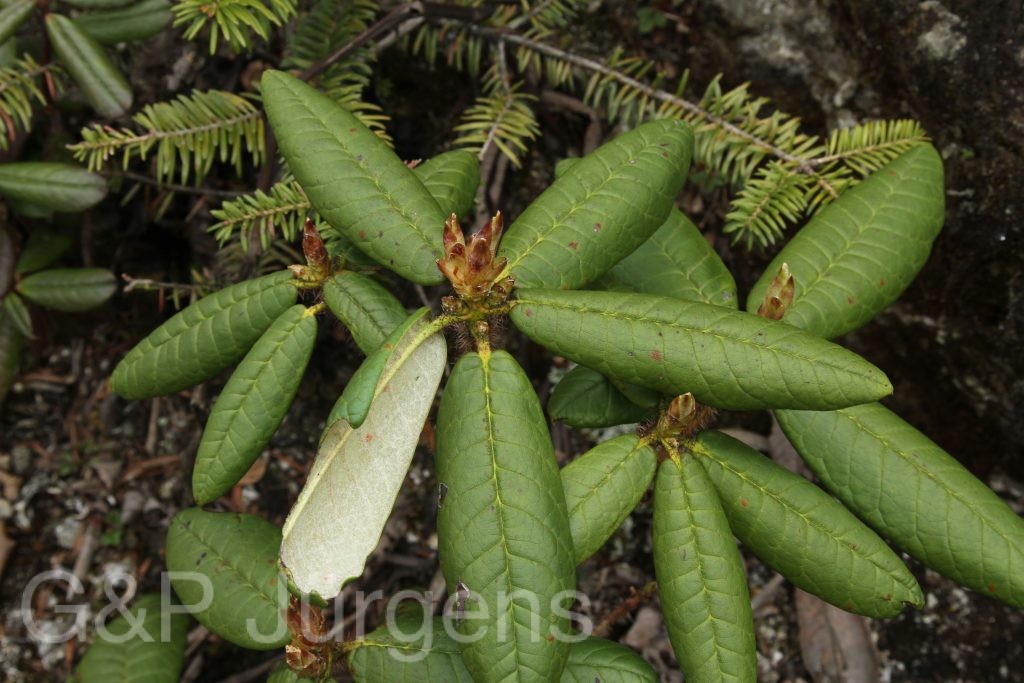
Rhododendron arboreum is the tree rhododendron of the Himalaya and the broader Indian subcontinent, ranging from Pakistan through India, Nepal, Bhutan and Myanmar into southwestern China, with a notable disjunct presence in the hills of Sri Lanka; widely cultivated, it appears in GBIF from many temperate countries and totals nearly 3000 occurrences. It is the most familiar species of the genus across its native range, growing in temperate broadleaved and oak-laurel forest, on hill slopes and in scrub, here recorded at Nundhaki in Nepal at 1400 m and in Bhutan. Spanning a broad elevational band, it flowers conspicuously in late winter and spring (March), painting Himalayan hillsides crimson.

It is an evergreen shrub or tree reaching 10-20 m, with a gnarled trunk and rough, flaking bark. The leaves are leathery, oblanceolate to elliptic, dark glossy green above and clothed beneath with a dense silvery, fawn or rusty indumentum that varies between subspecies. The flowers are massed in dense, rounded, terminal trusses of 15-20; each corolla is tubular-campanulate, 3-5 cm long, ranging from deep blood-red through pink to white, the throat marked with darker nectar spots. Stamens are typically 10, and the ovary tomentose with a long style. The fruit is a curved, woody, ribbed capsule splitting to release numerous small winged seeds.

Described by James Edward Smith, the species belongs to subgenus Hymenanthes, subsection Arborea, and is highly variable, with several recognised subspecies (e.g. subsp. cinnamomeum, subsp. nilagiricum, subsp. zeylanicum) differing in leaf indumentum and altitude. It is the national flower of Nepal (lali gurans) and the state tree of Uttarakhand, and the nectar-rich corollas are sought by sunbirds and bees, with the flowers used to make a local beverage. Although widespread and not globally threatened, lower-elevation populations face pressure from fuelwood harvesting, grazing and forest conversion.

Author: Sm. · Sources: POWO (Kew), GBIF, Flora of Bhutan, Flora of China, The Genus Rhododendron (Cullen & Chamberlain monograph)

(Wall. ex G. Don) Tagg.

Bhutan2014 370
Bhutan Jakar 3900m, May
Nepal 97 225 G465
Nepal Thudam 3850m April
Nepal 1994 286 ergebnis
Ost-Nepal Milka-Danda 3100m May 

Description

Rhododendron arboreum var. cinnamomeum (Wall. ex G. Don) Tagg is a high-elevation race of the widespread tree rhododendron distributed across the eastern and central Himalaya, with records concentrated in Nepal, Bhutan, Sikkim and adjacent China. It occupies the upper temperate to subalpine belt, typically between 3000 and 3900 m, forming dense thickets and the canopy of mossy fir-rhododendron forest. The photographed populations span this range, from Bhutan's Jakar valley at 3900 m and Nepal's remote Thudam at 3850 m to the Milka-Danda ridge of eastern Nepal at 3100 m, all flowering between April and May as the snow retreats. It thrives on acidic, humus-rich soils on cool, north-facing slopes with high atmospheric humidity.

This variety is a shrub or small gnarled tree distinguished from typical R. arboreum by the dense, persistent indumentum on the lower leaf surface. The leathery, oblong-lanceolate to oblanceolate leaves are dark green and rugose above, while beneath they bear a thick, felted, cinnamon- to rust-brown tomentum (the source of the epithet cinnamomeum). Flowers are borne in compact, rounded terminal trusses; the campanulate corolla, ranging from deep blood-red through pink to occasional white, has dark nectar pouches and conspicuous spotting on the upper lobes. The fruit is a woody, curved, dehiscent capsule releasing numerous minute winged seeds.

Taxonomically the taxon sits within the polymorphic R. arboreum complex (subgenus Hymenanthes), where the white-flowered, heavily indumented high-altitude plants have at times been treated as a distinct subspecies. The species is the national flower of Nepal and a foundational element of Himalayan cloud-forest ecosystems, supporting sunbirds and other nectarivores as pollinators. While not globally threatened, upper-montane var. cinnamomeum populations are sensitive to grazing, fuelwood collection and climate-driven treeline shifts.

Author: (Wall. ex G. Don) Tagg. · Sources: POWO (Kew), GBIF, Flora of Bhutan, Flora of China, The Genus Rhododendron (Cox & Cox), Rhododendrons of the Himalaya (Tagg)

Balf. f. & R.E. Cooper

Bhutan2014 445
Bhutan Yatong-La 3200m, May

Description

Rhododendron argipeplum Balf.f. & R.E.Cooper is an eastern Himalayan species of restricted distribution; GBIF records (about 77 occurrences) come from Bhutan, neighbouring northeastern India and adjacent China. It is a shrub or small tree of the cool-temperate forest belt, growing in mixed broad-leaved and conifer forest, rhododendron thickets and along ridges and ravines, generally between about 2700 and 3600 m. The individual photographed at Yatong-La in Bhutan at 3200 m in May, flowering as the higher passes thaw, is typical of its montane setting in the humid, cloud-influenced forests of the eastern range, where deep leaf litter and high atmospheric moisture prevail.

It forms a much-branched shrub up to several metres tall, the young shoots and petioles bristly-setose. The leaves are leathery and elliptic to oblong-ovate, dark green and glabrescent above, and clothed beneath with a thin, often bicoloured indumentum overlying a fawn-coloured felt. The flowers are borne in compact terminal trusses; the corolla is tubular-campanulate, fleshy, and deep red to crimson, usually with darker nectar pouches at the base. There are typically ten stamens, and the ovary bears a glabrous to setose style. The fruit is a woody, curved septicidal capsule splitting to release numerous small winged seeds.

The species belongs to subgenus Hymenanthes, subsection Barbata, a group of red-flowered, setose-stemmed Himalayan rhododendrons in which species delimitation has been debated; it has at times been confused with Rhododendron smithii and allies. Pollination of the showy red corollas is associated with birds and large bees. Owing to its limited eastern Himalayan range and dependence on intact temperate forest, the species is regionally restricted, and like many Bhutanese rhododendrons it is potentially vulnerable to forest clearance and to the pressures of climate change on the narrow montane belt it occupies.

Author: Balf. f. & R.E. Cooper · Sources: POWO (Kew), GBIF, Flora of Bhutan, The Rhododendrons of Bhutan, Flora of China, Royal Botanic Garden Edinburgh revision of subgenus Hymenanthes

Balf. f.

Sikkim2011 204
Sikkim Lachung 3100m, June
Sikkim2011 205
Sikkim Lachung 3100m, June
Sikkim2004 435 P758
Sikkim/India Lachung 3600m May

Description

Rhododendron baileyi is a lepidote shrub of the eastern Himalaya, native to Sikkim and the rest of northern India, Bhutan and south-eastern Tibet in China, with the remaining GBIF records (Great Britain, Canada, Japan, Sweden, United States) reflecting its presence in cultivation. Its roughly 121 georeferenced records indicate a narrowly distributed but well-known garden plant. It grows in open subalpine forest, rocky slopes and rhododendron-dominated thickets at roughly 3000-4300 m. The Sikkim collections noted above, from the Lachung valley at 3100-3600 m in May and June, are characteristic of its montane habitat.

It is a small to medium evergreen shrub with scaly young shoots, the leaves elliptic to oblong, leathery and densely covered beneath with overlapping reddish-brown lepidote scales that give the undersurface a rusty, almost continuous coating. The flowers are borne in compact terminal clusters and are widely campanulate to saucer-shaped, deep reddish-purple to magenta, often darker-spotted within, with the corolla and the exserted stamens and style bearing scattered scales. The fruit is a small ovoid, scaly, septicidal capsule splitting to release numerous minute seeds.

Within the genus Rhododendron, R. baileyi belongs to the lepidote subgenus and is placed in subsection Baileya, a small group distinguished by its strongly flattened, overlapping leaf scales and richly coloured flat-faced flowers. Named for the explorer F. M. Bailey, it has been valued in horticulture since its introduction. Pollination is by bumblebees and other long-tongued insects of the high Himalaya. Although not broadly assessed, its limited natural range and dependence on intact subalpine shrubland make it locally sensitive to grazing, fire and forest disturbance.

Author: Balf. f. · Sources: POWO (Kew), GBIF, Flora of China, Flora of Bhutan, The Genus Rhododendron (Royal Botanic Garden Edinburgh) monograph