
L.
Description
Monotropa hypopitys, the yellow bird's-nest, is a circumboreal mycoheterotroph of remarkably broad distribution, with GBIF amassing over 56,000 occurrences spanning North America, Europe and temperate Asia, including the United States, France, Canada, Russia, Germany, Scandinavia and Japan. It grows in the deep shade and leaf litter of coniferous and broadleaved forests, lacking chlorophyll and obtaining its carbon indirectly from surrounding trees via shared ectomycorrhizal fungi. The Himalayan records from Yetong-La in Bhutan at about 3050 m in June and Suli-Khola in western Nepal near 3000 m in July document its occurrence in shaded temperate fir, oak and rhododendron forest along the southern margin of its vast range. Here gbif_status is SYNONYM, with Monotropa hypopitys taken as the accepted name (often referred to Hypopitys monotropa).
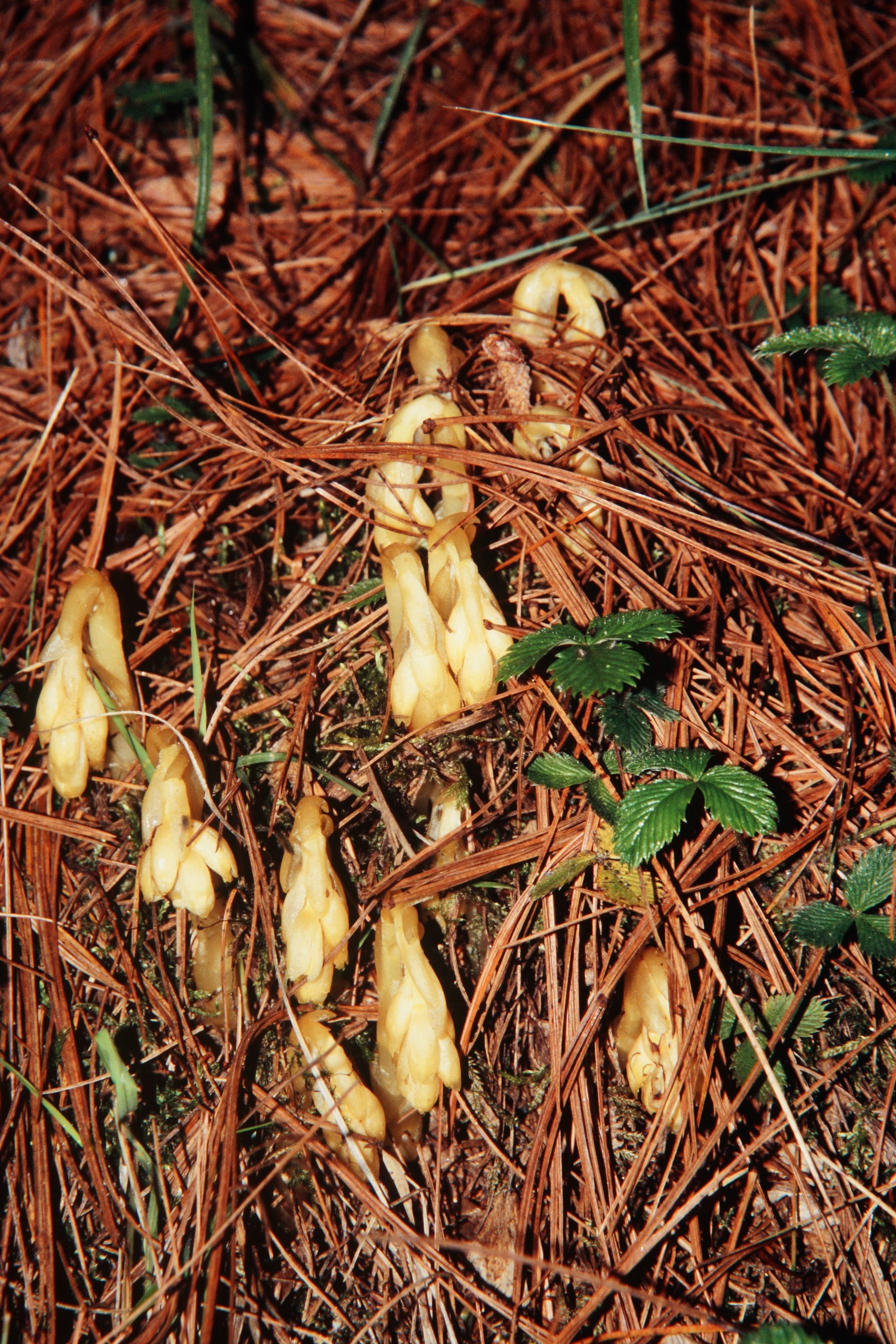
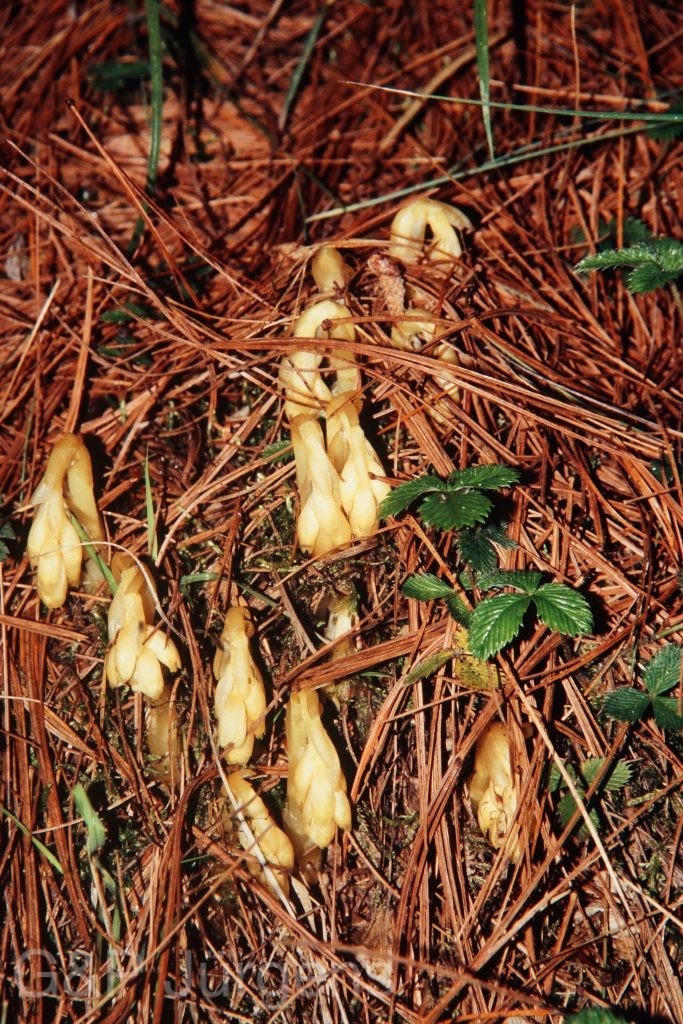
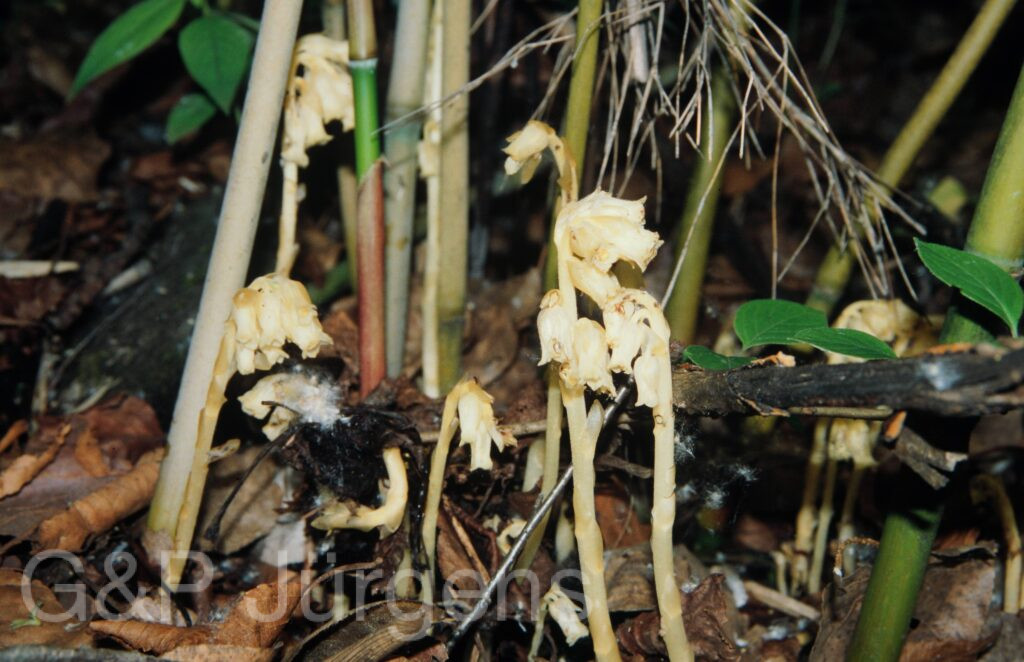
The entire plant is a waxy, fleshy herb of pale yellow, ivory or pinkish-brown colour, wholly devoid of green pigment. The simple, unbranched stem is clothed in scale-like, alternate, bract-form leaves in place of true foliage. At anthesis the stem nods at the apex, bearing a short, secund, few-flowered raceme of pendent, urn-shaped to campanulate flowers; the lateral flowers are usually 4-merous and the terminal 5-merous, with free or loosely cohering petals and eight to ten stamens. After pollination the inflorescence becomes erect, the ovary maturing into an ovoid capsule releasing enormous numbers of minute, dust-like seeds.
Long placed in its own family Monotropaceae, M. hypopitys is now firmly embedded within Ericaceae subfamily Monotropoideae, a lineage of obligate mycoheterotrophs whose nutrition depends entirely on a tripartite plant-fungus-tree relationship. Its dust seeds require fungal infection to germinate, tying its distribution closely to suitable mycorrhizal hosts. Despite its enormous global range it is inconspicuous and of least concern overall, though sensitive to forest clearance that severs its underground fungal connections.
Author: L. · Sources: POWO (Kew), GBIF, Flora of China, Flora Europaea, Flora of Bhutan, Wallace monograph of Monotropoideae