
Hook. f.
Description
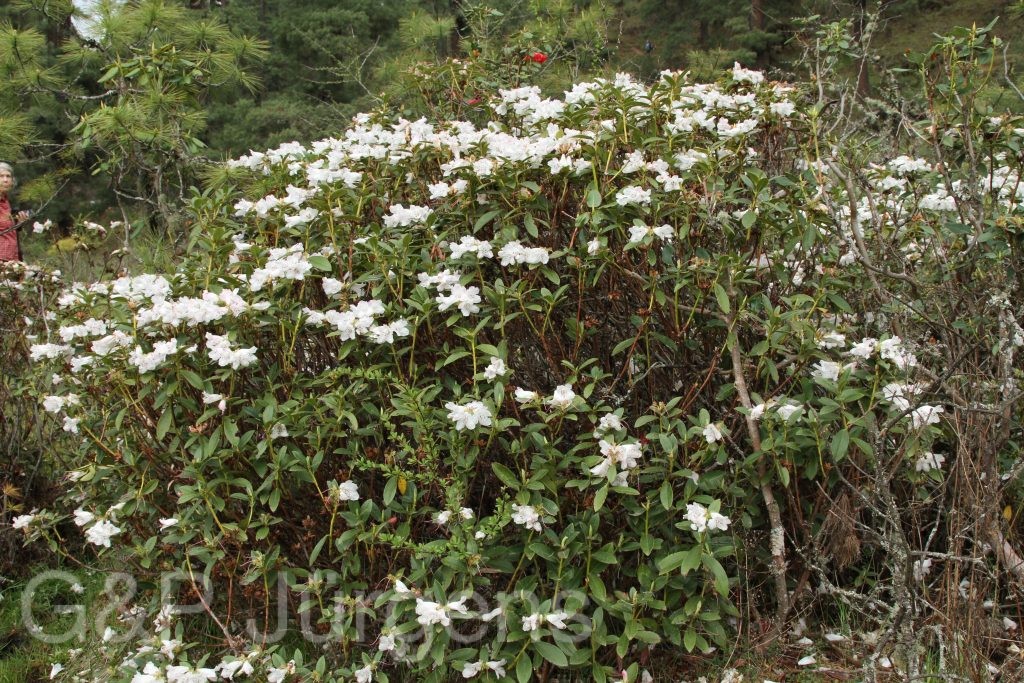
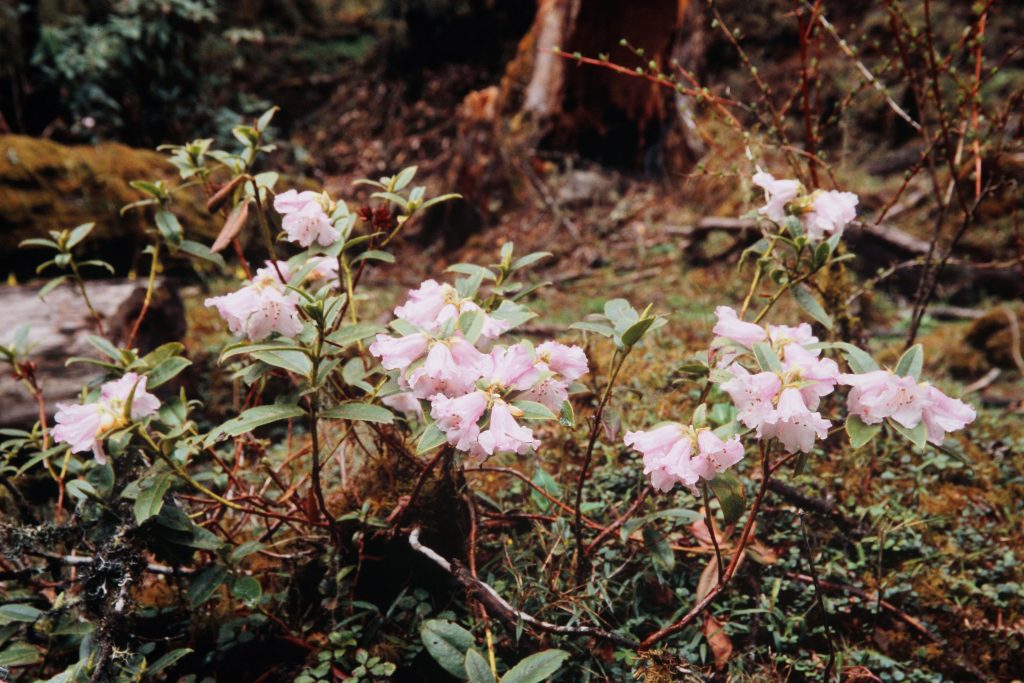
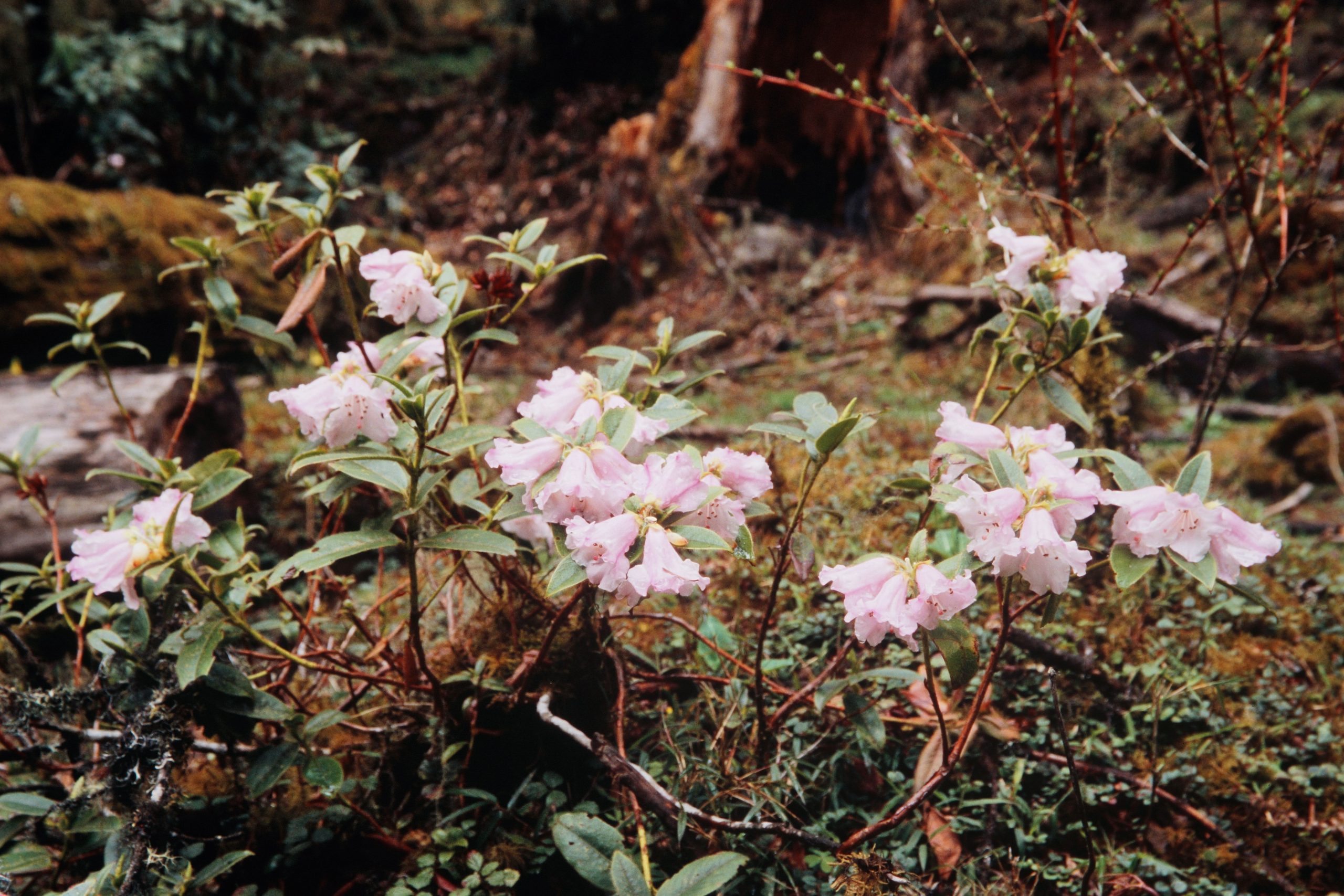
Rhododendron ciliatum is a low evergreen shrub of the Eastern Himalaya, with verified native occurrences in India, Nepal, Bhutan and China; numerous further GBIF records from Britain, North America, Austria, Italy, New Zealand and elsewhere reflect its wide cultivation. It grows on open hillsides, rocky slopes and forest margins, often epiphytically on mossy trunks, in the upper-temperate and subalpine zones between about 2700 and 3700 m. The cited material from Phobjika in Bhutan (2810-3100 m, April-May) and the Jaljale Himal of eastern Nepal (2800 m, April) shows the species in its characteristic early-spring flowering.
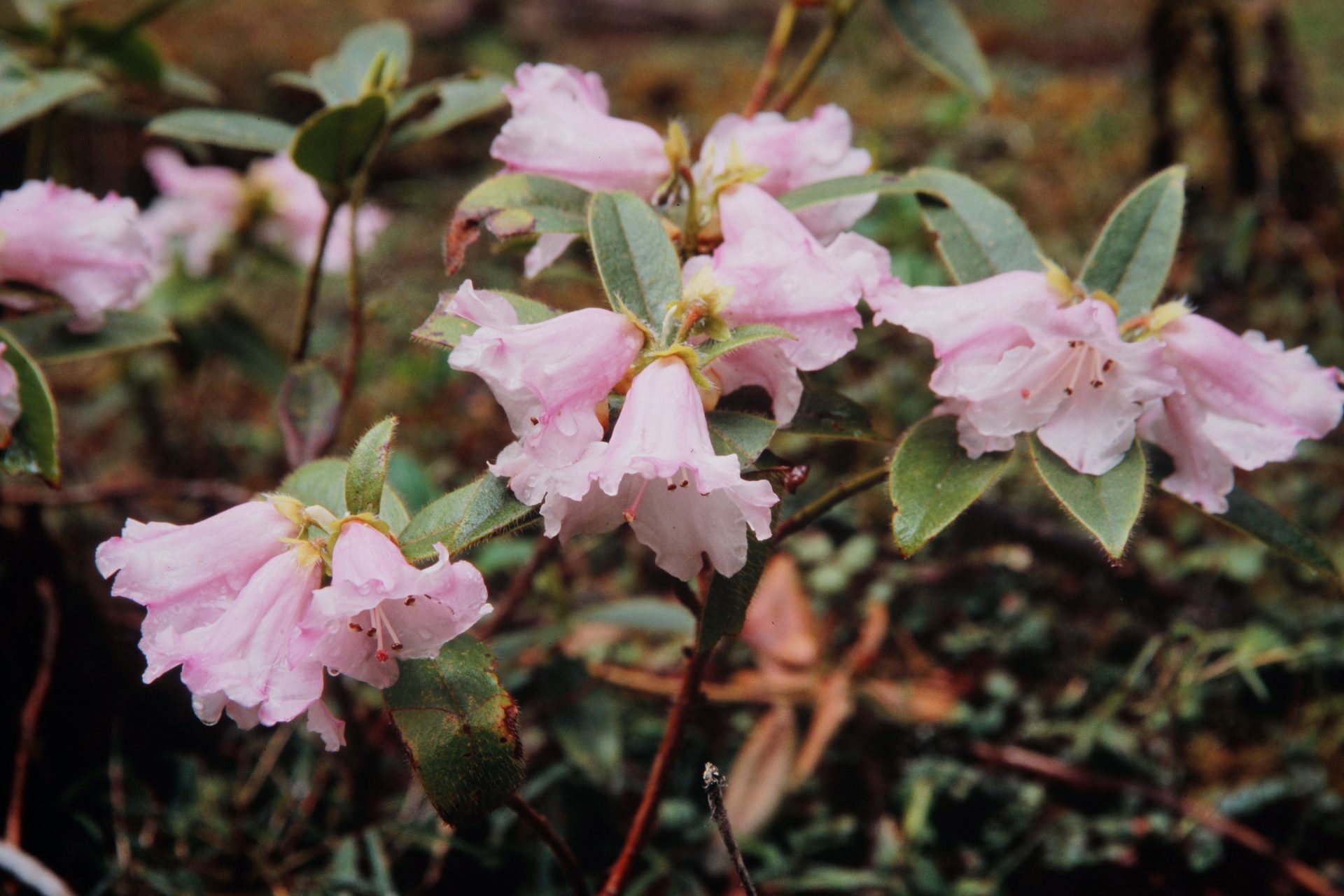
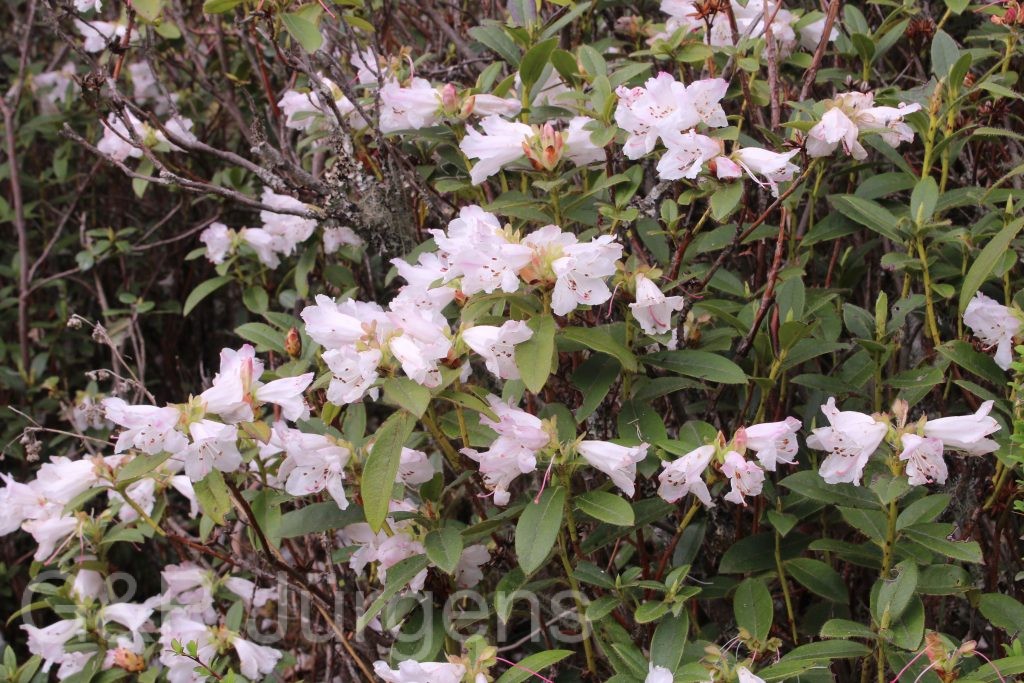
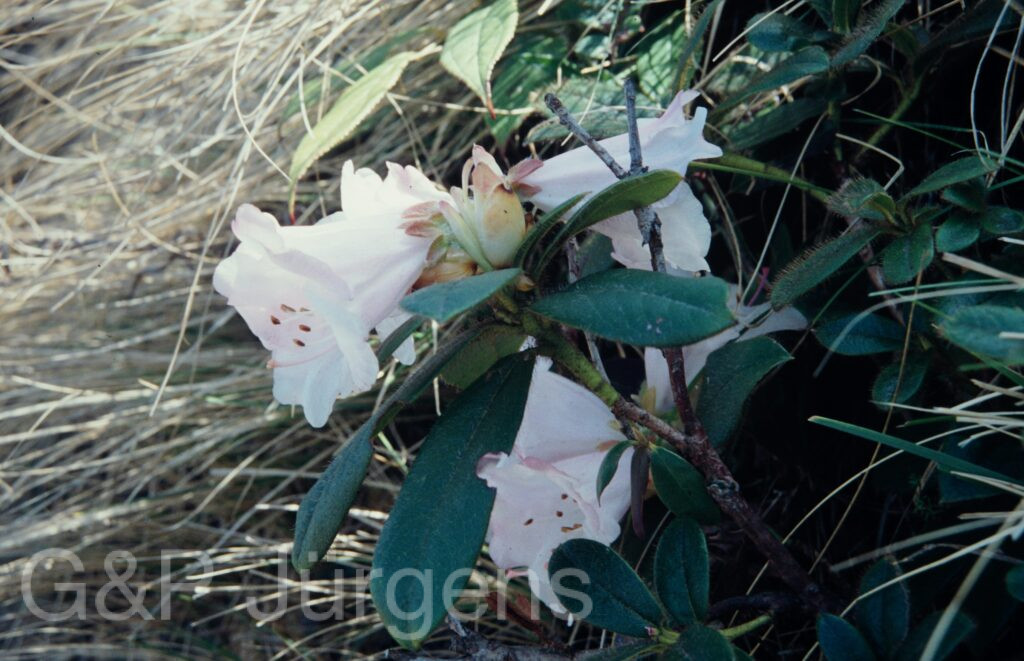
It forms a compact, rounded shrub usually under 1.5 m with peeling reddish-brown bark and bristly young shoots. The elliptic to oblong leaves are leathery and dark green, conspicuously fringed at the margins and on the midrib beneath with long stiff cilia, the feature giving the species its name, and scaly below. The flowers are borne in small terminal trusses of two to five; the corolla is broadly funnel-campanulate, white to pale pink, often deeper rose in bud, with a slightly nodding posture. The fruit is a small ovoid scaly capsule that splits to release abundant minute winged seeds.
Rhododendron ciliatum belongs to subgenus Rhododendron, subsection Maddenia, a lepidote (scaly) group, and was described by J.D. Hooker from his Sikkim collections; it has contributed extensively to horticultural hybridisation for its hardiness and early bloom. Ecologically it is an early-spring nectar source in the high forest. Widespread and locally common across its native range and abundant in cultivation, it is not regarded as threatened.
Author: Hook. f. · Sources: POWO (Kew), GBIF, Flora of Bhutan, The Genus Rhododendron (Royal Botanic Garden Edinburgh), Flora of China