Orchideaceae

Rolfe

Bh2008 488 G757 1
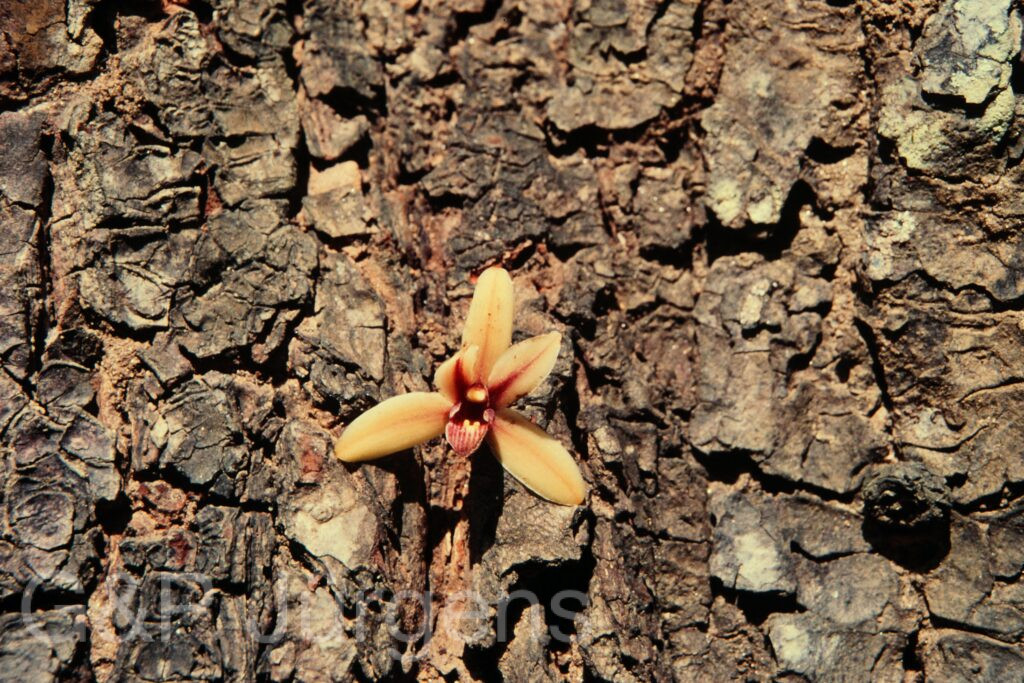
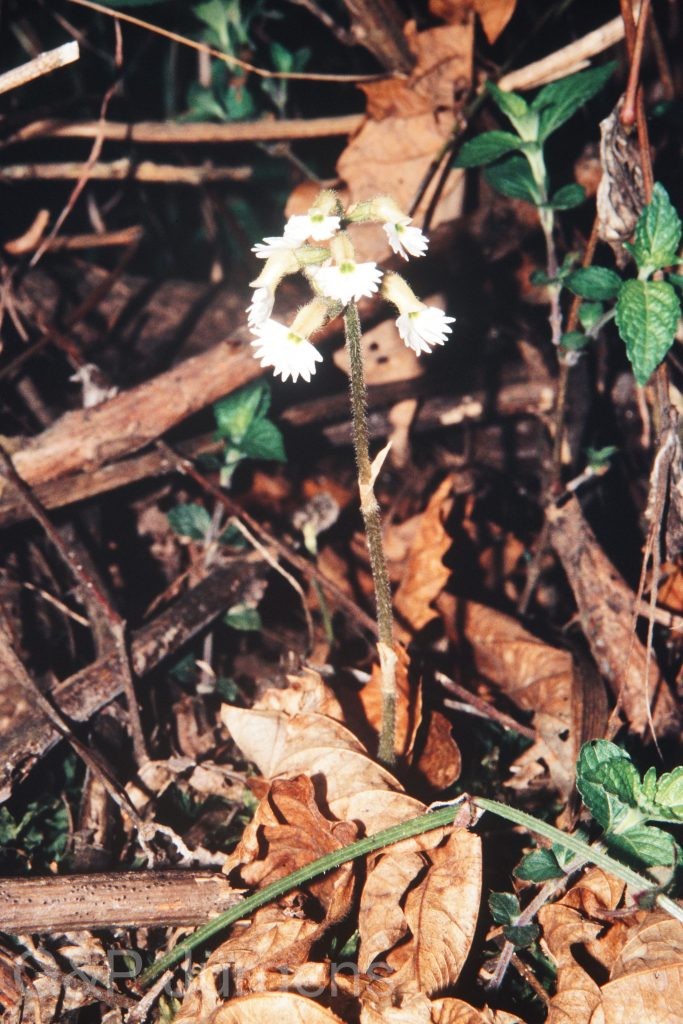
Bhutan Puna Tsang-Chu 1600m, May
Nepal1992 75 P108 ergebnis
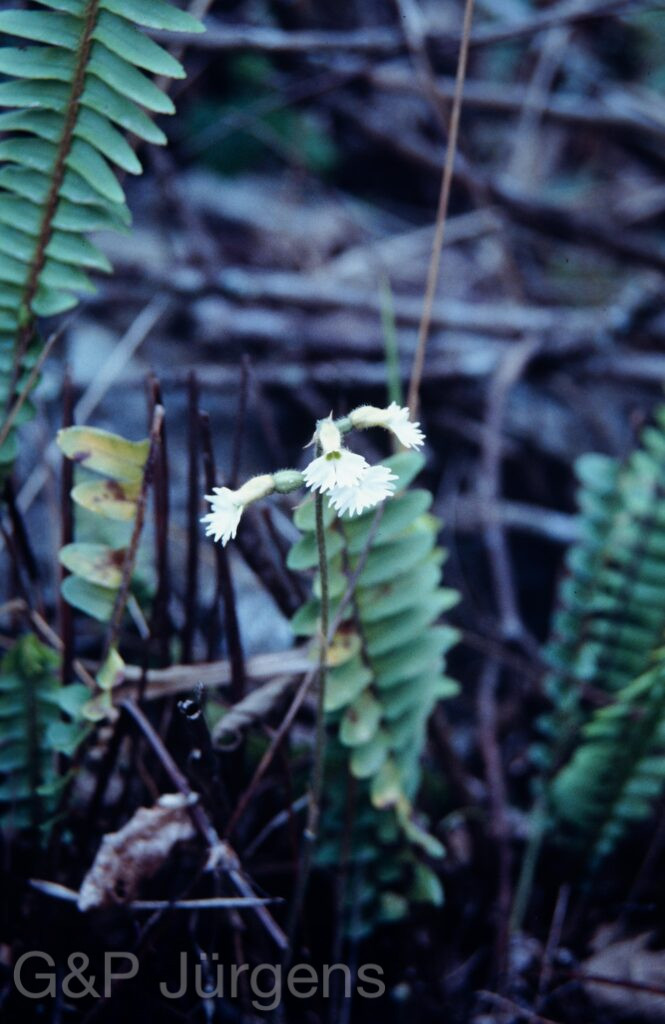
Nepal Chirwa 1260m March 

Description

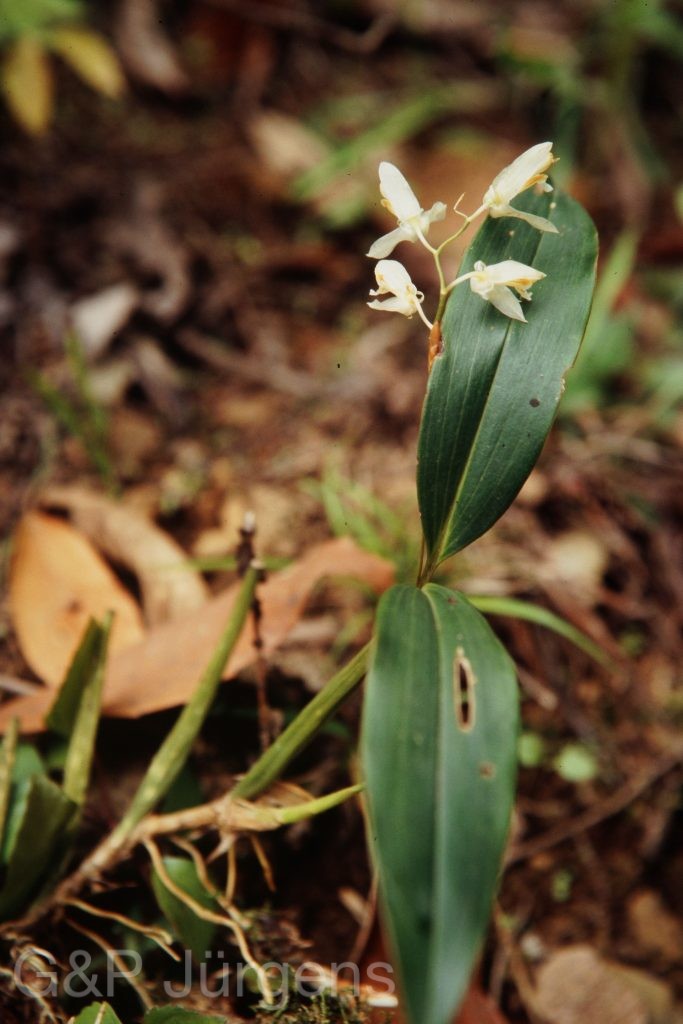
Cheirostylis yunnanensis is a small terrestrial jewel orchid of the eastern Himalaya and adjacent Southeast Asia, recorded by GBIF (129 occurrences) from China, Vietnam, Hong Kong, India, Bhutan, Myanmar and Thailand. It inhabits shaded, humus-rich forest floors, mossy banks and rocky slopes in warm-temperate to subtropical broad-leaved and evergreen forest, broadly between 1000 and 2000 m. The documented plants from the Puna Tsang-Chu valley in Bhutan at 1600 m (May) and from Chirwa in eastern Nepal at 1260 m (March) bracket its lower-montane range and reveal a spring flowering period coinciding with the pre-monsoon flush of forest growth.

The species is a diminutive, creeping herb arising from a fleshy, jointed, often reddish rhizome that runs along the substrate surface, rooting at the nodes. The few small leaves are ovate, clustered toward the stem base, sometimes withering by flowering, with a velvety green to bronzed lamina. The inflorescence is a short, few-flowered terminal raceme on a glandular-pubescent peduncle. The small white flowers have connate sepals forming a tube; the diagnostic lip (labellum) bears a saccate base enclosing two glandular calli and an apex that is broadened and divided into two fan-shaped, fringed or toothed lobes, the generic name referring to this hand-like column structure. The fruit is a small ribbed capsule.

Described by Rolfe, the species belongs to genus Cheirostylis (subfamily Orchidoideae, tribe Cranichideae, subtribe Goodyerinae), the rhizomatous jewel orchids prized for foliage and intricate floral architecture. Like all terrestrial orchids it relies on mycorrhizal fungi and on shaded, undisturbed forest floor microhabitats, making it sensitive to forest clearance. Its inconspicuous size means populations are easily overlooked; though not formally assessed, it is CITES-listed as an orchid and locally uncommon.

Author: Rolfe · Sources: POWO (Kew), GBIF, Flora of China, Flora of Bhutan, Genera Orchidacearum: Orchidoideae (Pridgeon et al.)
(Lindl.) Rchb.f.

Bh09 220 P373
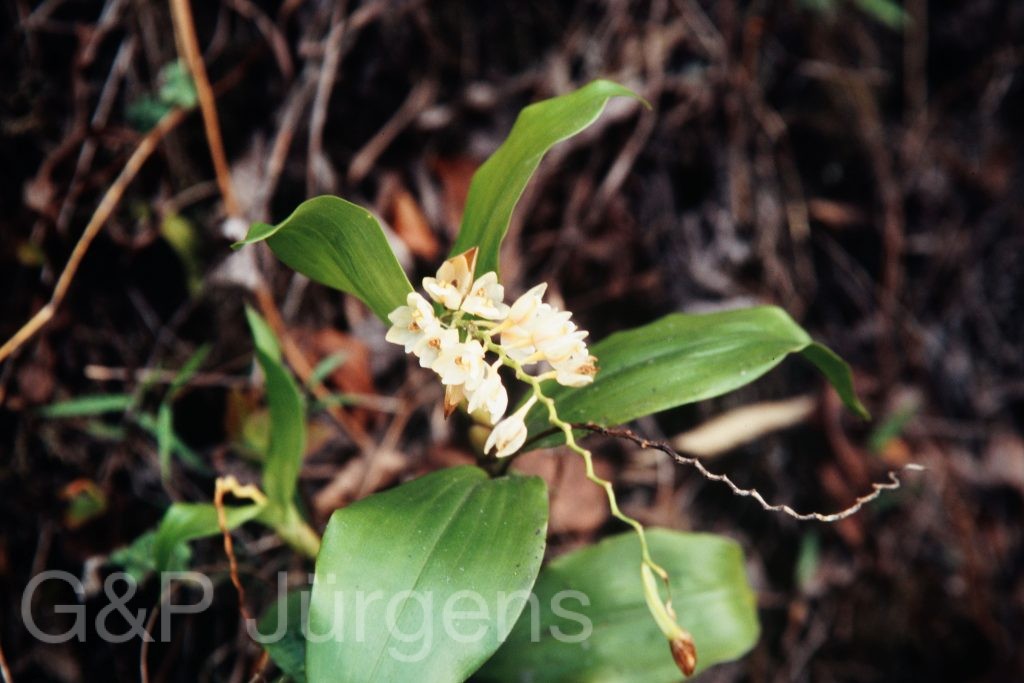
Bhutan Dochu-La, 2900m June
Bh09 356 P573
Bhutan Dochu-La, 2900m June

Description

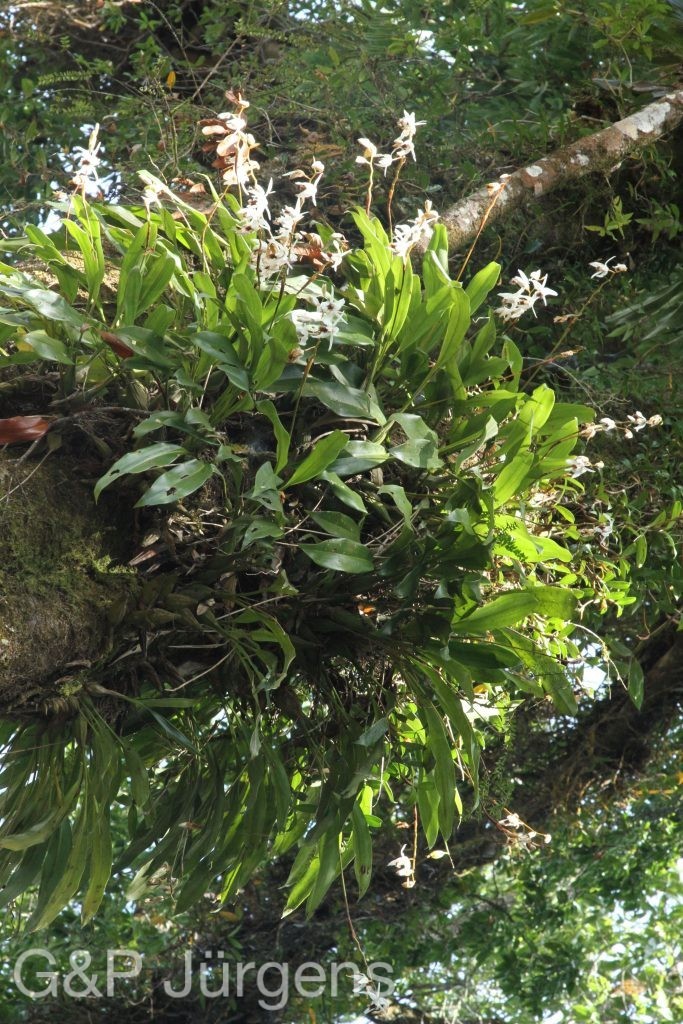
Coelogyne articulata (long widely known as Pholidota articulata) is an epiphytic orchid distributed broadly across tropical and subtropical Asia, from India, Nepal, Bhutan and China through Myanmar, Thailand, Indochina and Malesia to New Guinea, with 733 occurrences in GBIF. It grows as an epiphyte on tree trunks and mossy branches, occasionally as a lithophyte on shaded rocks, in evergreen and mixed broadleaved forest from the lowlands up to about 2900 m. The Bhutanese collection figured, from Dochu-La at 2900 m in June, marks the upper, cool-temperate edge of its range, where it flowers in the early monsoon in humid, shaded forest.

The plant has a creeping rhizome bearing a chain of cylindrical to fusiform pseudobulbs jointed end to end, each successive bulb arising from the apex of the last, producing the articulated, beaded habit reflected in the epithet. Each pseudobulb carries one or two oblong-lanceolate, plicate leaves. The slender, pendulous inflorescence is a distichous, secund raceme of many small flowers subtended by conspicuous boat-shaped bracts; the flowers are whitish to pale pink, with concave sepals, narrow petals and a saccate, concave lip. The fruit is a small ribbed dehiscent capsule releasing dust-like seeds.

The genus name on the source page reflects past placement in Pholidota; molecular phylogenetics has shown Pholidota to be nested within Coelogyne (Orchidaceae, subfamily Epidendroideae), and POWO accepts the combination Coelogyne articulata. The input family is given as "Orchideaceae"; the accepted family is Orchidaceae. Widespread, locally common and tolerant of secondary forest, the species is not regarded as threatened, though all wild orchids are listed on CITES Appendix II.

Author: (Lindl.) Rchb.f. · Sources: POWO (Kew), GBIF, Flora of China, Flora of Bhutan, The Genus Coelogyne (A Synopsis)

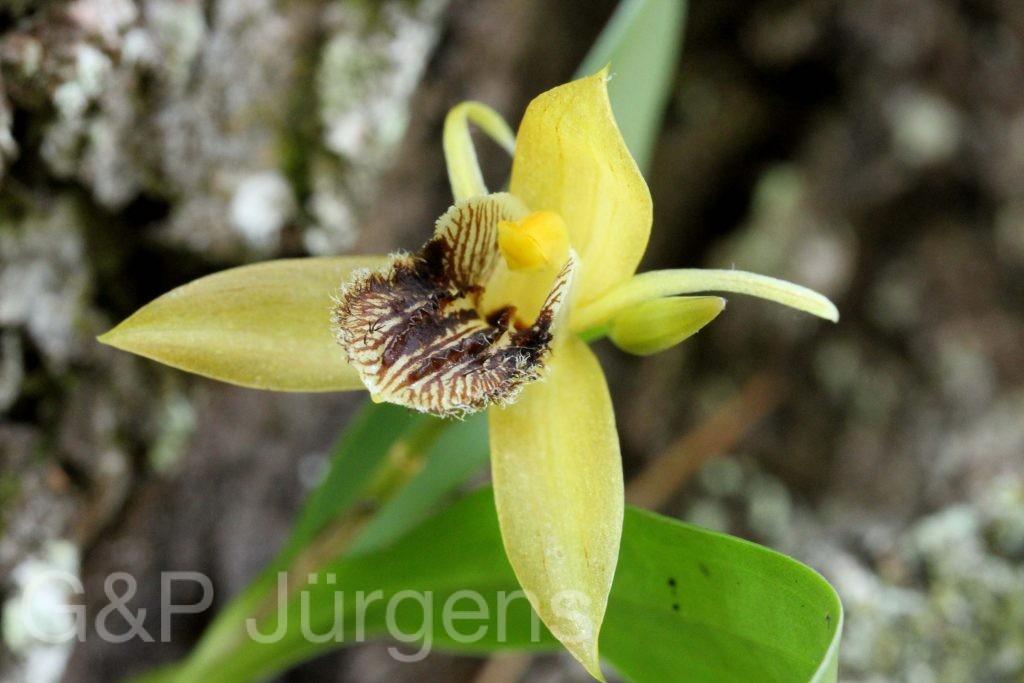
Lindl. ex Griff.

Bhutan2015 216
Bhutan Zhemgang 910m, October

Description

Coelogyne barbata is an Eastern Himalayan orchid recorded from China, north-eastern India, Bhutan, Myanmar, Bangladesh and Nepal, with GBIF documenting over a hundred occurrences across the region. It grows as an epiphyte on mossy tree trunks and large branches, and sometimes as a lithophyte on shaded, humus-covered rocks, in humid broad-leaved evergreen montane forest with abundant atmospheric moisture. The species occupies low to middle elevations of the warm-temperate belt; the photographed plant from Zhemgang in central Bhutan at about 910 m, flowering in October, exemplifies its autumn anthesis at the lower end of its altitudinal range, when many congeners are also in bloom.

The plant forms ovoid to oblong-conical pseudobulbs spaced along a stout creeping rhizome, each bearing a pair of apical leaves. The leaves are large, elliptic-lanceolate, plicate and prominently veined, narrowed to a petiole. The inflorescence is an erect to arching, several- to many-flowered raceme arising from the apex of a developing growth, the flowers opening more or less simultaneously. The flowers are showy and white, with spreading sepals and petals; the labellum is the most distinctive feature, trilobed and white marked with dark brown to blackish blotches, its disc and margins of the side lobes conspicuously fringed with long brown or blackish bristly hairs, from which the epithet derives. The fruit is a ribbed capsule.

C. barbata is placed within Coelogyne section Fuliginosae (the elata/ovalis alliance of fimbriate-lipped species), distinguished from its relatives by the heavily bearded, dark-marked labellum. Recent generic recircumscriptions of Coelogyne based on molecular phylogenetics retain the species in the genus. Attractive and readily recognised, it is collected from the wild for horticulture, which together with the clearance of mid-elevation forest constitutes the principal threat to its populations.

Author: Lindl. ex Griff. · Sources: POWO (Kew), GBIF, Flora of China, The Orchids of Bhutan (Pearce & Cribb), Coelogyne and its Allies (Clayton & Cribb)

Lindl.

Bhutan2014 17
Bhutan Sandrup 800m, May
Bhutan2014 19
Bhutan Sandrup 800m, May

Description

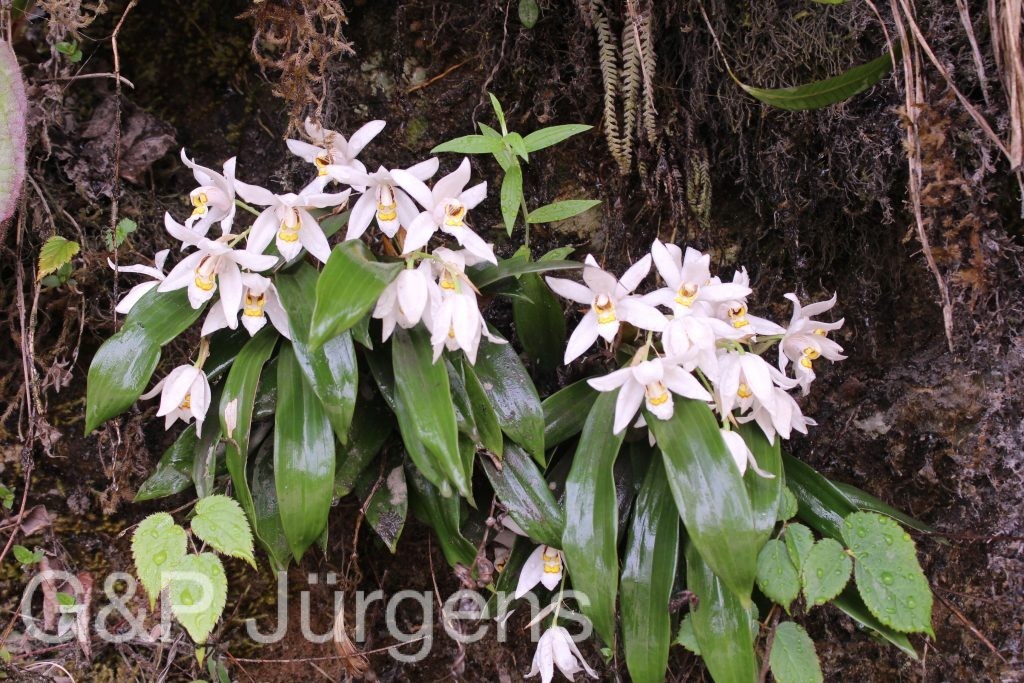
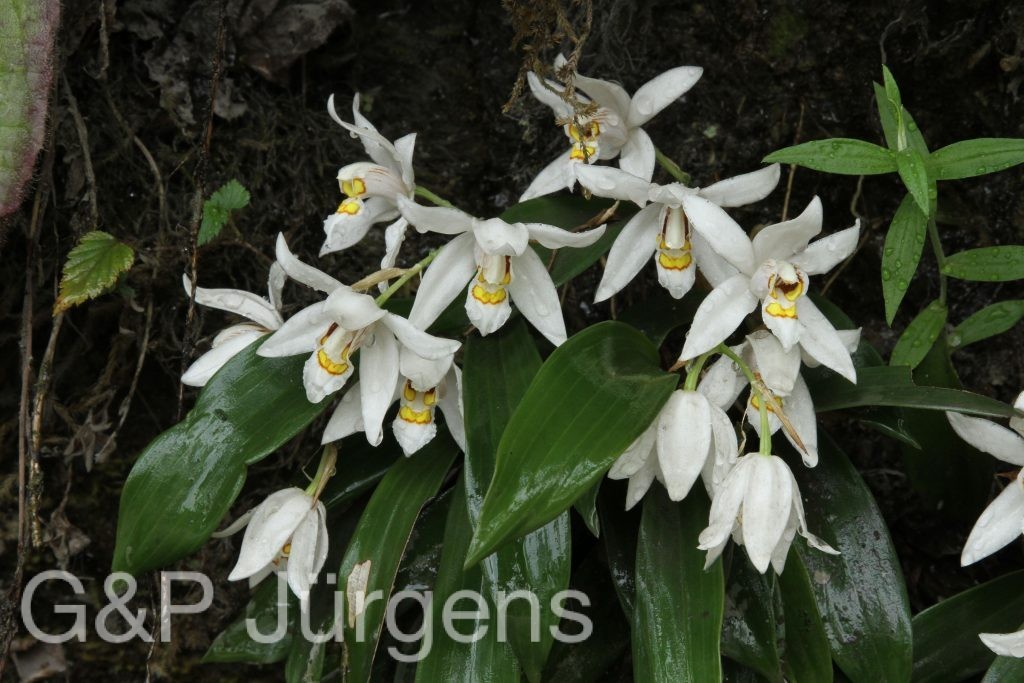
Coelogyne corymbosa is an epiphytic orchid widely distributed through the eastern Himalaya and adjoining Southeast Asia, native to China, India, Nepal, Bhutan, Myanmar, Thailand, Laos and Vietnam, with 424 GBIF records making it one of the better-documented Coelogyne of the region. It is a cool-growing epiphyte and lithophyte of mossy montane and cloud forest, usually between about 1800 and 3000 m, though the caption locality of Sandrup in southern Bhutan at 800 m in May reflects collection in the warmer foothill belt at the lower margin of its range; the bulk of its populations occupy higher, mist-bathed forest.

The plant forms ovoid to oblong pseudobulbs, spaced along a creeping rhizome, each topped by a pair of narrowly elliptic, plicate leaves. The inflorescence is a short, few-flowered raceme produced from the apex of the young growth. The flowers are relatively large for the plant and brilliant white, with spreading lanceolate sepals and petals; the trilobed lip is the diagnostic feature, conspicuously marked in the throat with bright orange-yellow blotches ringed in dark reddish-brown, set off by raised, fringed keels. The fruit is a ribbed capsule.

Coelogyne is a large Asian genus of tribe Arethuseae, and C. corymbosa belongs to a group of small, high-elevation, white-flowered species distinguished by their boldly ocellate lips. Cool-growing and floriferous, it is valued in cultivation, but its principal habitat in undisturbed mossy forest makes wild populations sensitive to logging and to the warming of montane climates. International trade is regulated under CITES Appendix II.

Author: Lindl. · Sources: POWO (Kew), GBIF, Flora of China, Flora of Bhutan, The Genus Coelogyne (Clayton & Cribb)

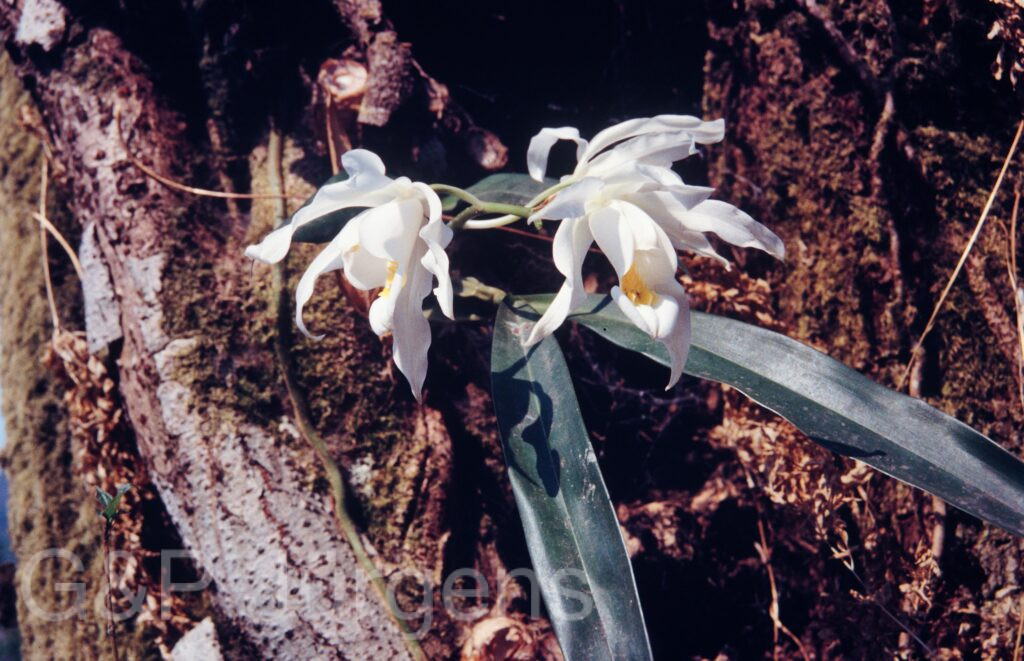
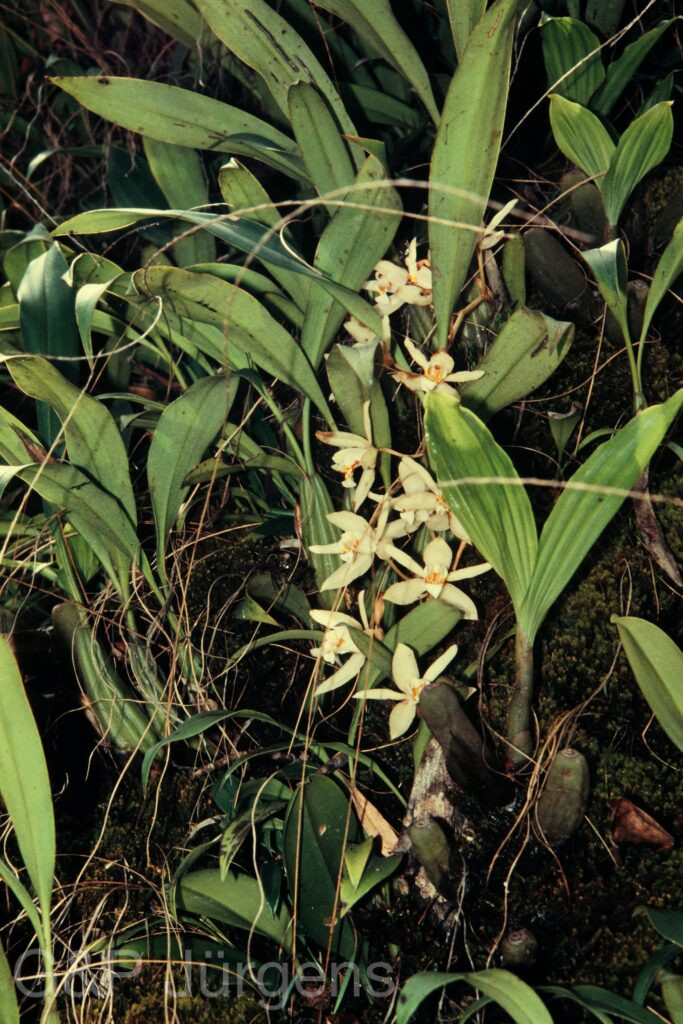
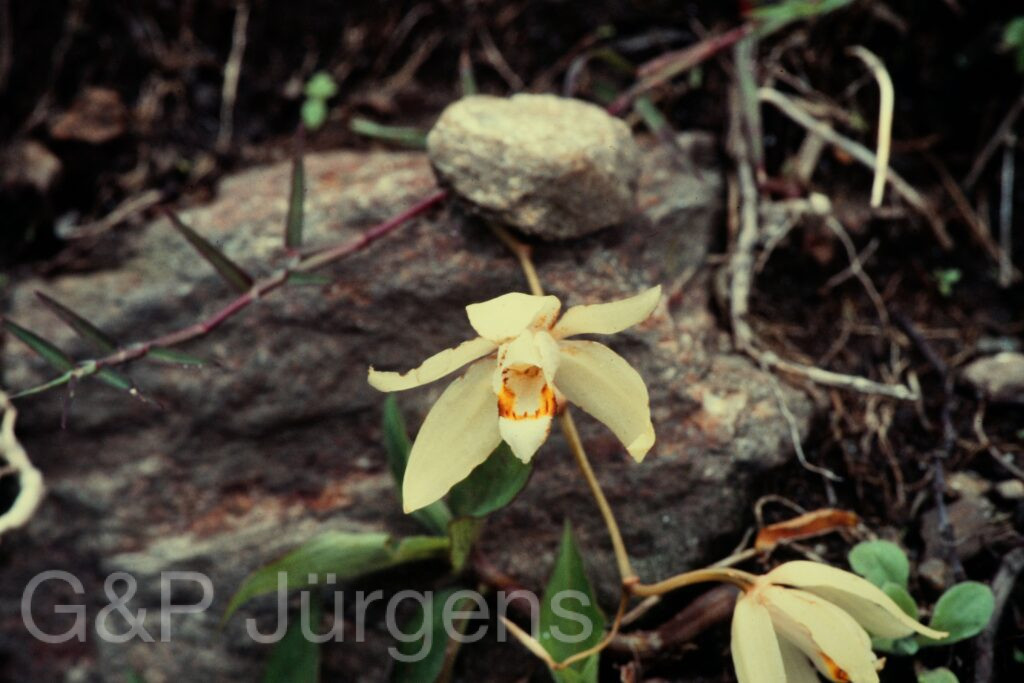
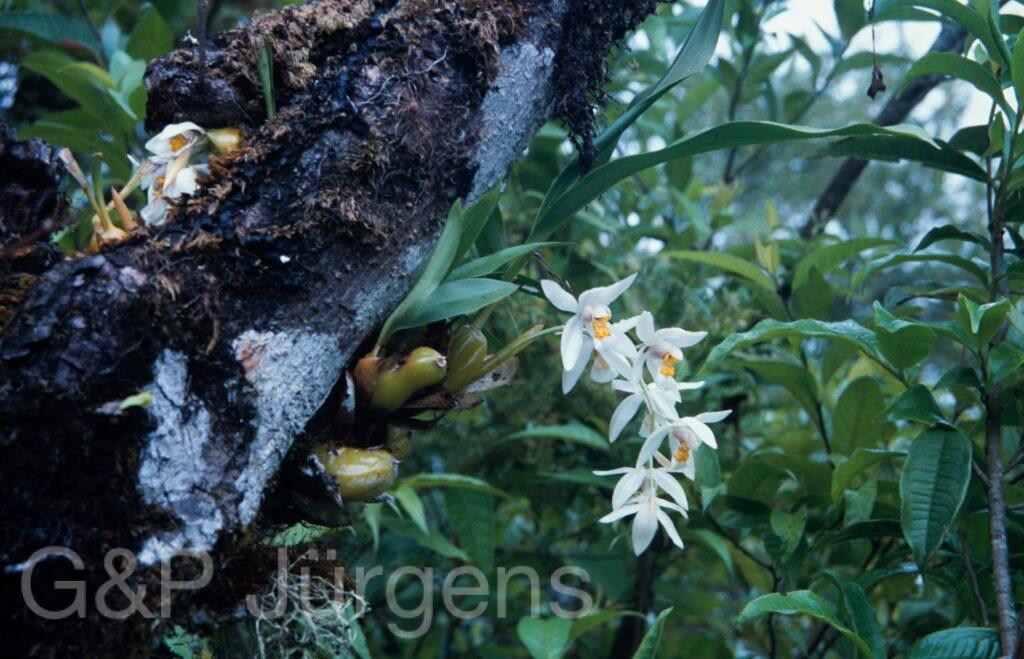
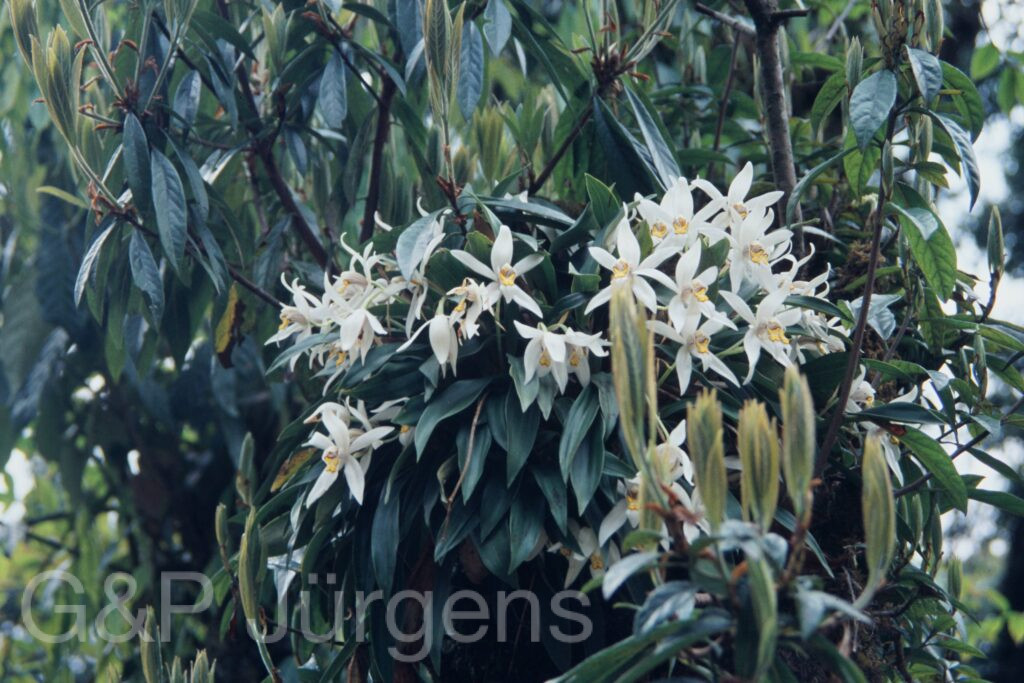
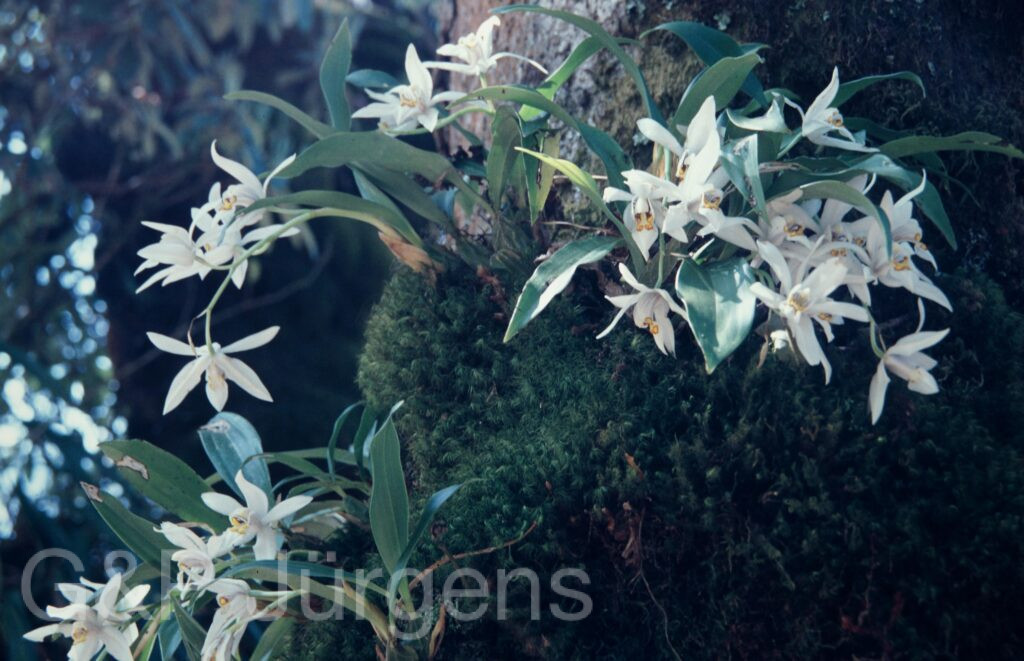
Lindl.

Nepal1992 90 P124 ergebnis
Nepal Amjilassa 2300m March 
Nepal1992 165 P240 ergebnis
Nepal Amjilassa 2300m March 

Description

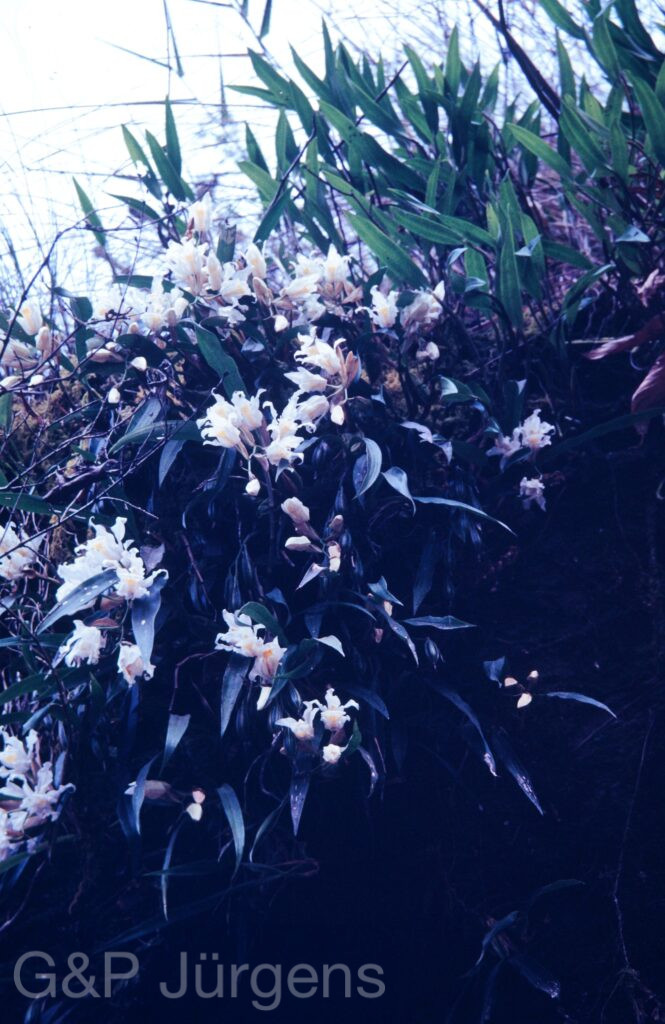
Coelogyne cristata is an epiphytic orchid of the central and eastern Himalaya, native to Nepal, India, Bhutan and China and widely grown in cultivation, a circumstance reflected in the broad GBIF country list (over 400 records spanning numerous European and American countries alongside its native range), most extraterritorial records being garden plants. In the wild it grows as an epiphyte and occasional lithophyte on mossy tree trunks, branches and shaded rock faces in humid temperate forest. The illustrated plant from Amjilassa in eastern Nepal, at about 2300 m and flowering in March, typifies its preference for cool, mist-laden montane forest where it blooms in the dry late-winter to early-spring season.

The plant grows from a creeping rhizome bearing crowded, ovoid to oblong, glossy green pseudobulbs, each topped by two strap-shaped, plicate, leathery leaves. The inflorescence is a pendulous to arching raceme arising from the base of the pseudobulb and carrying several large, fragrant flowers. These are crystalline white, with spreading, somewhat undulate sepals and petals and a trumpet-shaped, three-lobed labellum whose disc bears conspicuous golden-yellow, fringed and crested keels — the feature giving rise to the epithet cristata. The column is slender and winged, and the fruit is a ribbed dehiscent capsule releasing dust-like seeds.

Coelogyne is a large Asian orchid genus, and C. cristata ranks among its most celebrated members, long prized in horticulture for its abundant snow-white blooms. Like all orchids it is listed under CITES Appendix II, and wild populations are vulnerable to over-collection for the ornamental trade and to loss of the humid forest habitat on which it depends; sustaining intact montane forest is therefore central to its in-situ conservation across the Himalaya.

Author: Lindl. · Sources: POWO (Kew), GBIF, Flora of Bhutan (Orchidaceae), Flora of China (Orchidaceae), Pearce & Cribb: The Orchids of Bhutan (monograph)

Lindl.

Nepal 97 444 G862
Nepal Tashigaon 2900m May
Nepal 97 446 P864
Nepal Tashigaon 2900m May

Description

Coelogyne flaccida Lindl. is an epiphytic orchid of the Himalaya and Southeast Asia, recorded from China, India, Nepal, Bhutan, Thailand, Laos, Vietnam and Myanmar, with cultivated records widely scattered elsewhere; GBIF documents around 243 occurrences. It grows as an epiphyte, occasionally a lithophyte, on mossy tree trunks and shaded rocks in broadleaved evergreen and mixed forest, generally between about 900 and 2300 m, though montane records reach higher. The photographed plant was found at Tashigaon in Nepal at about 2900 m in May, at the upper, cooler edge of its range where this pseudobulbous orchid flowers in spring on humid, well-shaded substrates.

The plant is sympodial, with clustered, oblong to ovoid pseudobulbs borne on a creeping rhizome, each pseudobulb bearing one or two apical, plicate, lanceolate to elliptic leaves. The inflorescence is a pendent, laxly several-flowered raceme arising from the base of the pseudobulb. The flowers are fragrant, the sepals and petals creamy-white to pale buff and somewhat flaccid (the epithet flaccida), and the trilobed labellum is marked with conspicuous yellow to orange-brown keels and reddish-brown veining on the side lobes. The fruit is a ribbed dehiscent capsule releasing dust-like seeds.

Within the large Asiatic genus Coelogyne, this species belongs to the white-flowered, pendent-racemed group allied to C. cristata and C. corymbosa and is widely grown by orchid enthusiasts. Like other epiphytic orchids it depends on undisturbed humid forest and mycorrhizal partners for germination. Although fairly widespread, wild populations are vulnerable to habitat loss and collection, and all Coelogyne are listed on CITES Appendix II, regulating international trade.

Author: Lindl. · Sources: POWO (Kew), GBIF, Flora of China, Flora of Bhutan, Annotated Checklist of the Flowering Plants of Nepal, Clayton The Genus Coelogyne: A Synopsis

Lindl.

Bhutan2012 468
Bhutan Wangdi 2500m, September

Description

Coelogyne ovalis Lindl. is an epiphytic orchid of the Himalaya and northern Southeast Asia, recorded by GBIF from China, India, Nepal, Bhutan, Myanmar, Thailand, Vietnam, Malaysia and Indonesia, with cultivated records from Europe and North America, totalling some 235 occurrences. It grows as an epiphyte, and occasionally a lithophyte, on mossy trunks and rocks in humid evergreen and mixed montane forest, typically between about 1000 and 2500 m. The plant photographed near Wangdi in Bhutan at about 2500 m in September, at the close of the monsoon, represents the upper part of this range, where cool, perennially moist conditions favour the genus.

The species has a creeping rhizome bearing well-spaced, ovoid to oblong-cylindric pseudobulbs, each topped by two thin-textured, plicate, lanceolate to elliptic leaves that taper to a stalked base. The inflorescence arises from the apex of a developing or mature pseudobulb and carries one or a few comparatively large flowers in succession. The sepals and petals are narrow and pale yellowish to buff or olive-tinged; the broad three-lobed labellum is the showiest part, marked with rich brown to maroon blotches and bearing fringed keels along the disc, with erect lateral lobes flanking the column.

Coelogyne is a large Asian genus of subtribe Coelogyninae, and C. ovalis is placed in section Fuliginosae, characterised by successively produced, brown-marked flowers. It is reasonably widespread and is grown in cultivation, so it is not regarded as globally threatened, although wild populations are pressured by habitat loss and over-collection; like all orchids it is listed on CITES Appendix II. Its broad Indo-Himalayan to Sundaic range makes it a good example of the orchid connection between the Himalaya and Southeast Asia.

Author: Lindl. · Sources: POWO (Kew), GBIF, Flora of Bhutan, Flora of China, Pradhan Indian Orchids, Clayton monograph The Genus Coelogyne

Lindl.

Nepal 2001 237 ergebnis ergebnis
Nepal (Gorkha) Niuli Kharka 2500m, May
Sikkim2004 334 G595 ergebnis
Sikkim Choka 3330m, April
Nepal 1994 288 ergebnis
Ost-Nepal Milka-Danda 2850m, May 

Description

Coelogyne punctulata Lindl. is an epiphytic orchid of the Himalaya and neighbouring mountains, recorded from India, Nepal, Bhutan, China, Myanmar, Vietnam and Bangladesh (225 GBIF occurrences). It grows on mossy trunks and branches, and occasionally as a lithophyte on shaded rocks, in temperate broad-leaved and mixed forest, generally between 2000 and 3300 m. It was documented in Nepal at Niuli Kharka in Gorkha around 2500 m and at Milka-Danda in the east near 2850 m, both in May, and in Sikkim at Choka at 3330 m in April, reflecting the cool, humid mid-montane forests it favours.

It is a sympodial epiphyte with closely set, ovoid to oblong pseudobulbs borne on a creeping rhizome, each bearing one or two plicate, elliptic-lanceolate leaves narrowed to a petiole-like base. The inflorescence is a few-flowered raceme arising with the new growth. The flowers are white to pale cream, the elliptic sepals and narrower petals spreading, and the showy trilobed labellum marked with yellow or orange keels and reddish-brown to ochre spotting on the disc, the lateral lobes erect about the column. The fruit is a ribbed, dehiscent capsule releasing dust-fine seeds.

Coelogyne is a large Asian genus and C. punctulata sits within the section of small-flowered white-and-spotted species; it has at times been confused with the related C. nitida, a synonymy reflected in the original page reference. The deceptive, nectarless flowers are pollinated by bees, and the minute wind-dispersed seeds depend on mycorrhizal fungi for germination. As a forest epiphyte it is vulnerable to habitat loss and orchid collection, concerns shared across wild-harvested Coelogyne, and the genus is listed under CITES Appendix II.

Author: Lindl. · Sources: POWO (Kew), GBIF, Flora of China, Flora of Bhutan, The Orchids of the Sikkim-Himalaya (King & Pantling), Coelogyne monograph (Clayton, The Genus Coelogyne)

Lindl.

Nepal 2001 464 ergebnis ergebnis
Nepal (Gorkha) Gunda 1700m, May

Description

Coelogyne uniflora (long known as Panisea uniflora) is an epiphytic orchid distributed across the eastern Himalaya and Indochina, ranging from Nepal, Sikkim and Bhutan through northeast India to southern China, Myanmar, Thailand, Laos, Cambodia and Malaysia; GBIF records 90 occurrences across this range. It grows as an epiphyte on mossy trunks and branches, and occasionally as a lithophyte on shaded rocks, in humid subtropical to lower temperate broad-leaved and evergreen forest, generally between about 1000 and 2200 m. The photographed plant from Gunda in the Gorkha district of Nepal at 1700 m in May illustrates its flowering at the onset of the monsoon, when atmospheric humidity in these mid-montane forests is high.

It is a small, tufted, sympodial epiphyte with closely spaced, ovoid to cylindrical pseudobulbs borne on a creeping rhizome, each pseudobulb bearing one or two narrowly lanceolate, plicate leaves. The inflorescence is short and few-flowered, usually carrying a single relatively large flower (whence uniflora) at or near the base of the new growth. The flower has spreading, pale creamy-white to yellowish sepals and petals; the lip (labellum) is three-lobed, often marked with reddish-brown to orange and bearing low keels on the disc, the lateral lobes erect. The column is slender and the fruit a ribbed dehiscent capsule releasing dust-like seeds.

The species exemplifies recent generic realignments within the Coelogyninae (Orchidaceae): the genus Panisea has been subsumed into a broadly circumscribed Coelogyne on molecular phylogenetic grounds, so the wp_link "panisea-uniflora" reflects the former placement while Coelogyne uniflora is the currently accepted name. Like other coelogynes it produces minute wind-dispersed seeds dependent on mycorrhizal fungi for germination. Though wide-ranging, epiphytic orchids are sensitive to deforestation and collection and are afforded CITES Appendix II protection.

Author: Lindl. · Sources: POWO (Kew), GBIF, Flora of China Vol. 25, Flora of Bhutan Vol. 3, Flora of Nepal, The Genus Coelogyne: A Synopsis (Clayton & Pradhan)

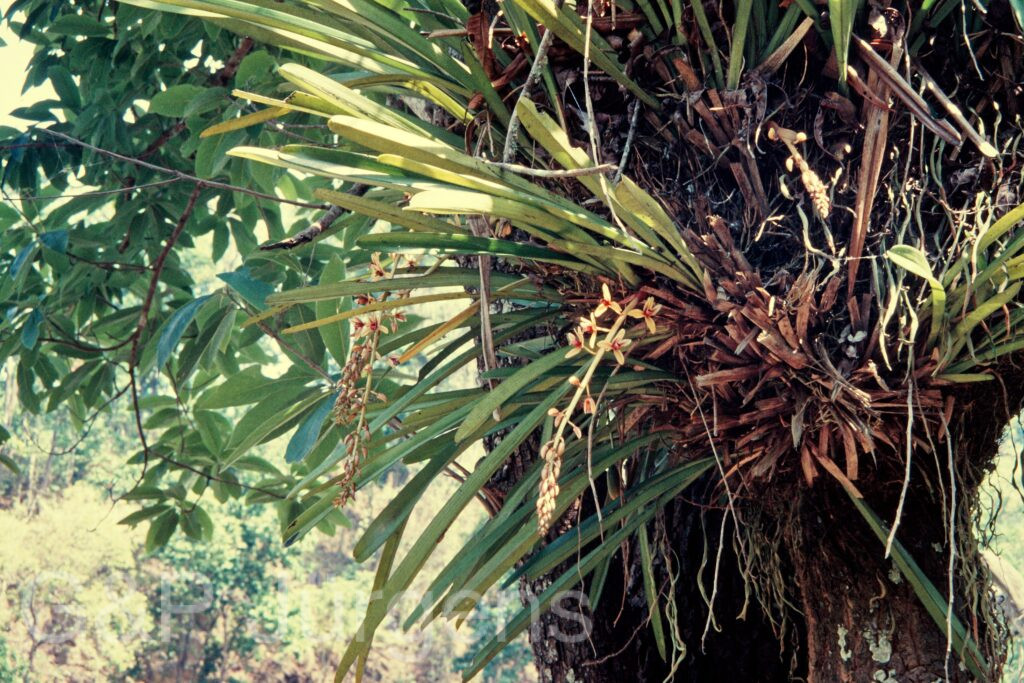
(L.) Sw.

Nepal 97 589 P1136
Nepal Sabha-Khola 560m May
Nepal 97 590 P1138
Nepal Sabha-Khola 560m May

Description

Cymbidium aloifolium is a widespread tropical Asian orchid recorded by GBIF (638 occurrences) from India, China, Vietnam, Thailand, Nepal, Sri Lanka, Indonesia, Bangladesh, the Philippines, Myanmar and Bhutan, alongside cultivated records farther afield. It is a robust epiphyte, and occasional lithophyte, of warm, seasonally dry lowland and submontane forest, growing on tree trunks and large branches and on rocky outcrops, generally below about 1000 m. The plant photographed in the Sabha Khola of Nepal at only 560 m in May represents its characteristic low-elevation, pre-monsoon flowering, the lowest-altitude species treated in this group.

The species forms dense clumps of ovoid pseudobulbs largely concealed by leaf bases. The leaves are several, distichous, thick and rigidly coriaceous, linear-ligulate and unequally bilobed at the apex, recalling those of an Aloe and giving the species its epithet. The inflorescence is a long, pendulous raceme bearing numerous closely set flowers. The sepals and petals are similar, oblong, pale yellow to cream and marked with a broad central reddish-brown to maroon stripe; the three-lobed labellum echoes this colouring, with erect lateral lobes and a recurved mid-lobe, and bears two longitudinal keels on the disc. The stout column carries waxy pollinia, and the fruit is an ellipsoid capsule.

Cymbidium aloifolium belongs to the section of pendulous-racemed, drought-tolerant epiphytic species adapted to monsoonal climates, in which the rigid leaves and water-storing pseudobulbs buffer the long dry season. The flowers are bee-pollinated, and the species is much collected for horticulture and traditional medicine. Although still locally common, like all Cymbidium it is listed on CITES Appendix II to regulate international trade in wild plants.

Author: (L.) Sw. · Sources: POWO (Kew), GBIF, Flora of China, Flora of Bhutan, Flora of Nepal, The Genus Cymbidium (Du Puy & Cribb)