
Paxton
Description
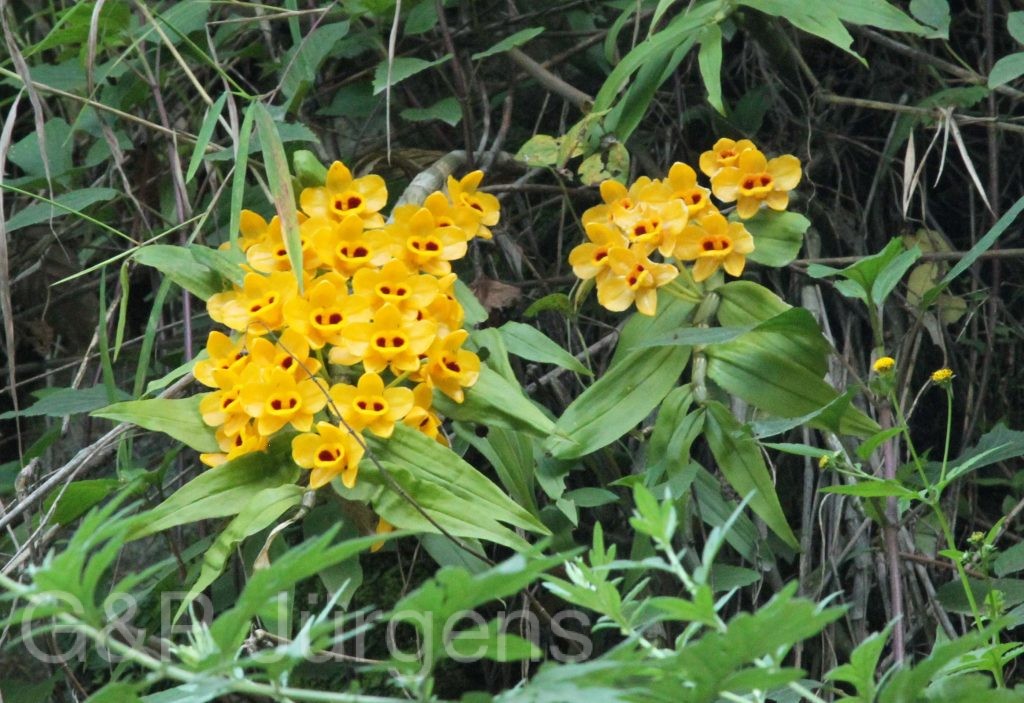
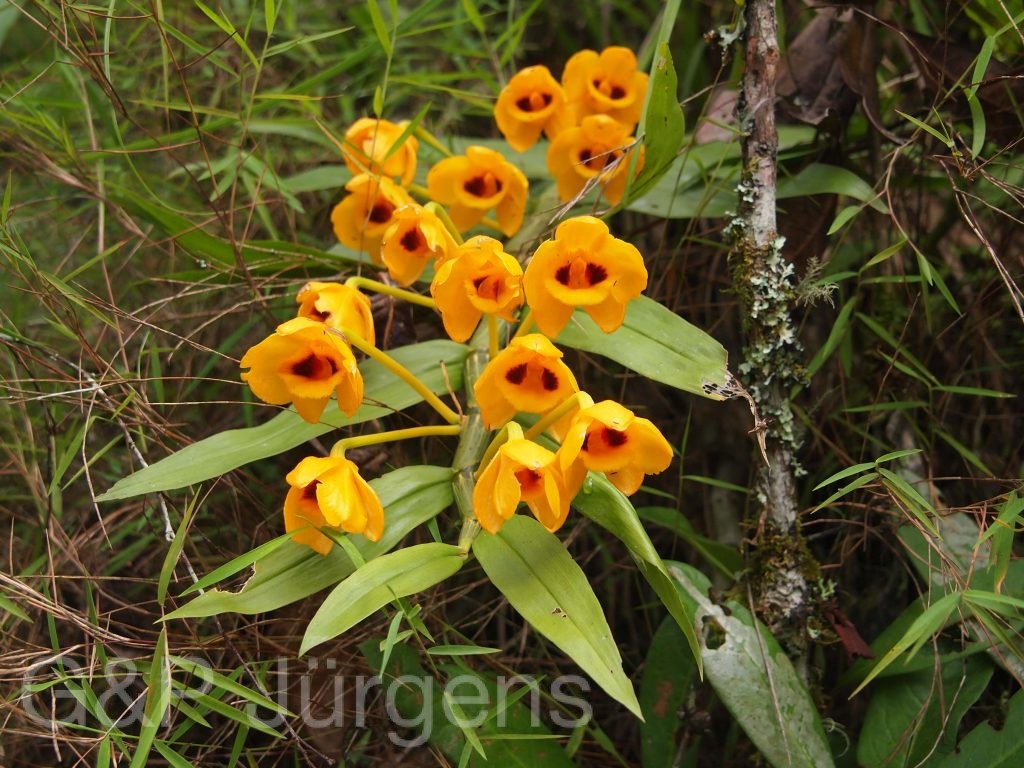
Dendrobium gibsonii is an epiphytic orchid widespread across the Sino-Himalayan and Indo-Chinese region, recorded from China, India, Thailand, Myanmar, Vietnam, Nepal, Bhutan, Laos and Malaysia, with 87 GBIF occurrences mapping a broad subtropical to lower-montane distribution. It is an epiphyte of warm, seasonally moist evergreen and semi-deciduous forest, favouring well-lit branches where it endures a pronounced dry season. In Bhutan it was photographed across a notable altitudinal spread, from Galephu and Trithangebe at around 900-1000 m in October to Wangdi at 2500 m in September, illustrating its tolerance of both the hot southern foothills and cooler inner valleys.
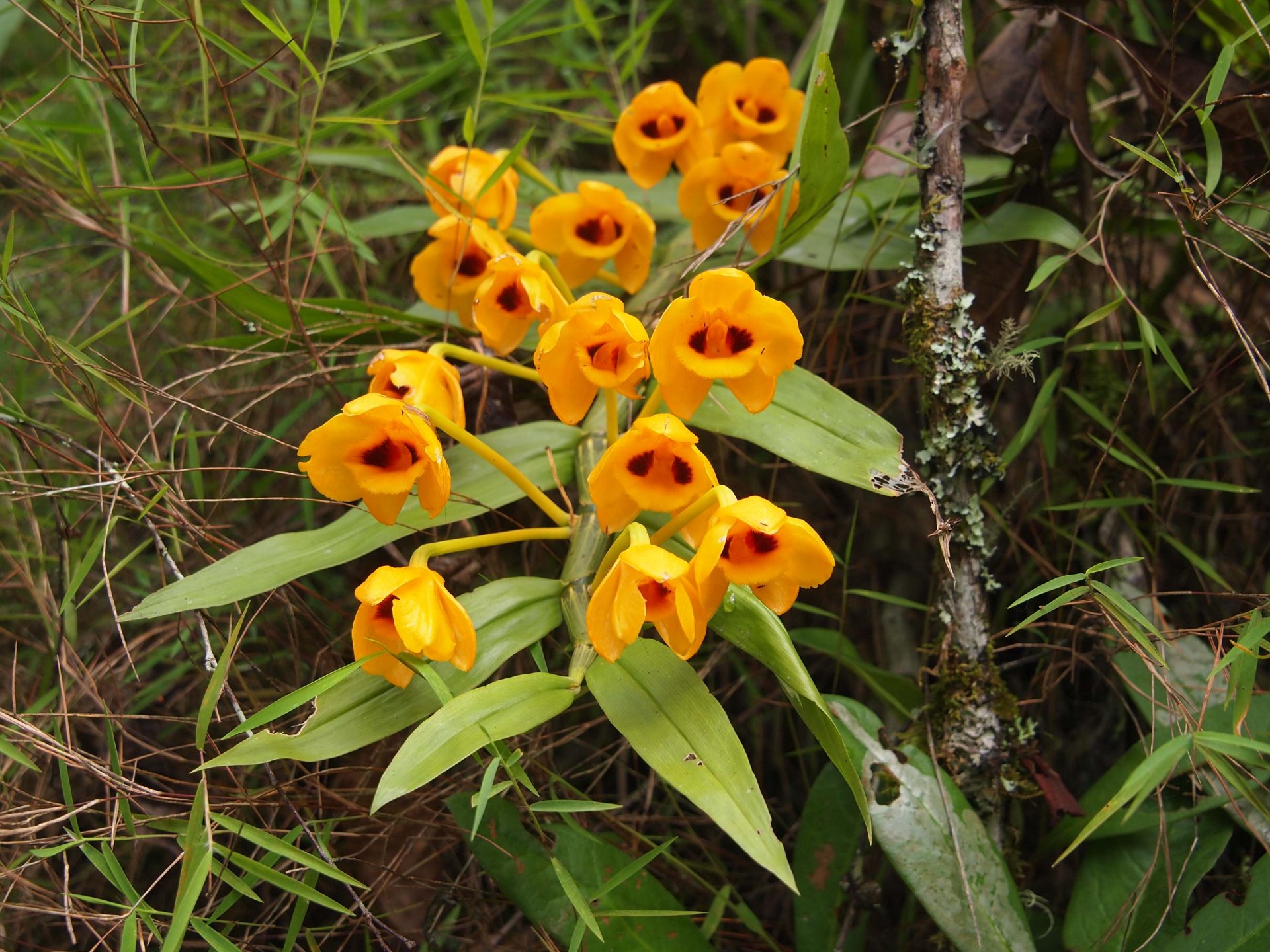
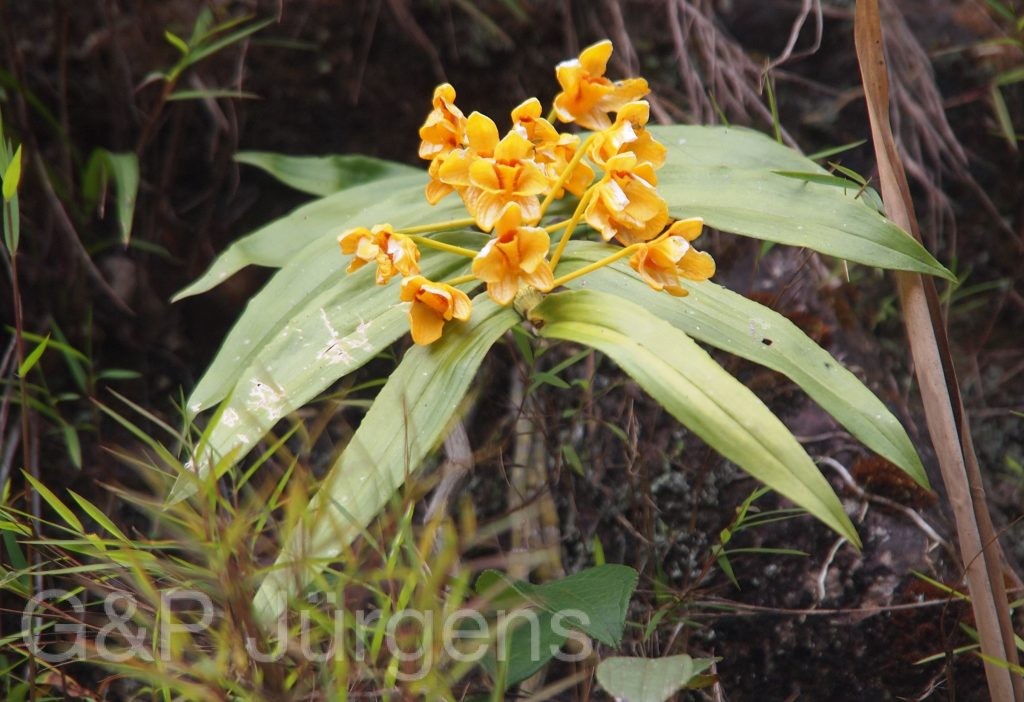
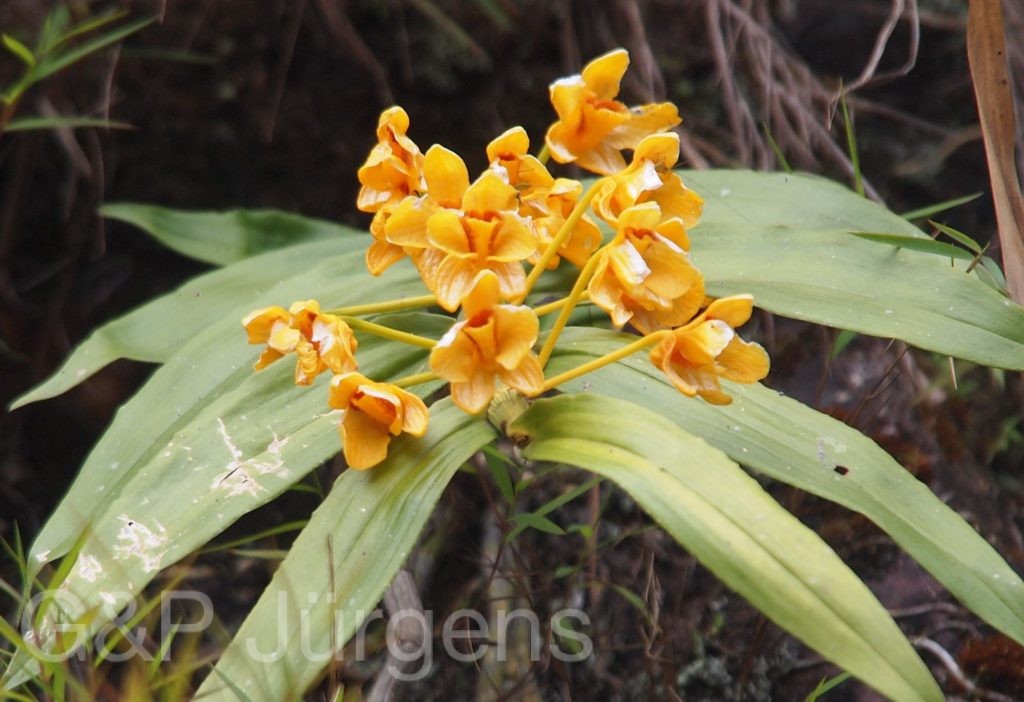
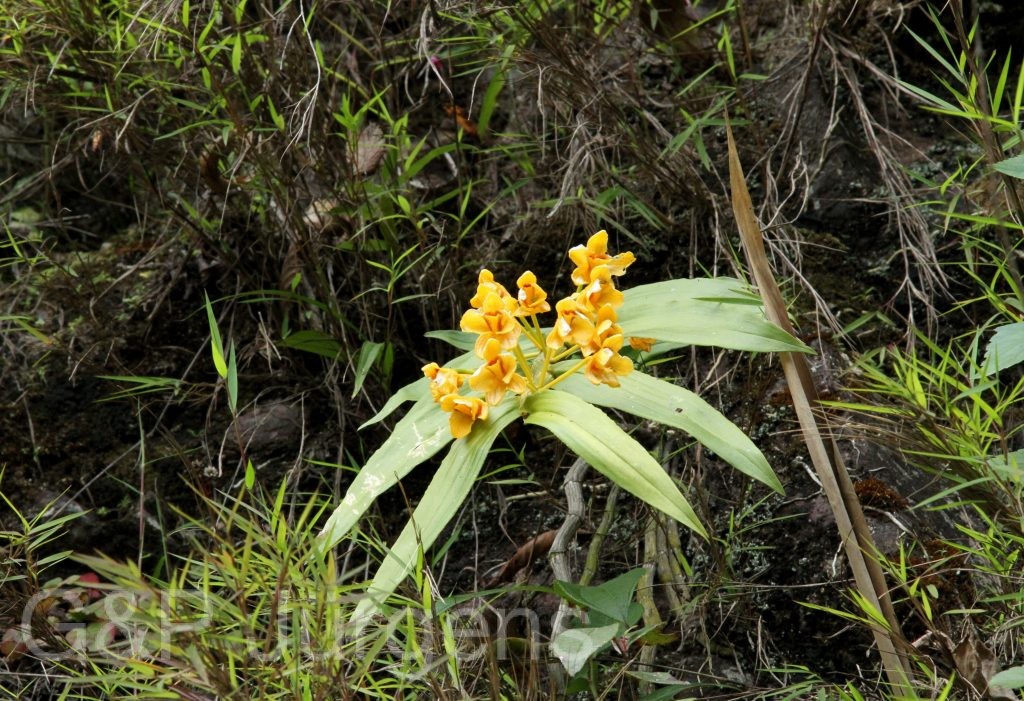
The plant produces long, pendulous to arching, slender canes that are somewhat swollen and channelled, bearing distichous, oblong-lanceolate, deciduous leaves. The inflorescences arise laterally on the older leafless canes as short, pendent racemes of several golden-yellow flowers. The sepals and petals are spreading and orange-yellow, while the broad, rounded lip is conspicuously fringed at the margin and marked with a pair of dark maroon or purple-brown blotches in the throat, a diagnostic feature. The fruit is a pendulous ribbed capsule.
The species belongs to Dendrobium section Dendrobium (the so-called nobile alliance), characterised by leafy canes that flower from the nodes after leaf fall. Its showy fringed, blotched lip makes it horticulturally desirable, and wild collection for the ornamental trade adds to pressure from habitat loss across the foothill forests. Although the wide range buffers it against immediate extinction risk, like many Asian Dendrobium it is listed under CITES Appendix II to regulate international trade.
Author: Paxton · Sources: POWO (Kew), GBIF, Flora of China, Flora of Bhutan, Dendrobium and its Allies (Lavarack, Harris & Stocker)