Primulaceae

(Duby) Govaerts

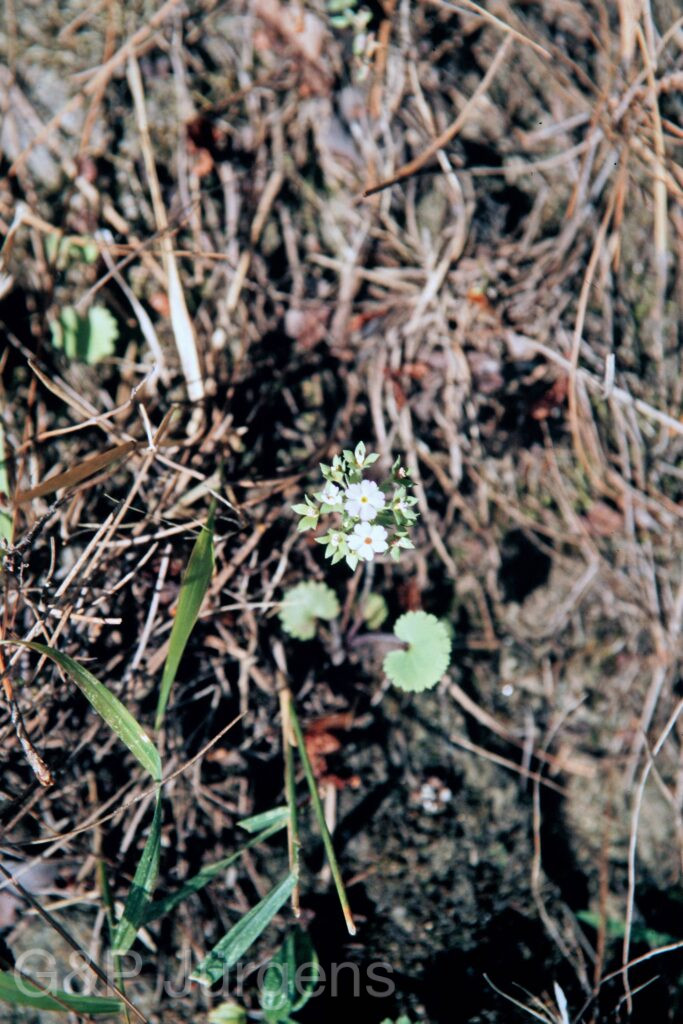
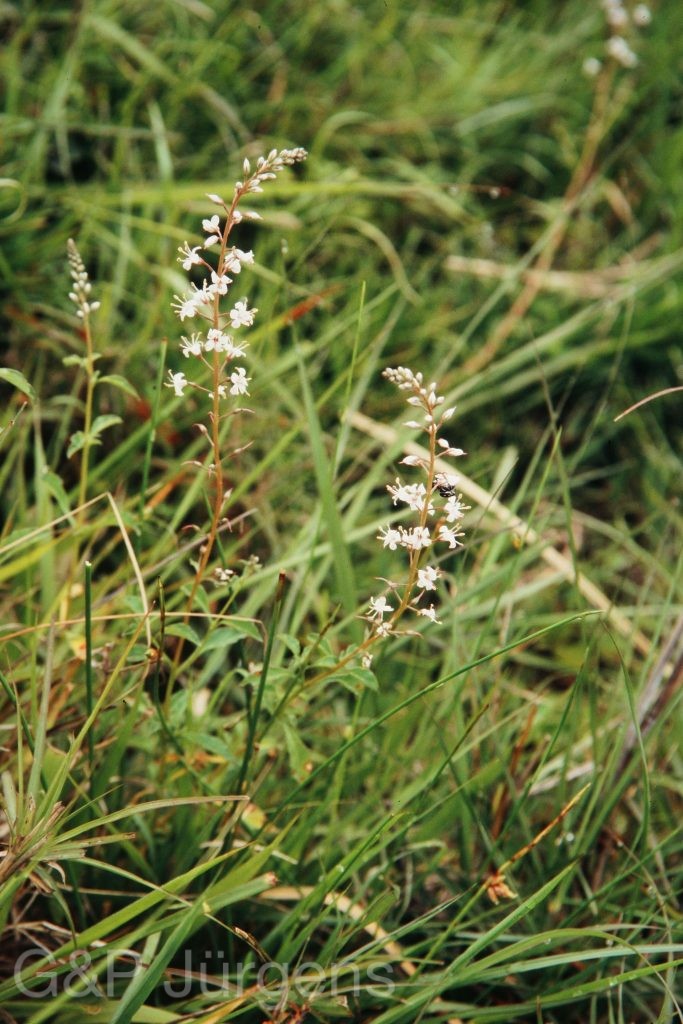
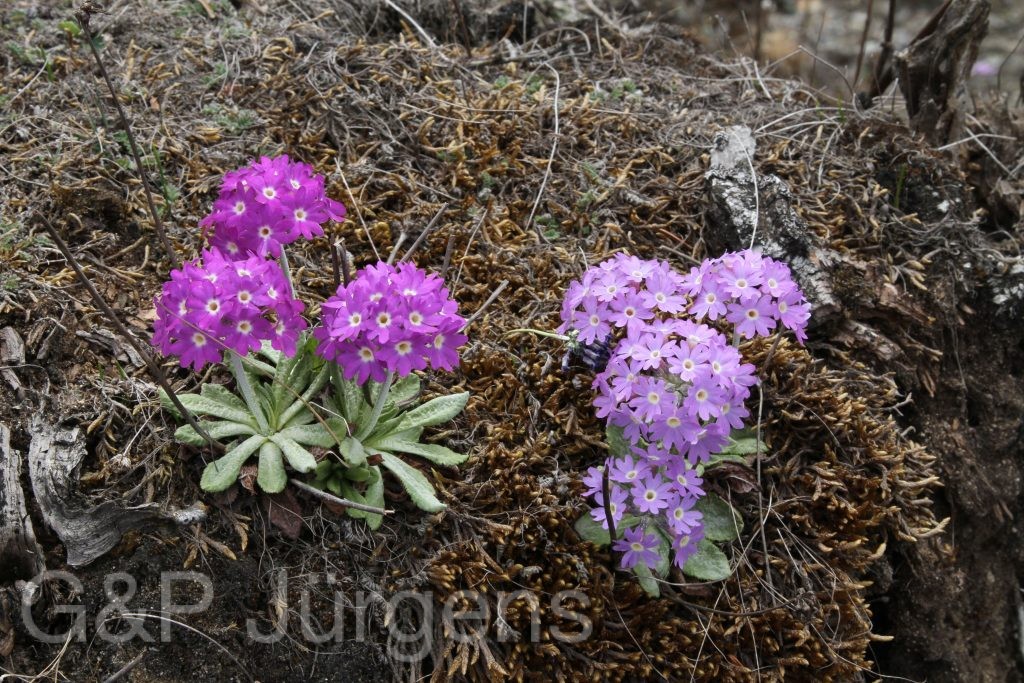
Nepal 99 77 ergebnis
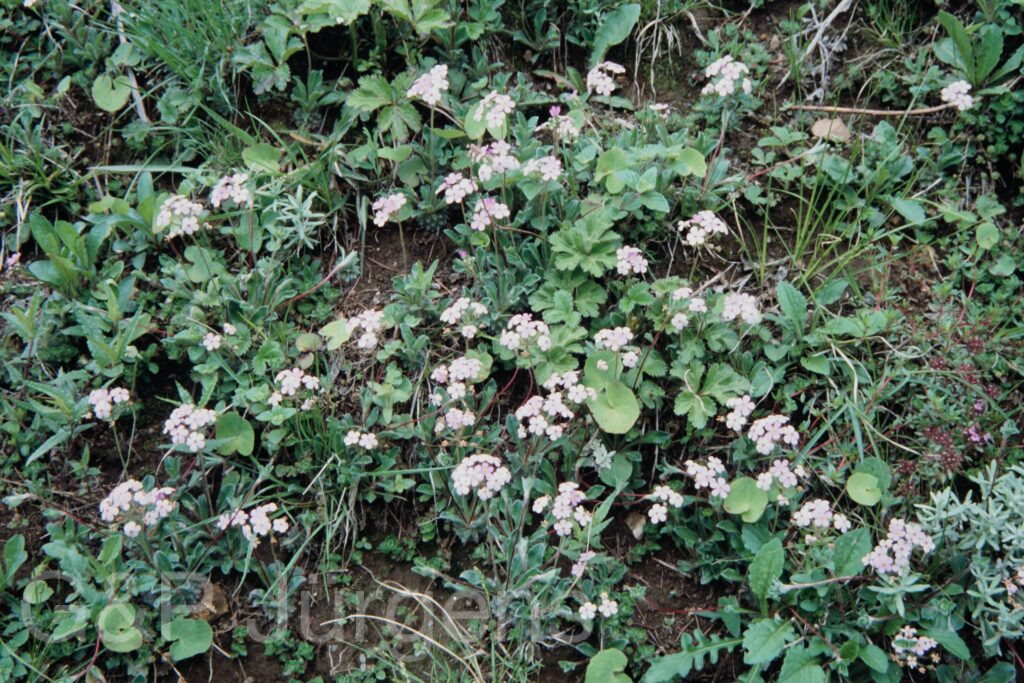
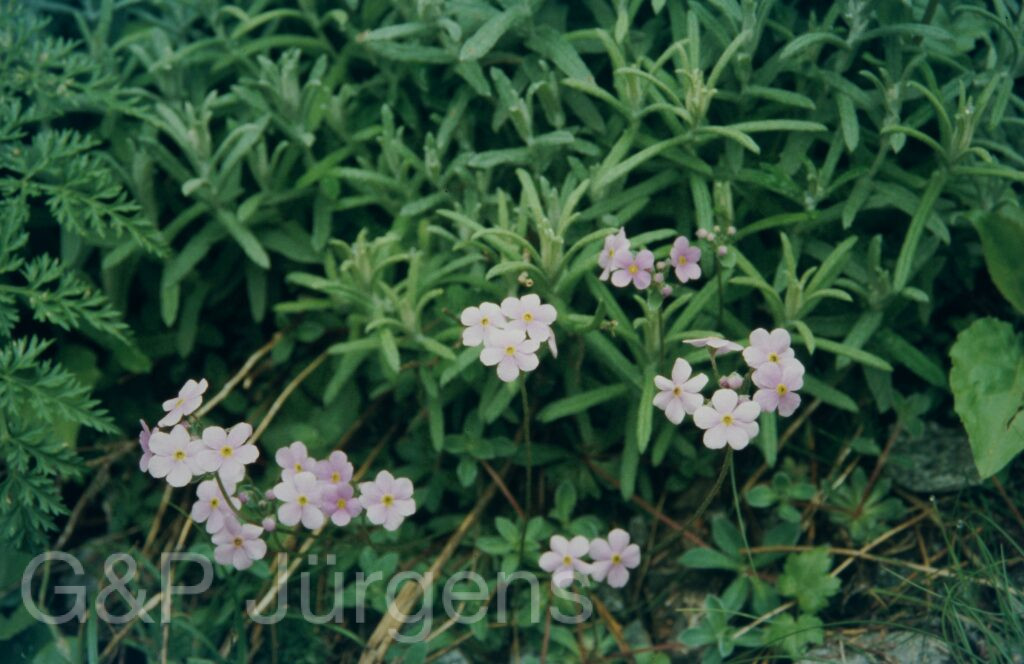
West-Nepal Chanta 2700m, June
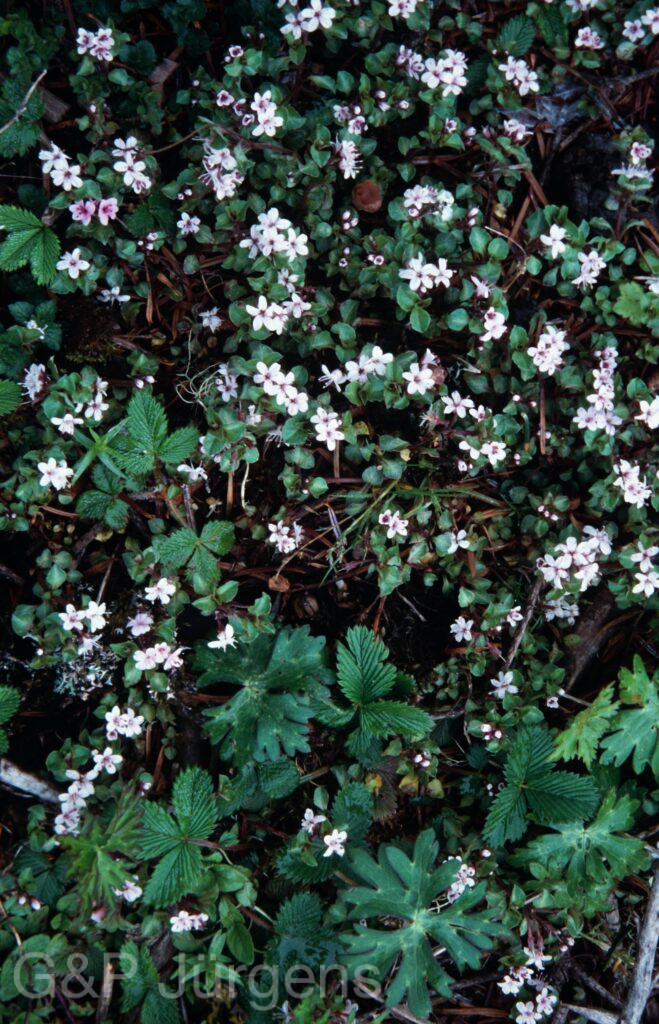
Nepal 99 78 ergebnis
West-Nepal Chanta 2700m, June
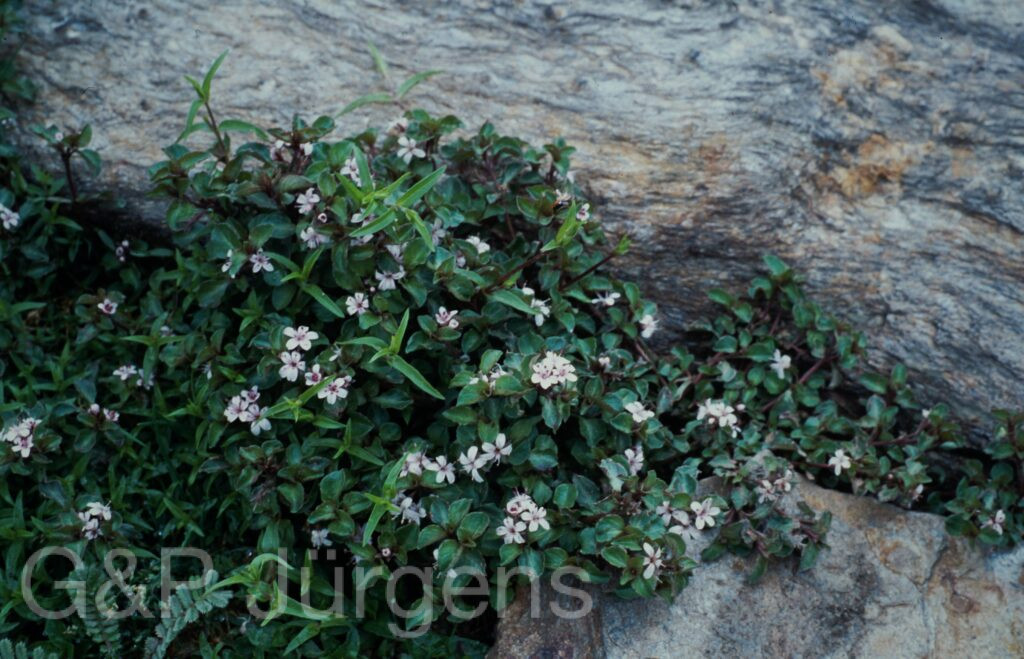
Garw 2005 42 ergebnis ergebnis
India Garhwal Valley of flowers 3250m, September

Description

Androsace sarmentosa subsp. primuloides is a mat-forming rock-jasmine of the western and central Himalaya, recorded from India, China, Nepal and Pakistan, with about 122 occurrences in GBIF. It grows on open rocky slopes, ledges, stony pastures and the margins of alpine meadows, mainly in the subalpine and lower alpine zones between roughly 2500 and 4000 m, favouring well-drained, sunny sites. The photographs from Chanta in West Nepal at about 2700 m in June and from the Valley of Flowers in Garhwal at about 3250 m in September capture the plant across its altitudinal range from early summer flowering to late-season fruiting in the high meadows.

The plant forms loose mats by means of slender, leafy stolons or runners (hence sarmentosa) that root at the nodes to produce new rosettes. Each rosette consists of oblong to spathulate leaves clothed, especially when young, in silky white or silvery hairs that give the cushions a downy appearance. From the rosettes arise short, hairy scapes bearing an umbel of several flowers subtended by a whorl of bracts; the flowers have a five-lobed, salver-shaped corolla, rose-pink with a yellow or orange eye and a constricted throat, recalling a small primrose, as the epithet primuloides suggests. The fruit is a small capsule with few seeds.

Androsace belongs to the Primulaceae and is closely allied to Primula, distinguished by its smaller flowers with a constricted corolla throat; the stoloniferous, mat-building habit of this taxon contrasts with the tight cushions of many high-alpine relatives. Long popular in alpine and rock gardening for its free-flowering pink umbels, it propagates readily from its rooting runners. Widely distributed and locally abundant, the subspecies is not of conservation concern.

Author: (Duby) Govaerts · Sources: POWO (Kew), GBIF, Flora of Pakistan, Annotated Checklist of the Flowering Plants of Nepal, Smith and Lowe's monograph of Androsace, Richards' Primula and its allies
Franch.

Sikkim2011 59
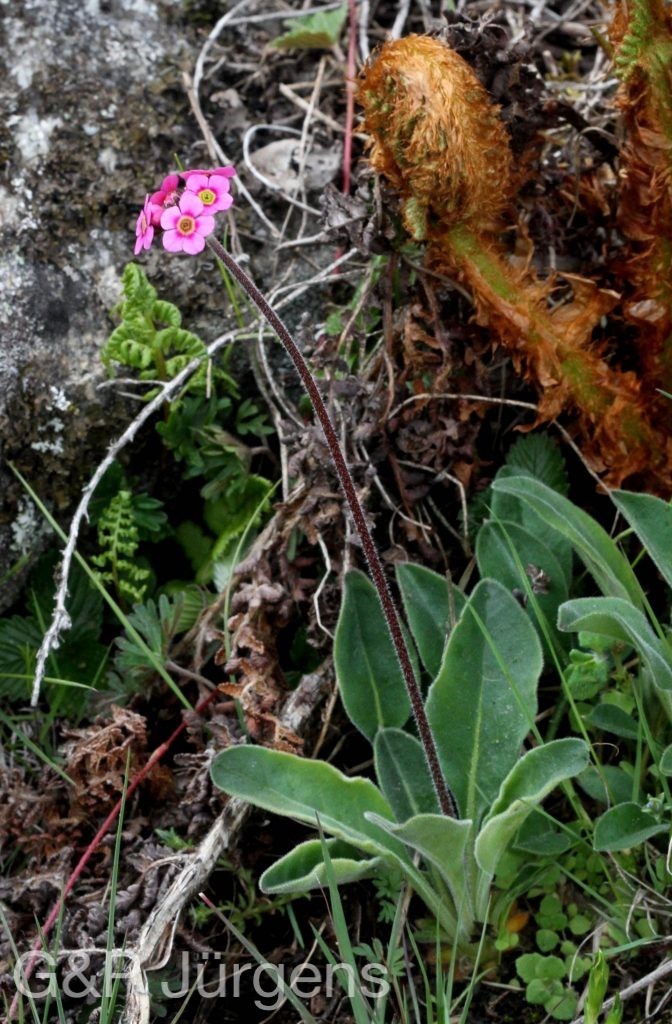
Sikkim Vista-valley 3800m, June

Description

Androsace strigillosa is a Himalayan rock-jasmine recorded in GBIF from Nepal, China, India and Bhutan across 294 occurrences. It is a plant of open subalpine and alpine slopes, meadows, forest clearings and rocky banks, generally between 3000 and 4200 m. The photographed individual was found in Sikkim's Vista valley at about 3800 m in June, when the early summer brings flowering on moist, well-drained turf shortly after snow-melt. Within the genus it is one of the taller, more robust species, favouring herb-rich grassland rather than extreme scree.

It is a rosette-forming perennial with a basal cluster of oblong-lanceolate to spathulate leaves narrowed to a winged base, the lamina toothed toward the apex and clothed, as the epithet implies, in a strigillose (short, stiff, appressed-bristly) indumentum. From the rosette arises a stout, hairy scape 10-30 cm tall terminating in an umbel of numerous flowers subtended by an involucre of bracts. Each flower has a campanulate, hairy calyx and a salverform pink to rose-purple corolla with a constricted, often yellow-eyed throat and five spreading lobes. The fruit is a small, few- to several-seeded globose capsule dehiscing by valves.

Androsace (Primulaceae) is a large genus of the northern temperate and arctic-alpine zones, well represented in the Himalaya and Tibetan Plateau, where cushion and rosette forms dominate. As a comparatively large-leaved, scapose species, A. strigillosa illustrates the meadow-dwelling end of the genus's ecological range. Pollination is by small insects attracted to the contrasting eye-ring, and seeds are gravity- and wind-dispersed. It is locally common and of no conservation concern.

Author: Franch. · Sources: POWO (Kew), GBIF, Flora of China, Annotated Checklist of the Flowering Plants of Nepal, Smith and Lowe Monograph of Androsace

Maxim.

Nepal 99 622 2 ergebnis
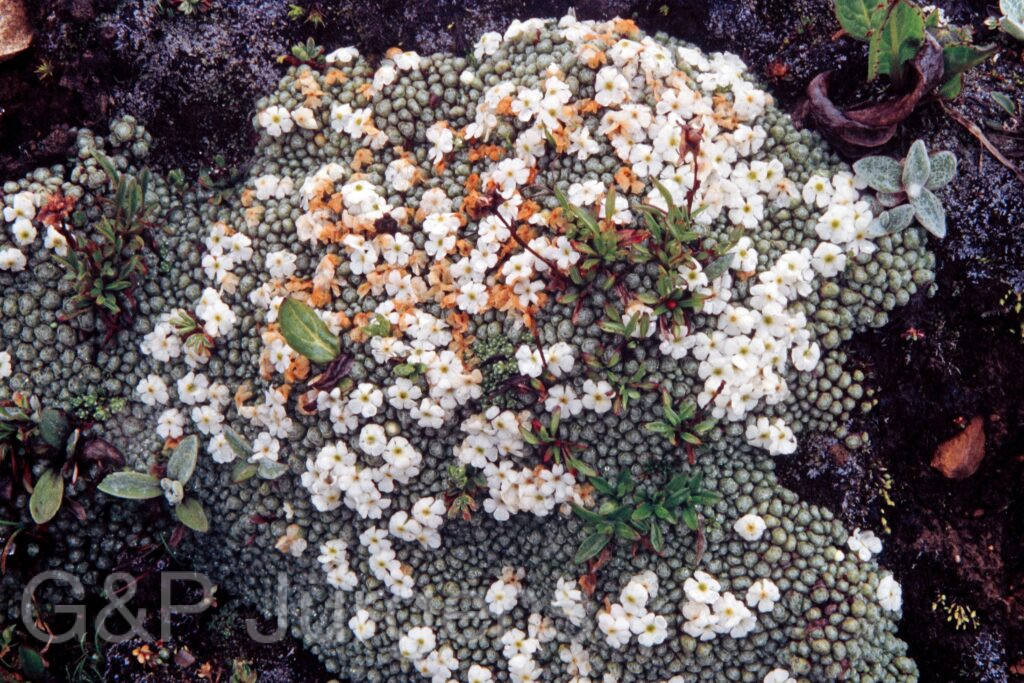
West-Nepal Kagmara-La 4550m, July

Description

Androsace tapete Maxim. is a cushion-forming rock-jasmine of the high Himalaya and Tibetan plateau, documented by some 579 records from China, Nepal, India and Bhutan. It is a true subnival specialist, growing on exposed gravelly and rocky slopes, screes, moraines and stony alpine flats, typically between about 4000 and 5500 m. The plant photographed at the Kagmara-La in West Nepal at 4550 m in July epitomises its habitat: a wind-blasted, intensely irradiated, frost-prone pass where it forms tight hemispherical cushions hugging the substrate.

The species is a compact, perennial, evergreen cushion plant built from densely packed columnar shoots, each terminating in a small rosette of imbricate, oblong-spathulate leaves clothed in long white hairs that trap warmth and reduce desiccation. Dead leaves are retained internally, packing the cushion into a firm dome (the epithet "tapete" meaning carpet). The flowers are solitary, sessile or nearly so among the rosette leaves, with a small gamopetalous corolla, the five lobes white to pink with a yellow or reddish eye, borne over a short tube. The fruit is a small few-seeded capsule largely enclosed within the persistent calyx.

Androsace tapete belongs to section Aretia (the aretioid cushion androsaces), a group whose extreme cushion architecture represents convergent adaptation to the cold, dry, high-radiation conditions of the world's highest vegetated terrain. The cushion modifies its own microclimate, ameliorating temperature and moisture and often facilitating other alpine species. Restricted to remote high-altitude habitats and slow-growing, such cushion plants are sensitive to climate warming and trampling, although A. tapete remains widespread and is not formally assessed.

Author: Maxim. · Sources: POWO (Kew), GBIF, Flora of China, Flora of Nepal, monograph of Androsace (sect. Aretia), Smith & Lowe's cushion Androsace studies

(Lour.) Merr.

Garh 07 23 ergebnis
India Garhwal Ransi at Mandakini 1850m, June

Description

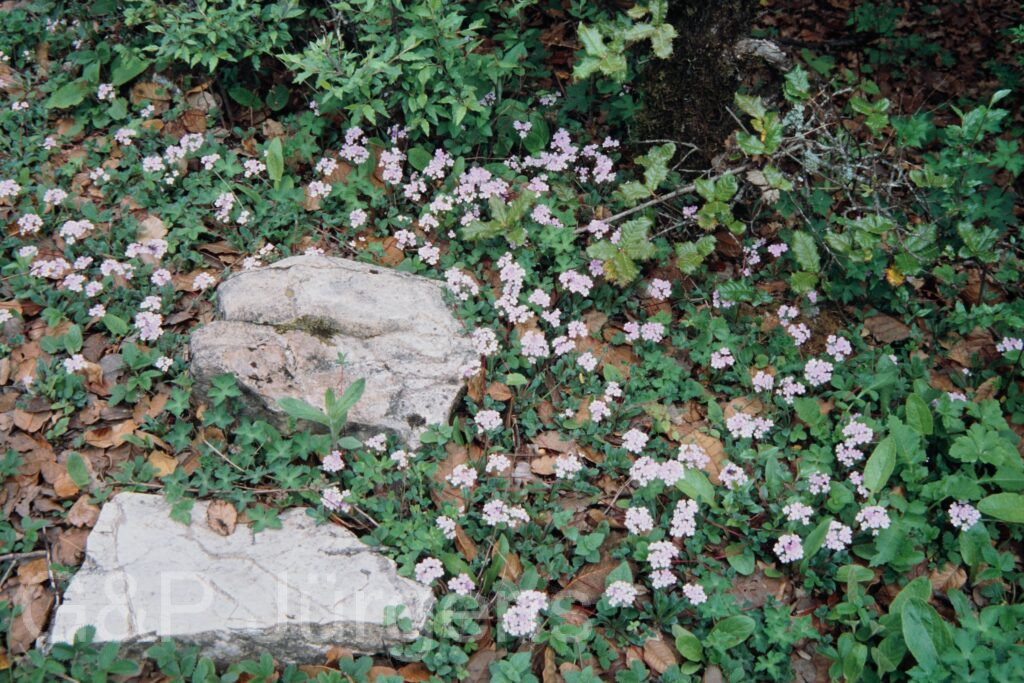
Androsace umbellata is a widespread East and South Asian annual ranging from the Himalaya across China, Korea, Japan, Taiwan and Southeast Asia to the Russian Far East; GBIF documents over 4000 occurrences, reflecting its abundance and broad ecological tolerance. It is a plant of open, disturbed and grassy ground, occurring on banks, terraces, field margins, roadsides, lawns and forest clearings from the foothills into the lower temperate zone. The image from Ransi by the Mandakini in Garhwal (India) at about 1850 m in June shows it in a typical mid-montane setting, where it forms scattered rosettes on moist, sunny slopes early in the growing season.

It is a small, soft, hairy annual herb forming a basal rosette of leaves close to the ground. The leaves are broadly ovate to orbicular or suborbicular, shallowly toothed to crenate at the margin, narrowed to a winged petiole and clothed in articulated multicellular hairs. From the rosette arise several slender, leafless scapes bearing terminal umbels of few to several small flowers, each subtended by an involucre of small bracts. The corolla is white, occasionally pinkish, with a short tube, yellow eye and five spreading lobes; the calyx is deeply lobed and accrescent. The fruit is a globose, five-valved capsule containing numerous small, angular brown seeds.

The species belongs to the annual, rosette-forming section of Androsace, contrasting with the perennial cushion species of the high alpine zone. Its weedy, self-compatible annual strategy and prolific seed production underlie its remarkable distribution and frequency in anthropogenic habitats. It is of no conservation concern, being among the commonest lowland and montane androsaces, and is sometimes used in traditional medicine across its East Asian range.

Author: (Lour.) Merr. · Sources: POWO (Kew), GBIF, Flora of China (Primulaceae), Flowers of the Himalaya (Polunin & Stainton), Smith & Lowe monograph of Androsace

Hook.f. & Thomson

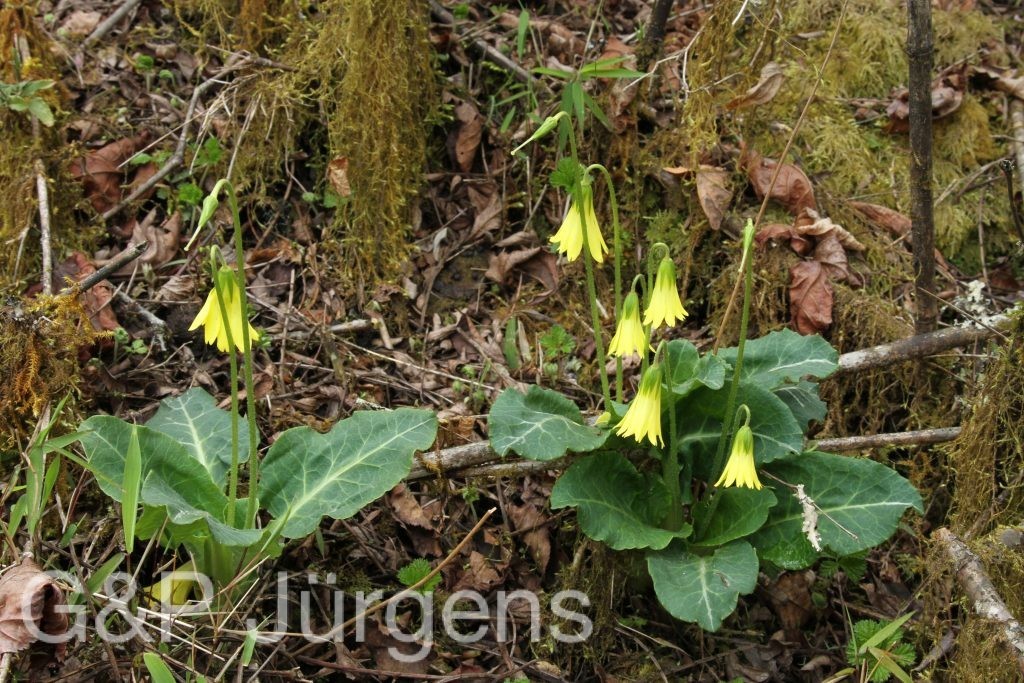
Bhutan2014 497
Bhutan Phobjika 2800m, May
Bhutan2014 499
Bhutan Phobjika 2800m, May

Description

Bryocarpum himalaicum is the sole species of its genus, a primuloid herb endemic to the eastern Himalaya and recorded from Bhutan, India (Sikkim), Nepal and southern China; GBIF documents around 86 occurrences across this narrow range. It grows in moss-rich, humus-laden ground in cool, shaded forest, among rhododendron and bamboo thickets and on damp, mossy banks in the upper temperate and subalpine zones, typically between about 2700 and 3700 m. The illustrated plant from Phobjika in central Bhutan at 2800 m, flowering in May, is characteristic of these humid, sheltered montane habitats.

It is a small, delicate perennial herb arising from a slender rhizome, forming a rosette of long-petioled, ovate to cordate, crenate leaves with a soft texture. The flowers are solitary and nodding on slender scapes, the corolla being narrowly tubular to bell-shaped and clear yellow, with a slender tube expanding into five spreading lobes, evoking a miniature pendent primrose. A distinctive feature giving the genus its name is the elongate, beaked, septicidal capsule that buries or lowers itself among the moss as it matures before releasing the seeds.

Bryocarpum is a monotypic genus traditionally allied to Primula and the cyclamenoid primulas within Primulaceae, distinguished by its solitary yellow flowers and peculiar elongate fruiting capsule. Its restricted high-Himalayan range and dependence on undisturbed mossy forest floor make it a botanically significant relict of conservation interest, vulnerable to habitat disturbance and changing montane moisture regimes.

Author: Hook.f. & Thomson · Sources: POWO (Kew), GBIF, Flora of Bhutan, Flora of China, Primula (J. Richards monograph)

Hemsl.

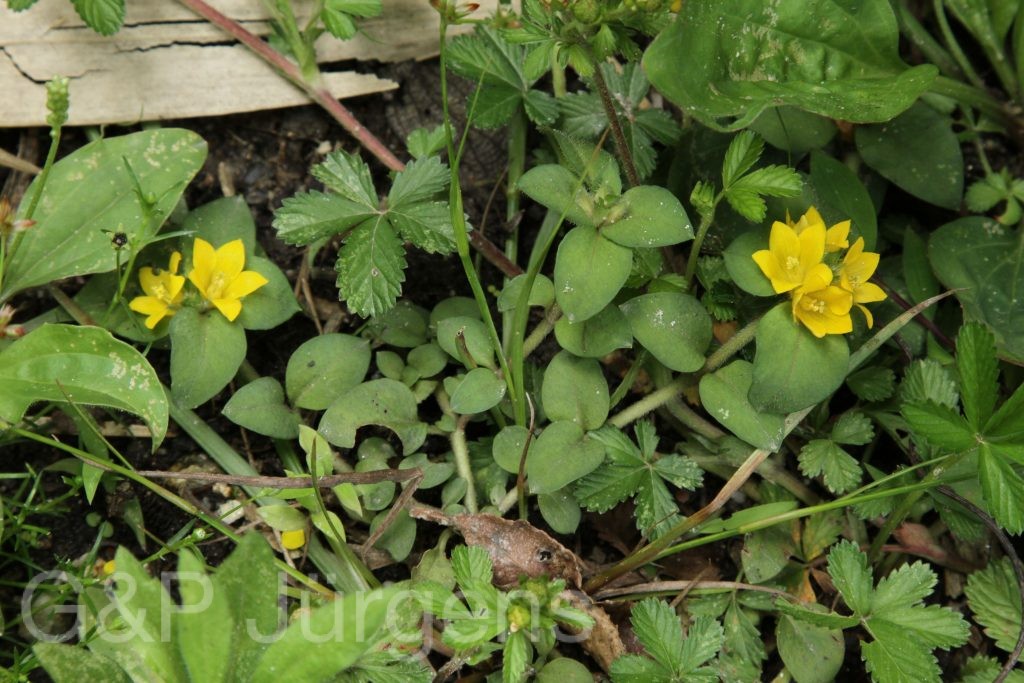
Bhutan2014 782
Bhutan Wangdi Mo-Chu 1200m, May

Description

Lysimachia congestiflora is a wide-ranging species native across China, Taiwan, the Himalaya (Nepal, north-east India, Bhutan) and into Myanmar, Vietnam, Laos, Thailand and Japan; its very large total of 1844 georeferenced records includes numerous naturalised and cultivated points in the United States, Brazil, Ecuador, Mexico, Australia and Europe, reflecting its popularity as a creeping ground-cover and basket plant. It grows in moist, shaded to open ground on grassy banks, streamsides, ditches, field margins and damp roadside slopes. The Bhutan collection at Wangdi along the Mo-Chu at about 1200 m typifies its preference for warm, humid lower-montane habitats.

It is a low, mat-forming perennial herb with slender, decumbent to creeping stems that root at the lower nodes and are sparsely villous. The leaves are opposite, ovate to broadly elliptic, often gland-dotted and minutely hairy. The flowers are crowded in dense terminal clusters (hence congestiflora), each on a short pedicel; the corolla is yellow, rotate to broadly campanulate, five-lobed and frequently marked with reddish spots or a darker throat. There are five stamens, and the fruit is a small globose capsule enclosed by the persistent calyx.

Within Primulaceae the genus Lysimachia (sometimes segregated as Lysimachiopsis or placed in subgenus Idiophyton) comprises loosestrifes characterised by rotate corollas and capsular fruit. The clustered yellow flowers attract a range of generalist insect pollinators. Exceptionally adaptable and frequently weedy in cultivation, the species is abundant throughout its native range and of no conservation concern; its capacity to naturalise has even made it a minor garden escape in several regions.

Author: Hemsl. · Sources: POWO (Kew), GBIF, Flora of China, Flora of Bhutan, Flora of Nepal, Hu & Kelso Primulaceae monographic treatments

Wall.

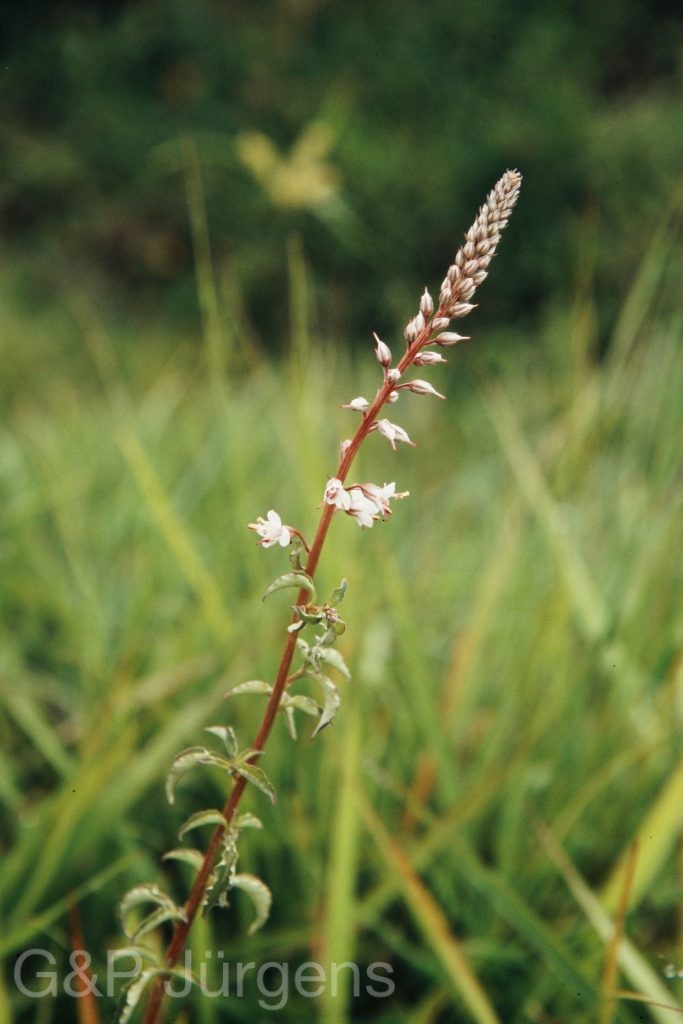
Bh09 395 P626
Bhutan Mo-Chu, 1350m June
Bh09 396 P628
Bhutan Mo-Chu, 1350m June

Description

Lysimachia lobelioides is a slender herb ranging widely through the Himalaya and Southeast Asia, recorded from China, India, Bhutan, Nepal, Myanmar, Thailand, Laos, Vietnam, Taiwan and New Caledonia, with 647 occurrences logged in GBIF. It favours moist, shaded and disturbed places at low to middle elevations: stream banks, ditches, damp grassy ground, field margins and open forest, broadly between 300 and 2500 m. The Bhutanese collection illustrated, from the Mo-Chu valley at 1350 m in June, typifies its occurrence in warm subtropical river-valley habitats during the early monsoon, when it flowers freely on damp, fertile soils.

It is an annual or short-lived perennial with weak, erect to decumbent, often quadrangular stems 10-40 cm long, glabrous and sometimes rooting at the lower nodes. The leaves are alternate, ovate to lanceolate, thin in texture, shortly petiolate and frequently dotted with dark glandular punctations. The small flowers are borne singly in the upper leaf axils on filiform pedicels; the corolla is white to pale pink, deeply five-lobed and shorter than or about equalling the lanceolate calyx lobes, with five stamens. The fruit is a small globose capsule dehiscing by valves and releasing numerous minute angular seeds.

Lysimachia (Primulaceae, formerly Myrsinaceae in part) is a large, near-cosmopolitan genus best developed in eastern Asia; L. lobelioides belongs to a group of small-flowered, axillary-flowered annuals. Its wide distribution, weedy tendency and tolerance of disturbed wet ground make it ecologically adaptable and of no conservation concern. The disjunct New Caledonian records are biogeographically notable, pointing to long-distance dispersal of this colonising species across the Indo-Pacific.

Author: Wall. · Sources: POWO (Kew), GBIF, Flora of China, Flora of Bhutan, Revision of the Genus Lysimachia (Primulaceae)

Klatt

Nepal 2001 255 ergebnis ergebnis
Nepal (Gorkha) Niuli Kharka 2700m, May
Nepal 2001 256 ergebnis ergebnis
Nepal (Gorkha) Niuli Kharka 2700m, May

Description

Lysimachia prolifera is a Sino-Himalayan species distributed across the central and eastern Himalaya and southwestern China, with verified occurrences in Nepal, India, Bhutan, China, Myanmar and Pakistan; outlying records from Japan and the United States among the roughly 194 collections almost certainly reflect cultivated or misdetermined material. It is a plant of moist temperate to subalpine habitats, favouring shaded forest margins, streamsides, mossy banks and damp grassy clearings. The photographed population at Niuli Kharka in Gorkha, Nepal, at about 2700 m and flowering in May, is typical of its mid-montane band where snowmelt and monsoon moisture keep the substrate reliably humid.

The species is a perennial herb with slender, often decumbent to ascending stems arising from a creeping rhizomatous base. The leaves are simple, opposite or sometimes whorled, ovate to lanceolate, entire-margined and frequently gland-dotted, narrowing to a short petiole or sessile base. The flowers are borne singly in the leaf axils or in lax leafy racemes; the corolla is rotate and five-lobed, typically yellow, the lobes spreading and often marked with darker glands. Stamens are five, opposite the corolla lobes and shortly connate at the base, the ovary superior with a single style. The fruit is a small, globose, dehiscent capsule containing numerous minute angular seeds.

Within Primulaceae, Lysimachia is a large, taxonomically intricate genus now circumscribed broadly, and species such as L. prolifera are distinguished by subtle differences in leaf arrangement, gland distribution and inflorescence form that have historically caused confusion. Ecologically it contributes to the herbaceous understorey of Himalayan forests and is visited by generalist pollinating insects. No specific conservation concern is recorded for this widespread montane species, though, like many Himalayan herbs, it is locally sensitive to forest clearance, trampling and grazing along trekking corridors.

Author: Klatt · Sources: POWO (Kew), GBIF, Flora of Nepal, Flora of China, Flora of Bhutan, Hu's monograph of Lysimachia (Primulaceae)

W.W. Sm.

Bhutan2014 924
Bhutan Chele-La 4000m, May
Bhutan2014 926
Bhutan Chele-La 4000m, May
Bh2008 588 G880
Bhutan Chele-La 3900m April

Description

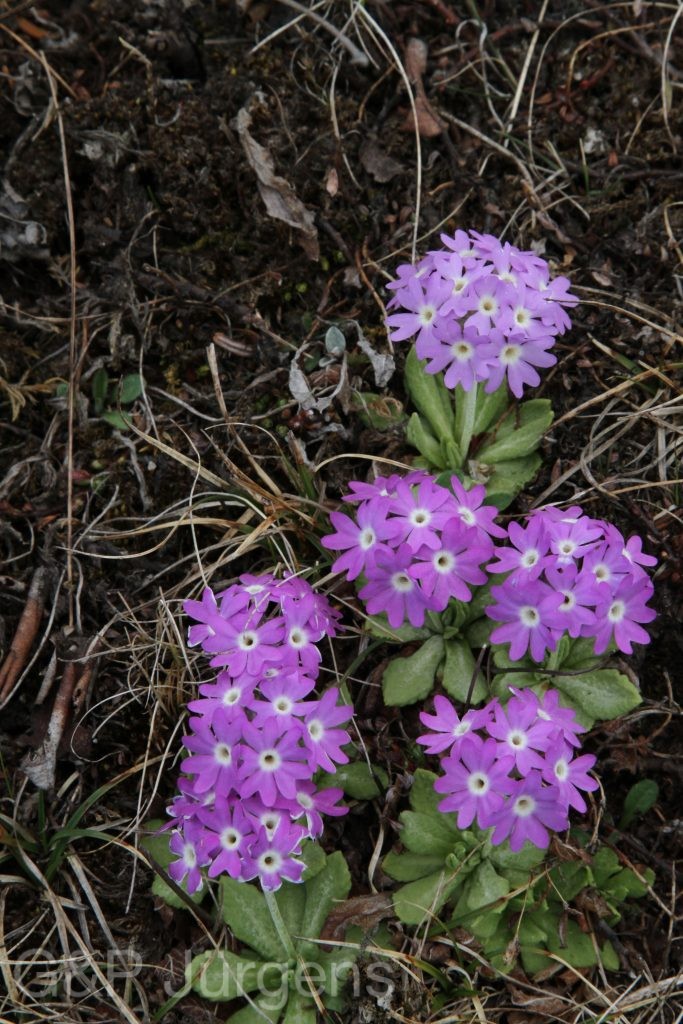
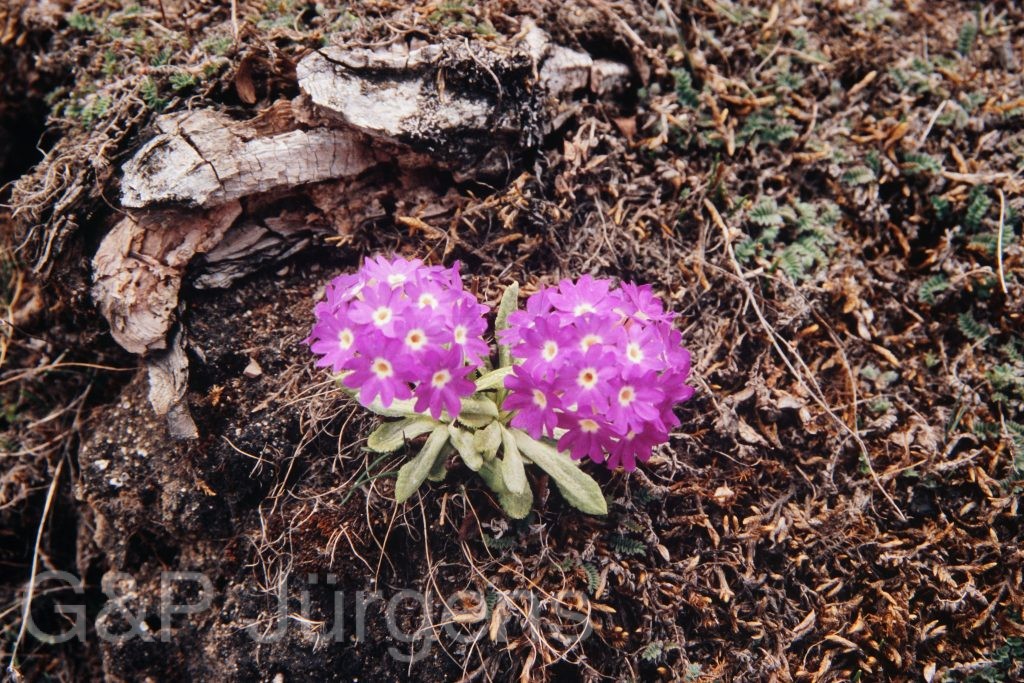
Primula atrodentata is a small alpine primrose of the high eastern and central Himalaya, native to China, Nepal, India, Bhutan and Pakistan, with about 161 georeferenced records confined to the upper subalpine and alpine zones. It grows on damp open slopes, alpine meadows, rocky turf and the margins of snow-melt seepages, typically between about 3000 and 4500 m. The photographed plants were recorded at the Chele-La in western Bhutan at 3900-4000 m, flowering in April and May immediately after snow-melt, when these cushion-forming primulas carpet the freshly exposed turf.

The species is a low, tufted perennial herb with a short rhizome and a basal rosette of obovate to spathulate leaves, the blade narrowed to a winged petiole, the margins finely toothed and the undersurface mealy with white or yellowish farina; the rosettes are often clothed at the base with persistent bud-scales. The flowers are borne in a dense, globose terminal umbel atop a slender, farinose scape that elongates after anthesis. The corolla is salver-shaped with a slender tube and spreading, notched lobes, coloured pale lilac to violet or rarely white, with a small yellow eye. The fruit is a small ovoid capsule shorter than the persistent calyx.

Primula atrodentata belongs to section Capitatae of the genus, the dense-headed primulas, distinguished by its compact globose umbel and toothed, farinose leaves; the epithet refers to the dark-tipped (atro-) teeth of the leaf margin and calyx. A characteristic early-flowering snow-melt species, it is heterostylous and insect-pollinated. Widespread and locally abundant across its alpine range, it is not regarded as threatened.

Author: W.W. Sm. · Sources: POWO (Kew), GBIF, Flora of Bhutan, Flora of China, The Genus Primula (Richards)

H.R.Fletcher

Nepal 2009 49 ergebnis
Nepal Helambu Nasem Pati 3550, May

Description

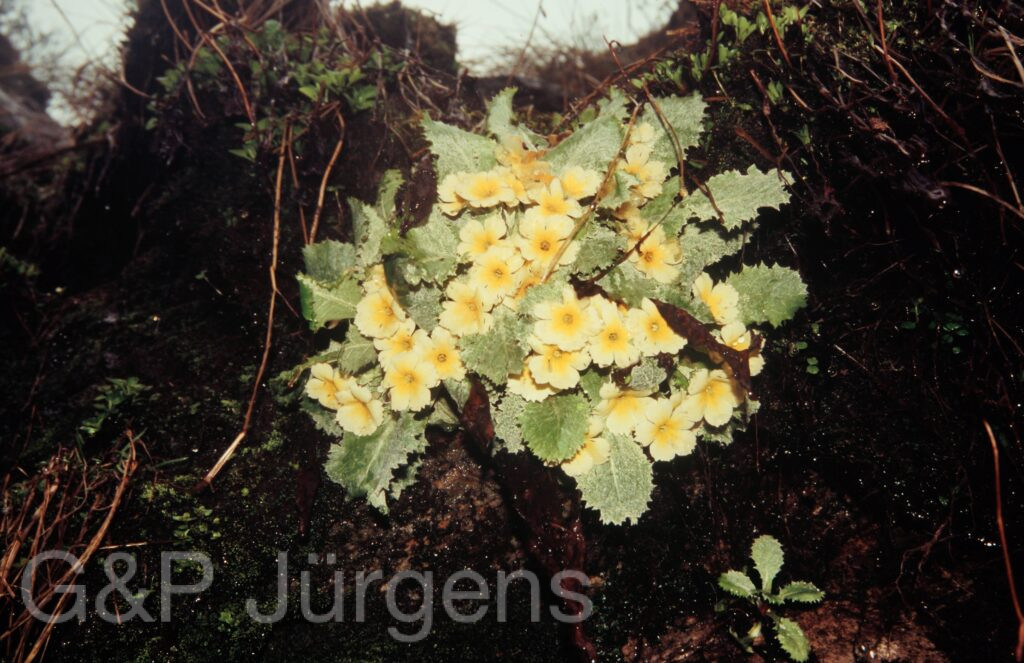
Primula aureata is a narrowly endemic primrose known only from central Nepal, where GBIF records (about 35 occurrences, all from Nepal) confirm its restricted range. It is a plant of cool, shaded, perpetually humid sites, growing on damp, mossy cliffs, dripping rock faces and shaded gully walls in the upper temperate and subalpine zone. The illustrated plant was photographed in the Helambu region at Nasem Pati at about 3550 m in May, a locality representative of the species' small known distribution along the moist ridges north of the Kathmandu valley, where it flowers soon after the winter snows clear.

The plant is a small, stemless perennial forming a basal rosette of leaves that emerge from a resting bud heavily coated in pale farina. The leaves are obovate to spathulate, toothed towards the apex, narrowed to a winged petiole, and dusted beneath with white meal. From the rosette rises a short scape bearing a few-flowered umbel; each flower has a tubular, farinose calyx and a flat-faced, pale yellow corolla with a deeper golden-yellow eye, the epithet aureata alluding to this golden centre. The corolla lobes are obcordate and notched, and the species is heterostylous with pin and thrum forms. The fruit is a small capsule enclosed in the persistent calyx.

Primula aureata belongs to section Petiolares, a largely Himalayan group of farinose, rosette-forming primulas of shaded, moist rock habitats. Its very limited range, dependence on specialised cliff microhabitats and small known population make it a plant of conservation interest, vulnerable to disturbance and collection; it is also esteemed in cultivation by alpine specialists. Localised endemics of this kind underline the high level of plant endemism in the central Nepal Himalaya.

Author: H.R.Fletcher · Sources: POWO (Kew), GBIF, Annotated Checklist of the Flowering Plants of Nepal, Flora of Bhutan, Smith and Fletcher's monographs of Primula section Petiolares, Richards' monograph Primula