
Hemsl.
Description
Lysimachia congestiflora is a wide-ranging species native across China, Taiwan, the Himalaya (Nepal, north-east India, Bhutan) and into Myanmar, Vietnam, Laos, Thailand and Japan; its very large total of 1844 georeferenced records includes numerous naturalised and cultivated points in the United States, Brazil, Ecuador, Mexico, Australia and Europe, reflecting its popularity as a creeping ground-cover and basket plant. It grows in moist, shaded to open ground on grassy banks, streamsides, ditches, field margins and damp roadside slopes. The Bhutan collection at Wangdi along the Mo-Chu at about 1200 m typifies its preference for warm, humid lower-montane habitats.
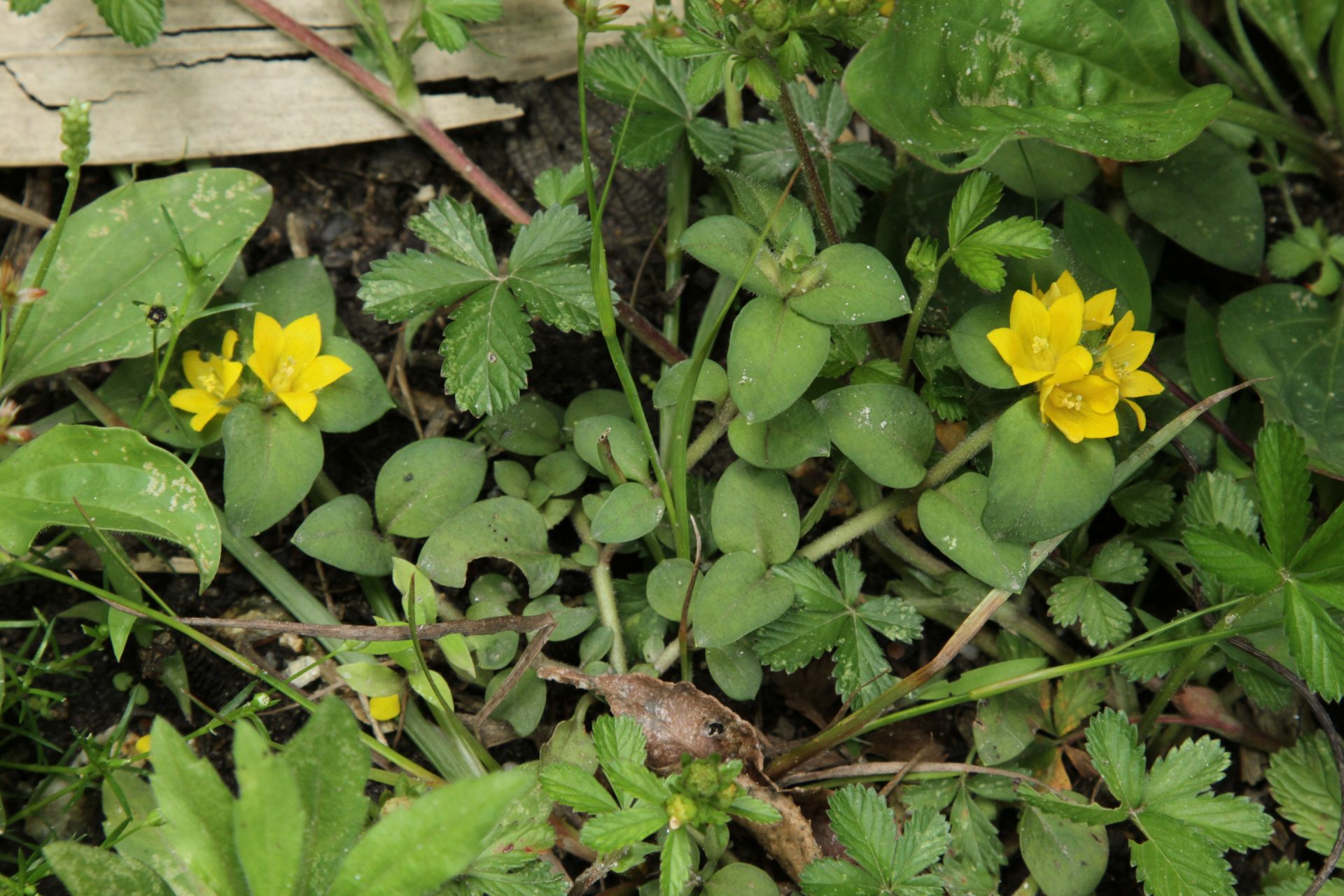
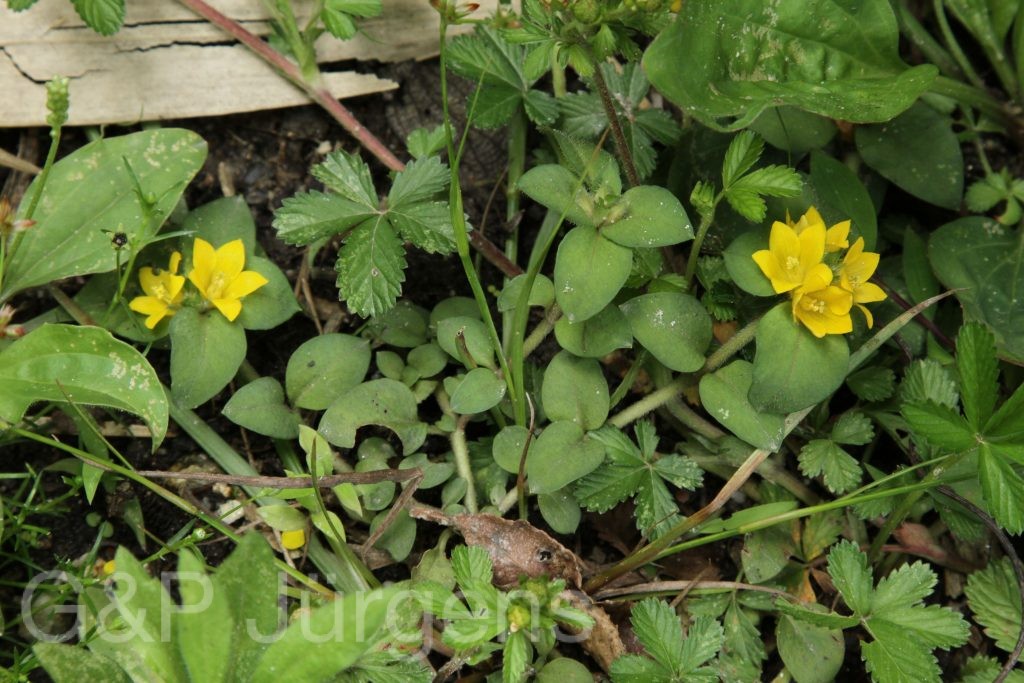
It is a low, mat-forming perennial herb with slender, decumbent to creeping stems that root at the lower nodes and are sparsely villous. The leaves are opposite, ovate to broadly elliptic, often gland-dotted and minutely hairy. The flowers are crowded in dense terminal clusters (hence congestiflora), each on a short pedicel; the corolla is yellow, rotate to broadly campanulate, five-lobed and frequently marked with reddish spots or a darker throat. There are five stamens, and the fruit is a small globose capsule enclosed by the persistent calyx.
Within Primulaceae the genus Lysimachia (sometimes segregated as Lysimachiopsis or placed in subgenus Idiophyton) comprises loosestrifes characterised by rotate corollas and capsular fruit. The clustered yellow flowers attract a range of generalist insect pollinators. Exceptionally adaptable and frequently weedy in cultivation, the species is abundant throughout its native range and of no conservation concern; its capacity to naturalise has even made it a minor garden escape in several regions.
Author: Hemsl. · Sources: POWO (Kew), GBIF, Flora of China, Flora of Bhutan, Flora of Nepal, Hu & Kelso Primulaceae monographic treatments