Primulaceae

Craib

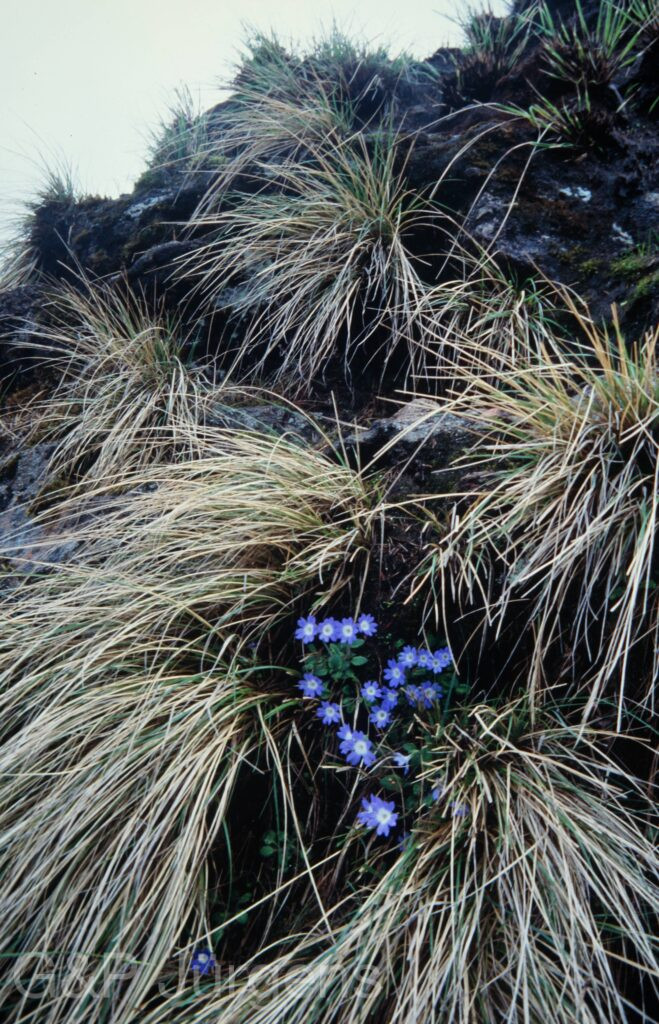
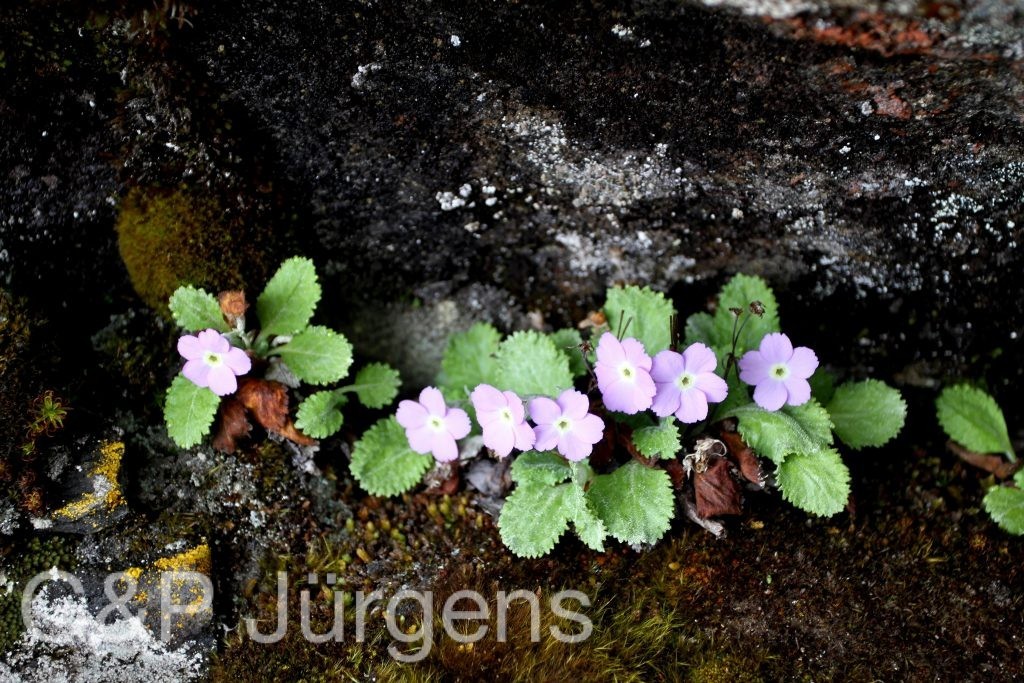
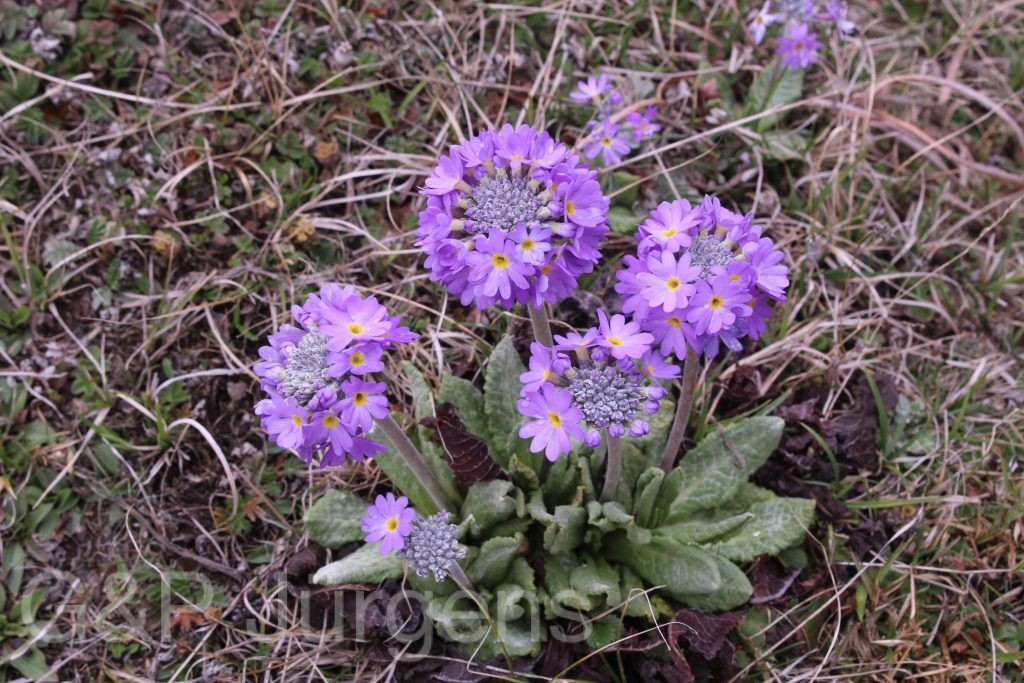
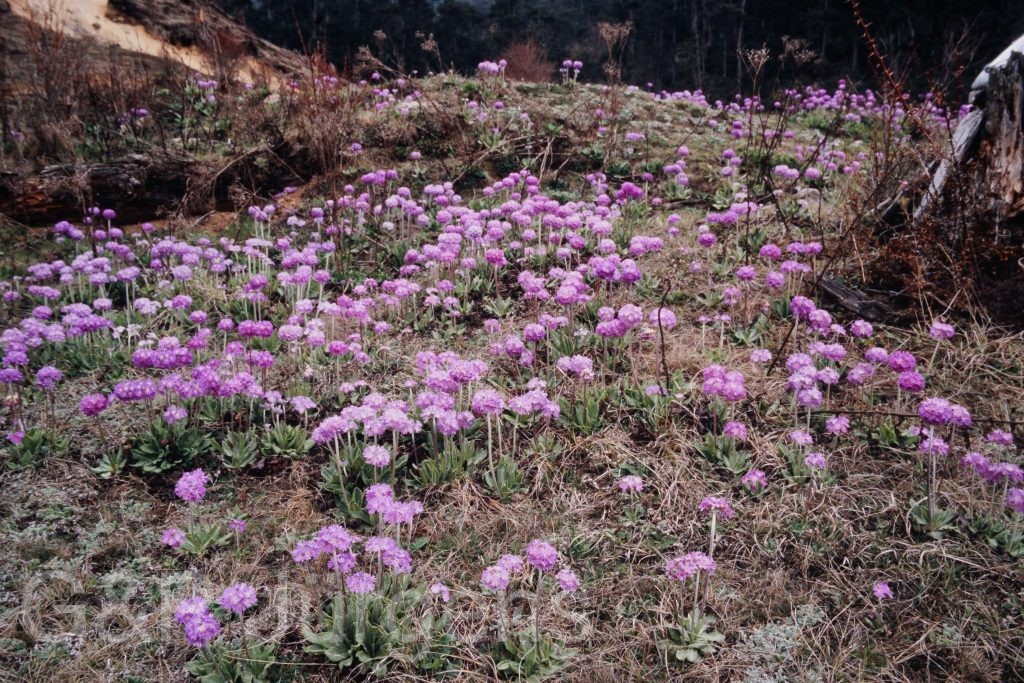
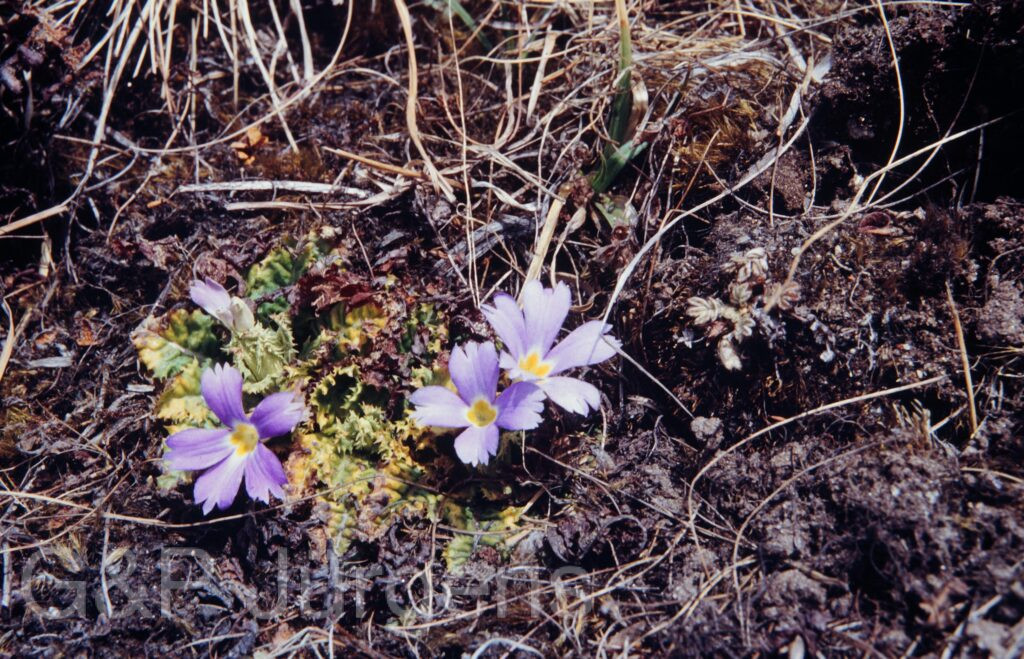
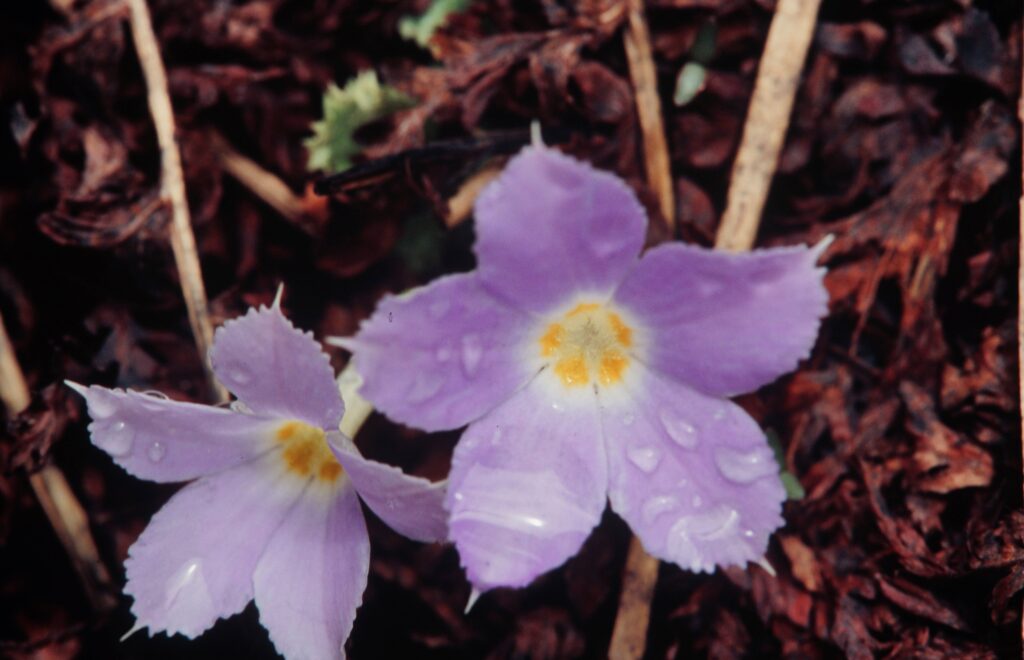
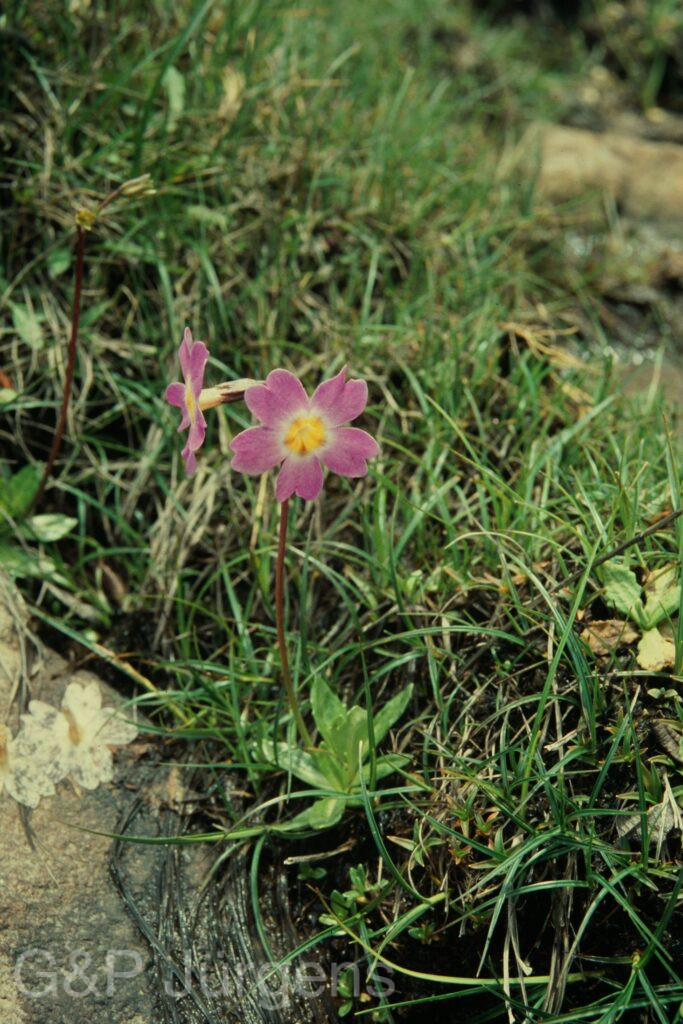
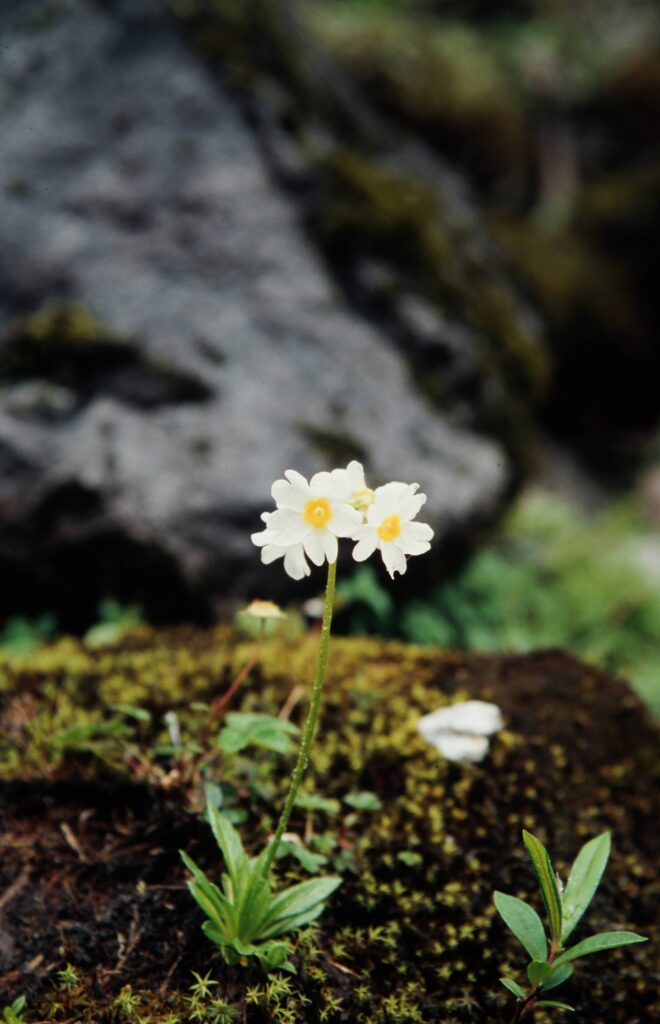
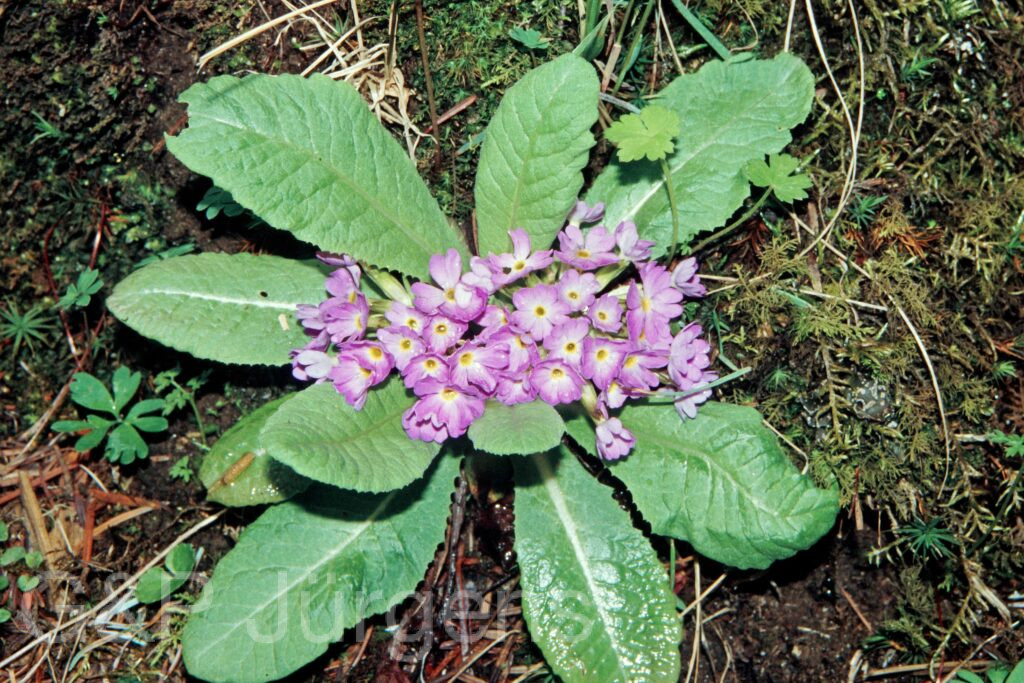
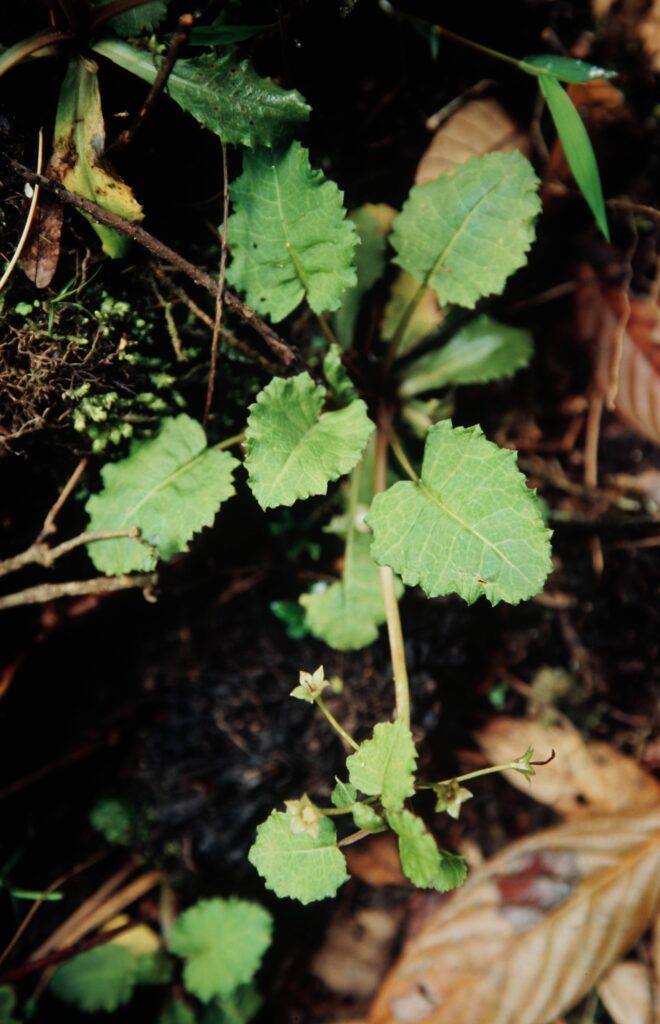
Sikkim 2006 345 ergebnis
India West-Bengal, Tolung 2500m, May

Description

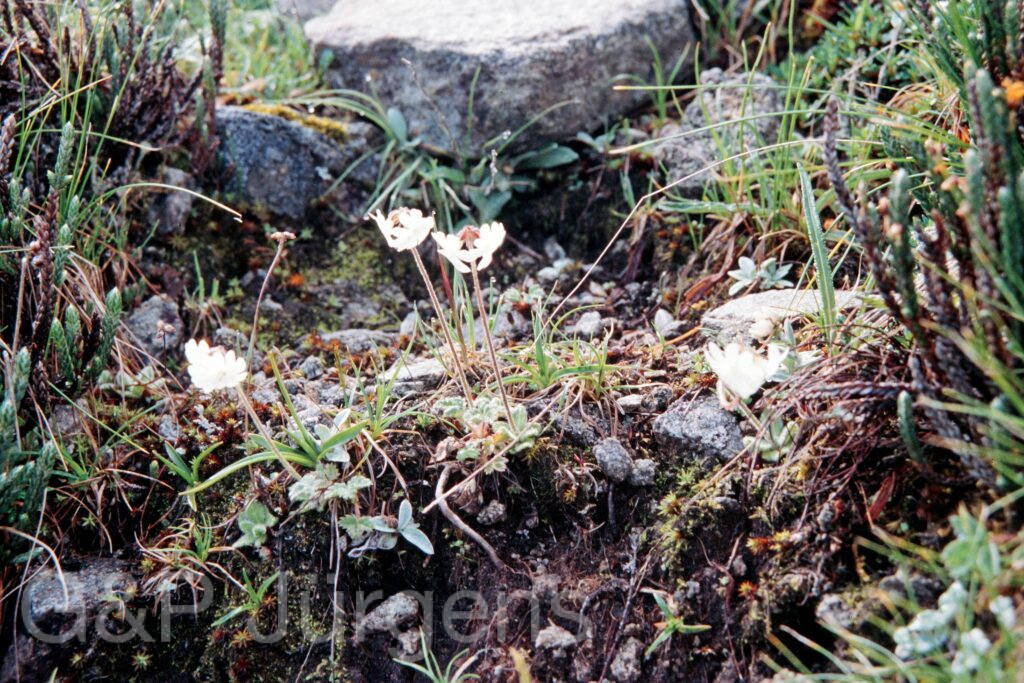
Primula bracteosa is a temperate to subalpine primrose of the eastern Himalaya, recorded from Bhutan, India and Nepal, with 51 georeferenced occurrences across this comparatively narrow range. It favours cool, shaded, moist situations such as mossy banks, damp rock ledges and the humus-rich floor of broadleaved and conifer forest. The plant photographed at Tolung in West Bengal, India, at 2500 m in May documents its spring flowering in the moist temperate forest belt, when the rosettes emerge and bloom early in the season following snowmelt and the first monsoon moisture.

The plant forms a basal rosette of obovate to spathulate leaves that are toothed to crenate along the margin, often farinose (mealy) beneath and tapering to a winged petiole. The flowers are borne in a terminal umbel atop a slender scape; as the epithet indicates, the umbel is subtended by conspicuous bracts. The individual flowers are salverform with a slender corolla tube and a spreading, notched-lobed limb, pink to rose-purple or lilac with a yellow or greenish eye. Like most Primula the species is typically heterostylous, with pin and thrum flower morphs promoting outcrossing. The fruit is a small capsule releasing numerous minute seeds.

Within the large and taxonomically complex genus Primula, P. bracteosa is placed in section Petiolares, a group of early-flowering, often farinose eastern-Himalayan primroses centred on Sikkim, Bhutan and adjacent regions. The section is prized but demanding in cultivation. Restricted to cool, humid montane forest, the species is locally frequent in suitable habitat but potentially vulnerable to forest disturbance and a warming climate.

Author: Craib · Sources: POWO (Kew), GBIF, Flora of Bhutan, Flora of China, The Genus Primula monograph (Richards), Flowers of the Himalaya (Polunin & Stainton)
Balf. f.

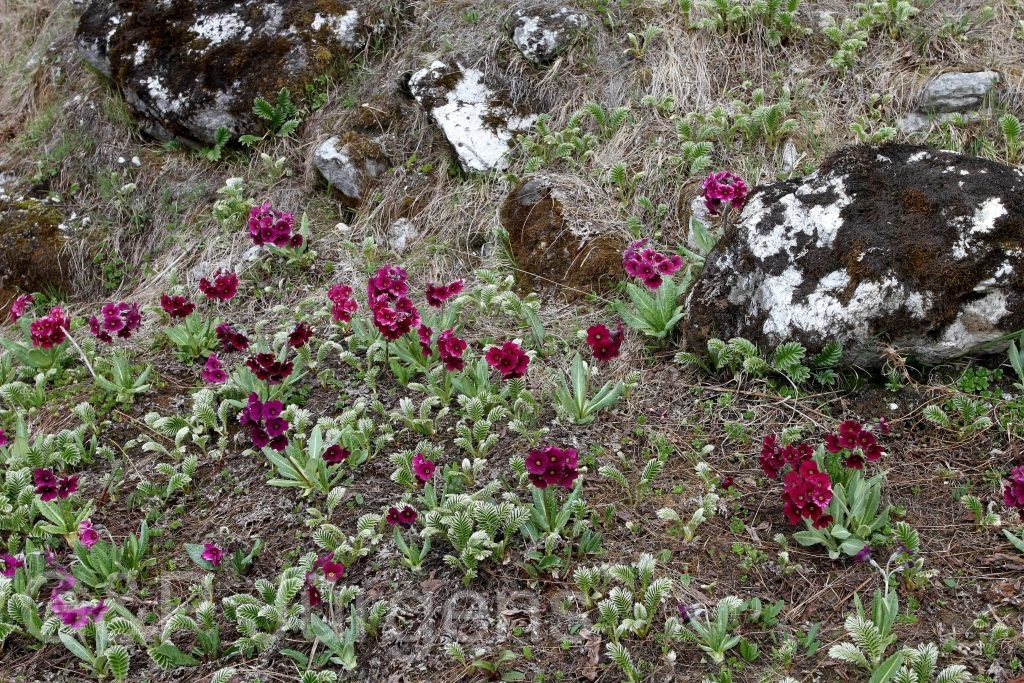
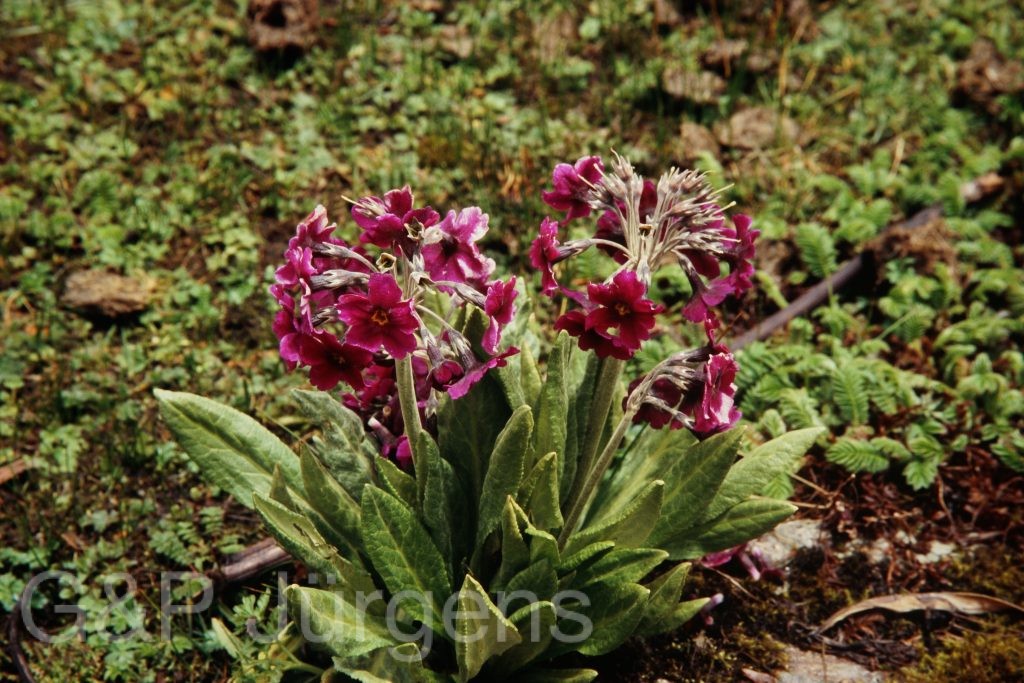
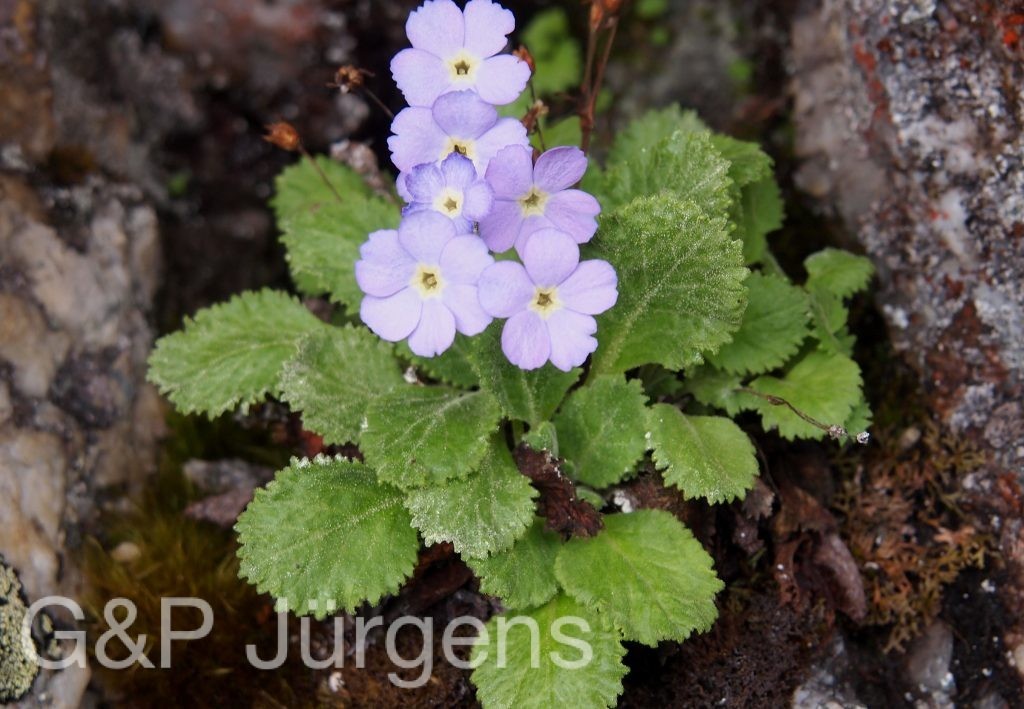
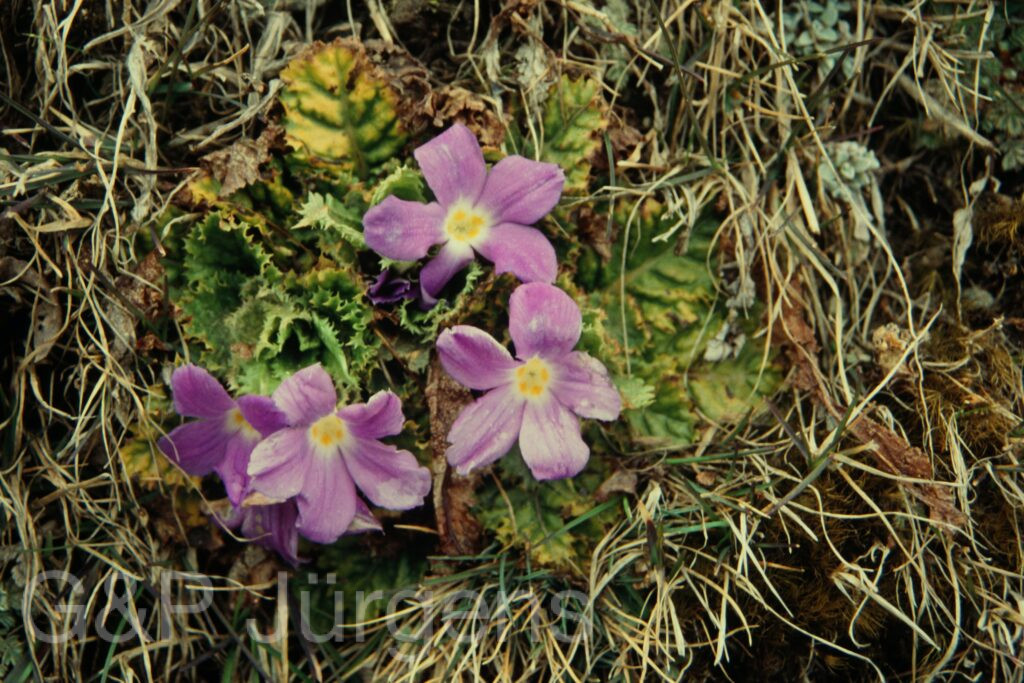
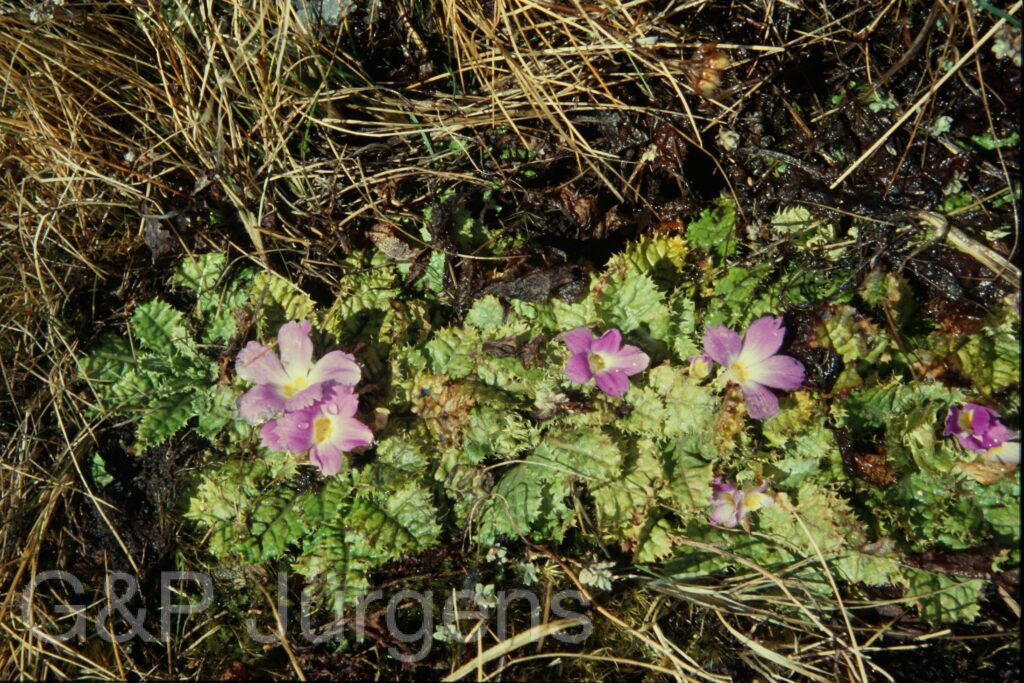
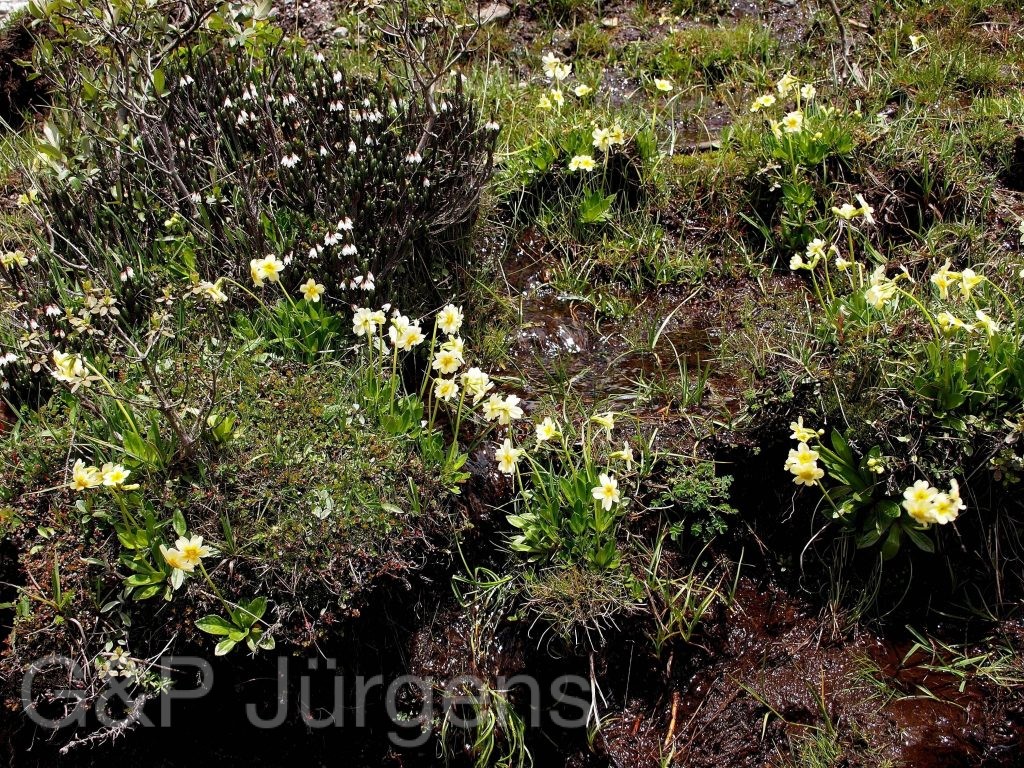
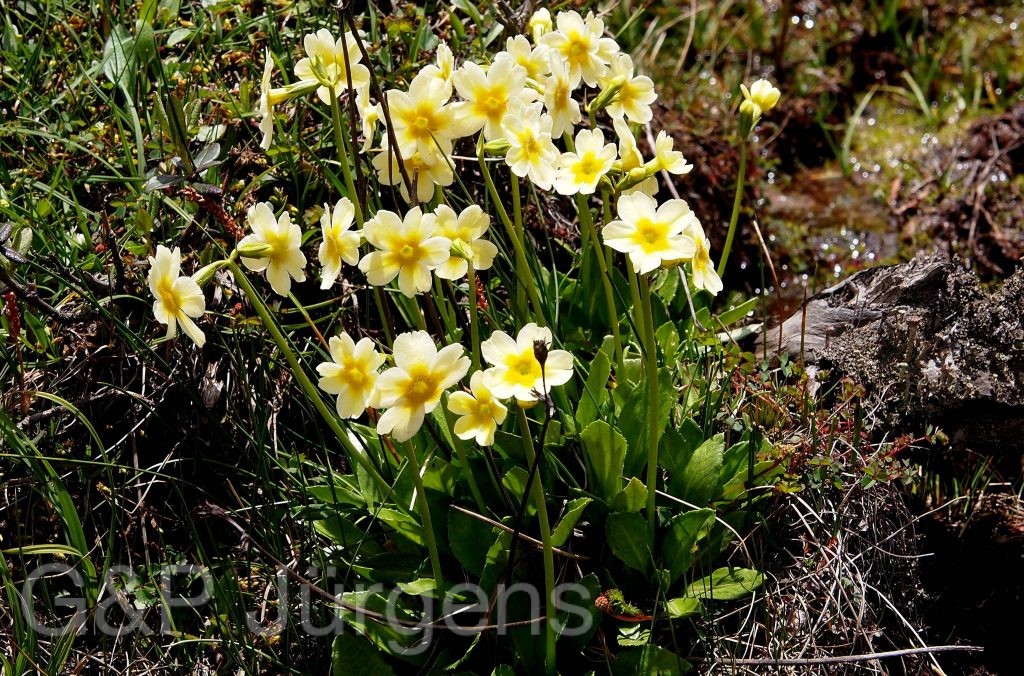
Nepal 99 540 ergebnis
West-Nepal Churta-Khola 4100m, June

Description

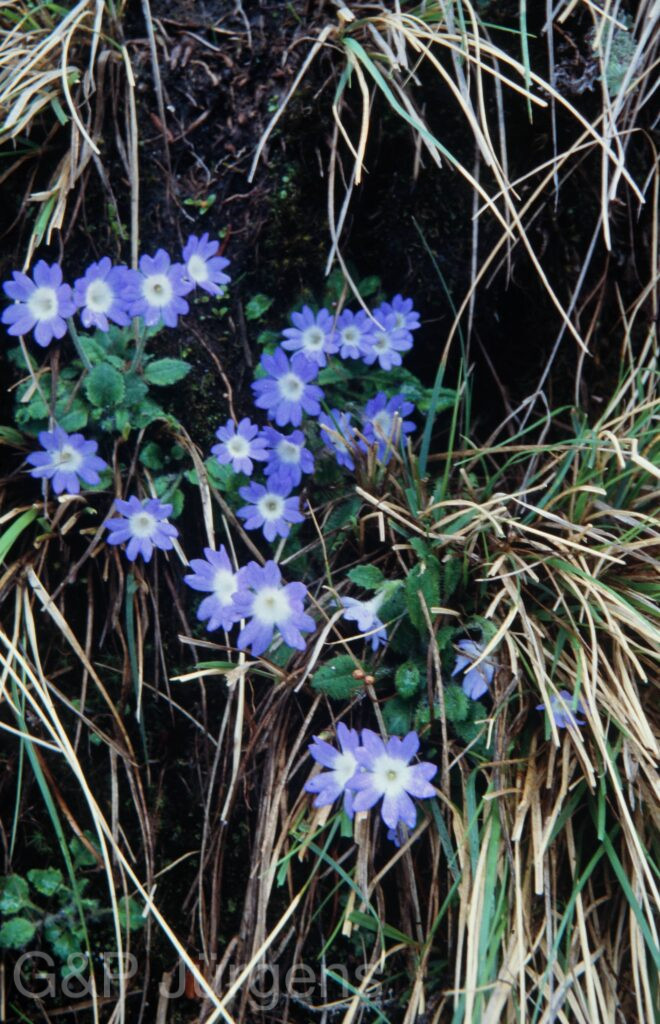
Primula buryana is a high-alpine primrose of the central and western Himalaya, recorded from Nepal and adjacent south-central China (Xizang), with around one hundred and twenty-two GBIF occurrences indicating a localised but well-documented range. It grows in damp alpine meadows, on grassy and rocky slopes, beside snowmelt rills and in moist turf above the treeline, typically around 4000 to 4500 m. The illustrated plant from the Churta-Khola in West Nepal at 4100 m, flowering in June, is characteristic of its early-summer phenology, blooming shortly after the snow retreats from the high pastures it favours.

The species is a small perennial herb forming a basal rosette of leaves that are often farinose (mealy with white or yellowish farina) and oblong to spathulate with crenate to denticulate margins. From the rosette rises a slender scape bearing a one- to several-flowered umbel subtended by an involucre of bracts. The flowers are heterostylous (pin and thrum), with a tubular calyx and a salverform to funnelform corolla that is violet to purple or pinkish with a contrasting yellowish or white eye. The fruit is a small capsule shorter than or about equalling the calyx, releasing numerous angular seeds.

Primula buryana is an accepted species placed within the petiolarid alliance of Primula (Primulaceae), the Himalayan group of farinose, small-statured alpine primroses. Its heterostyly promotes outcrossing, while the farina and compact rosette habit are adaptations to high insolation and the brief, moisture-rich alpine season. The species has a restricted range and, although not formally assessed, its dependence on intact high-altitude wet meadows makes it potentially vulnerable to grazing and climatic change.

Author: Balf. f. · Sources: POWO (Kew), GBIF, Annotated Checklist of the Flowering Plants of Nepal, Flora of China, Richards monograph Primula (Primulaceae)

H.R.Fletcher

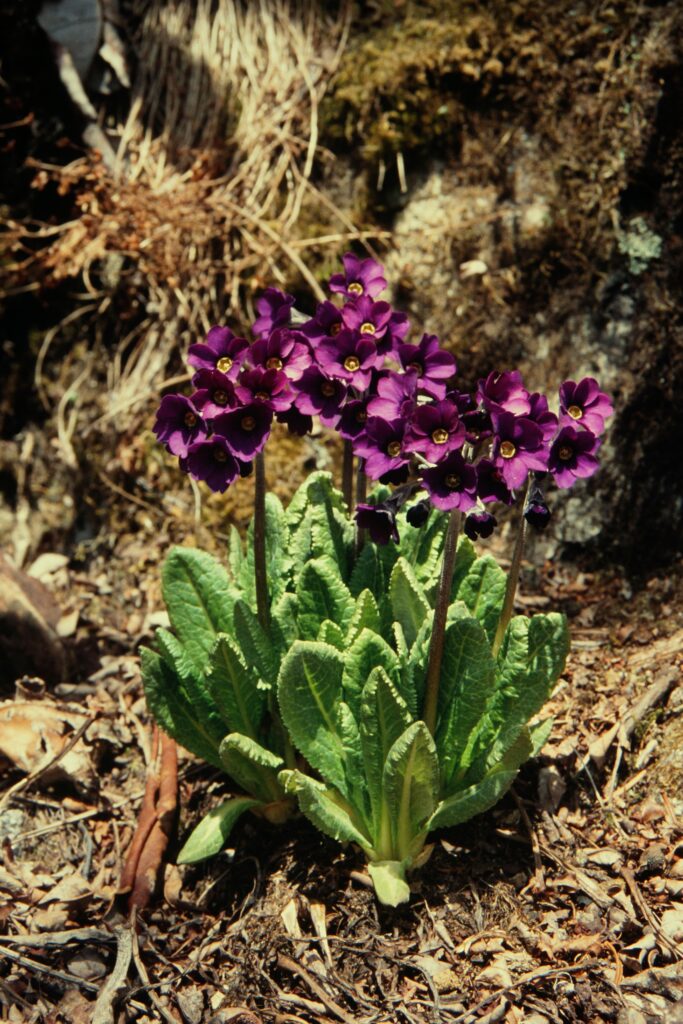
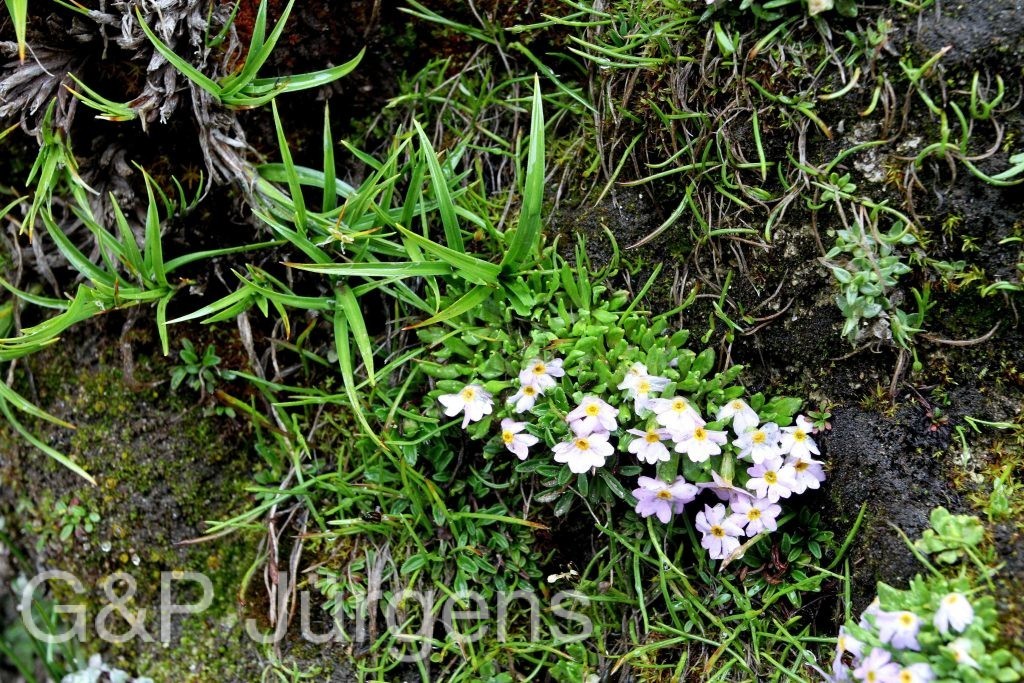
Nepal 2001 362 ergebnis ergebnis
Nepal (Gorkha) Rupina-La 3350m, May
Nepal 2001 361 ergebnis ergebnis
Nepal (Gorkha) Rupina-La 3350m, May

Description

Primula buryana var. purpurea is an alpine primrose found in central and eastern Nepal, growing in moist rocky crevices, moss-covered banks, and shaded cliff faces at 3,000–4,200 m elevation.

This compact perennial forms rosettes of small, rounded to spathulate leaves with a mealy (farinose) coating on the undersurface. The flowers are borne in umbels of 2–6 on slender scapes 5–15 cm tall. The variety purpurea is distinguished by its deep purple to violet-purple flowers with a contrasting yellow eye, differing from the type variety which has paler, lilac blooms.

Primula buryana belongs to the section Petiolares, a group of Himalayan primulas that are notoriously difficult to cultivate outside their native habitat due to their requirement for cool, humid conditions with excellent drainage.

Author: H.R.Fletcher · Sources: POWO (Kew), Flora of Nepal, Richards: Primula (2003)

Balf. f. & R.E. Cooper

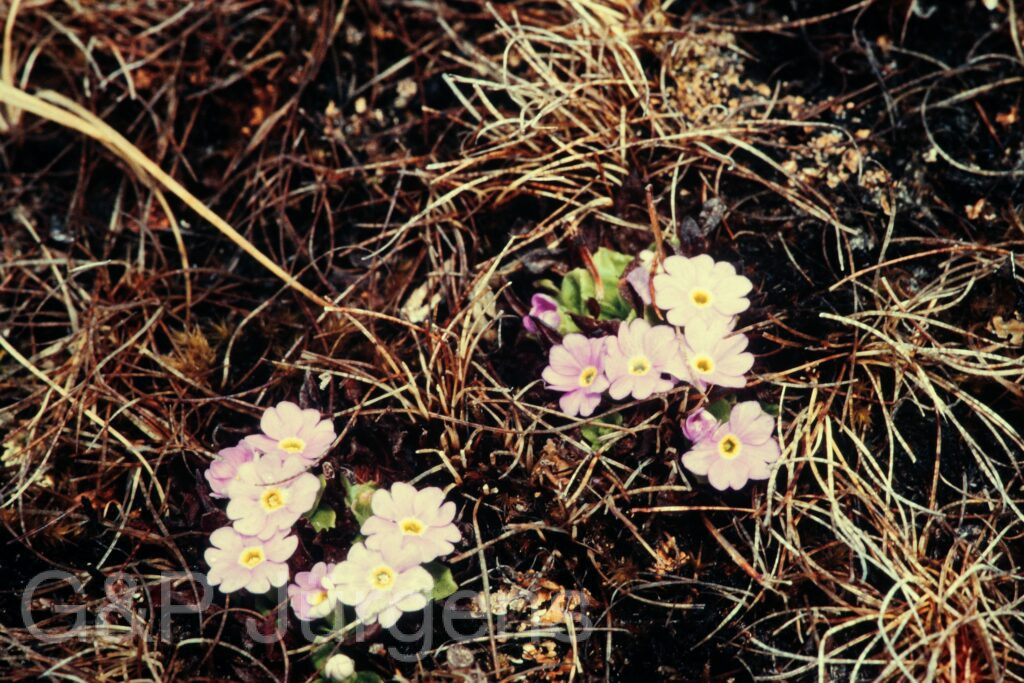
Sikkim2011 266
Sikkim Lada-La 4000m, June
Sikkim2011 335
Sikkim Lada-La 4000m, June
Bh09 120 P192
Bhutan Jimilangtso, 4000m June
Bh09 150 G268
Bhutan Jimilangtso, 4000m June
Sikkim2004 211 G358
Sikkim/India Gometang 4200m May

Description

Primula calderiana is an eastern Himalayan alpine primrose distributed through Nepal, India (Sikkim), Bhutan and adjacent China, with about 313 georeferenced records; isolated entries from Japan and elsewhere reflect cultivation or data artefacts. It grows on moist alpine meadows, damp turf, streamsides and the margins of melting snow between roughly 3500 and 4500 m. The documented localities at Lada-La (4000 m) and Gometang (4200 m) in Sikkim and at Jimilangtso (4000 m) in Bhutan, flowering in May and June, capture its appearance just after snowmelt in the high pastures.

It is a stout, scapose perennial with a basal rosette of obovate to spathulate leaves that are toothed at the margin and often dusted beneath with whitish or yellowish farina. The leafless scape bears a terminal umbel of several flowers, each subtended by linear bracts. The corolla is salver- or funnel-shaped with a slender tube and spreading limb of five notched lobes, ranging from deep purple to crimson with a contrasting yellow or dark eye, and a campanulate calyx. The fruit is a small capsule containing numerous seeds.

Primula calderiana belongs to section Petiolares, a notoriously difficult group whose species hybridise and intergrade across the eastern Himalaya; it is closely allied to P. tsariensis and related farinose primroses. As an early-flowering snowmelt specialist it is an indicator of intact alpine turf, and like many high-elevation Petiolares it is locally collected for gardens. It remains widespread within its core range.

Author: Balf. f. & R.E. Cooper · Sources: POWO (Kew), GBIF, Flora of Bhutan, Annotated Checklist of the Flowering Plants of Nepal, Richards' Primula monograph

W.W. Smith

BhutanPG2011 557 01 1
Bhutan Ludlow-Sherriff-Trail Dem-Tso, 4600m July
BhutanPG2011 558 1
Bhutan Ludlow-Sherriff-Trail Dem-Tso, 4600m July

Description

Primula caveana is a diminutive high-alpine primrose of the eastern Himalaya, recorded from Nepal, India, Bhutan and adjacent China, with about 115 georeferenced occurrences indicating a restricted range at extreme elevation. It is a plant of cold, exposed screes, rock crevices, moraine and damp gravelly turf near the upper limit of vegetation, generally between roughly 4200 and 5000 m. The documented gathering from Dem-Tso on the Ludlow-Sherriff Trail in Bhutan at 4600 m, flowering in July, is fully characteristic of its harsh, late-season nival habitat where snow persists late and the growing season is brief.

It is a small, farinose, scapose perennial forming a tight basal rosette of obovate to spathulate leaves that are toothed toward the apex and densely coated, especially beneath, with conspicuous yellowish or white farina. The short scape bears a few-flowered umbel subtended by farinose bracts. The corolla is salver-shaped with a slender tube and a spreading limb of five notched lobes, deep blue to violet with a yellow or white meal-dusted eye, set in a powdery campanulate calyx. The fruit is a small capsule with numerous seeds.

Primula caveana belongs to section Soldanelloides (allied to the Petiolares group), a cluster of high-elevation, farinose primroses that are taxonomically intricate and often hybridise. The heavy farina is interpreted as protection against intense ultraviolet radiation and water loss at extreme altitude. As a narrowly distributed nival specialist confined to the highest meadows and screes, it is of particular interest for monitoring the effects of alpine climatic change.

Author: W.W. Smith · Sources: POWO (Kew), GBIF, Flora of Bhutan, Annotated Checklist of the Flowering Plants of Nepal, Richards' Primula monograph

G.Watt

BhutanPG2011 562 01
Bhutan Ludlow-Sherriff-Trail Dem-Tso, 4600m July
Nepal 97 183 P363
Nepal Tayla-La 4500m April

Description

Primula concinna is a dwarf high-alpine primrose of the eastern Himalaya, recorded from Nepal, India, Bhutan and south-west China (with a cultivated record in Japan) across 123 georeferenced occurrences. It is a plant of the upper alpine zone, growing in short turf, on moist gravelly slopes, rock ledges and the margins of snow-melt flushes. The collections at Dem-Tso on the Ludlow-Sherriff Trail in Bhutan (4600 m, July) and Tayla-La in Nepal (4500 m, April) place it among the highest-altitude primulas, typically between about 4000 and 5000 m, flowering as the snow recedes.

It is a diminutive rosette-forming perennial herb, often only a few centimetres tall. The leaves are spathulate to oblanceolate, crowded into a flat basal rosette, with toothed or crenate margins and frequently a coating of pale farina (mealy powder) beneath. The flowers are borne singly or in a small umbel on a short scape, each with a tubular calyx and a rose-purple to lilac-pink corolla with a yellow or whitish eye, the limb flat and the lobes notched. The species is heterostylous (pin and thrum forms), and the fruit is a small capsule shorter than or about equalling the calyx.

Primula concinna belongs to the predominantly Sino-Himalayan section Minutissimae, a group of tiny, high-altitude, often farinose primulas distinguished by their cushion or rosette habit and solitary to few-flowered scapes. The heterostylous flowers promote outcrossing by alpine insects, chiefly bees and flies. Restricted to high, often remote terrain and locally frequent there, it faces few direct threats, though as a high-mountain specialist it is potentially sensitive to climate-driven shifts in snow cover.

Author: G.Watt · Sources: POWO (Kew), GBIF, Flora of Bhutan, Flora of China, Flora of Nepal, Richards Primula (monograph)

Sm.

Bhutan2014 914
Bhutan Chele La 4000m, May
Bhutan2014 378
Bhutan Chele La 4000m, May
Bh2008 247 P391
Bhutan Tumching-La, 3800m April

Description

Primula denticulata, the drumstick primrose, is a widespread Himalayan and Sino-Himalayan species ranging from Afghanistan and Pakistan through Nepal, India, Bhutan and Myanmar into China; long valued in horticulture, it is widely cultivated and naturalised, accounting for GBIF records from Great Britain, Germany, Austria, Scandinavia and North America among nearly 1800 occurrences. It is a plant of moist alpine and subalpine meadows, streamsides, damp grassy slopes and open scrub, often forming colonies in snow-melt flushes. The images document it in Bhutan at Chele La around 4000 m in May and at Tumching-La near 3800 m in April, when its globular heads emerge as the snow recedes.

It is a robust perennial herb forming a rosette from a short stout rhizome. The leaves are oblong-spathulate, denticulate at the margin (giving the epithet), often farinose beneath, and elongate markedly after flowering. The scape is stout and at first short, elongating to 15-30 cm, terminating in a dense globose umbel of many flowers. Each flower is salverform, lilac, purple, violet or occasionally white, with a yellow eye, borne on short pedicels; the species is heterostylous, with pin and thrum morphs. The fruit is a small globose capsule enclosed in the persistent calyx, shedding numerous seeds.

Primula denticulata is placed in section Denticulata of the genus and forms a distinctive group within the vast Himalayan radiation of Primula. Its heterostyly enforces outcrossing by early-season pollinators, and farina production is typical of many high-elevation primulas. Common across its range and easily grown, it is of least conservation concern and remains one of the most familiar Himalayan primroses in gardens worldwide.

Author: Sm. · Sources: POWO (Kew), GBIF, Flora of China, Flora of Bhutan, Flora of Nepal, Smith & Fletcher Monograph of the Genus Primula

Craib

Sikkim2004 167 G283
Sikkim/India Singalila 3900m May
Sikkim2004 156 P270
Sikkim/India Singalila 3900m May
Nepal1992 127 P181 ergebnis
Nepal Ghunsa 3600m March 
Sikkim 2006 386 ergebnis
India West-Bengal, Kishong 3500m, May

Description

Primula deuteronana is an eastern Himalayan primrose restricted to Nepal, India and Bhutan, and is comparatively poorly collected, with only about 61 GBIF records. It is a plant of the subalpine and alpine zone, growing on moist, shaded slopes, rocky banks, mossy ledges and the margins of rhododendron scrub, often flowering very early in the season as the snow melts. The cited collections illustrate this well: Singalila on the Sikkim-India ridge at around 3900 m in May, Ghunsa in eastern Nepal at about 3600 m as early as March, and Kishong in West Bengal at some 3500 m in May, indicating a preference for cool, humid, well-drained mountain habitats.

The plant is a small, low perennial herb with a basal rosette of leaves that are obovate to spathulate, often narrowed to a winged petiole, with crenate to dentate margins and frequently a farinose (mealy) coating, particularly when young. The flowers are borne singly or few together on short scapes barely exceeding the foliage, each with a tubular, lobed calyx and a salverform corolla in shades of rose-pink to purple with a contrasting paler or yellowish eye, the five lobes spreading and notched. The fruit is a small capsule containing numerous tiny seeds.

Described by Craib, P. deuteronana belongs to the species-rich Himalayan assemblage of farinose primulas. Its very early, near-snowmelt flowering is an adaptation to the short high-mountain growing season. As a narrow-range eastern Himalayan endemic with relatively few documented populations, it is potentially sensitive to grazing, trampling and climatic warming affecting its restricted alpine habitat, and merits monitoring.

Author: Craib · Sources: POWO (Kew), GBIF, Flora of Bhutan, Annotated Checklist of the Flowering Plants of Nepal, Richards' monograph Primula

G.Watt

Sikkim2011 40
Sikkim Vista-valley 3700m, June
Sikkim2011 41
Sikkim Vista-valley 3700m, June
Sikkim2004 388 P666
Sikkim Lachung 3100m, May
Sikkim 2006 357 ergebnis
India West-Bengal Tamrong 2750m, May

Description

Primula dickieana is an eastern Himalayan primrose ranging through China, Nepal, India, Myanmar and Bhutan, with about 202 GBIF records concentrated in the Sikkim–Bhutan sector. It is a plant of moist alpine meadows, damp turf and seepage slopes, typically between roughly 2700 and 4500 m. The cited collections span this gradient, from Sikkim's Vista valley at 3700 m and Lachung at 3100 m to Tamrong in West Bengal at 2750 m, flowering in May and June as snowmelt saturates the high pastures. It thrives where cool, humus-rich soils remain reliably wet through the early growing season.

The species is a small, tufted, perennial herb forming a basal rosette of leaves that are oblanceolate to spathulate, narrowed to a winged petiole, with crenate to entire margins and an efarinose (mealless) surface. A single slender scape bears a solitary terminal flower, or occasionally a few, the corolla rotate and showy in proportion to the plant. Flower colour is notably variable, ranging from yellow through cream, pink and purple to nearly white, with a tubular calyx and a corolla limb of broad, often emarginate lobes. The fruit is a small capsule enclosed within the persistent calyx, dehiscing to release numerous minute seeds.

Within Primula, the species is placed in section Yunnanensis (formerly allied to section Dickieana), a group of single-flowered alpine primulas, and its remarkable colour polymorphism has long interested monographers. Pollination is effected by alpine insects visiting the open corolla. The species is locally common within its narrow alpine band but, like many Sino-Himalayan primulas, is potentially vulnerable to upslope habitat compression under a warming climate and to trampling and grazing in accessible high pastures.

Author: G.Watt · Sources: POWO (Kew), GBIF, Flora of Bhutan, Flora of China (Primulaceae), Richards Primula (monograph)

Craib

Nepal 99 472 ergebnis
West-Nepal Churta-Khola 3250m, June

Description

Primula drummondiana is a narrowly distributed Himalayan primrose confined to the central and western Himalaya, with GBIF records from India, Nepal and Bhutan totalling only about 37 collections, reflecting both its restricted range and limited herbarium representation. It grows on damp alpine and subalpine slopes, moist rock ledges, snow-melt flushes and grassy stream margins, generally between 3000 and 4000 m. The plant photographed at Churta-Khola in west Nepal at 3250 m in June, flowering soon after snowmelt, illustrates its dependence on cool, moisture-retentive ground in the brief Himalayan growing season.

It is a small rosette-forming perennial herb. The leaves are obovate to oblong-spathulate, narrowed to a winged petiole, with a crenate-dentate margin and frequently a farinose (mealy white) coating on the undersurface, as is characteristic of many farinose-section primulas. The flowers are borne in a terminal umbel on a slender scape overtopping the foliage; the corolla is salver-shaped with a narrow tube and spreading, notched lobes, typically violet to pinkish-purple with a contrasting yellow or whitish eye. Plants are heterostylous, producing pin and thrum morphs, and the fruit is a small capsule dehiscing to release numerous minute seeds.

The genus Primula reaches its greatest diversity in the Sino-Himalayan mountains, and P. drummondiana belongs to the farinose-leaved alliance whose members are taxonomically intricate and often distinguished by subtle leaf, farina and corolla characters. Heterostyly enforces outcrossing in these alpine populations. Its small known range and few documented sites mean the species merits conservation attention, as such restricted-range alpine primulas are particularly sensitive to warming and grazing pressure on high pastures.

Author: Craib · Sources: POWO (Kew), GBIF, Annotated Checklist of the Flowering Plants of Nepal, Flora of Bhutan, Smith & Fletcher revision of Primula, The Genus Primula (Richards)