
G.Watt
Description
Primula concinna is a dwarf high-alpine primrose of the eastern Himalaya, recorded from Nepal, India, Bhutan and south-west China (with a cultivated record in Japan) across 123 georeferenced occurrences. It is a plant of the upper alpine zone, growing in short turf, on moist gravelly slopes, rock ledges and the margins of snow-melt flushes. The collections at Dem-Tso on the Ludlow-Sherriff Trail in Bhutan (4600 m, July) and Tayla-La in Nepal (4500 m, April) place it among the highest-altitude primulas, typically between about 4000 and 5000 m, flowering as the snow recedes.
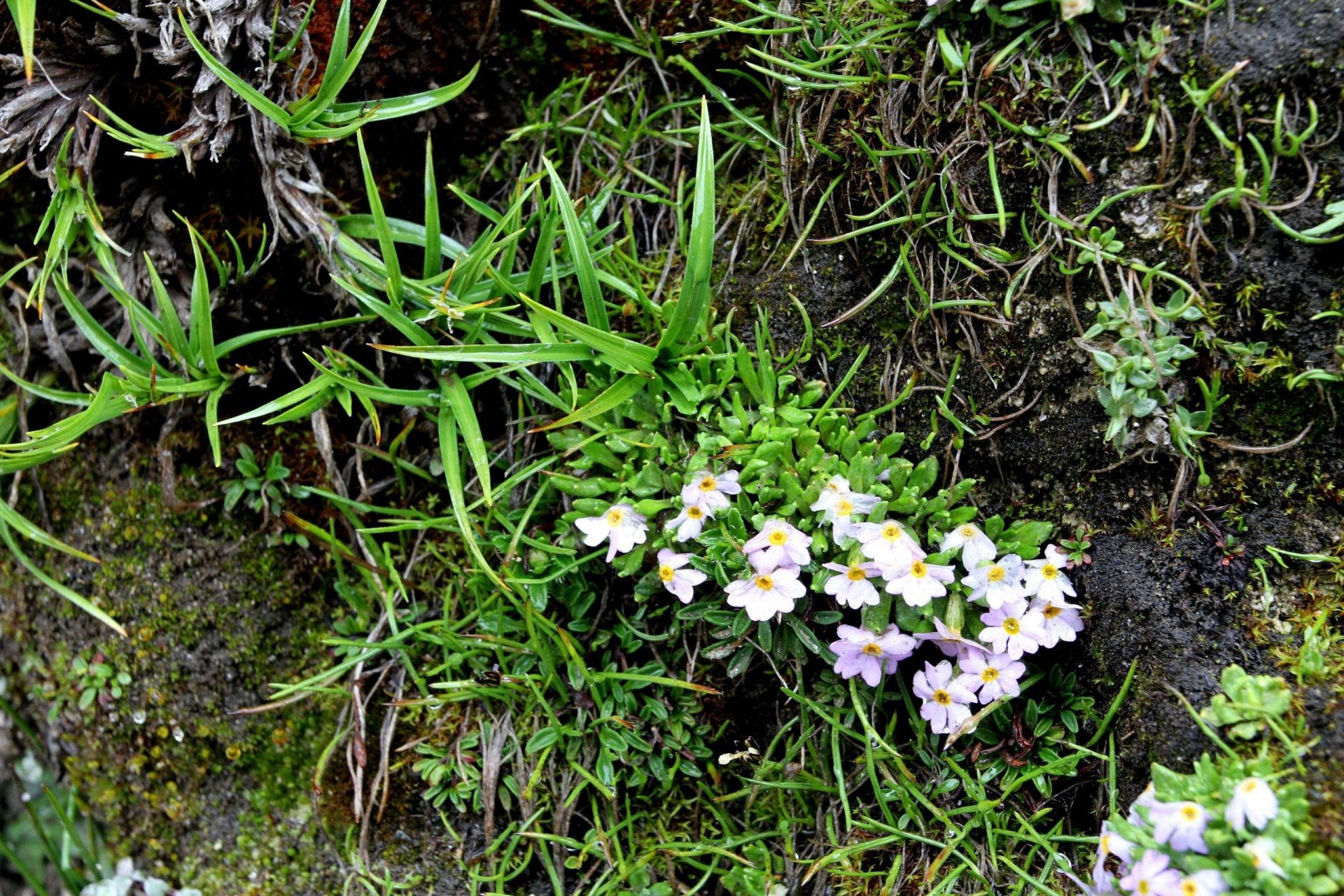
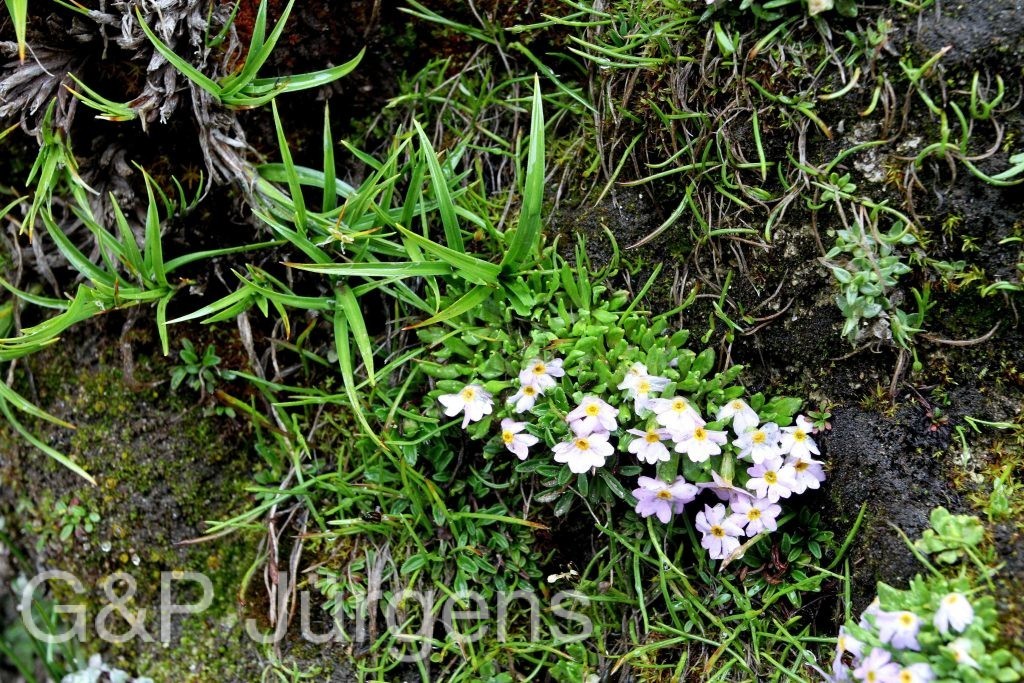
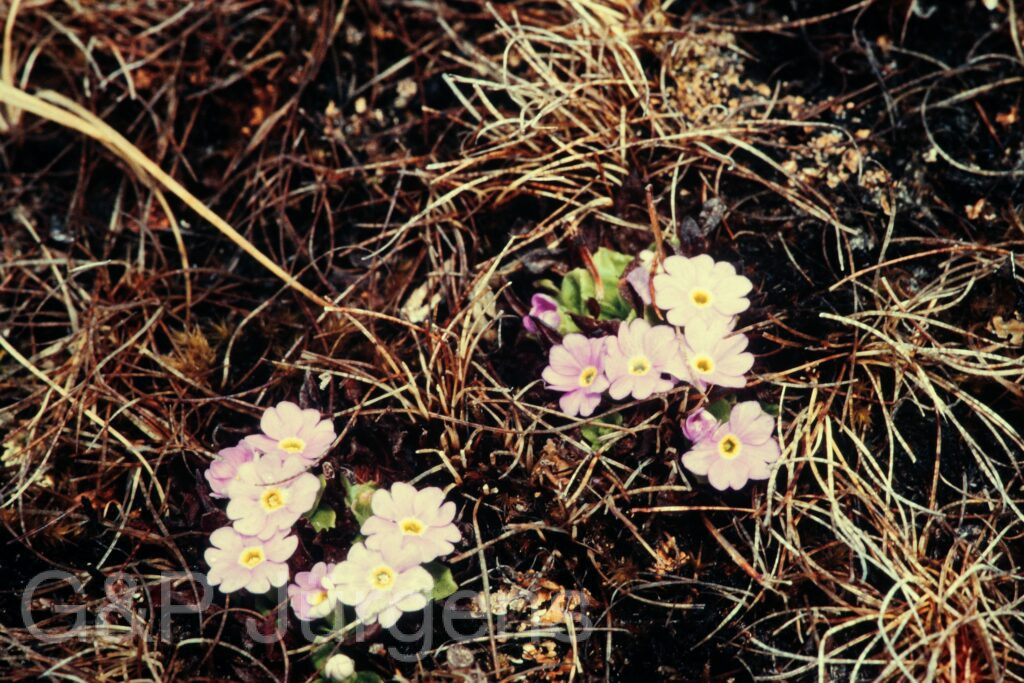
It is a diminutive rosette-forming perennial herb, often only a few centimetres tall. The leaves are spathulate to oblanceolate, crowded into a flat basal rosette, with toothed or crenate margins and frequently a coating of pale farina (mealy powder) beneath. The flowers are borne singly or in a small umbel on a short scape, each with a tubular calyx and a rose-purple to lilac-pink corolla with a yellow or whitish eye, the limb flat and the lobes notched. The species is heterostylous (pin and thrum forms), and the fruit is a small capsule shorter than or about equalling the calyx.
Primula concinna belongs to the predominantly Sino-Himalayan section Minutissimae, a group of tiny, high-altitude, often farinose primulas distinguished by their cushion or rosette habit and solitary to few-flowered scapes. The heterostylous flowers promote outcrossing by alpine insects, chiefly bees and flies. Restricted to high, often remote terrain and locally frequent there, it faces few direct threats, though as a high-mountain specialist it is potentially sensitive to climate-driven shifts in snow cover.
Author: G.Watt · Sources: POWO (Kew), GBIF, Flora of Bhutan, Flora of China, Flora of Nepal, Richards Primula (monograph)