
Balf. f. & R.E. Cooper


Description
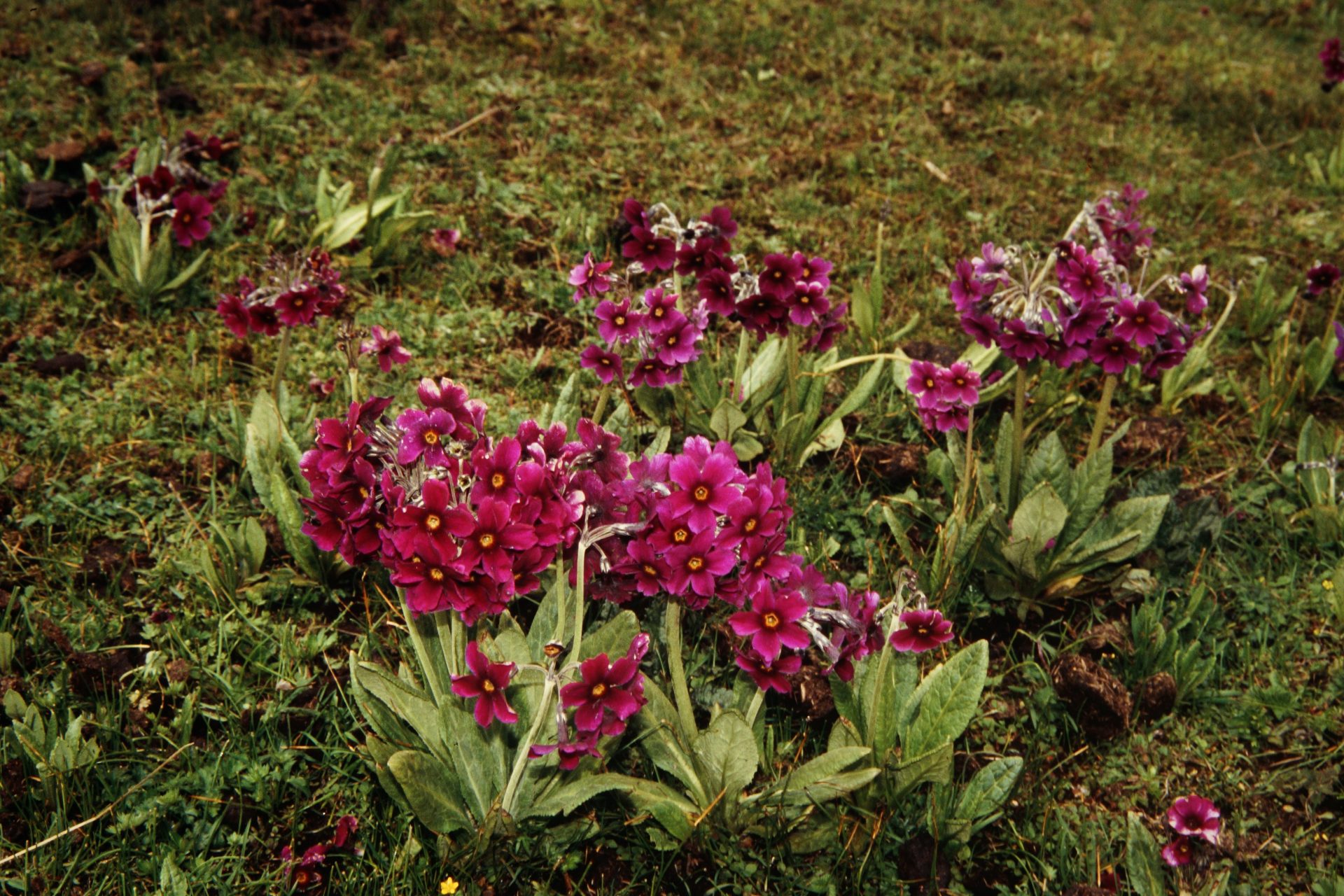
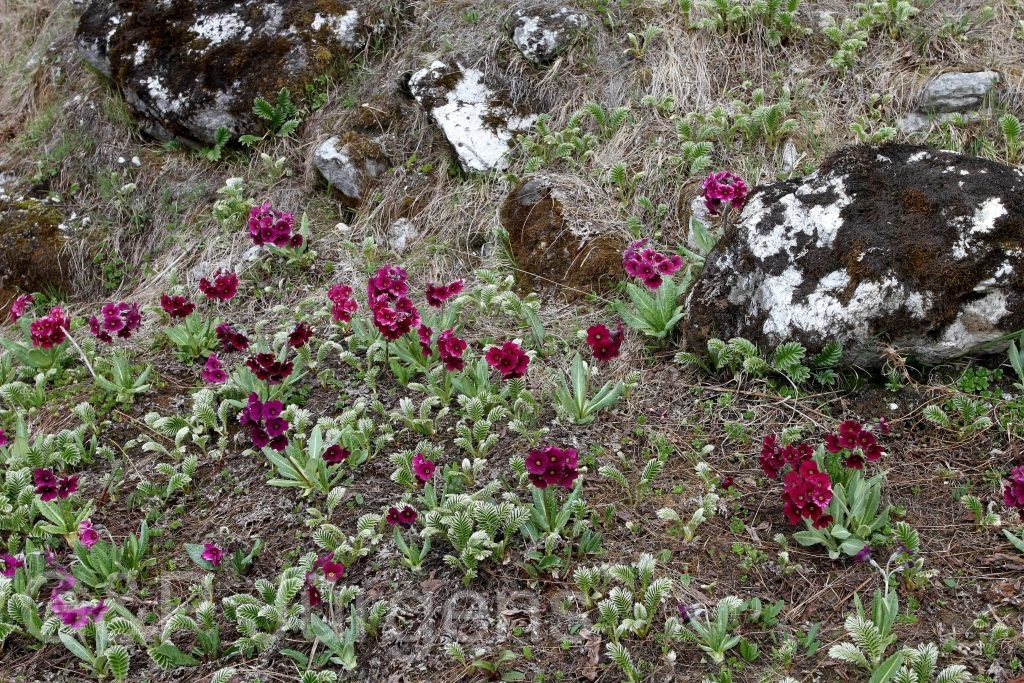
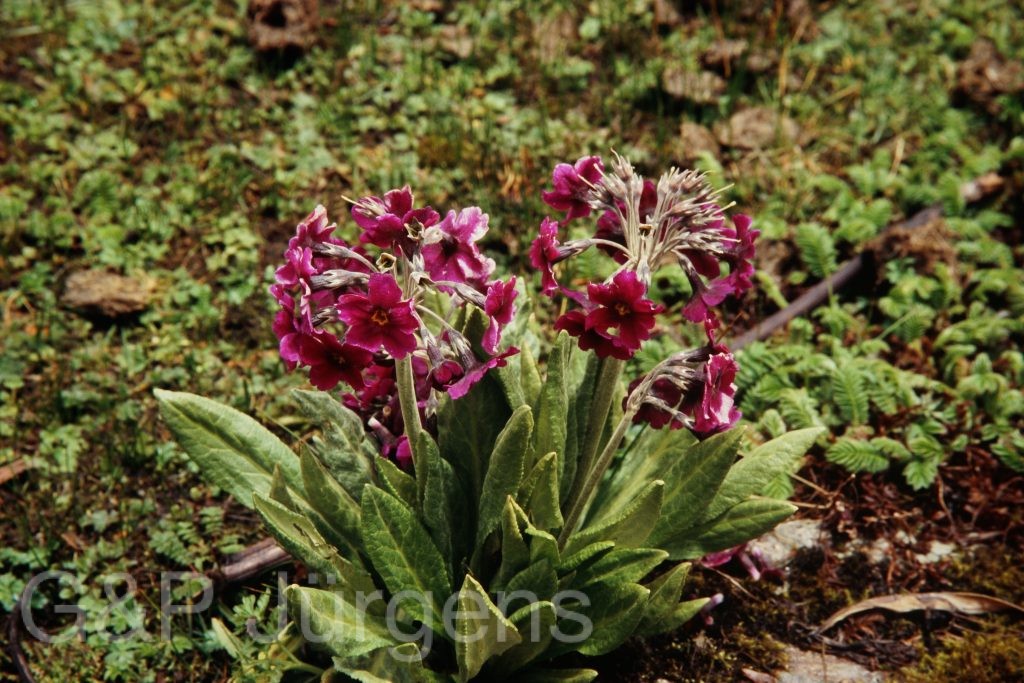
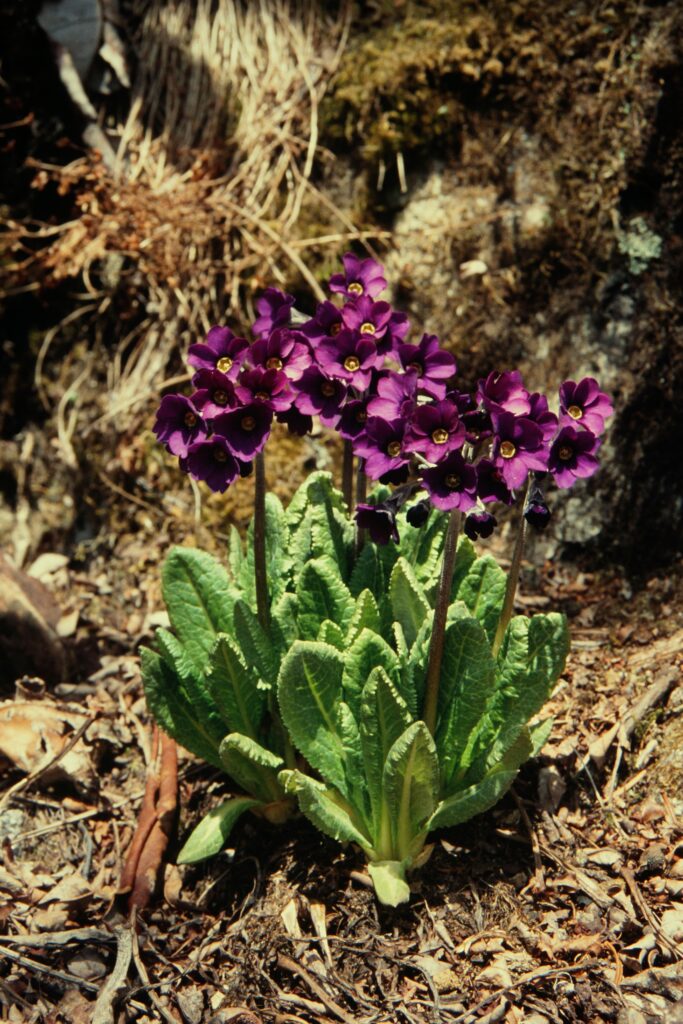
Primula calderiana is an eastern Himalayan alpine primrose distributed through Nepal, India (Sikkim), Bhutan and adjacent China, with about 313 georeferenced records; isolated entries from Japan and elsewhere reflect cultivation or data artefacts. It grows on moist alpine meadows, damp turf, streamsides and the margins of melting snow between roughly 3500 and 4500 m. The documented localities at Lada-La (4000 m) and Gometang (4200 m) in Sikkim and at Jimilangtso (4000 m) in Bhutan, flowering in May and June, capture its appearance just after snowmelt in the high pastures.
It is a stout, scapose perennial with a basal rosette of obovate to spathulate leaves that are toothed at the margin and often dusted beneath with whitish or yellowish farina. The leafless scape bears a terminal umbel of several flowers, each subtended by linear bracts. The corolla is salver- or funnel-shaped with a slender tube and spreading limb of five notched lobes, ranging from deep purple to crimson with a contrasting yellow or dark eye, and a campanulate calyx. The fruit is a small capsule containing numerous seeds.
Primula calderiana belongs to section Petiolares, a notoriously difficult group whose species hybridise and intergrade across the eastern Himalaya; it is closely allied to P. tsariensis and related farinose primroses. As an early-flowering snowmelt specialist it is an indicator of intact alpine turf, and like many high-elevation Petiolares it is locally collected for gardens. It remains widespread within its core range.
Author: Balf. f. & R.E. Cooper · Sources: POWO (Kew), GBIF, Flora of Bhutan, Annotated Checklist of the Flowering Plants of Nepal, Richards' Primula monograph