
Hook.
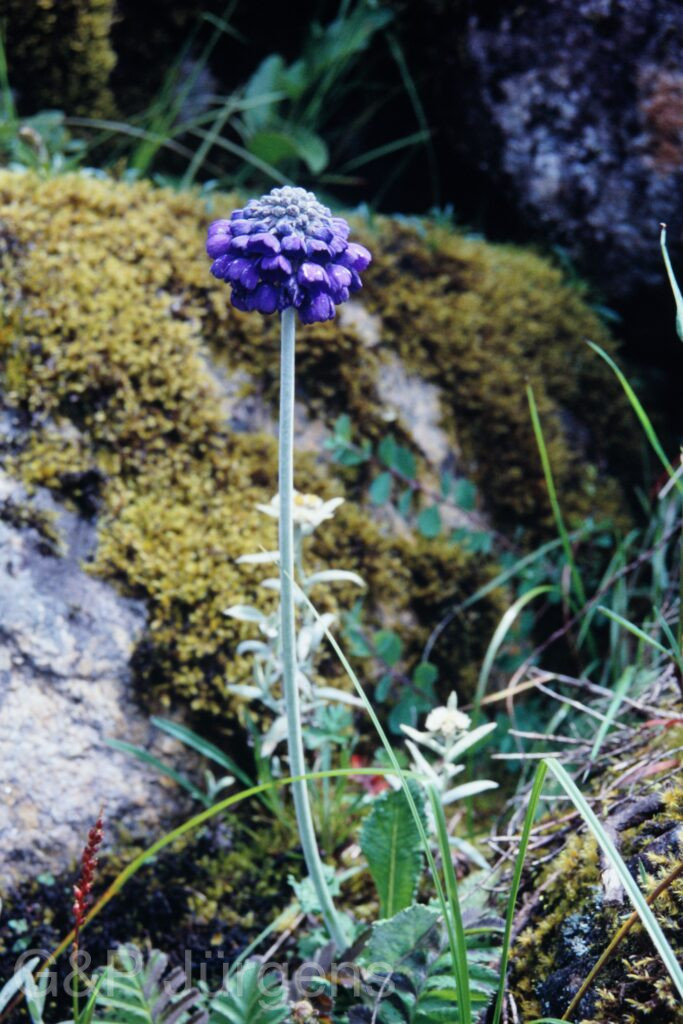
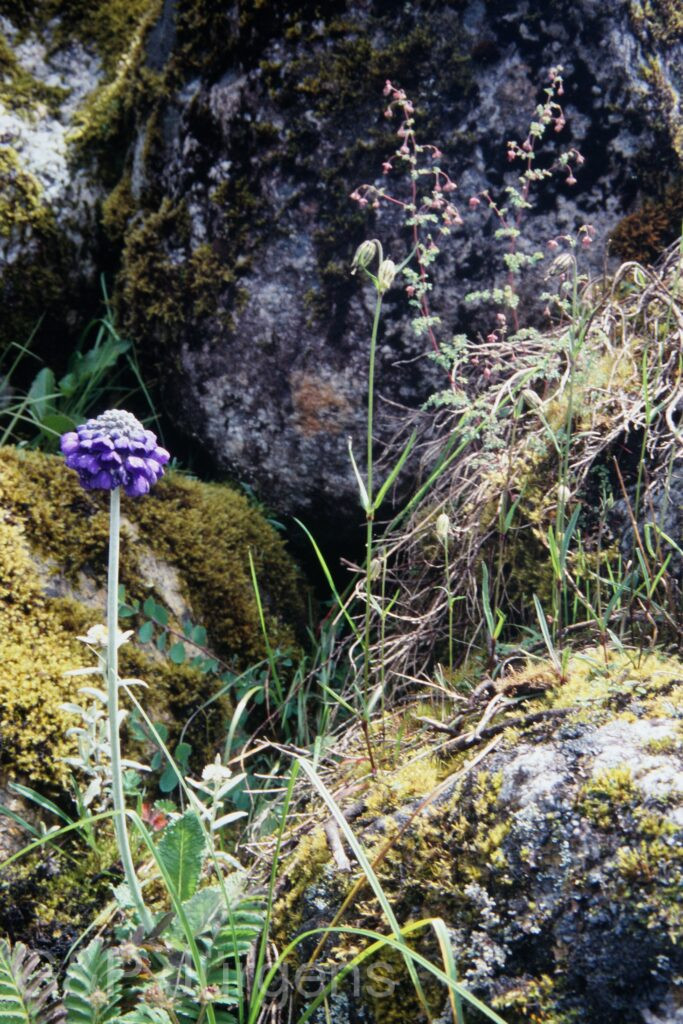
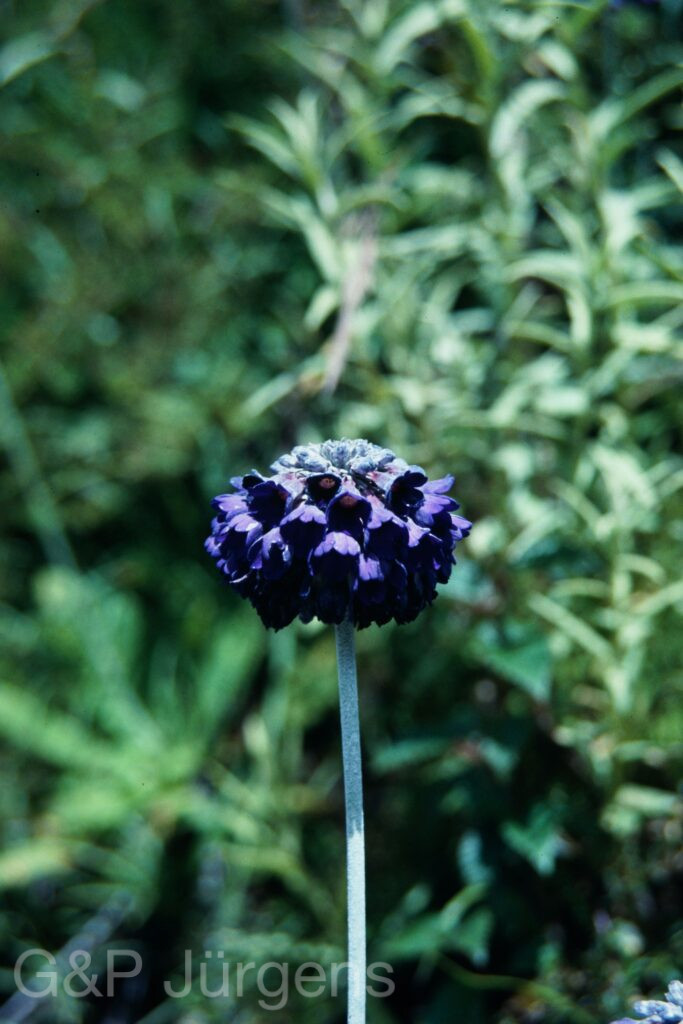
Description
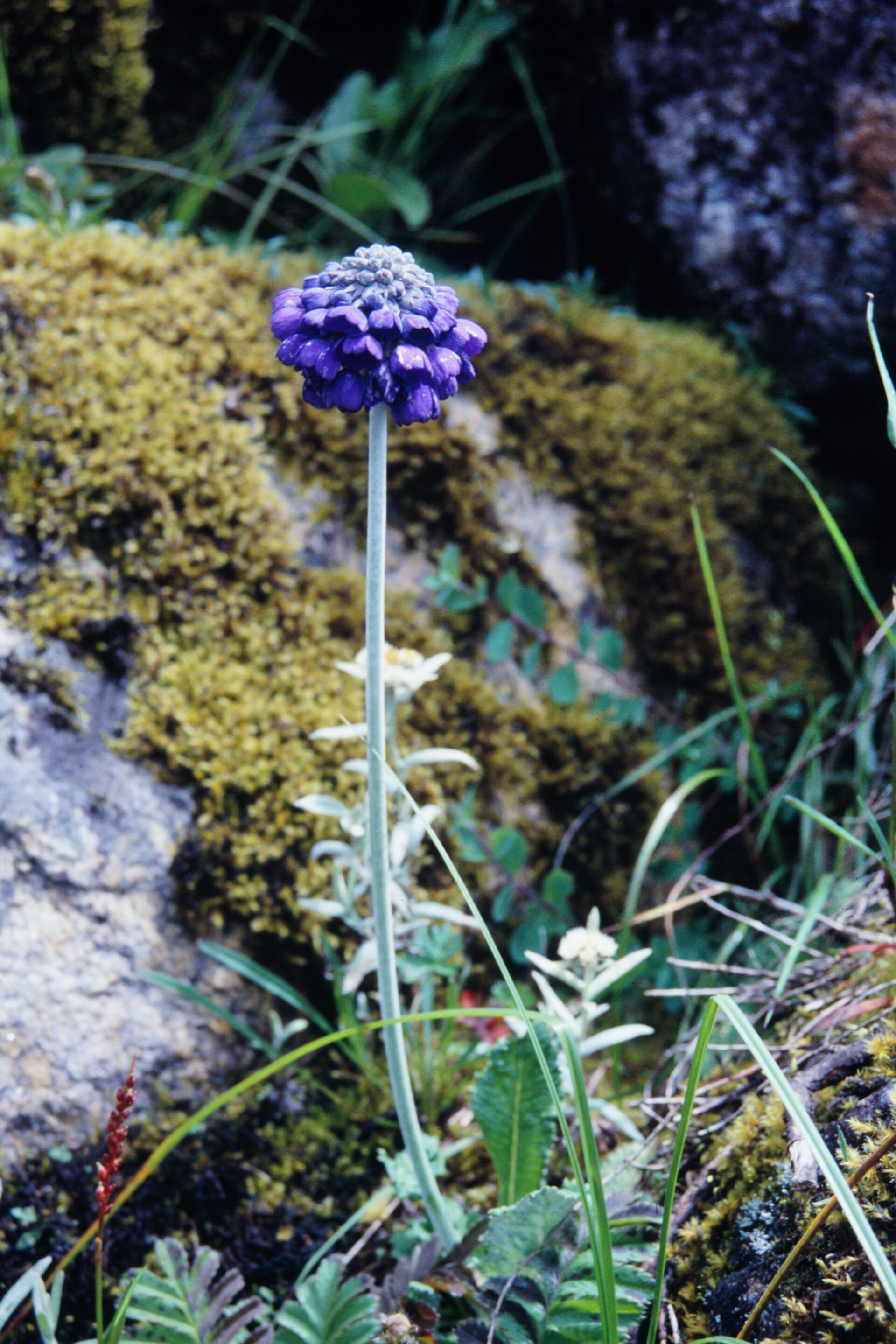
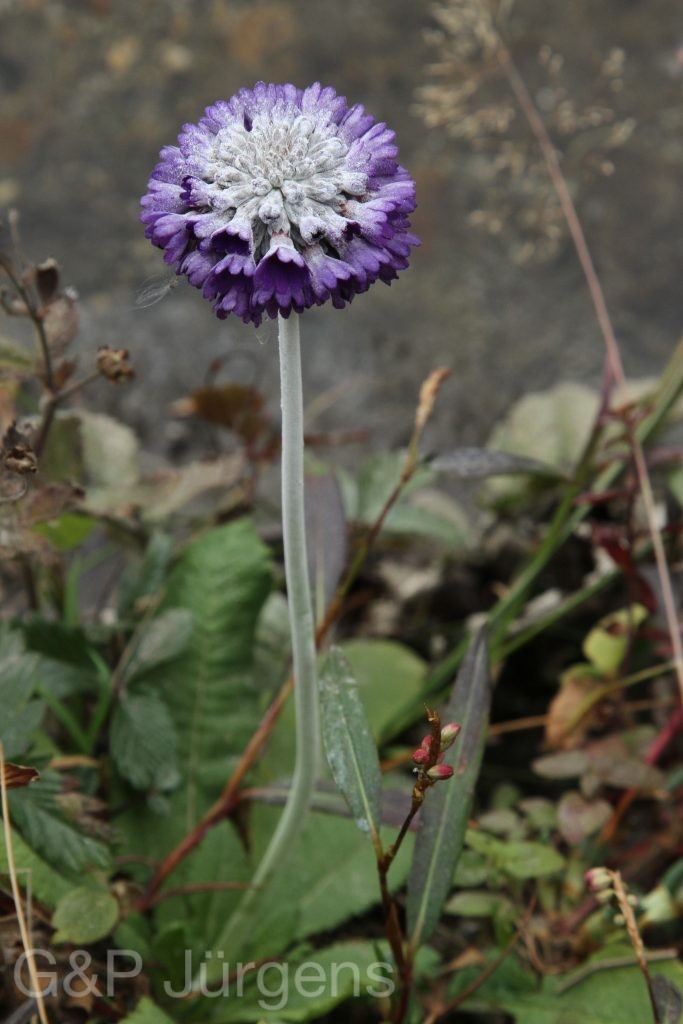
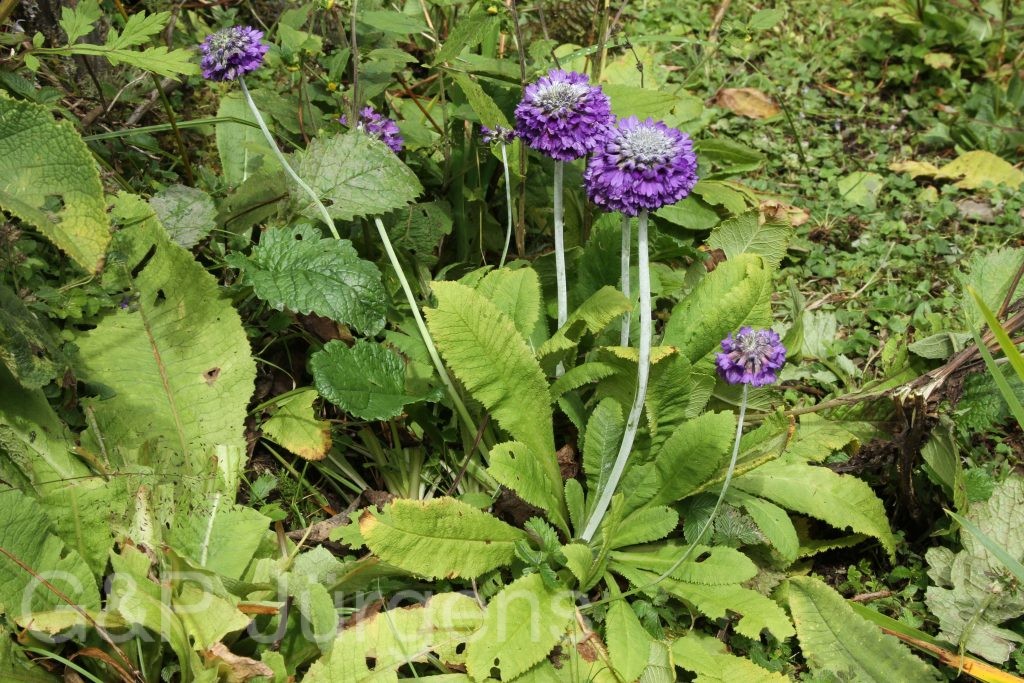
Primula capitata is an eastern Himalayan primrose distributed through Nepal, Sikkim and northern India, Bhutan and adjacent southern China and northern Myanmar, with around 476 GBIF records (additional entries from Europe, North America, Japan and Korea reflecting its cultivation). It is a plant of open, moist alpine and subalpine habitats, growing in damp meadows, on grassy slopes, streamsides and among rocks. The imaged populations at Tumching La (4000 m) and Shele La (3000 m) in Bhutan and at Dzongri in Sikkim (4100 m) span its typical elevational range and its notably late, monsoon-to-autumn flowering from August into October, when much of the alpine flora has already set seed.
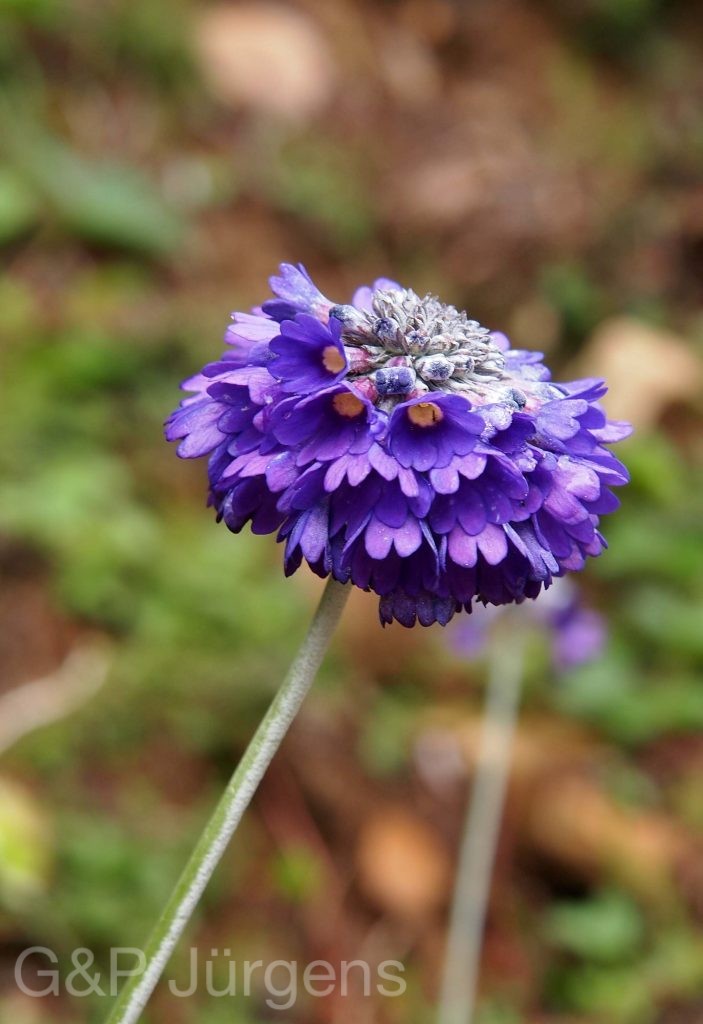
The species forms a rosette of oblanceolate to spathulate leaves that are crenate to denticulate at the margin and densely white- or yellow-farinose beneath. From the rosette rises a stout, farinose scape bearing the diagnostic inflorescence: a dense, flat-topped to hemispherical capitate head of many small flowers, the lowermost opening first so that the head appears truncate. Each flower has a tubular calyx and a violet to deep blue-purple corolla with a short tube and small, spreading limb-lobes, the throat farinose. The plant is heterostylous. The fruit is a small capsule enclosed in the persistent calyx.
Primula capitata belongs to sect. Capitatae, a small group distinguished by their compact, drumstick-like heads of farinose flowers. Several subspecies and varieties have been recognised on the basis of leaf and farina characters and degree of late-season flowering. Its dependence on cool, moist alpine turf ties its distribution to the high monsoon-influenced ranges of the eastern Himalaya; it is locally common and not regarded as threatened, and is valued in cultivation as a hardy late-flowering rock-garden primula.
Author: Hook. · Sources: POWO (Kew), GBIF, Flora of Bhutan, Flora of China, Annotated Checklist of the Flowering Plants of Nepal, Richards' Primula (monograph)