
W.W. Smith
Description
Primula caveana is a diminutive high-alpine primrose of the eastern Himalaya, recorded from Nepal, India, Bhutan and adjacent China, with about 115 georeferenced occurrences indicating a restricted range at extreme elevation. It is a plant of cold, exposed screes, rock crevices, moraine and damp gravelly turf near the upper limit of vegetation, generally between roughly 4200 and 5000 m. The documented gathering from Dem-Tso on the Ludlow-Sherriff Trail in Bhutan at 4600 m, flowering in July, is fully characteristic of its harsh, late-season nival habitat where snow persists late and the growing season is brief.
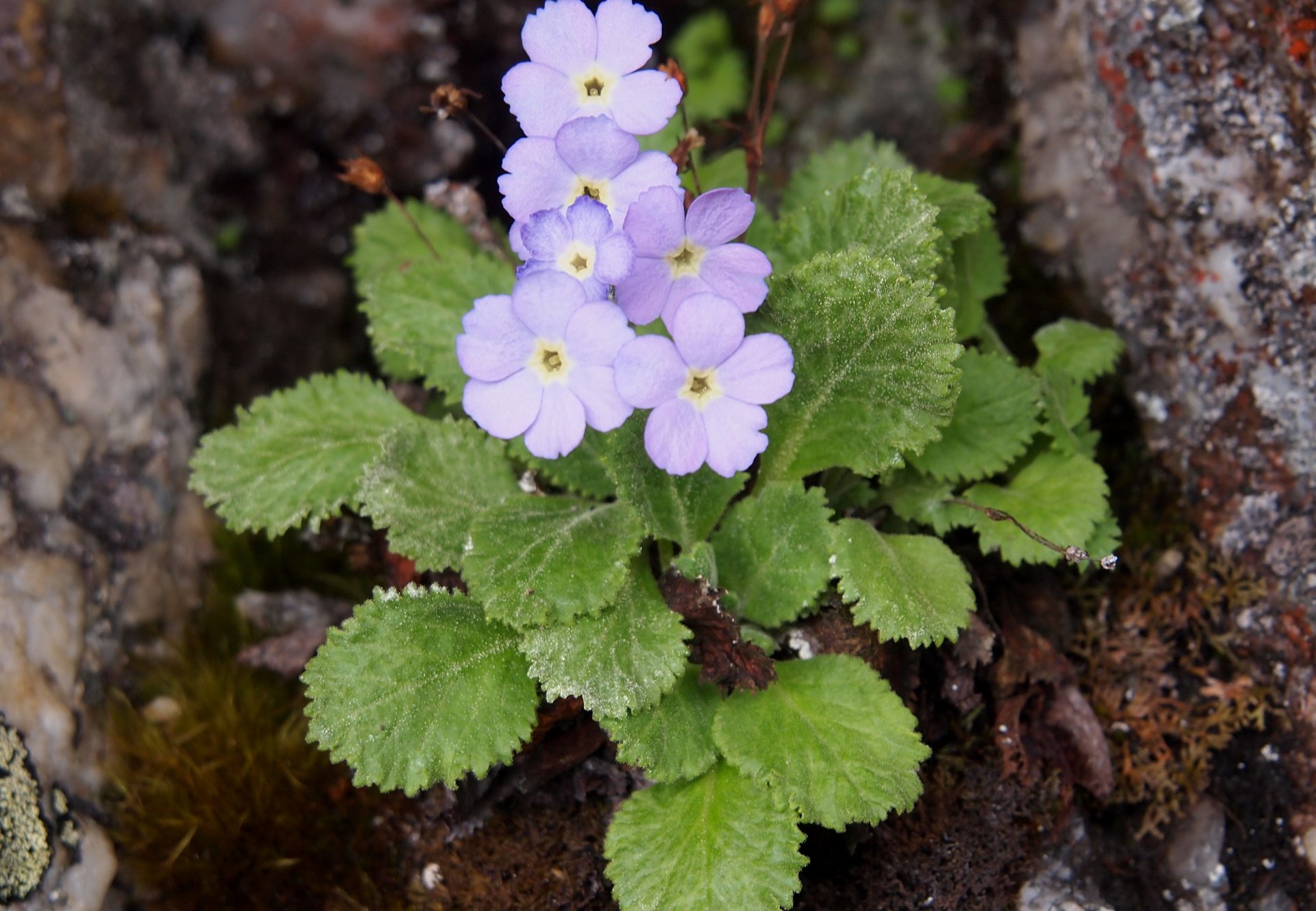
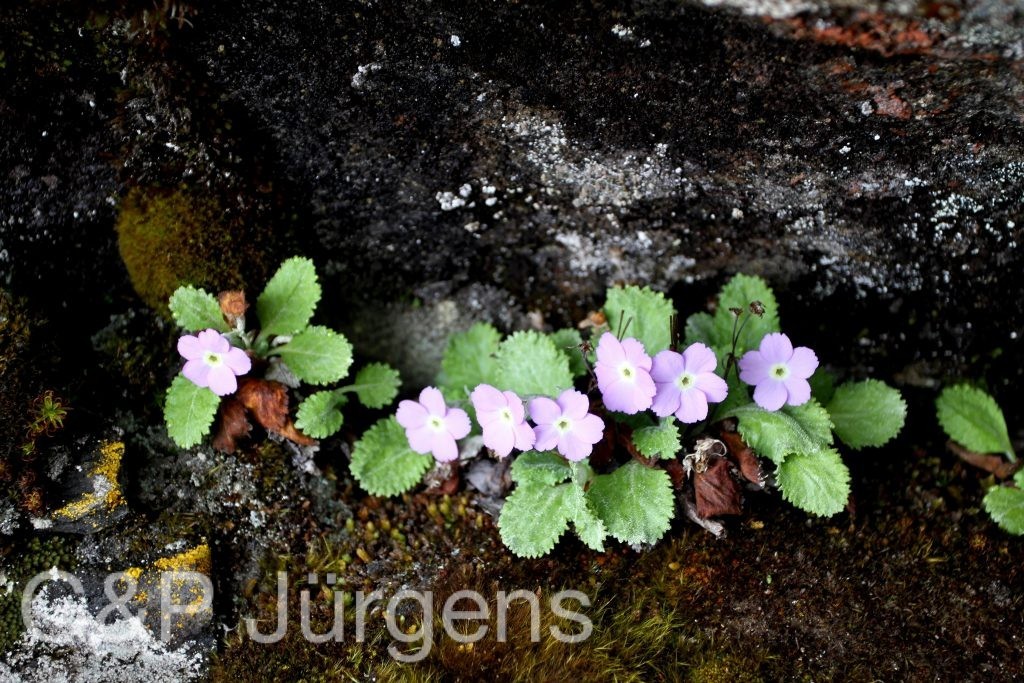
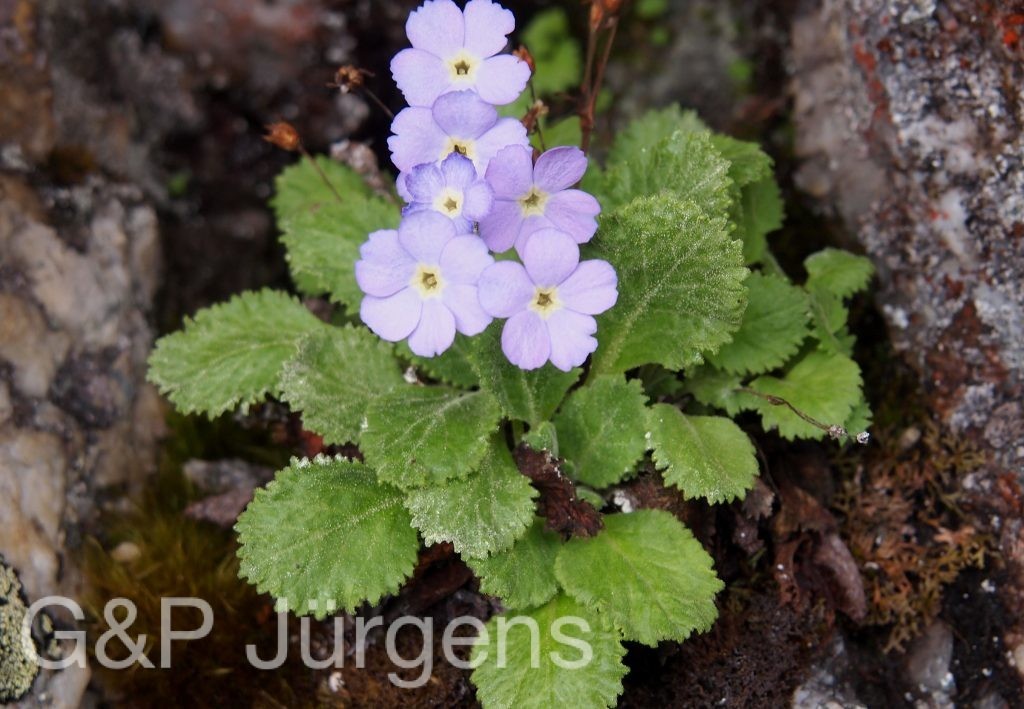
It is a small, farinose, scapose perennial forming a tight basal rosette of obovate to spathulate leaves that are toothed toward the apex and densely coated, especially beneath, with conspicuous yellowish or white farina. The short scape bears a few-flowered umbel subtended by farinose bracts. The corolla is salver-shaped with a slender tube and a spreading limb of five notched lobes, deep blue to violet with a yellow or white meal-dusted eye, set in a powdery campanulate calyx. The fruit is a small capsule with numerous seeds.
Primula caveana belongs to section Soldanelloides (allied to the Petiolares group), a cluster of high-elevation, farinose primroses that are taxonomically intricate and often hybridise. The heavy farina is interpreted as protection against intense ultraviolet radiation and water loss at extreme altitude. As a narrowly distributed nival specialist confined to the highest meadows and screes, it is of particular interest for monitoring the effects of alpine climatic change.
Author: W.W. Smith · Sources: POWO (Kew), GBIF, Flora of Bhutan, Annotated Checklist of the Flowering Plants of Nepal, Richards' Primula monograph