Primulaceae

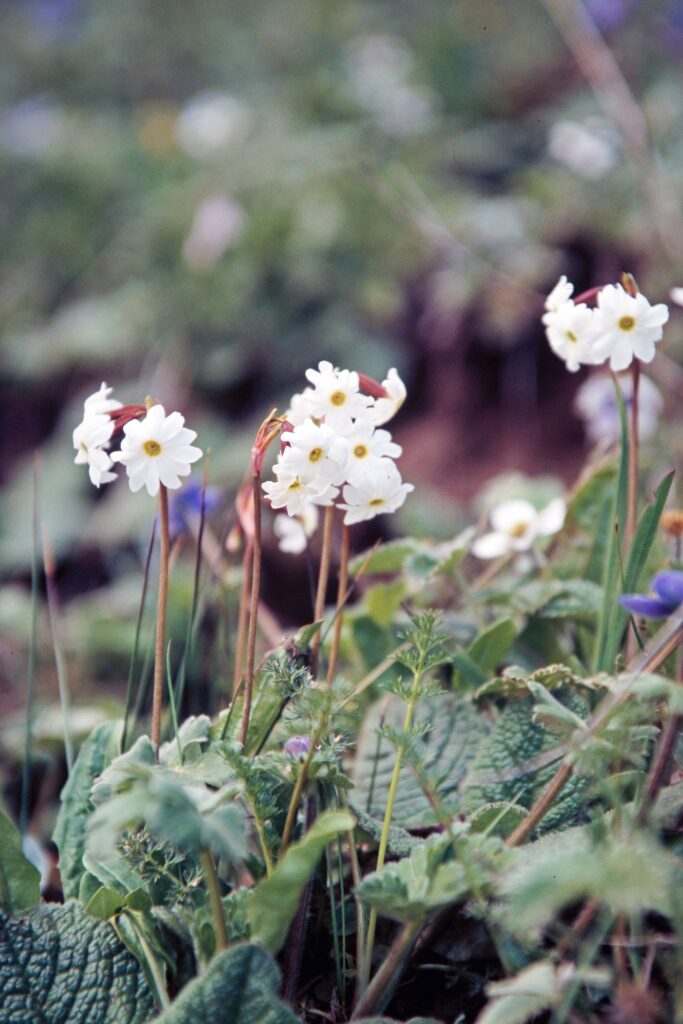
G.Watt

Sikkim 2006 387 ergebnis
India West-Bengal, Kishong 3600m, May

Description

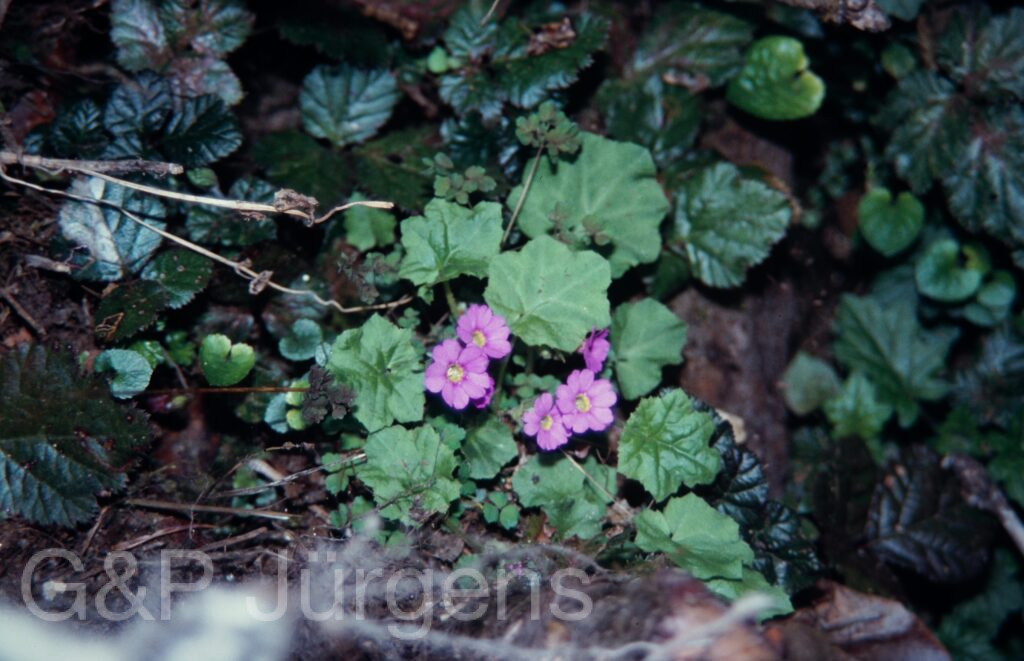
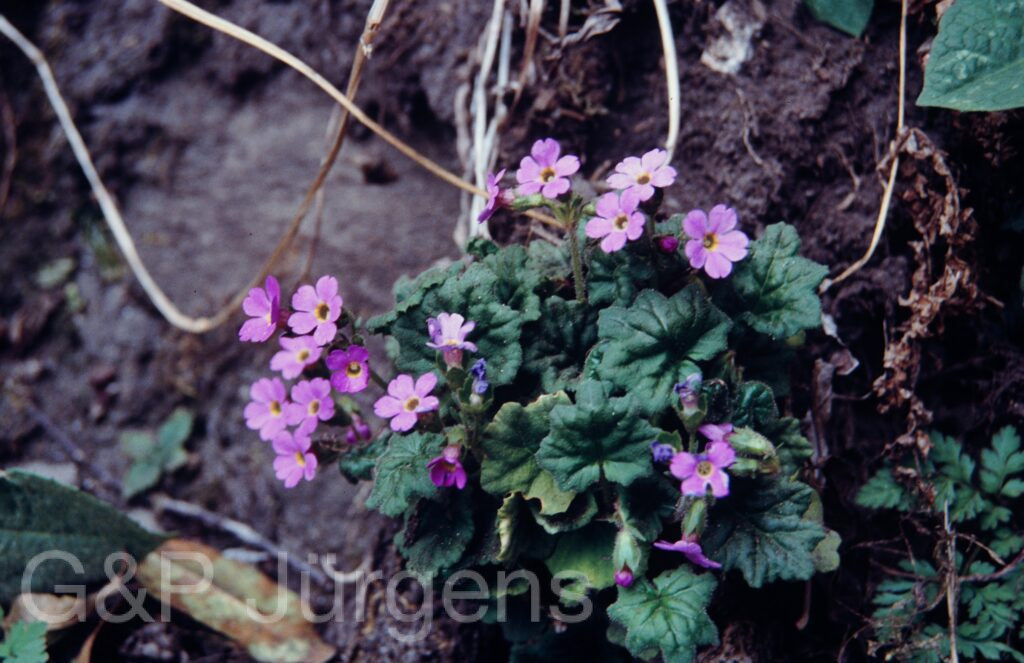
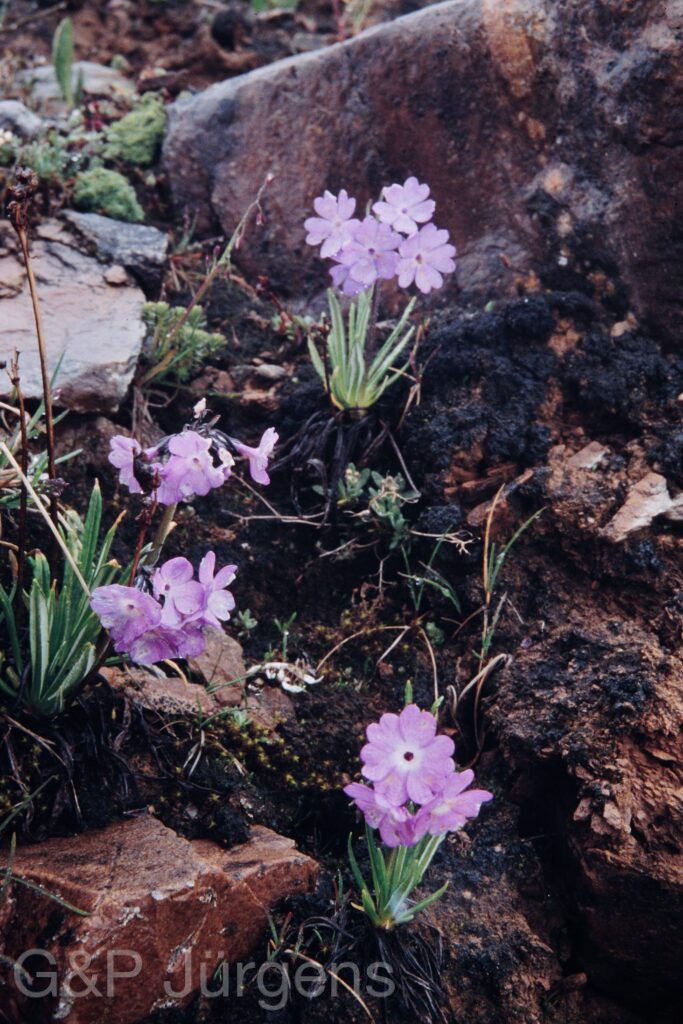
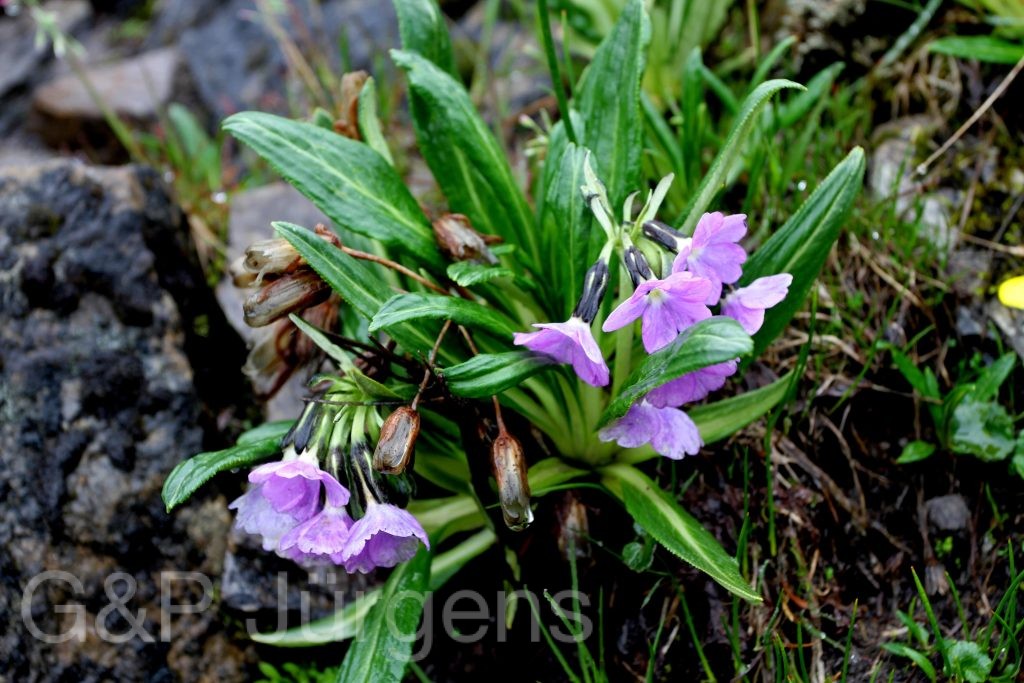
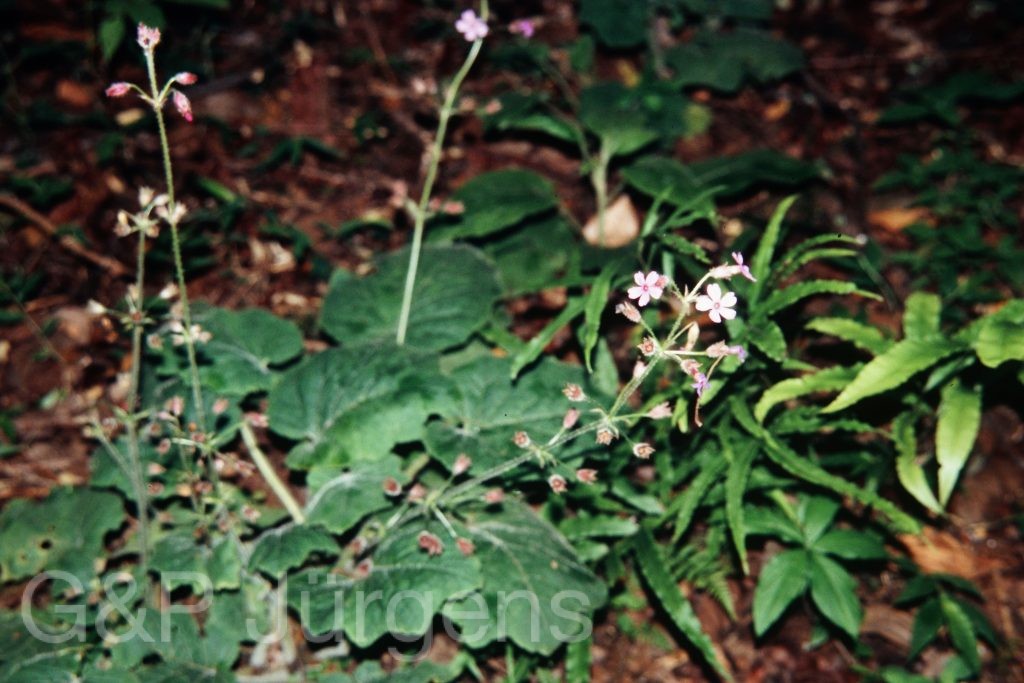
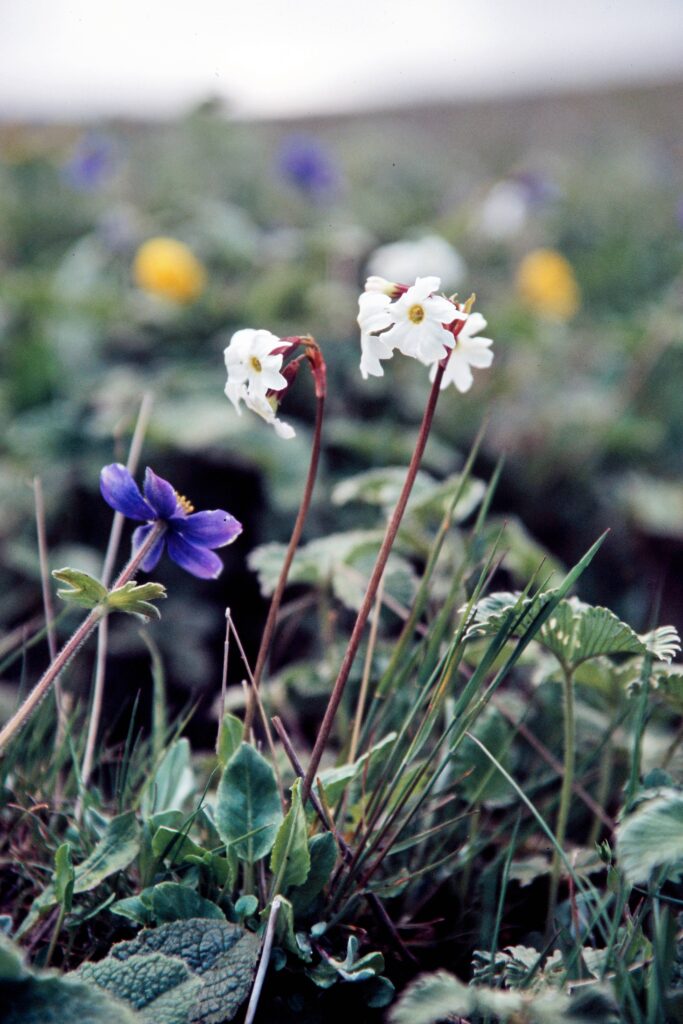
Primula hookeri is a diminutive alpine primrose of the eastern Himalaya, recorded from China, Nepal, India, Bhutan and Myanmar. It is a plant of high alpine meadows, mossy banks, rhododendron scrub margins and moist turf near the treeline and above, typically between about 3300 and 4500 m. The photographed plant from Kishong in West Bengal, India, at around 3600 m and flowering in May, is characteristic of its early-season blooming soon after snowmelt in cool, humid, high-montane meadow where moisture from melting snow and abundant atmospheric humidity sustain the small rosettes.

The species is a small, tufted perennial forming neat basal rosettes. The leaves are obovate to spathulate, narrowed to a winged petiole, crenate to denticulate, glabrous or nearly so, and lack the conspicuous farina of many Himalayan primulas. The flowers are typically solitary or few on short scapes, sometimes nearly sessile among the leaves; the corolla is white to pale lilac with a yellow eye, salverform, with an elongated tube and spreading, notched lobes. The fruit is a small capsule shorter than or about equalling the persistent calyx, releasing numerous minute seeds.

The epithet honours Sir Joseph Dalton Hooker, whose mid-nineteenth-century Sikkim explorations transformed knowledge of Himalayan Primula. The species belongs to the small-flowered section Minutissimae (the dwarf alpine primulas), a group of cushion- and turf-forming high-elevation specialists. Like many narrowly montane primulas it is heterostylous, promoting outcrossing. Restricted to fragile high-alpine habitats, such species are potentially sensitive to grazing and warming-induced upslope vegetation shifts, though P. hookeri is not presently regarded as threatened.

Author: G.Watt · Sources: POWO (Kew), GBIF, Flora of China Vol. 15, Flora of Bhutan Vol. 2, Flora of Nepal, The Genus Primula (Richards)
Wall. ex Duby

Nepal 99 492 ergebnis
West-Nepal Churta-Khola 3850m, June

Description

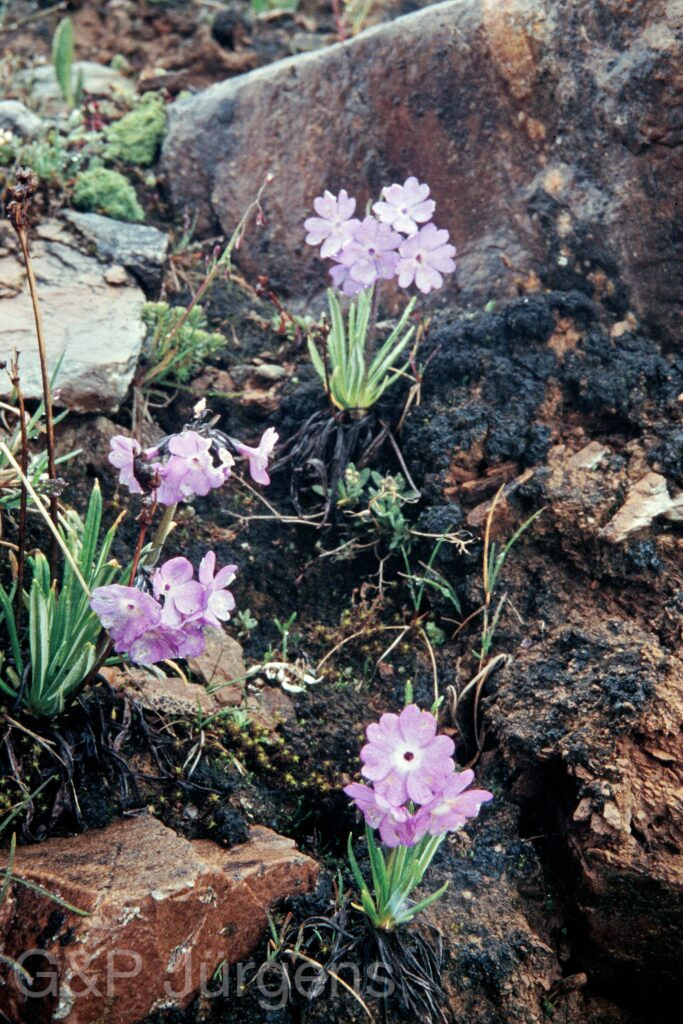
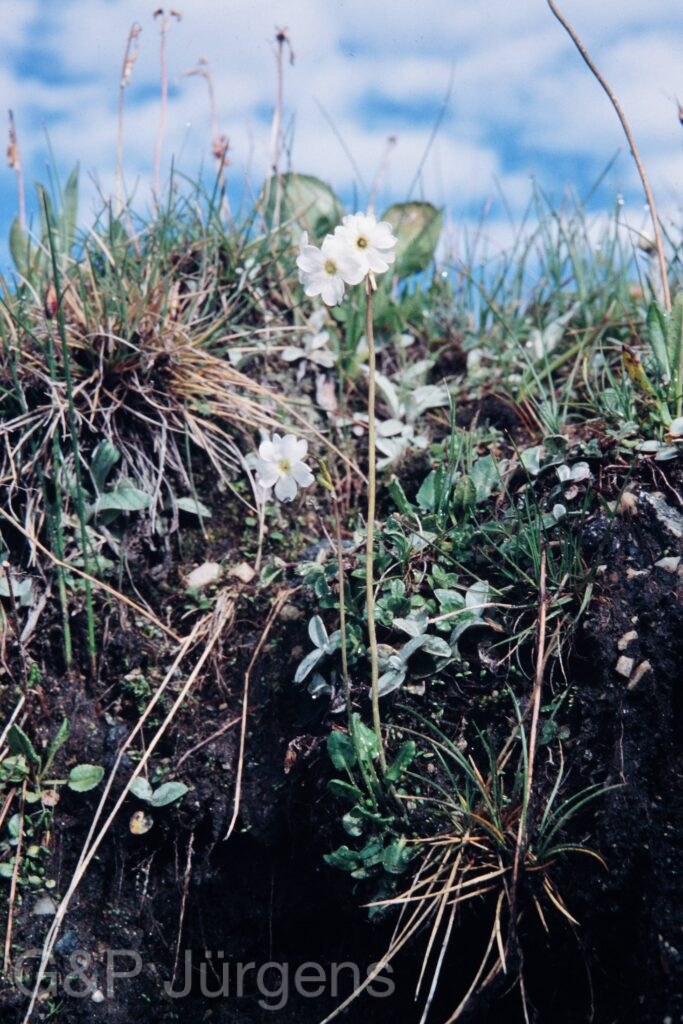
Primula involucrata Wall. ex Duby is a perennial of the high Himalaya and adjacent Tibetan plateau, ranging through Nepal, northern India, Bhutan and western China, with disjunct populations extending into Central Asia. The species is documented from West-Nepal at Churta-Khola near 3850 m and from the Garhwal Himalaya at Khiar Kutti around 3900 m, both flowering in June. It is a plant of damp alpine and subalpine meadows, marshy stream margins, seepage slopes and the moist turf bordering glacial pools, typically between 3000 and 4500 m, where snowmelt sustains saturated soils through the brief growing season. The very high GBIF occurrence count chiefly reflects records aggregated under the broadly circumscribed genus Primula rather than this taxon alone.

The plant forms a small, glabrous rosette of long-petiolate, elliptic to ovate-oblong leaves with entire or finely crenulate margins, often faintly farinose beneath. A slender, leafless scape rises to 10–25 cm and bears a terminal umbel of few to several flowers subtended by a conspicuous involucre of lanceolate bracts, from which the epithet derives. The flowers are sweetly fragrant, with a tubular calyx and a white to pale lilac or pinkish corolla marked by a yellow eye, the limb divided into five emarginate, spreading lobes. The fruit is a small cylindrical capsule dehiscing by apical valves and releasing numerous minute seeds.

Primula involucrata belongs to section Aleuritia (the farinose primulas), a group centred on the Sino-Himalayan and arctic-alpine zones and characterised by farina, heterostyly and umbellate inflorescences. Its preference for wet, base-rich alpine flushes makes it a useful indicator of stable hydrological conditions. Though locally common across its wide montane range and not currently of conservation concern, populations are vulnerable to grazing pressure, trampling and the drying of high-altitude wetlands under a warming climate.

Author: Wall. ex Duby · Sources: POWO (Kew), GBIF, Flora of Nepal, Flora of China, Flora of British India, Primula (Richards, monograph of the genus)

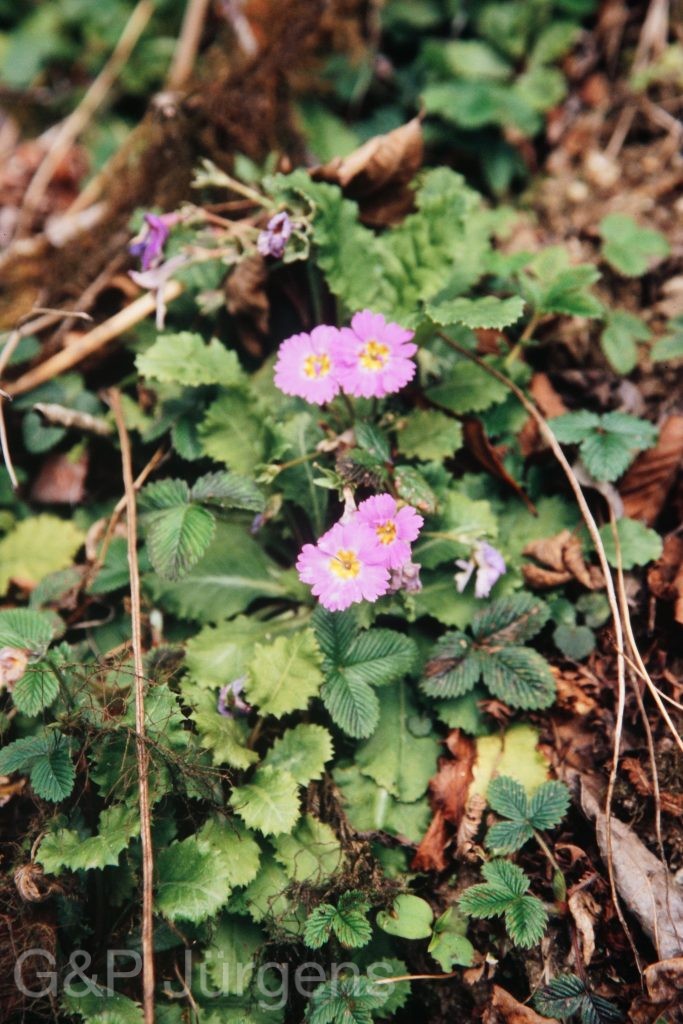
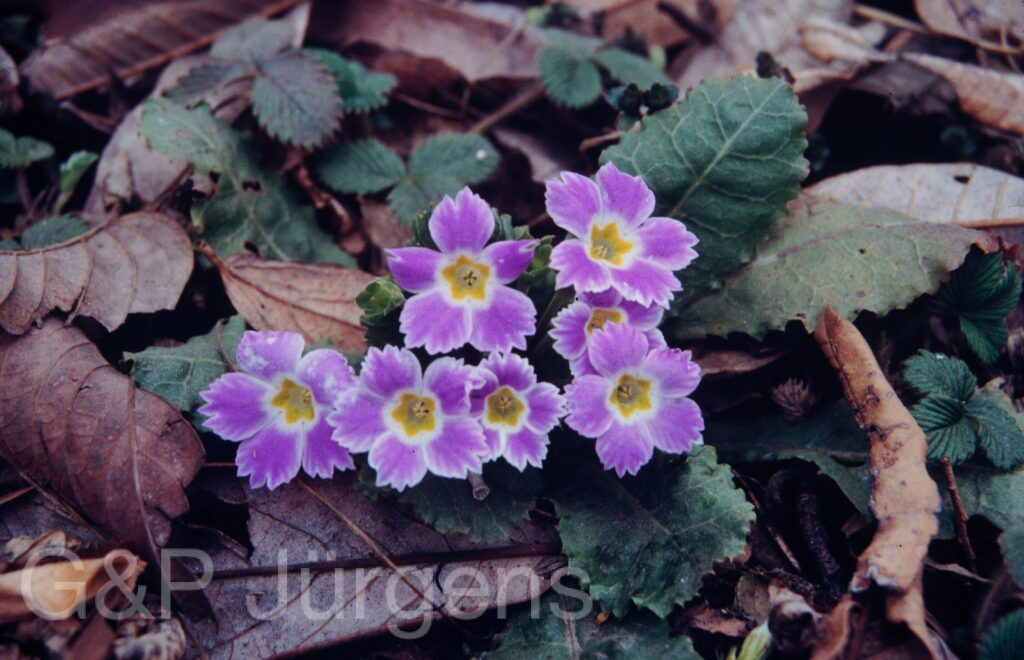
Craib

Bh2008 33 P56
Bhutan Doch-La, 3000m April
Nepal1992 198 P288 ergebnis
Nepal Suketar 2400m March 

Description

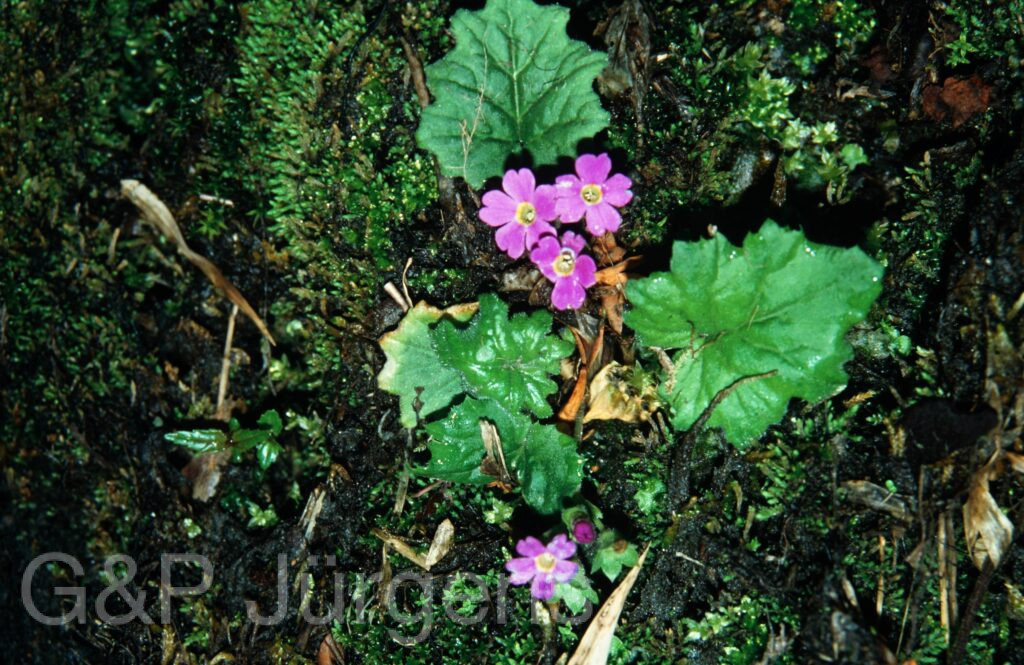
Primula irregularis Craib is a Himalayan primrose of restricted range, recorded in GBIF (about 45 occurrences) from Nepal, northern India and Bhutan. It is a plant of cool, humid temperate to subalpine habitats, growing on mossy banks, shaded forest floors, damp rock crevices and the margins of rhododendron and oak forest, broadly between about 2400 and 3500 m. The collections noted from Doch-La in Bhutan at 3000 m in April and from Suketar in eastern Nepal at 2400 m in March show it flowering very early, as winter snow recedes, in the moist, cloud-influenced mid-montane forest belt that characterises its niche.

It is a small farinose perennial forming a basal rosette that resumes growth early from a resting bud. The leaves are obovate to oblong, with a crenate-dentate, somewhat irregularly toothed margin tapering into a winged petiole, the undersurface frequently dusted with whitish or yellowish farina. The flowers open close to the rosette on a very short scape, solitary or in a few-flowered umbel. The corolla is salverform, with a slender tube and a spreading limb of obcordate, deeply emarginate lobes, pale lilac to violet with a contrasting paler or yellow eye. As in other primroses the species is heterostylous, and the small capsule contains numerous minute seeds.

Primula irregularis belongs to section Petiolares, the large Sino-Himalayan assemblage of early-flowering, farinose primulas whose species are notoriously difficult to delimit and which has been the subject of repeated revision. Heterostyly enforces outcrossing between long- and short-styled morphs. With its narrow range and dependence on perennially cool, moist microhabitats, the species is regionally restricted and likely sensitive to warming and habitat disturbance, characteristics shared by many of the high-altitude Petiolares primulas of the eastern Himalaya.

Author: Craib · Sources: POWO (Kew), GBIF, Annotated Checklist of the Flowering Plants of Nepal, Flora of Bhutan, Richards' monograph Primula, Flowers of the Himalaya

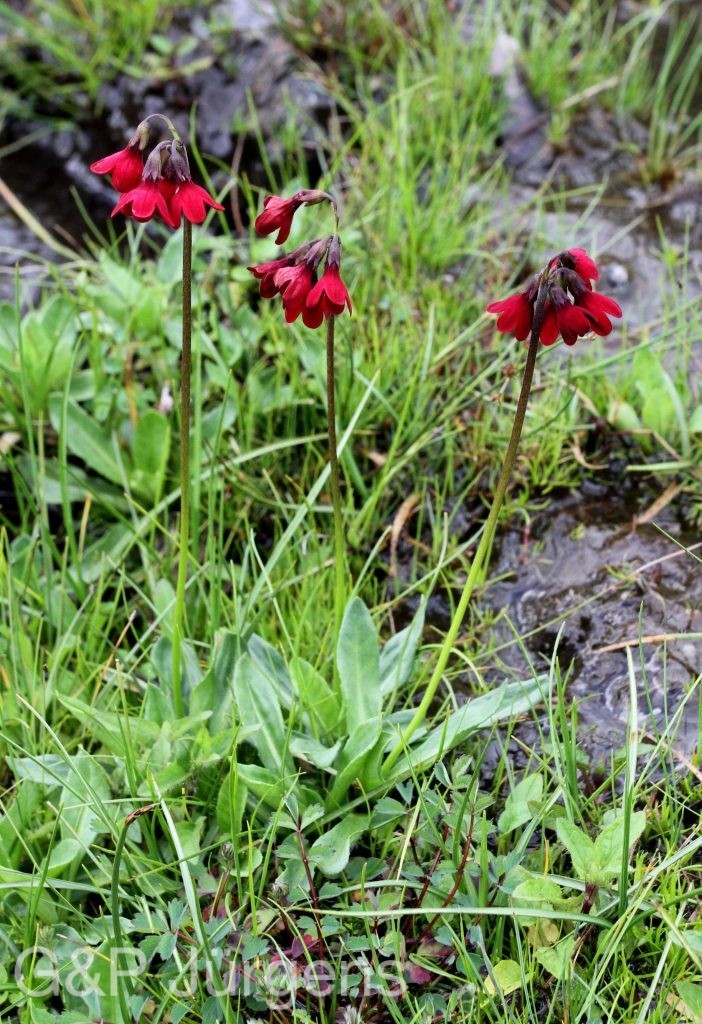
Primula kingii

by GP Jürgens

G.Watt 

BhutanPG2011 727 01 01
Bhutan Pele-La, 2750m July

Description

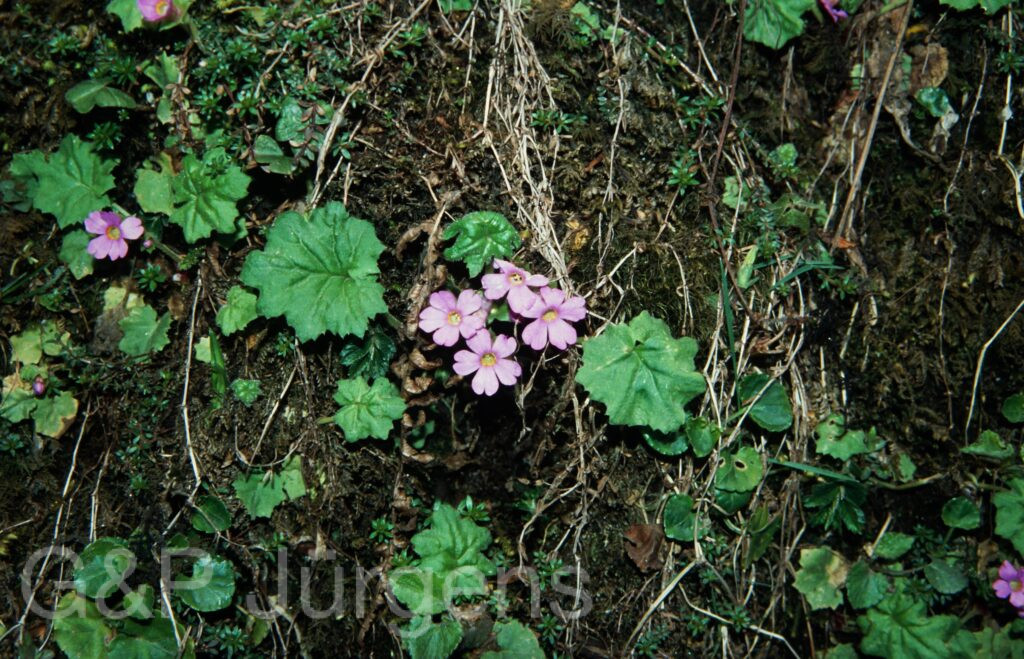
Primula kingii is an Eastern Himalayan endemic of restricted range, recorded from Bhutan, north-eastern India (Sikkim and adjacent Arunachal Pradesh) and southern Xizang (China), with some 57 georeferenced occurrences documented in GBIF. It is a plant of cool, perennially moist situations, favouring boggy alpine and subalpine meadows, seepage slopes, streamsides and damp turf saturated through the monsoon. The species ascends from the upper forest margin into the alpine zone; the photographed material from the Pele-La pass in central Bhutan at about 2750 m in July, flowering near the low end of its altitudinal span, illustrates its occupation of humid passes between drainage systems.

P. kingii is a small, tufted, glabrous perennial herb arising from a short rhizome with fibrous roots. The leaves form a basal rosette, oblanceolate to spathulate, narrowed to a winged petiole, the blade with a finely toothed or subentire margin and lacking the conspicuous farina seen in many congeners. The slender, erect scape bears a one-sided (secund), few-flowered terminal umbel of nodding flowers subtended by small bracts. The calyx is tubular-campanulate and dark, often blackish-purple; the corolla is deep blackish-crimson to maroon, with a narrow tube, a contracted throat and short, spreading or reflexed lobes. The fruit is a small capsule shorter than or about equalling the persistent calyx, releasing numerous minute seeds.

Within Primula the species is placed in the section Amethystina, a group of dark-flowered, nodding-blossomed Sino-Himalayan primroses centred on the eastern ranges. Its sombre maroon corolla and secund inflorescence distinguish it from associated species. As a narrowly distributed alpine bog specialist tied to high-elevation wetland microhabitats, it is potentially sensitive to hydrological change, grazing pressure and shifts in snowmelt timing, though no formal IUCN assessment defines its present status.

Author: G.Watt · Sources: POWO (Kew), GBIF, Flora of Bhutan, Flora of China, The Genus Primula (Richards)
Primula listeri

by GP Jürgens

King ex Hook.f.

Nepal 1994 205 ergebnis
Ost-Nepal Mewa-Khola 2300m April 
Nepal1992 207 P303 ergebnis
Nepal Suketar 2400m March 
Nepal 2001 88 ergebnis ergebnis
East-Nepal Gupka Pokhari 3000m, April
Nepal 2001 123 ergebnis ergebnis
East-Nepal Gupka Pokhari 3000m, April

Description

Primula listeri is an eastern Himalayan species distributed through Nepal, northern India, Bhutan, southern China (Xizang, Yunnan) and northern Myanmar, with GBIF documenting around 102 georeferenced records concentrated along the wetter eastern arc of the range. It occupies shaded, humid montane environments between roughly 2000 and 3000 m, growing on mossy banks, in the leaf litter of broad-leaved and mixed forest, and along seeping rock faces. The populations imaged in East Nepal at Mewa Khola (2300 m, April), Suketar (2400 m, March) and Gupka Pokhari (3000 m, April) typify its phenology, with flowering coinciding with the early pre-monsoon period when soils remain moist and cool.

The plant is a small, delicate perennial herb forming a slender rootstock from which arises a rosette of thin-textured leaves. The leaves are petiolate, ovate to oblong with a crenate to dentate margin, and frequently sparsely farinose or efarinose beneath. Flowers are borne on a slender scape in a loose few-flowered umbel, each subtended by narrow bracts; the calyx is tubular and lobed, and the corolla is rotate with a narrow tube and notched, lilac to pale violet limb-lobes, the throat marked by an annulus. As in many sect. Petiolares allies the species is heterostylous, producing pin and thrum flowers. The fruit is a small capsule dehiscing to release numerous minute seeds.

Taxonomically P. listeri belongs to the species-rich Primula sect. Petiolares, a complex assemblage of vernal-flowering, rosette-forming primroses centred on the eastern Himalaya. Its restricted elevational band and dependence on permanently humid forest microhabitats make it sensitive to forest clearance and desiccation, though it is not formally assessed as threatened. Biogeographically it forms part of the rich Sino-Himalayan endemic flora whose diversification is linked to the monsoon-driven moisture gradient of the eastern ranges.

Author: King ex Hook.f. · Sources: POWO (Kew), GBIF, Flora of Bhutan, Flora of China, Annotated Checklist of the Flowering Plants of Nepal, Richards' Primula (monograph)

D.Don

BhutanPG2011 572 1
Bhutan Ludlow-Sherriff-Trail Miluthang, 4350m July
BhutanPG2011 660 01
Bhutan Ludlow-Sherriff-Trail Thitha-Tso, 4350m July

Description

Primula macrophylla is a widespread high-alpine primrose ranging across the Himalaya and adjacent mountain systems, with GBIF records spanning India, Nepal, Pakistan, China, Tajikistan, Afghanistan and Bhutan among other territories and approaching a thousand documented occurrences. It is a plant of the upper alpine zone, growing on open rocky slopes, screes, moist alpine turf, glacial moraines and damp gravelly flats near snowmelt. It typically occupies elevations of roughly 3500-5000 m; the populations from the Ludlow-Sherriff Trail in Bhutan at Miluthang and Thitha-Tso (about 4350 m, July) and from Garhwal at Khiar Kutti (3950 m, June) exemplify its preference for cool, well-drained sites flowering through the early monsoon.

P. macrophylla is a robust, farinose perennial herb forming a stout rosette from a short rhizome. The leaves are large and elongate, oblanceolate to lanceolate, narrowed to a broad petiolar base, the lower surface densely covered with yellowish or whitish farina (mealy powder) and the margin entire to finely denticulate. The stout scape, also mealy, bears a dense terminal umbel of numerous flowers subtended by linear bracts. The flowers are heterostylous with a tubular calyx and a salverform purple to violet-purple corolla marked by a contrasting yellowish or whitish eye, the lobes notched at the apex. The fruit is a cylindrical capsule about equalling or exceeding the calyx and containing many small seeds.

The species belongs to Primula section Crystallophlomis (formerly Nivales), the great assemblage of farinose, large-flowered alpine primroses of the high Asian mountains, and is morphologically variable across its vast range, with several infraspecific taxa recognised by various authors. Its broad distribution and abundance suggest it is not of conservation concern, although high-elevation populations are inherently exposed to climate-driven shifts in snow cover and to localised grazing.

Author: D.Don · Sources: POWO (Kew), GBIF, Flora of China, Flora of Pakistan, The Genus Primula (Richards)

(Wall. ex Klatt) W.W. Sm. & H.R. Fletcher

Nepal 99 616 ergebnis
West-Nepal Kagmara-La 4300m, July
Nepal 99 617 ergebnis
West-Nepal Kagmara-La 4300m, July

Description

Primula macrophylla var. moorcroftiana is a high-alpine perennial distributed across the western and central Himalaya and adjoining Central Asian ranges, with GBIF documenting some 172 occurrences from India, Nepal, Pakistan, Tajikistan, Uzbekistan and China (Tibet). It inhabits open alpine meadows, moist screes, grazed turf and the margins of snowmelt flushes, typically between 3500 and 5000 m. The photographed plant was recorded at the Kagmara-La in West Nepal at 4300 m in July, a phenology typical of the taxon, which flowers as the snow recedes on cool, humus-rich substrates kept moist through the early monsoon.

The plant forms a stout rosette arising from a short rhizome clothed in persistent leaf-bases and farinose remains. The leaves are large for the genus, oblong-lanceolate to elliptic, entire to obscurely toothed, tapering gradually to a winged petiole and frequently coated beneath with white or yellowish farina. The scape is erect and conspicuously mealy, bearing a dense terminal umbel of several heterostylous flowers. The corolla is funnelform with a slender tube exceeding the campanulate calyx, the limb violet to purple with a paler or yellow eye and notched lobes. The fruit is a cylindrical capsule dehiscing by apical valves to release numerous small angular seeds.

Placed in Primula sect. Crystallophlomis (the nivalis alliance), the variety moorcroftiana is distinguished from typical P. macrophylla by its larger, more farinose foliage and robust habit. GBIF retains the name as accepted. As a snowbed and meadow specialist, it is sensitive to altered snow-lie and intensified summer grazing, though its broad transmontane range buffers it against immediate threat.

Author: (Wall. ex Klatt) W.W. Sm. & H.R. Fletcher · Sources: POWO (Kew), GBIF, Flora of Pakistan, Annotated Checklist of the Flowering Plants of Nepal, Smith & Fletcher monograph of Primula

H.Hara

BhutanPG2011 637 01
Bhutan Ludlow-Sherriff-Trail Laden-Tso, 4300m July

Description

Primula megalocarpa H.Hara is a high-alpine primula of the eastern and central Himalaya, recorded from Nepal, Bhutan, northern India and south-western China, with around 109 georeferenced occurrences in GBIF. It inhabits open alpine turf, moist rocky slopes, moraine and the margins of late-lying snowbeds, generally between about 3800 and 4800 m. The collection cited from the Ludlow-Sherriff trail at Laden-Tso at 4300 m in July is typical of its ecology, flowering as the snow retreats in habitats kept cool and damp by glacial meltwater and frequent cloud.

It is a small farinose perennial forming a compact rosette from a slender rootstock. The leaves are obovate to oblanceolate, narrowed to a winged base, with a finely toothed margin and a white- or yellow-farinose lower surface. Short scapes carry one to few violet to purple, flat-faced flowers; the corolla lobes are obcordate and notched, surrounding a farinose eye, and the calyx is farinose and lobed to about the middle. As the epithet megalocarpa implies, the species is notable for its conspicuously enlarged capsule, which is ovoid and considerably exceeds the calyx at maturity, a feature that readily separates it from related dwarf alpine species.

The enlarged fruit places it among the small-flowered cushion-forming primulas of section Minutissimae and allied groups, where it is distinguished chiefly by capsule size and farina distribution. Like many nival primulas it is tied to a narrow alpine belt and dependent on reliable snow cover, making such species sensitive indicators of shifting snowlines. No conservation status has been published, but its high-altitude niche warrants monitoring.

Author: H.Hara · Sources: POWO (Kew), GBIF, Flora of Bhutan, Flora of China, Smith & Fletcher monograph of Primula

Nutt. ex Hook.

Bh09 360 G577
Bhutan Wangdi, 2300m June

Description

Primula mollis is a softly hairy perennial of the Eastern Himalaya and adjacent Indo-Burmese ranges, with verified occurrences in China, Myanmar, Bhutan and India (additional GBIF records from Belgium, Britain and the Czech Republic reflect its cultivation by alpine enthusiasts). It grows in damp, shaded situations along forest margins, stream banks and moist rocky banks at moderate elevations, typically between about 2000 and 3000 m. The illustrated plant from near Wangdi in central Bhutan at around 2300 m in June shows the species flowering in the early monsoon, when the humid conditions it favours prevail.

The whole plant is conspicuously clothed in soft spreading hairs, the feature memorialised in the epithet mollis. The leaves form a basal rosette and are ovate to oblong, shallowly lobed and toothed, cordate at the base and borne on hairy petioles. From the rosette rises a stout, hairy scape carrying several superposed whorls (a candelabra arrangement) of flowers. Each flower has a tubular calyx and a salver-shaped corolla that is rose-pink to crimson with a darker or yellowish eye, the limb shallowly notched. The fruit is a small capsule enclosed within the persistent calyx and dehiscing to release numerous angular seeds.

Primula mollis is placed in section Cortusoides (Petiolares group of broader treatments), characterised by soft-textured, lobed, hairy leaves and whorled inflorescences. It is a long-cultivated woodland primula, and ecologically contributes to the herb layer of humid montane forest, where it is pollinated by insects attracted to its bright corollas. Across its range it remains locally frequent and is not considered threatened, though it depends on the persistence of moist, lightly shaded montane habitats.

Author: Nutt. ex Hook. · Sources: POWO (Kew), GBIF, Flora of Bhutan, Flora of China, Richards' monograph Primula

Georgi

Nepal 99 434 ergebnis
West-Nepal Chautabise-Khola 2800m, June

Description

Primula nutans Georgi is a circumboreal to continental Asian perennial with one of the broadest ranges in the genus, the GBIF dataset listing more than 11,700 occurrences across Fennoscandia (Finland, Sweden, Norway, Denmark), Russia, Greenland, North America (Canada, United States), Central Asia (Kazakhstan, Kyrgyzstan, Tajikistan, Mongolia) and into China, with disjunct southern records reaching India and Nepal. It is a plant of moist, often saline or calcareous habitats: coastal meadows, lake and river shores, damp turf, marshy flushes and seepage slopes. The illustrated material from the Chautabise-Khola in west Nepal at 2800 m in June represents the species near the southern, montane edge of its enormous Holarctic distribution, where it persists in damp grassy ground.

It is a small, glabrous perennial herb arising from a slender rootstock, lacking the farinose (mealy) covering of many congeners. The leaves form a basal rosette and are oblong to spatulate or elliptic, entire to faintly toothed, narrowing into a winged petiole. From the rosette rises a slender, leafless scape bearing a terminal umbel of a few nodding flowers, the nodding habit giving the epithet nutans. Each flower has a tubular, five-lobed calyx and a salverform corolla of pink to lilac-purple with a yellow eye, the lobes shallowly notched. The species is typically homostylous in many populations. The fruit is a cylindrical to ovoid capsule that opens by apical valves to shed numerous small seeds.

Primula nutans belongs to section Armerina, a group of small, often coastal or wetland primulas with farina-free foliage and nodding flowers, and has at times been treated under the names P. sibirica or P. finmarchica, reflecting taxonomic revision of this widespread aggregate. Its tolerance of saline and seasonally flooded ground is ecologically distinctive within the genus. Although globally secure given its vast range, peripheral and lowland populations, particularly along Baltic and Arctic coasts, are vulnerable to habitat loss, drainage and shoreline development, and are locally protected.

Author: Georgi · Sources: POWO (Kew), GBIF, Flora of China, Flora Nordica, John Richards – Primula (monograph)