Huth
Description
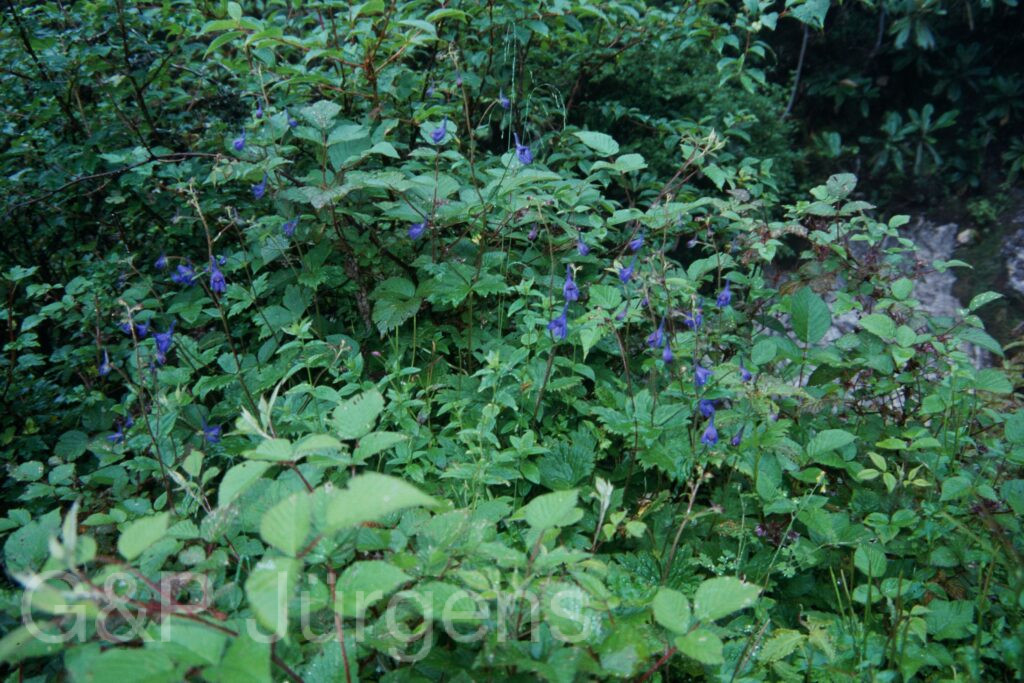
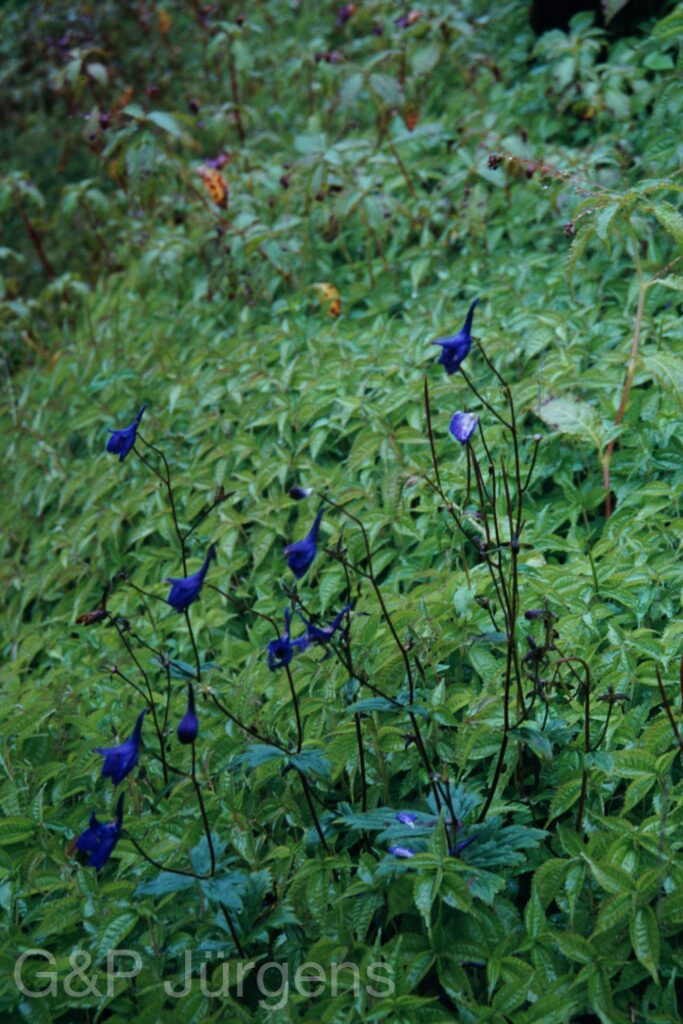
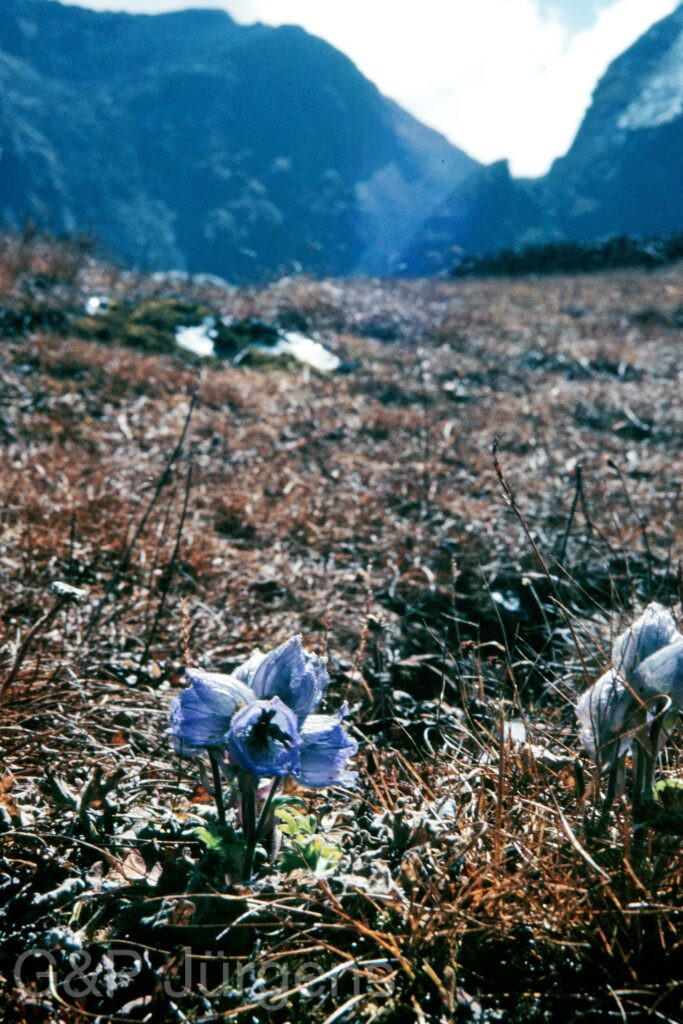
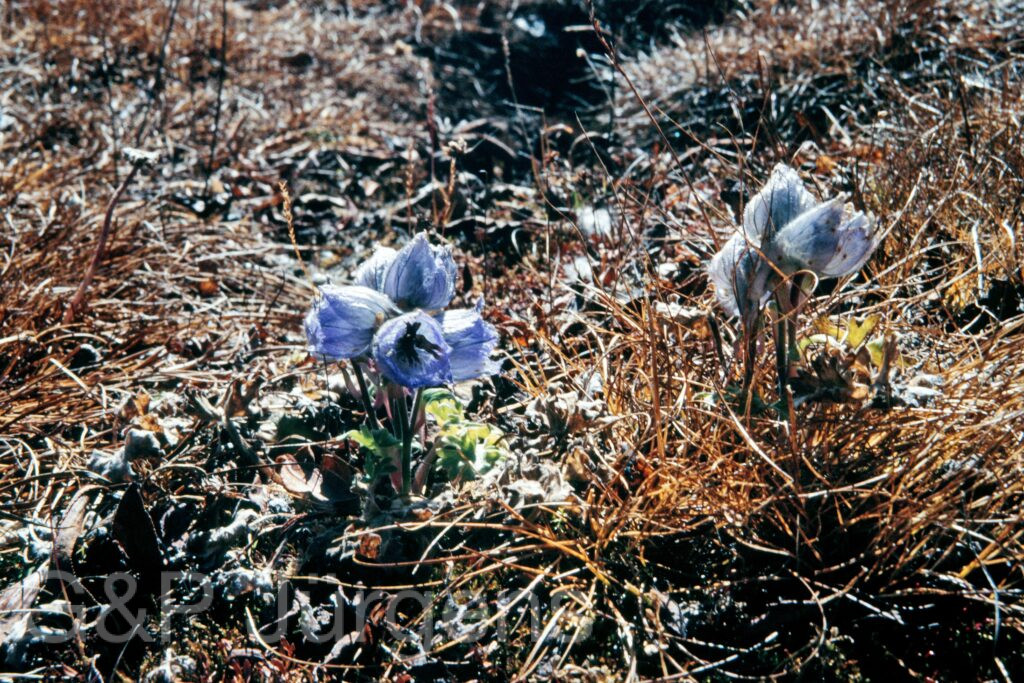
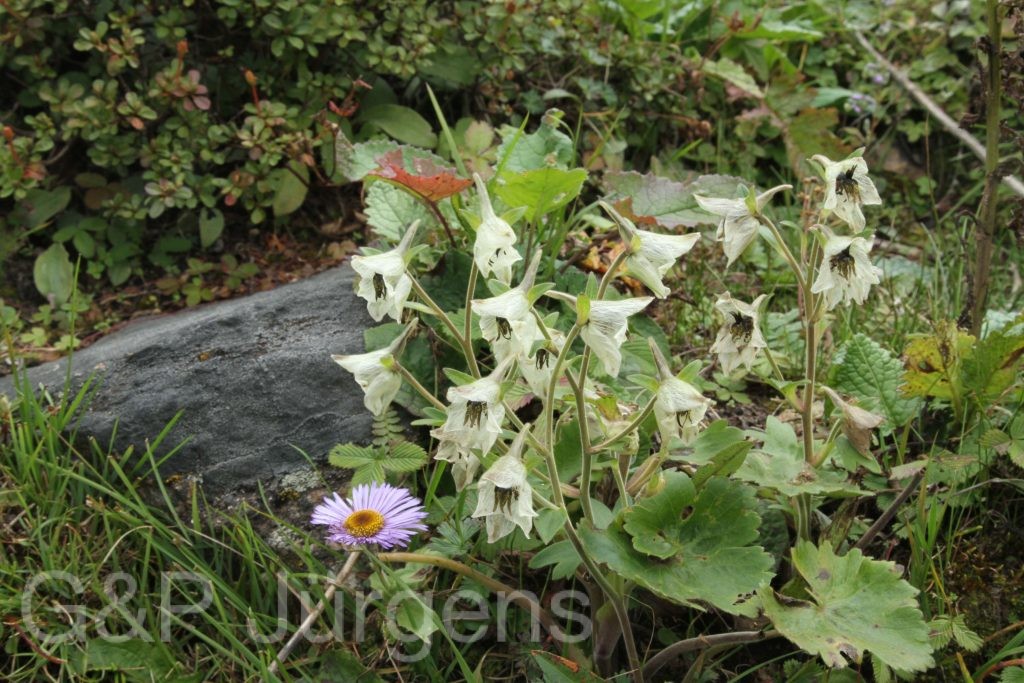
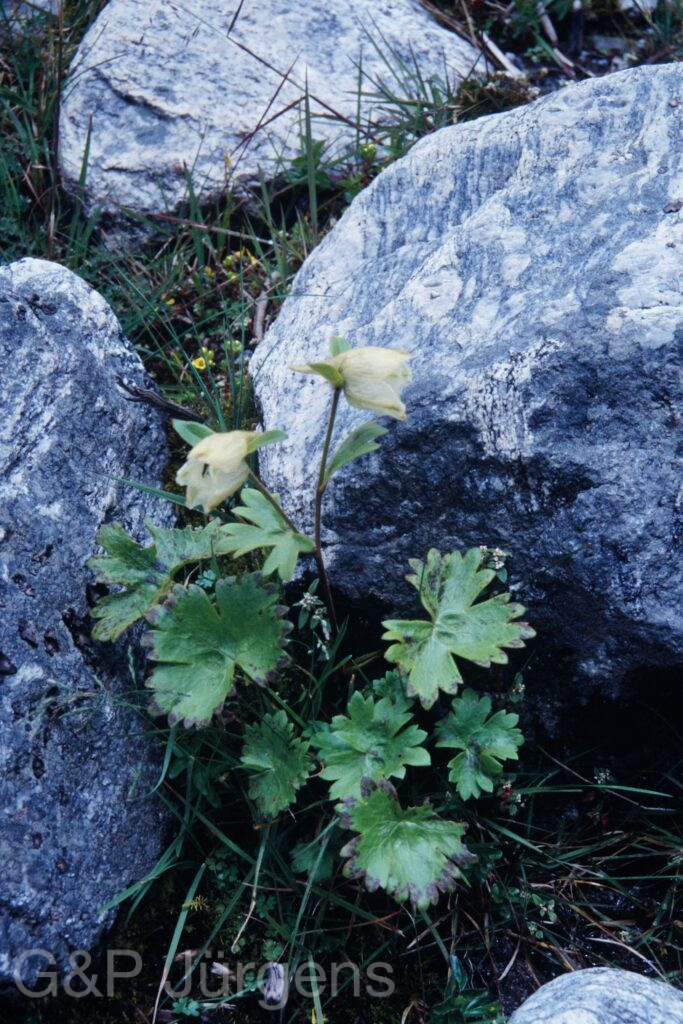
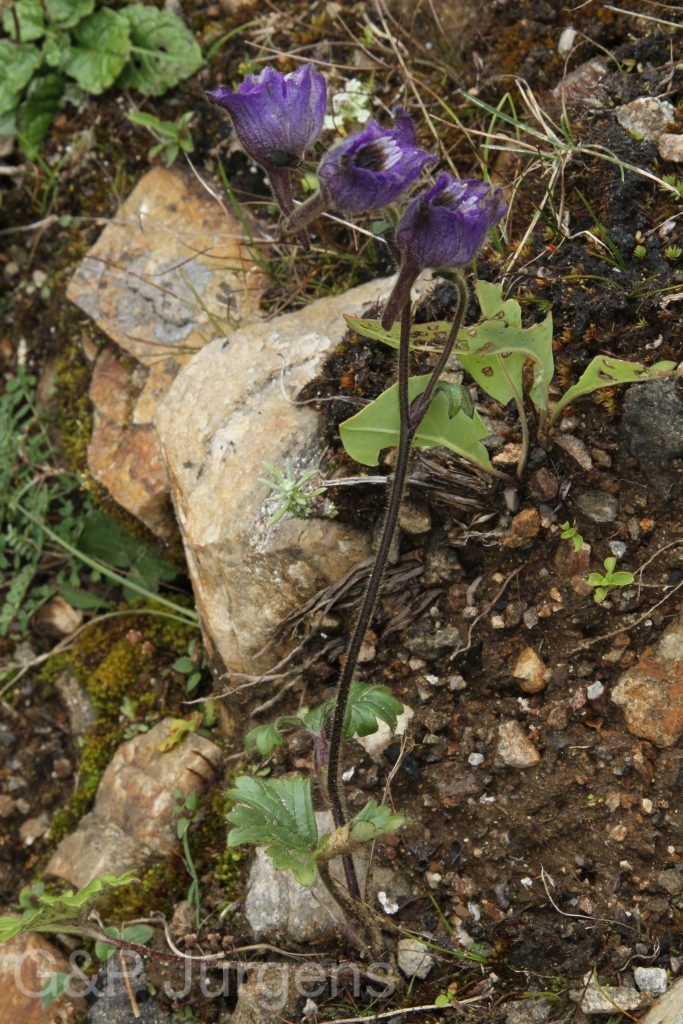
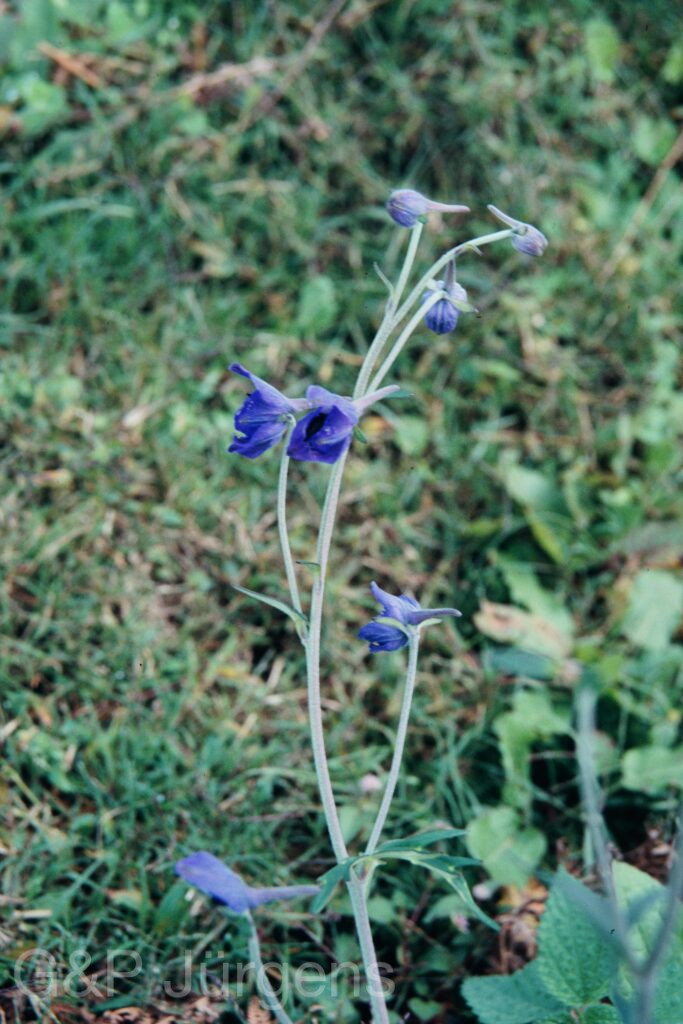
Delphinium kamaonense is a Himalayan and Sino-Himalayan larkspur recorded by GBIF (839 occurrences) from China, Nepal, India and Bhutan. It is a plant of open subalpine and alpine habitats, growing on grassy slopes, among low scrub, on stony pastures and along rocky margins, generally between about 3000 and 4500 m. The individual photographed south of the Rupien La in Nepal at 3450 m in October exemplifies its late, post-monsoon flowering, when many high-altitude perennials complete their reproductive cycle before the onset of winter.
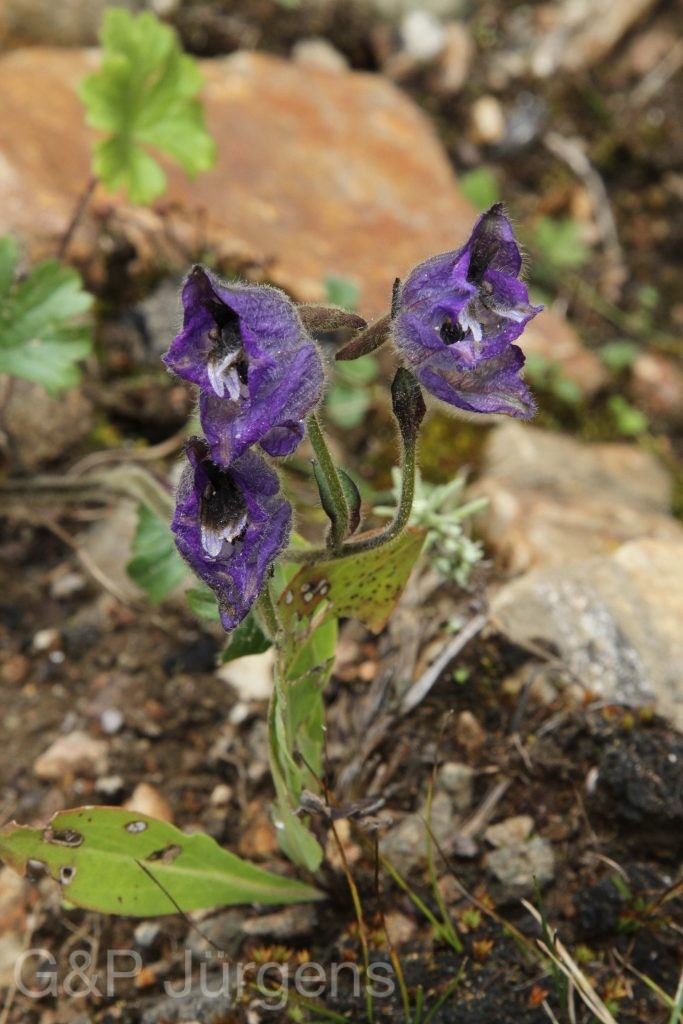
The species is a perennial herb arising from a fibrous or somewhat woody rootstock, with erect, slender stems that are often finely pubescent above. The leaves are alternate, long-petiolate below, with a palmately divided to deeply lobed blade whose segments are further cut into narrow ultimate lobes. The flowers are borne in a lax raceme or panicle and are strongly zygomorphic; the five petaloid sepals are deep blue to violet, the uppermost prolonged backwards into a conspicuous slender spur that encloses the nectariferous spurs of the two upper petals. The dark inner petals form a contrasting central eye. The fruit consists of several erect, many-seeded follicles.
Delphinium is a large northern-temperate genus well represented in the Himalaya, and D. kamaonense belongs to the assemblage of blue-flowered alpine larkspurs centred on the western and central ranges. The spurred flowers are adapted for pollination by long-tongued bumblebees capable of reaching the concealed nectar. Like most members of the genus the plant contains toxic diterpenoid alkaloids that deter grazing. The species is widespread within its high-elevation niche and is not currently considered to be at conservation risk.
Author: Huth · Sources: POWO (Kew), GBIF, Flora of China, Flora of Bhutan, Annotated Checklist of the Flowering Plants of Nepal, Monograph of the Genus Delphinium (Munz)