
Hook.f. & Thomson
Description
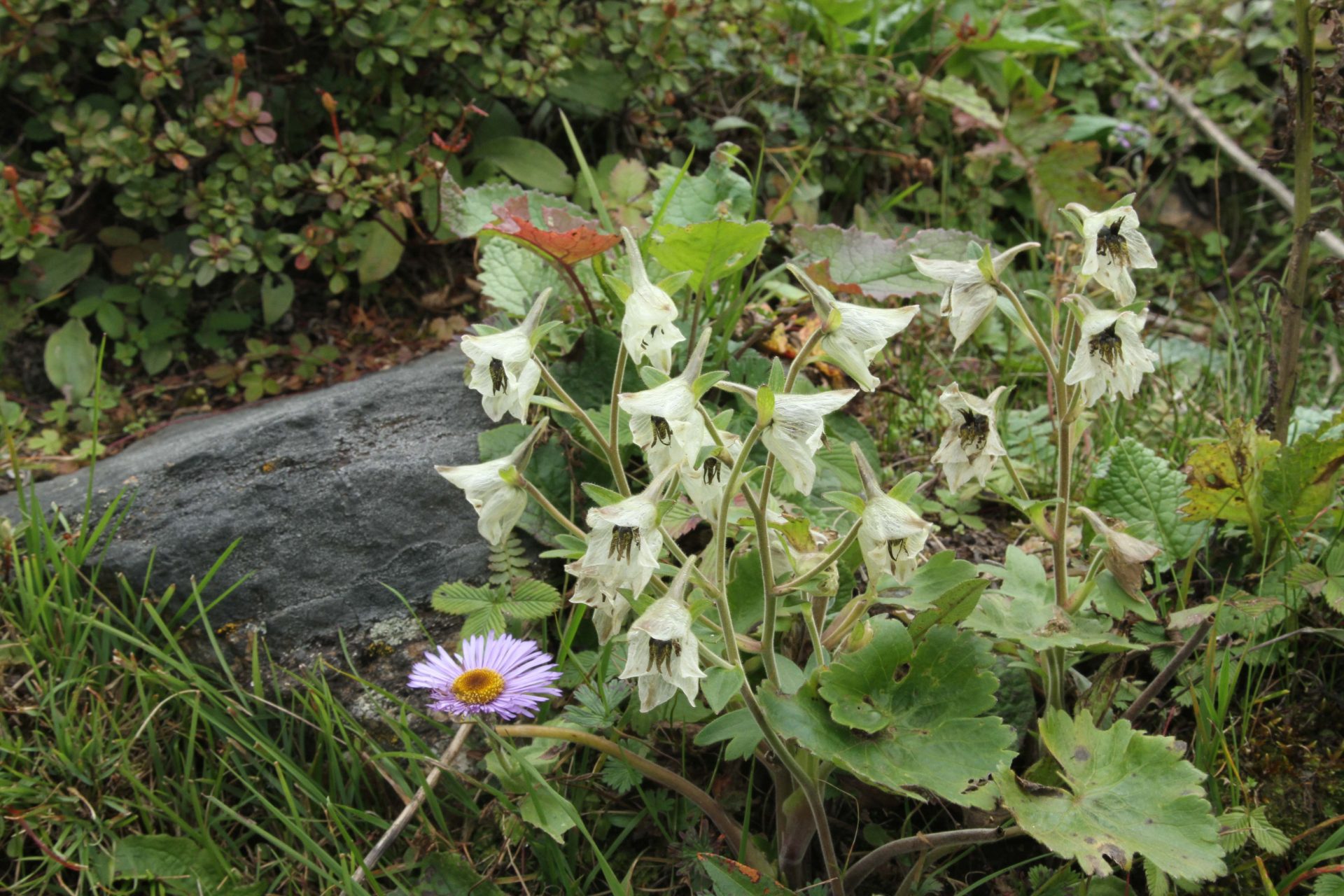
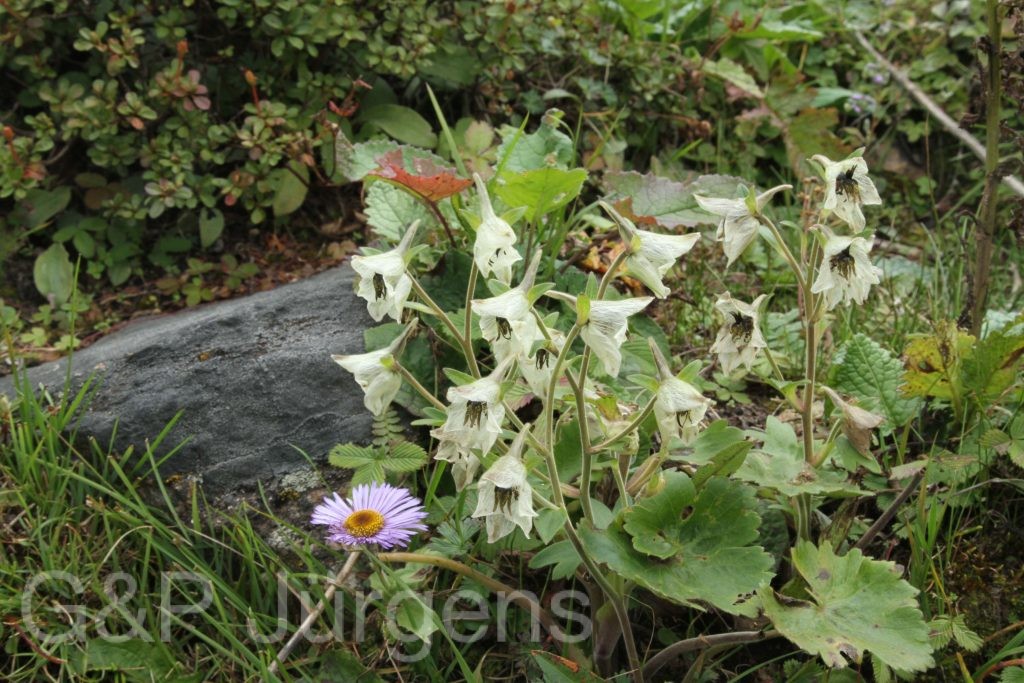
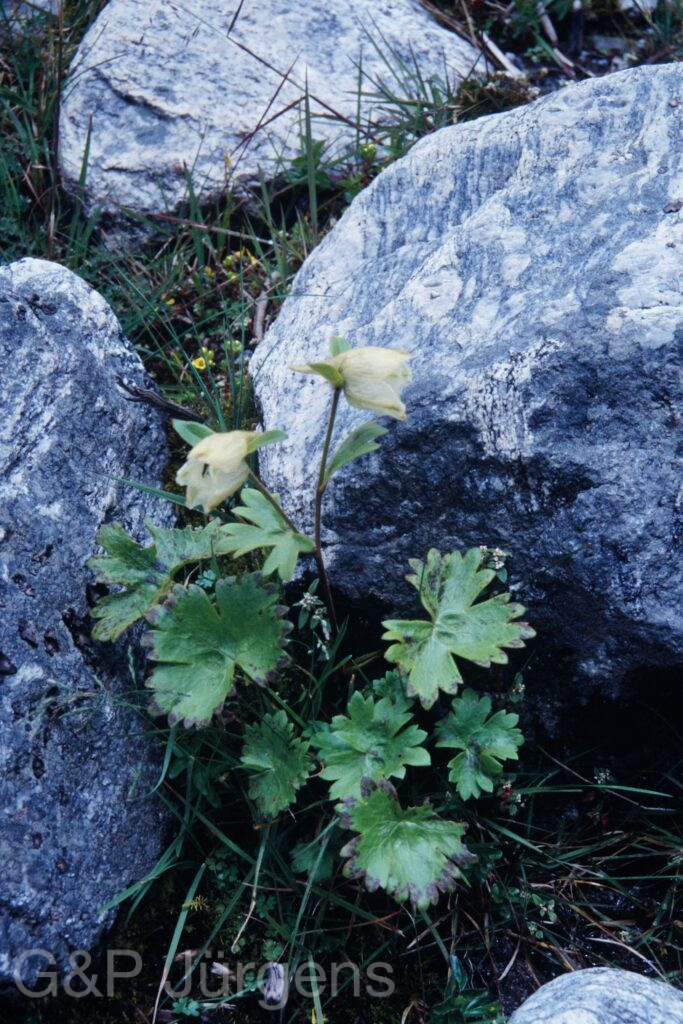
Delphinium viscosum is an alpine perennial of the Himalaya, recorded from India, Nepal, Bhutan and China, with 105 occurrences in GBIF reflecting its restricted high-altitude range. It inhabits open alpine slopes, stony meadows, scree margins and rocky pastures, generally between 3500 and 4500 m, where it flowers in late summer and early autumn. The collections figured, from Bhutan's Shele-La at 3900 m in September and Sikkim's Saniti-Lake at 4300 m in August, illustrate its occupancy of cold, exposed alpine terrain at the upper limit of herbaceous vegetation, on well-drained gravelly soils among low alpine swards.
The plant arises from a thickened, somewhat woody rootstock, producing erect stems usually 15-40 cm tall that are conspicuously glandular-viscid and hairy, the sticky pubescence giving the species its epithet. The leaves are alternate, orbicular to reniform in outline and palmately divided into several broad, toothed or further-lobed segments. The inflorescence is a few-flowered terminal raceme of showy zygomorphic flowers; the five petaloid sepals are deep blue to violet, the uppermost prolonged backward into a prominent spur enclosing the nectariferous true petals. The fruit is a cluster of usually three erect, glandular follicles releasing winged or scaly seeds.
Delphinium (Ranunculaceae) is a large genus of the northern temperate zone with a notable Sino-Himalayan radiation of alpine species; D. viscosum belongs to the glandular, spur-flowered montane group adapted to short alpine seasons. Like all larkspurs it contains toxic diterpenoid alkaloids. Its spurred flowers favour pollination by long-tongued bumblebees. With a limited high-alpine distribution, it is potentially sensitive to grazing and climatic change, though its remote habitats afford some natural protection.
Author: Hook.f. & Thomson · Sources: POWO (Kew), GBIF, Flora of China, Flora of Bhutan, A Taxonomic Revision of Himalayan Delphinium (Ranunculaceae)