Tag:

Bhutan

Flowers of Bhutan — 1326 plant species documented across the Bhutanese Himalaya, from dense broadleaf and conifer forests to alpine scrub and meadows. Bhutan’s largely intact wilderness shelters an exceptional diversity of orchids, rhododendrons, primulas and Himalayan poppies, many of them regional endemics. Each species page includes a botanical description, distribution, habitat and flowering time, with the original photograph and its recorded altitude and locality.

(Roxb.) Rehder

Bhutan2015 82
Bhutan Wangdi Galegphug 800m, October
Bhutan2015 83
Bhutan Wangdi Galegphug 800m, October

Description

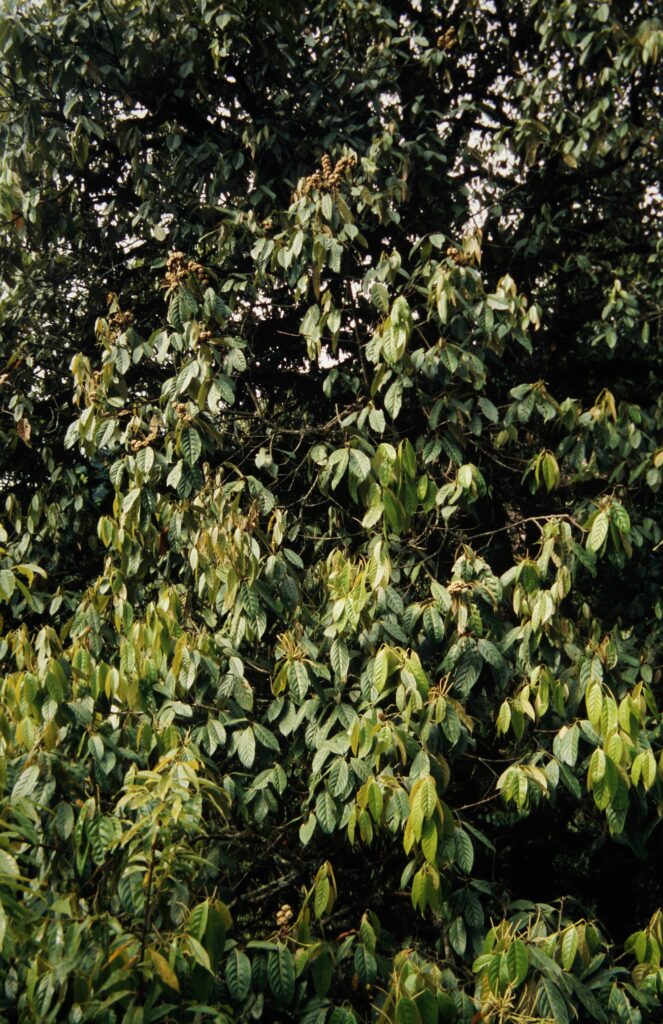
Lithocarpus fenestratus is an evergreen stone-oak widely distributed across the eastern Himalaya and Indo-Burma, ranging from Nepal, Bhutan and north-eastern India through Bangladesh, Myanmar, Thailand, Laos, Vietnam and Cambodia into southern China and Taiwan. GBIF aggregates over 1080 occurrences, concentrated in the montane forests of South-East Asia and the Sino-Himalayan borderlands. It is a canopy or sub-canopy tree of subtropical and warm-temperate evergreen broad-leaved forest, often in mixed laurel-oak associations on hill slopes, generally from the lowlands up to around 2000 m. The tree photographed in Bhutan near Wangdue/Gelephu (800 m, October) reflects its presence in the warm foothill forests of the southern Bhutanese duars.

The species is a medium to large tree with greyish, fissured bark and stout twigs. The leaves are simple, alternate, coriaceous, elliptic to oblong-elliptic, entire and pinnately veined, glabrous and lustrous above and often glaucous or thinly tomentose beneath. The flowers are unisexual, borne in erect catkin-like spikes, the male inflorescences elongate and the female flowers seated singly or in clusters at the base of mixed spikes. The diagnostic fruit is the acorn: a hard nut wholly or largely enclosed by a woody cupule covered in concentric, often lamellate rings, maturing over more than one season and dispersed by gravity and rodents.

Lithocarpus is a large Asian genus distinguished from Quercus by its erect (rather than pendulous) male catkins and its frequently enclosing, ringed cupules. L. fenestratus, transferred to the genus by Rehder, has a broad range and considerable foliar variation, and several infraspecific taxa have been recognised regionally. As a widespread, often dominant forest tree it is not globally threatened, though locally exploited for timber and important as mast for forest wildlife.

Author: (Roxb.) Rehder · Sources: POWO (Kew), GBIF, Flora of China, Flora of Bhutan, Flora of Thailand, Annotated Checklist of the Flowering Plants of Nepal, monograph of Asian Lithocarpus (Camus)
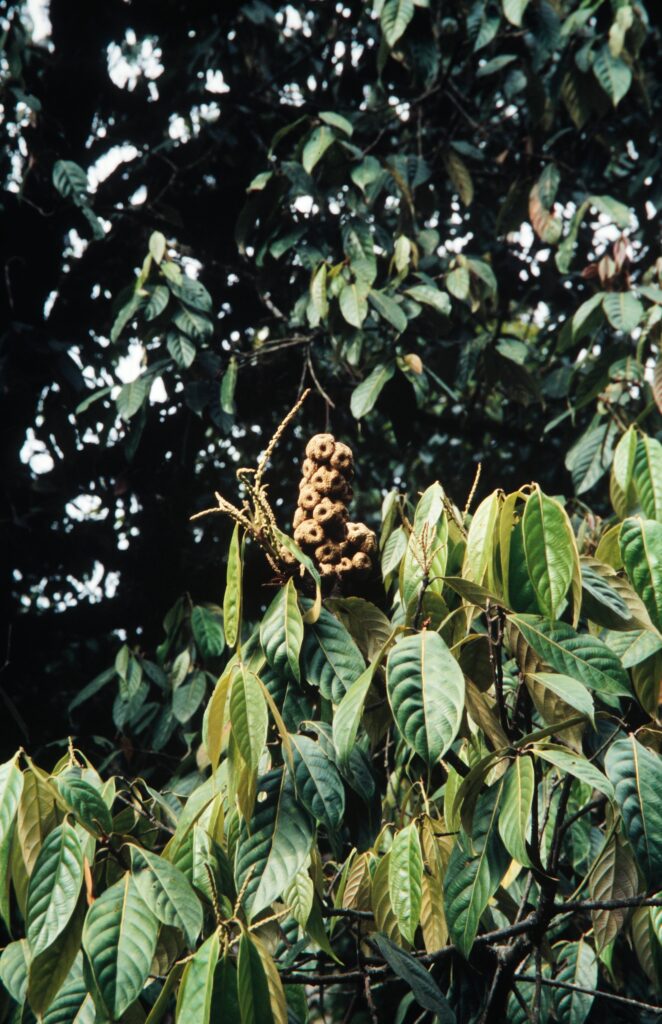
Rehder

Description

Lithocarpus pachyphyllus is a stone oak widely distributed across the eastern Himalaya and adjacent Southeast Asia, with records from China, India, Nepal, Myanmar, Bhutan, Thailand and Vietnam and a substantial occurrence base of around 229 georeferenced collections. It is a canopy and subcanopy tree of montane evergreen broadleaved forest, forming a conspicuous element of the laurophyllous oak-laurel belt on humid, well-drained slopes. The tree photographed at Ramman in West Bengal (India) at about 2250 m in May represents its characteristic position in the mid-montane cloud-forest zone, where Lithocarpus and Quercus species dominate the wet temperate forests of the southern Himalayan front.

It is an evergreen tree with a dense, rounded crown and grey, finely fissured bark. The leaves are coriaceous and pachyphyllous (thick-textured, as the epithet indicates), elliptic to oblong-lanceolate, entire-margined, glabrous and glossy above and dull beneath, with a prominent midrib and arcuate lateral veins. As in all Lithocarpus, the staminate flowers are borne in erect, rigid catkins rather than the pendulous catkins of true oaks, while the pistillate flowers are clustered at the base of the inflorescence axis. The fruit is a thick-walled nut seated in a woody cupule whose scales are typically arranged in concentric rings; the acorns are often densely aggregated along the rachis.

Lithocarpus is distinguished from Quercus chiefly by its erect staminate catkins and frequently aggregated, sessile fruits, features expressed clearly in this species. Its heavy, animal-dispersed acorns provide an important mast resource for montane wildlife, while the species contributes substantially to the structure and carbon stock of Himalayan oak forest. Although not currently of conservation concern across its broad range, local populations are reduced by timber extraction and the conversion of mid-elevation forest, making it a key indicator of intact wet temperate woodland.

Author: Rehder · Sources: POWO (Kew), GBIF, Flora of China Vol. 4, Flora of Bhutan Vol. 1, Flora of Nepal, Camus Les Chênes: Monographie du genre Lithocarpus

Hook.

Nepal 99 296 ergebnis
West-Nepal Kalmura 4100m, June

Description

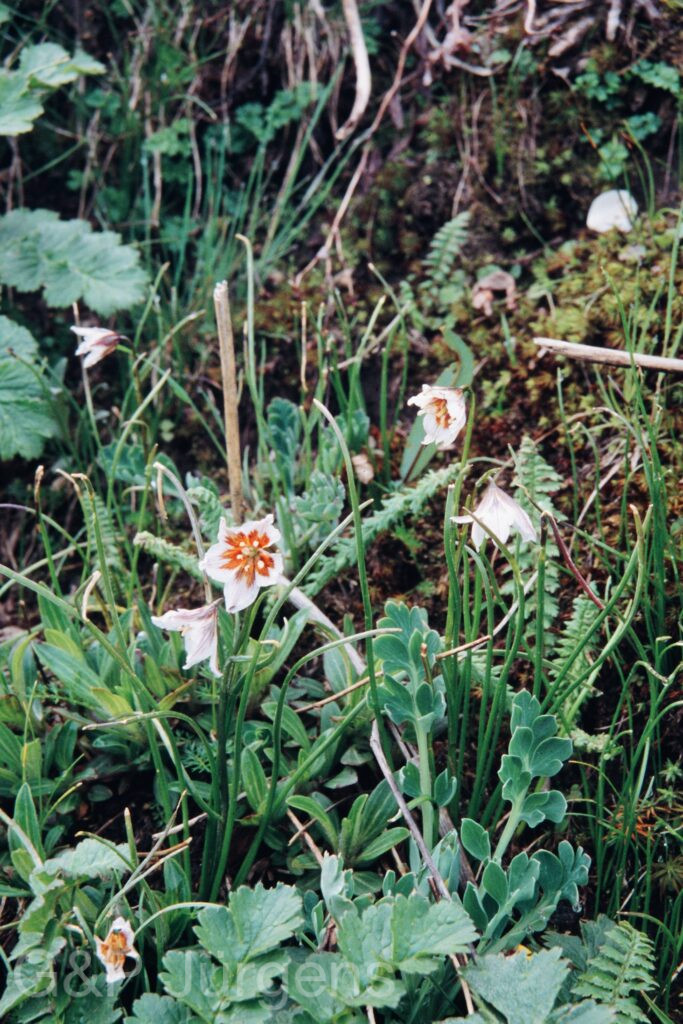
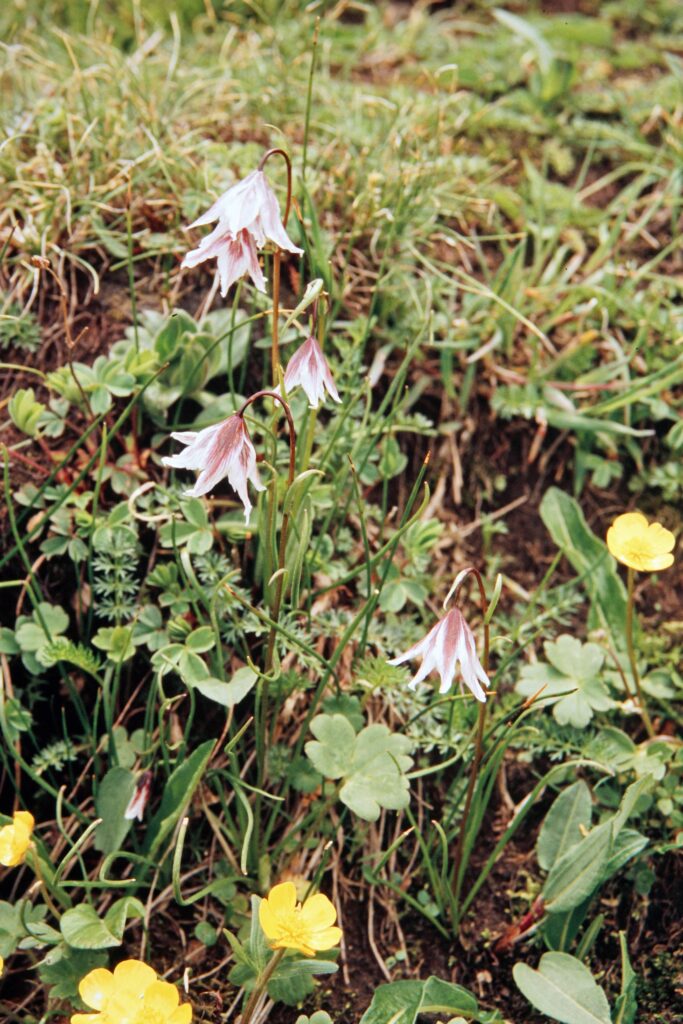
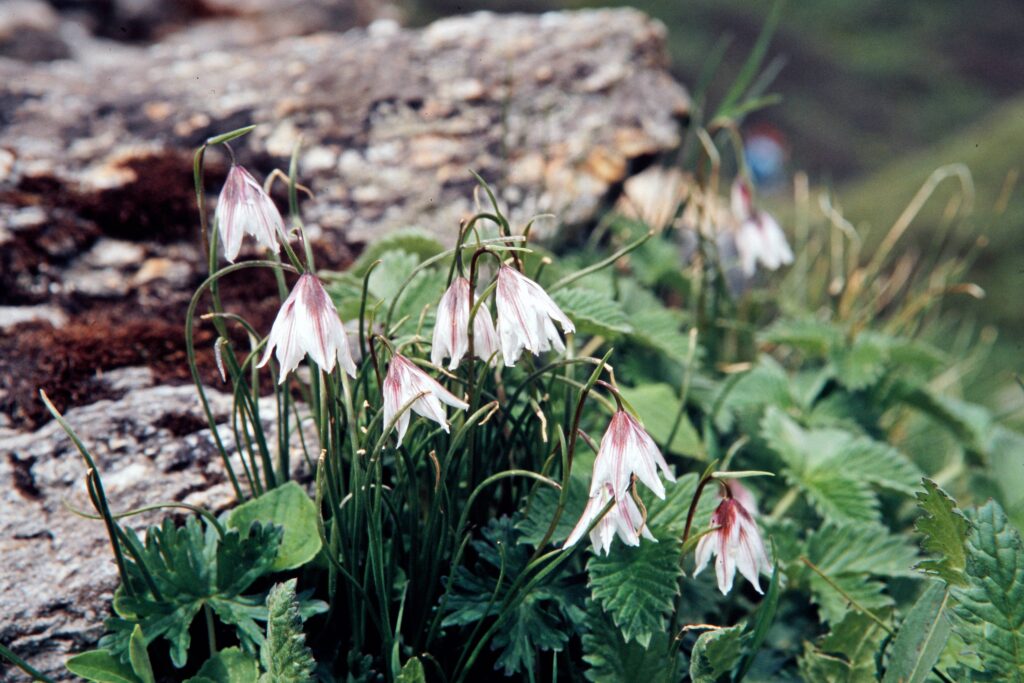
Lloydia longiscapa Hook. is a delicate bulbous geophyte of the high Himalaya. According to GBIF (about 75 occurrences) it ranges across Nepal, northern India, southern China (Tibetan plateau margins) and Bhutan, growing in alpine meadows, on grassy and rocky slopes and among open turf near the upper limit of vegetation. It is a true high-alpine plant, recorded chiefly between 3,500 and 4,500 m. The populations documented at Kalmura in West Nepal (4,100 m) and Khiar Kutti in Garhwal (3,900 m), both flowering in June, illustrate its phenology as a snow-melt species that emerges and blooms shortly after the retreat of the winter snowpack.

The plant develops from a small ovoid bulb enclosed in membranous tunics, producing one or few slender stems. The leaves are narrowly linear, almost grass-like, with basal leaves longer than the few reduced cauline ones. The flowers are solitary or few, erect, broadly campanulate, with six free, white to pale yellowish tepals usually marked with fine purplish veins and a small nectary at the base; the long, slender scape gives the species its epithet "longiscapa". Stamens are six, the ovary superior and three-locular, maturing into a loculicidal capsule containing numerous flat seeds.

GBIF flags this name as a synonym; the genus Lloydia is now widely subsumed within Gamochaeta-unrelated Gagea (Gagea sensu lato), so the taxon is best treated under the accepted concept indicated by current authorities while retaining Lloydia longiscapa as the working name. As a snow-bed and alpine-turf specialist it exemplifies the bulbous "spring ephemeral" strategy adapted to short Himalayan growing seasons, and its restricted high-elevation habitat warrants attention under scenarios of alpine climate change.

Author: Hook. · Sources: POWO (Kew), Flora of China Vol. 24, Flora of Nepal, GBIF, Stearn: Notes on the genus Lloydia

Franch.

BhutanPG2011 123
Bhutan Tsochenchen, 3550m June

Description

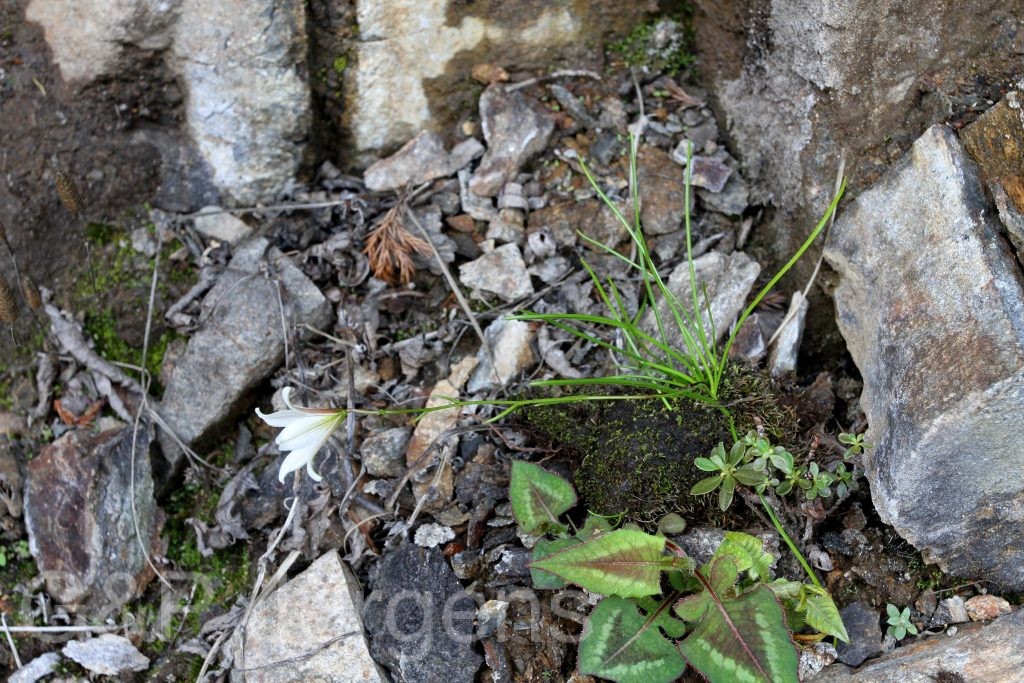
Lloydia yunnanensis is a small alpine bulbous herb ranging across south-central China (notably Yunnan and Xizang), the Indian Himalaya, Bhutan and Nepal, with around one hundred and thirty GBIF records testifying to a fairly continuous high-mountain distribution. It grows in alpine and subalpine meadows, on grassy and rocky slopes, in open scrub and among rocks, typically between about 3000 and 4500 m. The photographed plant from Tsochenchen in Bhutan at 3550 m, flowering in June, is characteristic of its early-summer flowering as the snow recedes from the upper pastures it favours.

The species arises from a small ovoid bulb with a fibrous tunic and produces a slender, erect stem. The leaves are few, narrowly linear and grass-like, the lower ones basal and the upper cauline and reduced. The flowers are solitary or few, erect, with six free, spreading tepals that are white to pale yellow, often veined or tinged with purple toward the base and bearing a nectary at the inner base; the six stamens have slender filaments and the superior ovary bears a single style. The fruit is a small loculicidal capsule containing numerous flat seeds.

Lloydia yunnanensis is here treated under the accepted name Lloydia yunnanensis. Although the genus Lloydia has frequently been merged into Gagea in modern molecular treatments, the segregate name is retained here following the input. Its dwarf stature, bulb-protected perennating organ and rapid post-snowmelt flowering are classic adaptations to the brief alpine growing season. The species is widespread and not regarded as threatened, though high-altitude grassland degradation could affect local populations.

Author: Franch. · Sources: POWO (Kew), GBIF, Flora of China, Flora of Bhutan, Peruzzi & Zarrei revision of Gagea/Lloydia (Liliaceae monograph)

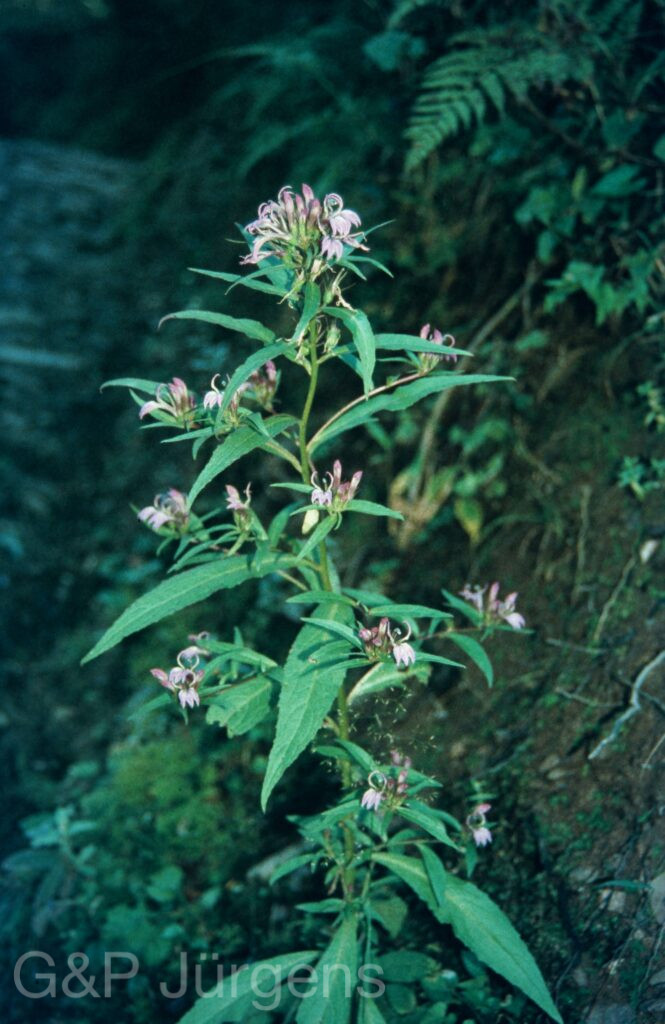
Roth

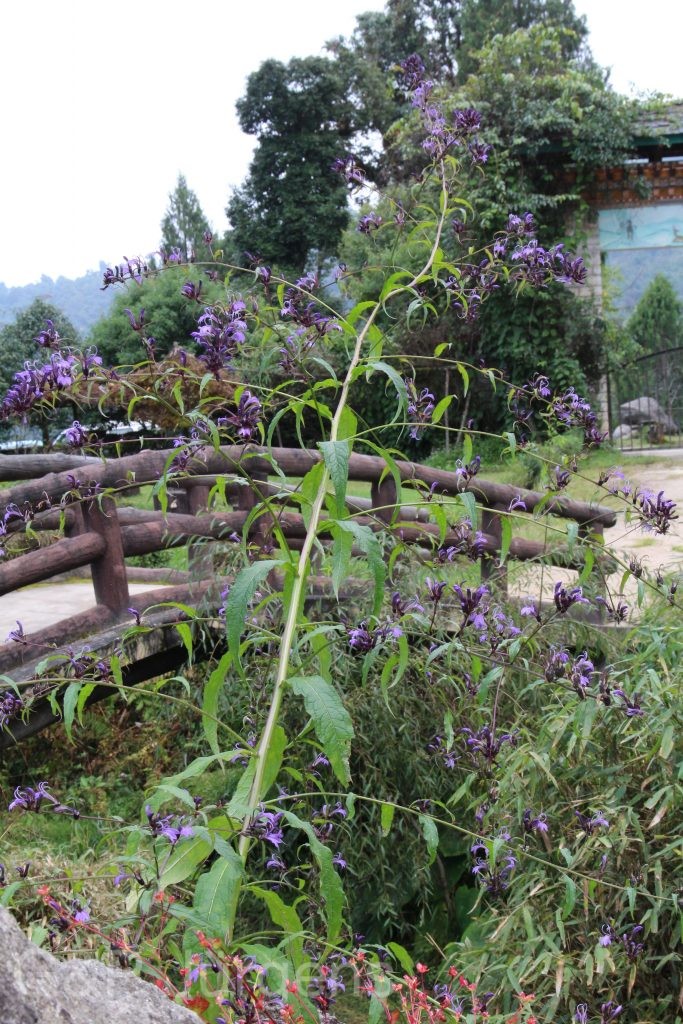
Bhutan2015 35
Bhutan Dochu-La 2700m, October
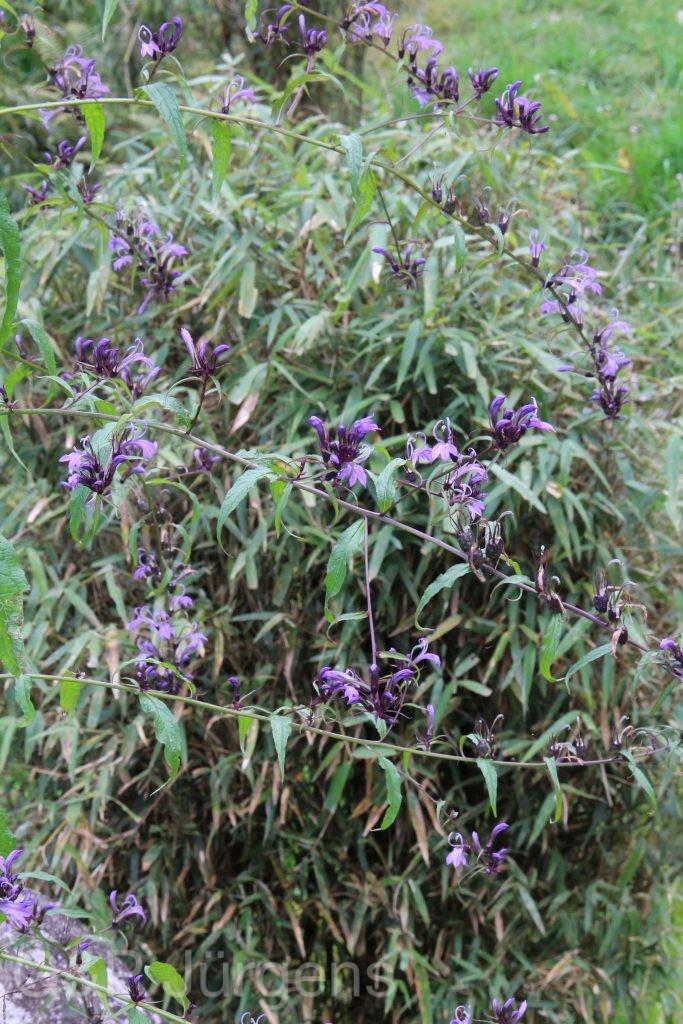
Bhutan2015 36
Bhutan Dochu-La 2700m, October
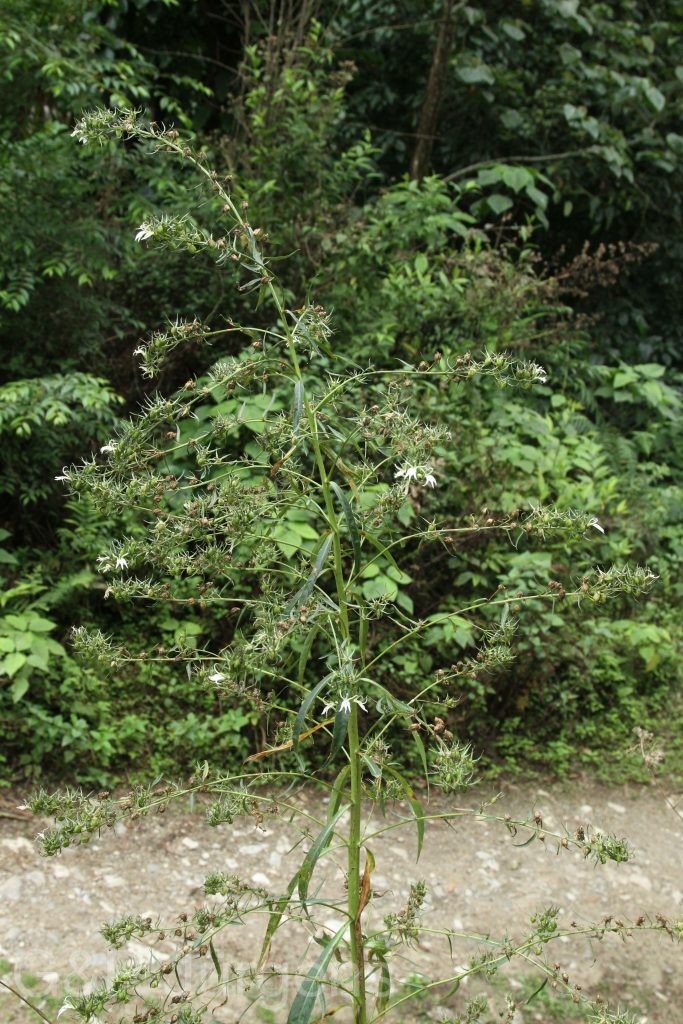
Bhutan2014 286
Bhutan Trithangebe at a farm, 800m May
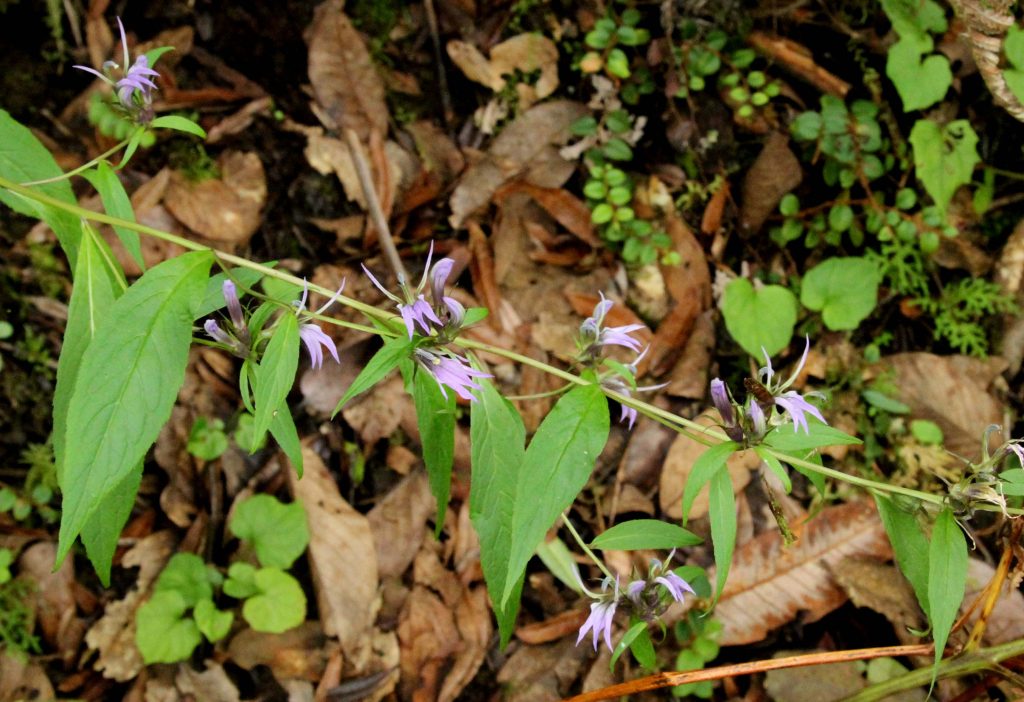
Bhutan2012 338
Bhutan Dochu-La 3000m, September

Description

Lobelia nicotianifolia is a robust, wide-ranging lobelia of the Indian subcontinent and tropical Asia, documented from India, China, Sri Lanka, Nepal, the Philippines, Thailand, Myanmar, Indonesia, Bangladesh, Vietnam, Bhutan, Laos, Malaysia and Taiwan, with around 763 occurrences making it one of the better-collected species in this set; New World records reflect cultivation or error. It occupies a wide altitudinal span, from warm foothill farmland to cool montane forest margins, favouring open, disturbed, moist ground along roadsides, clearings and field edges. The Bhutanese collections illustrate this breadth, ranging from a farm at Trithangebe at about 800 m in May to the Dochu-La between roughly 2700 and 3000 m flowering in September and October.

It is a tall, stout biennial or short-lived perennial herb, sometimes exceeding two metres, with an erect, little-branched stem exuding acrid milky latex when cut. The leaves are large, alternate, lanceolate to elliptic, finely toothed and tobacco-like in size and texture, hence the epithet nicotianifolia, the lower ones forming a substantial basal array. The flowers are borne in a long, dense terminal raceme; each is zygomorphic with a tubular, two-lipped corolla, typically pale greenish-white to bluish, split nearly to the base, the upper lip of two narrow lobes and the lower of three, the stamens connate into a staminal tube around the style. The fruit is a many-seeded capsule dehiscing at the apex.

Within Campanulaceae, Lobelia is a large genus distinguished by strongly bilabiate flowers and syngenesious anthers, and tall species such as this are notable for their imposing single-stemmed inflorescences and their pyridine alkaloids related to lobeline, giving them a long history of medicinal and folk use. The acrid latex deters herbivores, and the protandrous flowers favour outcrossing by insect visitors. Common and adaptable across a vast range, the species is of no conservation concern and behaves as a colonist of disturbed, anthropogenic habitats.

Author: Roth · Sources: POWO (Kew), GBIF, Flora of Bhutan, Flora of China, Flora of British India, Lammers's monographic studies of Lobelia (Campanulaceae)

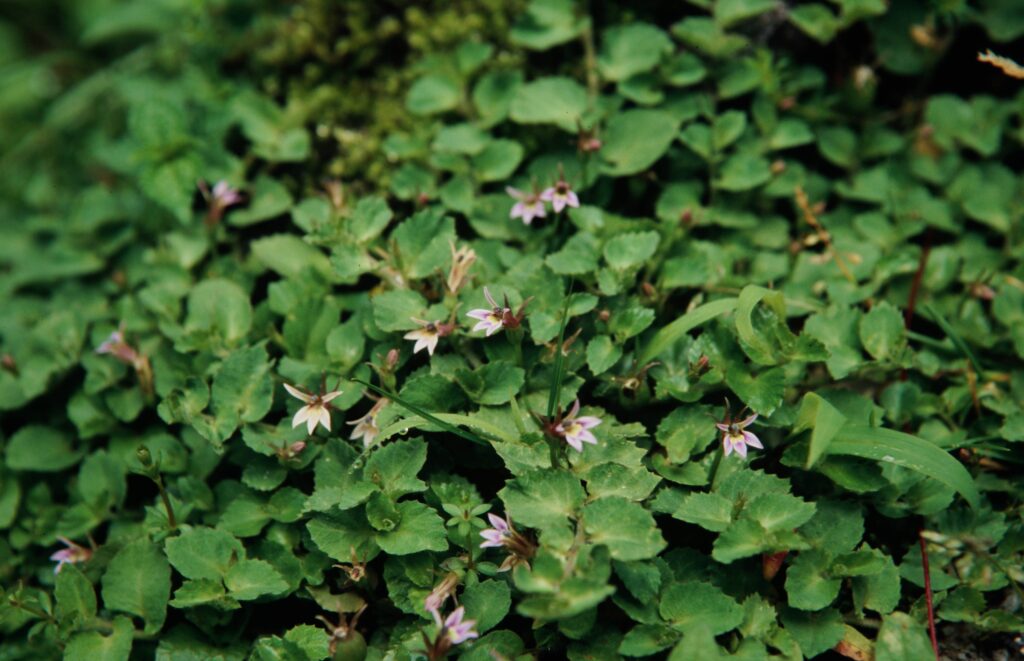
Lam.

Sikkim 2006 457 ergebnis
India West-Bengal, Ruigi-Chu 2100m, May

Description

Lobelia nummularia is a creeping, mat-forming perennial herb of the Campanulaceae (subfamily Lobelioideae), widely distributed across tropical and subtropical Asia. GBIF data (over 2,600 occurrences) confirm a broad native range spanning the eastern Himalaya, southern China, Taiwan, Indochina, the Malesian region and Papua New Guinea, with naturalised or cultivated records further afield. The species favours shaded, humid forest floors, mossy banks, ravine sides and the margins of streams in evergreen broadleaved and subtropical montane forest. The collection from the Ruigi-Chu valley in West Bengal at 2,100 m in May illustrates its habit of carpeting damp, sheltered ground in the lower montane belt.

The slender, prostrate stems root at the nodes and form extensive mats. Leaves are alternate, small, orbicular to broadly ovate or cordate, shortly petiolate, with shallowly crenate to serrate margins, the rounded coin-like blades giving rise to the epithet nummularia. The solitary axillary flowers are borne on long, filiform pedicels. The corolla is bilabiate, pale purplish-pink to whitish, with the two upper lobes erect and the three lower lobes spreading; the five anthers are fused into a tube around the style. The fruit is a small, more or less globose to subglobose capsule containing numerous minute seeds.

Members of subfamily Lobelioideae are characterised by their resupinate, strongly zygomorphic flowers and connate anthers, and like many lobelias the species contains piperidine alkaloids. As a ground-cover element of intact understorey, L. nummularia contributes to soil stabilisation on humid forest banks. Its very wide distribution renders it secure overall, though forest clearance threatens local populations dependent on continuous shade and humidity.

Author: Lam. · Sources: POWO (Kew), Flora of China Vol. 19, Flora of Bhutan Vol. 2, GBIF, Lammers: World Checklist and Bibliography of Campanulaceae (2007)

Wall.

Garw 2005 418 ergebnis
India Garhwal Didina 2470m, September

Description

Lobelia pyramidalis is a widespread Asian lobelia ranging through the Himalaya and into mainland Southeast Asia and southern China, with GBIF records from India, Nepal, Bhutan, Bangladesh, China, Taiwan, Myanmar, Thailand and Japan (a few extralimital records from the United States represent cultivation or introductions). Its nearly 419 documented occurrences confirm a broad and well-collected distribution. The species grows on grassy banks, open hillsides, forest margins, roadside cuttings and moist disturbed ground from the lowlands up to roughly 2,800 m. The photographed plant from Didina in Garhwal, India, at 2,470 m flowering in September illustrates its preference for the temperate Himalayan zone, where it flowers late in or after the monsoon.

The plant is an erect biennial or short-lived perennial herb with a tall, simple, pyramidal flowering stem reaching up to a metre or more. The leaves are alternate, sessile and crowded below, lanceolate to oblanceolate with finely toothed margins, the lower ones forming a basal rosette. The inflorescence is a long, dense, spike-like terminal raceme of many small zygomorphic flowers, each subtended by a leafy bract; the corolla is bilabiate and pale blue to lilac or whitish, with the two upper lobes erect and the three lower lobes spreading. The fruit is a small two-valved capsule containing numerous minute seeds.

The species belongs to Lobelia subgenus Tupa-related Asian lineages and, like its congeners, contains piperidine alkaloids that render it acrid and medicinally noteworthy in folk traditions. Its tolerance of disturbed and secondary habitats makes it locally common and of no conservation concern. Its wide latitudinal and altitudinal amplitude makes it a useful indicator of the disturbed grassland flora across monsoonal Asia.

Author: Wall. · Sources: POWO (Kew), Flora of China Vol. 19, Flora of Bhutan Vol. 2, GBIF, Lammers: World Checklist and Bibliography of Campanulaceae

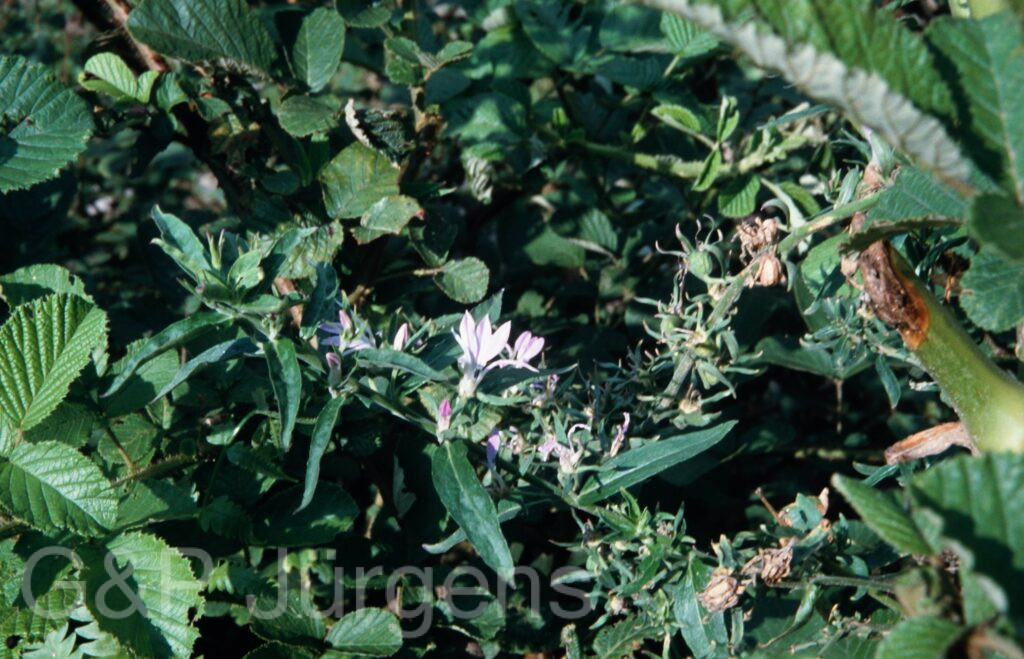
Wall.

Nepal 2001 514 ergebnis ergebnis
Nepal (Gorkha) Mulabari 1340m, May

Description

Lobelia rosea is a slender annual or short-lived herb of the eastern Himalaya and Indo-Burmese region, ranging from Nepal, Bhutan and north-east India through Myanmar, Thailand, Laos and Vietnam to southern China and peninsular Malaysia. GBIF records 112 occurrences across this subtropical to warm-temperate arc. It favours moist open ground, stream and paddy margins, damp grassy banks and disturbed clearings at low to middle elevations. The plant from Mulabari in Gorkha, central Nepal, at 1340 m in May is a typical pre-monsoon population on humus-rich soil in light shade.

It is a delicate herb with erect or ascending, simple or sparingly branched stems exuding milky latex when broken. The leaves are alternate, sessile or shortly petiolate, ovate to lanceolate, serrate to denticulate and thin in texture. The flowers are borne in lax terminal racemes on slender pedicels. The corolla is markedly zygomorphic and two-lipped, pink to rose-purple (whence rosea), the tube split dorsally and the lower lip three-lobed; the five anthers are connate around the style into the Lobelia tube, the two lower ones tufted apically. The fruit is a small two-valved capsule dehiscing apically to shed numerous minute, reticulate seeds.

Lobelia, the largest genus of Campanulaceae (subfamily Lobelioideae), is sometimes segregated, but molecular evidence supports its retention within an expanded Campanulaceae. L. rosea belongs to a group of small-flowered Asian annuals delimited chiefly by corolla colour, leaf shape and capsule form. Like its congeners it contains piperidine alkaloids, and several Asian Lobelia species feature in traditional medicine. Widespread and weedy, persisting readily in disturbed seasonally moist habitats, it is of no conservation concern.

Author: Wall. · Sources: POWO (Kew), GBIF, Flora of China Vol. 19, Flora of Bhutan Vol. 2, Annotated Checklist of the Flowering Plants of Nepal, Lammers world checklist of Campanulaceae

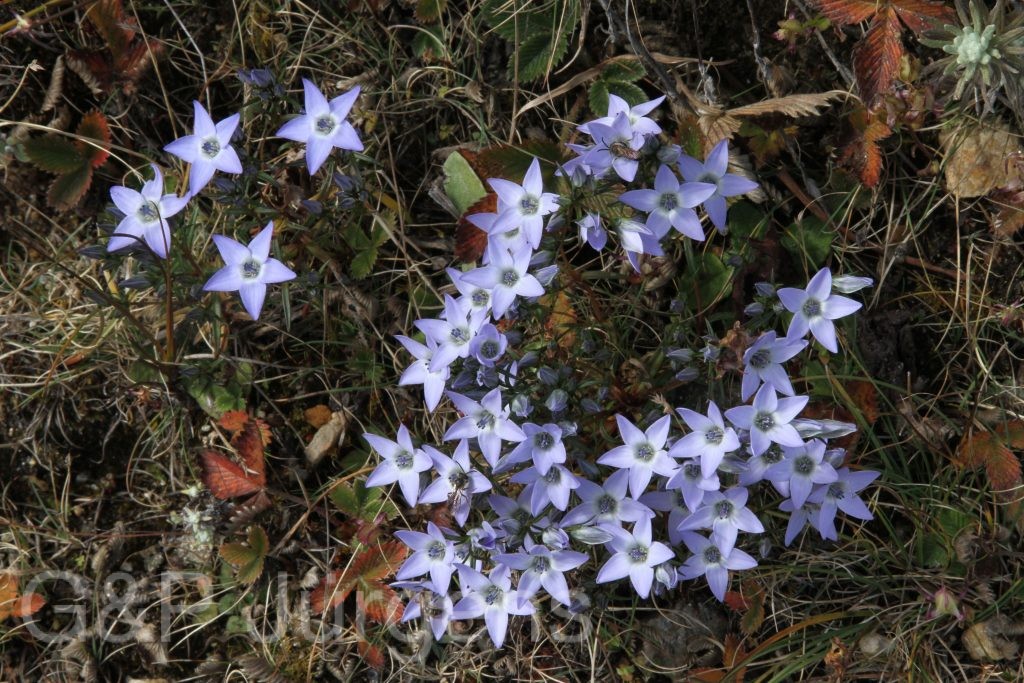
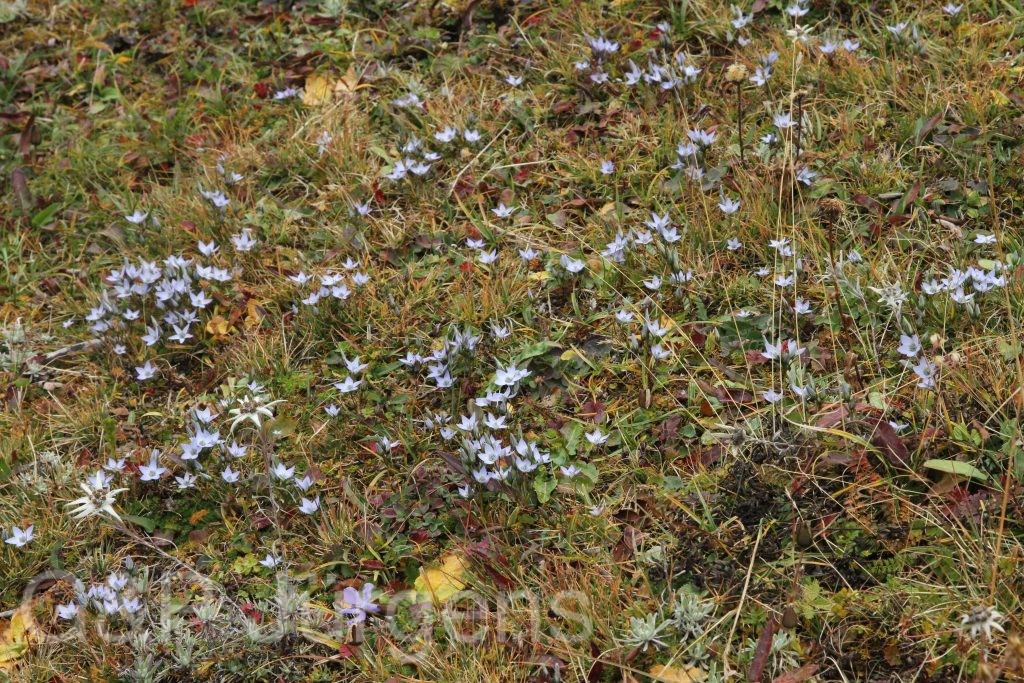
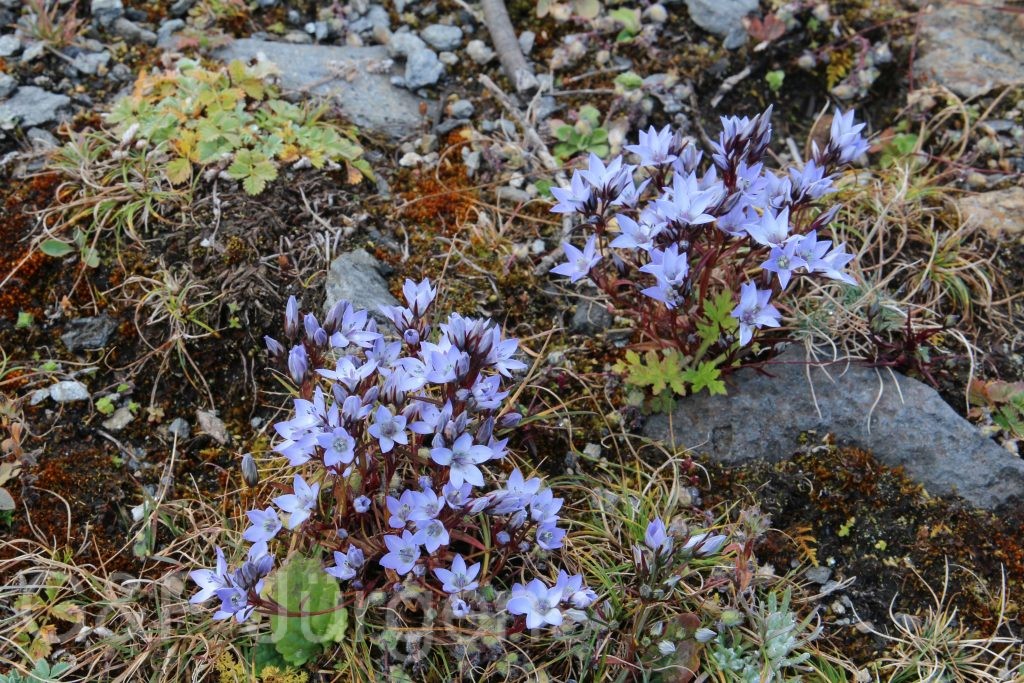
(Burkill) Harry Sm.

Bhutan2015 666
Bhutan Chele-La 4000m, October
Bhutan2015 682
Bhutan Chele-La 4000m, October
Bhutan2015 685
Bhutan Chele-La 4000m, October

Description

Lomatogonium sikkimense is a high-alpine gentian relative restricted to the eastern Himalaya and adjacent Tibet, recorded from Nepal, India, Bhutan and China, with about 74 occurrences in GBIF. It grows in the alpine zone on open turf, moist meadows, streamsides and gravelly slopes, characteristically between about 3500 and 4500 m, flowering late as the monsoon ends. The plants photographed at the Chele-La in Bhutan at around 4000 m in October exemplify this habitat, where the species blooms among short alpine vegetation just before the onset of winter.

It is a slender annual or short-lived herb with erect or ascending, often branched stems bearing opposite, sessile, narrowly lanceolate to linear leaves. The flowers, borne singly or in a few-flowered cyme, are rotate and deeply five-lobed, the blue to violet-blue corolla lobes acute and often delicately veined; characteristically for the genus, each lobe bears a pair of fringed nectary scales at its base, distinguishing Lomatogonium from the closely related Swertia and Gentianella. The five stamens alternate with the lobes, and the superior ovary develops into a many-seeded capsule.

Lomatogonium is a small Eurasian genus of high mountains and is centred on the Sino-Himalayan and Tibetan flora, with L. sikkimense among its narrowly distributed eastern Himalayan members, as its epithet referencing Sikkim records. The fringed paired nectaries and rotate corolla are key diagnostic features separating it from allied swertioid gentians. No formal conservation assessment exists; the species appears locally frequent within its restricted alpine range, though such narrowly zoned high-altitude annuals are potentially vulnerable to climate-driven shifts in alpine meadow vegetation.

Author: (Burkill) Harry Sm. · Sources: POWO (Kew), GBIF, Flora of Bhutan, Flora of China, Annotated Checklist of the Flowering Plants of Nepal, Ho & Liu Worldwide Monograph of Swertia and its Allies

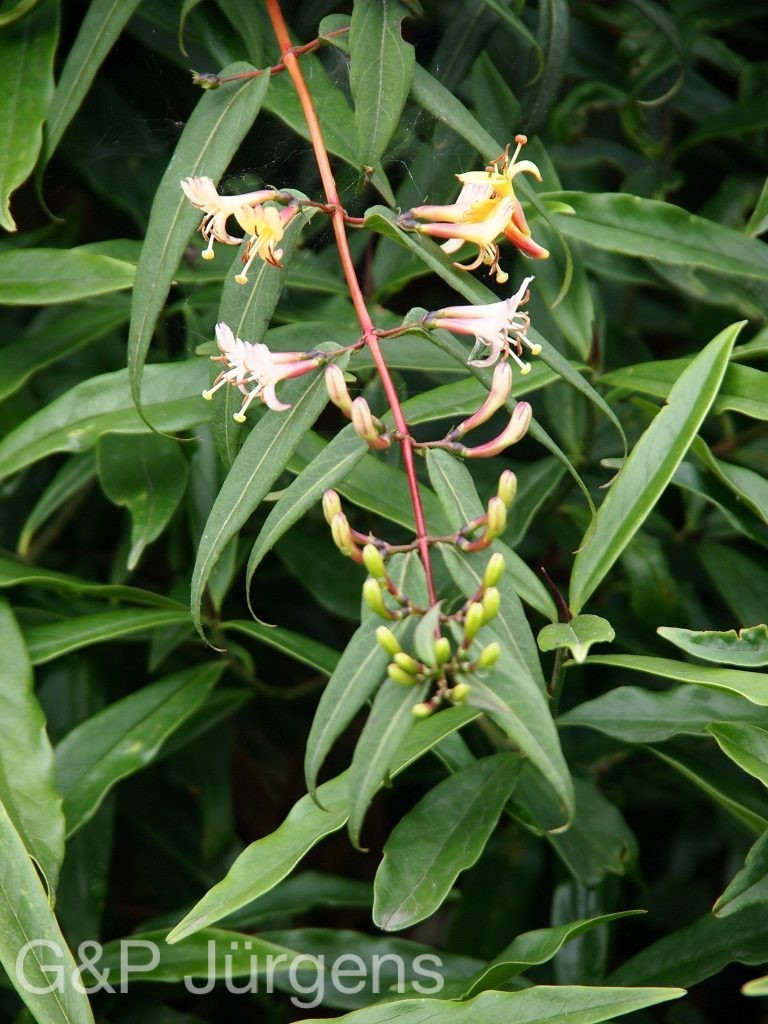
Wall.

BhutanPG2011 3
Bhutan Paro, 2400m June

Description

Lonicera acuminata is a widespread evergreen or semi-evergreen climbing honeysuckle distributed across the Himalaya and montane East and Southeast Asia, with native records from China, Taiwan, Japan, Nepal, India, Bhutan, the Philippines and Indonesia, alongside numerous cultivated and naturalised occurrences in Europe and North America; GBIF documents over 12,000 occurrences. It inhabits forest margins, thickets, ravines and scrubby slopes, mostly between 1000 and 3000 m, scrambling over shrubs and trees in mixed broadleaf and conifer forest. The Bhutanese photograph from Paro at about 2400 m in June shows it flowering in its typical mid-elevation woodland-edge setting.

The plant is a twining woody liana with slender, often purplish, hairy young branches. The leaves are opposite, ovate-oblong to lanceolate, acuminate at the apex as the epithet indicates, entire, and frequently ciliate and pubescent along the margins and veins. The flowers are paired in the leaf axils on short peduncles, the corolla bilabiate and tubular, opening pale yellow and often suffused with reddish or purplish tones, the slender tube exceeding the lobes and the stamens and style exserted. The bracts are small and the calyx teeth short. The fruit is a small globose to ovoid berry, ripening purple-black and bearing few seeds.

Within the large, taxonomically intricate genus Lonicera (Caprifoliaceae), L. acuminata belongs to the climbing subgenus Periclymenum and shows considerable variation in indumentum and leaf form across its range, accounting for a long list of synonyms. Its tubular, exserted-stamen flowers point to pollination by long-tongued insects, while the fleshy berries are dispersed by birds. Broadly distributed and frequent, it is of no conservation concern and is grown ornamentally for its fragrant flowers and vigorous growth.

Author: Wall. · Sources: POWO (Kew), GBIF, Flora of China, Flora of Bhutan, Annotated Checklist of the Flowering Plants of Nepal, Rehder's revisions of Lonicera