Tag:

Bhutan

Flowers of Bhutan — 1326 plant species documented across the Bhutanese Himalaya, from dense broadleaf and conifer forests to alpine scrub and meadows. Bhutan’s largely intact wilderness shelters an exceptional diversity of orchids, rhododendrons, primulas and Himalayan poppies, many of them regional endemics. Each species page includes a botanical description, distribution, habitat and flowering time, with the original photograph and its recorded altitude and locality.

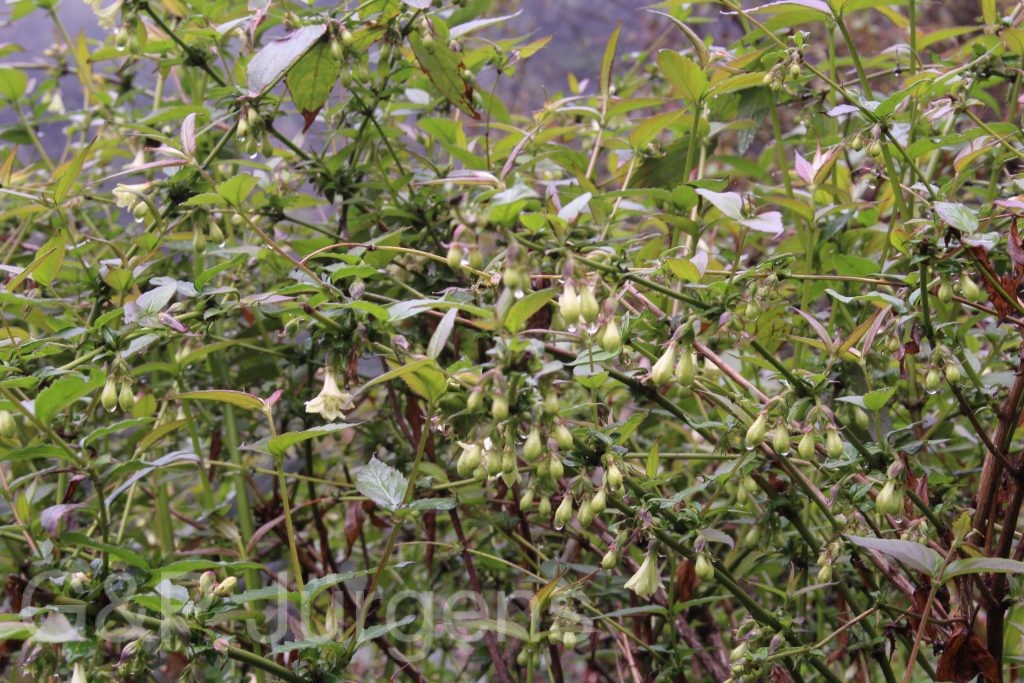
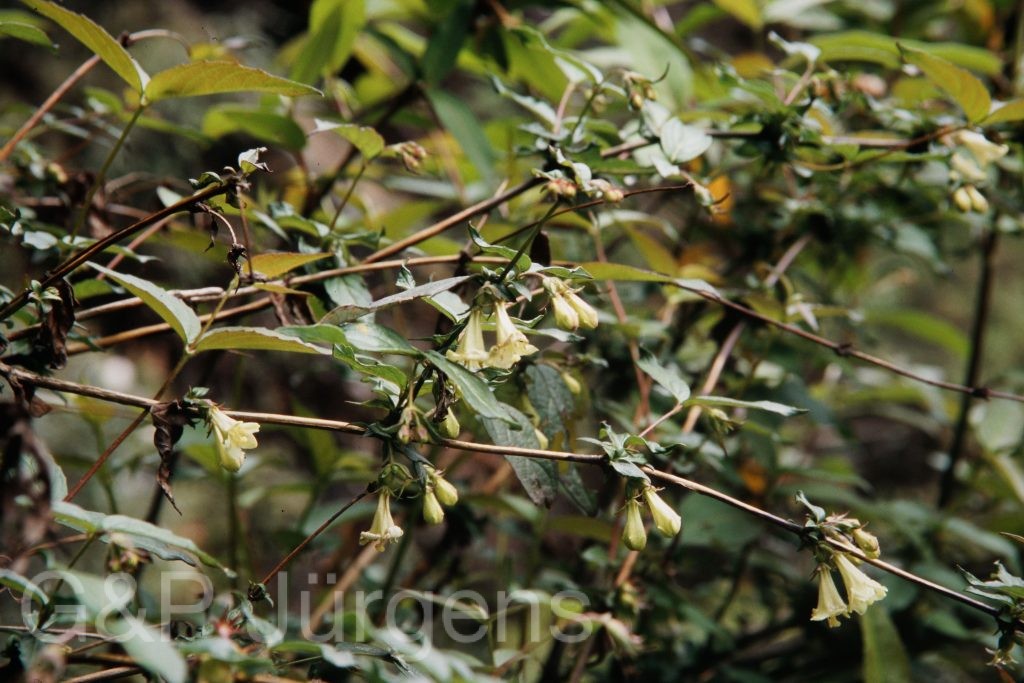
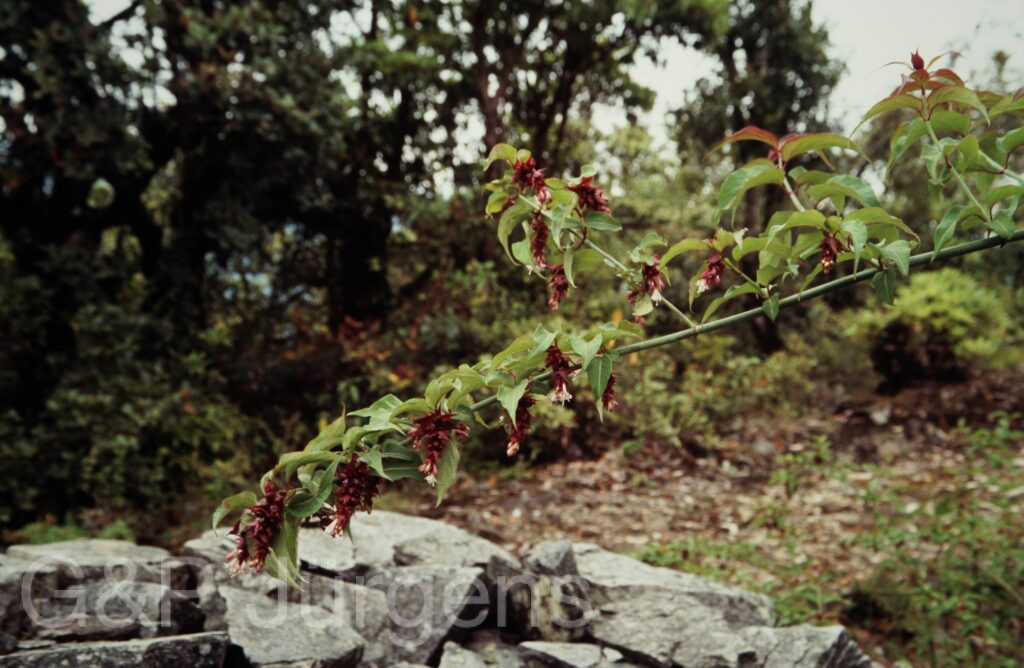
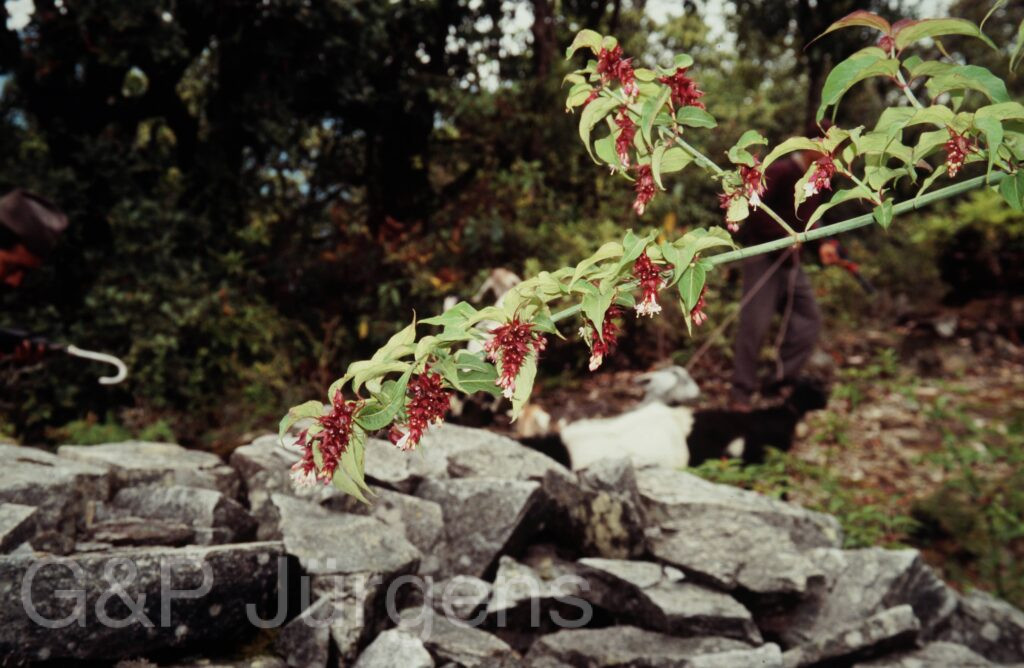
Sm.

Bhutan2015 595
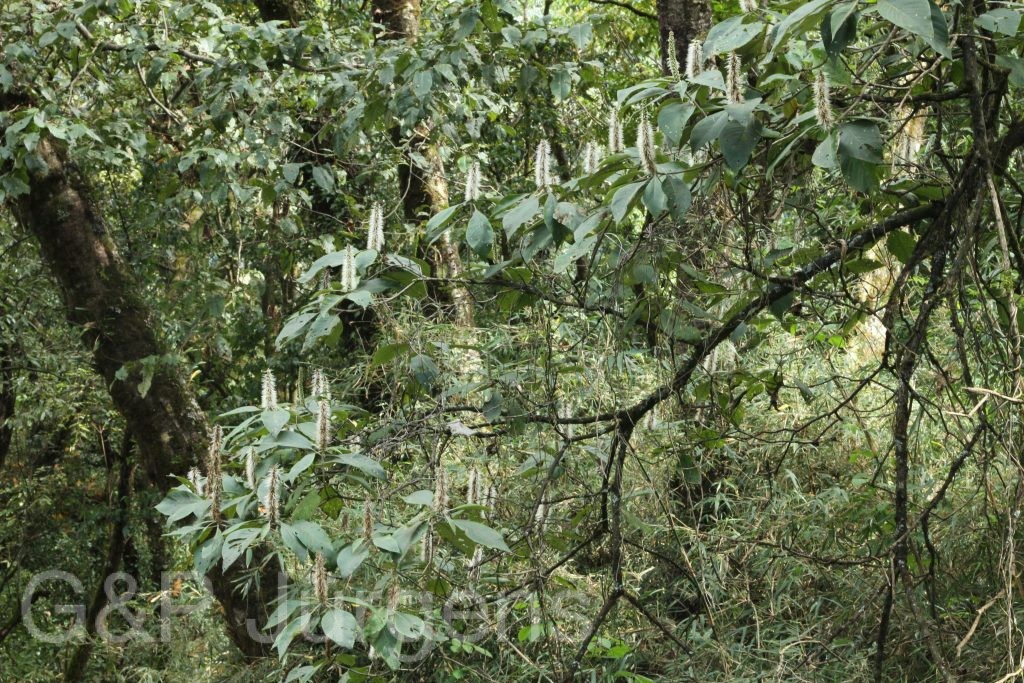
Bhutan Mo-Chu 1900m, October
Bhutan2012 1307
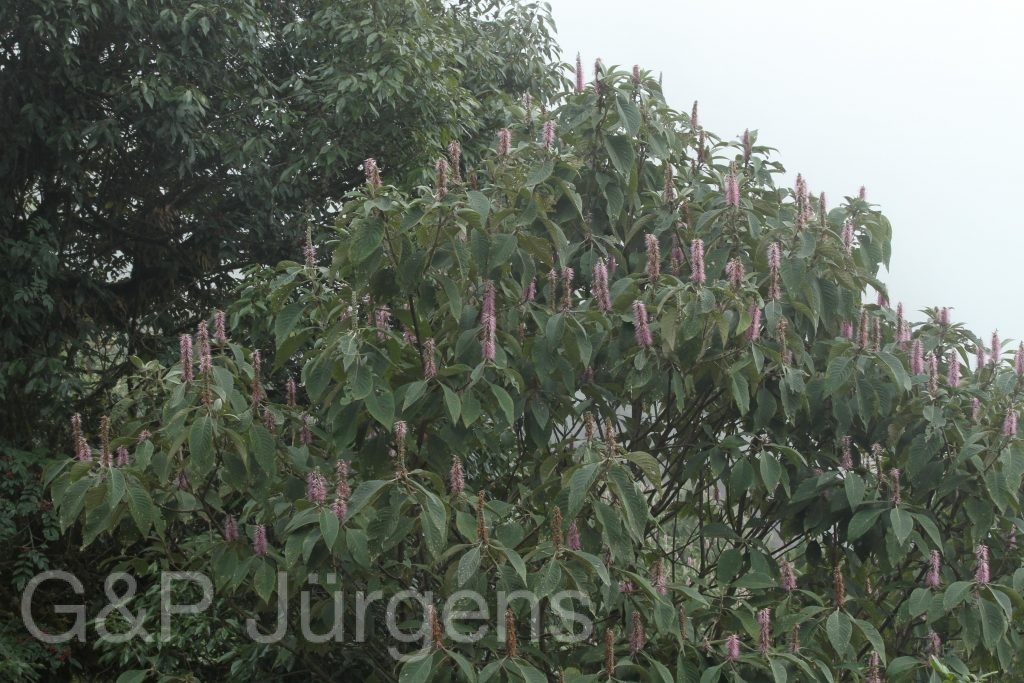
Bhutan Mo-Chu 1900m, October

Description

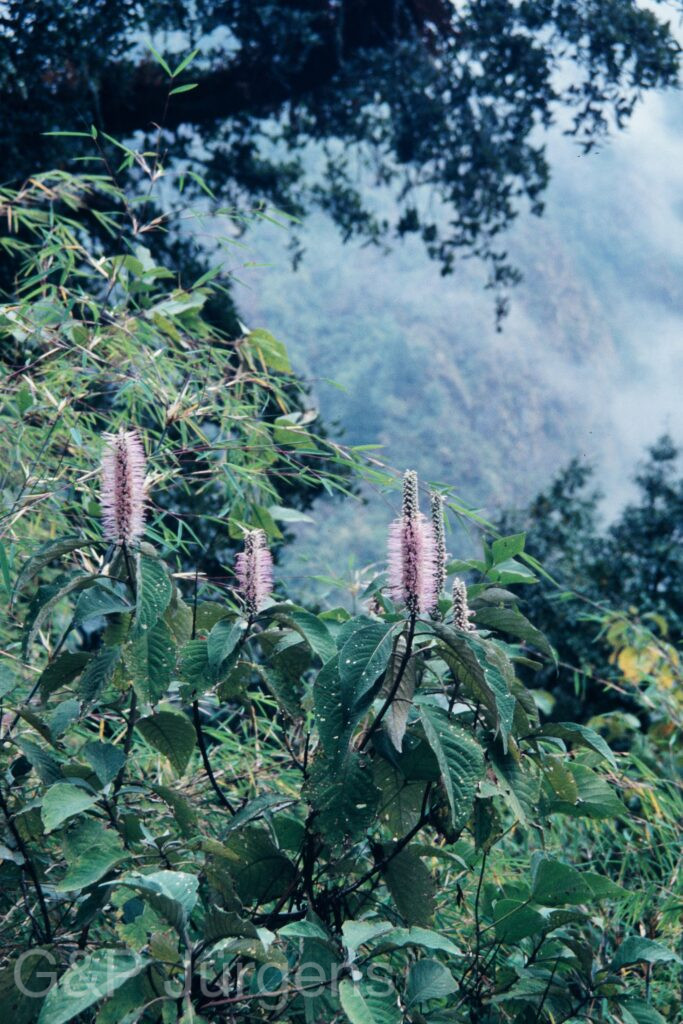
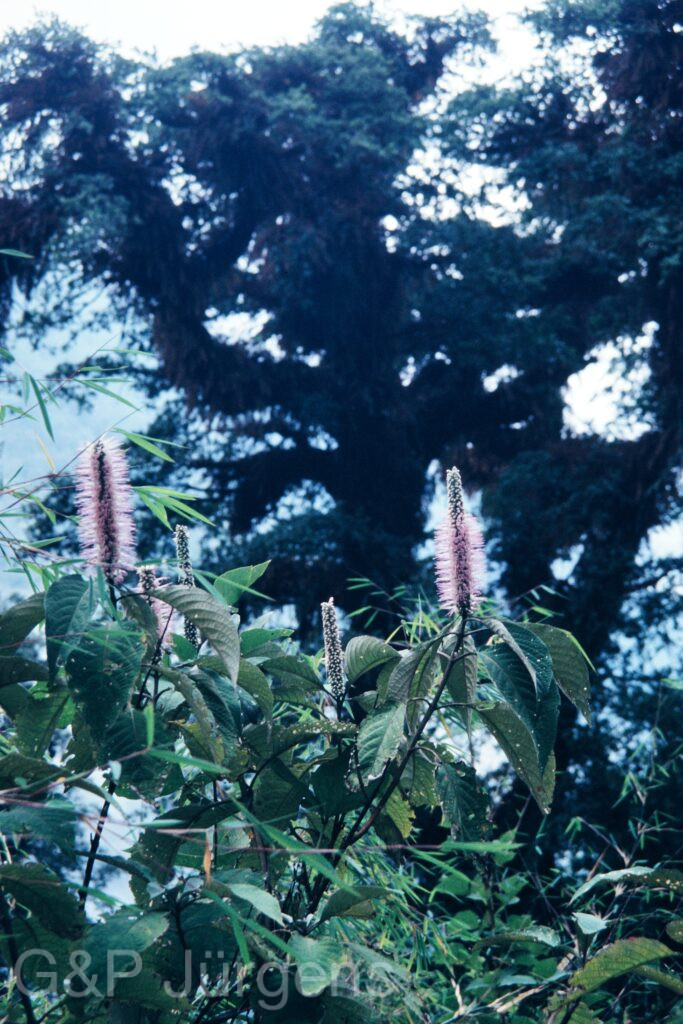
Leucosceptrum canum is a soft-wooded shrub or small tree of the Himalaya and southwestern China, distributed through China, Nepal, India, Bhutan and Myanmar and east to Indochina (CN, NP, IN, BT, MM, VN, TH, BD, LA, with further records), one of the more frequently collected species here with about 515 occurrences. It grows in moist temperate forest, on shaded slopes, ravine sides, forest margins and clearings, typically in the warm- to cool-temperate belt. The gatherings cited are from the Mo-Chu valley in Bhutan at 1900 m and from Trisuli in Nepal at 2700 m, both flowering in October, reflecting its autumn-to-early-winter blooming in the mid-montane forest zone.

The plant is a coarse shrub or small tree with stout, four-angled young branches densely clothed, like the leaf undersides and inflorescence, in a greyish (canous) tomentum from which the epithet derives. The leaves are large, opposite, elliptic to oblong-lanceolate, with a serrate margin, an acuminate apex and prominent venation. The flowers are crowded into a dense, terminal, cylindrical spike-like thyrse with conspicuous bracts; the calyx is tubular and five-toothed, and the white to pale yellow, two-lipped corolla has a short tube and exserted, declinate stamens. The fruit comprises four small nutlets (an eremocarp) enclosed in the persistent calyx.

Leucosceptrum is a small genus placed in the subfamily Lamioideae (or basal lineages) of the Lamiaceae and is of phylogenetic interest as part of an early-diverging Asian woody assemblage allied to Comanthosphace. The conspicuous, nectar-rich autumn inflorescences attract bees, butterflies and birds, and the species is notable for the production of defensive sesquiterpenes secreted by glandular trichomes. Widespread and common across the Himalaya into China, L. canum is of no conservation concern and is locally valued for fuel and as a bee plant.

Author: Sm. · Sources: POWO (Kew), GBIF, Flora of Bhutan, Flora of China, Labiatae of the Himalaya (Lamiaceae revision)
Wall.

Nepal 2009 106 ergebnis
Nepal Helambu Indrawati 2000, May
Nepal 2009 107 ergebnis
Nepal Helambu Indrawati 2000, May

Description

Leycesteria formosa is a Himalayan shrub native to the temperate forests of Nepal, India, Bhutan, Pakistan and southwestern China, where it grows in moist montane woodland, forest margins, ravines, streamsides and shrubby clearings, typically between about 1500 and 3000 m. The photographed plant from the Indrawati drainage in the Helambu region of Nepal, recorded in May, is characteristic of these cool, humid mid-elevation habitats. Far beyond its native range, however, the species is among the most frequently recorded plants in GBIF, with over 42,000 occurrences, the great majority from regions where it has become naturalised after cultivation as an ornamental, notably Great Britain, Ireland, France, the Netherlands, Belgium, Germany, Switzerland, Spain, Portugal, the United States, Australia and New Zealand, where it is regarded as an invasive woodland weed.

It is a deciduous, hollow-stemmed shrub 1-2.5 m tall, with erect, glaucous, bamboo-like green canes that are conspicuously jointed and unbranched or sparingly branched. The leaves are opposite, ovate to ovate-lanceolate, long-acuminate, entire to slightly toothed and often weakly cordate at the base, frequently with a few basal lobes. The inflorescences are pendent, interrupted spike-like racemes of whorled flowers subtended by showy, claret-purple, leaf-like bracts. Each funnel-shaped corolla is white flushed with purple-pink and five-lobed; the ovary is inferior. The fruit is a many-seeded berry that ripens from green through reddish-purple to a glossy deep maroon-black, soft and sweetish, much sought by birds, which disperse the abundant small seeds.

The genus Leycesteria, named for the Bengal magistrate William Leycester, comprises a small group of Sino-Himalayan shrubs traditionally placed in Caprifoliaceae (Lonicereae) near Lonicera. Bird-mediated seed dispersal underlies both the plant's ecological success and its problematic naturalisation abroad, where it colonises disturbed woodland and riparian thickets; in New Zealand in particular it is listed as an environmental weed. Within its native Himalayan range it is common and of no conservation concern, valued horticulturally for its colourful pendent inflorescences and ornamental berries, sometimes grown under the names "Himalayan honeysuckle" or "pheasant berry."

Author: Wall. · Sources: POWO (Kew), GBIF, Flora of China Vol. 19, Flora of Bhutan Vol. 2, Flora of Nepal, Flora of Pakistan, Airy Shaw's revision of Leycesteria

(Hook. f. & Thomson) Hook.f.

Bhutan2014 312
Bhutan Tumching-La 2600m, May

Description

Leycesteria glaucophylla is an eastern Himalayan shrub distributed across India, China, Bhutan and Nepal and into Myanmar; GBIF documents about 113 occurrences, including a few cultivated records in Great Britain and New Zealand. It is a plant of temperate montane forest, occurring at forest margins, in shrubberies, along stream sides and in clearings, generally between about 2000 and 3000 m. The photographed individual grows in Bhutan at Tumching La at around 2600 m in May, a setting typical of this shade-tolerant honeysuckle relative within the cool, humid forests of the eastern Himalaya during the pre-monsoon period.

The species is an erect, deciduous shrub with hollow, often glaucous young stems. The leaves are opposite, ovate to lanceolate, acuminate, entire to slightly toothed, and conspicuously glaucous, particularly beneath, a feature reflected in the epithet glaucophylla. The flowers are borne in pendulous, bracteate terminal and axillary inflorescences subtended by leafy bracts; each has a tubular, funnel-shaped, white to pinkish corolla with five short lobes. The fruit is a many-seeded berry ripening to a dark purplish colour, attractive to birds which act as the principal seed dispersers.

Leycesteria glaucophylla (Hook.f. & Thomson) Hook.f. belongs to a small genus of Himalayan and Sino-Himalayan shrubs allied to Lonicera, placed in Caprifoliaceae; its showy bracts and pendulous spikes give the genus ornamental interest, and several species are cultivated. The species is restricted to the eastern Himalaya and adjacent ranges but is locally frequent in montane forest and not currently regarded as threatened. Its bird-dispersed berries aid colonisation of forest gaps and margins.

Author: (Hook. f. & Thomson) Hook.f. · Sources: POWO (Kew), GBIF, Flora of Bhutan, Flora of China, taxonomic revisions of Leycesteria (Caprifoliaceae)

(Kurz) Airy Shaw

Bh2008 326 P504
Bhutan Jakar, 3000m April

Description

Leycesteria gracilis is a Himalayan and Sino-Himalayan shrub, GBIF recording around 232 occurrences from China, India, Bhutan, Nepal and Myanmar, with scattered records from Japan. It grows in the understorey and at the margins of temperate broadleaved and mixed forest, in shrubberies, along forest tracks and on shaded, moist banks, generally at mid to upper montane elevations between about 2400 and 3300 m. The plant photographed from Jakar (Bumthang) in central Bhutan at 3000 m, in early flower in April, is characteristic of its preference for cool, humid montane forest where it leafs and blooms in spring ahead of the summer rains.

It is a slender, erect to arching deciduous shrub with hollow, often glaucous young stems, more delicate in habit than its relative L. formosa—hence "gracilis." The leaves are opposite, ovate-lanceolate to lanceolate, long-acuminate, entire to finely toothed and thin in texture. The flowers are borne in pendulous, interrupted spikes or whorled clusters subtended by leafy, sometimes purplish bracts; each has a small calyx and a tubular to funnel-shaped, five-lobed corolla in shades of white, pink or pale purple. The fruit is a small, several-seeded berry ripening dark purplish to nearly black.

Transferred by Airy Shaw from Kurz's original epithet, L. gracilis belongs to the small Himalayan genus Leycesteria, now placed in Caprifoliaceae in its broad modern sense. It is locally frequent and not regarded as threatened, though dependent on intact montane forest. Ecologically its tubular flowers attract insect and bird pollinators, while its fleshy dark berries are taken by birds that disperse the seed, making it a useful component of regenerating montane scrub.

Author: (Kurz) Airy Shaw · Sources: POWO (Kew), GBIF, Flora of Bhutan, Flora of China, Airy Shaw revision of Leycesteria (Caprifoliaceae)

DC.

Garw 2005 33 ergebnis ergebnis
India Garhwal Valley of flowers 3050m, September
Garw 2005 34 ergebnis ergebnis
India Garhwal Valley of flowers 3050m, September

Description

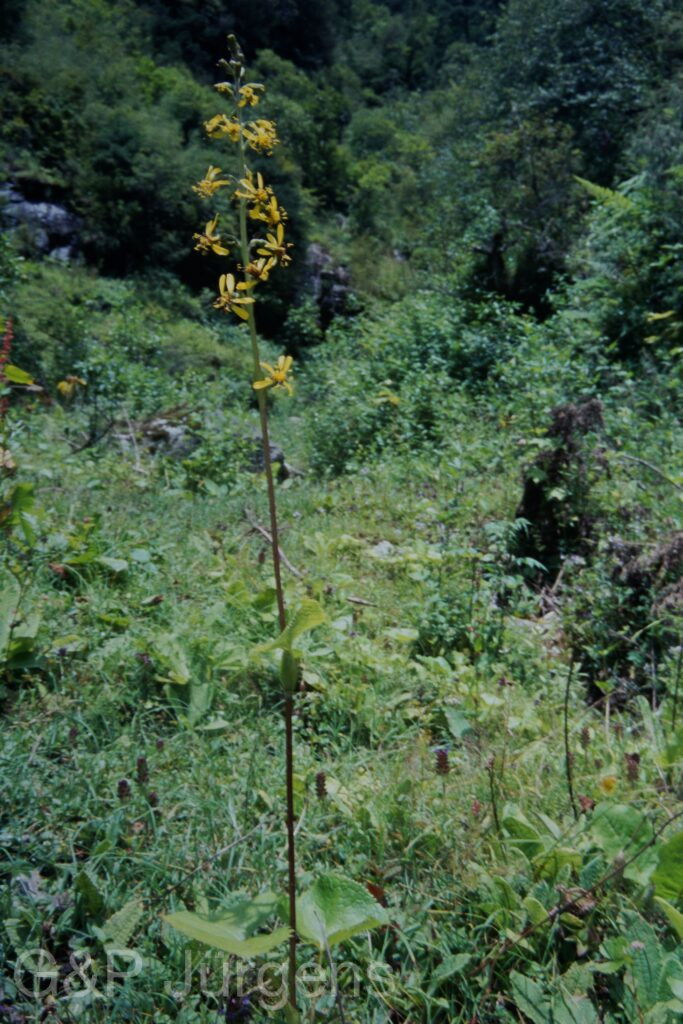
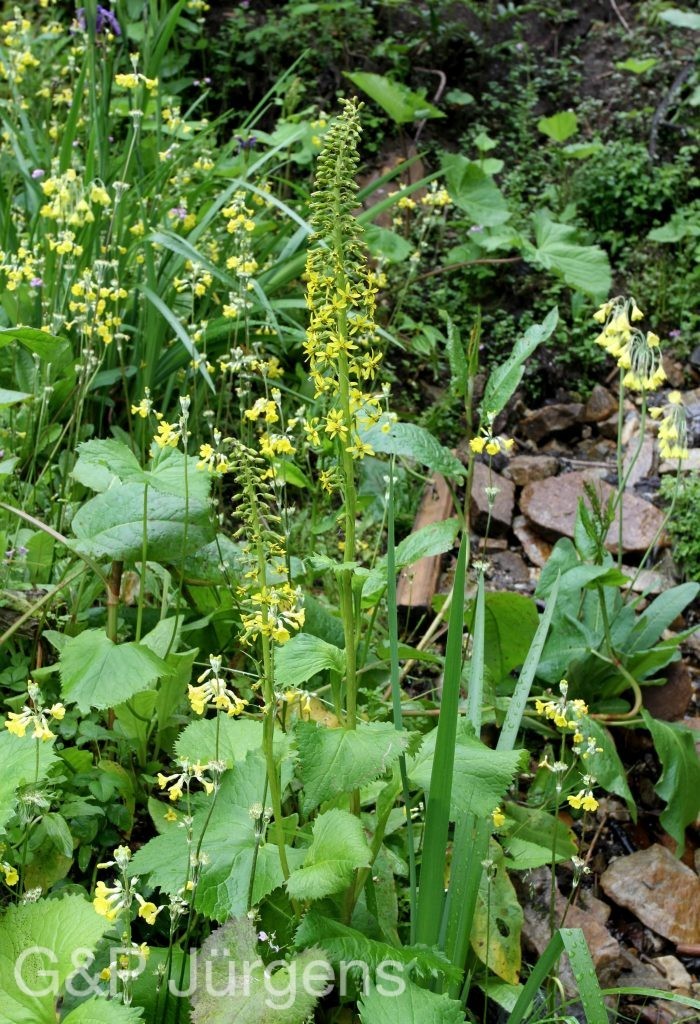
Ligularia amplexicaulis DC. is a robust Himalayan composite ranging from Pakistan and northern India through Nepal and Bhutan into southwestern China (gbif_countries: NP, IN, BT, CN, PK, plus collection records coded US and CA), with around 271 occurrences in GBIF. It is characteristic of moist alpine and subalpine meadows, tall-herb slopes, forest clearings and streamside grassland, typically between about 2800 and 4300 m. The photographed plant from the celebrated Valley of Flowers in Garhwal at 3050 m, flowering in September, exemplifies its late-season presence in the rich monsoon-fed herb meadows for which that valley is famous.

It is a stout perennial herb arising from a short rhizome with fibrous roots. The lower leaves are large, reniform to broadly cordate and long-petiolate, the cauline leaves becoming sessile and conspicuously amplexicaul (stem-clasping), as the epithet records. The inflorescence is an elongate terminal raceme of numerous radiate capitula. Each head bears yellow ray florets and yellow tubular disc florets, subtended by a campanulate involucre of few subequal phyllaries; the achenes are glabrous and cylindric, crowned by a pappus of soft barbellate bristles.

Ligularia (tribe Senecioneae) is a large Sino-Himalayan genus centred on the eastern alpine flora, and the present species is part of the racemose-headed Himalayan assemblage. Like its relatives it accumulates pyrrolizidine alkaloids, deterring herbivory and rendering it of pharmacological and toxicological interest. The species is widespread and locally abundant in protected alpine areas such as Nanda Devi and the Valley of Flowers, and is not considered threatened.

Author: DC. · Sources: POWO (Kew), GBIF, Flora of China (Asteraceae: Senecioneae), Flora of Bhutan, Annotated checklist of the flowering plants of Nepal

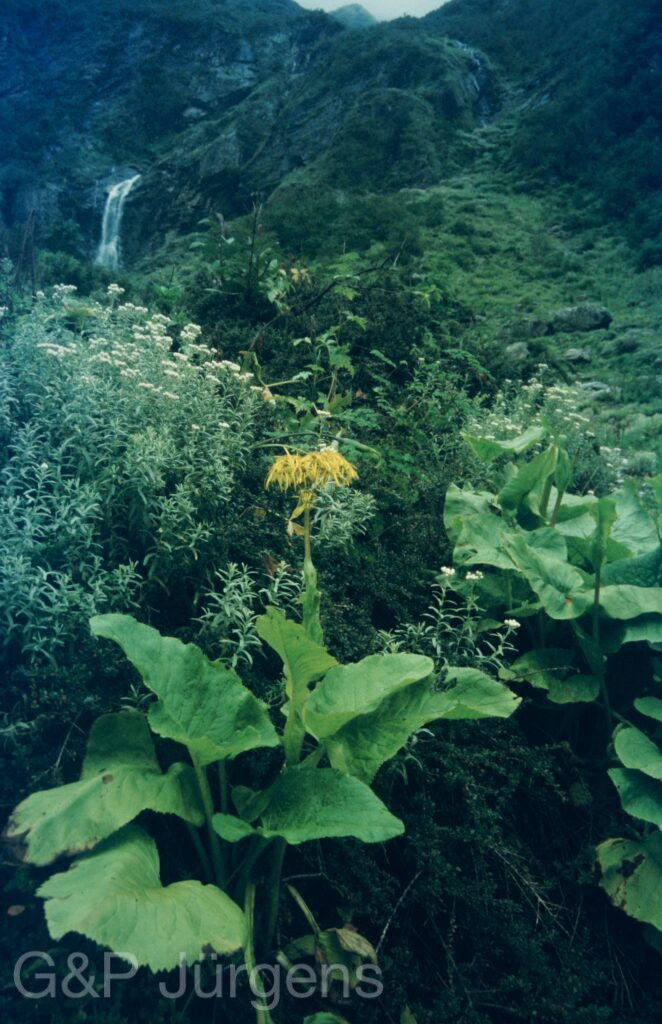
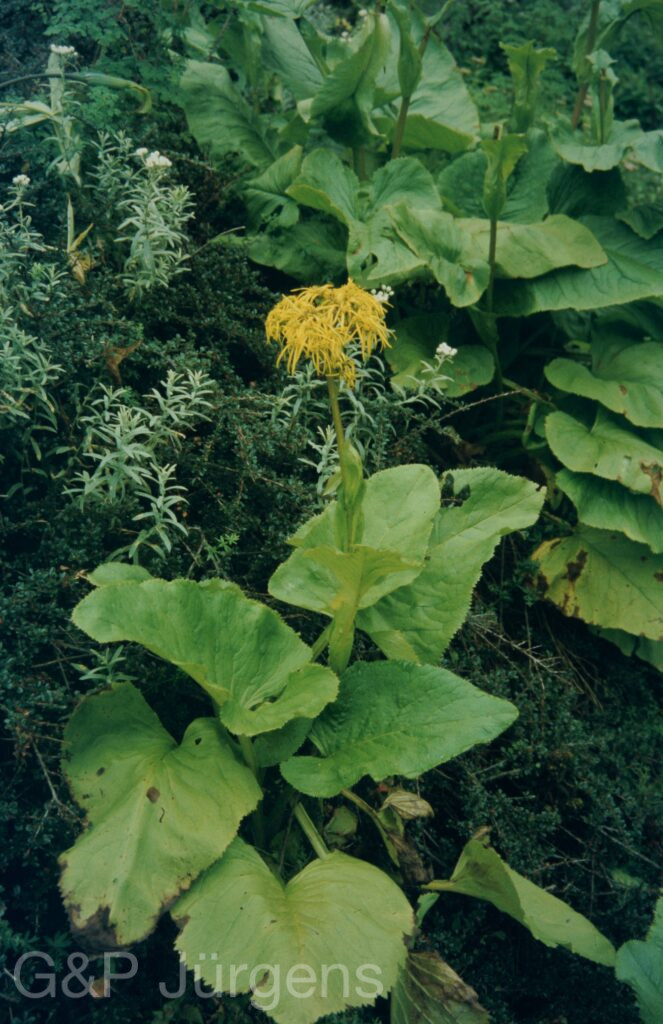
(C.B.Clarke) S.W.Liu

Sikkim2003 365 P512 2
Sikkim Lachen 2740m, August

Description

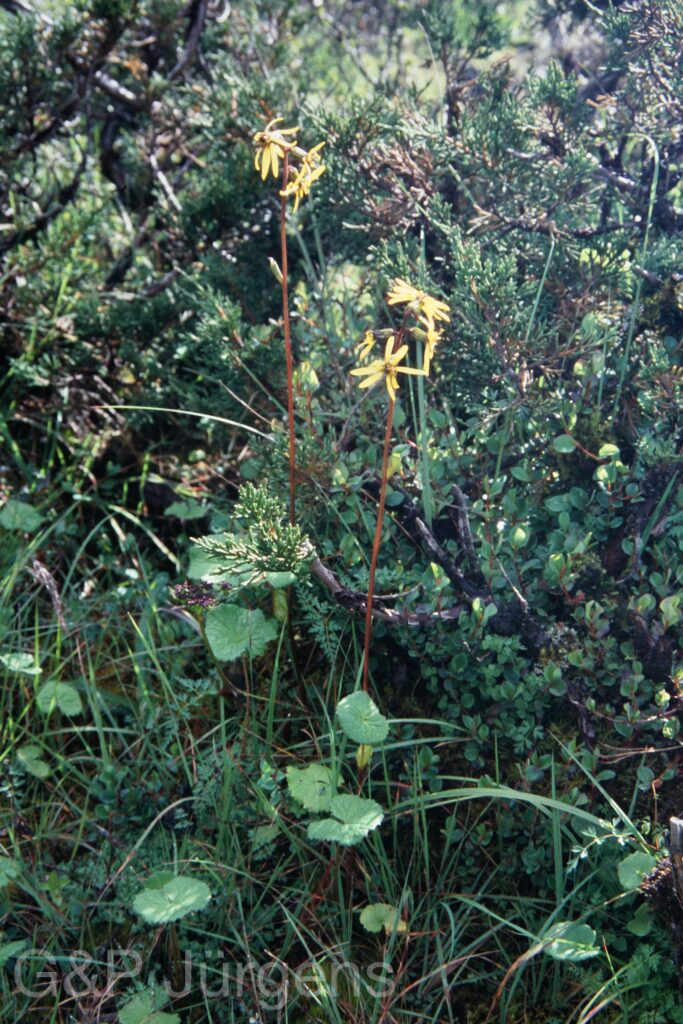
Ligularia atkinsonii is a tall herbaceous perennial of the Himalaya and adjacent China, with verified occurrences in Nepal, China, Bhutan, India and Myanmar. It favours moist, cool situations such as forest margins, streamsides, damp meadows and shrubby slopes through the temperate and subalpine zones, broadly between about 2500 and 4000 m. The plant photographed at Lachen in northern Sikkim at around 2740 m in August represents its late-summer flowering, when these golden composites are conspicuous in the monsoon-fed grasslands and clearings of the inner valleys.

The species arises from a stout rootstock bearing large, long-petioled basal leaves; these are broadly cordate to reniform, with toothed margins and a soft texture, the bases of the petioles often sheathing the stem. The flowering stem is erect, leafy below and bears a narrow elongate inflorescence (a raceme or narrow panicle) of numerous radiate capitula. Each head has an involucre of few narrow phyllaries and carries several spreading yellow ray florets around a disc of tubular florets. The fruit is a glabrous cylindrical achene topped by a pappus of fine brownish bristles aiding wind dispersal.

Ligularia, of tribe Senecioneae, is a large and taxonomically demanding genus centred on the Sino-Himalayan region, and L. atkinsonii, transferred to the genus by S.W. Liu from a C.B. Clarke basionym, is distinguished by its leaf shape and narrow inflorescence. Ecologically these robust herbs are important late-season nectar sources in subalpine meadows. The species is reasonably widespread along the Himalaya and is not currently considered to be of conservation concern, though it depends on the persistence of moist montane grassland.

Author: (C.B.Clarke) S.W.Liu · Sources: POWO (Kew), GBIF, Flora of China, Flora of Bhutan, Annotated Checklist of the Flowering Plants of Nepal

Turcz.

BhutanPG2011 810 01 01
Bhutan Chele-La 3900m, August

Also: Primula smithiana Craib / Primula sikkimensis Hook.f.

Description

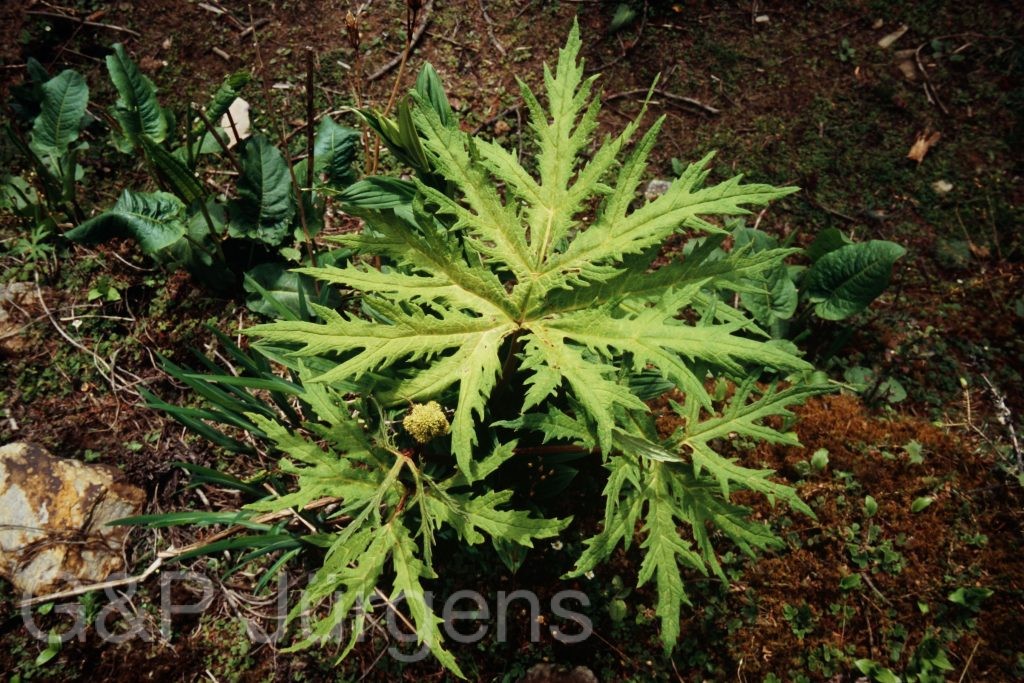
Ligularia fischeri is a robust, broadly distributed temperate-montane composite ranging across East Asia and the Himalaya, recorded from Japan, Korea (KR, KP), China, Russia, Mongolia, Nepal, India, Bhutan, Pakistan and Myanmar (JP, KR, CN, RU, NP, KP, IN, MN, BT, PK, MM), with nearly 3000 GBIF occurrences; further records from Europe and North America reflect cultivation and naturalisation. It favours moist, fertile situations: streamsides, wet meadows, marshy ground, forest margins and damp open slopes from montane to alpine elevations. The photographed plant grew on the Chele-La in Bhutan at 3900 m in August, flowering through the monsoon among tall herbaceous vegetation, here associated with Primula smithiana and Primula sikkimensis.

It is a stout perennial herb with a thick, fibrous-rooted rhizome producing erect flowering stems up to 1–1.5 m or more. The basal leaves are large, long-petiolate and reniform-cordate, with toothed margins and a broad, deeply cordate base, the petioles sheathing at the stem; cauline leaves diminish upward and become more clasping. The inflorescence is an elongate terminal raceme or narrow panicle of several to many radiate capitula, each subtended by a cylindric involucre of few phyllaries. The heads bear a few showy, ligulate, golden-yellow ray florets surrounding numerous yellow tubular disc florets. The fruit is a glabrous, cylindric, ribbed cypsela crowned by a pappus of whitish to brownish capillary bristles.

Ligularia (tribe Senecioneae) is a large genus of the temperate Old World especially diverse in the mountains of China; L. fischeri, described by Turczaninow, is among its most familiar and economically used species, its young leaves and shoots being gathered as a traditional vegetable and the plant valued horticulturally for damp gardens. Ecologically it is a tall-herb component of moist subalpine communities and a generalist food source for late-summer pollinators. Common and widespread, it is of least conservation concern.

Author: Turcz. · Sources: POWO (Kew), GBIF, Flora of China Vol. 20-21, Flora of Bhutan, Flora of Nepal, Ligularia monograph (Liu, Senecioneae of China)

(C.B.Clarke) Hand.-Mazz.

Sikkim2003 242 G332
Sikkim Dzongri 4100m, August

Description

Ligularia hookeri is a robust perennial herb of the eastern Himalaya and adjacent China, recorded from China, Nepal, India, Bhutan and Myanmar, with around 574 georeferenced records spanning the subalpine and alpine zones. It inhabits alpine meadows, open grassy slopes, forest margins and damp, rocky ground, often in seepage areas and along streams. The plant photographed at Dzongri in Sikkim at 4100 m, flowering in August, is characteristic of its high-elevation summer habitat, where it flowers at the height of the monsoon among other tall meadow herbs.

It arises from a stout rootstock and produces a cluster of large basal leaves on long, sometimes purplish petioles; the blades are broadly reniform to orbicular-cordate, palmately veined and toothed at the margin. The flowering stem is erect and stout, bearing few to several large capitula in a lax raceme or corymb. Each head has an involucre of broad bracts and is radiate, with conspicuous yellow to orange-yellow ligulate ray florets surrounding numerous tubular yellow disc florets. The fruit is a glabrous cylindrical cypsela crowned by a pappus of fine bristles.

Ligularia, of tribe Senecioneae, is distinguished from related Senecio and Cremanthodium by its radiate, erect, large-headed inflorescences and broad cordate leaves; C. B. Clarke first described this taxon, later combined in Ligularia by Handel-Mazzetti. The showy heads are pollinated by bumblebees, butterflies and flies of the high meadows, and the pappose cypselae are wind-dispersed. The species is widespread across the eastern Himalaya and of no current conservation concern, though it forms a conspicuous and ecologically important element of alpine pastures.

Author: (C.B.Clarke) Hand.-Mazz. · Sources: POWO (Kew), GBIF, Flora of China, Flora of Bhutan, Annotated Checklist of the Flowering Plants of Nepal, Liu monograph of Ligularia

(C.B.Clarke) Hand.-Mazz.

Bh09 38 P69
Bhutan Paro 2400m, June

Description

Ligularia mortonii is an East Himalayan endemic distributed across Bhutan, Nepal and adjacent north-eastern India, with GBIF documenting some 81 georeferenced occurrences concentrated along the inner Himalayan ranges. It is a plant of moist subalpine to temperate environments, favouring damp meadows, streamsides, forest margins and open grassy slopes where summer monsoon moisture is reliable. The photographed material from Paro in western Bhutan at around 2400 m, flowering in June, typifies its altitudinal preference in the temperate broadleaf and conifer belt, though populations ascend higher into subalpine pastures. Its restricted range marks it as a regional element of the Sino-Himalayan flora.

A robust perennial herb arising from a short stout rhizome bearing fibrous roots, it produces erect, often purplish, sparsely arachnoid-pubescent stems. The basal and lower cauline leaves are long-petiolate with reniform to cordate, palmately veined blades, the margins dentate to denticulate; upper leaves are progressively reduced and amplexicaul with sheathing bases. The capitula are radiate, several to many in an elongate raceme or narrow panicle, each subtended by small bracts. Involucral phyllaries are uniseriate and herbaceous; ray florets are yellow, ligulate and pistillate, surrounding numerous tubular yellow disc florets. The fruit is a glabrous cylindric cypsela crowned by a pappus of fine barbellate bristles.

The genus Ligularia (tribe Senecioneae) is centred on the mountains of China and the Himalaya, where it has radiated extensively, and species delimitation often rests on leaf shape, capitulescence form and phyllary characters. L. mortonii, based on Senecio mortonii, exemplifies the taxonomic complexity of the group. Like many congeners it accumulates pyrrolizidine alkaloids, and its nectar-rich heads attract bumblebees and other montane pollinators. Though not formally assessed as threatened, its dependence on intact subalpine meadow and forest-edge habitat renders it locally vulnerable to grazing pressure and land-use change.

Author: (C.B.Clarke) Hand.-Mazz. · Sources: POWO (Kew), GBIF, Flora of Bhutan, Flora of China, Annotated Checklist of the Flowering Plants of Nepal, Liu's Monograph of Ligularia (Senecioneae)

DC.

Sikkim2003 446 P619
Sikkim Chopta-Valley 4250m, August

Description

Ligularia retusa is a robust perennial composite of the alpine zone of the eastern Himalaya and adjacent China, native to China, Nepal, Bhutan and India, with about 201 documented occurrences. It grows in moist alpine meadows, streamsides, marshy turf and damp open slopes, typically between about 3500 and 4500 m. The photographed plant was recorded in the Chopta Valley of northern Sikkim at 4250 m, flowering in August, at the height of the monsoon when meltwater and rainfall sustain the lush herbaceous communities of the high pastures.

The species is a stout herb arising from a short rhizome with fibrous roots, producing a few large basal leaves on long petioles; the blades are reniform to broadly cordate with a retuse or shallowly notched apex (the epithet retusa) and a crenate-dentate margin, glabrous or thinly hairy. The cauline leaves are smaller and clasping. The inflorescence is a raceme or narrow corymb of several to many radiate capitula; the involucral bracts are in one or two series, and the heads bear bright yellow to orange-yellow ligulate ray florets surrounding numerous tubular disc florets. The fruit is a glabrous cylindrical cypsela crowned by a pappus of slender bristles.

Ligularia, of the tribe Senecioneae, is a large genus centred on the Sino-Himalayan mountains, distinguished from Senecio by its few-seriate involucre and habit; species delimitation in the Himalayan radiation is often difficult. As a tall meadow herb it is a conspicuous element of late-summer alpine flora and is visited by a range of insects. Widely distributed across the eastern Himalaya, it is not regarded as being of conservation concern.

Author: DC. · Sources: POWO (Kew), GBIF, Flora of Bhutan, Flora of China, The Genera Ligularia, Cremanthodium and Parasenecio (Liu)