
DC.
Description
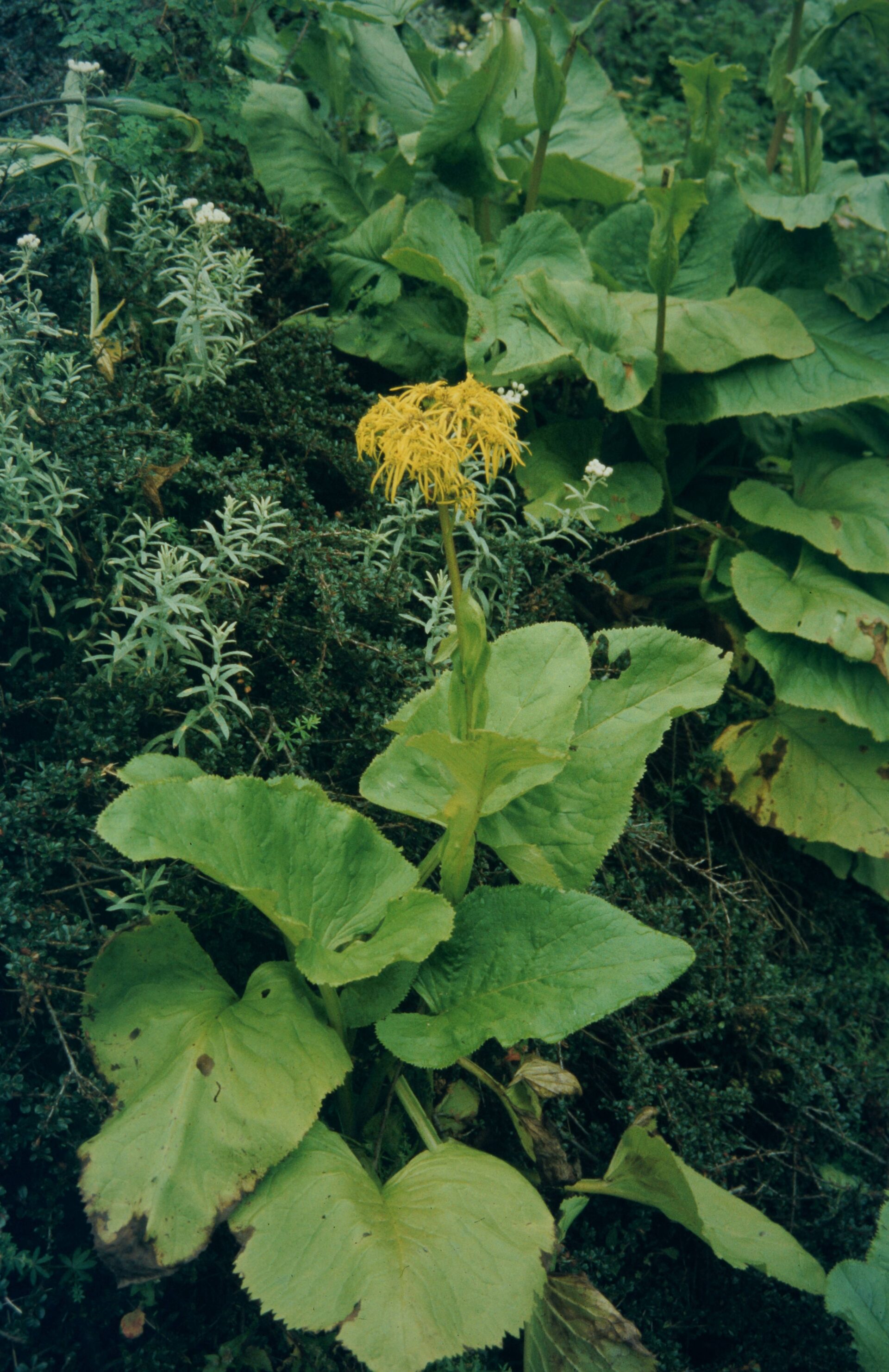
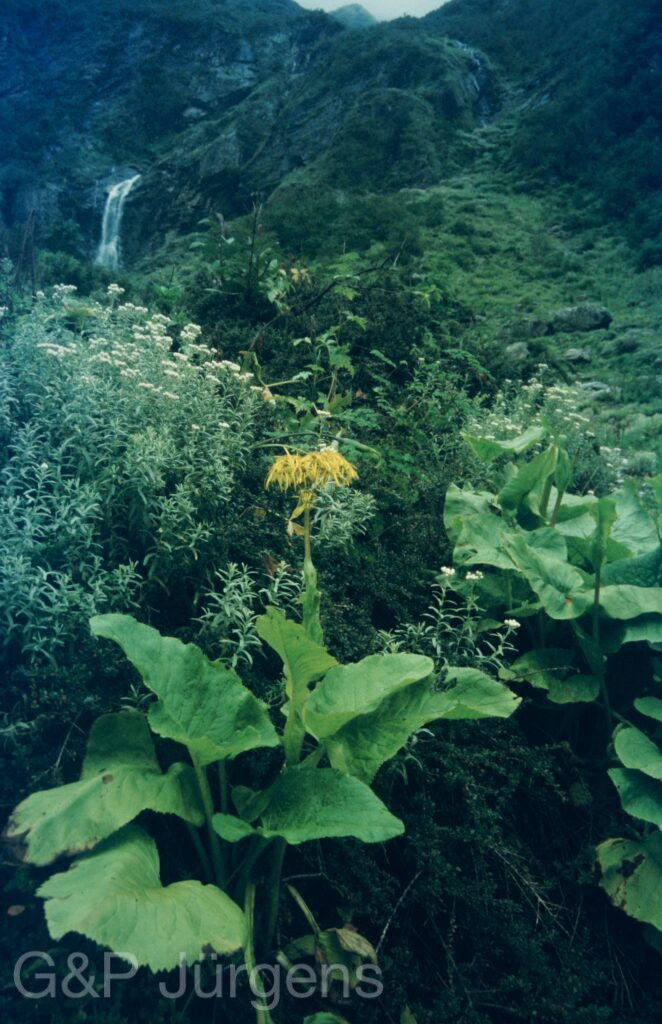
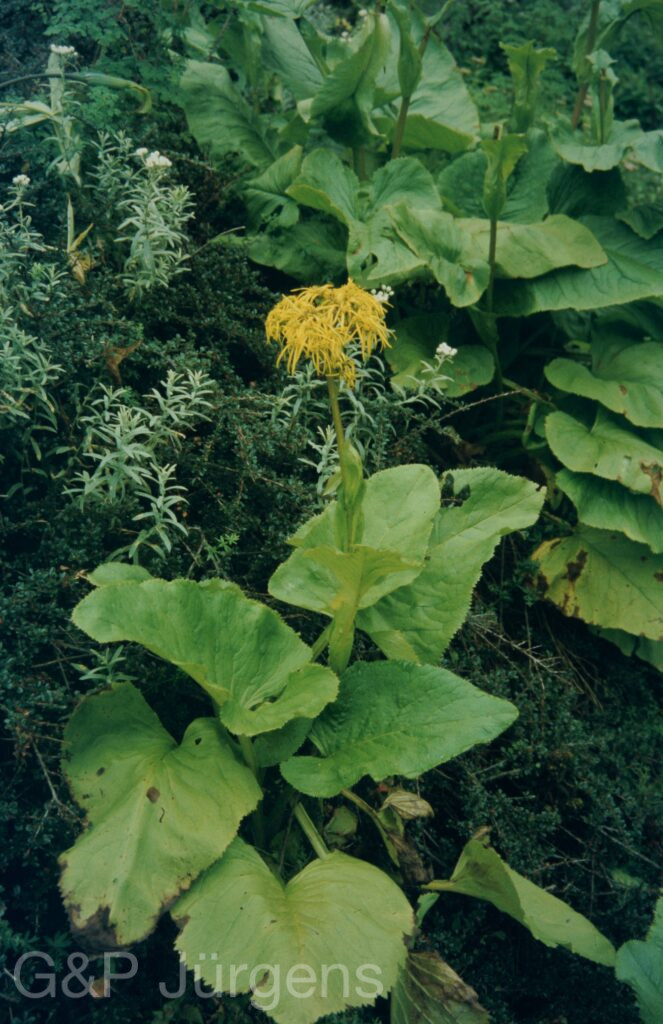
Ligularia amplexicaulis DC. is a robust Himalayan composite ranging from Pakistan and northern India through Nepal and Bhutan into southwestern China (gbif_countries: NP, IN, BT, CN, PK, plus collection records coded US and CA), with around 271 occurrences in GBIF. It is characteristic of moist alpine and subalpine meadows, tall-herb slopes, forest clearings and streamside grassland, typically between about 2800 and 4300 m. The photographed plant from the celebrated Valley of Flowers in Garhwal at 3050 m, flowering in September, exemplifies its late-season presence in the rich monsoon-fed herb meadows for which that valley is famous.
It is a stout perennial herb arising from a short rhizome with fibrous roots. The lower leaves are large, reniform to broadly cordate and long-petiolate, the cauline leaves becoming sessile and conspicuously amplexicaul (stem-clasping), as the epithet records. The inflorescence is an elongate terminal raceme of numerous radiate capitula. Each head bears yellow ray florets and yellow tubular disc florets, subtended by a campanulate involucre of few subequal phyllaries; the achenes are glabrous and cylindric, crowned by a pappus of soft barbellate bristles.
Ligularia (tribe Senecioneae) is a large Sino-Himalayan genus centred on the eastern alpine flora, and the present species is part of the racemose-headed Himalayan assemblage. Like its relatives it accumulates pyrrolizidine alkaloids, deterring herbivory and rendering it of pharmacological and toxicological interest. The species is widespread and locally abundant in protected alpine areas such as Nanda Devi and the Valley of Flowers, and is not considered threatened.
Author: DC. · Sources: POWO (Kew), GBIF, Flora of China (Asteraceae: Senecioneae), Flora of Bhutan, Annotated checklist of the flowering plants of Nepal