
(Kurz) Airy Shaw
Description
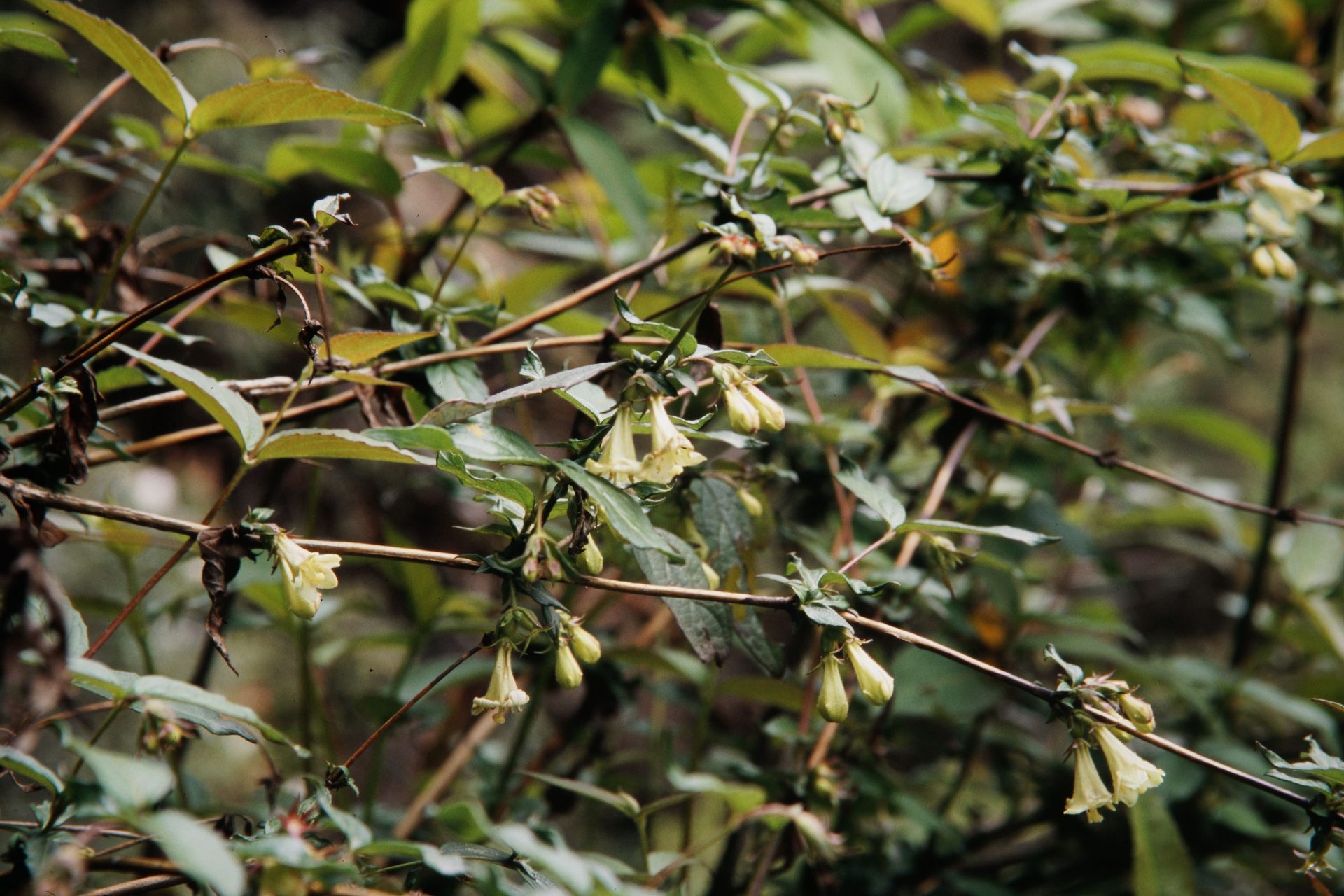
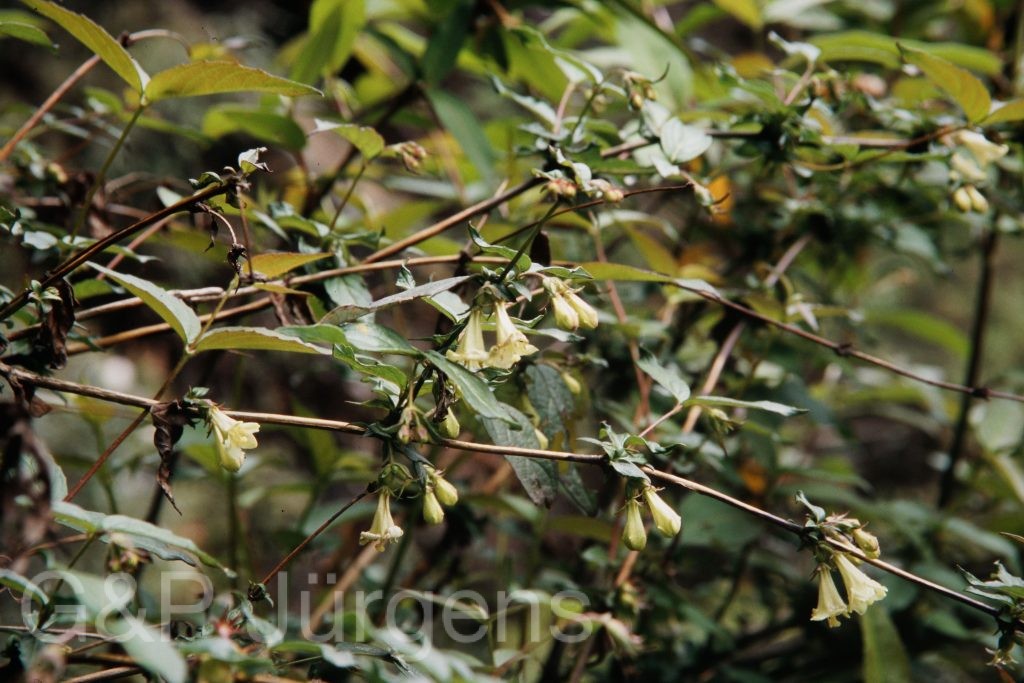
Leycesteria gracilis is a Himalayan and Sino-Himalayan shrub, GBIF recording around 232 occurrences from China, India, Bhutan, Nepal and Myanmar, with scattered records from Japan. It grows in the understorey and at the margins of temperate broadleaved and mixed forest, in shrubberies, along forest tracks and on shaded, moist banks, generally at mid to upper montane elevations between about 2400 and 3300 m. The plant photographed from Jakar (Bumthang) in central Bhutan at 3000 m, in early flower in April, is characteristic of its preference for cool, humid montane forest where it leafs and blooms in spring ahead of the summer rains.
It is a slender, erect to arching deciduous shrub with hollow, often glaucous young stems, more delicate in habit than its relative L. formosa—hence "gracilis." The leaves are opposite, ovate-lanceolate to lanceolate, long-acuminate, entire to finely toothed and thin in texture. The flowers are borne in pendulous, interrupted spikes or whorled clusters subtended by leafy, sometimes purplish bracts; each has a small calyx and a tubular to funnel-shaped, five-lobed corolla in shades of white, pink or pale purple. The fruit is a small, several-seeded berry ripening dark purplish to nearly black.
Transferred by Airy Shaw from Kurz's original epithet, L. gracilis belongs to the small Himalayan genus Leycesteria, now placed in Caprifoliaceae in its broad modern sense. It is locally frequent and not regarded as threatened, though dependent on intact montane forest. Ecologically its tubular flowers attract insect and bird pollinators, while its fleshy dark berries are taken by birds that disperse the seed, making it a useful component of regenerating montane scrub.
Author: (Kurz) Airy Shaw · Sources: POWO (Kew), GBIF, Flora of Bhutan, Flora of China, Airy Shaw revision of Leycesteria (Caprifoliaceae)