
D. Don
Description
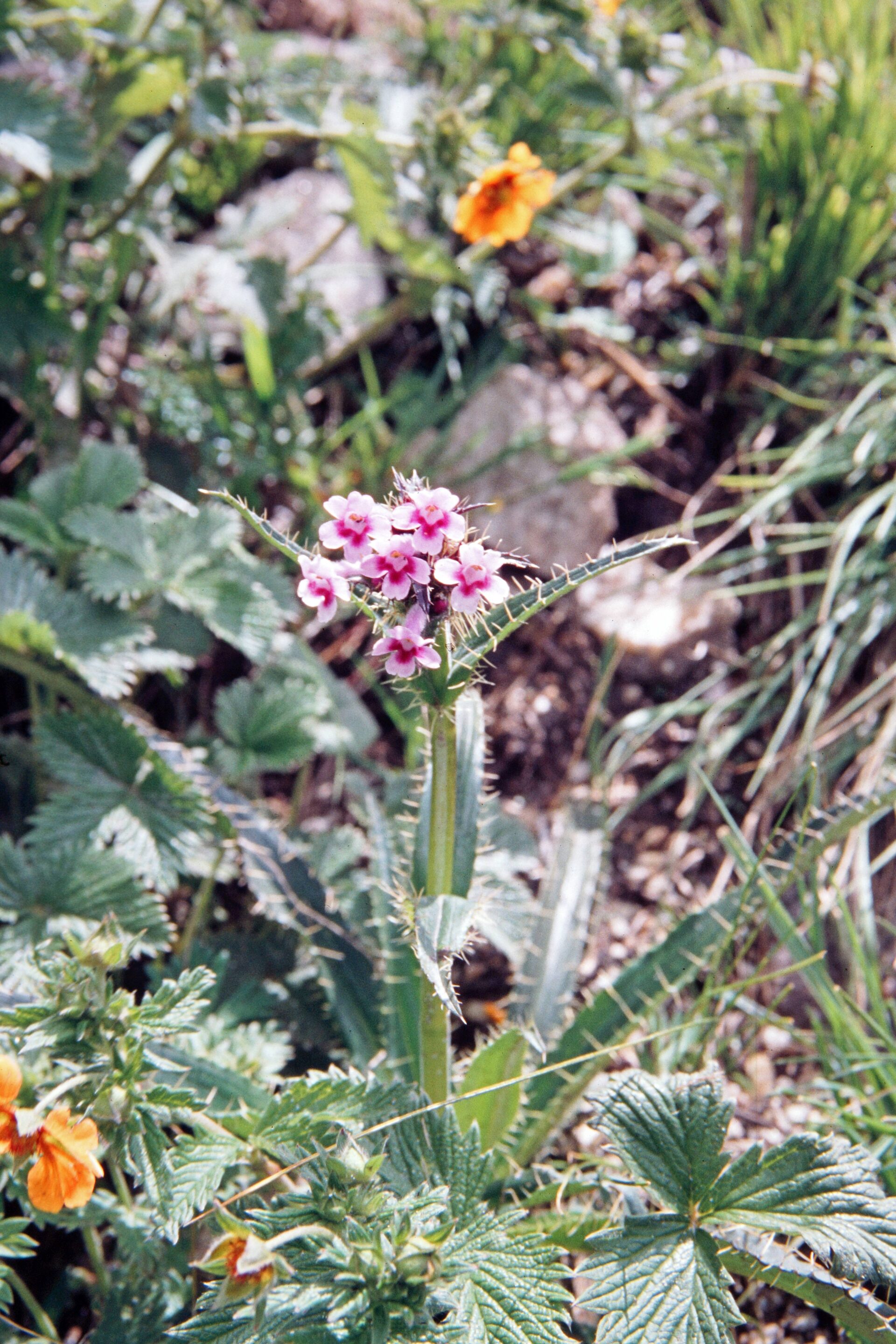
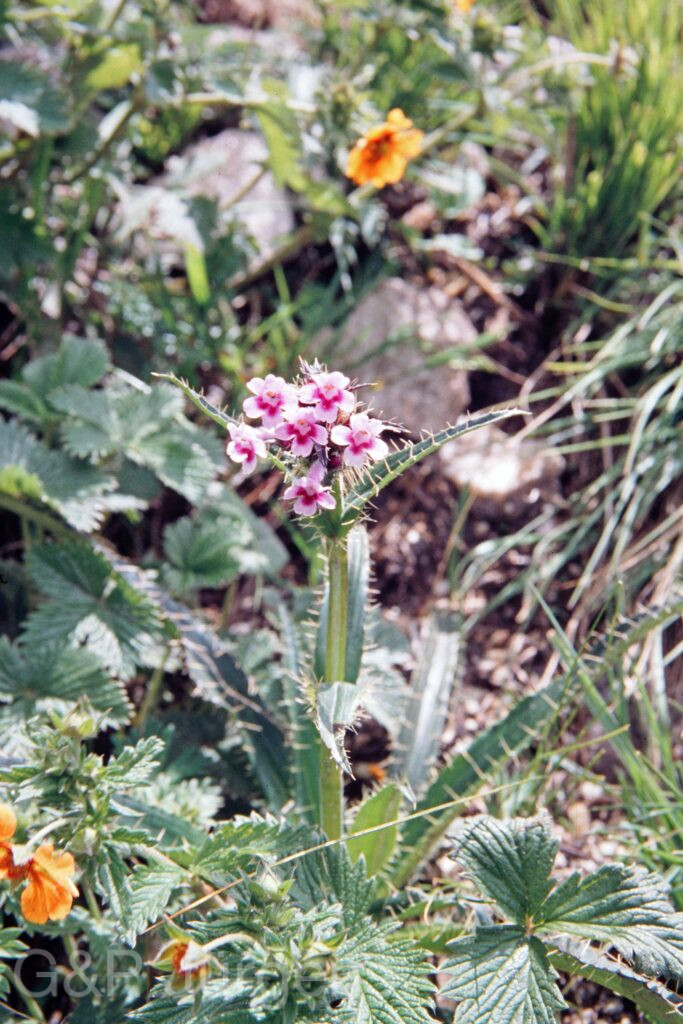
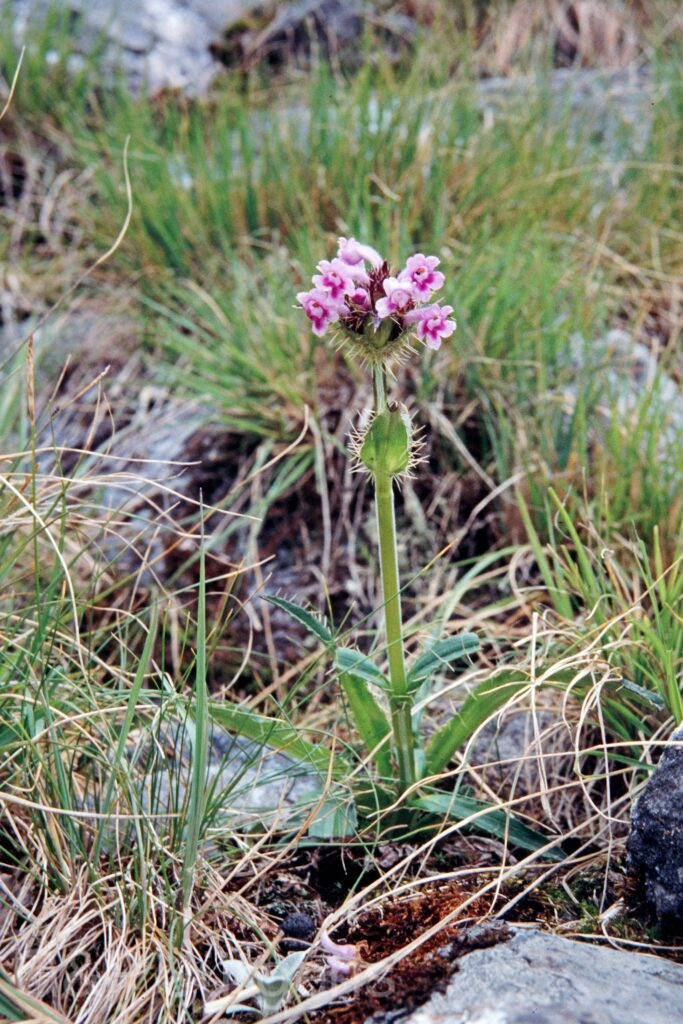
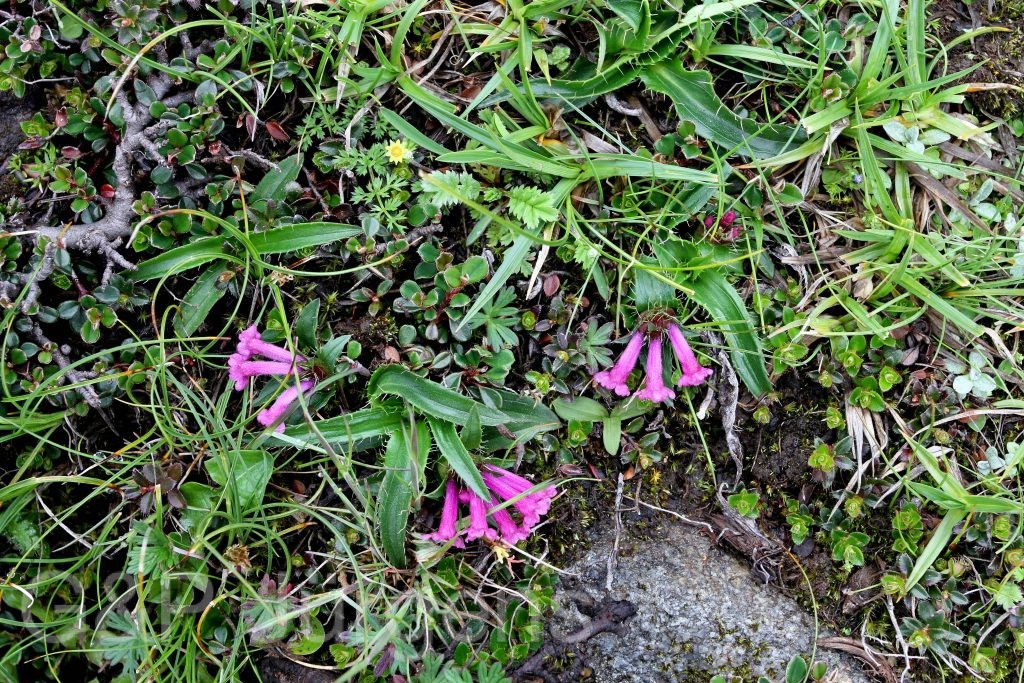
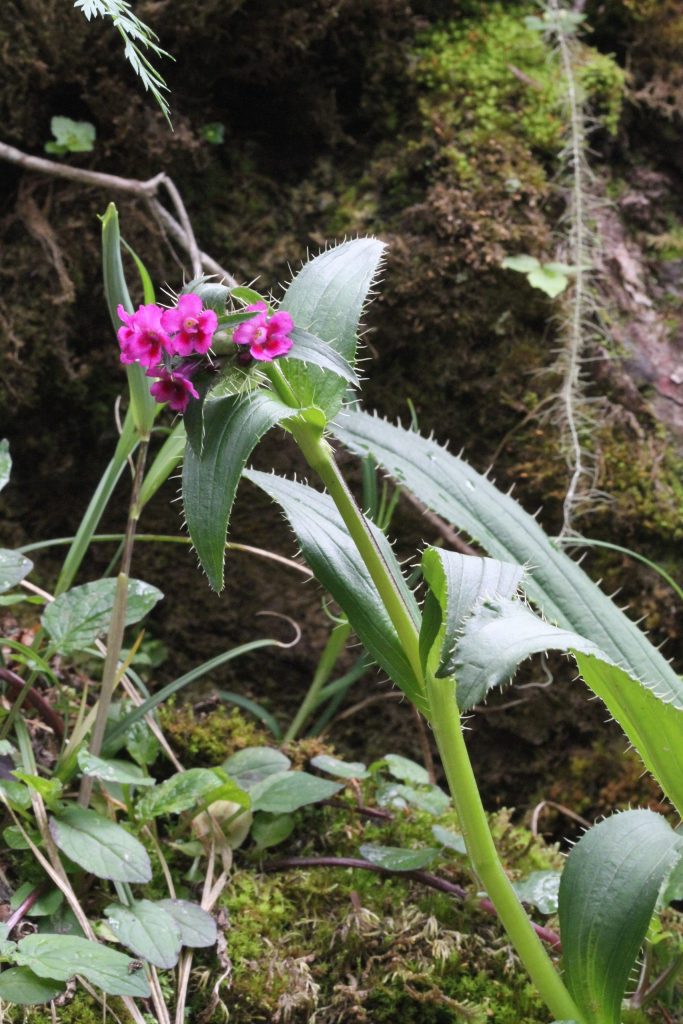
Morina nepalensis is a high-mountain perennial of the Sino-Himalayan region, ranging through China, Nepal, India, Bhutan and Pakistan, with GBIF recording 239 occurrences across this arc. It inhabits open alpine pastures, grassy slopes, rocky meadows and shrubby hollows above the treeline, typically between about 3000 and 4500 m. The illustrated plants were photographed in West Nepal at Kalomura at 3900 m and in Bhutan on the Ludlow-Sherriff Trail near Warrtlang-La at 4450 m, both in June, exemplifying the subalpine to alpine turf where the species is most frequent during the early summer flush.
The plant forms a stout rosette from a thick taproot, the basal leaves narrowly oblong to lanceolate, sessile or amplexicaul and conspicuously armed along the margins with stiff spinose teeth. The flowering stem is erect, terminating in interrupted whorls of flowers subtended by spiny pinnatifid bracts. Each flower sits within a tubular involucel and a two-lipped calyx; the corolla is gamopetalous, curved and white to pink, often deepening to rose with age, with a slender tube and five spreading lobes. There are two fertile stamens and a single inferior ovary maturing into an achene enclosed by the persistent involucel.
Long placed in the segregate family Morinaceae, the genus Morina is now subsumed within an expanded Caprifoliaceae, consistent with the input family. POWO and GBIF treat M. nepalensis as the accepted name. The colour change of the corolla after pollination is a notable floral signal, and the species contributes to the showy alpine herbfields grazed by Himalayan livestock.
Author: D. Don · Sources: POWO (Kew), GBIF, Flora of China, Flora of Bhutan, Annotated Checklist of the Flowering Plants of Nepal, Revision of Morinaceae (Dipsacales monograph)