
Royle ex Hook.f. & Thomson
Description
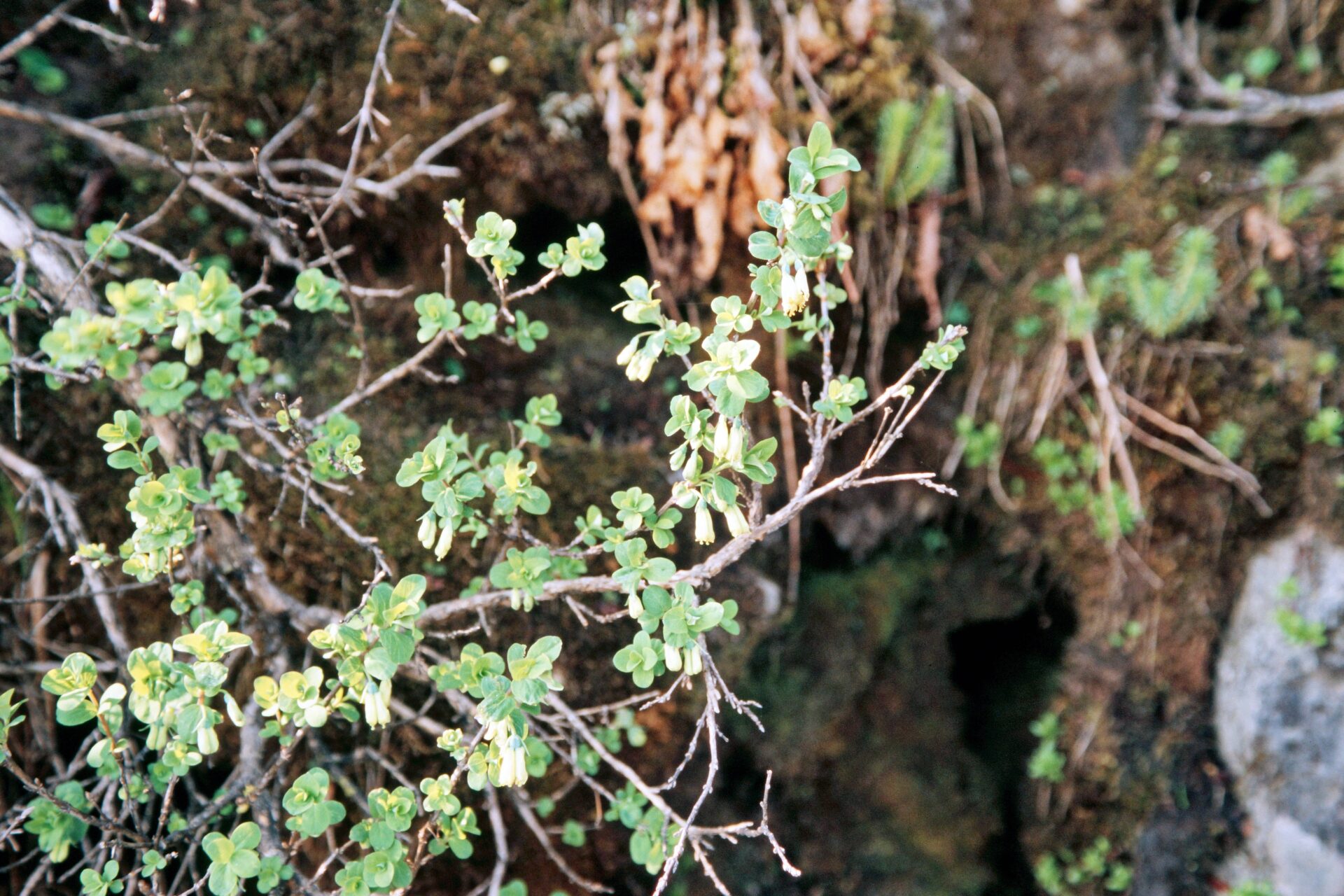
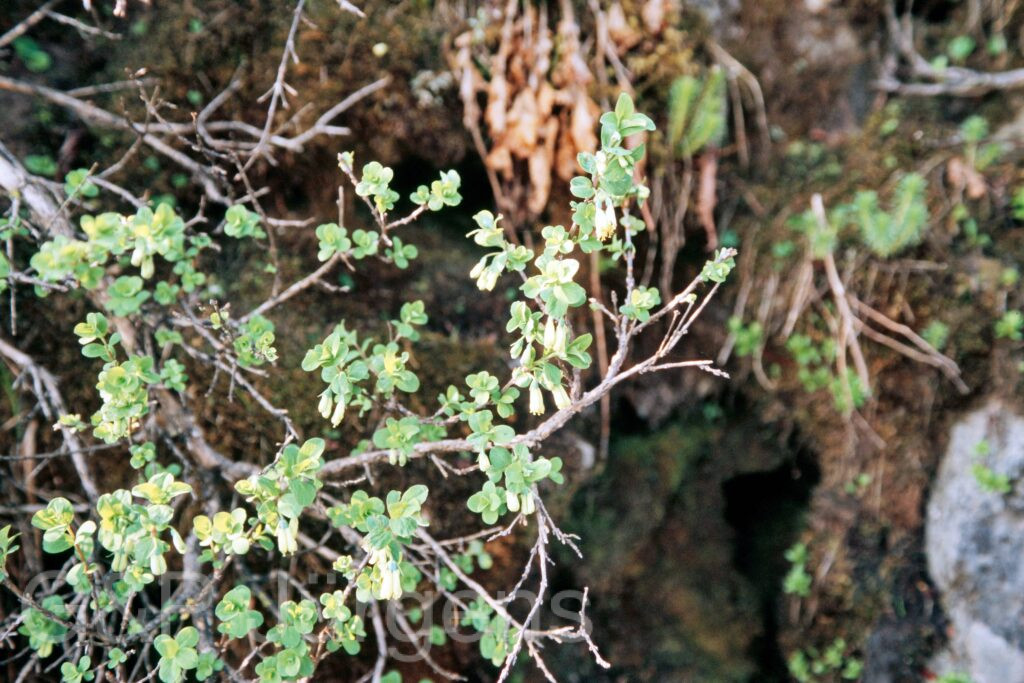
Lonicera obovata is a Himalayan shrubby honeysuckle distributed through Afghanistan, Pakistan, Nepal, NW India, Bhutan and SW China, with 424 occurrences recorded in GBIF. It inhabits high-elevation shrubberies, open coniferous and birch woodland margins, rocky slopes and the upper subalpine to alpine zone. The photographed material from Meggu Kichatti in Garhwal, India, at about 3,300 m in June, represents typical habitat where the plant flowers as the snow recedes, often forming low thickets among rocks and dwarf rhododendron.
It is a deciduous, much-branched dwarf shrub usually 0.3–1 m tall with slender, often arching branches. The leaves are opposite, small, obovate to elliptic as the epithet implies, 1–3 cm long, rounded or retuse at the apex and somewhat glaucous, with short petioles. The flowers are borne in axillary pairs on short peduncles; the twin corollas are funnelform, pale yellow to creamy white, two-lipped, with the ovaries of the paired flowers partly connate. The fruit is a fused, ovoid, red berry crowned by the persistent calyx teeth, the paired ovaries coalescing into a single bilocular fruit.
The species belongs to Lonicera sect. Isika, a group of paired-flowered honeysuckles with connate fruits. GBIF records it as accepted. It is a hardy element of the West and Central Himalayan alpine flora, ecologically important as a nectar source for high-altitude pollinators and as cover in exposed terrain, and is not considered threatened across its broad montane range.
Author: Royle ex Hook.f. & Thomson · Sources: POWO (Kew), Flora of China Vol. 19, Flora of Pakistan, GBIF, Rehder: Synopsis of the Genus Lonicera (1903)