
Wall. ex DC.
Description
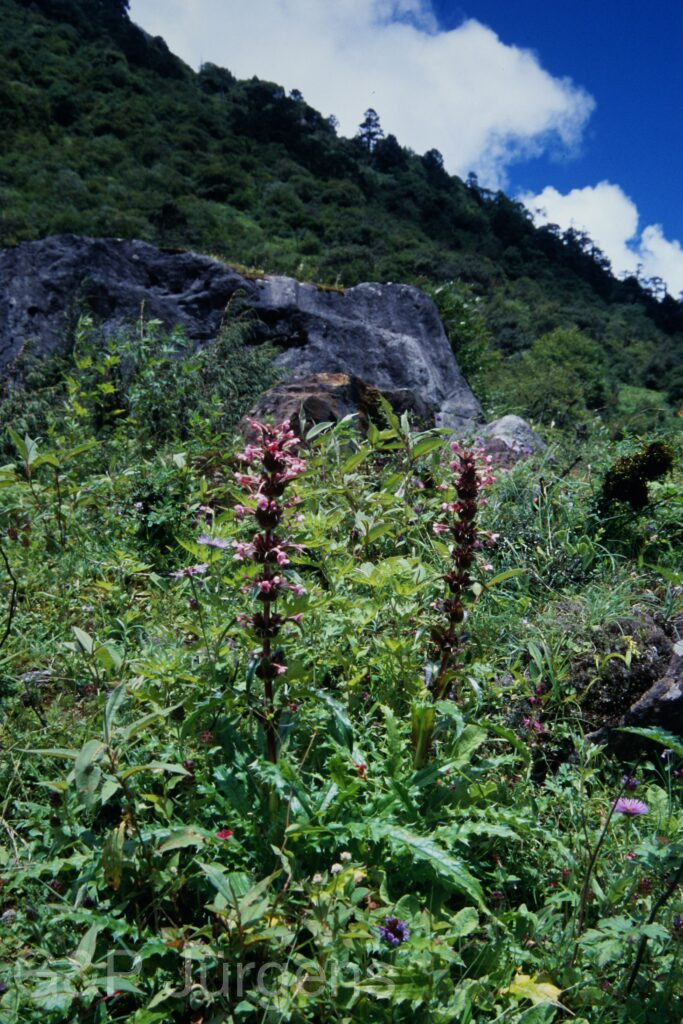
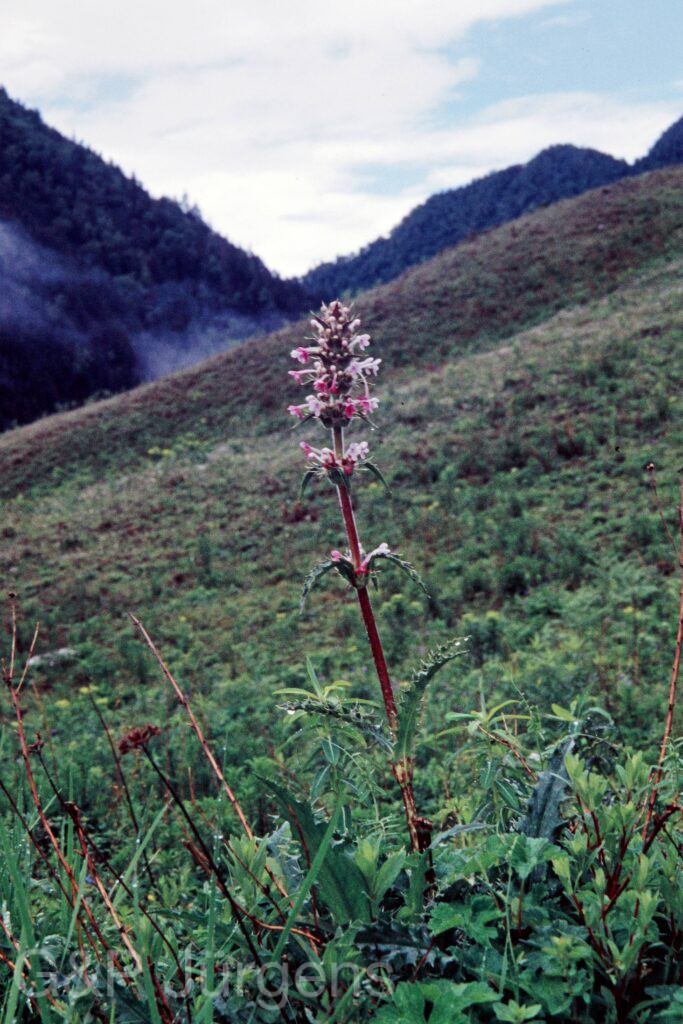
Morina longifolia, the Himalayan whorlflower, is native to the Himalaya across Pakistan, India, Nepal and Bhutan, with naturalised and cultivated records in Europe and North America (Norway, Germany, Denmark, Sweden, the United States) reflected among its roughly 125 GBIF occurrences. It grows on open alpine and subalpine slopes, in stony meadows, grassy clearings and among low scrub on well-drained soils above the forest. The cited localities, the Tista valley in Sikkim at 3500 m in August, Bhulbhule in western Nepal at 3200 m in June, and the Valley of Flowers in Garhwal at 3100 m in September, span its range of roughly 3000-4000 m, where it flowers through the summer monsoon.
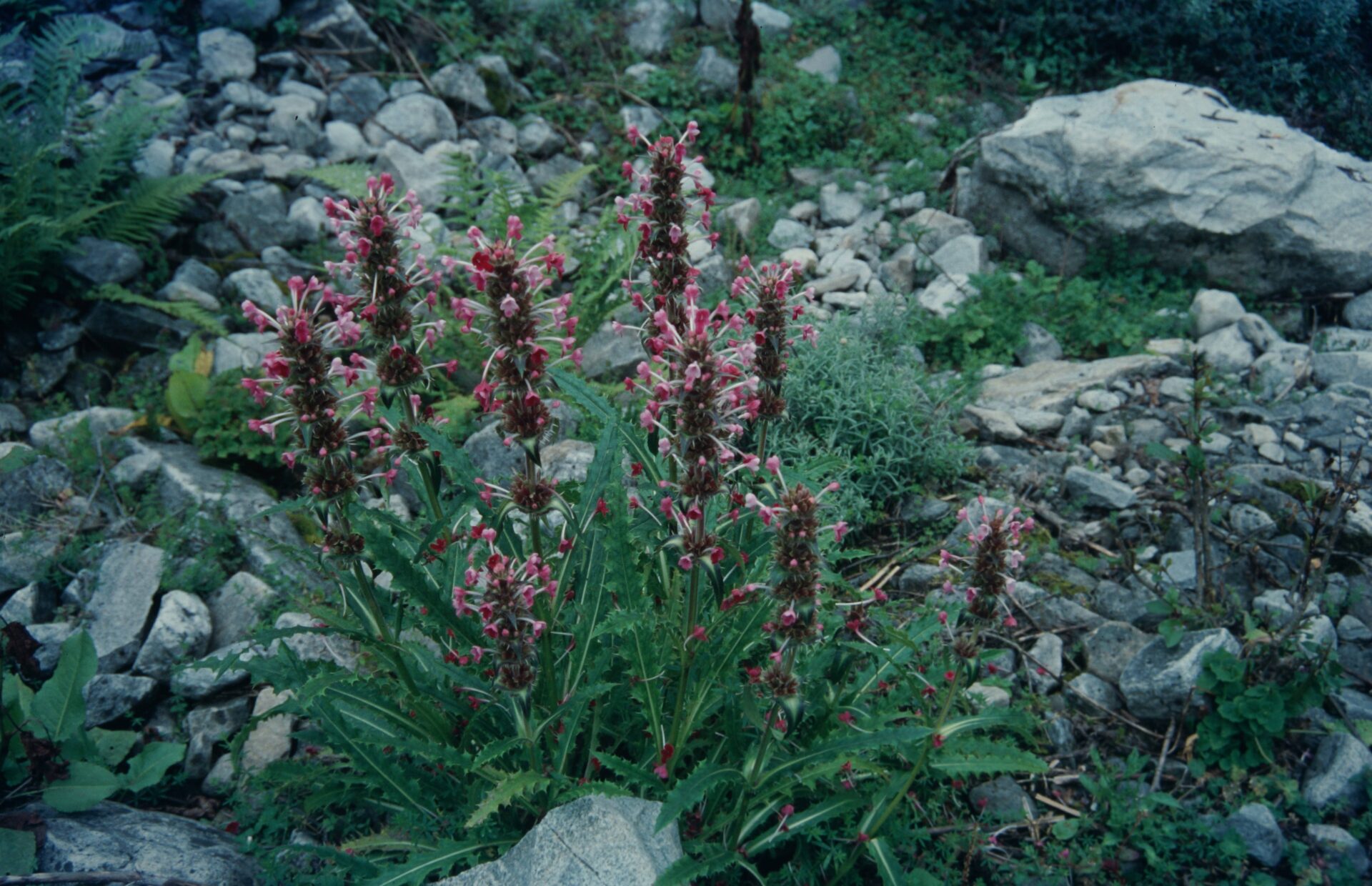
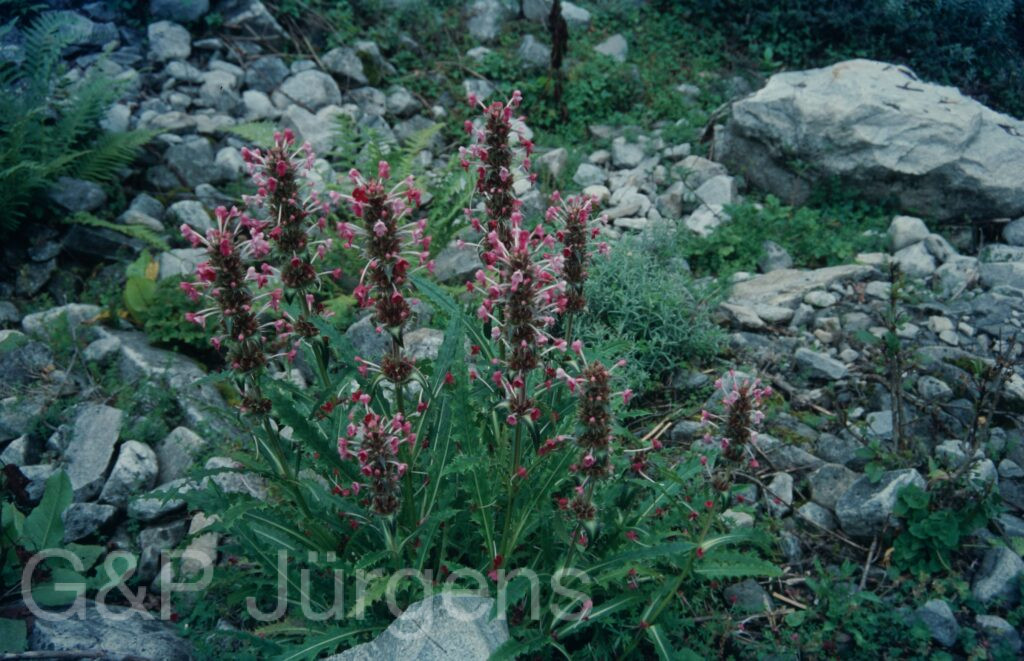
It is a robust, erect perennial herb forming a basal rosette of long, narrow, linear-lanceolate leaves whose margins are conspicuously spiny-toothed, giving a thistle-like appearance, the whole plant aromatic when crushed. The flowering stem rises stoutly and bears the flowers in well-separated, spiny-bracted whorls (verticillasters) up the upper axis. Each flower has a tubular, curved, two-lipped corolla that opens white and ages through pink to deep crimson, so flowers of several colours appear together in one whorl. Two stamens are fertile, the slender style is exserted, and the inferior ovary develops into a small one-seeded achene enclosed within the persistent involucel.
The genus Morina, with its spiny leaves and whorled bicoloured flowers, has been placed variously in its own family Morinaceae or within Dipsacaceae, and is treated by current systems within an enlarged Caprifoliaceae; molecular work confirms its position near the teasels and valerians in the Dipsacales. The long-tubed flowers are pollinated by long-tongued insects, and the species is widely grown as an ornamental, accounting for its scattered occurrences far beyond its native range.
Author: Wall. ex DC. · Sources: POWO (Kew), GBIF, Flora of Pakistan, Flora of Bhutan, Cannon revision of Morina, Bell Dipsacales phylogeny