
Walp.
Description
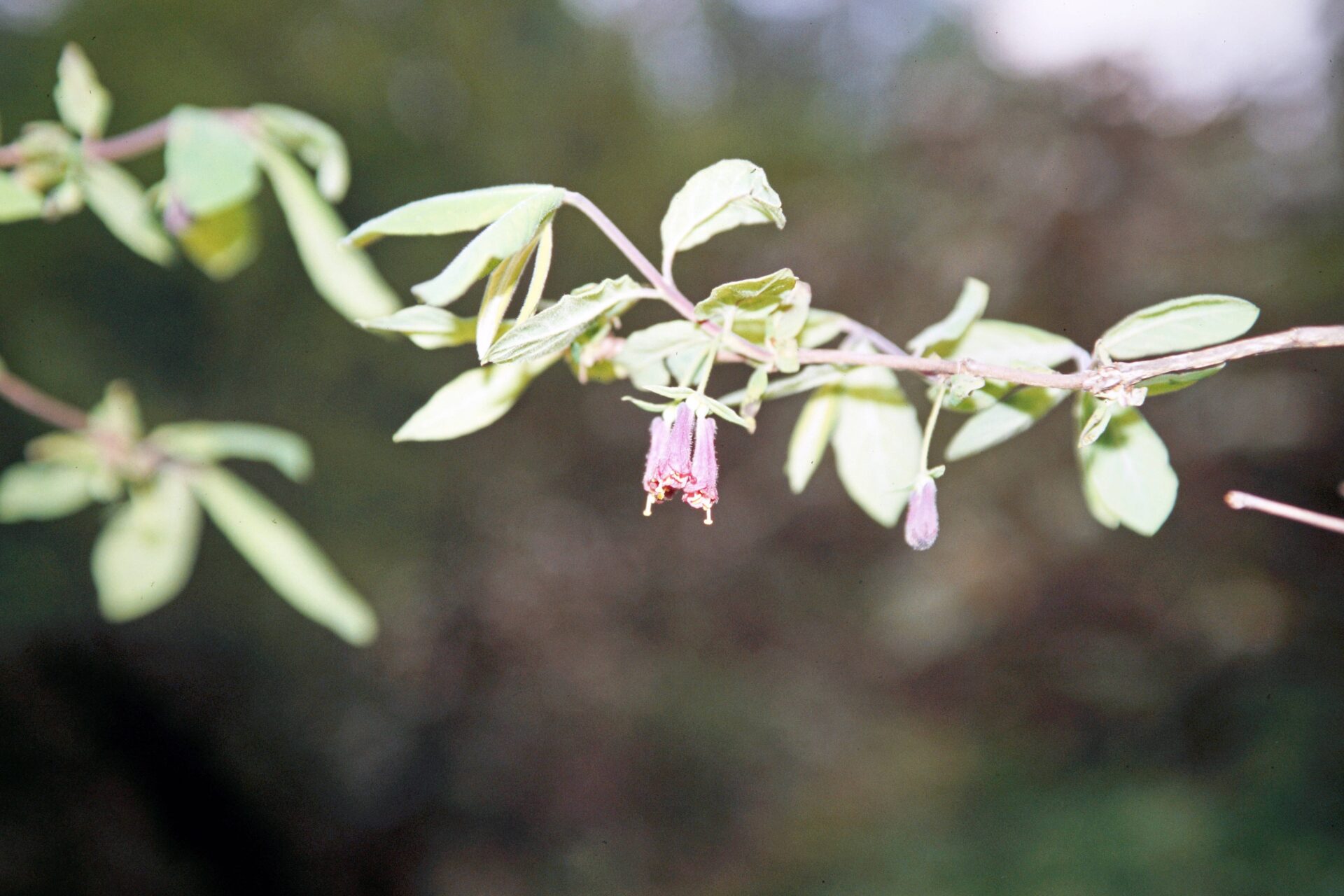
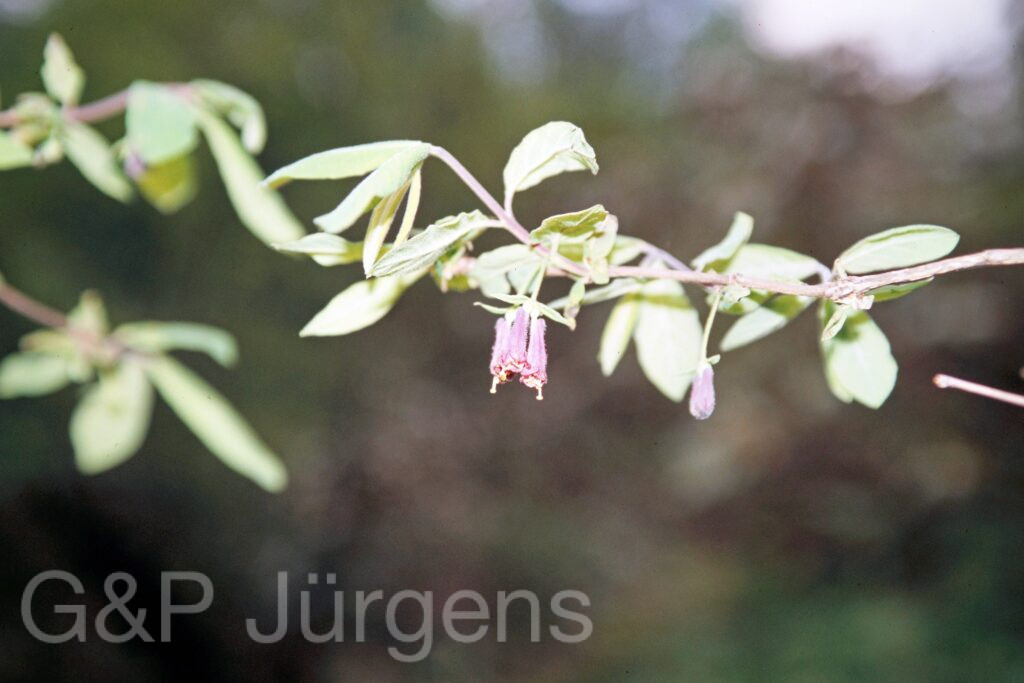
Lonicera purpurascens Walp. is a deciduous shrubby honeysuckle of the western and central Himalaya. GBIF occurrence data place it principally in India, Pakistan, Nepal, Afghanistan, Bhutan and Myanmar, confirming a chiefly Himalayan distribution. It is a plant of subalpine forest and shrubberies, growing among Abies, Betula and Rhododendron stands and along open rocky slopes, generally between about 2,800 and 3,800 m. The illustrated plant from Meggu Kichatti in Garhwal at 3,200 m, flowering in June, is characteristic of its occurrence in the upper temperate to subalpine belt where it blooms shortly after snowmelt.
It is an erect to spreading shrub up to 1.5–2 m tall with terete, glabrescent young branches and ovate to elliptic, entire leaves that are often glaucous and purplish-tinged beneath. The flowers are borne in axillary pairs on a common peduncle, subtended by bracts; the corolla is two-lipped, gibbous at the base, and ranges from yellowish to purple-flushed, hence the epithet. The paired ovaries are partly fused, and the resulting berries are red, more or less connate, each containing several seeds.
The species is one of numerous Himalayan Lonicera within the section Isika, and the purplish foliage and connate fruits distinguish it from allied taxa such as L. quinquelocularis and L. webbiana. Its berries provide food for montane birds, contributing to seed dispersal. The species is widespread within the Himalayan arc and is not currently regarded as of conservation concern.
Author: Walp. · Sources: POWO (Kew), GBIF, Flora of Pakistan, Flora of Bhutan Vol. 2, Rehder: Synopsis of the Genus Lonicera