Tag:

Nepal

Flowers of Nepal — 1313 wild plant species documented from the Nepalese Himalaya, from subtropical foothills to high alpine meadows above 4,000 m. Nepal’s dramatic elevation gradient makes it one of the richest botanical regions on Earth, home to rhododendrons, primulas, gentians and the famed blue poppies (Meconopsis). Every entry gives a botanical description, native distribution, habitat and flowering season, alongside the original field photograph and the location where it was taken.

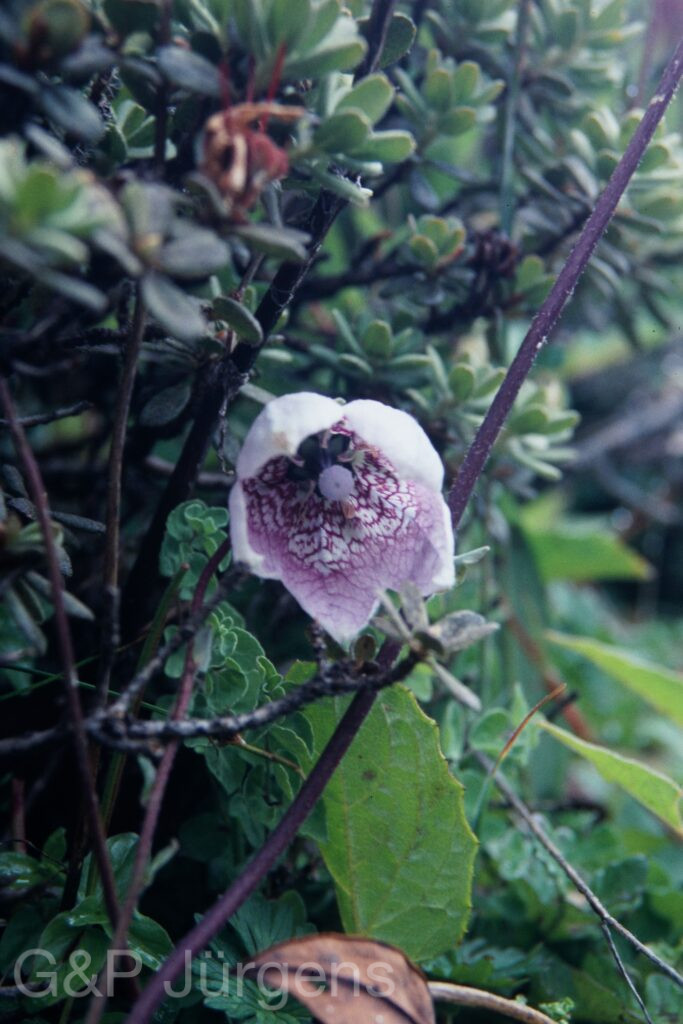
Hook.f. & Thomson

Sikkim2003 425 G591
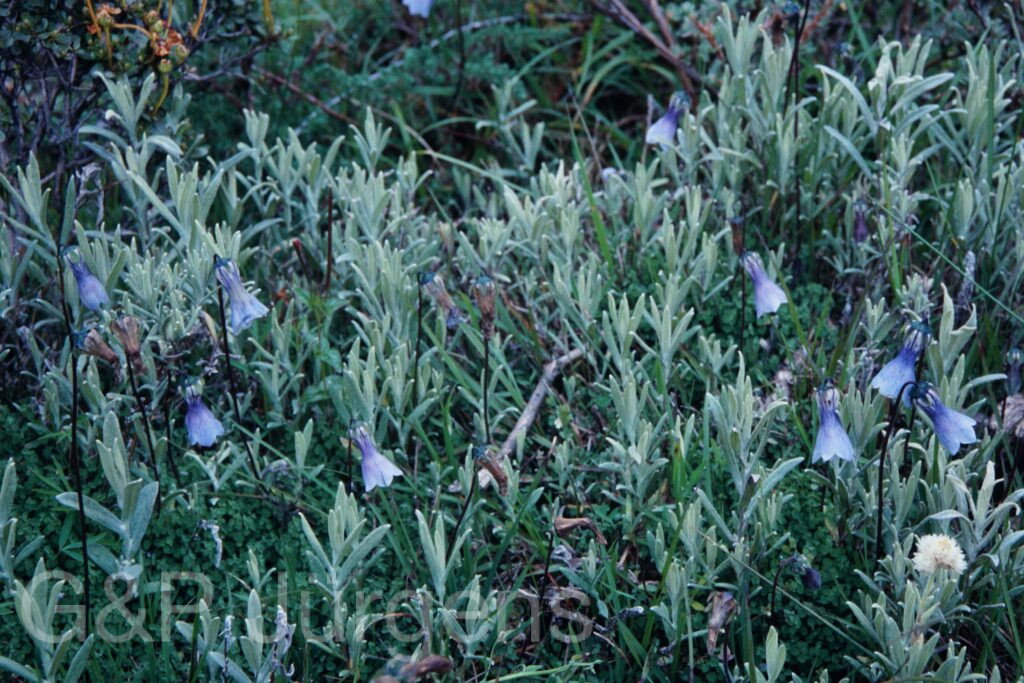
Sikkim Chopta Valley 4250m August

Description

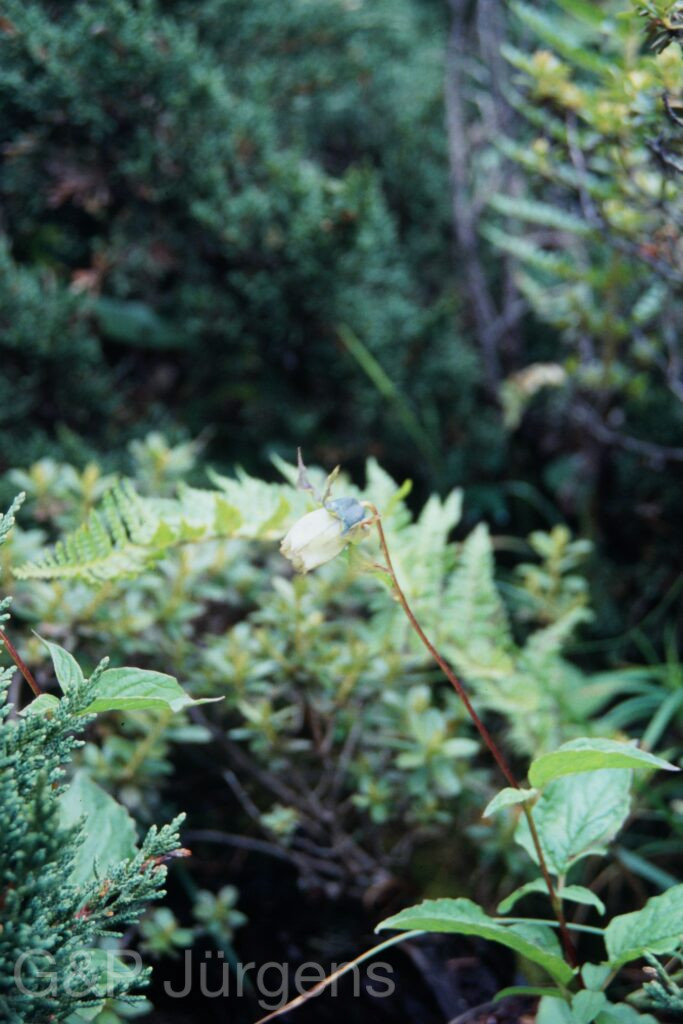
Codonopsis foetens is an alpine herb of the eastern Himalaya, distributed across China, Bhutan, India, Myanmar and Nepal, with about 712 georeferenced records in GBIF. It occupies high-elevation meadows, alpine scrub, screes and rocky slopes, typically between roughly 3500 and 4800 m. The plant illustrated was photographed in Sikkim's Chopta Valley at 4250 m in August, during the monsoon flowering season, where it grows among dwarf rhododendron scrub and damp alpine turf in the upper subalpine to alpine zone.

The species is an erect to ascending perennial herb arising from a thickened root, with simple or sparingly branched stems bearing small, scattered, ovate to lanceolate leaves. The flowers are solitary and terminal, nodding, with a broadly campanulate corolla that is pale blue to greyish-blue or violet and conspicuously marked internally with darker veins or blotches. The five corolla lobes are short and the throat often bears coloured patterning; the fruit is a capsule subtended by the persistent calyx lobes and releasing numerous minute seeds at maturity.

Codonopsis (Campanulaceae) is well diversified in the Sino-Himalayan alpine flora, and as the epithet foetens indicates, this species emits a strong, unpleasant odour when the foliage is bruised, a trait shared with several relatives and thought to deter herbivores while attracting particular insect visitors. The pendent bell-shaped flowers are pollinated chiefly by bumblebees. Restricted to high alpine habitats, C. foetens is not formally assessed as threatened but is dependent on intact alpine vegetation and is potentially sensitive to grazing pressure and climate-driven shifts in the alpine belt.

Author: Hook.f. & Thomson · Sources: POWO (Kew), GBIF, Flora of China, Flora of Bhutan, Annotated Checklist of the Flowering Plants of Nepal, Hong Monograph of the Genus Codonopsis
Hook.f. & Thomson

Description

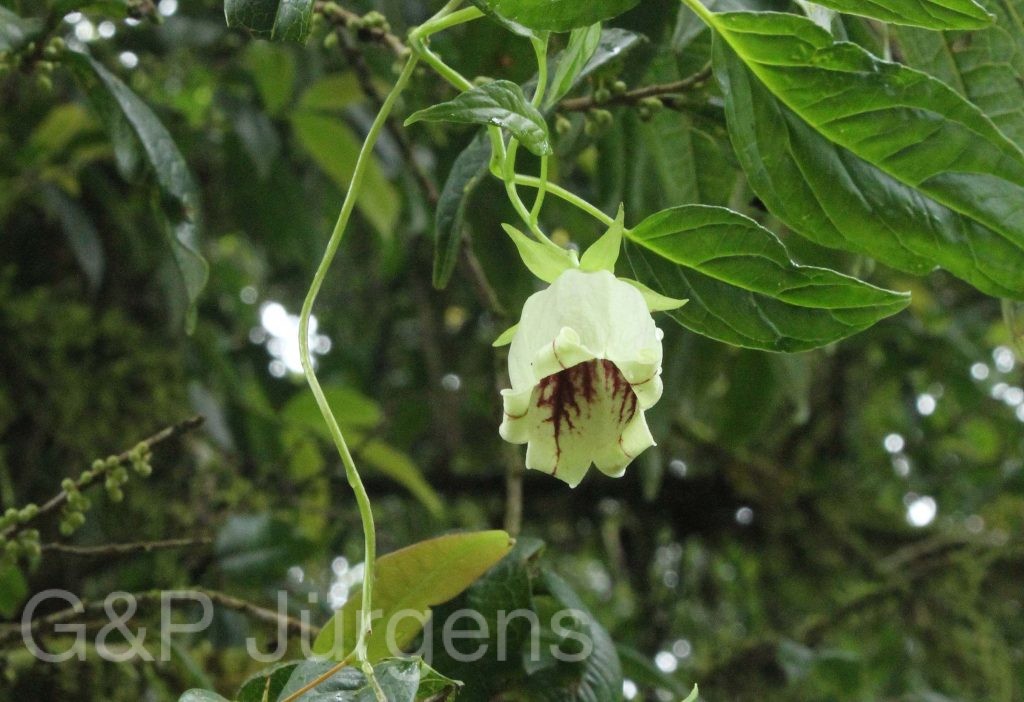
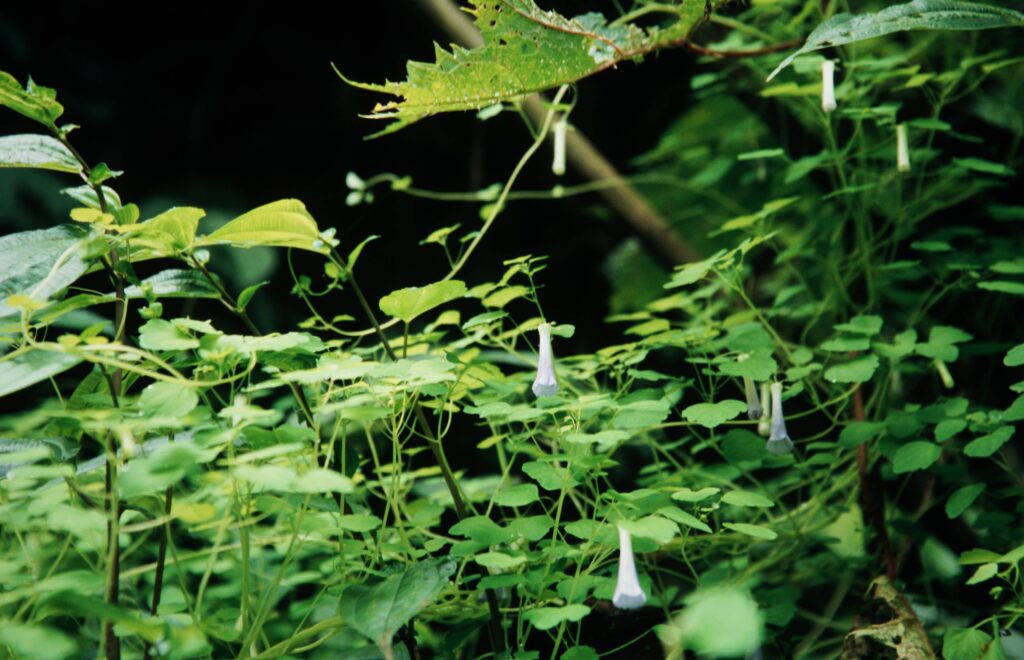
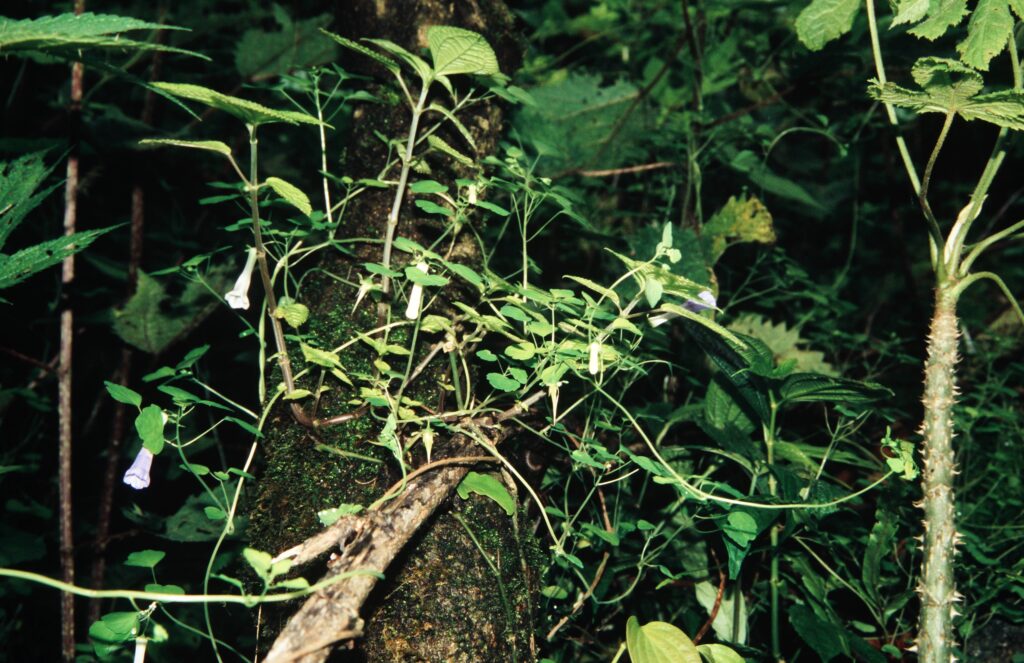
Codonopsis gracilis is a slender twining herb distributed across the eastern Himalaya and into mainland Southeast Asia and southern China. Its range extends from Nepal, Bhutan, and northeastern India (Sikkim, West Bengal, Assam, Meghalaya) through Myanmar and Vietnam to southern China (Yunnan, Sichuan, Guizhou). GBIF records 72 occurrences across these countries. The species grows in margins of subtropical and warm temperate broadleaved forests, thickets, hedgerows, and along streams, at elevations of 1,200–2,800 m. The photograph from Ruigi-Chu in West Bengal at 1,850 m, taken in May, shows the species at a mid-elevation site in the Sikkim-Darjeeling region during the early monsoon flowering period.
The plant is a perennial twining herb arising from a slender, fusiform or cylindrical root. Stems are slender, glabrous or sparsely pubescent, extensively twining through surrounding vegetation, reaching 1–3 m. Leaves are alternate or opposite on lower stems, ovate to broadly ovate, 2–5 cm long, with crenate to serrate margins, sparsely hairy above, paler beneath. Flowers are solitary, axillary, pendulous on slender pedicels. The calyx lobes are five, lanceolate to ovate, spreading. The corolla is broadly campanulate, 15–25 mm long, pale blue to lilac with darker purple veins and markings inside, particularly prominent reticulate venation in the throat. Stamens five, free; the ovary is semi-inferior. The fruit is a broadly conical capsule, dehiscing by apical valves.
Codonopsis gracilis is distinguished from congeners by its relatively small, delicate habit and slender roots, lacking the thick, fleshy taproots prized in traditional medicine that characterize species such as C. pilosula and C. tangshen. The genus Codonopsis comprises approximately 40 species centred on the Sino-Himalayan region, and molecular phylogenetic studies have confirmed its placement within Campanulaceae sensu lato. C. gracilis is not currently considered threatened and remains locally frequent in forest margins across its wide range.

Author: Hook.f. & Thomson · Sources: POWO (Kew), GBIF, Hong & Lammers: Campanulaceae in Flora of China Vol. 19, Grierson & Long: Flora of Bhutan Vol. 2

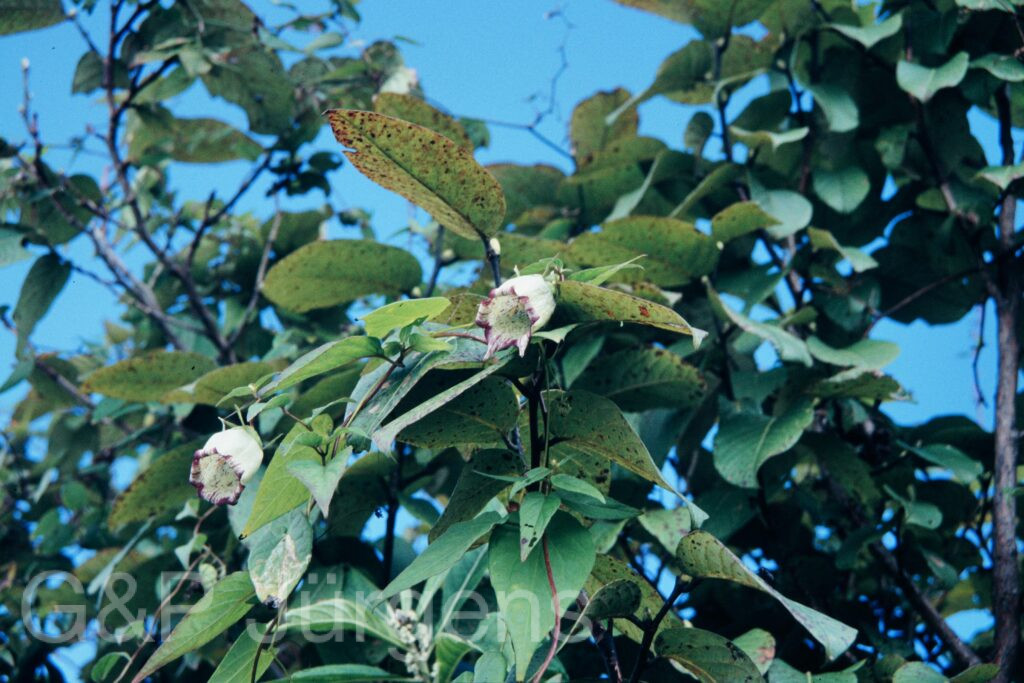
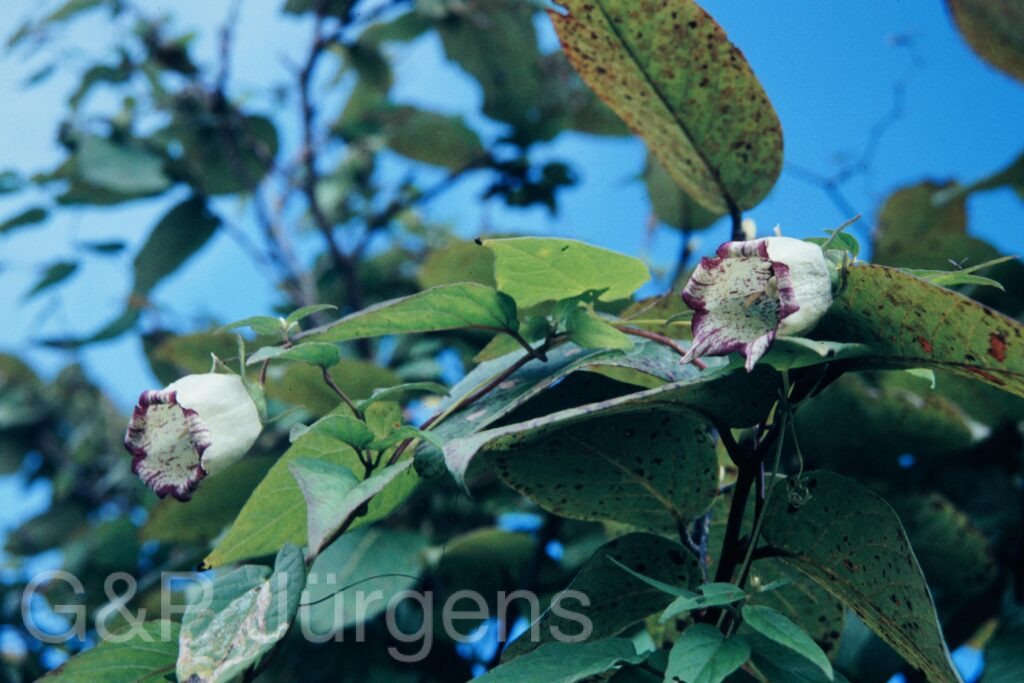
Hook.f.

Bhutan2012 672
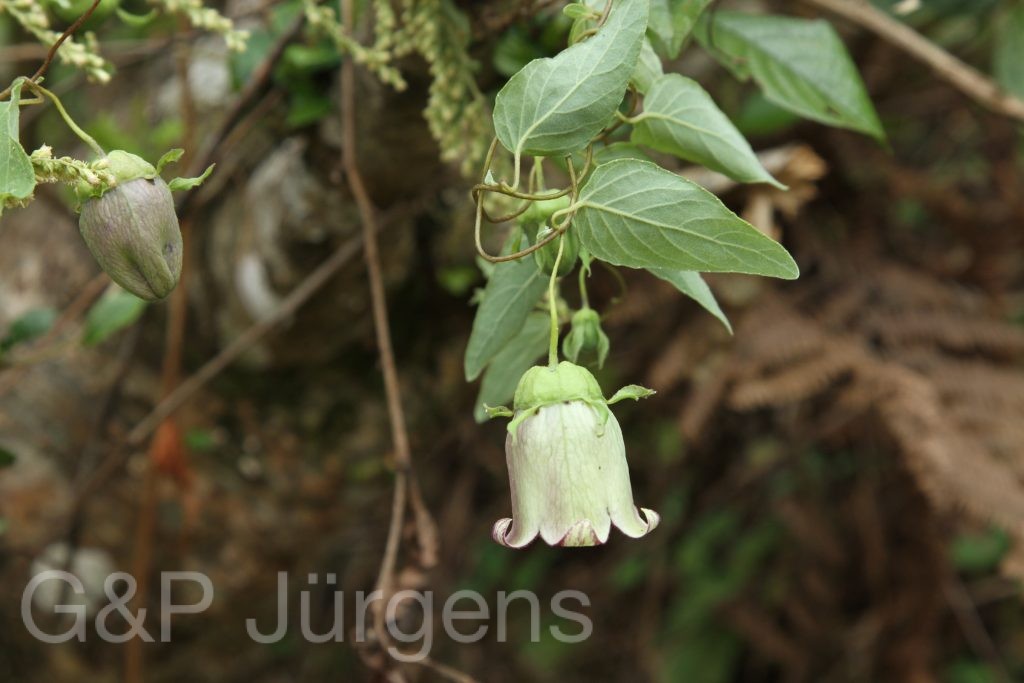
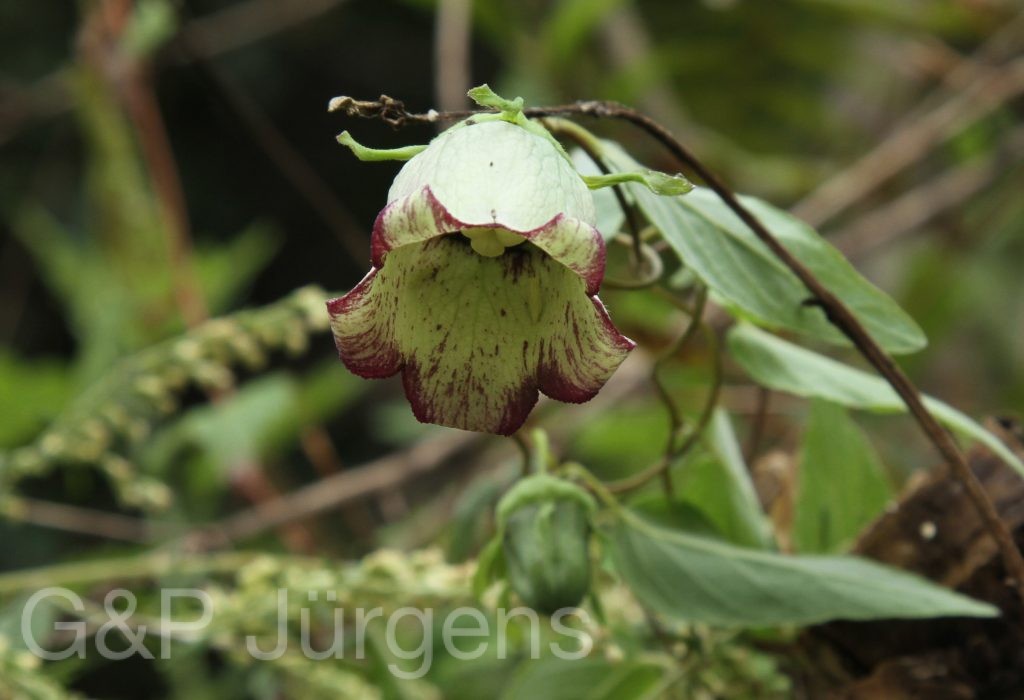
Bhutan Tserang 1000m, September
Bhutan2012 675
Bhutan Tserang 1000m, September

Description

Codonopsis inflata is a herbaceous twining perennial of the eastern and central Himalaya, recorded from India, Nepal, Bhutan, China and Myanmar. It grows in forest margins, thickets, scrub and among tall herbs on shaded slopes and stream banks in the subtropical to lower temperate belt, generally between about 1000 and 2500 m, scrambling over surrounding vegetation. The photographed plant comes from Tserang in Bhutan at around 1000 m, flowering in September. With around 107 georeferenced records it is a moderately documented Himalayan bellflower relative, characteristic of the humid, vegetated lower montane zone where its slender climbing stems are supported by neighbouring shrubs and herbs.

It arises from a fleshy, often swollen rootstock and produces slender, twining, glabrous stems that exude latex when cut and emit the characteristic foetid odour of the genus. The leaves are alternate or subopposite, ovate to lanceolate, with entire to shallowly toothed margins and slender petioles. The flowers are solitary and nodding on long pedicels; the calyx has five lobes adnate to the lower part of the ovary, and the corolla is broadly campanulate to somewhat inflated, pale greenish, yellowish or bluish and usually marked within by darker veins or blotches. There are five stamens, and the inferior to half-inferior ovary ripens into a capsule that dehisces to release numerous small seeds.

Codonopsis is a large Sino-Himalayan genus, several species of which are valued in traditional Chinese and Himalayan medicine, the fleshy roots (dang shen) used as tonics; C. inflata shares this ethnobotanical use. Its taxonomy is complicated by variation in corolla form and by close affinity to allied Himalayan species. As a fairly widespread plant of vegetated montane habitats it is of least conservation concern.

Author: Hook.f. · Sources: POWO (Kew), GBIF, Flora of China, Flora of Bhutan, Lammers monograph of Campanulaceae (Codonopsis)

Hook.f. & Thomson

Sikkim2003 439 P610 2
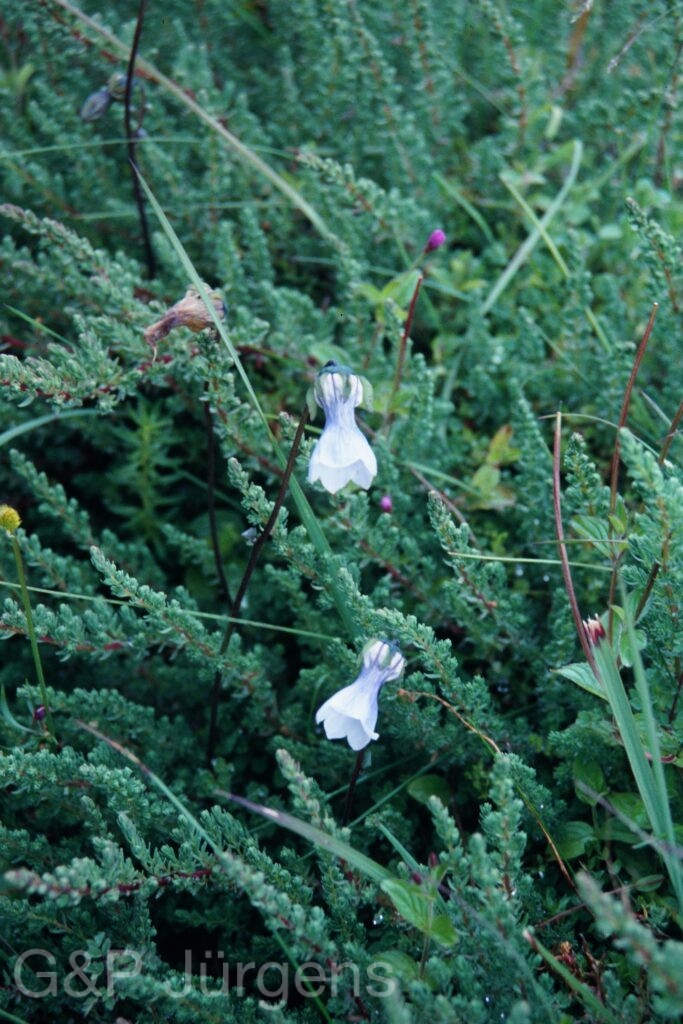
Sikkim Chopta Valley 4000m August
Sikkim2003 424 P590
Sikkim Chopta Valley 4250m August

Description

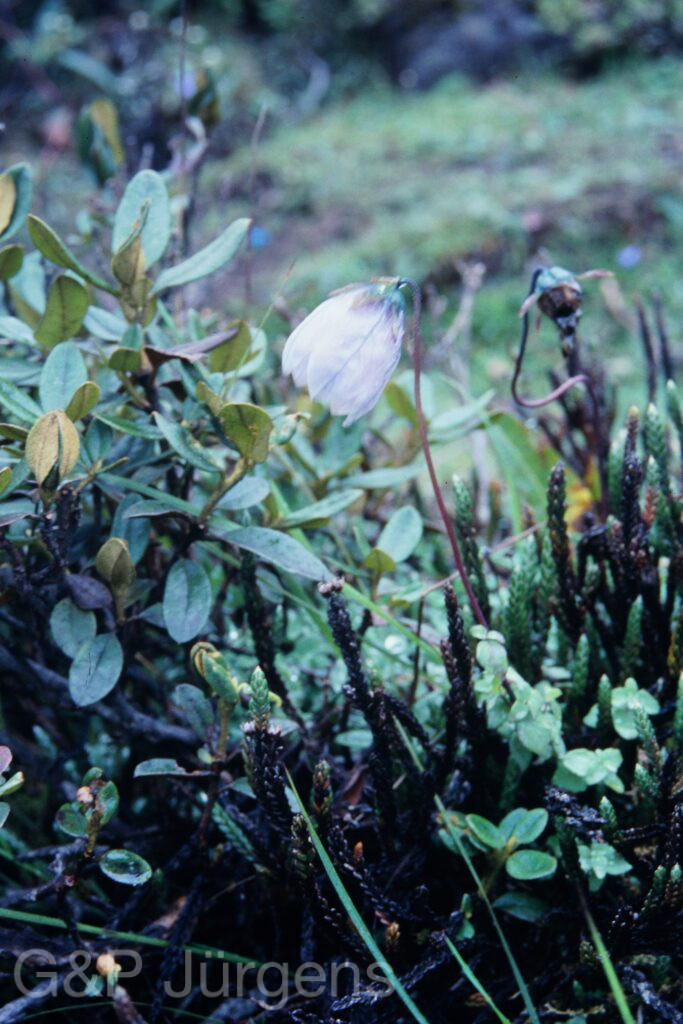
Codonopsis subsimplex is an alpine herb of the eastern Himalaya, distributed across Nepal, India (Sikkim), Bhutan and adjacent China, with about 101 georeferenced records in GBIF. It grows in high-elevation meadows, scrub margins, rock crevices and stony alpine slopes, typically within the belt between about 3500 and 4500 m. The plants illustrated were photographed in Sikkim's Chopta Valley at 4000 and 4250 m in August, at the height of the monsoon flowering season, where it occurs among dwarf shrubs and damp turf in the upper alpine zone.

The species is a slender perennial herb arising from a thickened, fleshy rootstock, with stems that are erect to weakly ascending and, as the epithet suggests, little branched. The leaves are small, alternate or scattered, ovate to lanceolate, and shortly petiolate to nearly sessile. The flowers are solitary and terminal, nodding on slender pedicels, with a broadly campanulate corolla typically pale bluish, greenish or purple-tinged and often marked internally with darker veining or coloured spots. The five corolla lobes are shallow; the fruit is a capsule crowned by the persistent calyx, dehiscing to release numerous small seeds.

Codonopsis (Campanulaceae) is a genus of the temperate and alpine Asian flora well represented in the Himalaya, several members of which are characterised by a distinctive foetid odour when bruised. Pollination is largely by bumblebees attracted to the pendent bell-shaped flowers. The fleshy roots of various Codonopsis species are valued in regional herbal medicine. C. subsimplex is restricted to high alpine habitats and, while not formally assessed as threatened, depends on intact alpine pasture and is sensitive to overgrazing and climatic warming.

Author: Hook.f. & Thomson · Sources: POWO (Kew), GBIF, Flora of China, Flora of Bhutan, Annotated Checklist of the Flowering Plants of Nepal, Hong Monograph of the Genus Codonopsis
Wall.

Sikkim2003 122 P163
Sikkim Dzongri 3950m, August
Sikkim2003 265 P364
Sikkim Dzongri 3950m, August
Sikkim2003 266 P367
Sikkim Dzongri 3950m, August

Description

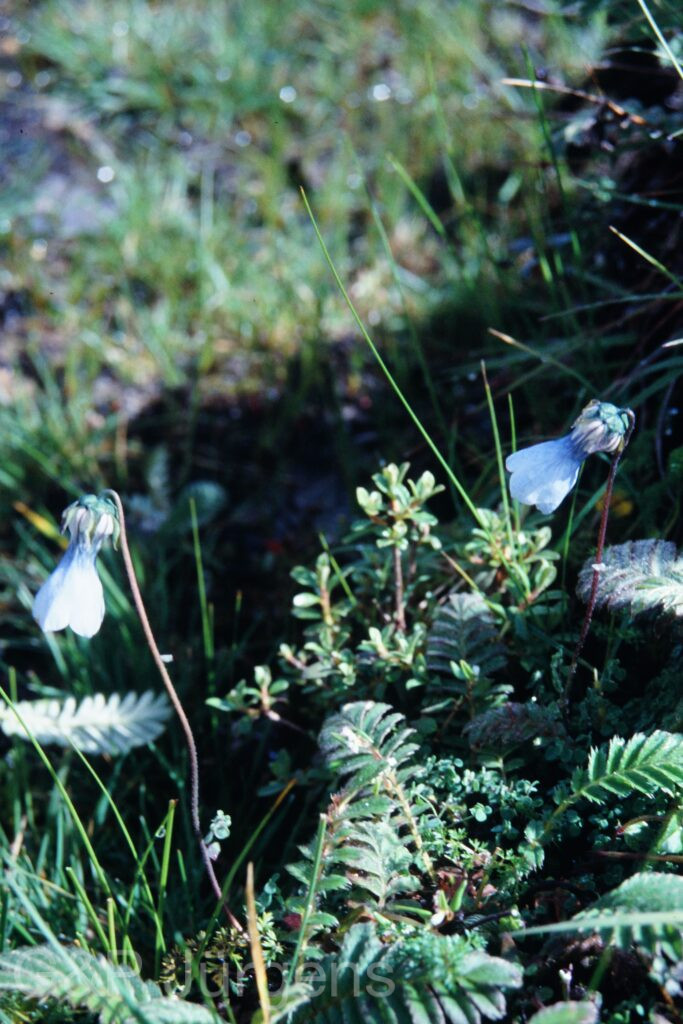
Codonopsis thalictrifolia is a Sino-Himalayan alpine herb of the bellflower family, GBIF recording about 217 occurrences from Nepal, China, India and Bhutan. It is a plant of the upper subalpine and alpine zones, growing in open turf, among dwarf rhododendron scrub, on stony slopes, moraine and moist rock ledges generally between about 3500 and 4500 m. The population photographed at Dzongri in western Sikkim at 3950 m, flowering in August during the late monsoon, is characteristic of its occurrence in cool, humid, high-elevation meadow and shrub habitats where it blooms toward the end of the short alpine summer.

It is a slender, glabrous, somewhat glaucous perennial herb arising from a fleshy rootstock, the stems erect to ascending and often weakly clambering through surrounding vegetation. The leaves are small and finely divided or pinnately lobed, recalling the foliage of a meadow-rue (Thalictrum), from which the epithet derives. The flowers are solitary and nodding on slender pedicels; the corolla is broadly campanulate, pale blue to greenish or violet-tinged and frequently marked within by darker veining, with five short lobes, five stamens and an inferior to half-inferior ovary. The fruit is a capsule dehiscing to release numerous small seeds.

Described by Wallich, C. thalictrifolia belongs to the genus Codonopsis (Campanulaceae), the bonnet-bellflowers, several of which emit the group's characteristic foetid odour when bruised. It is locally frequent and not regarded as threatened, though tied to intact alpine turf and scrub. Ecologically its nodding, bell-shaped flowers are adapted to pollination by bumblebees and other robust alpine insects, and it is valued horticulturally as a delicate plant of the high mountains.

Author: Wall. · Sources: POWO (Kew), GBIF, Flora of Bhutan, Flora of China, The Genus Codonopsis (Lammers/Hong monograph)

Wall.

Bhutan2012 1191
Bhutan Tashiyangtse 2000m, October
Bhutan2012 1193
Bhutan Tashiyangtse 2000m, October
Nepal 95 118 P206 ergebnis
Nepal south of Rupina La 3400m October
Nepal 95 119 P207 ergebnis
Nepal south of Rupina La 3400m October

Description

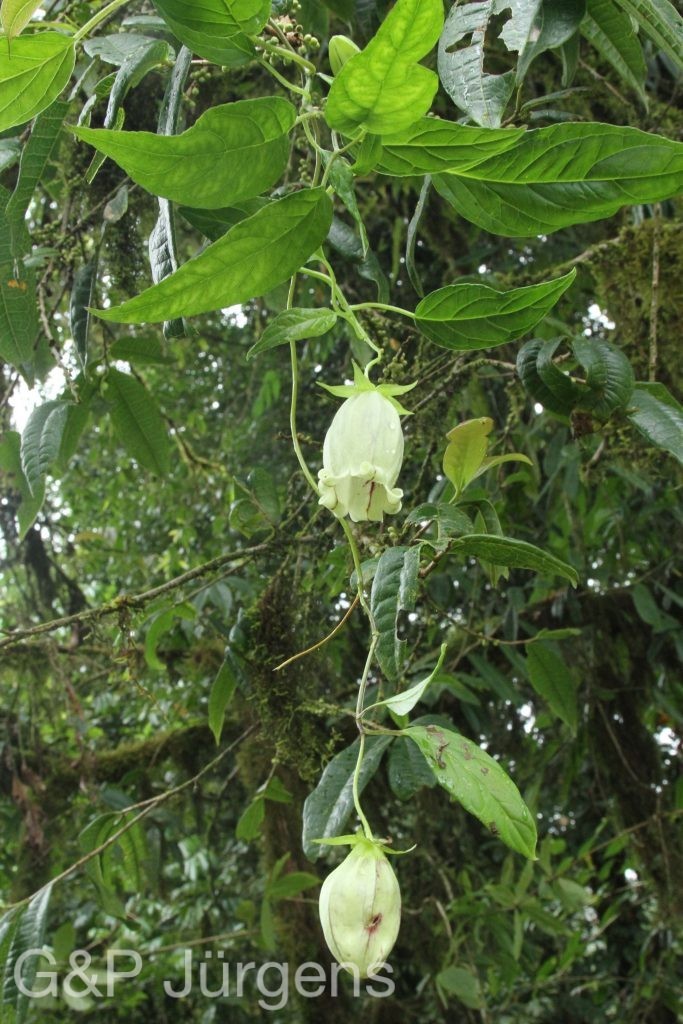
Codonopsis viridis is a Himalayan twining or scrambling perennial distributed along the central and eastern ranges from Nepal through northern India, Sikkim and Bhutan into south-western China, with 162 GBIF records concentrated in this Sino-Himalayan belt. It grows in shrubberies, forest margins, hedgerows and disturbed banks across a wide montane elevation span, from warm-temperate slopes to the subalpine zone. The cited collections illustrate this amplitude: from Tashiyangtse in eastern Bhutan at 2000 m to a higher site south of the Rupina La in Nepal at 3400 m, both flowering in October at the close of the monsoon.

It is a herbaceous climber with slender, twining stems emerging from a tuberous or fleshy rootstock, the foliage and roots emitting the characteristic acrid Codonopsis odour. The leaves are ovate to ovate-lanceolate, alternate or scattered along the stem, thin-textured and entire to obscurely toothed. The flowers are solitary and terminal or borne on slender lateral branches, broadly campanulate to cup-shaped, the corolla greenish to greenish-yellow, often faintly veined or tinged within, with five short spreading lobes. The fruit is a turbinate capsule with a flattened apex, dehiscing to release numerous small seeds.

Codonopsis is a large Asian genus centred on the Himalaya and China, and C. viridis is distinguished within it by its greenish corolla and climbing habit. Like its congeners, it is visited by bees and flies and several species are harvested as substitutes for the tonic root "dang shen". The species is widespread and locally frequent across its range and is not regarded as of conservation concern.

Author: Wall. · Sources: POWO (Kew), GBIF, Flora of China, Flora of Bhutan, Annotated Checklist of the Flowering Plants of Nepal, Lammers monograph of Campanulaceae (Codonopsis)

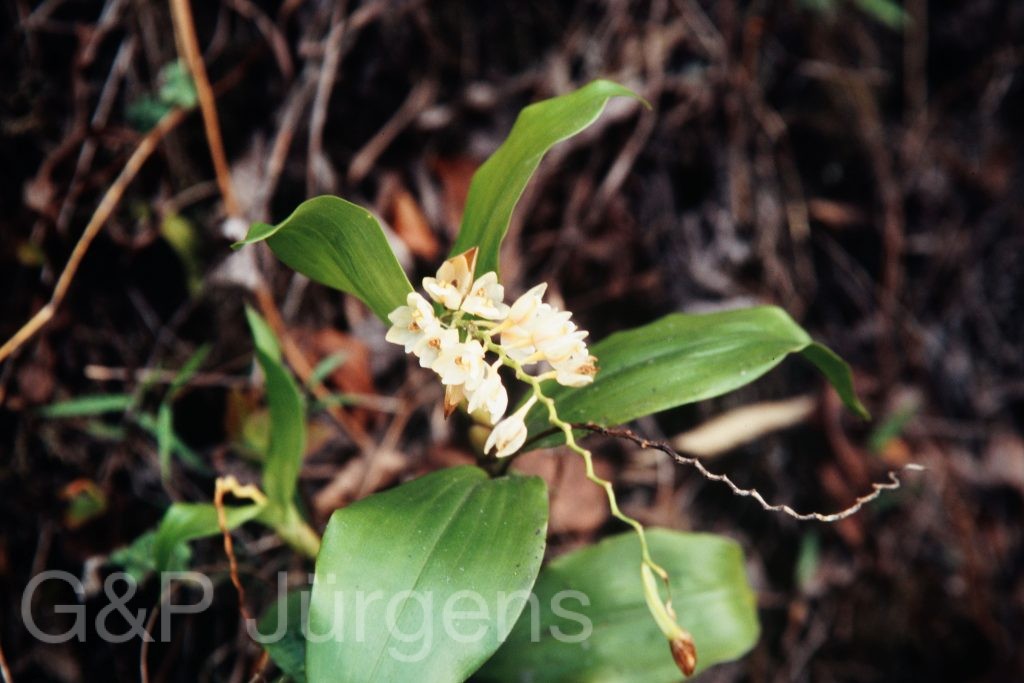
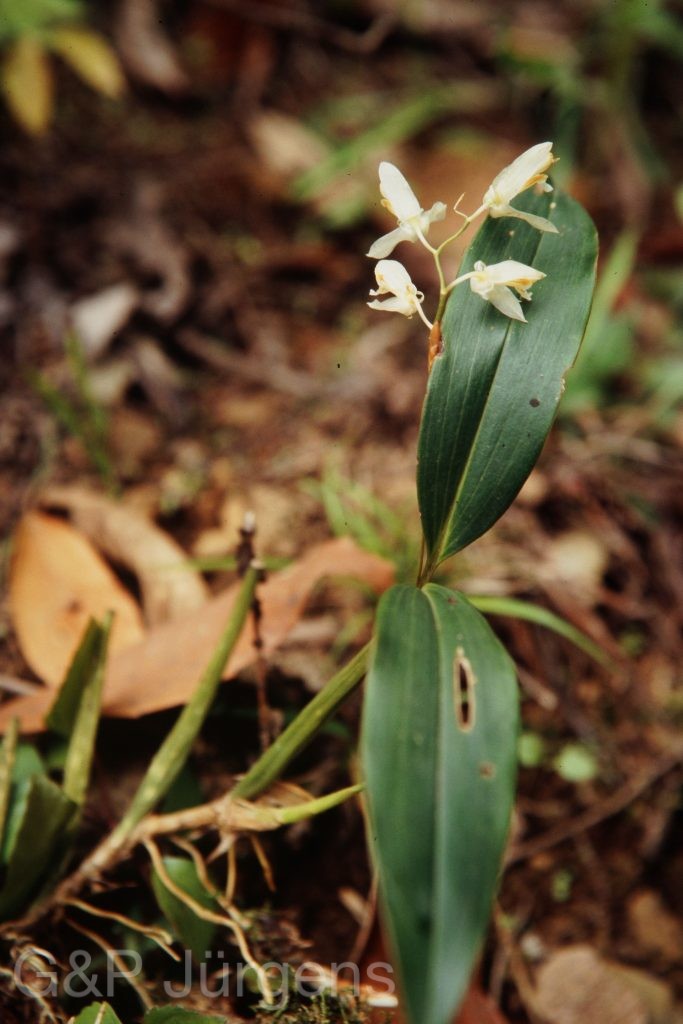
(Lindl.) Rchb.f.

Bh09 220 P373
Bhutan Dochu-La, 2900m June
Bh09 356 P573
Bhutan Dochu-La, 2900m June

Description

Coelogyne articulata (long widely known as Pholidota articulata) is an epiphytic orchid distributed broadly across tropical and subtropical Asia, from India, Nepal, Bhutan and China through Myanmar, Thailand, Indochina and Malesia to New Guinea, with 733 occurrences in GBIF. It grows as an epiphyte on tree trunks and mossy branches, occasionally as a lithophyte on shaded rocks, in evergreen and mixed broadleaved forest from the lowlands up to about 2900 m. The Bhutanese collection figured, from Dochu-La at 2900 m in June, marks the upper, cool-temperate edge of its range, where it flowers in the early monsoon in humid, shaded forest.

The plant has a creeping rhizome bearing a chain of cylindrical to fusiform pseudobulbs jointed end to end, each successive bulb arising from the apex of the last, producing the articulated, beaded habit reflected in the epithet. Each pseudobulb carries one or two oblong-lanceolate, plicate leaves. The slender, pendulous inflorescence is a distichous, secund raceme of many small flowers subtended by conspicuous boat-shaped bracts; the flowers are whitish to pale pink, with concave sepals, narrow petals and a saccate, concave lip. The fruit is a small ribbed dehiscent capsule releasing dust-like seeds.

The genus name on the source page reflects past placement in Pholidota; molecular phylogenetics has shown Pholidota to be nested within Coelogyne (Orchidaceae, subfamily Epidendroideae), and POWO accepts the combination Coelogyne articulata. The input family is given as "Orchideaceae"; the accepted family is Orchidaceae. Widespread, locally common and tolerant of secondary forest, the species is not regarded as threatened, though all wild orchids are listed on CITES Appendix II.

Author: (Lindl.) Rchb.f. · Sources: POWO (Kew), GBIF, Flora of China, Flora of Bhutan, The Genus Coelogyne (A Synopsis)

Lindl. ex Griff.

Bhutan2015 216
Bhutan Zhemgang 910m, October

Description

Coelogyne barbata is an Eastern Himalayan orchid recorded from China, north-eastern India, Bhutan, Myanmar, Bangladesh and Nepal, with GBIF documenting over a hundred occurrences across the region. It grows as an epiphyte on mossy tree trunks and large branches, and sometimes as a lithophyte on shaded, humus-covered rocks, in humid broad-leaved evergreen montane forest with abundant atmospheric moisture. The species occupies low to middle elevations of the warm-temperate belt; the photographed plant from Zhemgang in central Bhutan at about 910 m, flowering in October, exemplifies its autumn anthesis at the lower end of its altitudinal range, when many congeners are also in bloom.

The plant forms ovoid to oblong-conical pseudobulbs spaced along a stout creeping rhizome, each bearing a pair of apical leaves. The leaves are large, elliptic-lanceolate, plicate and prominently veined, narrowed to a petiole. The inflorescence is an erect to arching, several- to many-flowered raceme arising from the apex of a developing growth, the flowers opening more or less simultaneously. The flowers are showy and white, with spreading sepals and petals; the labellum is the most distinctive feature, trilobed and white marked with dark brown to blackish blotches, its disc and margins of the side lobes conspicuously fringed with long brown or blackish bristly hairs, from which the epithet derives. The fruit is a ribbed capsule.

C. barbata is placed within Coelogyne section Fuliginosae (the elata/ovalis alliance of fimbriate-lipped species), distinguished from its relatives by the heavily bearded, dark-marked labellum. Recent generic recircumscriptions of Coelogyne based on molecular phylogenetics retain the species in the genus. Attractive and readily recognised, it is collected from the wild for horticulture, which together with the clearance of mid-elevation forest constitutes the principal threat to its populations.

Author: Lindl. ex Griff. · Sources: POWO (Kew), GBIF, Flora of China, The Orchids of Bhutan (Pearce & Cribb), Coelogyne and its Allies (Clayton & Cribb)

Lindl.

Bhutan2014 17
Bhutan Sandrup 800m, May
Bhutan2014 19
Bhutan Sandrup 800m, May

Description

Coelogyne corymbosa is an epiphytic orchid widely distributed through the eastern Himalaya and adjoining Southeast Asia, native to China, India, Nepal, Bhutan, Myanmar, Thailand, Laos and Vietnam, with 424 GBIF records making it one of the better-documented Coelogyne of the region. It is a cool-growing epiphyte and lithophyte of mossy montane and cloud forest, usually between about 1800 and 3000 m, though the caption locality of Sandrup in southern Bhutan at 800 m in May reflects collection in the warmer foothill belt at the lower margin of its range; the bulk of its populations occupy higher, mist-bathed forest.

The plant forms ovoid to oblong pseudobulbs, spaced along a creeping rhizome, each topped by a pair of narrowly elliptic, plicate leaves. The inflorescence is a short, few-flowered raceme produced from the apex of the young growth. The flowers are relatively large for the plant and brilliant white, with spreading lanceolate sepals and petals; the trilobed lip is the diagnostic feature, conspicuously marked in the throat with bright orange-yellow blotches ringed in dark reddish-brown, set off by raised, fringed keels. The fruit is a ribbed capsule.

Coelogyne is a large Asian genus of tribe Arethuseae, and C. corymbosa belongs to a group of small, high-elevation, white-flowered species distinguished by their boldly ocellate lips. Cool-growing and floriferous, it is valued in cultivation, but its principal habitat in undisturbed mossy forest makes wild populations sensitive to logging and to the warming of montane climates. International trade is regulated under CITES Appendix II.

Author: Lindl. · Sources: POWO (Kew), GBIF, Flora of China, Flora of Bhutan, The Genus Coelogyne (Clayton & Cribb)

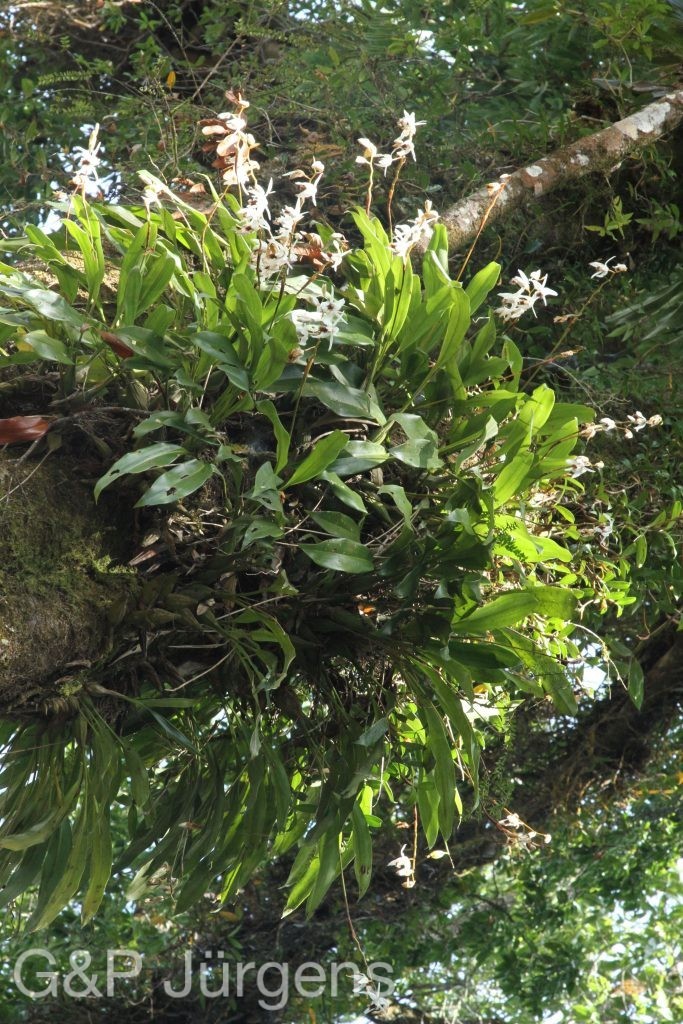
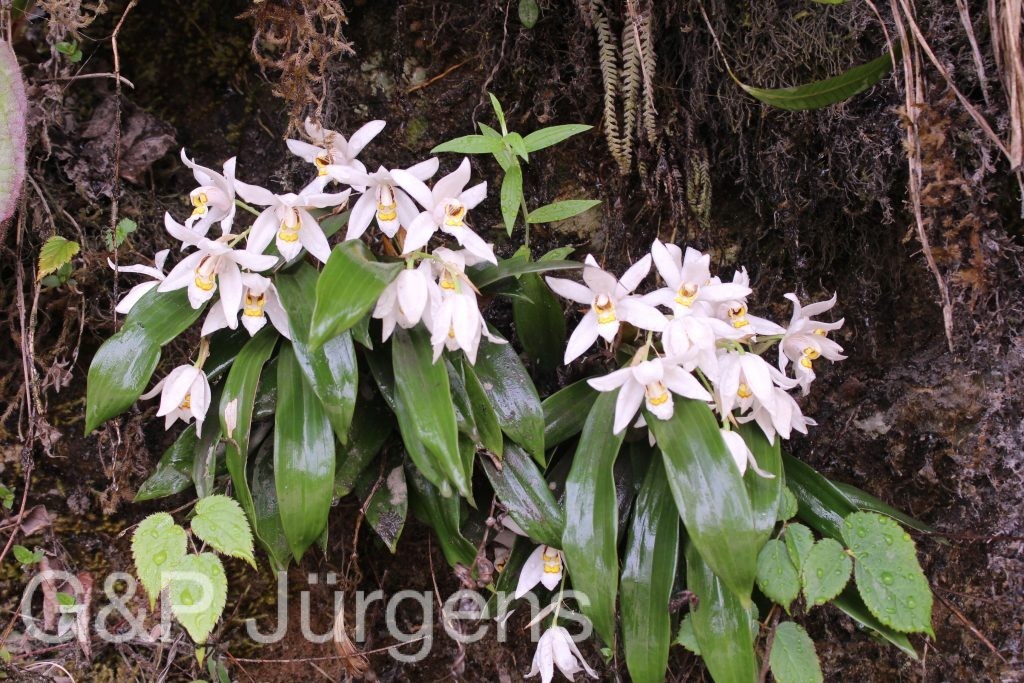
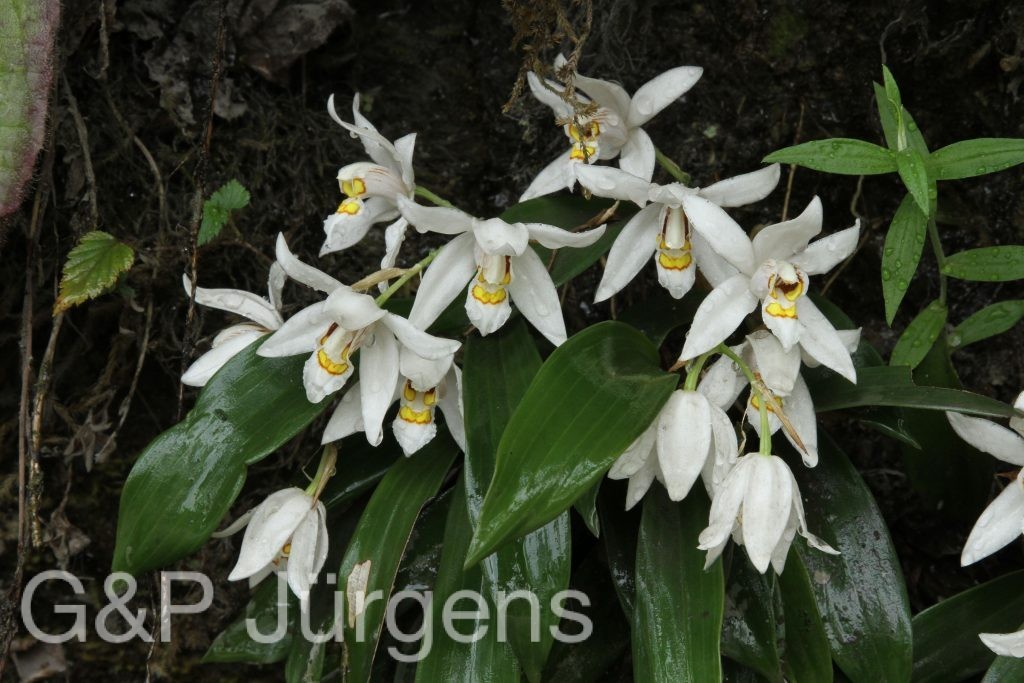
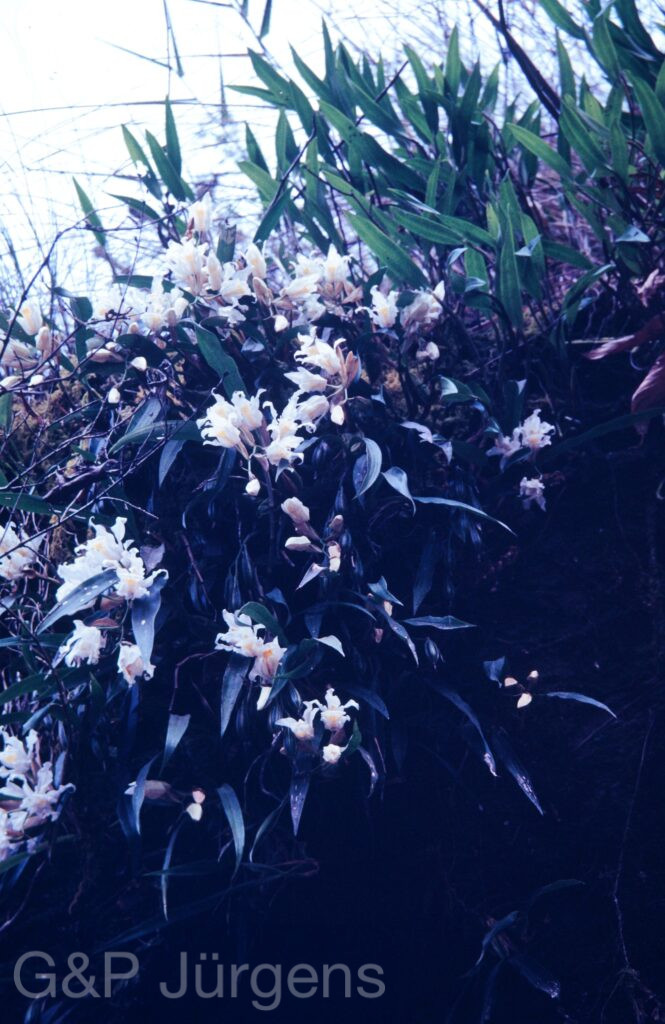
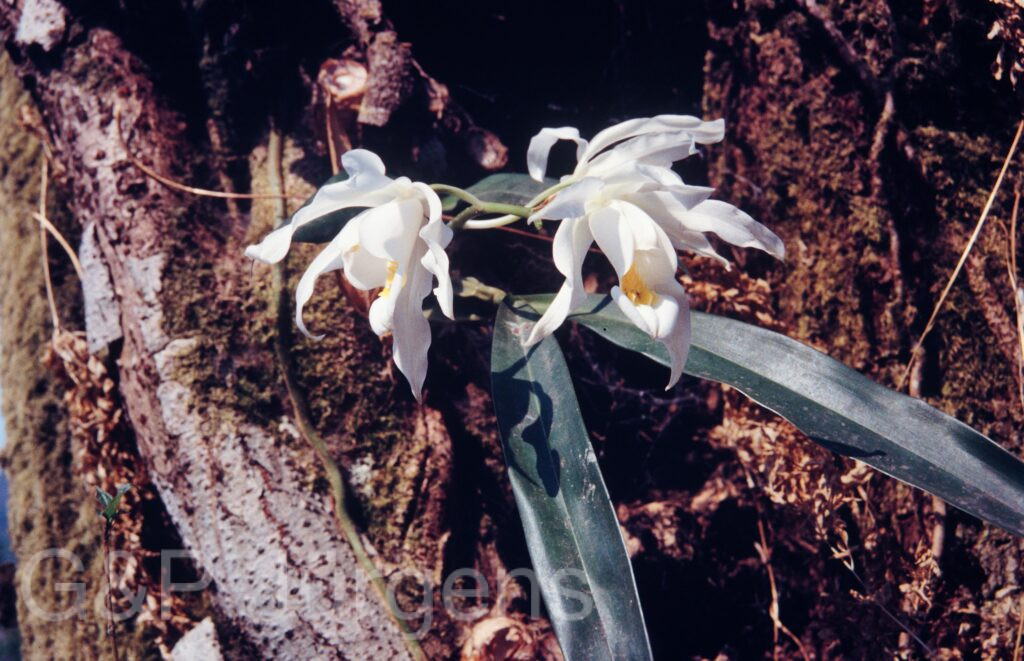
Lindl.

Nepal1992 90 P124 ergebnis
Nepal Amjilassa 2300m March 
Nepal1992 165 P240 ergebnis
Nepal Amjilassa 2300m March 

Description

Coelogyne cristata is an epiphytic orchid of the central and eastern Himalaya, native to Nepal, India, Bhutan and China and widely grown in cultivation, a circumstance reflected in the broad GBIF country list (over 400 records spanning numerous European and American countries alongside its native range), most extraterritorial records being garden plants. In the wild it grows as an epiphyte and occasional lithophyte on mossy tree trunks, branches and shaded rock faces in humid temperate forest. The illustrated plant from Amjilassa in eastern Nepal, at about 2300 m and flowering in March, typifies its preference for cool, mist-laden montane forest where it blooms in the dry late-winter to early-spring season.

The plant grows from a creeping rhizome bearing crowded, ovoid to oblong, glossy green pseudobulbs, each topped by two strap-shaped, plicate, leathery leaves. The inflorescence is a pendulous to arching raceme arising from the base of the pseudobulb and carrying several large, fragrant flowers. These are crystalline white, with spreading, somewhat undulate sepals and petals and a trumpet-shaped, three-lobed labellum whose disc bears conspicuous golden-yellow, fringed and crested keels — the feature giving rise to the epithet cristata. The column is slender and winged, and the fruit is a ribbed dehiscent capsule releasing dust-like seeds.

Coelogyne is a large Asian orchid genus, and C. cristata ranks among its most celebrated members, long prized in horticulture for its abundant snow-white blooms. Like all orchids it is listed under CITES Appendix II, and wild populations are vulnerable to over-collection for the ornamental trade and to loss of the humid forest habitat on which it depends; sustaining intact montane forest is therefore central to its in-situ conservation across the Himalaya.

Author: Lindl. · Sources: POWO (Kew), GBIF, Flora of Bhutan (Orchidaceae), Flora of China (Orchidaceae), Pearce & Cribb: The Orchids of Bhutan (monograph)