Tag:

Nepal

Flowers of Nepal — 1313 wild plant species documented from the Nepalese Himalaya, from subtropical foothills to high alpine meadows above 4,000 m. Nepal’s dramatic elevation gradient makes it one of the richest botanical regions on Earth, home to rhododendrons, primulas, gentians and the famed blue poppies (Meconopsis). Every entry gives a botanical description, native distribution, habitat and flowering season, alongside the original field photograph and the location where it was taken.

Wight

Bh2008 154 P253
Bhutan Trongtsa 2120m, April
Nepal 97 115 P198
Nepal Mewa-Khola 2470m April

Description

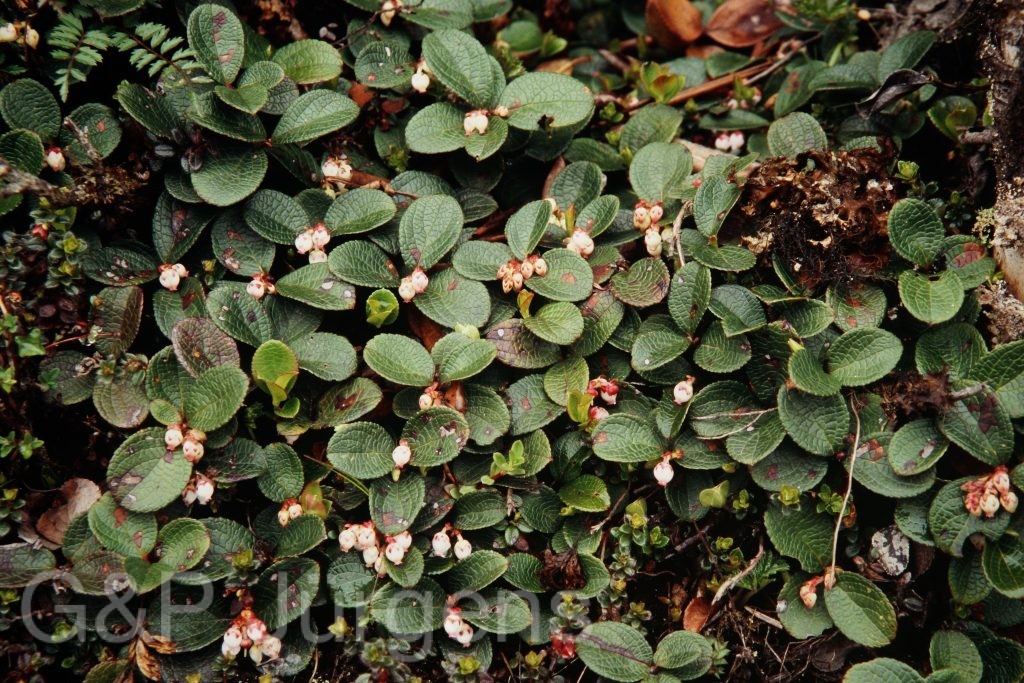
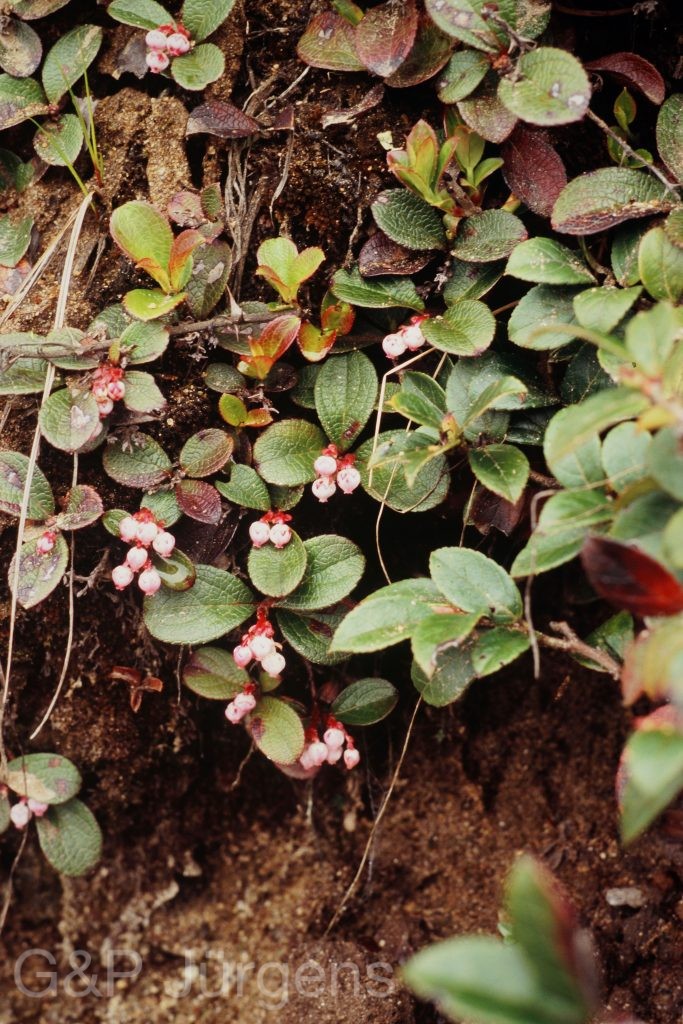
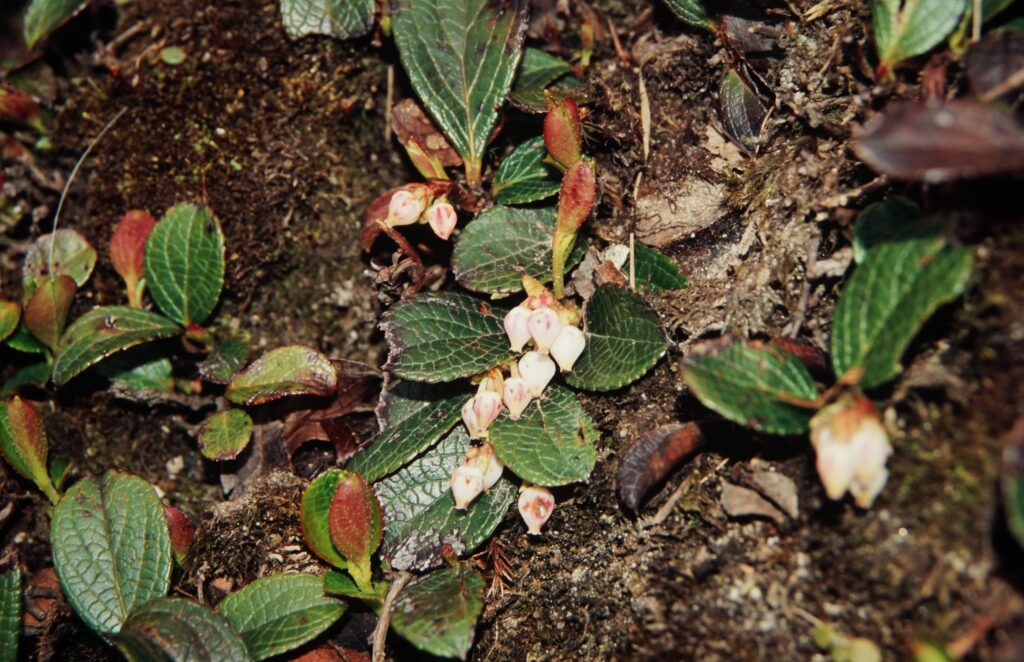
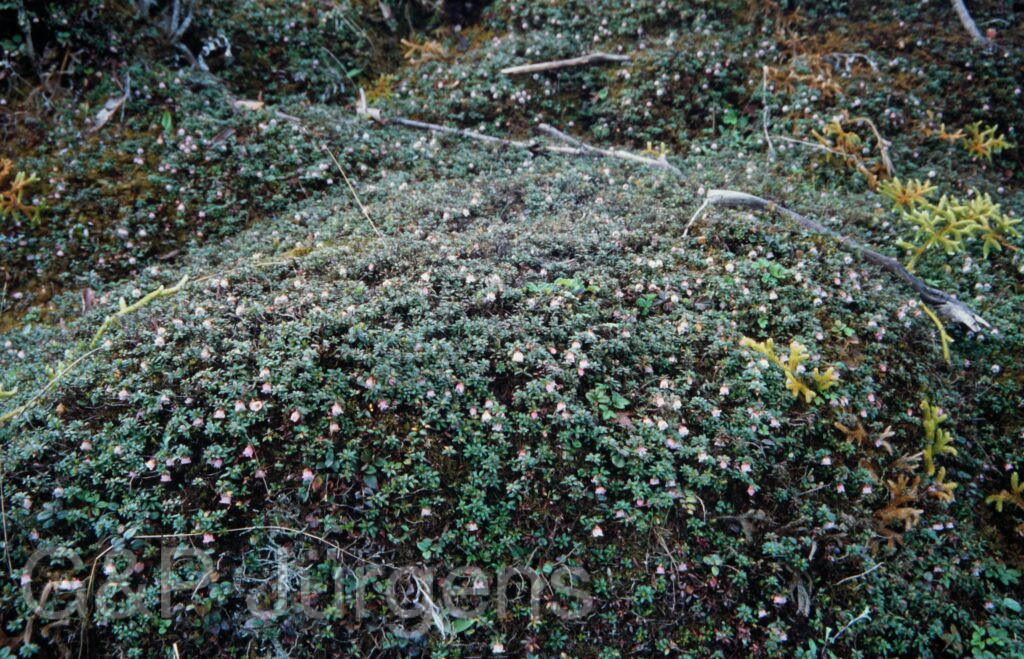
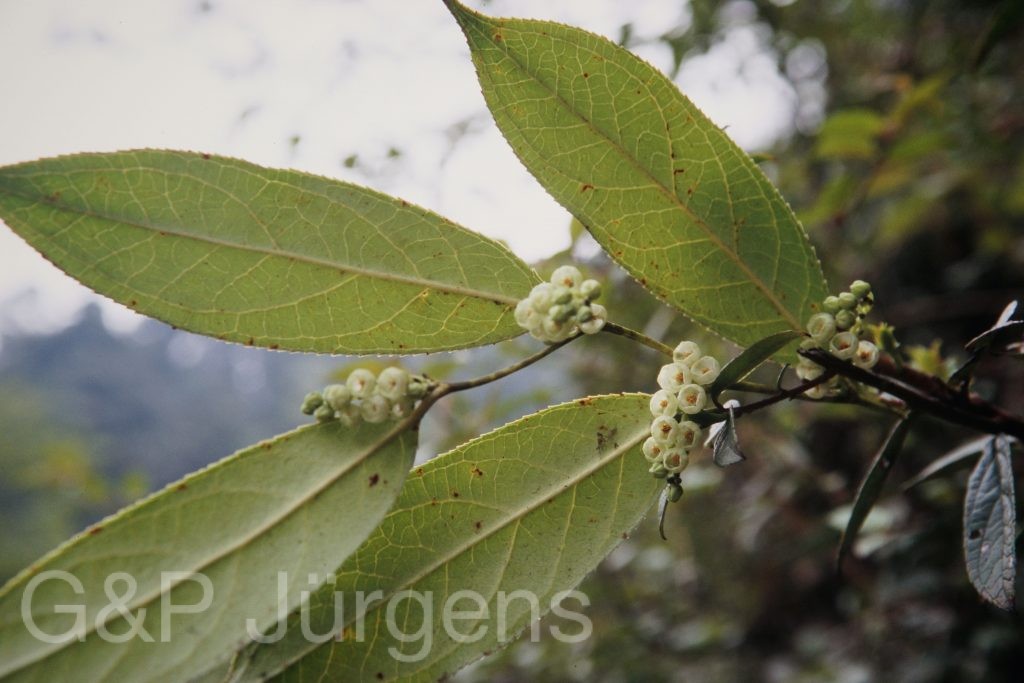
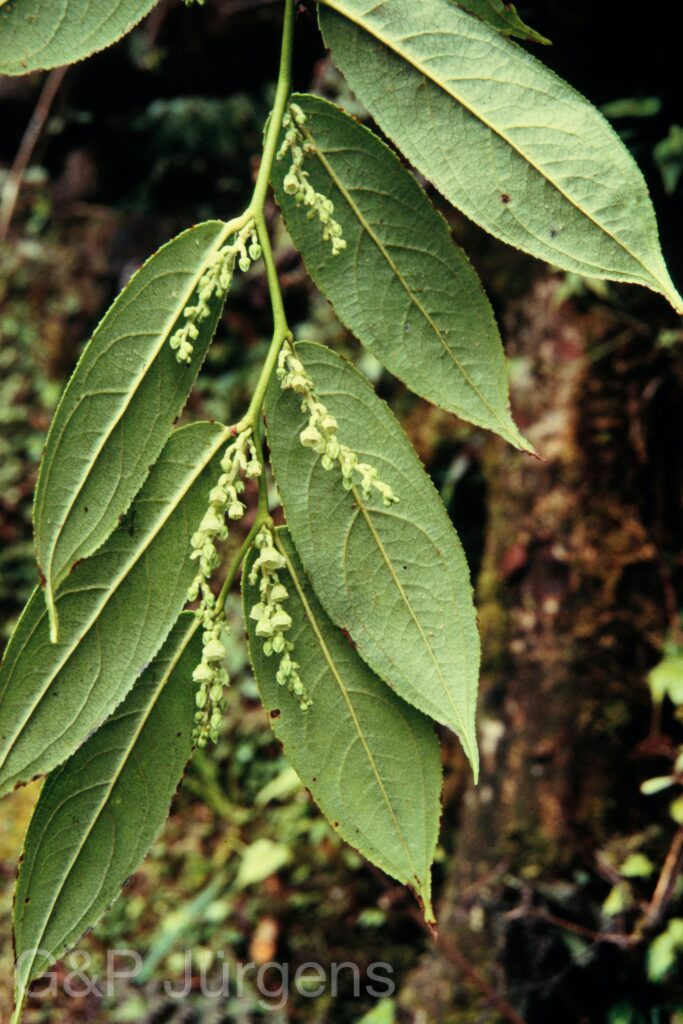
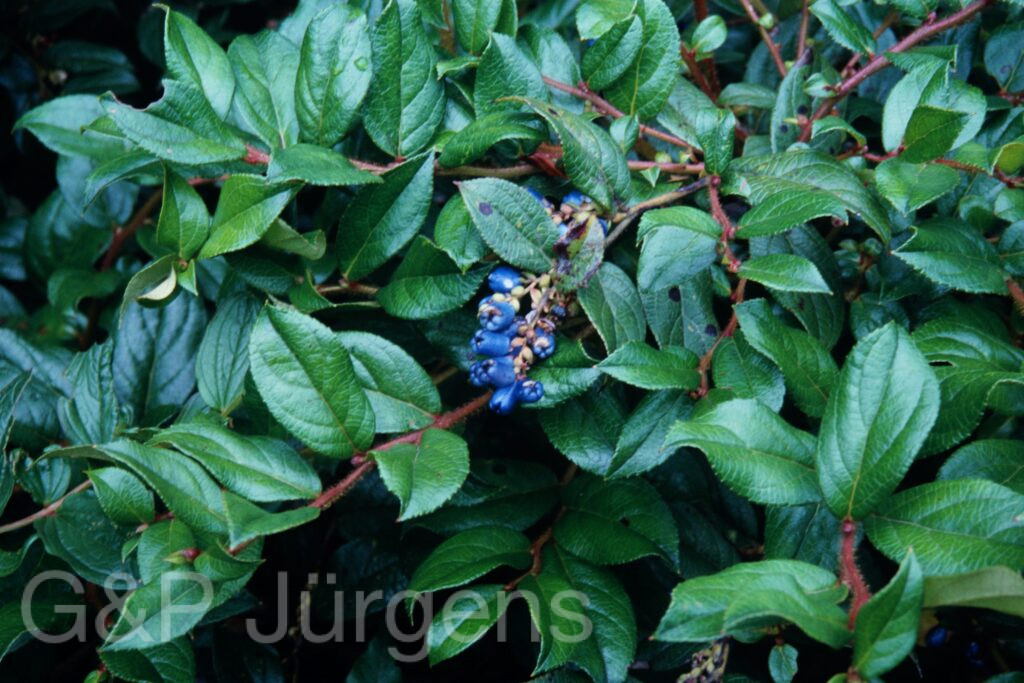
Gaultheria griffithiana is an evergreen shrub of the eastern Himalaya and Indo-Burmese mountains, distributed through Nepal, Sikkim and Darjeeling in India, Bhutan, southern China (Xizang, Yunnan), Myanmar, Laos and Vietnam, with nearly seven hundred georeferenced records. It grows in temperate broadleaved and conifer forest, on shrubby slopes, forest margins and rocky banks, often on acidic humus-rich soils. The cited collections at Trongtsa in Bhutan around 2120 m and Mewa-Khola in east Nepal at 2470 m, both flowering in April, reflect its spring anthesis in the montane forest belt.

The plant is a much-branched shrub with reddish, often bristly or glandular-setose young branchlets. The leaves are alternate, coriaceous, elliptic to oblong-lanceolate, finely serrate with gland-tipped teeth, glossy above and often with bristly hairs or glands, and aromatic when crushed. The flowers are borne in axillary racemes, each subtended by bracts; the calyx is five-lobed and the corolla is small, urceolate (urn-shaped), white to pinkish, with ten included stamens whose anthers open by terminal pores. The fruit is a small berry-like structure, the capsule being enclosed by the fleshy, accrescent calyx that turns blue-black or dark purple at maturity.

Gaultheria (Ericaceae, subfamily Vaccinioideae) is well represented in the Sino-Himalaya, and this species, named for William Griffith, belongs to the assemblage of wintergreen-scented shrubs containing methyl salicylate. The fleshy fruiting calyces are dispersed by birds, while the urceolate flowers are pollinated by bees. Locally common and ecologically widespread, the species is not regarded as threatened.

Author: Wight · Sources: POWO (Kew), GBIF, Flora of China, Flora of Bhutan, Middleton's revision of Asian Gaultheria (Ericaceae)
C.B.Clarke

Sikkim2003 409 P569
Sikkim Zemu Valley 3400m August

Description

Gaultheria hookeri is an evergreen shrub native to the eastern Himalayas and extending into southwestern China and northern Myanmar. Its range encompasses Nepal, northeast India (Sikkim, Arunachal Pradesh), Bhutan, Myanmar, and China (Yunnan, Xizang, Sichuan). The species is a characteristic element of upper temperate to subalpine forests, occurring at elevations of 2,500–4,000 m in Rhododendron-Abies forests, bamboo thickets, and along stream margins. It is well documented from the Zemu Valley in Sikkim at 3,400 m, where it can be found growing in the understorey of dense montane forests during August.
Gaultheria hookeri forms a densely branched, spreading to erect shrub 0.3–1.5 m tall. The young branchlets are setose-hispid with rusty brown hairs. The leaves are alternate, coriaceous, ovate to elliptic-ovate, 4–10 cm long, with a serrate to serrulate margin, the veins impressed above and prominent beneath. The flowers are borne in short axillary racemes; each flower has a campanulate to urceolate corolla, white to pinkish, 4–6 mm long. The calyx is five-lobed and becomes fleshy and enlarged in fruit, enclosing the capsule to form a conspicuous, globose, fleshy pseudoberry that is blue to deep purple-black at maturity, 8–12 mm in diameter.
Described by C.B. Clarke and named in honour of Sir Joseph Dalton Hooker, who extensively explored the Sikkim Himalaya, G. hookeri is one of the more robust and widely collected species in the genus across the eastern Himalayan region. With over 750 occurrence records in GBIF, it is comparatively well documented. The species is of ecological importance as a food source for montane birds and mammals that disperse its fleshy fruits. Its aromatic, wintergreen-scented foliage, rich in methyl salicylate, is occasionally used in traditional medicine. The species has also been introduced to cultivation in botanical gardens in Europe and North America.

Author: C.B.Clarke · Sources: POWO (Kew), GBIF, Flora of Bhutan Vol. 2, Flora of China Vol. 14, Hooker: Flora of British India Vol. 3 (1882)

D.Don

Garw 2005 166 ergebnis ergebnis
India Garhwal Shertoli 3200m, September

Description

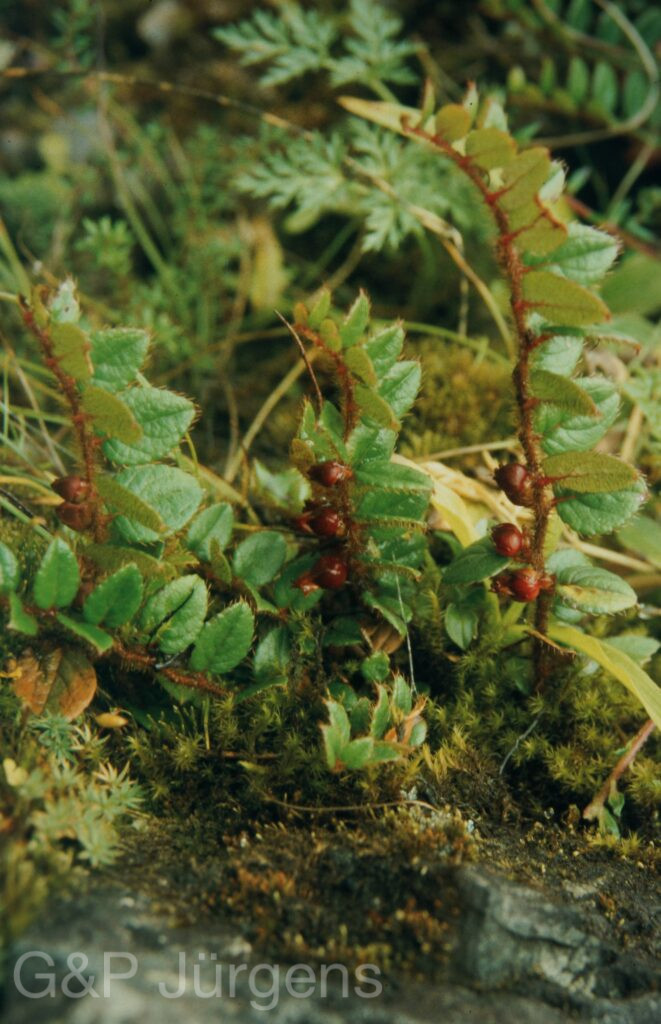
Gaultheria nummularioides D.Don is a prostrate, creeping dwarf shrub of the temperate and subalpine Himalaya and adjacent mountains of East and Southeast Asia. Its range extends through Nepal, NE and NW India, Bhutan, Myanmar and SW China, with outlying records in Malesia (Indonesia, Malaysia) and cultivated occurrences in Japan, Great Britain and the United States; GBIF documents over 1,200 collections across this wide span. It typically grows between 2,000 and 4,000 m in mossy forest margins, on damp rocks, banks and epiphytically on tree trunks, as recorded for the photographed plant from Garhwal at Shertoli, 3,200 m, in September. It favours humid, shaded, acidic substrates and is a characteristic component of Rhododendron–oak understorey and bryophyte-rich rock communities.

The plant forms wiry, much-branched, reddish-brown procumbent stems clothed in stiff brown bristles, rooting at the nodes to form dense mats. Leaves are small, distichous, ovate to rounded (nummularioides referring to the coin-like blade), 5–12 mm long, coriaceous, dark green and glossy above, the margins finely toothed and ciliate. Flowers are solitary and axillary, pendent on short pedicels, the corolla campanulate to urceolate, white tinged pink, 4–5 mm long with five short recurved lobes; the calyx is often reddish. The fruit is a fleshy blue-black berry-like capsule enclosed by the accrescent succulent calyx.

The genus Gaultheria (subfamily Vaccinioideae) is notable for aromatic foliage rich in methyl salicylate; G. nummularioides is locally used as a fragrant and medicinal plant. Its broad Himalayan-to-Malesian distribution illustrates the floristic continuity of the Sino-Himalayan ericaceous element. The species is common and not of conservation concern across most of its range.

Author: D.Don · Sources: POWO (Kew), GBIF, Flora of China Vol. 14, Flora of Bhutan Vol. 2, Flora of Nepal, Airy Shaw: The Gaultheria-Pernettya complex (Kew Bulletin)

Hook.f. & Thomson ex Miq.

Bh09 327 P536
Bhutan Tumching, 3700m June
Bh09 328 G535
Bhutan Tumching, 3700m June
Sikkim 2006 130 ergebnis
India West-Bengal, Molley 3650m, May

Description

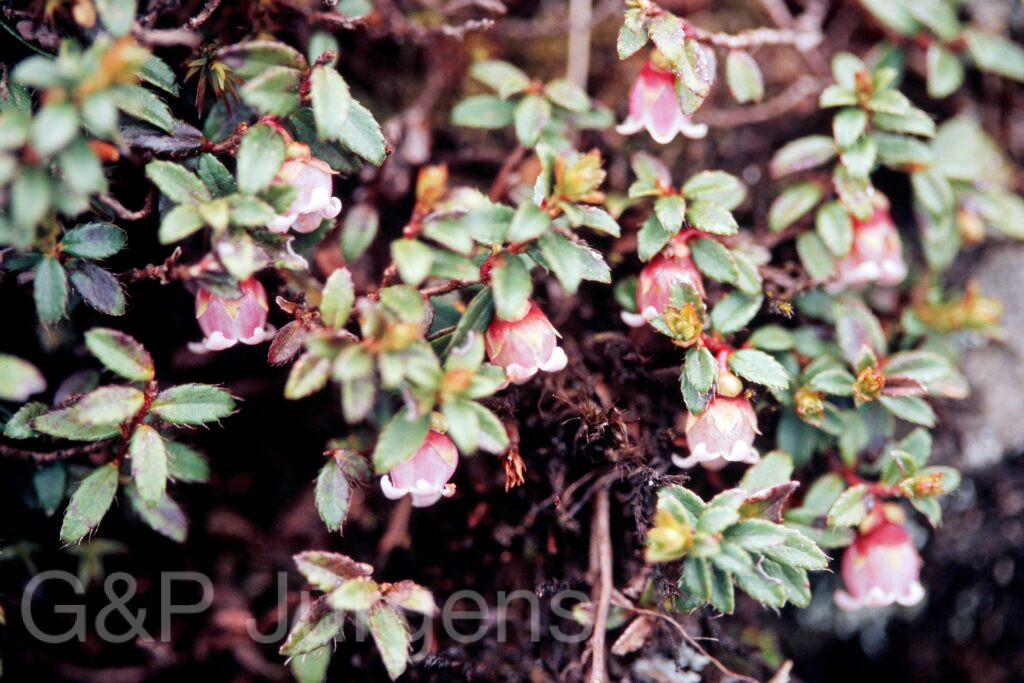
Gaultheria pyroloides is a dwarf evergreen shrublet of the eastern Himalaya and East Asia, with a notably disjunct northern range: its 652 georeferenced records span Japan (JP), China (CN) and the Russian Far East (RU) as well as the core Himalayan countries of Nepal (NP), India (IN) and Bhutan (BT). It is a plant of cool, humid, high-montane to subalpine habitats, growing on mossy banks, in the floor of conifer and rhododendron forest, on humus-rich rocks and at forest margins, generally between about 3000 and 4000 m. The plants documented at Tumching in Bhutan at 3700 m in June and at Molley in West Bengal at 3650 m in May are typical of these shaded, moss-rich montane situations.

It is a low, creeping to ascending undershrub forming mats, with slender, often reddish-bristly stems rooting at the nodes. The leaves are crowded toward the stem tips, more or less rosulate, obovate to broadly elliptic, leathery, glossy, with a finely serrulate, bristle-margined edge and a Pyrola-like aspect that gives the epithet pyroloides. The flowers are usually few, axillary or in short terminal racemes, the corolla urceolate to campanulate, white or pink-flushed, with a five-lobed limb. As in many of its relatives the calyx becomes fleshy and accrescent in fruit, enclosing or partly enclosing the small capsule to form a berry-like, blue to blue-black false fruit attractive to birds.

Gaultheria (Ericaceae, subfamily Vaccinioideae) is exceptionally diverse in the Himalaya, and the prostrate, rosette-leaved species such as G. pyroloides occupy the dwarf, ground-hugging end of the genus's growth-form spectrum. The wide but fragmented distribution into temperate East Asia points to a once more continuous circum-montane forest range. The species is not regarded as threatened, but its reliance on undisturbed, moist forest understorey renders it sensitive to disturbance.

Author: Hook.f. & Thomson ex Miq. · Sources: POWO (Kew), GBIF, Flora of Bhutan, Flora of China, Flora of Japan, Airy Shaw and Fritsch revisions of Gaultheria (Ericaceae)
Royle

Nepal 2001 411 ergebnis ergebnis
Nepal (Gorkha) Barpak 3050m, May
Garh 07 165 ergebnis
India Garhwal Kinkhola 3550m, June

Description

Gaultheria trichophylla is a low, mat-forming dwarf shrub of the high Himalaya, occurring across Nepal, northern India, Bhutan, Pakistan, Myanmar and southwestern China, with disjunct or introduced records from New Zealand, Canada, Chile and France; GBIF documents some 611 collections. It is a plant of open alpine and subalpine slopes, rhododendron scrub margins and humus-rich turf between about 3000 and 4500 m. The photographed material was gathered in central Nepal at Barpak (Gorkha) near 3050 m in May and in the Garhwal Himalaya at Kinkhola around 3550 m in June, on the moist, well-drained, peaty soils it favours under a cool monsoonal climate.

The plant forms compact, prostrate to ascending mats from slender, wiry, much-branched stems that are finely bristly-hairy and root at the nodes. The leaves are small, alternate, crowded, ovate to elliptic, leathery and shining, with a finely toothed, bristly-ciliate margin. Flowers are solitary in the leaf axils, the corolla urceolate to broadly campanulate, pink to pale rose, five-lobed, with a persistent calyx that becomes fleshy in fruit. The fruit is a depressed-globose capsule enclosed by the swollen, berry-like, bright blue calyx, a diagnostic generic feature aiding bird dispersal.

The genus Gaultheria (Ericaceae) is centred on eastern Asia and the Americas, and G. trichophylla belongs to a group of small-leaved alpine species in which the showy fleshy calyx replaces a true berry. Like its relatives it is calcifuge, demanding acidic substrates and forming ericoid mycorrhizal associations. It is widespread and locally abundant across its core Himalayan range and not regarded as threatened.
Author: Royle · Sources: POWO (Kew), GBIF, Flora of China Vol. 14, Flora of Bhutan Vol. 2, Flora of Nepal, Flora of Pakistan, Airy Shaw and Sleumer monograph of Asiatic Gaultheria

Buch.-Ham. ex D.Don

Garh 07 393 ergebnis
India Garhwal Meggu Kichatti 3200m, June 
Garh 07 420 ergebnis
India Garhwal Khiar Kutti 3900m, June

Description

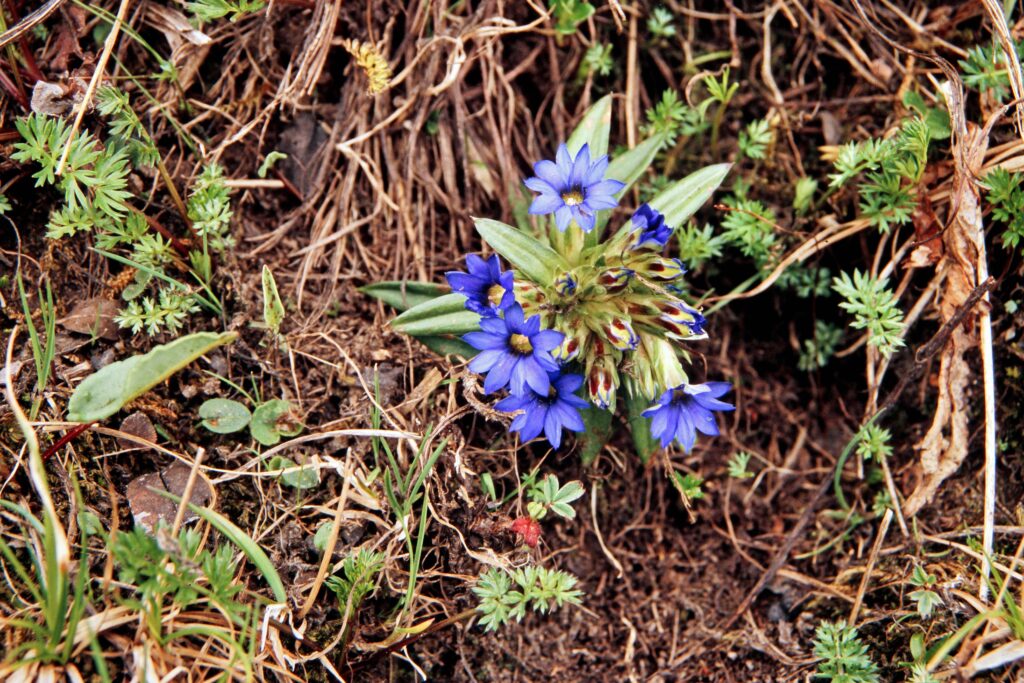
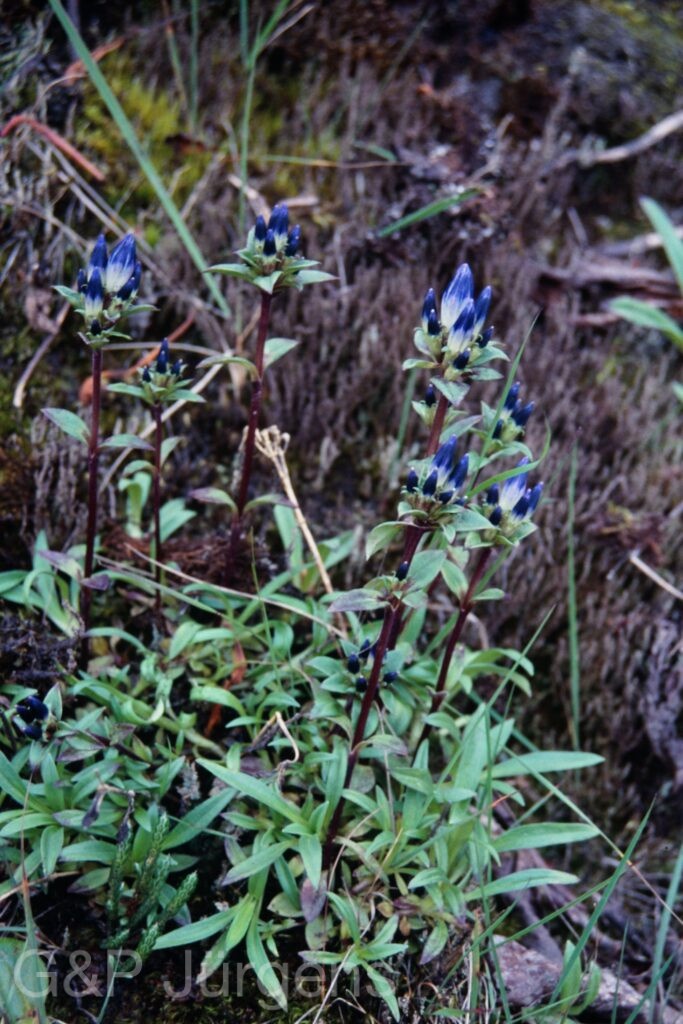
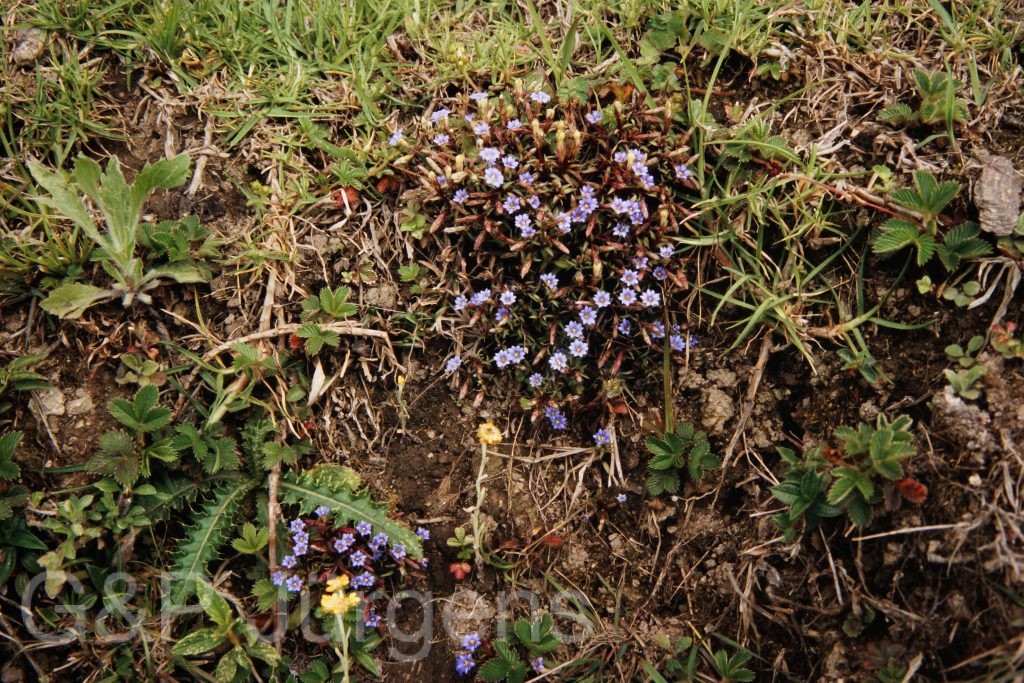
Gentiana capitata is a Himalayan annual gentian distributed across Nepal, India, Bhutan, China and Pakistan and into Myanmar; GBIF records about 206 occurrences spanning the central and eastern Himalaya. It grows on open alpine and subalpine slopes, grassy meadows, terraced banks and pastures, generally between about 2500 and 4000 m. The photographed plants come from Garhwal, India, at Meggu Kichatti (3200 m) and Khiar Kutti (3900 m), both in June, a setting typical of this small monsoon-season gentian, part of the seasonal herb flora of the western Himalayan high meadows in early summer.

The species is a slender annual with erect, often few-branched, quadrangular stems arising from a fine root system. The leaves are opposite, sessile, ovate to lanceolate, the basal pairs sometimes forming a loose rosette. The flowers are clustered into a dense, head-like or capitate terminal cyme that gives the species its name, sometimes with additional flowers in the upper axils. Each flower has a tubular to funnel-shaped, pale blue to bluish-mauve corolla with five spreading lobes and small plicate folds between them; the calyx is tubular with five teeth. The fruit is a stalked, two-valved capsule releasing numerous minute seeds.

Gentiana capitata Buch.-Ham. ex D.Don belongs to the annual, small-flowered Himalayan section of the genus characterised by capitate inflorescences and plicate corollas. Widespread and locally common across the Himalaya, it tolerates grazed and disturbed ground and is of no conservation concern. As an annual it depends on regular seed production and the brief monsoon season, and it is a familiar component of the high-meadow flora pollinated by insects drawn to its blue flower clusters.

Author: Buch.-Ham. ex D.Don · Sources: POWO (Kew), GBIF, Flora of China, Flora of Nepal, Halda: The Genus Gentiana

Royle

Nepal 95 380 P673 ergebnis
Nepal Jaisuli Kund 4200m, October

Description

Gentiana coronata is a Himalayan alpine gentian distributed across the western and central Himalaya, from Pakistan through northern India (Kashmir, Himachal Pradesh, Uttarakhand) to Nepal. GBIF records 52 occurrences from India, Pakistan, and adjacent regions. The species typically grows in alpine meadows, moist grassy slopes, and along stream margins at elevations of 3,500–4,800 m. The photograph from Jaisuli Kund in Nepal at 4,200 m, taken in October, captures the species in its characteristically late flowering season when most alpine herbs have already set seed.
The plant is an annual or biennial herb, 5–15 cm tall, with erect or ascending stems that are simple or sparingly branched from the base. Basal leaves are ovate to elliptic, forming a loose rosette; cauline leaves are opposite, sessile, ovate-lanceolate, 8–20 mm long, with acute apices. Flowers are solitary and terminal or few in upper leaf axils, sessile or subsessile. The calyx is tubular, 10–15 mm long, with five lanceolate lobes. The corolla is tubular-campanulate, 20–30 mm long, pale blue to deep azure, with conspicuous plicae (inter-lobe folds) that are fringed or laciniate, forming the corona-like structure alluded to in the specific epithet. Stamens five, inserted at the middle of the corolla tube. The capsule is stipitate, ellipsoid.
Gentiana coronata belongs to section Chondrophyllae and is part of a complex of small annual gentians that diversified extensively in the high-altitude environments of the Himalaya and Tibetan Plateau. Its late-season phenology is ecologically significant, as it provides nectar resources for pollinators at a time when floral availability is minimal. The species is considered locally common in suitable habitats but faces potential long-term threats from climate-induced shifts in alpine vegetation zones.

Sources: POWO (Kew), GBIF, Flora of Pakistan Vol. 197, Ho & Pringle: Gentianaceae in Flora of China Vol. 16

D.Don

Nepal 95 367 P653 ergebnis
Nepal Pansing 3150m, October
Nepal 95 368 P654 ergebnis
Nepal Pansing 3150m, October
Nepal 95 420 P733 ergebnis
Nepal Pansing 3150m, October

Description

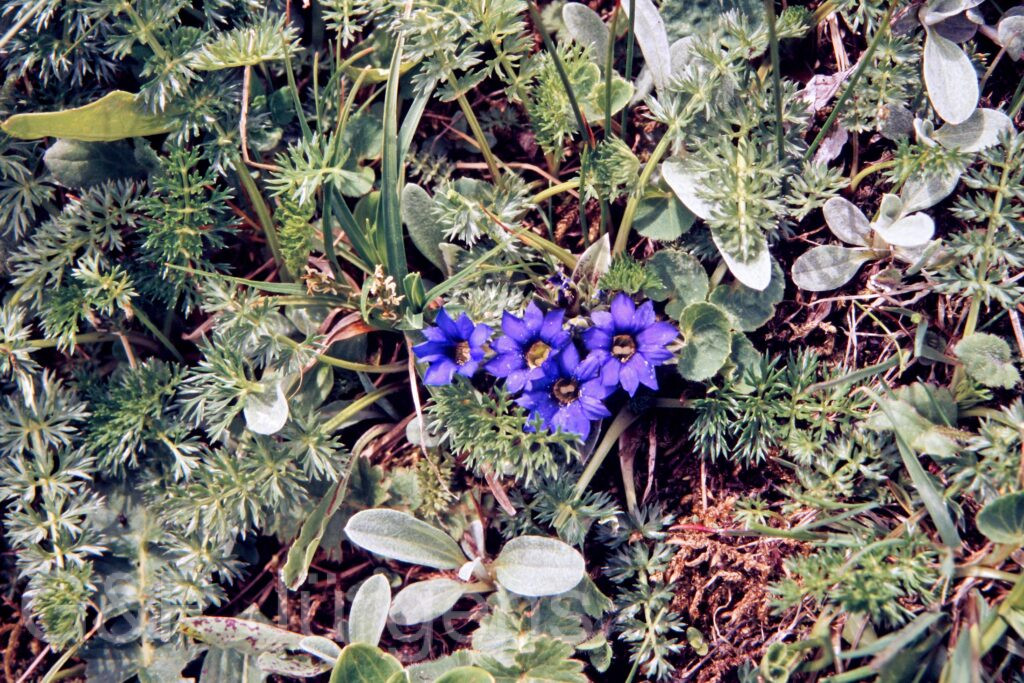
Gentiana depressa is a cushion-forming alpine gentian of the Himalaya, native to Nepal, India, China and Bhutan, the c. 301 georeferenced records tracing a range across the central and eastern high ranges. It grows in open alpine turf, on grassy and stony slopes, banks and amongst dwarf shrubs, generally between about 3000 and 4500 m, and is a notable autumn-flowering species. The plant was photographed at Pansing in Nepal at 3150 m in October, a season and elevation typical of the species, which produces its broad flowers late in the year as the surrounding herbage senesces.

It is a low, prostrate perennial forming dense mats, with creeping, much-branched stems clothed in crowded, small, ovate to elliptic leaves arranged in tight rosettes and overlapping pairs. The flowers are large relative to the plant and sit terminally, almost sessile within the leaf cluster, depressing the foliage around them (depressa). The corolla is broadly campanulate to funnel-shaped, pale greenish-yellow to whitish or sky-blue, conspicuously speckled and streaked within, with five short lobes separated by small plicate folds (plicae). The calyx is tubular and five-toothed; the fruit is a many-seeded capsule, often on a short stipe, releasing fine winged seeds.

Gentiana (tribe Gentianeae) is divided into numerous sections, and G. depressa belongs to the Himalayan autumnal cushion gentians of section Frigida and allies, distinguished by their plicate corollas and prostrate, mat-forming habit. The broad pale flowers borne flat against ground level are an adaptation to the cold, wind-exposed late-season alpine environment, maximising warmth for the developing capsule. Widespread and locally common across its range, the species is not regarded as threatened, though specialised cushion-formers are sensitive to trampling and climatic warming.

Author: D.Don · Sources: POWO (Kew), GBIF, Flora of China, Annotated Checklist of the Flowering Plants of Nepal, Ho & Liu monograph of Gentiana

C.B.Clarke

Sikkim2003 164 G219
Sikkim Dzongri 4000m, August
Sikkim2003 165 P220
Sikkim Dzongri 4000m, August

Description

Gentiana elwesii is an eastern Himalayan gentian recorded from Nepal (NP), Bhutan (BT), India (IN) and China (CN), with 100 GBIF occurrences reflecting its restricted high-mountain range. It is a plant of alpine meadows, open turf, grassy slopes and rocky pastures in the upper subalpine and alpine zones, generally between about 3500 and 4500 m. The illustrated material was collected at Dzongri in Sikkim at roughly 4000 m in August, when many Himalayan autumnal gentians come into flower at the close of the monsoon.

It is a small annual or biennial herb with a slender, erect to ascending, often branched stem arising from a basal rosette. The leaves are small, ovate to lanceolate, opposite and sessile, the rosette leaves frequently larger than the cauline ones. The flowers are borne singly or few together at the stem and branch apices; the calyx is tubular with narrow lobes, and the corolla is funnel-shaped to narrowly campanulate, typically blue to purplish-blue, with five spreading lobes alternating with smaller, fringed or toothed plicae in the sinuses, a diagnostic feature of the autumn-flowering gentians. The fruit is a stipitate, two-valved capsule releasing numerous minute seeds.

Gentiana elwesii belongs to the species-rich annual gentians (section Chondrophyllae and allies) that characterise Himalayan alpine grasslands, a group noted for intricate corolla-plait morphology and bee pollination. The Sino-Himalayan region is a global centre of Gentiana diversity, and such narrow-range alpine annuals are valuable indicators of high-elevation grassland habitats sensitive to grazing and climatic change.

Author: C.B.Clarke · Sources: POWO (Kew), GBIF, Flora of China, Flora of Nepal, Flora of Bhutan, Ho & Liu Worldwide Monograph of the genus Gentiana

Franch.

Bh2008 446 G697
Bhutan Gogona, 3400m April
BH2008 537 G815
Bhutan Limbukha, 2200m April
Bh2008 538 P816
Bhutan Limbukha, 2200m April

Description

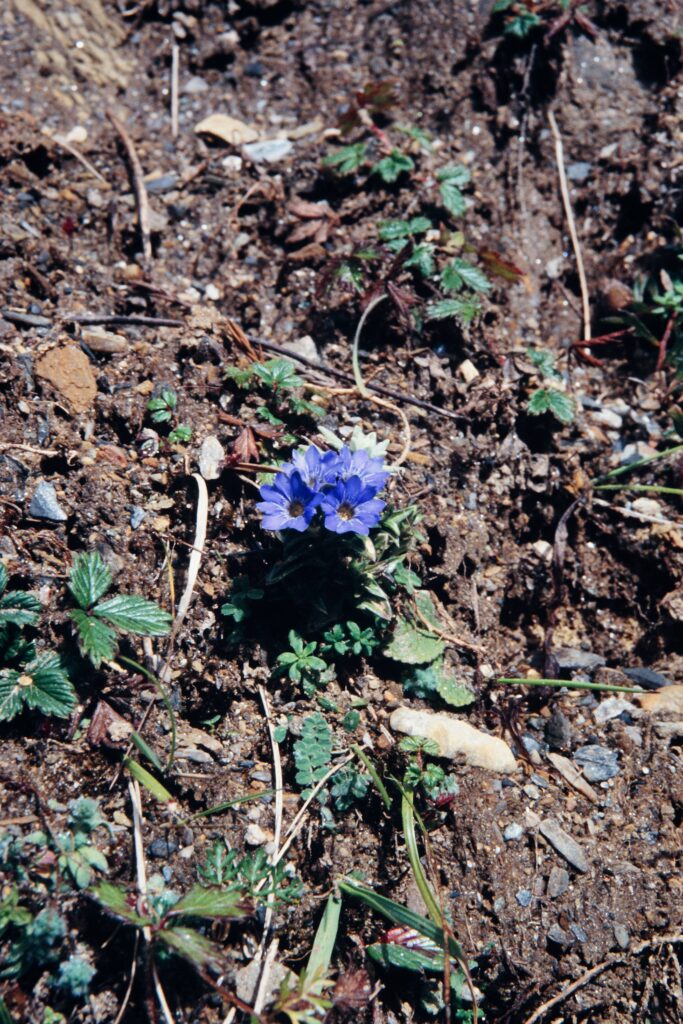
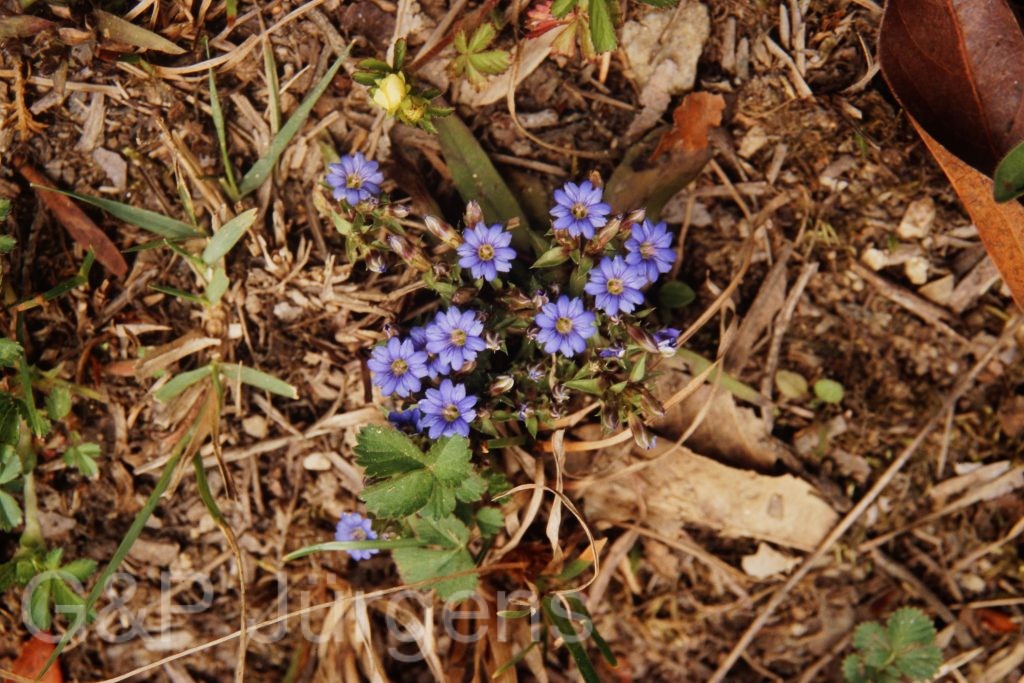
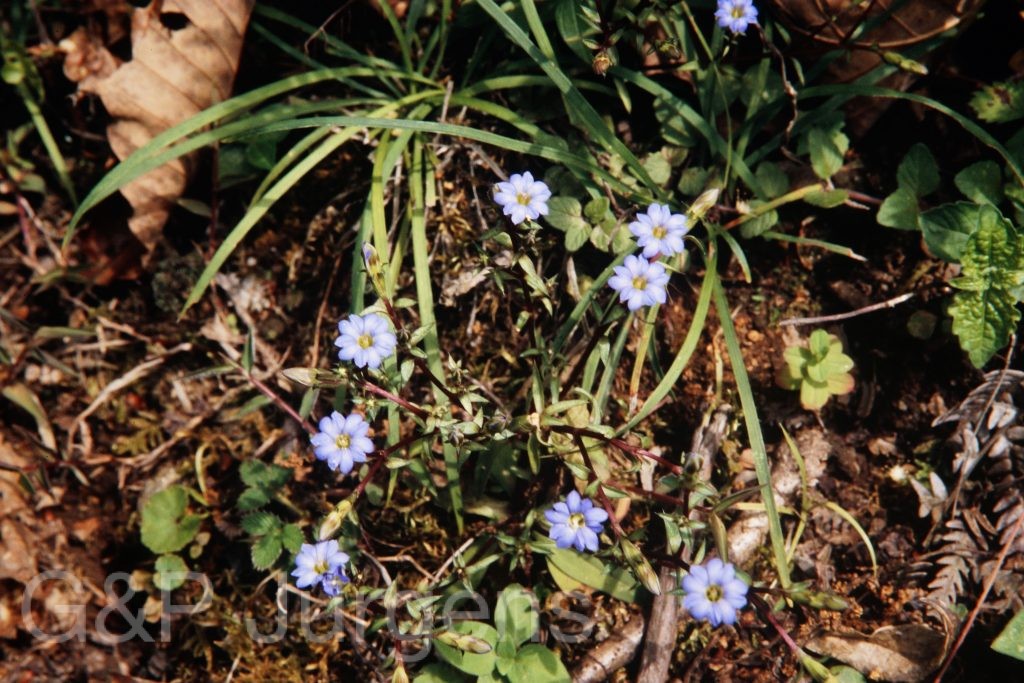
Gentiana maeulchanensis is a small annual or biennial gentian of the eastern Himalaya and adjacent China, known from a comparatively modest 60 records spanning China, Bhutan, India and Myanmar. It occupies open meadows, grassy banks, terraced field margins and moist disturbed ground, generally between 2000 and 3600 m, flowering early in the season before the monsoon. The illustrated plants were collected in Bhutan at Gogona (3400 m) and at Limbukha (2200 m), both in April, the latter site lying among the lower cultivated valleys where the species descends to its altitudinal minimum.

The plant is a slender, often branched herb a few centimetres to about 20 cm tall, with a basal rosette and small opposite cauline leaves that are ovate to spathulate with cartilaginous, often whitish margins. The flowers are solitary and terminal or borne in lax cymes; the calyx is tubular with a membranous keel and unequal lobes. The corolla is funnelform to campanulate, blue to pale violet, with five spreading lobes alternating with shorter, fringed or toothed plicae in the sinuses, a defining feature of the section. The capsule is exserted on a stipe at maturity and releases numerous minute seeds.

The species belongs to the predominantly annual Himalayan-Chinese assemblage of small gentians, where it is distinguished by its plical fringing and early phenology. Such early flowering exploits the brief window before competing monsoon vegetation, and the flowers are pollinated by early-emerging insects. With a restricted but stable distribution, it has not been assessed but warrants attention where its lower-elevation habitats are subject to agricultural change.

Author: Franch. · Sources: POWO (Kew), GBIF, Flora of China, Flora of Bhutan, Annotated Checklist of the Flowering Plants of Nepal, Ho & Liu monograph of Gentiana