Dumort.
Description
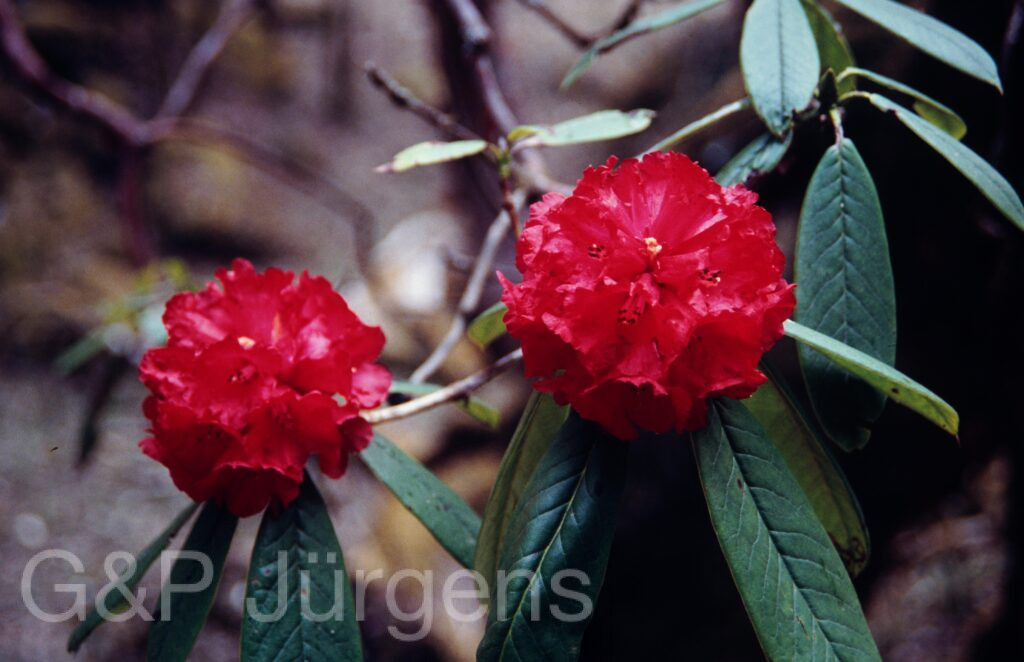
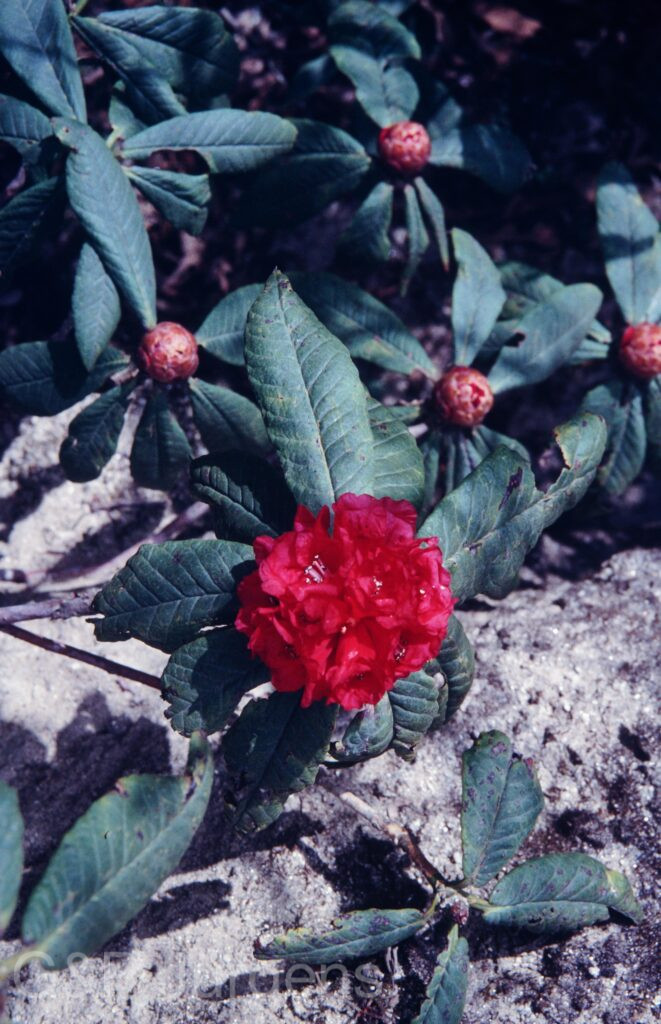
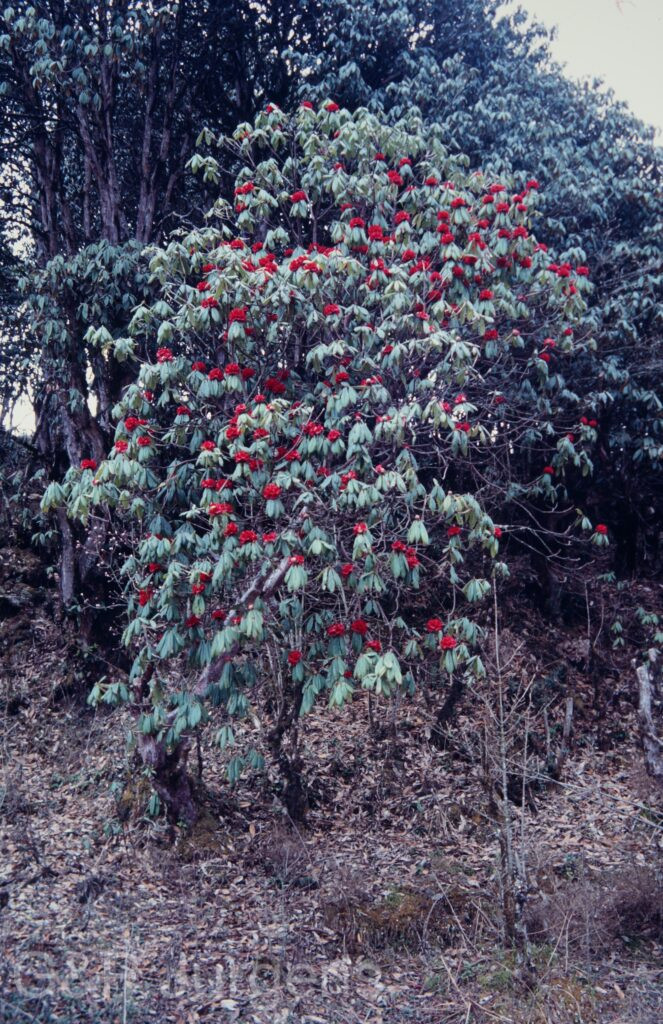
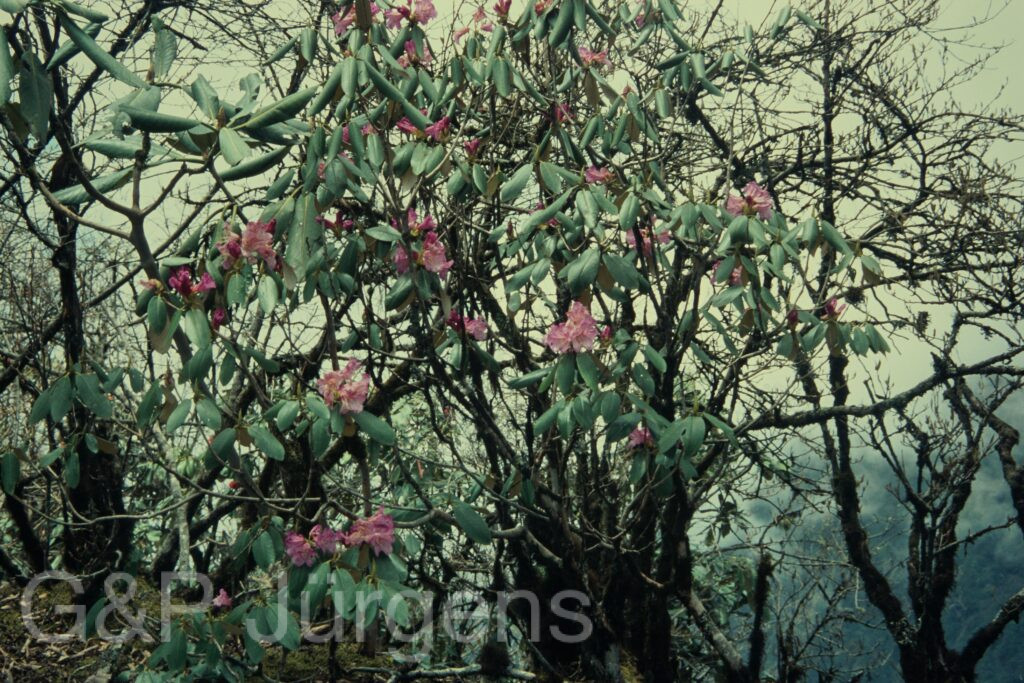
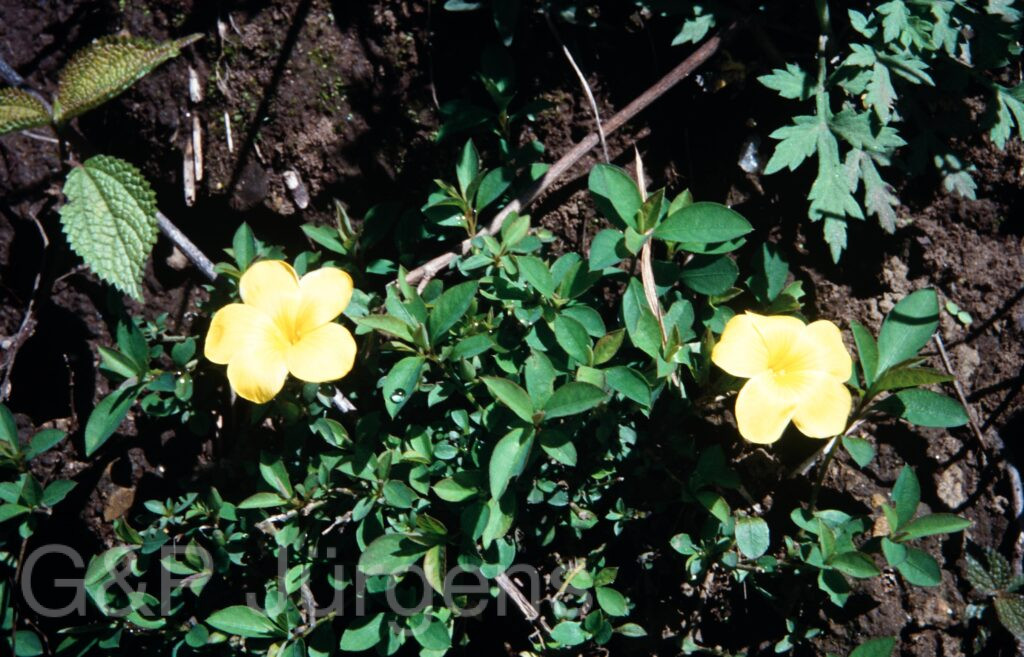
Reinwardtia indica Dumort., the yellow flax, is a subshrub of the flax family widely distributed through the Himalaya and the mountains of southern China and Southeast Asia. GBIF documents it in India, Nepal, Bhutan, Pakistan, China, Myanmar and Thailand, with numerous extralimital records reflecting its frequent cultivation as an ornamental. It grows on shaded banks, forest margins, hillside scrub and roadside slopes in the subtropical to lower temperate zone, generally between about 800 and 2,300 m. The plant from Gunda in the Gorkha district of Nepal at 1,700 m, flowering in May, is typical of its hill-forest habitat, though it also flowers conspicuously in the cooler months.
The species is a low, much-branched perennial subshrub to about 1 m tall with slender, glabrous green stems. The leaves are alternate, elliptic to obovate, entire or minutely toothed, with small caducous stipules. The bright golden-yellow flowers are borne singly or in few-flowered axillary and terminal clusters; each has five sepals, five large obovate petals that are fugacious (lasting only a day), and stamens united below into a tube with alternating staminodes. The fruit is a septicidal capsule splitting into several one-seeded segments.
Reinwardtia is a small genus of one or two species closely allied to Linum, distinguished by its woody habit and persistent yellow flowers. R. indica is much grown in gardens and is used in folk medicine and as a dye source. It is widespread, frequently semi-naturalised through cultivation, and of no conservation concern.
Author: Dumort. · Sources: POWO (Kew), GBIF, Flora of China Vol. 11, Flora of Pakistan, Mildbraed: Linaceae in Das Pflanzenreich