
(D.Don) H.Li & A.Hay
Description
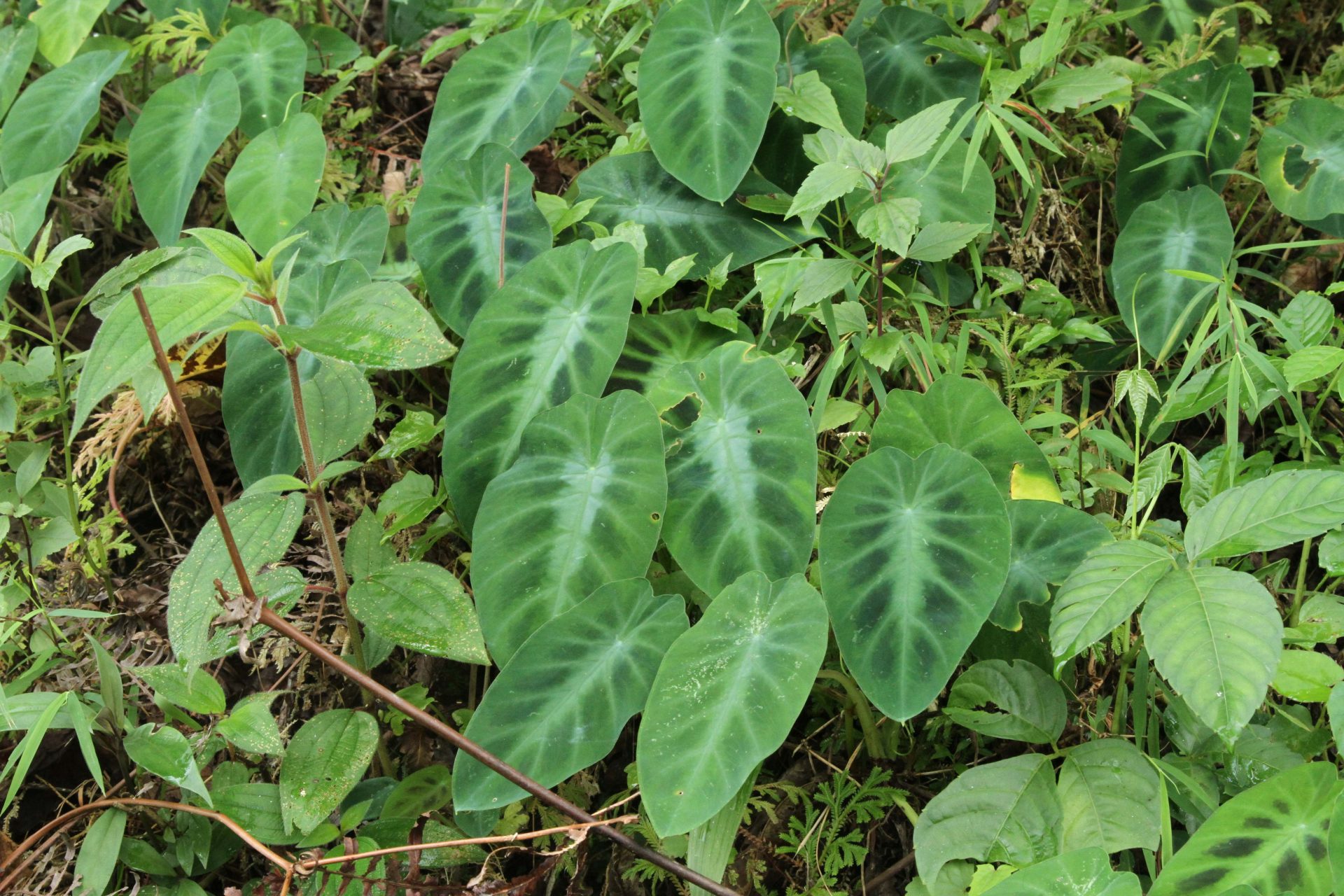
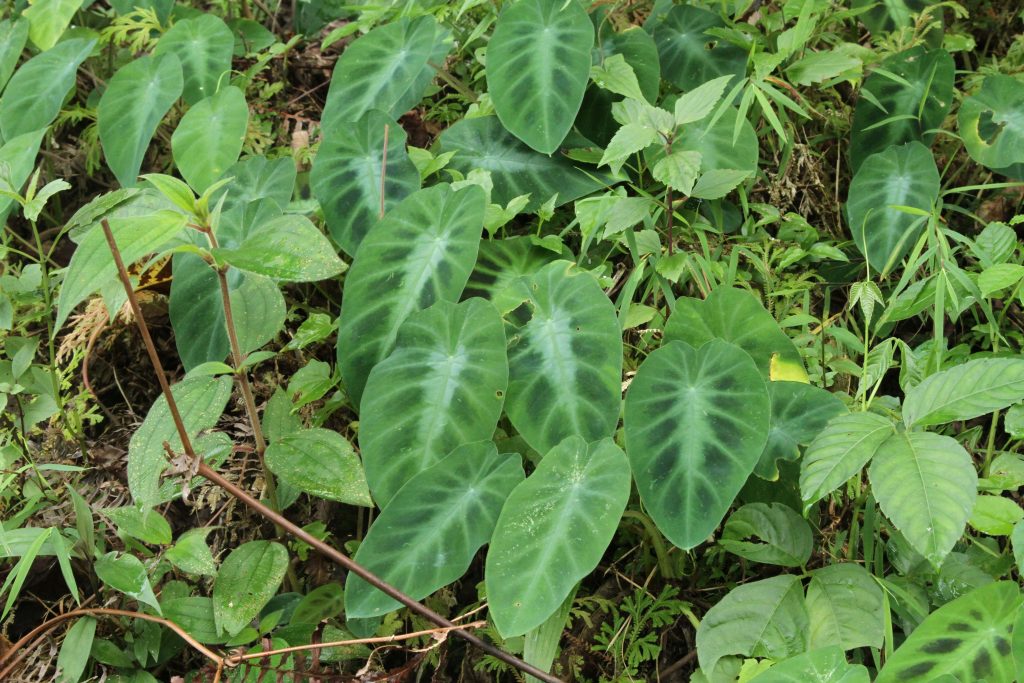
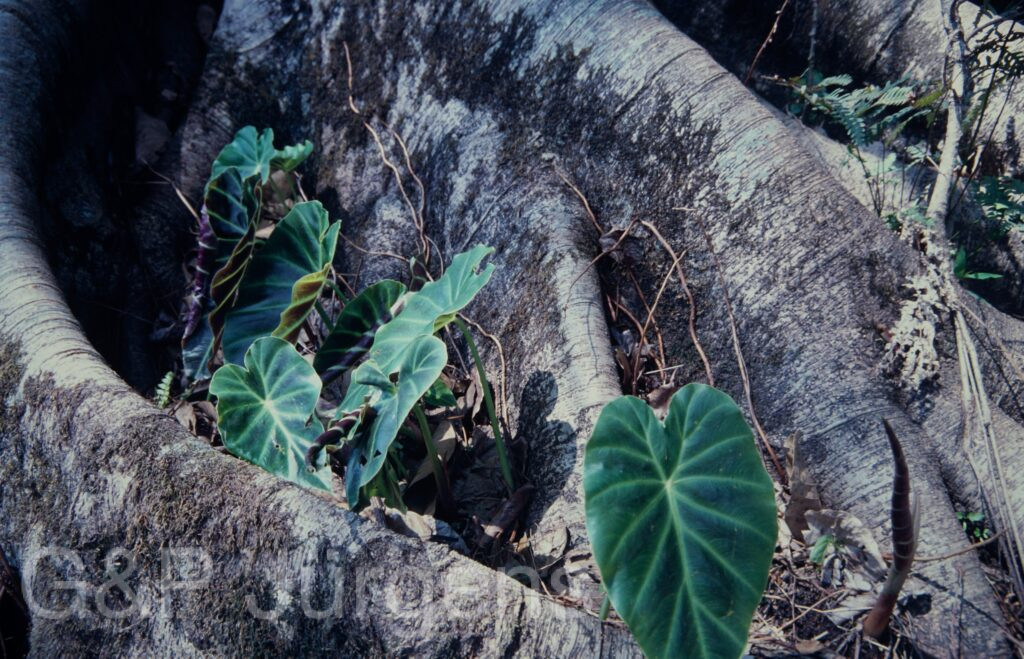
Remusatia pumila (D.Don) H.Li & A.Hay is a small tuberous aroid of the eastern Himalaya and Indo-Burmese region, documented by about 269 records spanning India, Nepal, Bhutan, China, Myanmar, Thailand, Malaysia, Indonesia and Vietnam, with naturalised reports elsewhere. It grows as a lithophyte and epiphyte on mossy rocks, boulders and tree trunks in humid broad-leaved and subtropical forest, favouring shaded, seepage-moistened microsites. The cited gatherings from Galephu in southern Bhutan at 850 m in October and the Mewa Khola of East Nepal at 1900 m in April reflect its span across the warm-temperate to subtropical foothill belt.
The plant is a diminutive geophyte arising from a small subglobose tuber that produces clusters of bulbil-bearing structures. The leaves are few, with slender petioles and ovate to ovate-cordate, peltate or sagittate blades. As in all Remusatia, vegetative reproduction is conspicuous: erect to spreading bulbiliferous shoots bear numerous hooked, scale-covered bulbils that detach and disperse epizoochorously. The inflorescence is a spathe enclosing a spadix with basal female and upper male flower zones separated by sterile flowers; flowering is comparatively infrequent relative to the prolific bulbil production.
The species was long placed in Gonatanthus, a genus now subsumed within Remusatia, the combination reflecting molecular and morphological reassessment of the tribe Colocasieae. Reliance on hooked bulbils for dispersal by passing animals is a key adaptation to its epilithic and epiphytic, often ephemerally exposed habitats. Widespread and locally frequent, it is not considered threatened, though its dependence on undisturbed humid forest links its persistence to lowland and submontane habitat integrity.
Author: (D.Don) H.Li & A.Hay · Sources: POWO (Kew), GBIF, Flora of China, Flora of Bhutan, Flora of Nepal, Araceae of the Indian subcontinent / monograph of Remusatia and Colocasieae