Tag:

Subalpine (2500-3500 m)

Yeo

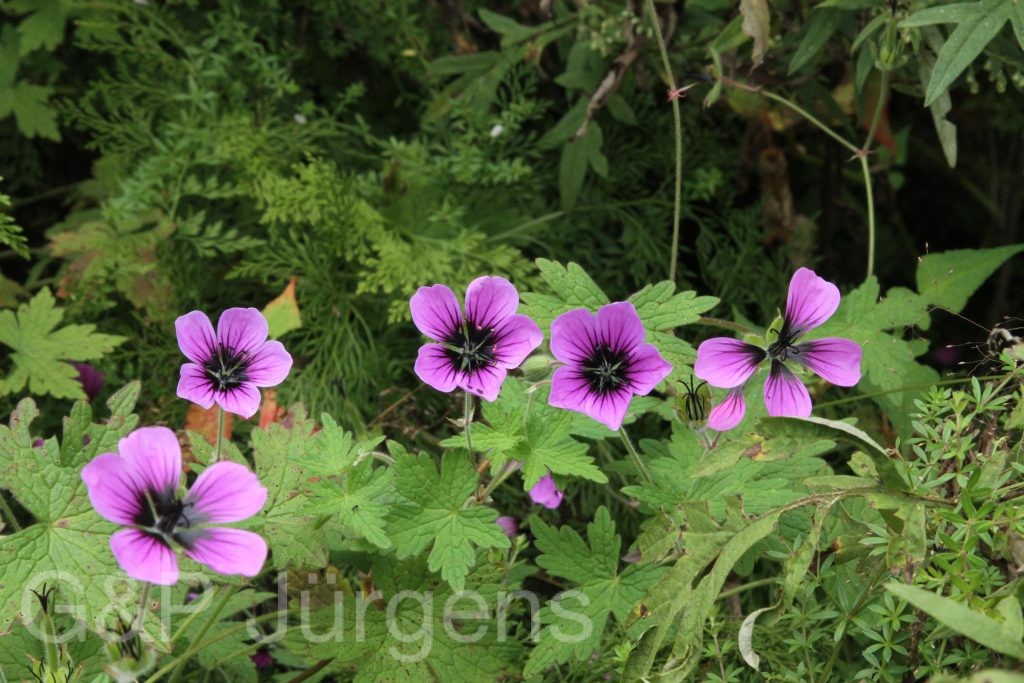
Bhutan2012 336
Bhutan Haar-Valley, 3200m September
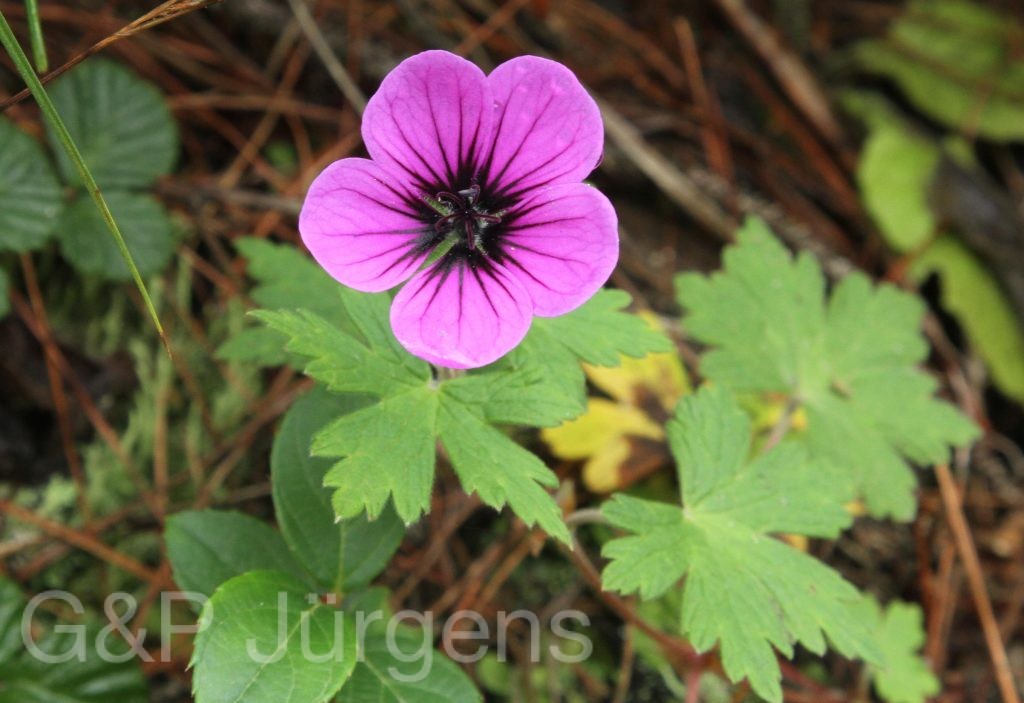
Bhutan2012 165
Bhutan Haar-Valley, 3200m September
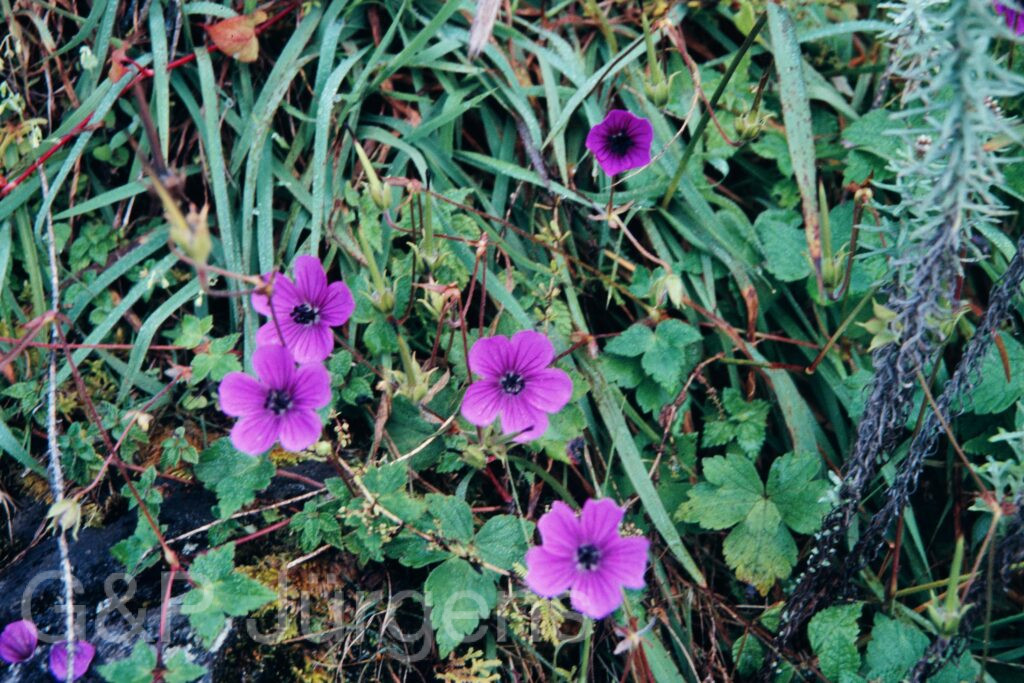
Nepal 95 117 P205 ergebnis
Nepal south of Rupien La 3400m October

Description

Geranium procurrens is a trailing perennial of the central and eastern Himalaya, native to Nepal, Bhutan, India and adjacent China, with around 192 recorded occurrences and a scatter of cultivated or naturalised records farther afield reflecting its garden popularity. It grows in subalpine and upper temperate habitats, among forest margins, shrubberies, banks and open slopes where it scrambles over surrounding vegetation, flowering late into the autumn. The species is well represented in the high Himalaya, as shown by collections from the Haa (Haar) Valley in Bhutan at about 3200 m in September and from south of the Rupien La in Nepal at around 3400 m in October.

The plant is distinctive for its long, prostrate, procumbent stems that root at the nodes and form sprawling mats, giving the epithet procurrens. The leaves are long-petiolate with an orbicular blade deeply palmately five- to seven-lobed, the lobes themselves toothed or further divided, and marked above with a darker zone. The flowers are borne on slender pedicels and have five spreading obovate petals of deep magenta to purplish-crimson with darker veining and a near-black centre, surrounding ten stamens and a beaked ovary. The fruit is the characteristic geranium schizocarp, the long rostrate beak splitting elastically into five mericarps that catapult the seeds.

Geranium procurrens was described by Yeo, the monographer of the genus, and is closely allied to the magenta-flowered Himalayan species of section Polyantha. Its nodal rooting and stoloniferous habit, unusual among hardy geraniums, enable extensive vegetative spread and have made it a vigorous ground-cover plant in cultivation, where it has given rise to garden hybrids. In the wild it remains a locally common montane species of no particular conservation concern, valued ecologically as a late-flowering nectar source for high-altitude pollinators.

Author: Yeo · Sources: POWO (Kew), GBIF, Flora of Bhutan Vol. 2, Flora of Nepal, Flora of China Vol. 11, Yeo monograph Hardy Geraniums

D.Don

Garw 2005 271 ergebnis
India Garhwal Kunol 2650m, October

Description

Geranium wallichianum is a perennial cranesbill native to the Himalaya and adjacent mountain systems, distributed from Afghanistan and Pakistan through northern India (Kashmir, Himachal Pradesh, Uttarakhand) to Nepal, Bhutan, and southwestern China. It inhabits alpine and subalpine meadows, forest margins, open shrublands, and grassy slopes at elevations of 2,000–4,000 m, frequently forming extensive patches in disturbed and grazed areas. The species has been documented near Kunol in the Garhwal Himalaya at 2,650 m, where it flowers late into the autumn season in October.
The plant is a spreading to trailing perennial herb with a thick, woody rootstock and procumbent to ascending stems 20–60 cm long, covered in retrorse or patent hairs. Leaves are long-petiolate, orbicular in outline, 5–10 cm in diameter, deeply palmately divided into five to seven rhombic, further lobed and toothed segments. The flowers are large and showy, 3–4 cm in diameter, borne singly or in pairs on long, glandular-hairy pedicels. Petals are five, broadly obovate, typically violet-blue to lavender with a conspicuous white centre and darker veins radiating from the base. Stamens are ten with dark anthers. The fruit is a schizocarp with a persistent beak (rostrum) 2–3 cm long; at maturity the five mericarps separate elastically, each retaining a single seed.
Geranium wallichianum is among the most horticulturally significant Himalayan cranesbills, widely cultivated in temperate gardens worldwide since the nineteenth century. The cultivar 'Buxton's Variety' (syn. 'Buxton's Blue'), selected for its clear blue flowers with prominent white eyes, has received the Royal Horticultural Society's Award of Garden Merit and remains one of the most popular autumn-flowering hardy geraniums. In its native range, the species is ecologically important as a ground-cover plant that stabilizes soil on slopes and provides late-season nectar for pollinators. It is named after the Danish botanist Nathaniel Wallich, who collected extensively in Nepal and India.

Author: D.Don · Sources: POWO (Kew), GBIF, Flora of China Vol. 11, Yeo: Hardy Geraniums (2002), Annotated Checklist of the Flowering Plants of Nepal

King & Pantl.

Bhutan2012 347
Bhutan Dochu-La 3000m, September

Description

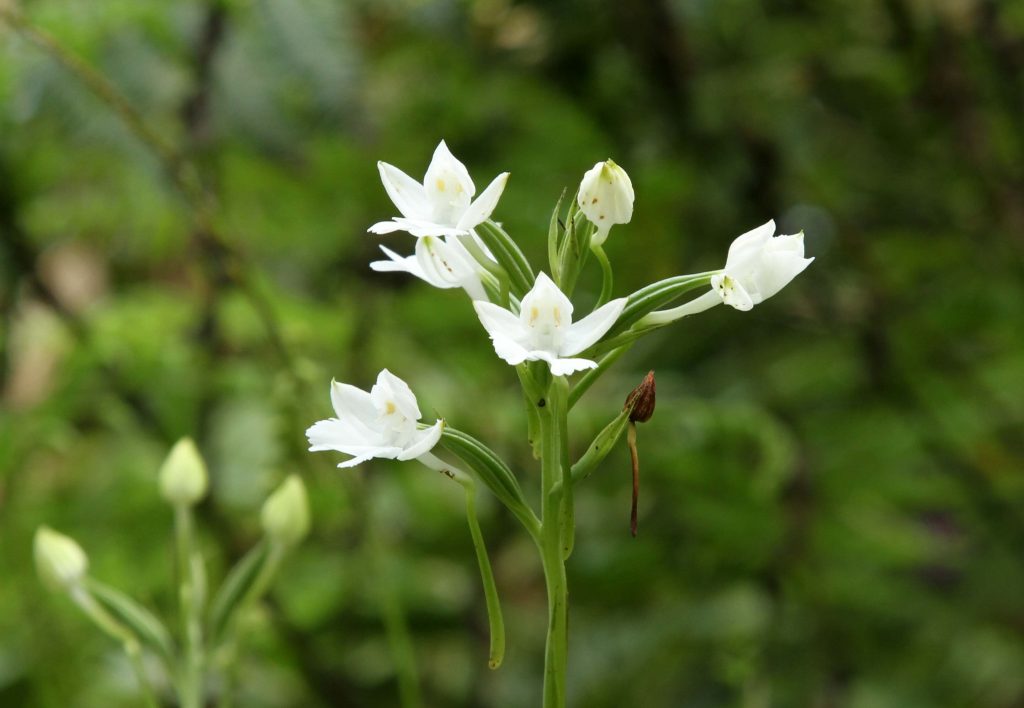
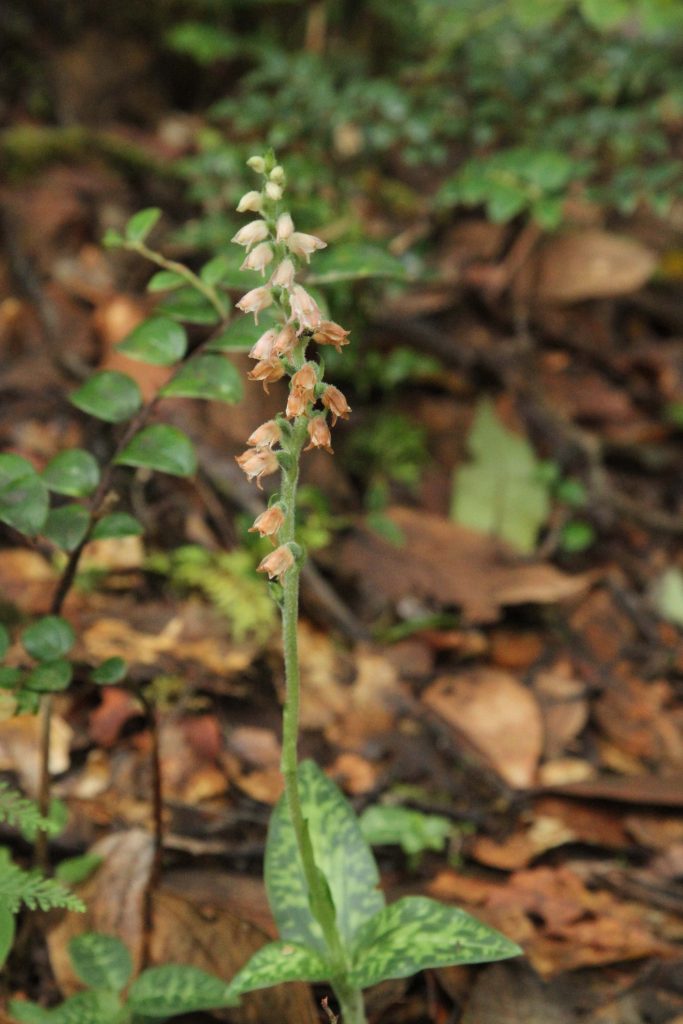
Goodyera hemsleyana is a terrestrial orchid of the cool, humid temperate forests of the eastern Himalaya and adjoining southwestern China. Documented occurrences (21 GBIF records) span India, Nepal, China, Bhutan and Myanmar, following the moist mid- to upper-montane belt of the Sino-Himalayan region. The species favours the deep, mossy humus and leaf litter of shaded broadleaved and mixed conifer forest, typically between about 2500 and 3500 m. The illustrated material was gathered at Dochu-La in western Bhutan at roughly 3000 m in September, a pass clothed in cloud forest where rhododendron and fir provide the shade and atmospheric moisture this orchid requires.

The plant is a small, creeping geophyte arising from a slender, fleshy, decumbent rhizome that roots at the lower nodes. The leaves are few, gathered toward the base, ovate to elliptic, and characteristically marked with a fine reticulate venation that distinguishes the 'jewel orchid' alliance. The erect inflorescence is a pubescent scape bearing a rather lax, secund raceme of small white to greenish-white flowers. Each flower shows the connivent dorsal sepal and petals forming a hood over the column, spreading lateral sepals, and a saccate, concave lip with an incurved, often shortly bifid apex; the ovary is glandular-hairy and twisted.

Goodyera is a large, near-cosmopolitan genus within tribe Cranichideae, subtribe Goodyerinae, and G. hemsleyana belongs to the assemblage of Himalayan species described from the King & Pantling collections. Like its congeners it is mycoheterotrophic in establishment, dependent on rhizoctonia-type fungal symbionts in the forest humus, which restricts it to undisturbed old-growth stands. Though not formally assessed as threatened, its reliance on intact mossy forest makes it sensitive to logging and grazing pressure across its range.

Author: King & Pantl. · Sources: POWO (Kew), GBIF, Flora of Bhutan, Flora of China, The Orchids of Bhutan (Pearce & Cribb)

Lindl.

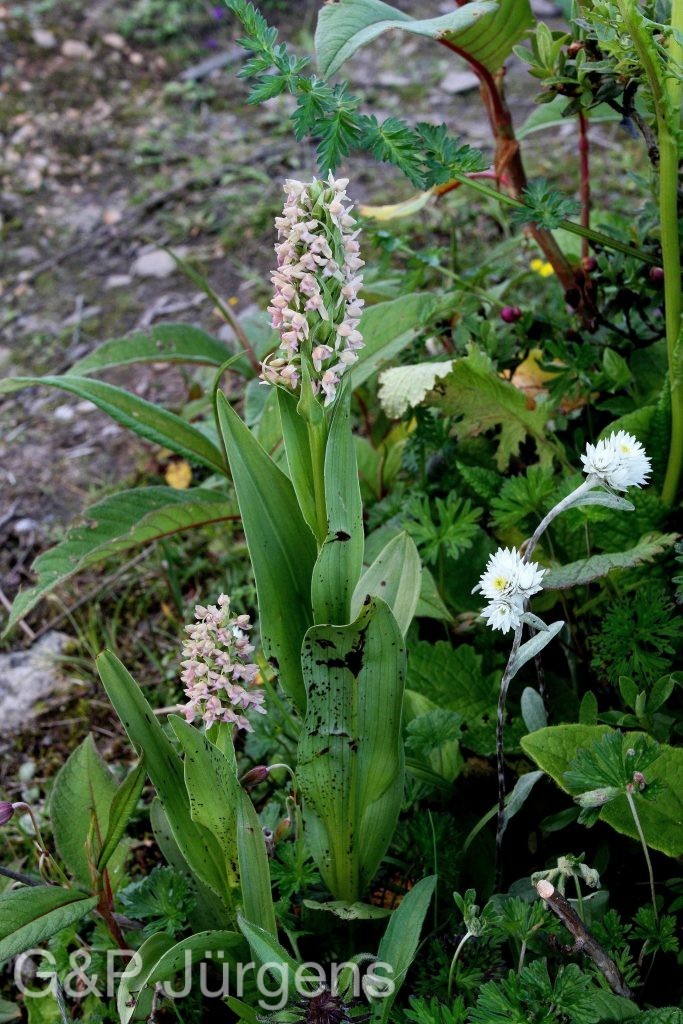
BhutanPG2011 801 01 01
Bhutan Chele-La, 3800m July
also included: Anaphalis busua (D.Don) DC. and Anemone demissa Hook.f. & Thomson
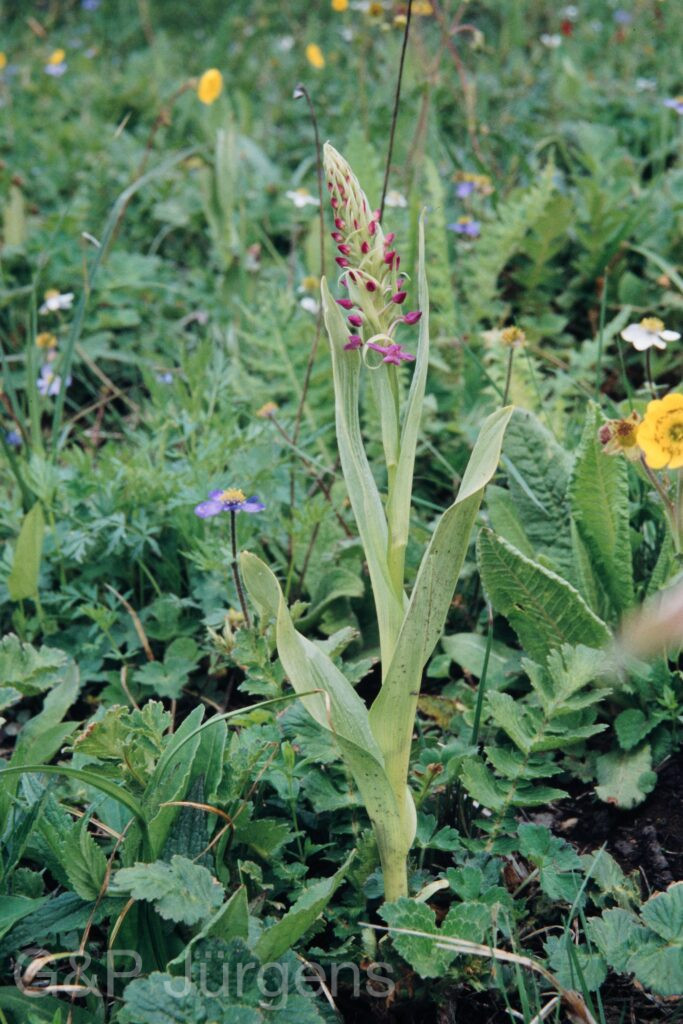
Nepal 99 371 ergebnis
West-Nepal Linji-Khola 3400m, June
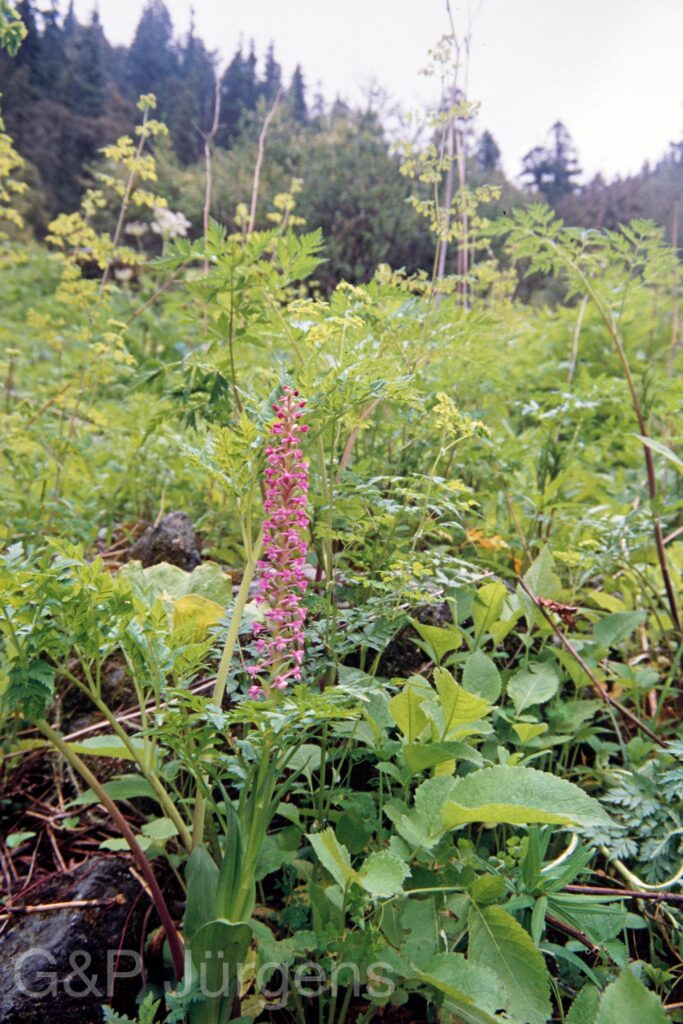
Nepal 99 474 ergebnis
West-Nepal Churta-Khola 3200m, June

Description

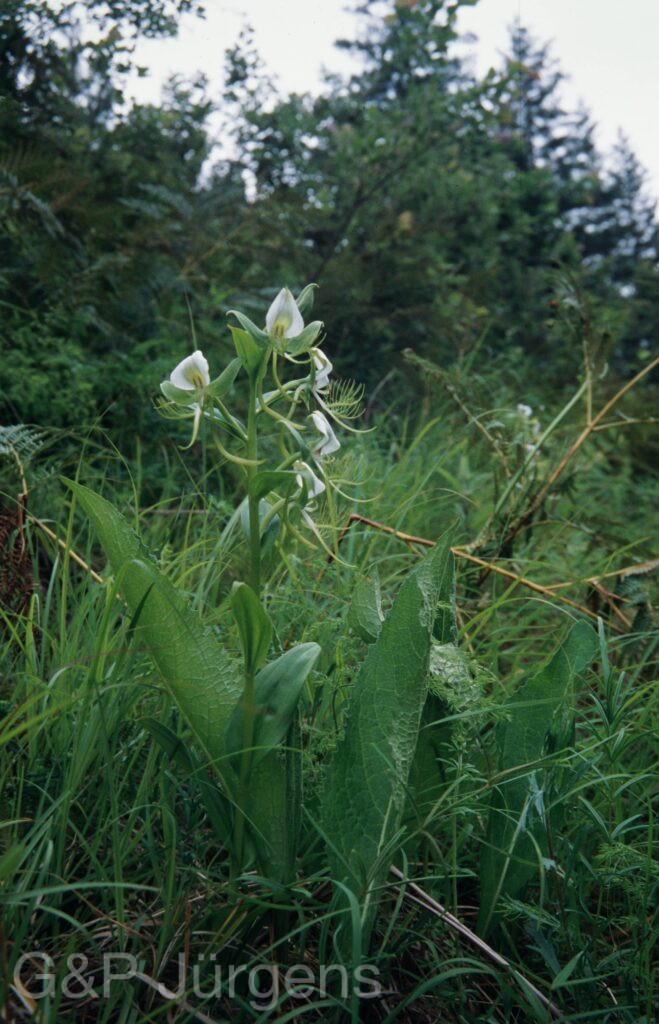
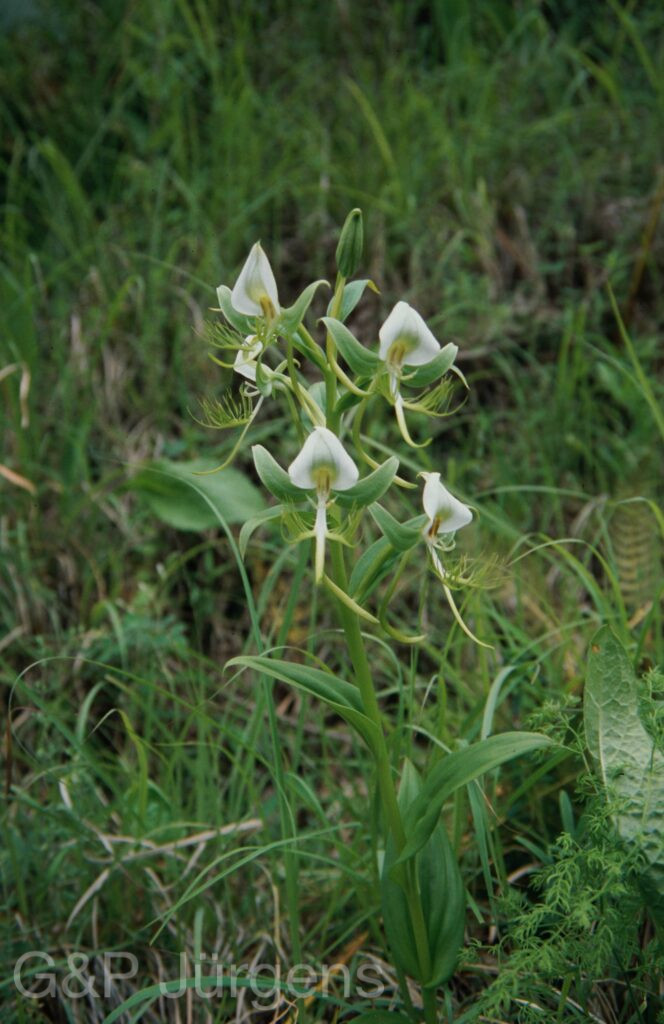
Gymnadenia orchidis is a terrestrial orchid of the Himalaya and adjacent China, distributed through China, Nepal, India, Bhutan, Myanmar and Pakistan, with GBIF documenting some 795 occurrences. It is a plant of open alpine and subalpine meadows, grassy slopes, forest clearings and damp turf, growing in full sun to light shade on humus-rich soils. The species occupies the upper montane to alpine zone; the photographed material from the Chele-La pass in Bhutan at about 3800 m in July, sharing its habitat with Anaphalis busua and Anemone demissa, and from the Linji-Khola and Churta-Khola valleys of West Nepal at 3200-3400 m in June, illustrates its summer flowering across this high-elevation belt.

The plant arises from palmately lobed, fleshy root-tubers and bears an erect, leafy stem. The leaves are several, oblong to lanceolate, sheathing at the base and reduced upward to bracts. The inflorescence is a dense, cylindrical terminal spike of many small flowers, ranging in colour from purple and pink-magenta to occasionally white. Each flower has spreading lateral sepals, a hooded arrangement of the dorsal sepal and petals, and a trilobed labellum bearing a slender, decurved spur about equalling or shorter than the ovary, containing nectar. The pollinaria have naked, exposed viscidia characteristic of the genus. The fruit is a small, erect capsule.

The species belongs to Gymnadenia, a genus of nectar-spurred terrestrial orchids closely allied to Dactylorhiza and Platanthera; it has at times been segregated into Habenaria or treated under broader generic concepts, reflecting ongoing debate over the limits of the orchidine genera. Pollinated by long-tongued insects attracted to its spur nectar, it remains widespread and locally common in Himalayan alpine grasslands, although meadow degradation and grazing may affect individual populations.

Author: Lindl. · Sources: POWO (Kew), GBIF, Flora of China, Flora of Bhutan, The Orchids of Sikkim and Bhutan (Pearce & Cribb)

Schltr.

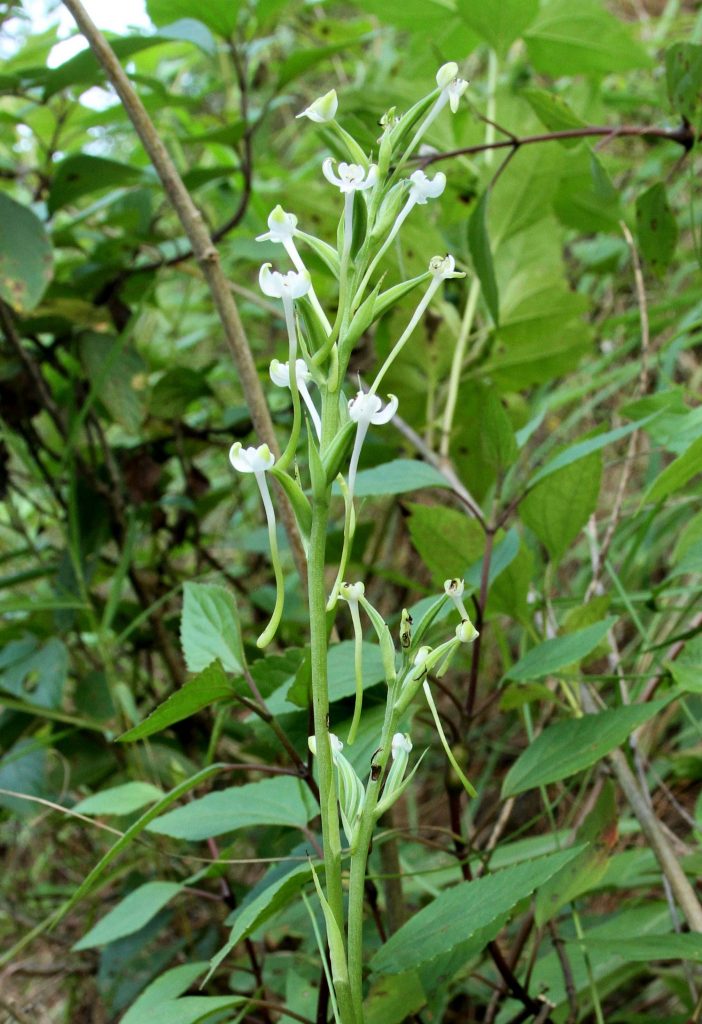
Bhutan2012 624
Bhutan Dochu-La 2800m, September
Bhutan2012 957
Bhutan Dochu-La 2800m, September

Description

Habenaria dentata is a wide-ranging terrestrial orchid of tropical and subtropical Asia, documented in GBIF across 933 occurrences from China, Thailand, Japan, Taiwan, India, Vietnam, Myanmar, Nepal, Bhutan and beyond. It grows in grassy slopes, open forest, scrub and forest-margin clearings from the lowlands to about 2800 m. The photographed plant was found at Dochu-La in Bhutan at about 2800 m in September, at the upper edge of its range, flowering at the close of the monsoon when soil moisture remains high in the cool mid-montane zone.

It is a tuberous terrestrial herb arising from underground ellipsoid tubers, with an erect leafy stem 30-60 cm tall bearing several oblong-lanceolate to elliptic, clasping cauline leaves. The inflorescence is a dense terminal raceme of showy white flowers; the dorsal sepal and petals converge to form a hood, while the conspicuous three-lobed labellum has the lateral lobes broadly dilated and fringed-dentate along the margins, giving the epithet dentata, and bears a long, slender, downcurved spur. The column is short with the rostellum and pollinaria typical of Habenaria, and pollination is effected by long-tongued, often nocturnal moths attracted to the white, spurred flowers.

Habenaria (Orchidaceae, subtribe Orchidinae) is a large, cosmopolitan genus of terrestrial orchids best diversified in the tropics, and like all orchids it is listed on CITES Appendix II. Seed germination depends on symbiosis with mycorrhizal fungi. Despite its broad distribution and relative frequency, populations are reduced locally by grassland conversion and collection, but the species is not globally threatened.

Author: Schltr. · Sources: POWO (Kew), GBIF, Flora of China, Flora of Bhutan, The Orchids of Bhutan, CITES Appendix II listing

D.Don

Nepal 99 902 ergebnis
West-Nepal Sepka 2680m, July
Nepal 99 903 ergebnis
West-Nepal Sepka 2680m, July

Description

Habenaria pectinata is a terrestrial orchid of the Himalaya and adjacent China, distributed from India and Nepal through Bhutan into south-western China, with records also from Japan. GBIF holds around 222 occurrences, concentrated in the central and eastern Himalaya and the Sino-Himalayan borderlands. It is a plant of temperate forest and forest margins, grassy slopes, clearings and humus-rich banks, typically between about 1500 and 3000 m, flowering during the summer monsoon. The population photographed in West-Nepal at Sepka (2680 m, July) is characteristic of its occurrence in cool, moist mid-elevation woodland and adjoining meadows, flowering as the rains advance.

The plant is a tuberous terrestrial herb arising from ovoid to oblong root-tubers, producing a single erect, leafy stem. The leaves are several, cauline, ovate-lanceolate to oblong, sheathing at the base and grading into bracts above. The inflorescence is a lax to fairly dense terminal raceme of green to greenish-white flowers. Each flower shows the characteristic Habenaria structure: a galeate dorsal sepal with spreading lateral sepals, narrow petals, and a deeply tripartite lip whose lateral lobes are conspicuously divided into slender comb-like (pectinate) segments, giving the epithet, with a long slender spur behind. The column bears widely separated viscidia and elongate caudicles adapted to moth pollination; the fruit is a ribbed dehiscent capsule releasing dust-like seeds.

The family name as supplied (Orchideaceae) is an orthographic variant of the correct Orchidaceae. Habenaria is a large pantropical genus, and H. pectinata, described by David Don, belongs to a Himalayan group with fringed or pectinate lip lobes whose delimitation from allied species requires care. As a fairly widespread terrestrial orchid it is not globally assessed as threatened, but like many ground orchids it is sensitive to forest disturbance, habitat loss and collection.

Author: D.Don · Sources: POWO (Kew), GBIF, Flora of China, Flora of Bhutan, Annotated Checklist of the Flowering Plants of Nepal, Orchids of Nepal, monograph of the genus Habenaria (Kraenzlin)

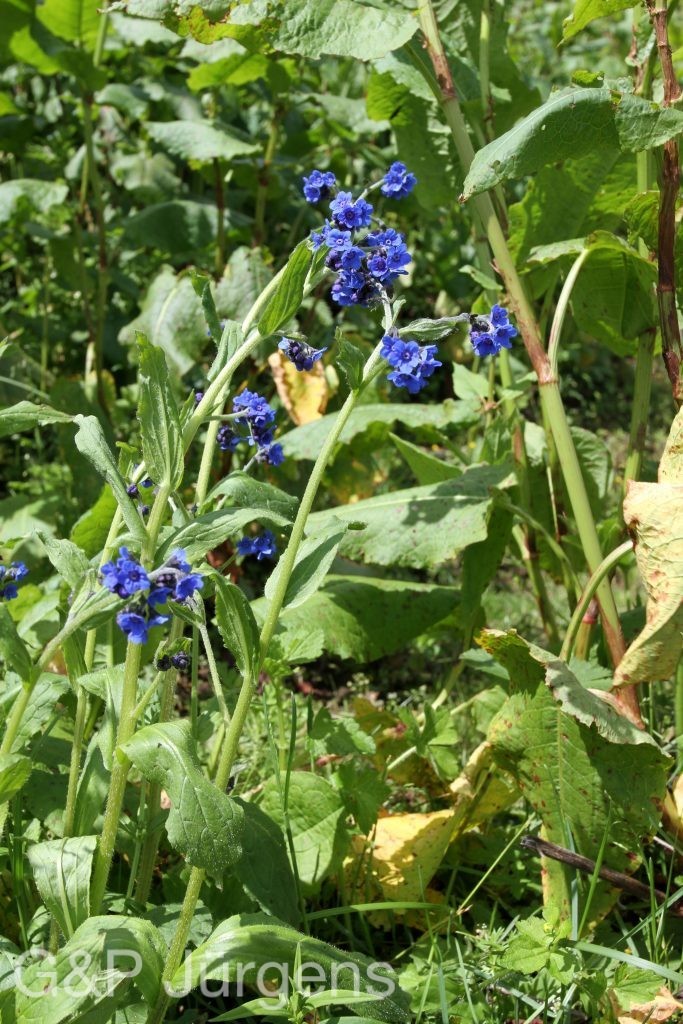
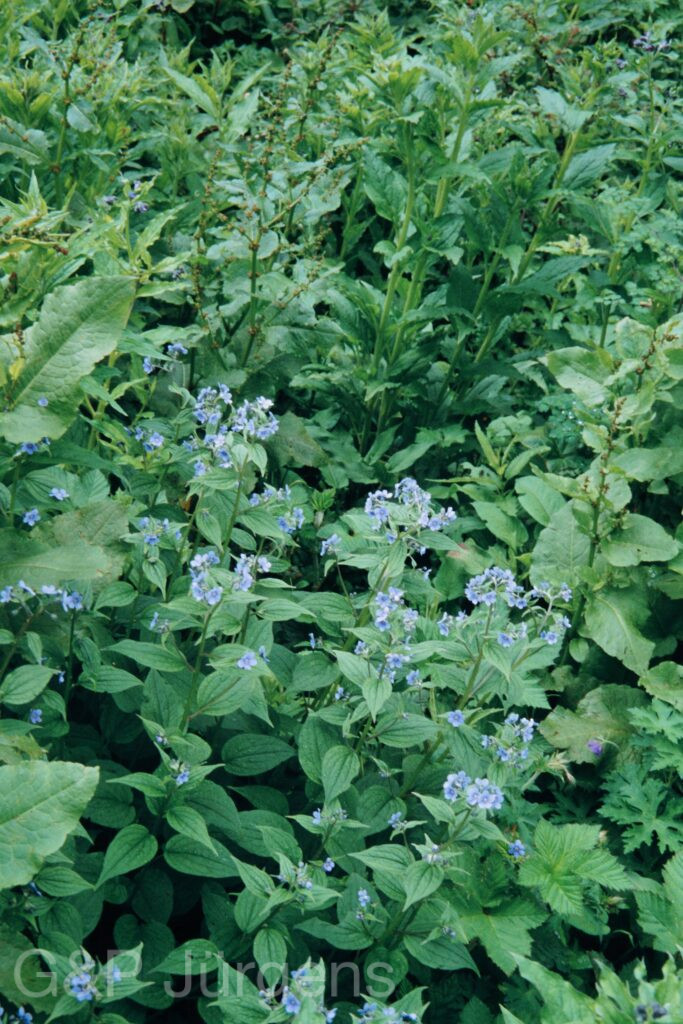
R.R.Mill

Bhutan2014 1055
Bhutan Takthsang 2900m, May
BhutanPG2011 766
Bhutan Chele-La, 3800m July

Description

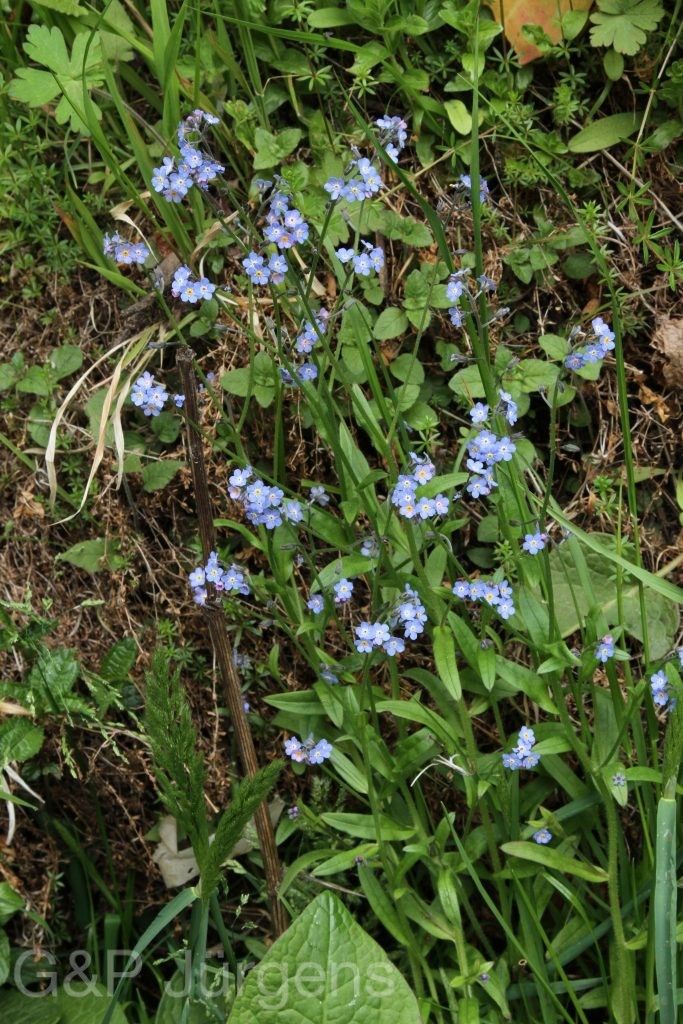
Hackelia bhutanica is a forget-me-not relative of the eastern Himalaya, described from Bhutan and also recorded from India and Nepal, with a comparatively small number of occurrences (31 georeferenced records) consistent with a localised eastern Himalayan range. It grows on shaded banks, forest margins, open slopes and among rocks in the temperate to subalpine zones. The illustrated plants from Bhutan — at Takthsang around 2900 m in May and at Chele-La near 3800 m in July — span a broad altitudinal range and show the species flowering from late spring at lower elevations into mid-summer at higher ones, tracking the seasonal advance of conditions up the mountain.

The plant is an erect biennial or perennial herb, more or less roughly hairy throughout, with a leafy stem arising from a basal cluster of leaves. The leaves are alternate, narrowly lanceolate to oblong, entire and hispid. The flowers are borne in elongating, scorpioid (coiled) cymes typical of the Boraginaceae; each has a five-lobed calyx and a small, salver-shaped, blue corolla with a short tube and five spreading lobes closed at the throat by raised scales (fornices). The fruit characteristic of Hackelia consists of four nutlets whose margins bear glochidiate (barbed, hooked) prickles, an adaptation for dispersal by attachment to passing animals.

Hackelia is segregated from the closely allied Lappula and the broader stickseed group within Boraginaceae, distinguished largely by nutlet ornamentation; the species was described by R. R. Mill, a specialist in the Bhutanese and Himalayan flora. As a restricted eastern Himalayan endemic known from relatively few localities, H. bhutanica warrants attention from a conservation standpoint, its persistence depending on the maintenance of the temperate forest and open subalpine habitats it occupies.

Author: R.R.Mill · Sources: POWO (Kew), GBIF, Flora of Bhutan, Flora of China (Boraginaceae), Mill: revisionary studies of Himalayan Boraginaceae

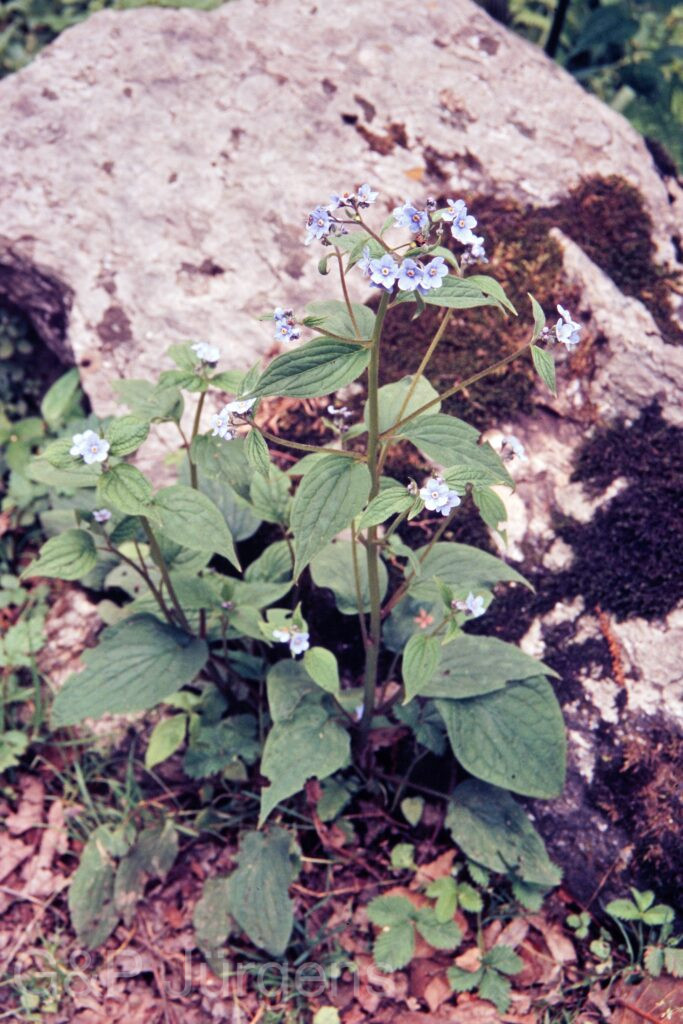
(Royle ex Benth.) C.E.C.Fisch.

Nepal 99 112 ergebnis
West-Nepal South of Rara-Lake 3600m, June
Garh 07 336 ergebnis
India Garhwal Mahji 2650m, June

Description

Hackelia uncinata (Royle ex Benth.) C.E.C.Fisch. is a perennial herb of the Himalaya and Central Asian mountains, with GBIF recording some 417 occurrences across China, India, Nepal, Pakistan, Bhutan, Myanmar, Mongolia and Russia. It grows in forest clearings, on shaded banks, among subalpine scrub and in moist meadow on the cooler slopes of the temperate to subalpine zone, flowering in early summer. The cited collections, from south of Rara Lake in west Nepal at 3600 m in June and from Mahji in Garhwal (Indian Himalaya) at 2650 m in June, illustrate its preference for partly shaded, humus-rich montane sites where it forms loose stands.

The plant produces erect to ascending, pubescent stems from a perennial rootstock, bearing alternate, ovate-lanceolate to elliptic leaves that are softly hairy, the lower ones petiolate and the upper sessile. The small flowers are arranged in lax, branched, scorpioid cymes; the corolla is rotate to shortly funnelform, pale blue to violet, with five lobes and prominent throat appendages (fornices). The diagnostic feature, reflected in the epithet uncinata, lies in the four nutlets, whose margins bear a row of glochidiate (hooked, barbed) prickles that catch on fur and clothing, effecting epizoochorous dispersal.

Hackelia, segregated from Lappula and the broader stickseed assemblage, is distinguished by nutlet ornamentation and is centred on the temperate mountains of Asia and the Americas. The hooked nutlets are an effective adaptation for animal-mediated dispersal across open montane terrain. The species is widespread and not of conservation concern, occurring frequently in both natural and lightly disturbed habitats throughout its broad Himalayan and Central Asian range.

Author: (Royle ex Benth.) C.E.C.Fisch. · Sources: POWO (Kew), GBIF, Flora of Nepal, Flora of China, Boraginaceae of the Western Himalaya, Brand monograph on Hackelia and Lappula

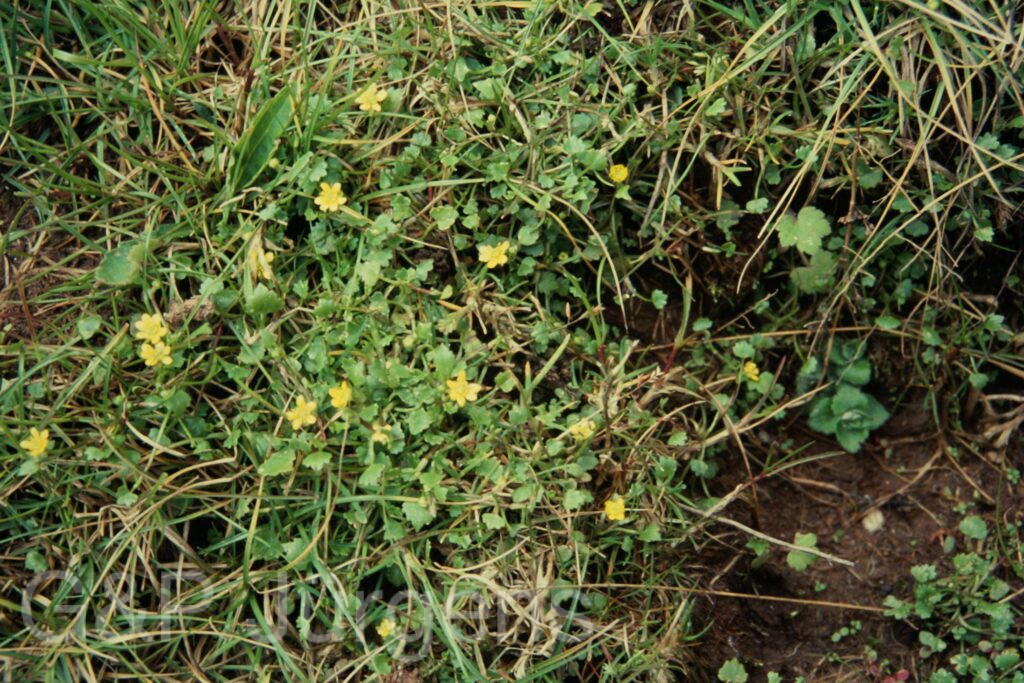
(Adams) Komarov

Sikkim2004 68 P119
Sikkim West-Bengal, Bersay 2800m April

Description

Halerpestes sarmentosa is a widely distributed stoloniferous perennial of saline and moist open ground across temperate Eurasia, documented from Russia, China, India, Mongolia, Kazakhstan, Afghanistan, Tajikistan, Pakistan, Kyrgyzstan, Nepal and Uzbekistan, with disjunct and partly introduced records in the Americas (the more than 2170 GBIF occurrences include adventive populations). It favours damp meadows, lake and stream margins, marshy depressions and alkaline flats, typically from the lowlands to around 4500 m. The plant photographed at Bersay (Sikkim, West Bengal) at about 2800 m in April reflects its occurrence in moist montane grassland during early flowering.

The species is a low, mat-forming herb spreading by slender rooting stolons (sarmentose runners), from which arise long-petiolate basal leaves. The leaf blades are simple, ovate to reniform or somewhat three-lobed, with crenate margins and a cordate to truncate base, rather thick and slightly fleshy. The leafless scapes bear one to a few small flowers; the five spreading sepals subtend five narrow, yellow, nectariferous petals each with a basal scale. Stamens and carpels are numerous, the latter densely aggregated on an elongating receptacle and maturing into a globose to ovoid head of small, flattened, faintly ribbed achenes with a short straight beak.

Halerpestes was segregated from Ranunculus on the basis of its stoloniferous halophytic habit, leathery entire leaves and distinctive achene structure, the genus being centred on the steppe and saline wetlands of Central Asia. The taxon is also catalogued under the orthographic variant Halerpestes sarmentosus. Ecologically it is a salt-tolerant wetland colonist of grazed and disturbed shores; its broad range and tolerance of human-modified habitats render it of least concern, and its near-cosmopolitan spread illustrates the biogeographic links between Eurasian and American cold-temperate floras.

Author: (Adams) Komarov · Sources: POWO (Kew), GBIF, Flora of China, Flora of Bhutan, Annotated Checklist of the Flowering Plants of Nepal, Tamura's monograph of Ranunculaceae

Wall.

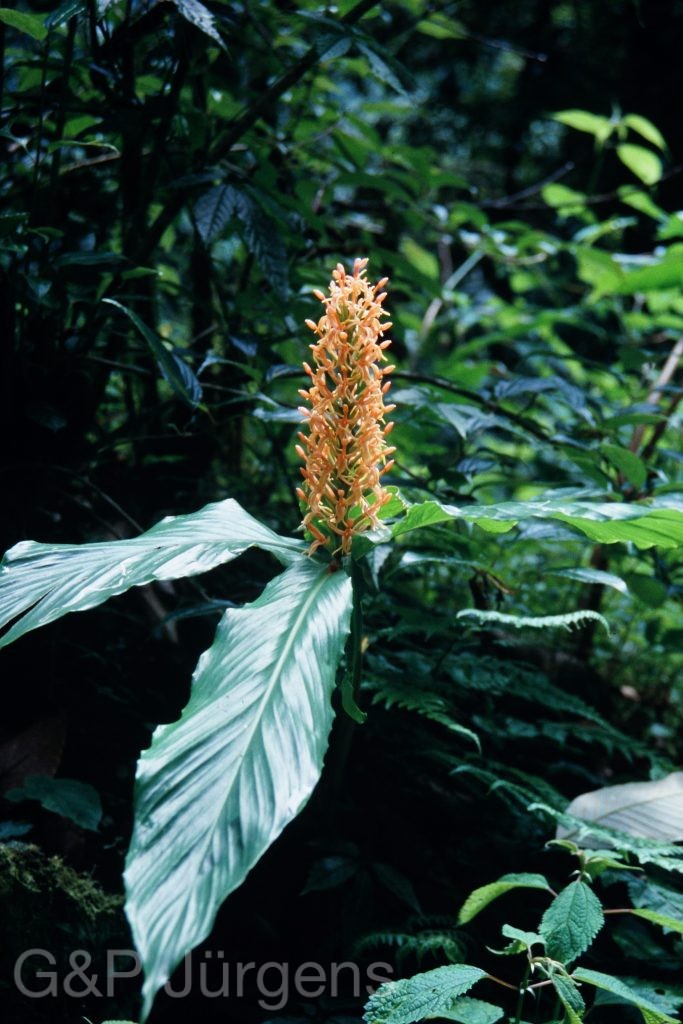
Sikkim2003 54 P73
Sikkim avove Yoksam 2600m 08.2003

Description

Hedychium densiflorum Wall. is a robust rhizomatous ginger native to the eastern Himalaya, ranging through China (CN), India (IN), Nepal (NP), Bhutan (BT) and Myanmar (MM); GBIF records 255 occurrences, with additional points from cultivation in Britain, North America and elsewhere reflecting its popularity as a hardy ornamental. In the wild it grows in moist temperate forest, shaded banks and clearings, frequently as an epilithic or terrestrial herb among rocks. It was photographed in Sikkim above Yoksam at 2600 m in August, in the cool, monsoon-drenched broadleaf forest belt that typifies its habitat.

The plant grows from a stout, aromatic, creeping rhizome, producing tall leafy pseudostems formed by overlapping leaf-sheaths. The leaves are distichous, oblong-lanceolate, acuminate and shortly petiolate, with a conspicuous membranous ligule. The inflorescence is a dense, narrowly cylindrical terminal spike, much denser than in most congeners, from which the epithet derives; the bracts are imbricate and each subtends one or more flowers. The flowers are slender and orange to soft yellow, with a long corolla tube, narrow petals, a prominent exserted filament bearing the anther, and a bilobed or entire labellum. The fruit is a globose capsule splitting to reveal seeds enclosed in a bright arillus.

Hedychium belongs to tribe Zingibereae and is centred on the Indo-Malayan and Himalayan region, where many species are pollinated by moths and butterflies attracted to the long-tubed, often fragrant flowers. H. densiflorum and its selections such as 'Assam Orange' and 'Stephen' are widely grown for their hardiness. The original family field, spelled "Zingiberacaea", is retained verbatim though the correct orthography is Zingiberaceae. The species faces localised pressure from forest disturbance but remains common across its range.

Author: Wall. · Sources: POWO (Kew), GBIF, Flora of Bhutan, Flora of China, Zingiberaceae monograph (Schumann; T. L. Wu & K. Larsen)