Tag:

Summer

(Wall. ex DC.) F.T.Pu & M.F.Watson
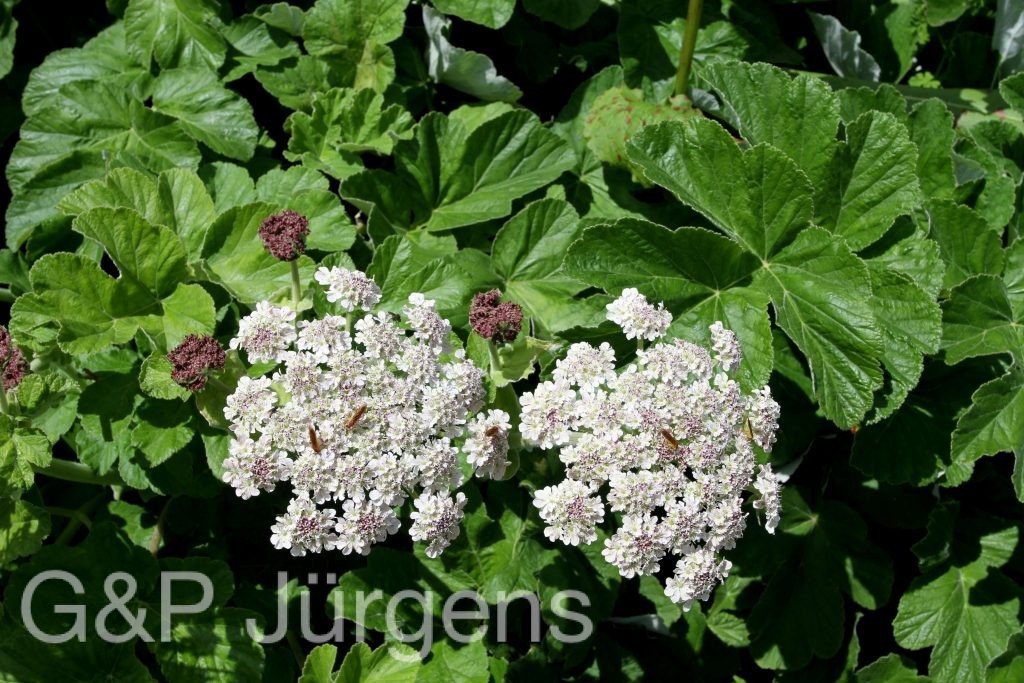
BhutanPG2011 769 01 01
Bhutan Chele-La, 3900m July

Description

Heracleum candidans var. obtusifolium (Wall. ex DC.) F.T.Pu & M.F.Watson is treated by GBIF as a synonym, with the accepted name being Heracleum candicans obtusifolium. It is a Himalayan umbellifer recorded from China and Nepal, GBIF documenting 44 occurrences, and is a plant of the upper subalpine and alpine zones. It occupies open slopes, meadow flushes, shrubberies and forest clearings, typically between about 3000 and 4200 m. The photographed plant at the Chele-La in western Bhutan, at roughly 3900 m in July, illustrates its association with the moist, high-elevation grasslands of the eastern Himalaya during the summer flowering season.

The plant is a robust, tomentose perennial with a stout rootstock and erect, ridged, hollow stems. The leaves are large and pinnately divided, with broad, lobed segments that are densely white-woolly beneath, the obtuse leaf segments giving the variety its epithet. The inflorescence is a large compound umbel with numerous rays subtended by deciduous bracts; the small flowers are white, with the marginal flowers often radiant and the outer petals enlarged and bilobed. The fruit is a dorsally compressed, broadly winged schizocarp bearing conspicuous oil ducts (vittae), the typical mericarp of the genus.

Heracleum is a taxonomically difficult genus in the Himalaya, with a continuum of closely allied entities; this taxon has been variously ranked as a species, subspecies or variety, and its placement under H. candicans reflects ongoing molecular and morphological reassessment of the group. As with other species of the genus, the foliage and sap contain furanocoumarins that may cause phototoxic dermatitis. The taxon is not regarded as threatened, though it occupies the narrow, climate-sensitive alpine belt of the central and eastern Himalaya.

Author: (Wall. ex DC.) F.T.Pu & M.F.Watson · Sources: POWO (Kew), GBIF, Flora of China, Flora of Bhutan, Flora of Nepal, Pimenov & Leonov genera of Umbelliferae

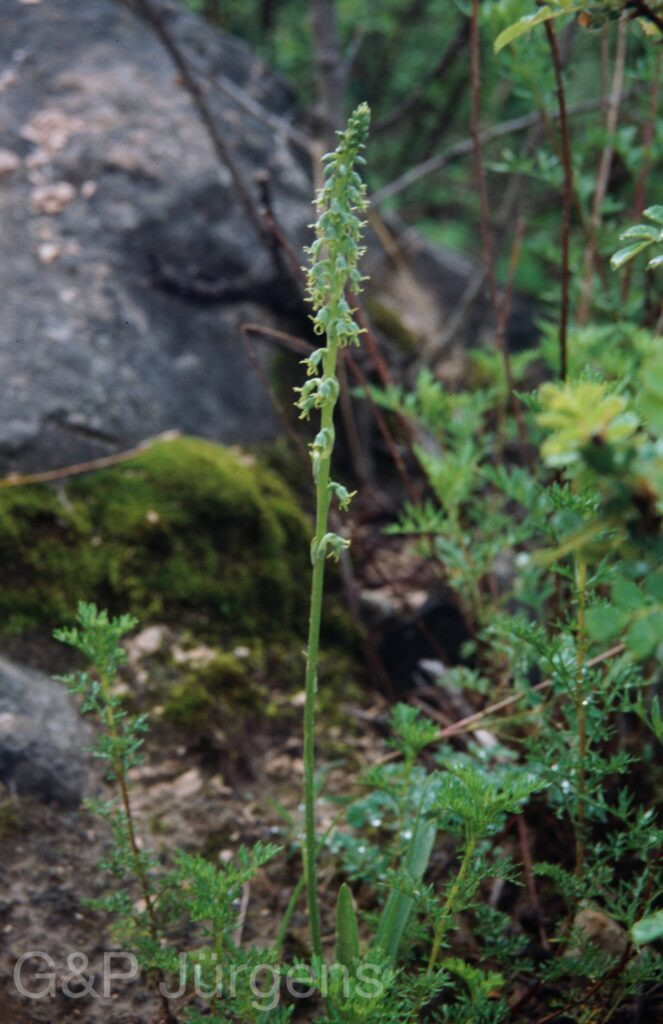
C.B.Clarke

Nepal 99 285 ergebnis
West-Nepal Kalmura 4000m, June

Description

Heracleum pinnatum, here treated under its accepted name in current databases (it is variously circumscribed and has at times been placed in the segregate genus Tetrataenium, as reflected in the source page), is a robust umbellifer of the western and central Himalaya. GBIF holds about 193 occurrences from India, Pakistan, China and Nepal, indicating a montane-to-alpine distribution along the northwestern arc of the range. It favours open grassy slopes, herb-rich alpine meadows, forest clearings and moist hollows, generally between 3000 and 4300 m. The plant figured from Kalmura in West Nepal at roughly 4000 m in June occupies the upper part of this band, flowering in early summer amid the lush tall-herb communities that develop on deep, moisture-retentive alpine soils.

It is a stout, erect perennial herb arising from a thick taproot, the hollow furrowed stem reaching one to two metres and clothed, as is typical of the genus, in rough or hispid hairs. The leaves are large and pinnately compound with broad, coarsely toothed and often deeply lobed segments. The inflorescence is a large flat-topped compound umbel with numerous rays; the outer flowers frequently have enlarged, radiating, deeply notched petals that give the umbel a showy margin, a trait promoting insect attraction. Flowers are white. The fruit is a dorsally compressed schizocarp (a mericarp pair) with broad lateral wings and conspicuous dark longitudinal oil canals (vittae) on the commissural and dorsal faces, the diagnostic feature underpinning the Tetrataenium concept.

The taxonomy of Himalayan Heracleum is notoriously complex, with the broad-fruited, club-shaped-vitta species often segregated as Tetrataenium by some authors while others retain them within an enlarged Heracleum; molecular work has tended to support a reintegration, hence the accepted placement adopted here. Like its congeners the plant contains furanocoumarins that can cause phytophotodermatitis, and it offers abundant nectar to a wide guild of generalist pollinators. As a wide-ranging montane herb of accessible meadow habitat it is not regarded as threatened.

Author: C.B.Clarke · Sources: POWO (Kew), GBIF, Flora of China Vol. 14, Flora of Pakistan, Flora of Nepal, Mukherjee & Constance Umbelliferae of India

(Duthie) Tang & F.T.Wang

Nepal 99 706 ergebnis
West-Nepal, Pungmo-Khola 3800m, July

Description

Herminium elisabethiae (Duthie) Tang & F.T.Wang is a small terrestrial orchid of the Himalaya, formerly treated under Peristylus, as its synonymy and the source URL indicate. Although GBIF currently holds no georeferenced occurrence records for the name, the species is known from the western and central Himalaya, where it grows in alpine and subalpine grassland, open turf and grassy slopes. It was photographed in West Nepal along the Pungmo-Khola at 3800 m in July, during the summer monsoon flowering period typical of high-elevation Himalayan terrestrial orchids.

The plant is a slender, glabrous geophyte arising from small ovoid or spherical underground tubers. The stem bears a few narrow, lanceolate to linear leaves clustered near the base, grading into bract-like cauline leaves above. The inflorescence is a slender, cylindrical, many-flowered raceme of small greenish to yellowish-green flowers, each subtended by a narrow bract. The flowers show the dorsal sepal and petals converging into a hood over the column, with a small spurred or saccate, often three-lobed labellum characteristic of the Herminium-Peristylus alliance. The fruit is a small ellipsoid capsule releasing abundant dust-like seeds.

The genus Herminium, in tribe Orchideae of subfamily Orchidoideae, comprises small alpine and subalpine orchids of temperate Eurasia, and molecular work has repeatedly transferred species between Herminium and Peristylus, explaining the nomenclatural history here. The original family field is given verbatim as "Orchideaceae", though the correct spelling is Orchidaceae. As with most terrestrial orchids it depends on mycorrhizal fungi for germination, and its grassland habitat is vulnerable to grazing intensification and land-use change. The species is poorly documented and merits further field survey.

Author: (Duthie) Tang & F.T.Wang · Sources: POWO (Kew), GBIF, Flora of China, Flora of Nepal, Orchidaceae of the Himalaya (Tang & Wang; X. H. Jin revision of Herminium)

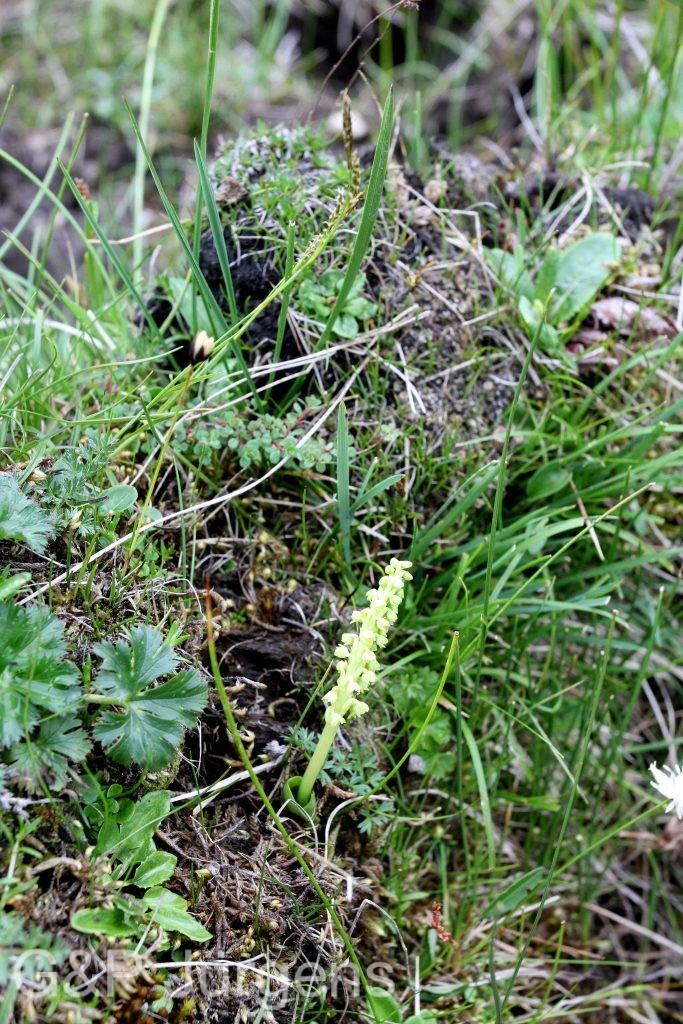
(Renz) X.H.Jin, Schuit., Raskoti & Lu Q.Huang

BhutanPG2011 621
Bhutan Ludlow-Sherriff-Trail Kem-La, 4300m July

Description

Herminium himalayanum is a small terrestrial orchid of the high Eastern Himalaya, documented in occurrence records principally from Bhutan, where it is a rare and infrequently collected alpine plant. It inhabits the alpine zone, growing among short turf, mossy banks, damp meadows and the margins of scrub above the treeline, where the flowering individual shown was photographed on the Ludlow–Sherriff trail near Kem-La in Bhutan at 4300 m in July, during the brief monsoon-season flowering of these high pastures.

The plant is a slender, glabrous perennial arising from small subterranean tubers that store reserves through the dormant season. The stem is erect and bears one or few narrow, lanceolate to oblong leaves, often somewhat basal, sheathing at the base. The inflorescence is a slender, few- to several-flowered raceme of small, greenish to yellowish-green flowers. As in Herminium the floral segments are narrow and the labellum is characteristically lobed, frequently three-lobed with elongate divisions and lacking a developed spur or with only a slight saccate base. The column is short, bearing two pollinia attached to viscidia, and the fruit is a small erect capsule liberating dust-like seeds.

The accepted placement of the species follows a molecular recircumscription of the Herminium alliance, the taxon having previously been treated under the segregate genus Bhutanthera, as reflected in its earlier name Bhutanthera himalayana; subsequent phylogenetic work transferred it to Herminium. As a narrow high-alpine Eastern Himalayan endemic with very few known localities, it is of biogeographic interest and should be regarded as data-deficient and potentially of conservation concern given its restricted range and fragile habitat.

Author: (Renz) X.H.Jin, Schuit., Raskoti & Lu Q.Huang · Sources: POWO (Kew), GBIF, The Orchids of Bhutan (Pearce & Cribb), Flora of Bhutan, Jin et al. phylogeny of Herminium and Bhutanthera, CITES Appendices

King & Pantl.

Nepal 99 706 ergebnis
Nepal Pugmo 3210m, July

Description

Herminium jaffreyanum is a terrestrial orchid native to the central and eastern Himalayas, distributed across Nepal, northeast India (Sikkim, Darjeeling), Bhutan, and adjacent parts of southern China (Xizang). The species occurs in montane meadows, grassy slopes, and open scrubland at elevations of 2,800–4,200 m, favouring well-drained, humus-rich soils. It is a component of the subalpine herbaceous flora, as evidenced by collections from Pugmo in Nepal at 3,210 m, where it flowers during the monsoon season in July.
The plant arises from a small, ovoid tuber and produces slender, erect stems 10–25 cm tall. The basal leaves are typically two, oblong-elliptic to lanceolate, 3–8 cm long, sheathing the stem at the base. The inflorescence is a lax, elongate raceme bearing numerous small, greenish-yellow flowers approximately 3–4 mm across. Each flower has a trilobed lip with a short, saccate spur; the lateral lobes are linear and divergent, while the mid-lobe is tongue-shaped. The column is short with two widely separated pollinia. Fruits are small, erect capsules containing dust-like seeds.
Herminium jaffreyanum belongs to a taxonomically complex genus within the subtribe Orchidinae, and its delimitation from allied species such as H. mackinnonii requires careful examination of lip morphology and spur structure. The species is relatively poorly collected, with only about 25 occurrence records documented in GBIF, suggesting it may be genuinely scarce or under-surveyed across its range. Its dependence on intact subalpine grasslands makes it potentially vulnerable to overgrazing and habitat conversion. Like all orchids, it falls under CITES Appendix II, and further field surveys across the Nepal–Sikkim corridor are needed to clarify its conservation status.

Author: King & Pantl. · Sources: POWO (Kew), GBIF, Flora of Bhutan Vol. 3, Pearce & Cribb: The Orchids of Bhutan (2002), King & Pantling: The Orchids of the Sikkim-Himalaya (1898)

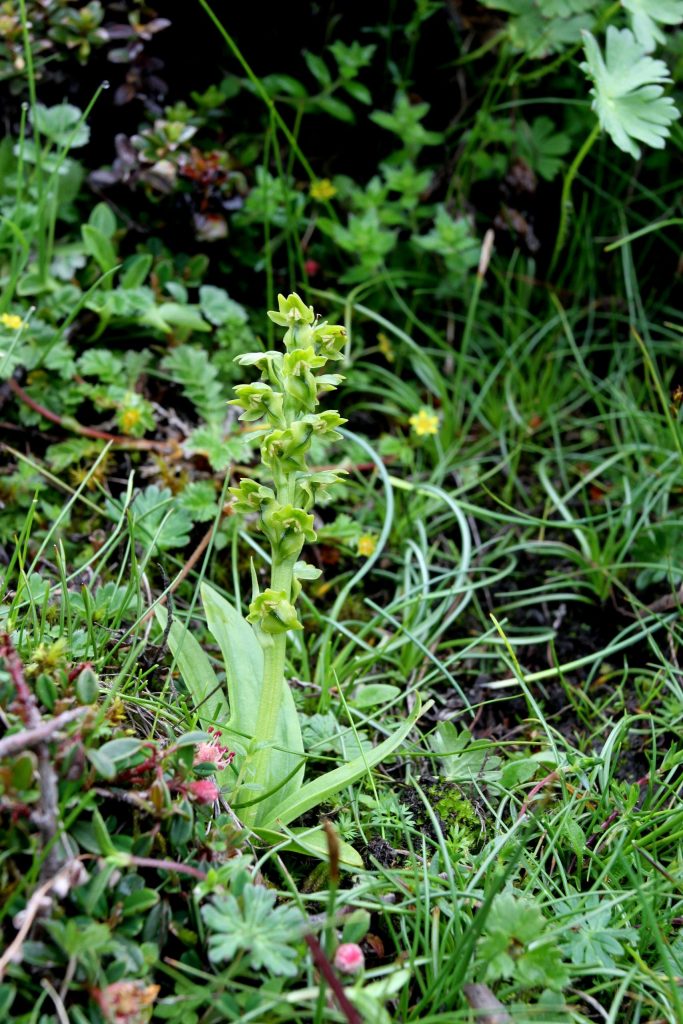
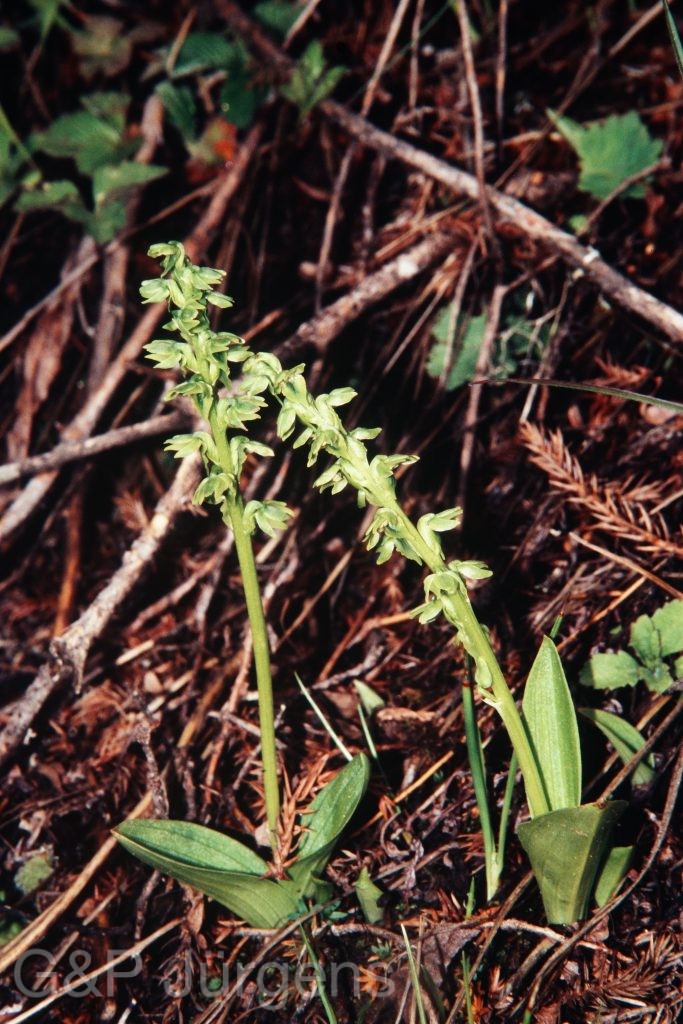
Rchb.f.

BhutanPG2011 125
Bhutan Tsochenchen, 3500m June
Bh09 196 G335
Bhutan above Thimphu, 3000m June

Description

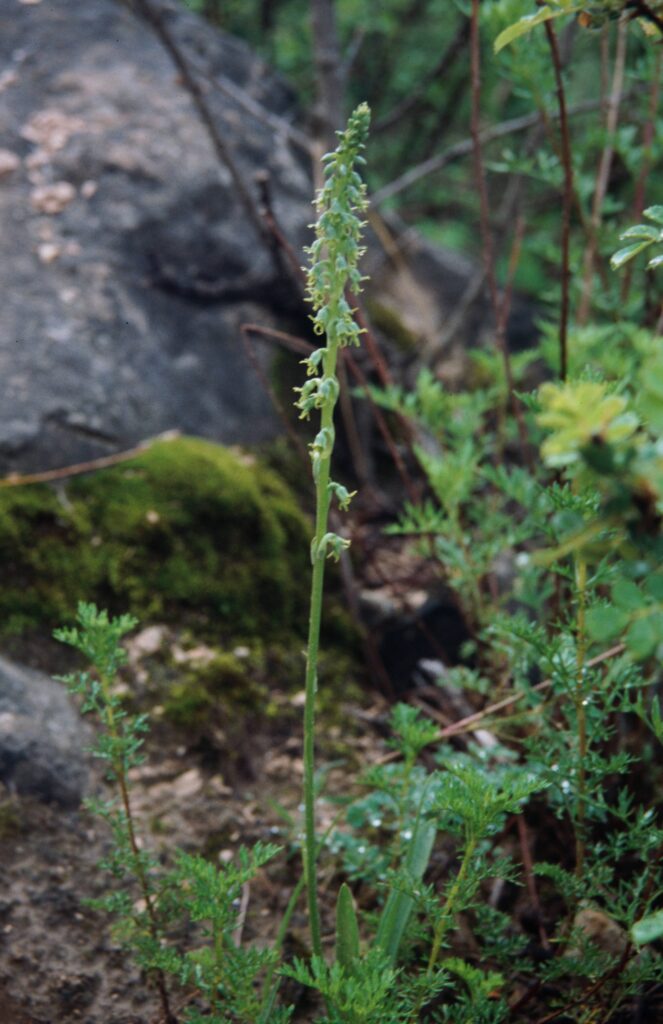
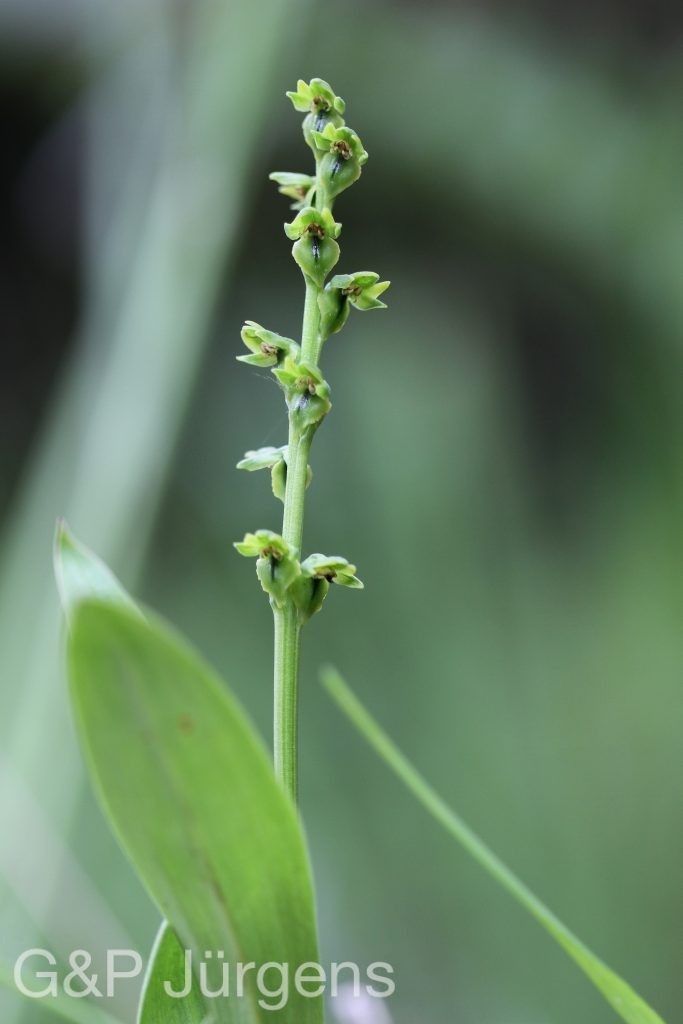
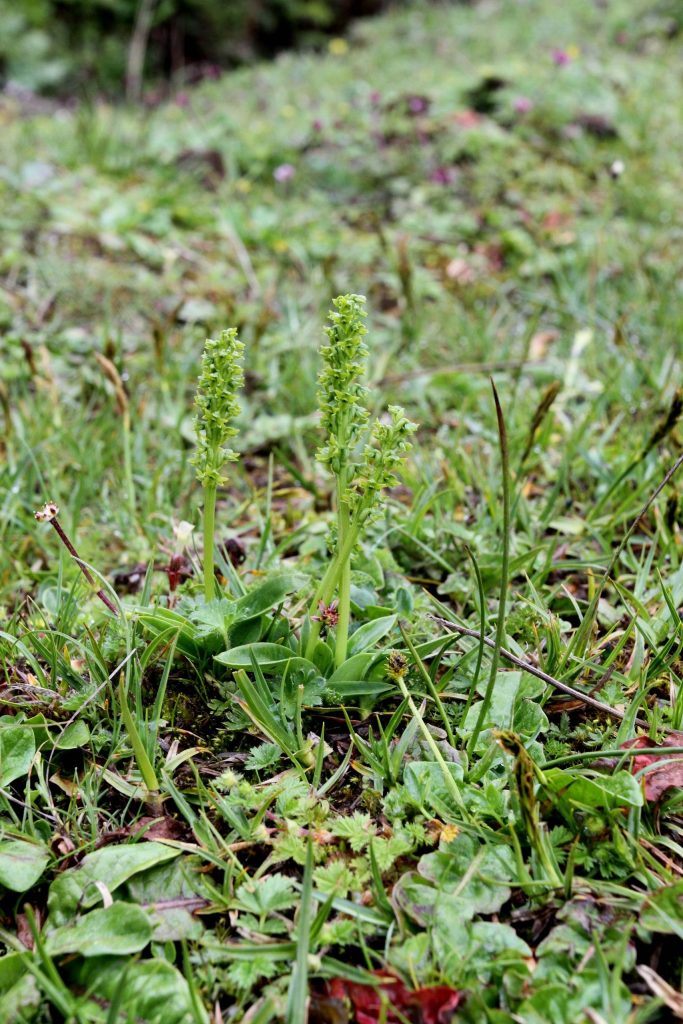
Herminium josephi is a small terrestrial orchid of the alpine and upper subalpine Himalaya, recorded from China, Nepal, India and Bhutan, with 259 GBIF occurrences clustered along the high mountain chain. It is a plant of open alpine turf, grassy slopes and the moist margins of meadows above the treeline, generally between about 3000 and 4300 m. The illustrated material was gathered in Bhutan at Tsochenchen at around 3500 m and on the slopes above Thimphu at about 3000 m, both in June, when these short-grazed alpine swards flower in the brief window after snowmelt.

The plant arises from one or two small ovoid or globose tubers and produces a slender, erect stem with a few narrow, lanceolate to linear leaves toward the base. The inflorescence is a slender, cylindrical, many-flowered spike of tiny green to yellowish-green flowers. The individual flowers are inconspicuous and somewhat hooded, with the dorsal sepal and petals connivent over the small column; the lip is narrow and characteristically lobed, and the genus is distinguished by its minute flowers and, in many species, a very short or saccate rather than spurred lip. The fruit is a small erect capsule.

Herminium is a genus of tribe Orchideae centred on temperate Asia, with the Sino-Himalayan alpine zone forming a major centre of diversity; H. josephi, described by Reichenbach f., is one of its characteristic high-elevation members. The minute green flowers suggest fly or small-insect pollination typical of the genus. As a widespread alpine species it is not considered threatened, though heavy grazing and climate-driven shifts of the alpine belt may affect local abundance.

Author: Rchb.f. · Sources: POWO (Kew), GBIF, Flora of China, Flora of Bhutan, The Orchids of Bhutan (Pearce & Cribb)

(Thunb. ex Sw.) Vuijk

Sikkim2003 380 G536
Sikkim Tista valley 3300m August

Description

A terrestrial orchid of remarkably wide distribution across temperate and montane Asia, from the Himalaya through China, Japan, Korea and Taiwan to South-East Asia and Australasia, with nearly 1950 GBIF occurrences spanning India, Nepal, China, Japan, the Philippines and beyond. It grows in grassy slopes, open meadows, forest clearings and herb-rich banks, generally between about 1000 and 3500 m. The illustrated plant was recorded in August in the Tista valley of Sikkim at around 3300 m, a moist, grassy subalpine setting typical of its summer flowering.

The species is a slender tuberous geophyte arising from one or two small, ovoid root-tubers. The erect stem bears a few narrowly lanceolate to linear, sheathing leaves clustered toward the base and grading into bracts above. The inflorescence is a long, slender, densely many-flowered cylindrical raceme of small green to yellowish-green flowers. Each flower has spreading sepals, narrow petals and a distinctive three-lobed labellum with elongate, often divergent lateral lobes and a short to spurless base; the column is short, bearing two pollinia attached to viscidia for insect removal. The inferior, twisted ovary ripens into a small erect, ribbed capsule releasing dust-like seeds.

Accepted by POWO and GBIF, H. lanceum is the most widespread member of the genus Herminium, the muskorchids, and shows considerable variation in stature and floral detail across its enormous range, with several segregate varieties recognised by some authors. Its small green flowers are adapted to inconspicuous insect pollination, and like all orchids it depends on mycorrhizal fungi for germination. Despite habitat loss in places, its vast range and abundance render it secure; it is listed under CITES Appendix II as a member of Orchidaceae.

Author: (Thunb. ex Sw.) Vuijk · Sources: POWO (Kew), GBIF, Flora of China, Flora of Bhutan, Pridgeon et al. Genera Orchidacearum

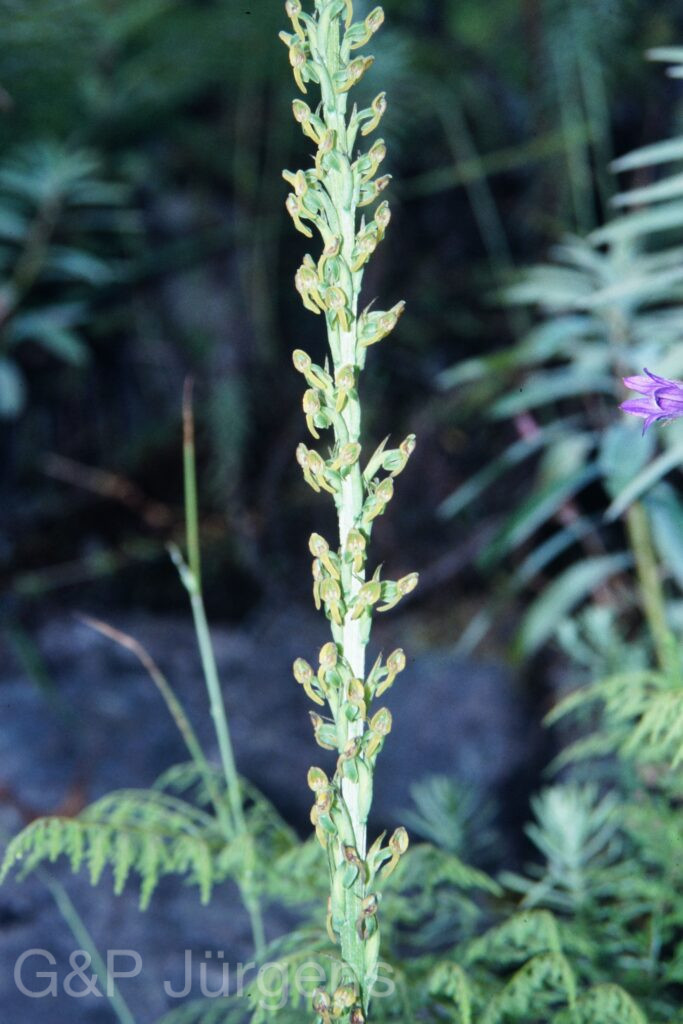
(D.Don) P.F.Hunt & Summerh.

BhutanPG2011 245
Bhutan Tsochenchen 3800m, June

Description

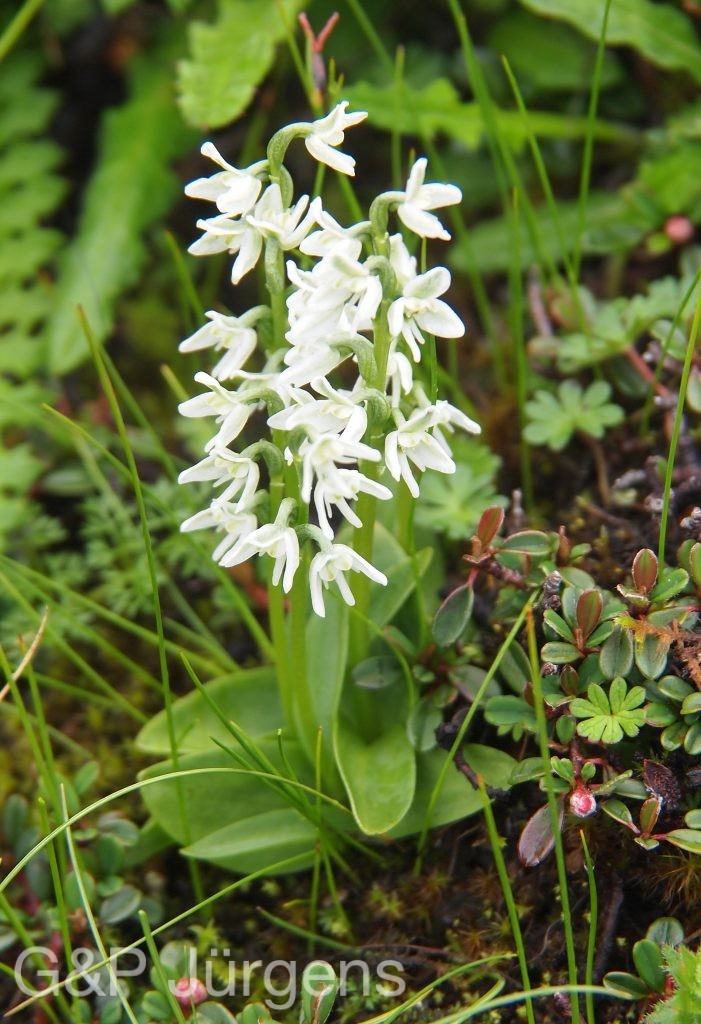
Herminium monophyllum (D.Don) P.F.Hunt & Summerh. is a small terrestrial orchid of the Himalaya and western China, recorded by GBIF from India, Nepal, Bhutan and China across some 59 occurrences. It is a plant of open alpine and subalpine turf, grassy slopes, moist meadows and the margins of scrub, generally between about 3000 and 4300 m. The individual photographed at Tsochenchen in Bhutan at around 3800 m in June, during the brief alpine flowering flush, reflects its preference for cool, humid grassland kept moist through the growing season.

The plant grows from small subterranean tubers and produces a slender erect stem. As the epithet monophyllum indicates, there is characteristically a single principal basal leaf (sometimes with a second much smaller one), which is oblong to lanceolate, sheathing at the base. The inflorescence is a slender, rather lax to dense terminal raceme of numerous tiny greenish or greenish-yellow flowers. Each flower has narrow, somewhat hooded sepals and petals and a small three-lobed labellum without a true spur, the whole giving the inflorescence a delicate, grass-like appearance typical of the genus, which is pollinated chiefly by small insects.

Herminium is a genus of small-flowered terrestrial orchids of tribe Orchideae, distinguished by its spurless or near-spurless labellum and tuberous habit. Herminium monophyllum is one of several closely similar Himalayan species and can be confused with its relatives without close examination. It is inconspicuous and easily overlooked, and although not formally assessed as threatened it is restricted to high-altitude grassland that is vulnerable to overgrazing and warming; like all orchids it is protected under CITES Appendix II.

Author: (D.Don) P.F.Hunt & Summerh. · Sources: POWO (Kew), GBIF, Flora of Bhutan, Flora of China, Pearce and Cribb Orchids of Bhutan, World Checklist of Orchidaceae

(Lour.) Y.De Smet & C.Granados

Sikkim2003 52 P71^
Sikkim above Yoksam 2300m, August

Nepal 2001 431 ergebnis ergebnis
Nepal (Gorkha) Laprak 2000m, May

Description

Hydrangea febrifuga, long familiar under the name Dichroa febrifuga, is a widely distributed shrub of subtropical and warm-temperate Asia, ranging from the Himalaya (Nepal, Sikkim, Bhutan, northeast India) eastward through southern China, Myanmar, Thailand and Indochina to Malesia and the Philippines. It inhabits moist, shaded forest, ravines and streamsides, forming part of the evergreen broad-leaved understorey. It is recorded from low to mid elevations; the populations shown above Yoksam in Sikkim at 2,300 m in August and at Laprak in the Gorkha region of Nepal at 2,000 m in May span its typical mid-montane range in humid forest.

The plant is an erect, much-branched shrub with subquadrangular, often purplish young stems. The leaves are opposite, elliptic to oblong-lanceolate, with a serrate margin, acuminate apex and a glabrous to sparsely pubescent surface. The inflorescence is a terminal or axillary corymbose to paniculate cyme bearing numerous small bisexual flowers; the calyx is shortly toothed and the corolla blue to violet or whitish with thick, valvate petals, the stamens conspicuous. Distinctively for the family, the fruit is a fleshy, indigo-blue berry crowned by the persistent calyx and containing many minute seeds.

Molecular phylogenetic work has shown the segregate genus Dichroa to be nested within Hydrangea, prompting the recombination as Hydrangea febrifuga by De Smet and Granados; the basionym traces to Loureiro's original description of Lourea. The species is of long-standing ethnomedical importance: its roots and leaves, rich in the alkaloid febrifugine, have been used in traditional Chinese and Himalayan medicine against malaria and fevers, a property reflected in the epithet. It remains common and is not considered threatened.

Author: (Lour.) Y.De Smet & C.Granados · Sources: POWO (Kew), Flora of China Vol. 8, Flora of Bhutan Vol. 1, GBIF, De Smet et al.: Hydrangea phylogeny (TAXON)

D. Don

Sikkim2011 179
Sikkim Lachen 2760m, June

Description

Hydrangea heteromalla is a deciduous shrub or small tree of the Himalaya and central China, with GBIF returning over 1600 occurrences spanning its native range in China, Nepal, India, Bhutan and Myanmar as well as numerous cultivated and naturalised records from Europe and North America. In the wild it grows in cool temperate forest, on open slopes, forest margins, ravines and shrubberies, typically between about 1500 and 3500 m. The plant photographed near Lachen in northern Sikkim at about 2760 m, flowering in June, occupies the moist temperate montane belt where the species is a frequent understorey and edge shrub.

The plant has stout, spreading branches with peeling bark and opposite leaves that are ovate to elliptic, acuminate, finely serrate, and characteristically discolorous, dark green above and densely pale-tomentose to whitish beneath, the indumentum giving the epithet heteromalla. The inflorescence is a broad, flat-topped to slightly domed corymb bearing many small fertile flowers surrounded at the margin by larger, showy, sterile ray-florets with four enlarged white sepaloid segments. The fertile flowers are small, white, with five petals and numerous stamens. The fruit is a small ribbed capsule opening at the apex to release numerous tiny seeds.

Hydrangea heteromalla is a variable and widespread species, the subject of much horticultural selection and the source of cultivated forms grown for their lacecap inflorescences, which explains its scattered records across temperate gardens worldwide. Within Hydrangea section Hydrangea it represents the principal Himalayan-Chinese montane lineage. Ecologically the marginal sterile florets serve to attract pollinators to the inconspicuous fertile flowers. The species is common and not threatened, and its wide ecological amplitude and ornamental value have ensured both its persistence in the wild and its global cultivation.

Author: D. Don · Sources: POWO (Kew), GBIF, Flora of China, Flora of Bhutan, McClintock "A Monograph of the Genus Hydrangea", Annotated Checklist of the Flowering Plants of Nepal