Tag:

Summer

(Royle ex Benth.) C.E.C.Fisch.
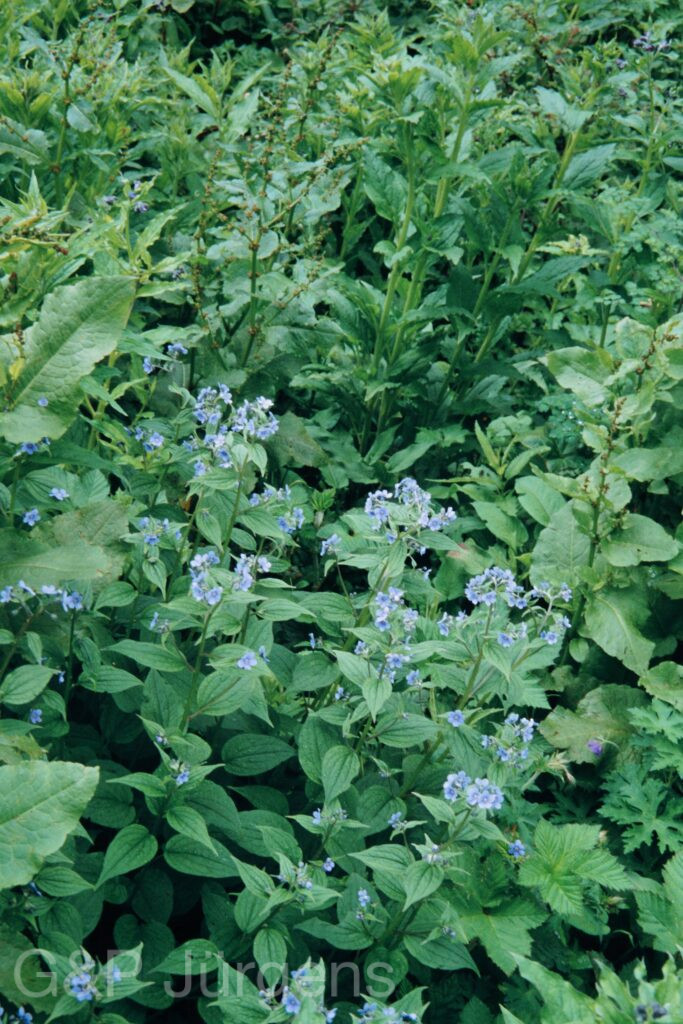
Nepal 99 112 ergebnis
West-Nepal South of Rara-Lake 3600m, June
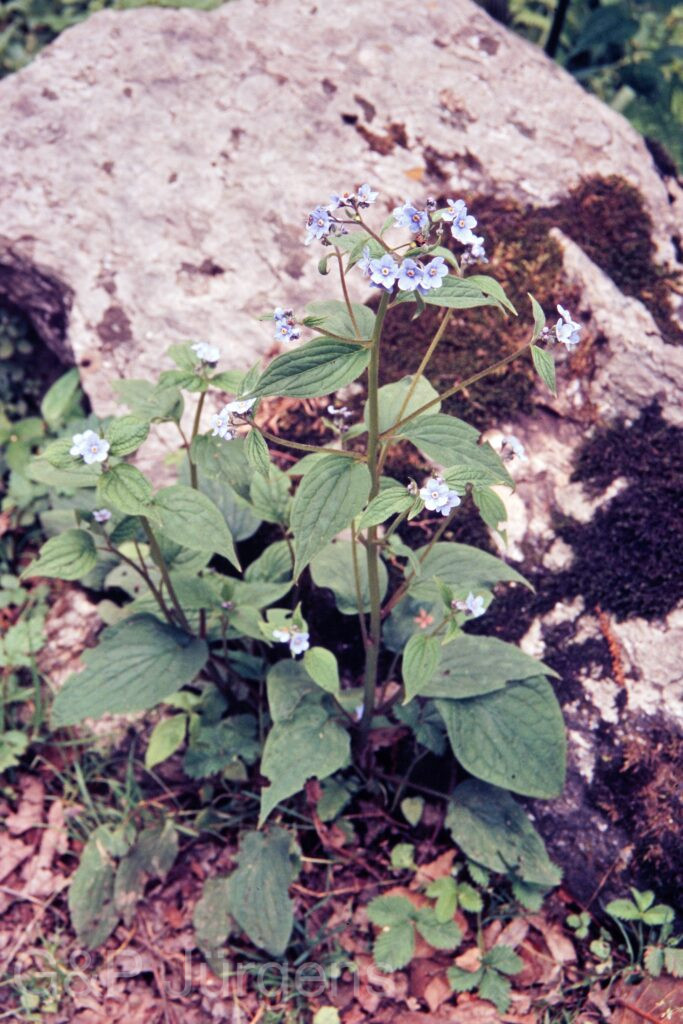
Garh 07 336 ergebnis
India Garhwal Mahji 2650m, June

Description

Hackelia uncinata (Royle ex Benth.) C.E.C.Fisch. is a perennial herb of the Himalaya and Central Asian mountains, with GBIF recording some 417 occurrences across China, India, Nepal, Pakistan, Bhutan, Myanmar, Mongolia and Russia. It grows in forest clearings, on shaded banks, among subalpine scrub and in moist meadow on the cooler slopes of the temperate to subalpine zone, flowering in early summer. The cited collections, from south of Rara Lake in west Nepal at 3600 m in June and from Mahji in Garhwal (Indian Himalaya) at 2650 m in June, illustrate its preference for partly shaded, humus-rich montane sites where it forms loose stands.

The plant produces erect to ascending, pubescent stems from a perennial rootstock, bearing alternate, ovate-lanceolate to elliptic leaves that are softly hairy, the lower ones petiolate and the upper sessile. The small flowers are arranged in lax, branched, scorpioid cymes; the corolla is rotate to shortly funnelform, pale blue to violet, with five lobes and prominent throat appendages (fornices). The diagnostic feature, reflected in the epithet uncinata, lies in the four nutlets, whose margins bear a row of glochidiate (hooked, barbed) prickles that catch on fur and clothing, effecting epizoochorous dispersal.

Hackelia, segregated from Lappula and the broader stickseed assemblage, is distinguished by nutlet ornamentation and is centred on the temperate mountains of Asia and the Americas. The hooked nutlets are an effective adaptation for animal-mediated dispersal across open montane terrain. The species is widespread and not of conservation concern, occurring frequently in both natural and lightly disturbed habitats throughout its broad Himalayan and Central Asian range.

Author: (Royle ex Benth.) C.E.C.Fisch. · Sources: POWO (Kew), GBIF, Flora of Nepal, Flora of China, Boraginaceae of the Western Himalaya, Brand monograph on Hackelia and Lappula
L.

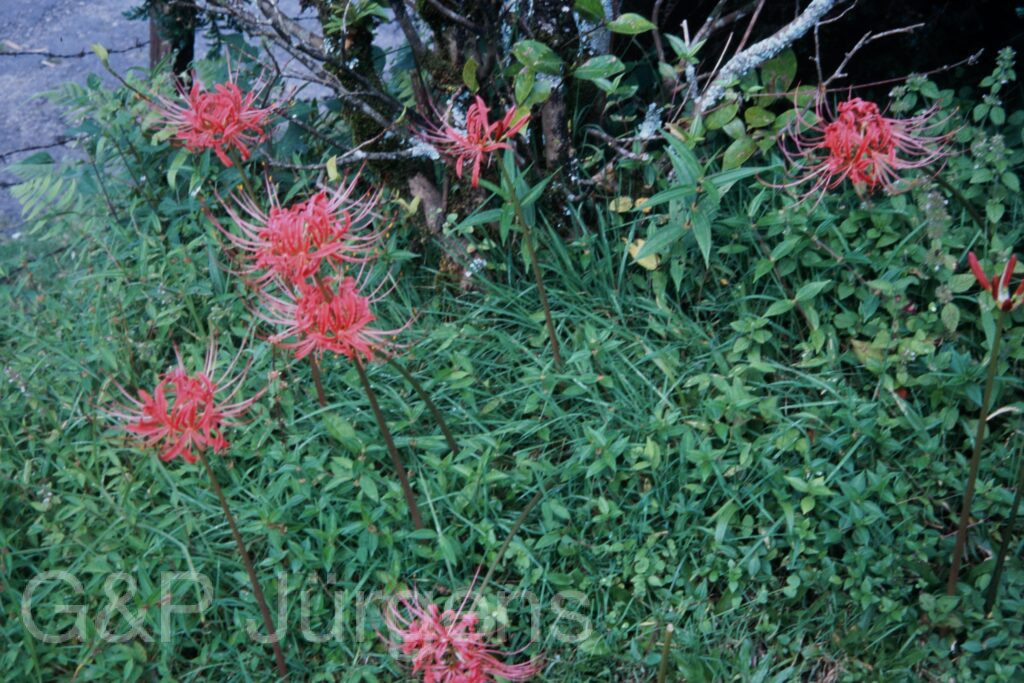
Sikkim2003 550 P773
Sikkim Gangtok 1750m August

Description

Haemanthus coccineus is a bulbous geophyte native to the winter-rainfall regions of South Africa and Namibia, where the overwhelming majority of its more than three thousand records originate; the further occurrences in Australia, New Zealand, the United States and Europe represent cultivation and naturalisation. In its homeland it grows on rocky slopes, in sandy or stony soils and seasonally dry scrub of the Cape, flowering in late summer to autumn after the foliage has died back. The plant photographed at Gangtok in Sikkim at 1750 m in August is a cultivated specimen well outside the species' natural range, the Himalaya being far removed from its Mediterranean-climate African home.

The plant arises from a large, flattened, fleshy bulb. It typically produces only two (occasionally more) broad, strap-shaped, prostrate leaves that lie flat on the ground, often spotted or barred with red-purple beneath and ciliate at the margin; these are usually borne after flowering. The inflorescence is a stout, mottled scape topped by a dense umbel of small flowers tightly enclosed by several showy, fleshy, bright scarlet spathe bracts, giving the plant its common name of blood lily or paintbrush lily. Numerous coral-red stamens with prominent yellow anthers project beyond the perianth, and the fruit is a fleshy, brightly coloured berry containing few large seeds.

Haemanthus is a southern African genus of the Amaryllidaceae characterised by the brush-like umbel framed by coloured bracts, and H. coccineus is its most widespread and variable species. The bright bracts and exserted stamens attract bird and insect pollinators, while the fleshy berries are dispersed by animals. Long cultivated as an ornamental, it is secure in the wild; its appearance in Himalayan gardens underscores its horticultural popularity rather than any natural Asian distribution.

Author: L. · Sources: POWO (Kew), GBIF, Flora of Southern Africa, The Color Encyclopedia of Cape Bulbs, Snijman's revision of Haemanthus (Amaryllidaceae)

Benth. ex Baker

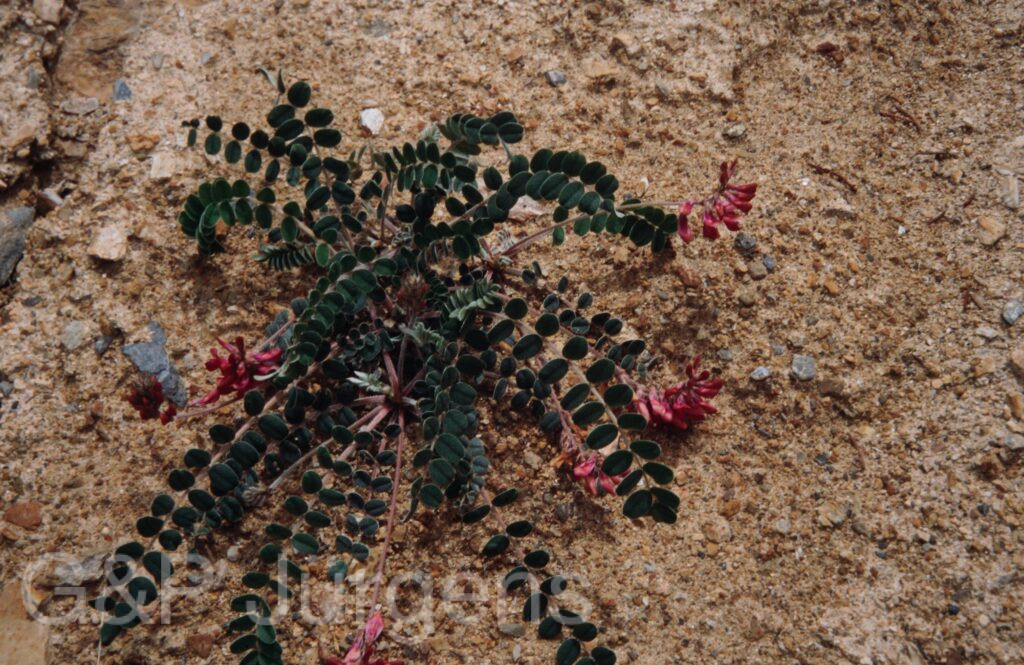
Nepal 99 720 ergebnis ergebnis
West-Nepal Bauli-Khola 3550m, July

Description

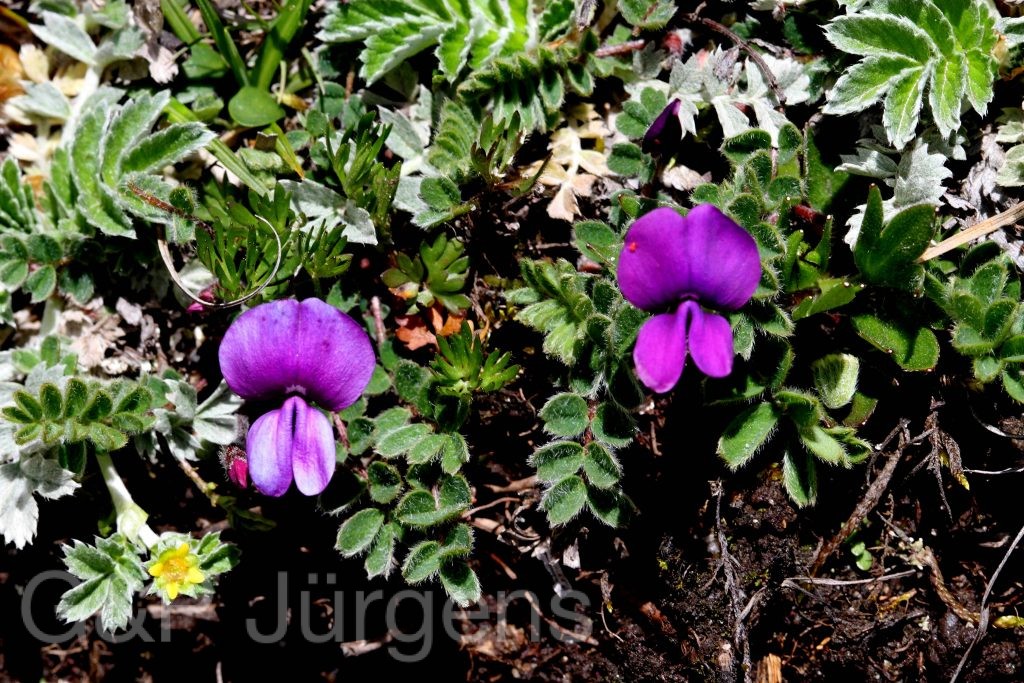
Hedysarum kumaonense is an alpine legume of the western and central Himalaya, recorded from Nepal, China and India across some 63 GBIF occurrences. The photographed plant was found at Bauli-Khola in West Nepal at about 3550 m in July. It inhabits open alpine and subalpine slopes, stony meadows, gravelly riverbanks and grazed turf, typically between 3000 and 4500 m, growing on well-drained, often calcareous substrates in the high-elevation grasslands that flower briefly during the short summer.

The plant is a perennial herb with a stout woody rootstock and ascending to erect stems. The leaves are imparipinnate, bearing several pairs of elliptic to oblong leaflets, with membranous stipules at the base of the petiole. The flowers are papilionaceous, pink to purple or reddish, arranged in dense axillary racemes; each has the standard, wing and keel petals characteristic of the Fabaceae. The diagnostic fruit is a flattened, transversely jointed loment that breaks at maturity into one-seeded, reticulate articles, a feature that distinguishes Hedysarum (sweetvetches) from related genera.

Like most legumes the species fixes atmospheric nitrogen through root nodules in symbiosis with rhizobia, enriching the impoverished alpine soils it colonises. The lomentaceous fruit segments are dispersed individually, aided by their textured surface. As a member of the Himalayan alpine flora with a regionally restricted range, H. kumaonense is not formally assessed as threatened but is subject to heavy summer grazing across its montane pastures.

Author: Benth. ex Baker · Sources: POWO (Kew), GBIF, Flora of China, Flora of Nepal, Flora of Pakistan, Fedtschenko – Monograph of the Genus Hedysarum

(Benth.) B.H.Choi & H.Ohashi

Sikkim2011 44
Bhutan Chele-La 4000m, May
Sikkim2011 78
Sikkim Vista-valley 3700m, June
Sikkim2011 44 1
Sikkim Vista-valley 3700m, June

Description

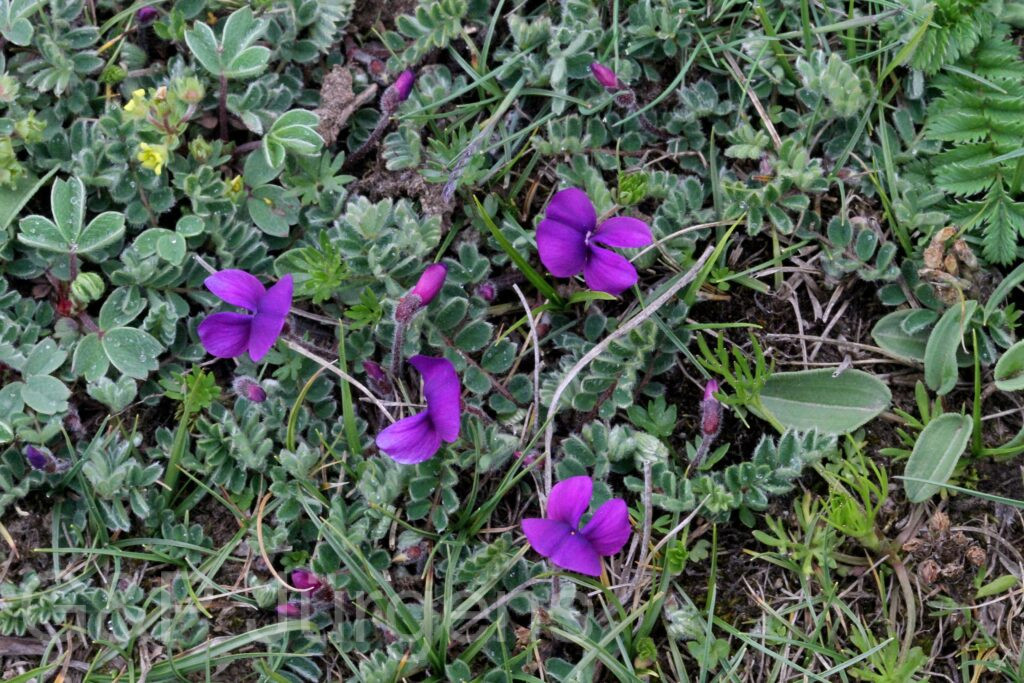
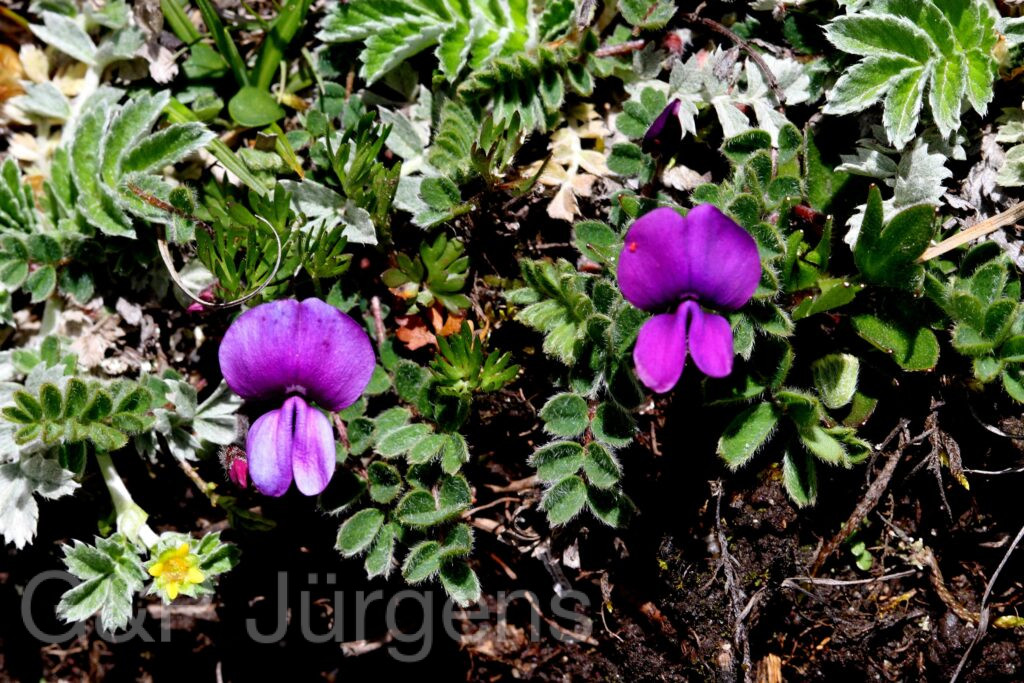
Hedysarum tibeticum is a high-alpine legume of the Himalaya and Tibetan plateau, distributed across China, India, Nepal and Bhutan, with around 295 GBIF records; it has historically also been treated under the name Stracheya tibetica, reflecting earlier generic placement. It grows on open stony alpine slopes, gravelly pastures, moraine flats and dry grassy banks near and above treeline, generally between about 3500 and 4500 m. The collections cited from Chele-La in Bhutan at 4000 m in May and from the Vista-valley in Sikkim at 3700 m in June show its early-summer flowering across the high eastern Himalaya.

It is a low, cushion- or mat-forming perennial herb arising from a stout woody rootstock and deep taproot. The leaves are imparipinnate with several pairs of small, oblong to elliptic leaflets that are often appressed-hairy. The flowers are borne in short, dense racemes; each is the typical papilionaceous pea-flower, with a standard, two wings and a keel, coloured pink to purplish-red. The diagnostic fruit is a flattened, transversely jointed lomentum that breaks at maturity into one-seeded segments, the articles often margined or prickly, aiding epizoochorous dispersal.

The taxon has been the subject of nomenclatural revision, the monotypic genus Stracheya having been merged into Hedysarum by Choi and Ohashi on the basis of morphological and molecular evidence, so that POWO now treats Hedysarum tibeticum as accepted. The low cushion habit and deep root are adaptations to wind, cold and the thin soils of the high plateau, while the jointed lomentum is an efficient dispersal device. Widespread across the Tibetan borderlands, the species is not considered threatened and is a characteristic component of high-alpine legume communities.

Author: (Benth.) B.H.Choi & H.Ohashi · Sources: POWO (Kew), GBIF, Flora of China (Fabaceae), Flora of Bhutan, Annotated Checklist of the Flowering Plants of Nepal, Choi & Ohashi systematic revision of Hedysarum

(W.W.Sm.) Y.Tang & H.Peng

Sikkim2003 458 P634
Sikkim Chopta Valley 4000m August
Sikkim2003 459 G636
Sikkim Chopta Valley 4000m August

Description

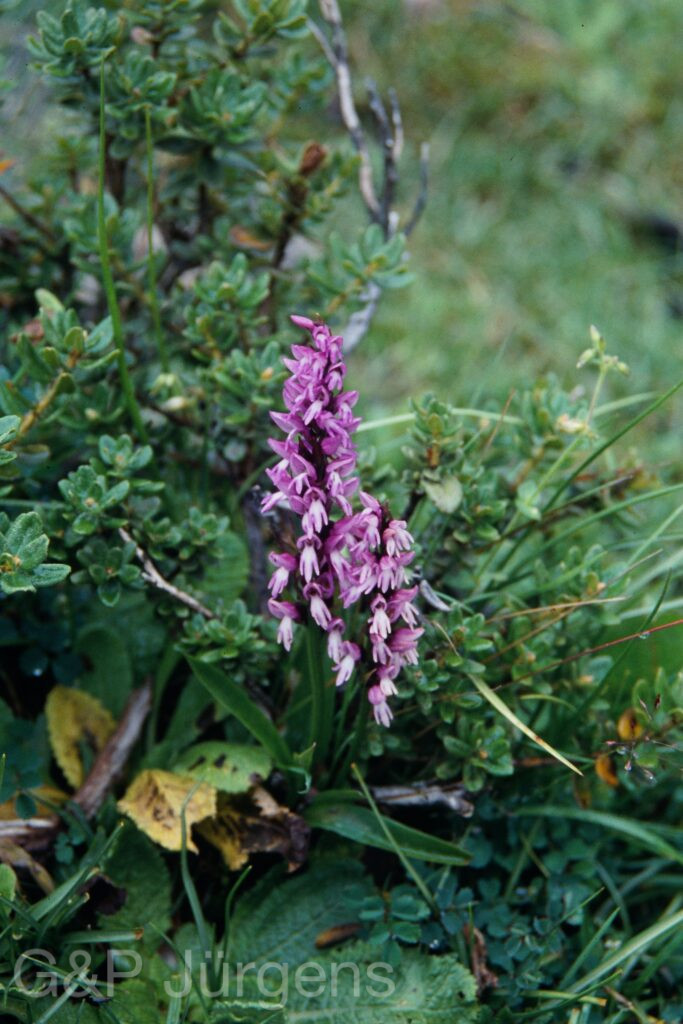
Hemipilia calcicola is a terrestrial orchid of the high Sino-Himalaya, recorded from southwestern China (notably Yunnan and Sichuan) and extending into Nepal, Sikkim and Bhutan, with GBIF logging 199 occurrences across CN, NP and BT. As both its epithet calcicola and its habitat preference indicate, it favours calcareous substrates, growing in alpine and subalpine meadows, on grassy limestone slopes and in open turf, typically between about 3000 and 4300 m. The photographed plant was found in the Chopta Valley of Sikkim at around 4000 m, flowering in August during the late-monsoon alpine flowering season.

The species is a slender terrestrial herb arising from an ovoid or globose underground tuberoid. It typically bears a single basal leaf, ovate to cordate and frequently marked above with purplish spots, clasping the base of the erect flowering stem. The inflorescence is a lax raceme of several resupinate flowers; each has spreading sepals and petals and a prominent, deflexed, often three-lobed labellum bearing a slender nectar-spur at its base. The column carries the pollinaria characteristic of the Orchidaceae, and the fruit is a dehiscent capsule releasing dust-like, abundant seeds requiring mycorrhizal association for germination.

The taxon was originally described as a variety under Habenaria/Neottianthe (reflected in the website slug neottianthe-cucullata-var-calcicola) and was transferred to Hemipilia by Tang and Peng on molecular grounds, consolidating Neottianthe within an expanded Hemipilia. It is one of numerous calciphilous Sino-Himalayan orchids whose specialised soil requirements and dependence on pollinators and mycorrhizae make populations vulnerable to grazing, collection and habitat disturbance.

Author: (W.W.Sm.) Y.Tang & H.Peng · Sources: POWO (Kew), GBIF, Flora of China (Orchidaceae), Genera Orchidacearum (Pridgeon et al.), Tang & Peng revision of Hemipilia

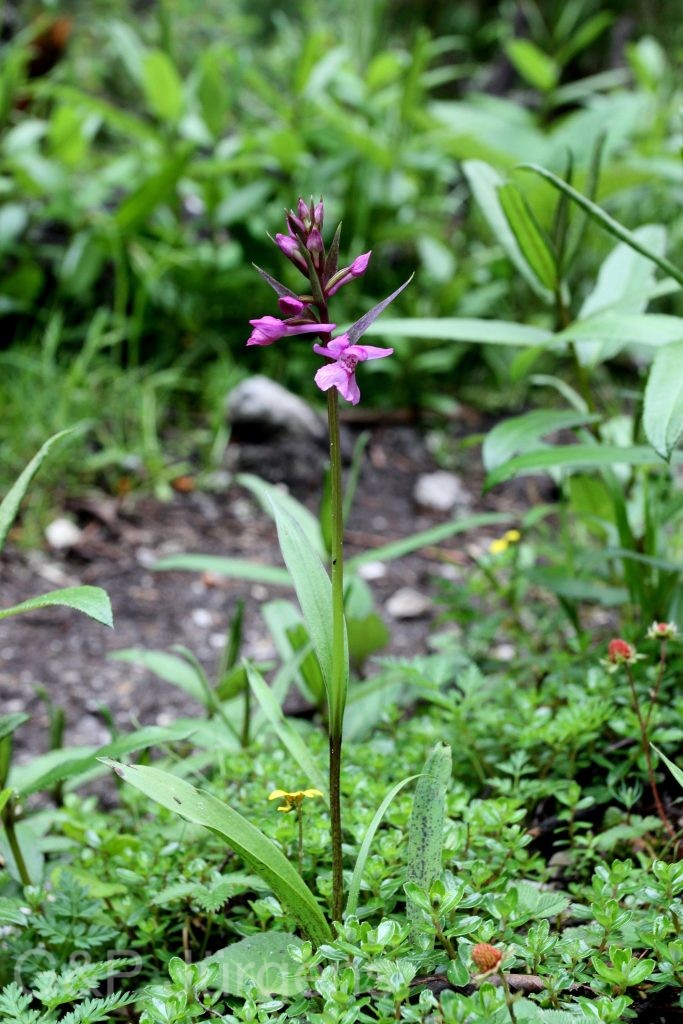
(D.Don) Y.Tang & H.Peng

Sikkim2003 150 P201
Sikkim Dzongri, 4100m August
BhutanPG2011 792
Bhutan Ludlow-Sherriff-Trail Kem-La, 4300m July

Description

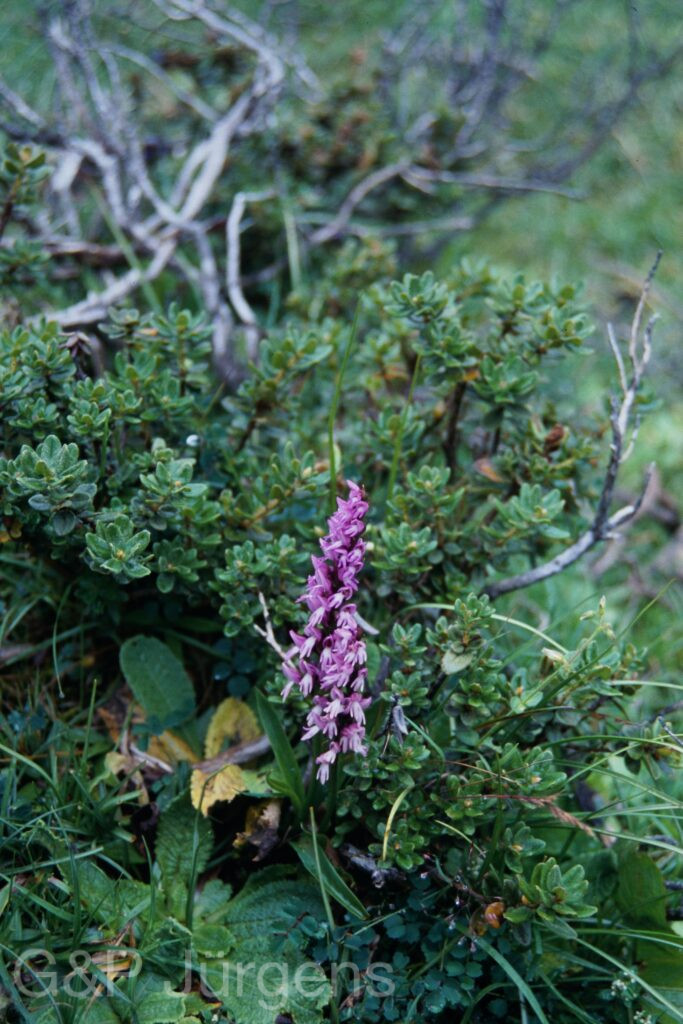
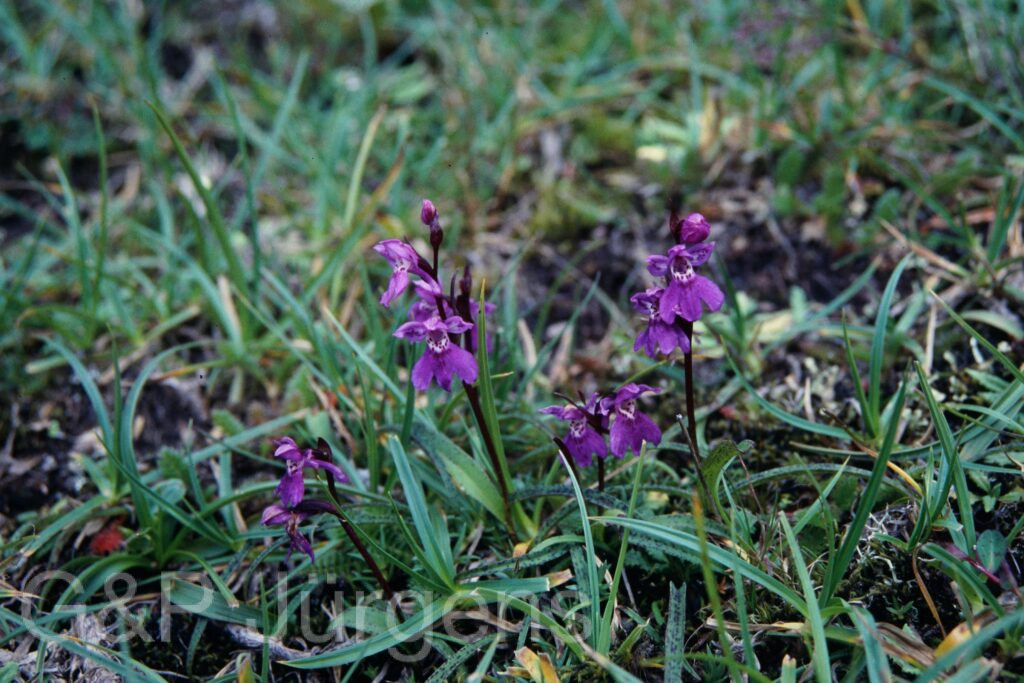
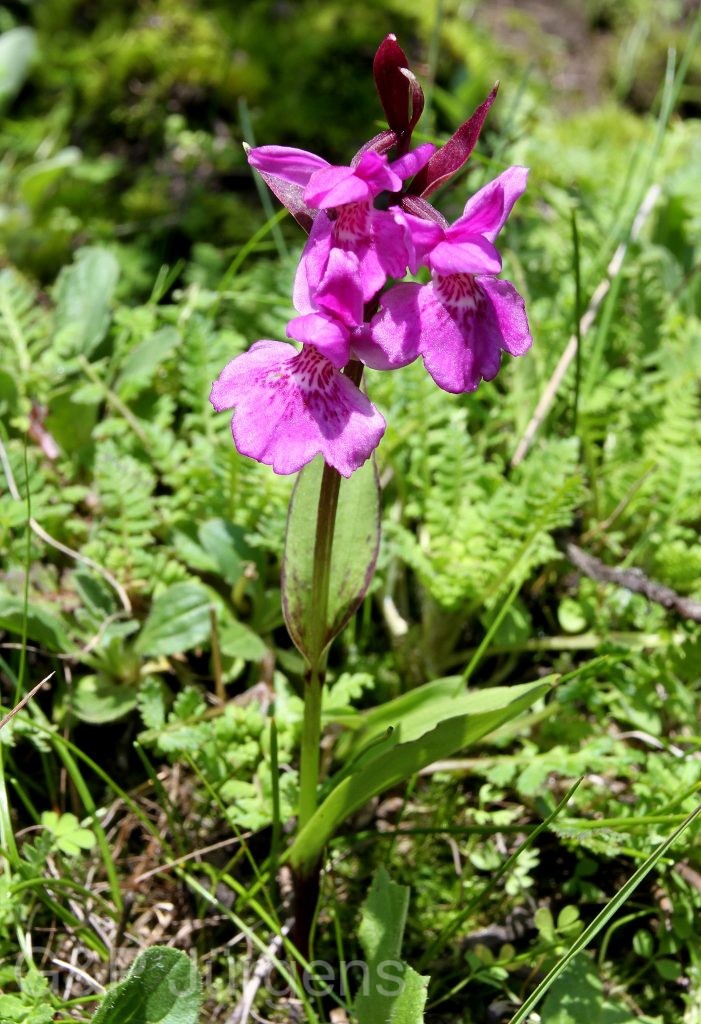
Hemipilia chusua is a terrestrial orchid widely distributed across temperate and alpine Asia, recorded from China, Nepal, India, Bhutan, Myanmar, Russia, Japan and Korea, with over 1700 GBIF occurrences making it one of the best-documented orchids of the region. It grows in alpine and subalpine meadow, open turf, grassy slopes and the margins of dwarf-shrub heath, typically between about 2500 and 4500 m. The illustrated plants from Dzongri in Sikkim at 4100 m, flowering in August, and from Kem-La on the Ludlow-Sherriff Trail in Bhutan at 4300 m in July, exemplify its high-altitude grassland habitat.

It is a slender terrestrial herb arising from small ovoid to ellipsoid tubers, with an erect, glabrous stem bearing one or few leaves. The leaves are lanceolate to oblong-lanceolate, sheathing at the base and somewhat clasping the stem. The inflorescence is a lax, few-flowered terminal raceme of showy rosy-purple to magenta flowers; the lip (labellum) is broad, three-lobed and bears a slender, downward-pointing spur longer than the ovary, while the lateral sepals spread and the dorsal sepal and petals form a loose hood. The fruit is an erect, ribbed dehiscent capsule releasing dust-like seeds.

Long familiar as Orchis or Ponerorchis chusua, the species was transferred to Hemipilia by Tang and Peng following molecular reappraisal of the orchidine alliance. Though wide-ranging and locally abundant, like all wild orchids it is listed under CITES Appendix II, and its alpine populations are vulnerable to collection, grazing pressure and the upslope shift of montane vegetation under climate change.

Author: (D.Don) Y.Tang & H.Peng · Sources: POWO (Kew), GBIF, Flora of Bhutan, Flora of China, Pearce & Cribb The Orchids of Bhutan

(King & Pantl.) Y.Tang & H.Peng

BhutanPG2011 66 ergebnis
Bhutan Menchuang, 2650m June

Description

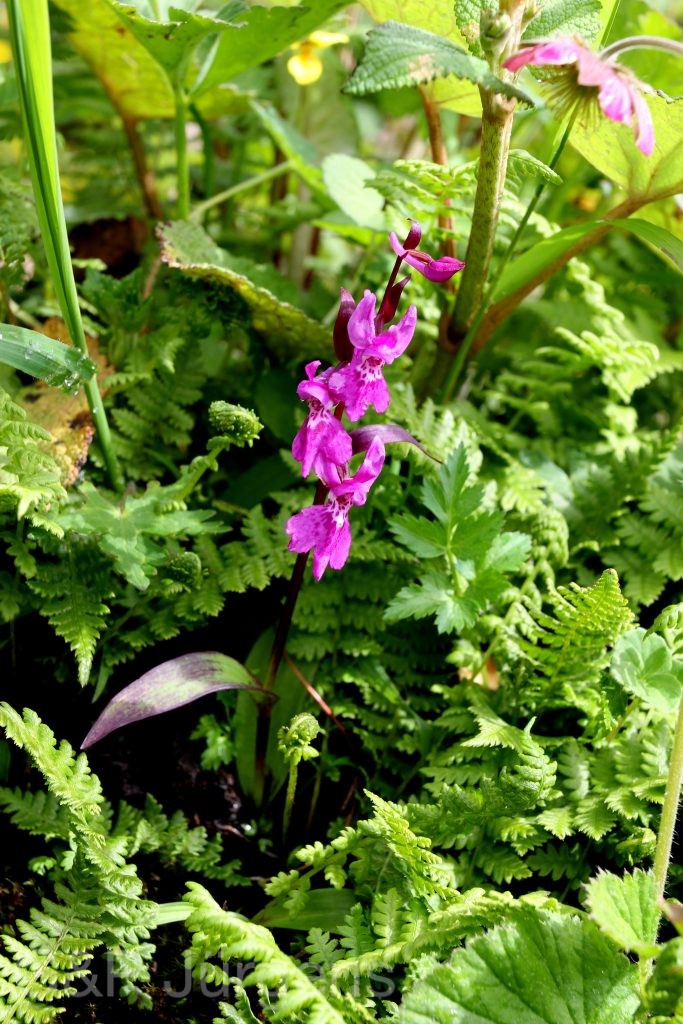
Hemipilia puberula is a terrestrial orchid of the temperate Sino-Himalayan mountains, recorded from China, Bhutan, India and Myanmar, with 41 GBIF occurrences indicating a relatively restricted eastern Himalayan and southwest Chinese distribution. It grows on grassy and rocky slopes, in open forest margins and among scrub in the cool montane to subalpine zone, generally between about 2400 and 3500 m. The illustrated plant was found at Menchuang in Bhutan at around 2650 m in June, in the upper temperate belt where flushed slopes and forest edges support a scattered terrestrial orchid flora.

The plant develops from a small ovoid or ellipsoid tuber and typically bears one (sometimes two) basal leaf that is ovate to elliptic and frequently spotted or mottled with purplish blotches above. The slender erect stem carries a lax raceme of a few showy flowers. These are rosy-purple to pinkish-lilac, with spreading sepals and petals and a prominent, broad, flabellate lip that is often notched or lobed at the apex and bears a slender backward-pointing spur; the epithet puberula refers to the fine minute pubescence on the plant. The fruit is an erect ribbed capsule.

The basionym authority (King & Pantl.) Y.Tang & H.Peng reflects the modern recircumscription of Hemipilia to include species formerly placed in Chusua and segregated from Ponerorchis, supported by molecular phylogenetic study. The genus belongs to tribe Orchideae and is a Sino-Himalayan group of tuberous terrestrial orchids. With its limited range and showy flowers, H. puberula is locally uncommon and potentially vulnerable to grazing and collection, and is regulated under CITES Appendix II.

Author: (King & Pantl.) Y.Tang & H.Peng · Sources: POWO (Kew), GBIF, Flora of China, The Orchids of Bhutan (Pearce & Cribb), Tang, Xiang & Peng (Hemipilia phylogeny)

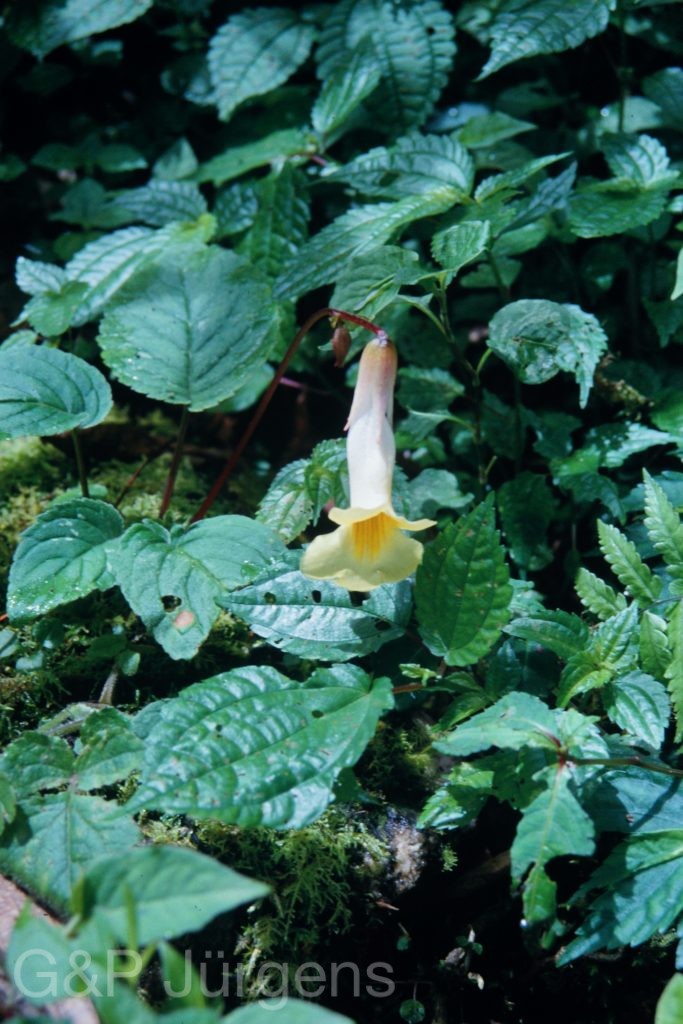
(C.B.Clarke) D.J. Middleton & Mich. Müller

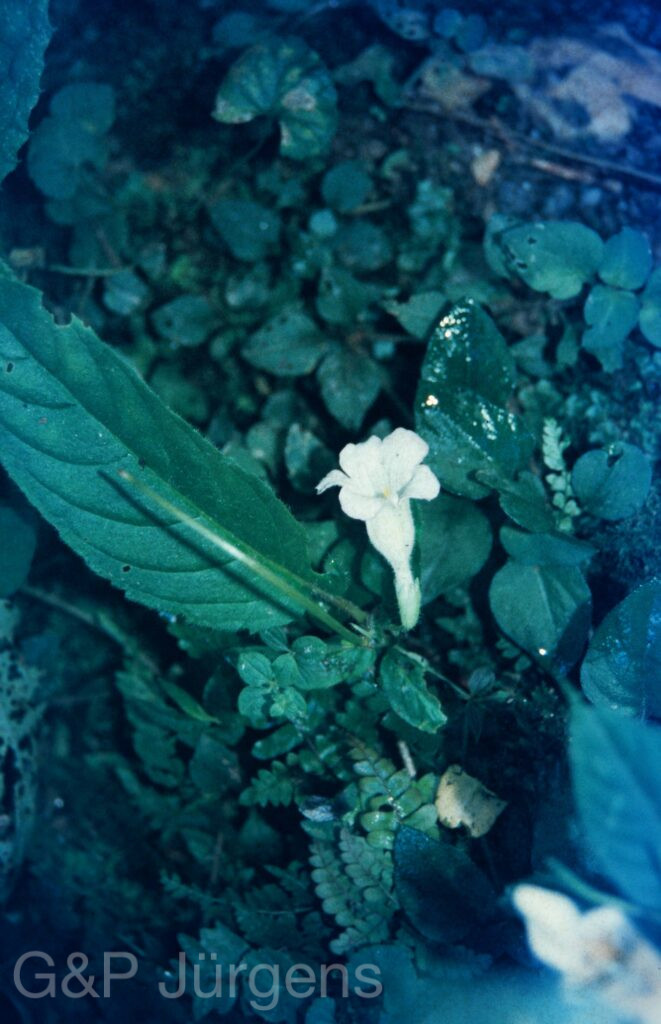
Sikkim2003 59 P79
Sikkim above Yoksam 2750m August
Sikkim2003 60 G80
Sikkim Yoksam 1800m, August

Description

Henckelia calva (C.B.Clarke) D.J.Middleton & Mich.Müller is a perennial herb of the Gesneriaceae (the input subtribe name Didymocarpinae notwithstanding), distributed across the eastern Himalaya and adjacent ranges. GBIF (a sparse 12 occurrences) records it from northern India, Bhutan and Myanmar, where it grows on shaded, moss-covered rocks, damp banks and forest understorey in humid broad-leaved and evergreen forest. The two Sikkim records at Yoksam, at 1,800 m and 2,750 m, both in August during the monsoon, indicate a montane preference broadly between 1,500 and 3,000 m, where high atmospheric humidity supports its growth.

The plant is a soft, more or less rhizomatous herb. Leaves are opposite, ovate to elliptic, often somewhat fleshy, with a crenate to serrate margin and a relatively sparse indumentum (the epithet "calva", meaning bald or glabrescent, alludes to this comparatively smooth surface). The inflorescences are axillary cymes bearing showy zygomorphic flowers; the corolla is tubular and bilabiate, white to pale violet or bluish, the throat sometimes marked with yellow. There are two fertile stamens with cohering anthers, and the ovary is superior, maturing into the elongate, narrowly cylindrical, twisted capsule characteristic of Henckelia, which splits to release numerous minute seeds.

The species was transferred from Didymocarpus to a recircumscribed Henckelia following molecular phylogenetic studies of Old World Gesneriaceae by Middleton, Möller and collaborators, a reclassification that reshaped generic limits in the subtribe Didymocarpinae. As a narrow-range, hygrophilous understorey herb of the eastern Himalaya, it is intrinsically vulnerable to forest disturbance and habitat loss, and its few documented occurrences underline the need for continued field survey of the region's Gesneriaceae.

Author: (C.B.Clarke) D.J. Middleton & Mich. Müller · Sources: POWO (Kew), Flora of Bhutan Vol. 2, Flora of China Vol. 18, GBIF, Weber & Burtt: Remarks on the classification of Gesneriaceae

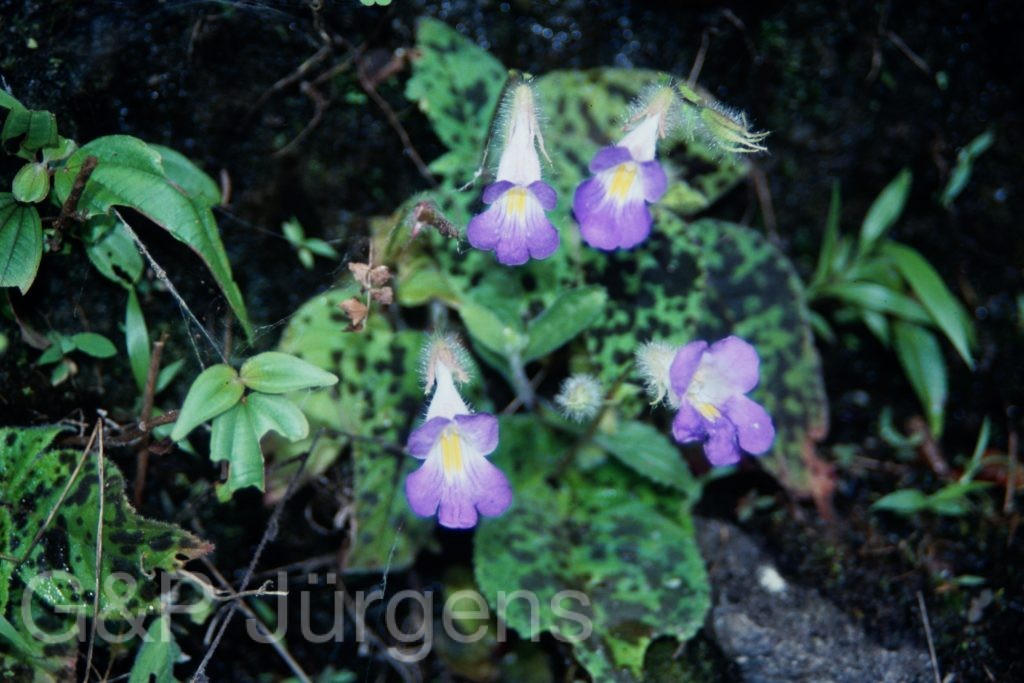
D.Don A.Dietr.

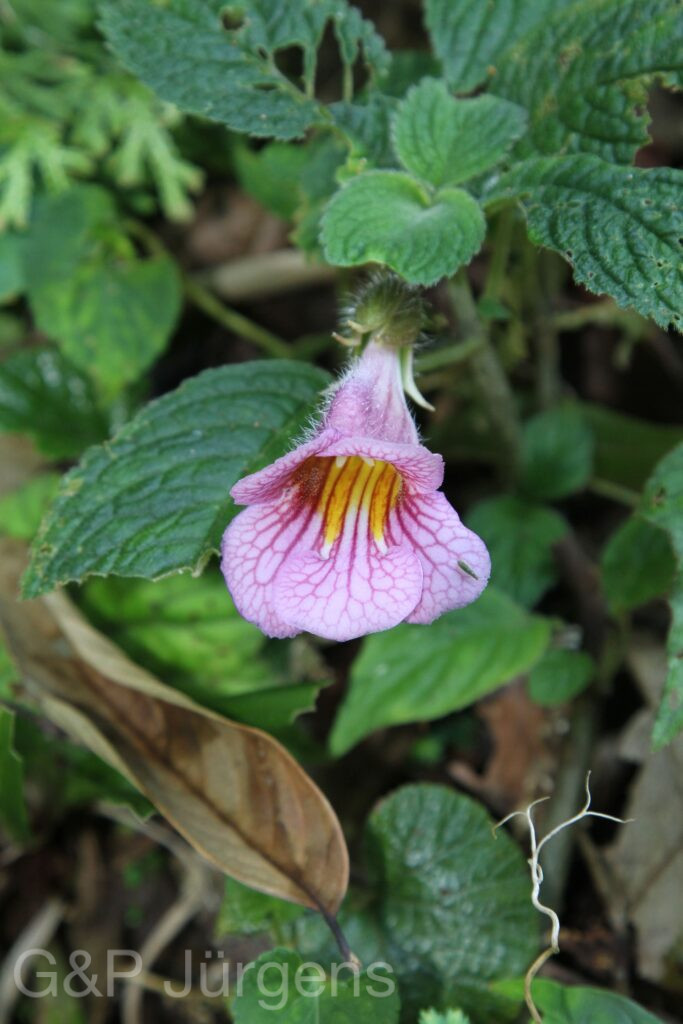
Sikkim2003 23 G27
Sikkim Rathong-Chu 1200m, August
Garw 2005 214 ergebnis ergebnis
India Garhwal Simkarok 2680m, September
Bhutan2015 89
Bhutan Galephug 600m, October

Description

Henckelia pumila is a small gesneriad of the eastern and central Himalaya and adjacent Indo-Burma, recorded from China, India, Nepal, Myanmar, Bhutan, Thailand and Vietnam, with close to 600 occurrences in GBIF. It is a plant of shaded, humid habitats, growing on moist rock faces, mossy boulders, stream banks and shaded earth cuttings within evergreen broad-leaved and subtropical hill forest. Its wide altitudinal amplitude is reflected in the collection localities given for the illustrated material, ranging from the Rathong Chu in Sikkim at 1200 m in August and Galephug in Bhutan at only 600 m in October up to Simkarok in Indian Garhwal at 2680 m in September, indicating tolerance of both warm subtropical and cool temperate forest understorey.

The plant is a small perennial or facultatively annual herb with a short, often weak stem and crowded, opposite or subopposite leaves that are ovate to elliptic, crenate-serrate and softly hairy, frequently somewhat fleshy and unequal in a pair. The flowers are borne singly or in few-flowered cymes on slender peduncles from the leaf axils. The corolla is tubular and weakly two-lipped, white to pale lilac or bluish, often with a yellow throat or coloured markings, with the lower lip the more spreading. There are two fertile stamens with coherent anthers, and the ovary is superior, developing into the slender, elongate, twisted or straight loculicidal capsule typical of the genus.

The family is given as Didymocarpinae on the source page, the subtribal name within the Gesneriaceae to which Henckelia belongs; the species is correctly a member of the Gesneriaceae. The genus Henckelia has been substantially recircumscribed following molecular study, with numerous Asiatic didymocarpoid species transferred into and out of it, and H. pumila sits within this Sino-Himalayan radiation of rock-dwelling gesneriads. Its capacity to colonise moist shaded rock and its broad elevational range make it locally frequent, and it is not regarded as threatened.

Author: D.Don A.Dietr. · Sources: POWO (Kew), GBIF, Flora of China Vol. 18, Flora of Bhutan Vol. 2, Flora of Nepal, A Revision of the Genus Henckelia (Gesneriaceae)

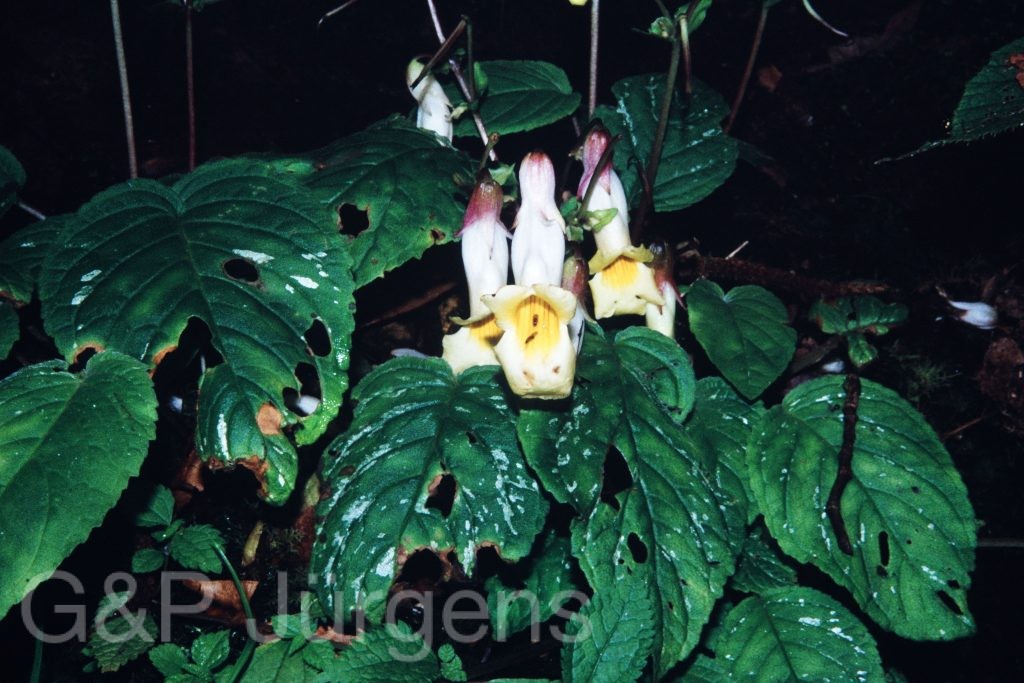
(Buch.-Ham. ex D.Don) A.Dietr

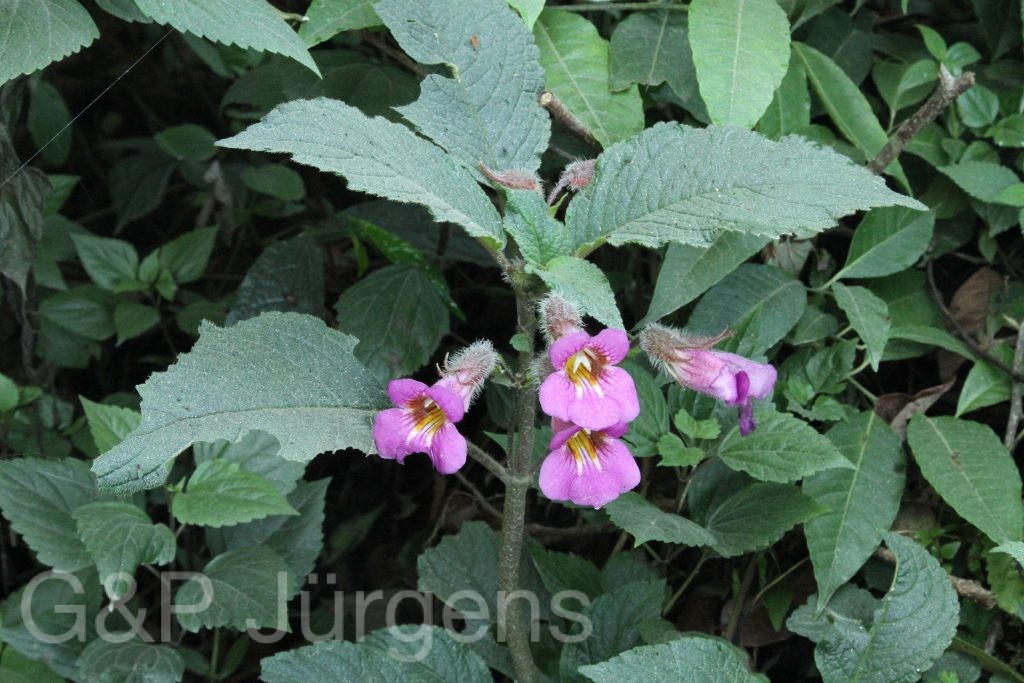
Bhutan2012 646
Bhutan Tserang 1600m, September
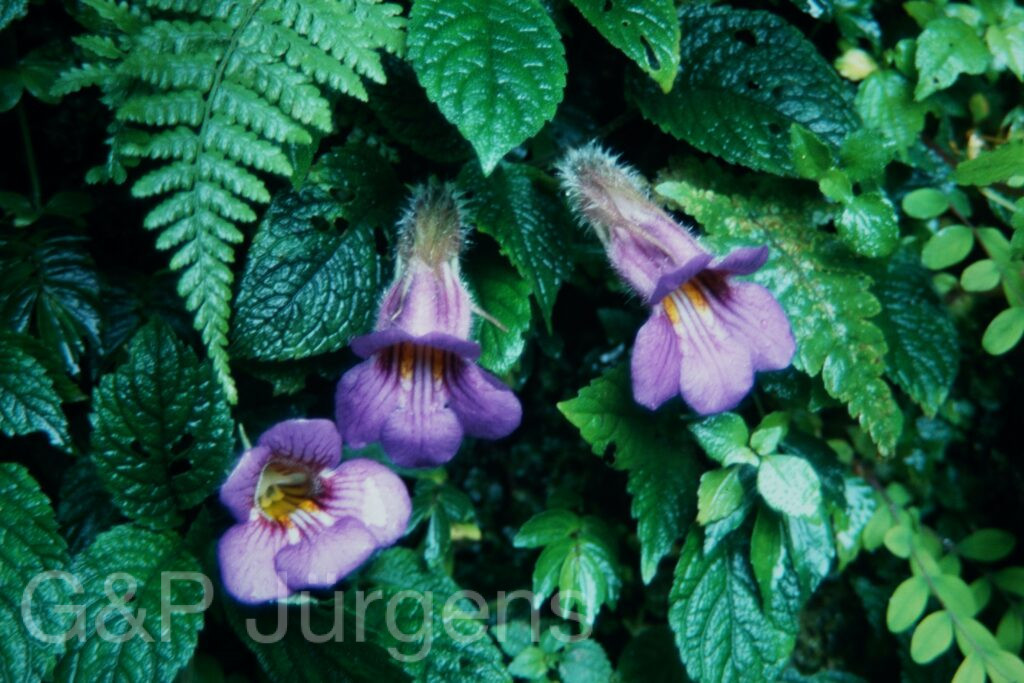
Sikkim2003 348 W489
Sikkim above Yoksam 1880m August

Description

Henckelia urticifolia is a Himalayan gesneriad ranging through Nepal, China, India, Bhutan and Myanmar, the c. 212 georeferenced records concentrated along the humid southern Himalayan front. It is a plant of shaded, moist understorey habitats: it grows on damp banks, mossy rock faces, ravines and the margins of broadleaved and subtropical forest, generally between about 1200 and 2200 m. The illustrated material was gathered at Tserang in Bhutan at 1600 m in September and above Yoksam in Sikkim at 1880 m in August, locations typical of its preference for cool, dripping, sheltered sites that retain monsoon moisture.

It is a perennial herb with an erect to ascending, often softly hairy stem. As the epithet suggests, the leaves are nettle-like (urticifolia): opposite, ovate, coarsely toothed, thin-textured and pubescent, with prominent venation. The flowers are borne in axillary cymes; the calyx is five-parted and the corolla zygomorphic, tubular and bilabiate with a short two-lobed upper lip and a larger spreading three-lobed lower lip, pale violet to bluish-mauve, often with darker guidelines and a paler throat. There are two fertile stamens with cohering anthers, and the ovary is superior. The fruit is the characteristic elongate, narrowly cylindrical capsule of the genus.

Henckelia (Gesneriaceae) was recircumscribed in the molecular reclassification of the Old World didymocarpoid gesneriads, with many Asiatic species formerly placed in Didymocarpus and Chirita transferred to it; the supra-generic placement in subtribe Didymocarpinae reflects that scheme, so the family name given here, though listed as the subtribal name, properly resolves to Gesneriaceae. The genus is defined by its straight, undivided capsules and bilabiate corolla. Forest-dwelling and locally common, the species is not presently considered threatened, but it depends on intact humid forest cover.

Author: (Buch.-Ham. ex D.Don) A.Dietr · Sources: POWO (Kew), GBIF, Flora of China, Flora of Bhutan, Weber & Möller revision of Henckelia (Gesneriaceae)