
L.
Description
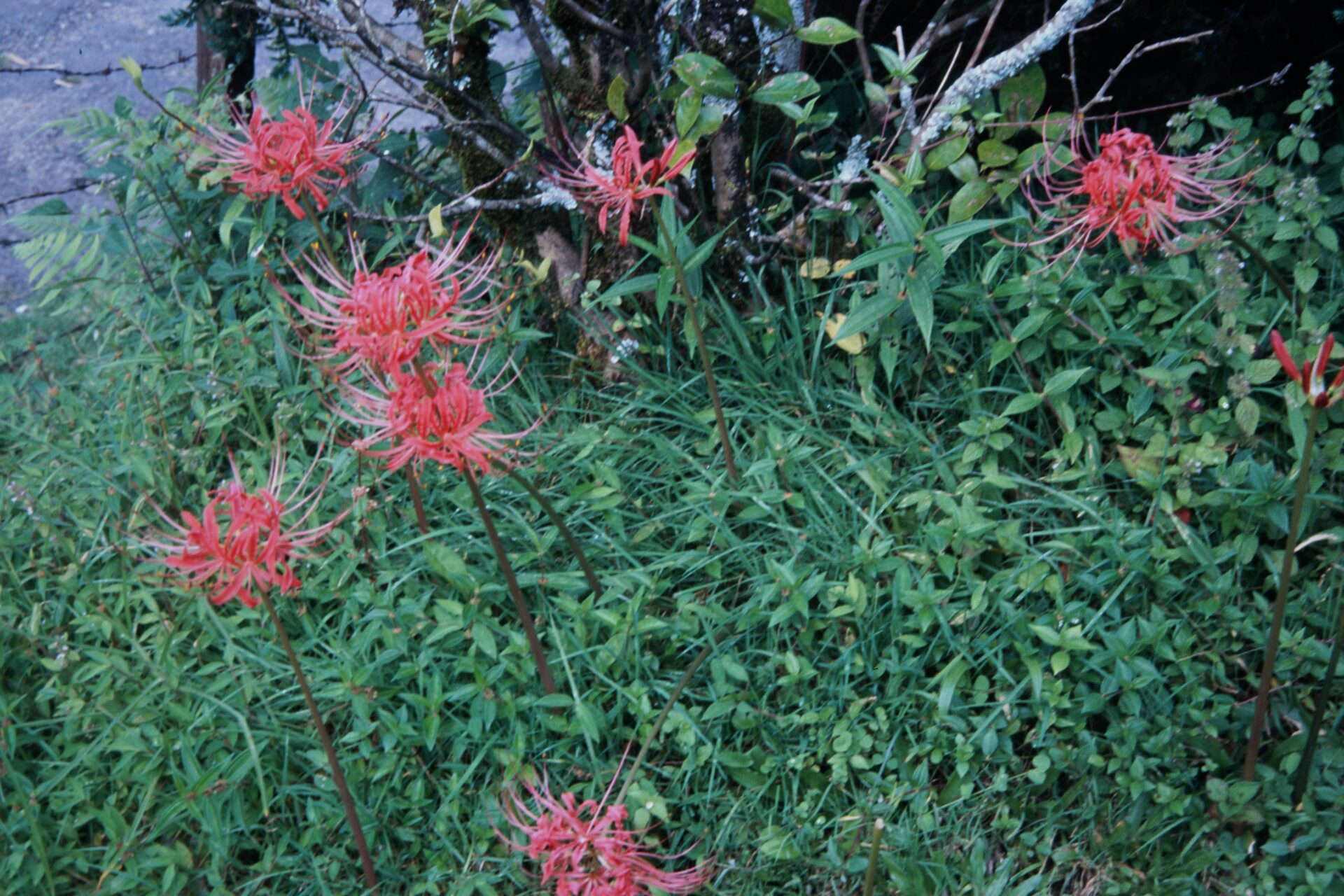
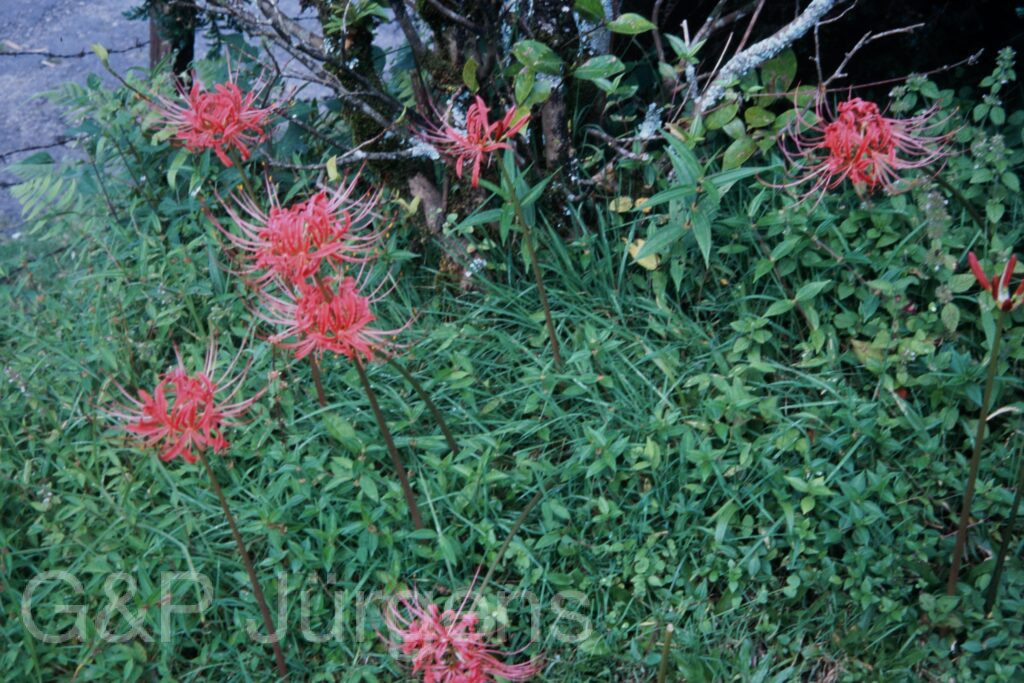
Haemanthus coccineus is a bulbous geophyte native to the winter-rainfall regions of South Africa and Namibia, where the overwhelming majority of its more than three thousand records originate; the further occurrences in Australia, New Zealand, the United States and Europe represent cultivation and naturalisation. In its homeland it grows on rocky slopes, in sandy or stony soils and seasonally dry scrub of the Cape, flowering in late summer to autumn after the foliage has died back. The plant photographed at Gangtok in Sikkim at 1750 m in August is a cultivated specimen well outside the species' natural range, the Himalaya being far removed from its Mediterranean-climate African home.
The plant arises from a large, flattened, fleshy bulb. It typically produces only two (occasionally more) broad, strap-shaped, prostrate leaves that lie flat on the ground, often spotted or barred with red-purple beneath and ciliate at the margin; these are usually borne after flowering. The inflorescence is a stout, mottled scape topped by a dense umbel of small flowers tightly enclosed by several showy, fleshy, bright scarlet spathe bracts, giving the plant its common name of blood lily or paintbrush lily. Numerous coral-red stamens with prominent yellow anthers project beyond the perianth, and the fruit is a fleshy, brightly coloured berry containing few large seeds.
Haemanthus is a southern African genus of the Amaryllidaceae characterised by the brush-like umbel framed by coloured bracts, and H. coccineus is its most widespread and variable species. The bright bracts and exserted stamens attract bird and insect pollinators, while the fleshy berries are dispersed by animals. Long cultivated as an ornamental, it is secure in the wild; its appearance in Himalayan gardens underscores its horticultural popularity rather than any natural Asian distribution.
Author: L. · Sources: POWO (Kew), GBIF, Flora of Southern Africa, The Color Encyclopedia of Cape Bulbs, Snijman's revision of Haemanthus (Amaryllidaceae)