(Benth.) B.H.Choi & H.Ohashi
Description
Hedysarum tibeticum is a high-alpine legume of the Himalaya and Tibetan plateau, distributed across China, India, Nepal and Bhutan, with around 295 GBIF records; it has historically also been treated under the name Stracheya tibetica, reflecting earlier generic placement. It grows on open stony alpine slopes, gravelly pastures, moraine flats and dry grassy banks near and above treeline, generally between about 3500 and 4500 m. The collections cited from Chele-La in Bhutan at 4000 m in May and from the Vista-valley in Sikkim at 3700 m in June show its early-summer flowering across the high eastern Himalaya.
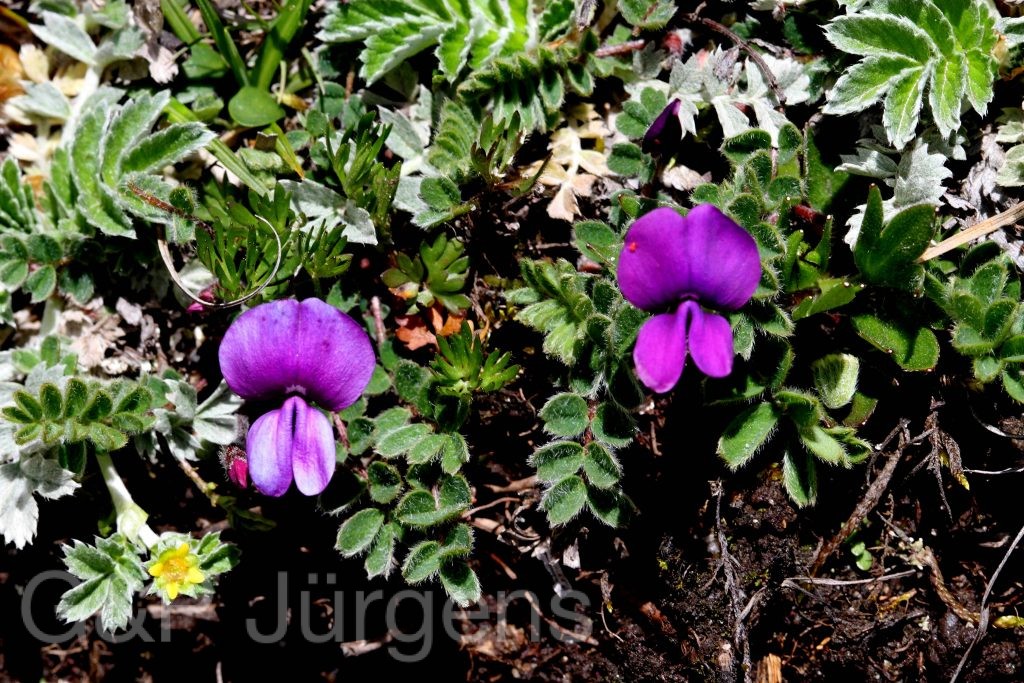
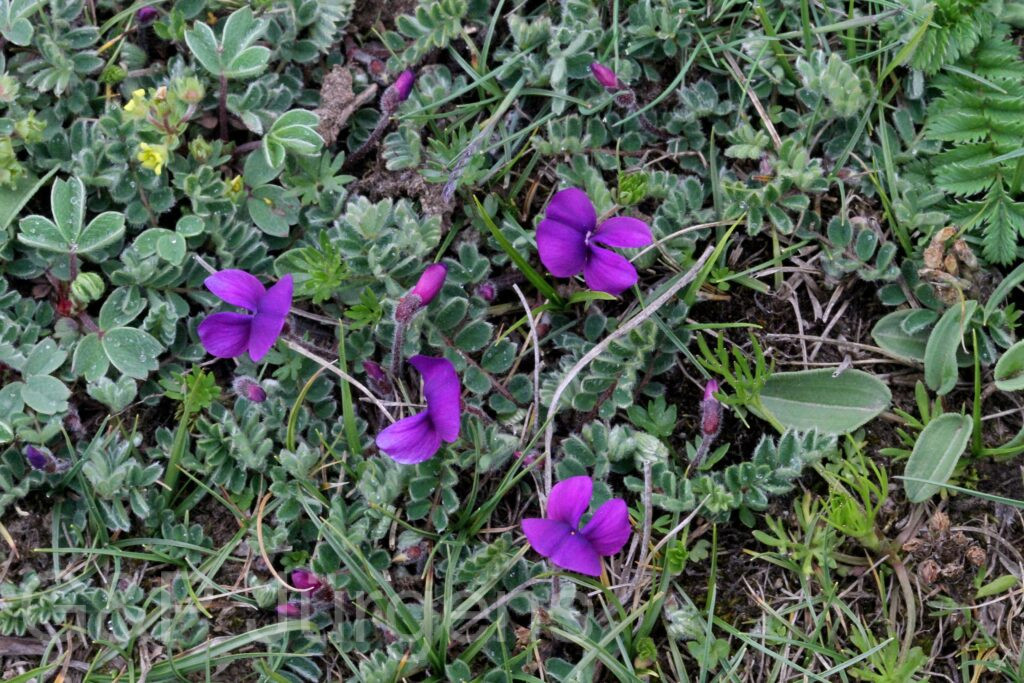
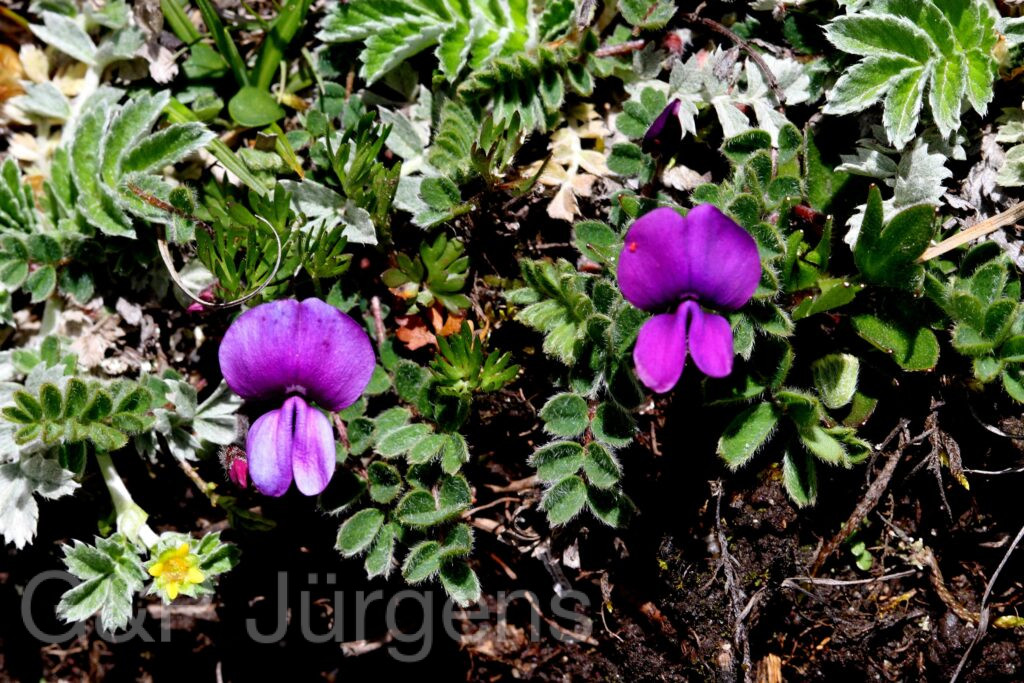
It is a low, cushion- or mat-forming perennial herb arising from a stout woody rootstock and deep taproot. The leaves are imparipinnate with several pairs of small, oblong to elliptic leaflets that are often appressed-hairy. The flowers are borne in short, dense racemes; each is the typical papilionaceous pea-flower, with a standard, two wings and a keel, coloured pink to purplish-red. The diagnostic fruit is a flattened, transversely jointed lomentum that breaks at maturity into one-seeded segments, the articles often margined or prickly, aiding epizoochorous dispersal.
The taxon has been the subject of nomenclatural revision, the monotypic genus Stracheya having been merged into Hedysarum by Choi and Ohashi on the basis of morphological and molecular evidence, so that POWO now treats Hedysarum tibeticum as accepted. The low cushion habit and deep root are adaptations to wind, cold and the thin soils of the high plateau, while the jointed lomentum is an efficient dispersal device. Widespread across the Tibetan borderlands, the species is not considered threatened and is a characteristic component of high-alpine legume communities.
Author: (Benth.) B.H.Choi & H.Ohashi · Sources: POWO (Kew), GBIF, Flora of China (Fabaceae), Flora of Bhutan, Annotated Checklist of the Flowering Plants of Nepal, Choi & Ohashi systematic revision of Hedysarum