Author

GP Jürgens

(Lindl.) X.H.Jin, Schuit., Raskoti & Lu Q.Huang
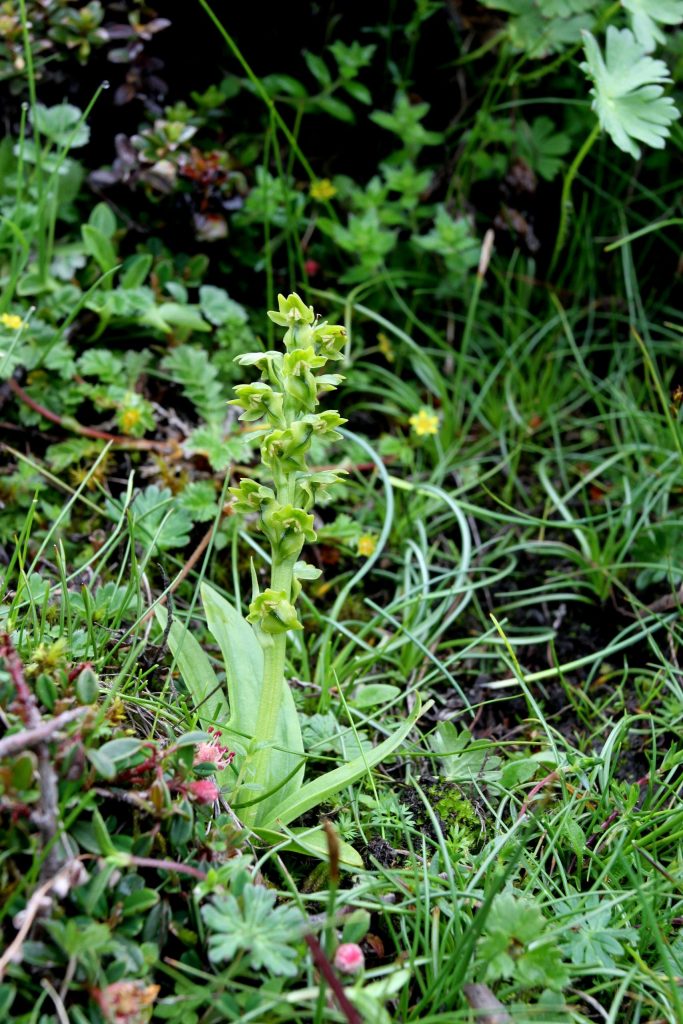
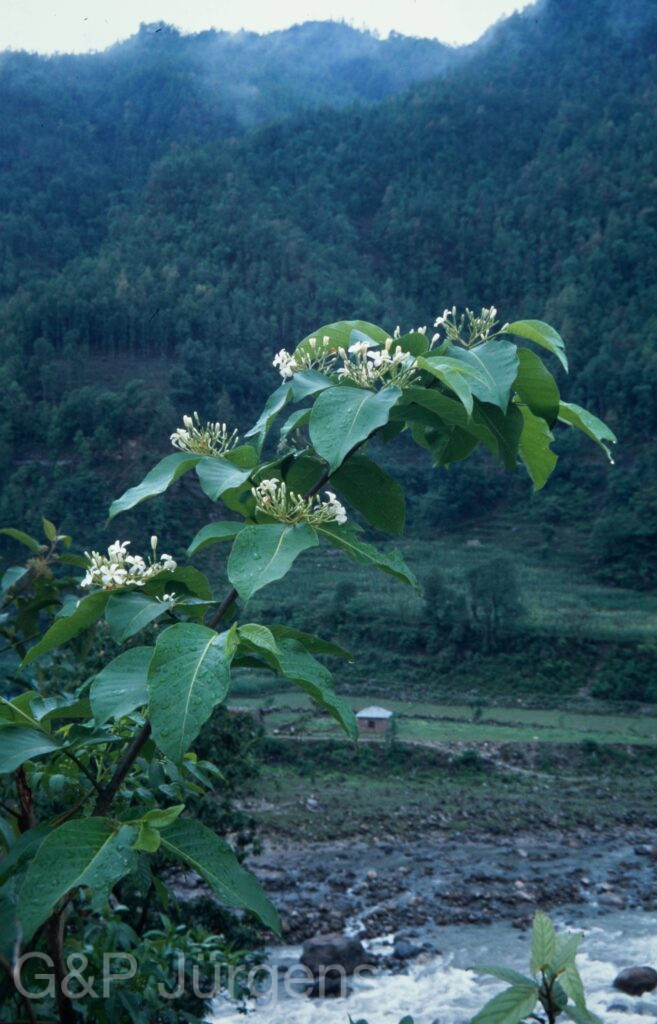
Bhutan2012 839
Bhutan Trontsa 2850m, October

Description

Herminium clavigerum is an alpine terrestrial orchid distributed across the eastern and central Himalaya and adjacent ranges, with documented occurrences in Nepal, China, India, Bhutan and Russia (GBIF logs roughly 220 records). It favours open grassy slopes, moist alpine meadows and the margins of shrubberies, typically between about 2800 and 4000 m. The photographed plant near Trongsa (Trontsa) in central Bhutan at 2850 m, flowering in October, reflects its late-season autumnal anthesis at the lower end of its altitudinal range, where it grows among damp turf in cool, humid montane conditions.

The species is a slender, glabrous geophyte arising from small ovoid or globose tubers. The erect stem bears a few cauline leaves that are narrowly oblong to lanceolate, sheathing at the base and gradually reduced upward into bracts. The inflorescence is a lax to fairly dense terminal raceme of small, greenish to yellowish-green flowers. The lateral sepals are oblong and spreading, the petals narrower; the labellum is the diagnostic organ, deeply three-lobed with elongate, often clavate (club-thickened) lateral lobes, and the spur is short and saccate. The column is short, bearing distinctive clavate caudicles, and the fruit is a small ellipsoid capsule releasing dust-fine seed.

Long placed in the genus Herminium, the species was recombined as Platanthera clavigera by Jin, Schuit., Raskoti & Lu Q.Huang following molecular studies that redefined generic limits within subtribe Orchidinae. Like many Orchidaceae it depends on mycorrhizal associations for germination and is pollinated by small insects. Though not assessed as threatened, its restriction to fragile alpine grassland renders it sensitive to grazing and habitat disturbance.

Author: (Lindl.) X.H.Jin, Schuit., Raskoti & Lu Q.Huang · Sources: POWO (Kew), GBIF, Flora of Bhutan, Flora of China (Orchidaceae), Pridgeon et al. Genera Orchidacearum
(Renz) X.H.Jin, Schuit., Raskoti & Lu Q.Huang

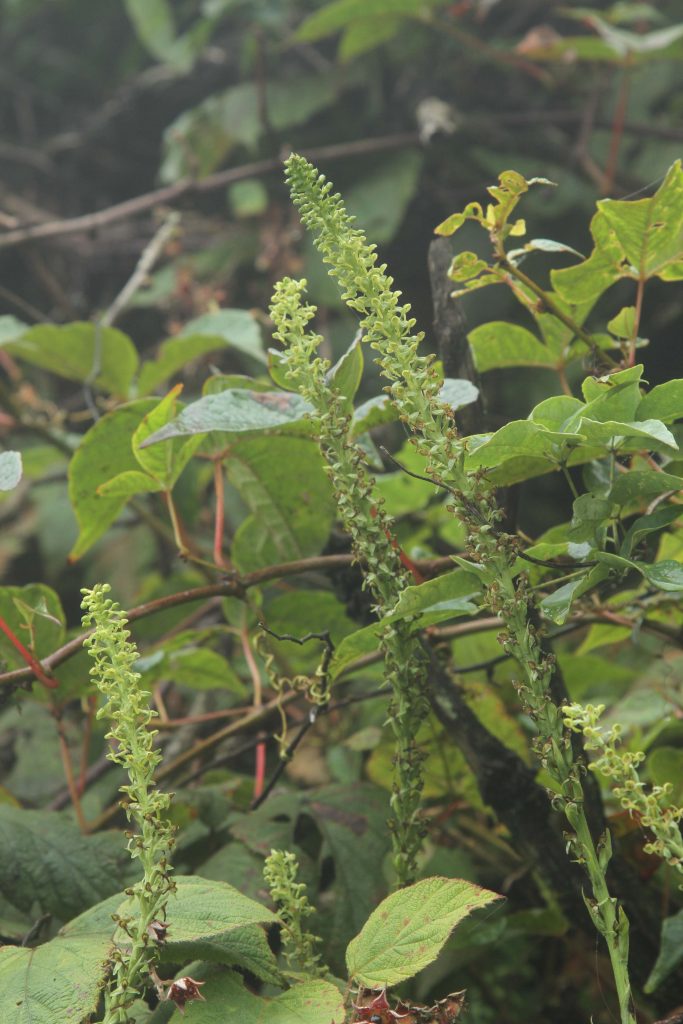
BhutanPG2011 621
Bhutan Ludlow-Sherriff-Trail Kem-La, 4300m July

Description

Herminium himalayanum is a small terrestrial orchid of the high Eastern Himalaya, documented in occurrence records principally from Bhutan, where it is a rare and infrequently collected alpine plant. It inhabits the alpine zone, growing among short turf, mossy banks, damp meadows and the margins of scrub above the treeline, where the flowering individual shown was photographed on the Ludlow–Sherriff trail near Kem-La in Bhutan at 4300 m in July, during the brief monsoon-season flowering of these high pastures.

The plant is a slender, glabrous perennial arising from small subterranean tubers that store reserves through the dormant season. The stem is erect and bears one or few narrow, lanceolate to oblong leaves, often somewhat basal, sheathing at the base. The inflorescence is a slender, few- to several-flowered raceme of small, greenish to yellowish-green flowers. As in Herminium the floral segments are narrow and the labellum is characteristically lobed, frequently three-lobed with elongate divisions and lacking a developed spur or with only a slight saccate base. The column is short, bearing two pollinia attached to viscidia, and the fruit is a small erect capsule liberating dust-like seeds.

The accepted placement of the species follows a molecular recircumscription of the Herminium alliance, the taxon having previously been treated under the segregate genus Bhutanthera, as reflected in its earlier name Bhutanthera himalayana; subsequent phylogenetic work transferred it to Herminium. As a narrow high-alpine Eastern Himalayan endemic with very few known localities, it is of biogeographic interest and should be regarded as data-deficient and potentially of conservation concern given its restricted range and fragile habitat.

Author: (Renz) X.H.Jin, Schuit., Raskoti & Lu Q.Huang · Sources: POWO (Kew), GBIF, The Orchids of Bhutan (Pearce & Cribb), Flora of Bhutan, Jin et al. phylogeny of Herminium and Bhutanthera, CITES Appendices

Rchb.f.

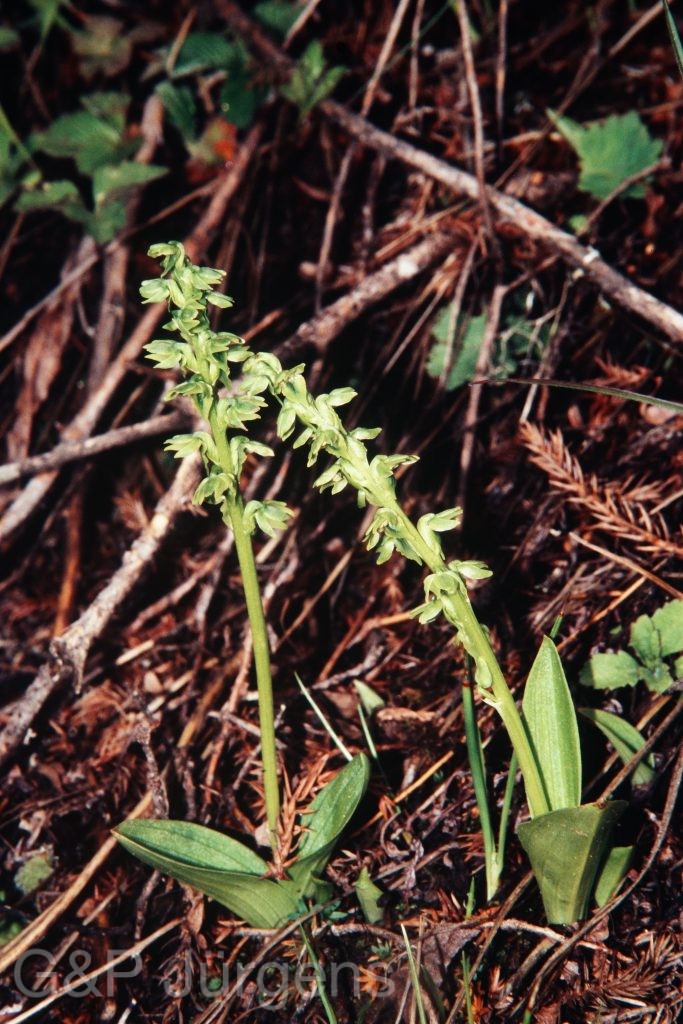
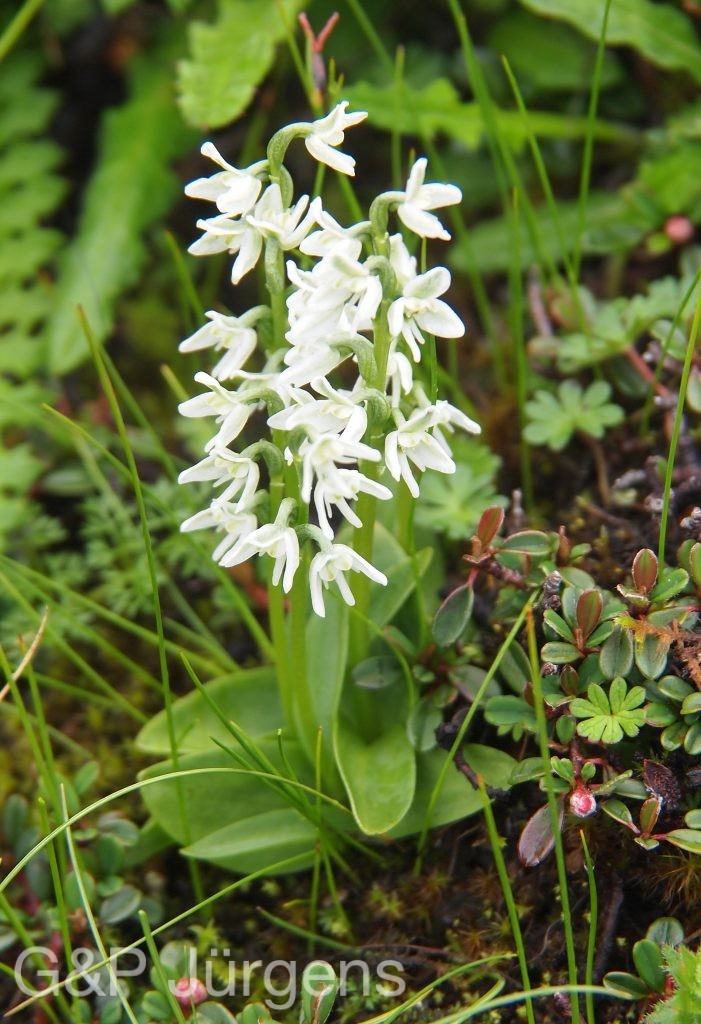
BhutanPG2011 125
Bhutan Tsochenchen, 3500m June
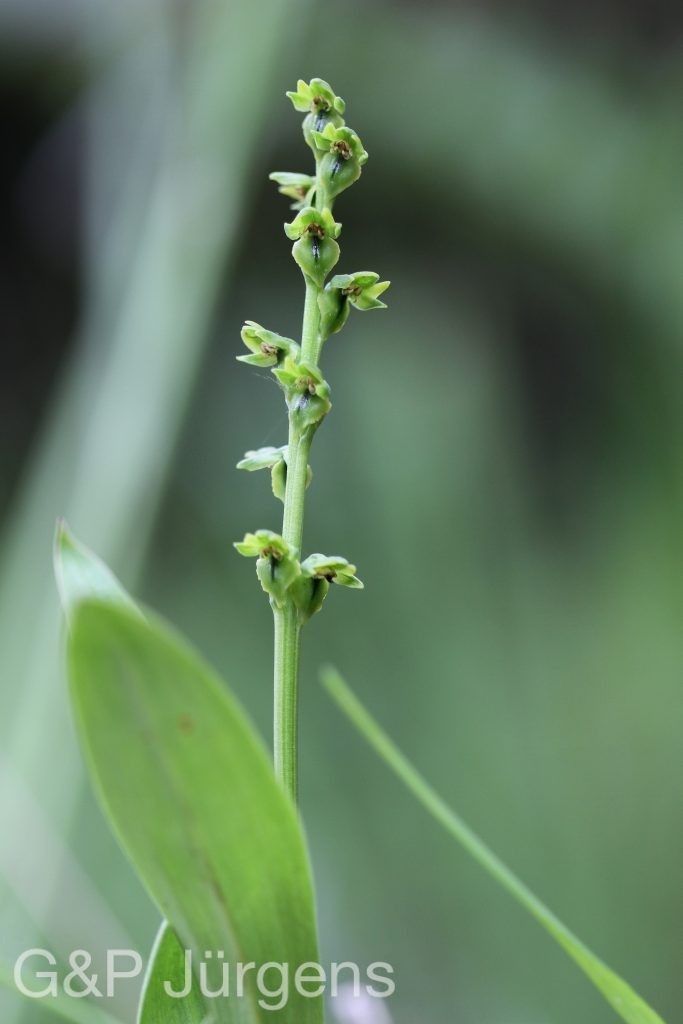
Bh09 196 G335
Bhutan above Thimphu, 3000m June

Description

Herminium josephi is a small terrestrial orchid of the alpine and upper subalpine Himalaya, recorded from China, Nepal, India and Bhutan, with 259 GBIF occurrences clustered along the high mountain chain. It is a plant of open alpine turf, grassy slopes and the moist margins of meadows above the treeline, generally between about 3000 and 4300 m. The illustrated material was gathered in Bhutan at Tsochenchen at around 3500 m and on the slopes above Thimphu at about 3000 m, both in June, when these short-grazed alpine swards flower in the brief window after snowmelt.

The plant arises from one or two small ovoid or globose tubers and produces a slender, erect stem with a few narrow, lanceolate to linear leaves toward the base. The inflorescence is a slender, cylindrical, many-flowered spike of tiny green to yellowish-green flowers. The individual flowers are inconspicuous and somewhat hooded, with the dorsal sepal and petals connivent over the small column; the lip is narrow and characteristically lobed, and the genus is distinguished by its minute flowers and, in many species, a very short or saccate rather than spurred lip. The fruit is a small erect capsule.

Herminium is a genus of tribe Orchideae centred on temperate Asia, with the Sino-Himalayan alpine zone forming a major centre of diversity; H. josephi, described by Reichenbach f., is one of its characteristic high-elevation members. The minute green flowers suggest fly or small-insect pollination typical of the genus. As a widespread alpine species it is not considered threatened, though heavy grazing and climate-driven shifts of the alpine belt may affect local abundance.

Author: Rchb.f. · Sources: POWO (Kew), GBIF, Flora of China, Flora of Bhutan, The Orchids of Bhutan (Pearce & Cribb)

(Thunb. ex Sw.) Vuijk

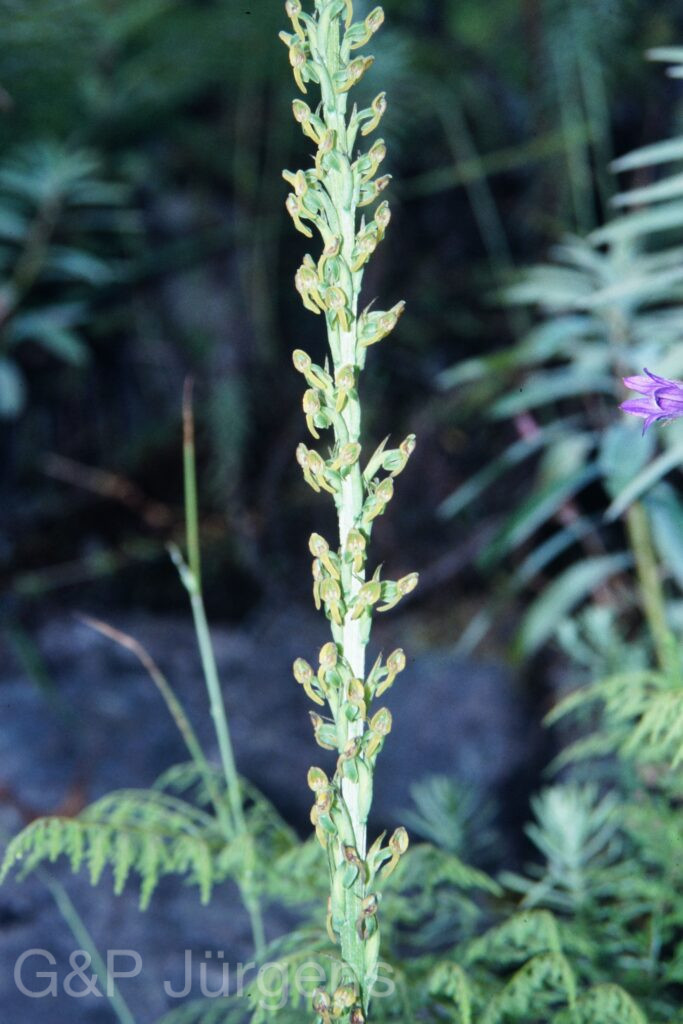
Sikkim2003 380 G536
Sikkim Tista valley 3300m August

Description

A terrestrial orchid of remarkably wide distribution across temperate and montane Asia, from the Himalaya through China, Japan, Korea and Taiwan to South-East Asia and Australasia, with nearly 1950 GBIF occurrences spanning India, Nepal, China, Japan, the Philippines and beyond. It grows in grassy slopes, open meadows, forest clearings and herb-rich banks, generally between about 1000 and 3500 m. The illustrated plant was recorded in August in the Tista valley of Sikkim at around 3300 m, a moist, grassy subalpine setting typical of its summer flowering.

The species is a slender tuberous geophyte arising from one or two small, ovoid root-tubers. The erect stem bears a few narrowly lanceolate to linear, sheathing leaves clustered toward the base and grading into bracts above. The inflorescence is a long, slender, densely many-flowered cylindrical raceme of small green to yellowish-green flowers. Each flower has spreading sepals, narrow petals and a distinctive three-lobed labellum with elongate, often divergent lateral lobes and a short to spurless base; the column is short, bearing two pollinia attached to viscidia for insect removal. The inferior, twisted ovary ripens into a small erect, ribbed capsule releasing dust-like seeds.

Accepted by POWO and GBIF, H. lanceum is the most widespread member of the genus Herminium, the muskorchids, and shows considerable variation in stature and floral detail across its enormous range, with several segregate varieties recognised by some authors. Its small green flowers are adapted to inconspicuous insect pollination, and like all orchids it depends on mycorrhizal fungi for germination. Despite habitat loss in places, its vast range and abundance render it secure; it is listed under CITES Appendix II as a member of Orchidaceae.

Author: (Thunb. ex Sw.) Vuijk · Sources: POWO (Kew), GBIF, Flora of China, Flora of Bhutan, Pridgeon et al. Genera Orchidacearum
(D.Don) P.F.Hunt & Summerh.

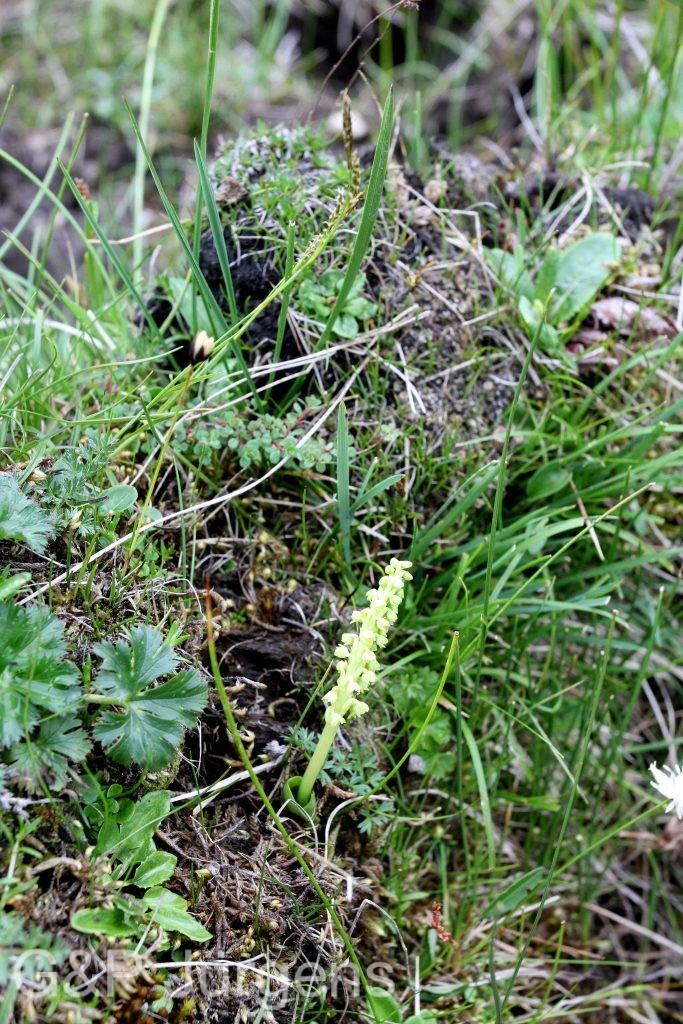
BhutanPG2011 245
Bhutan Tsochenchen 3800m, June

Description

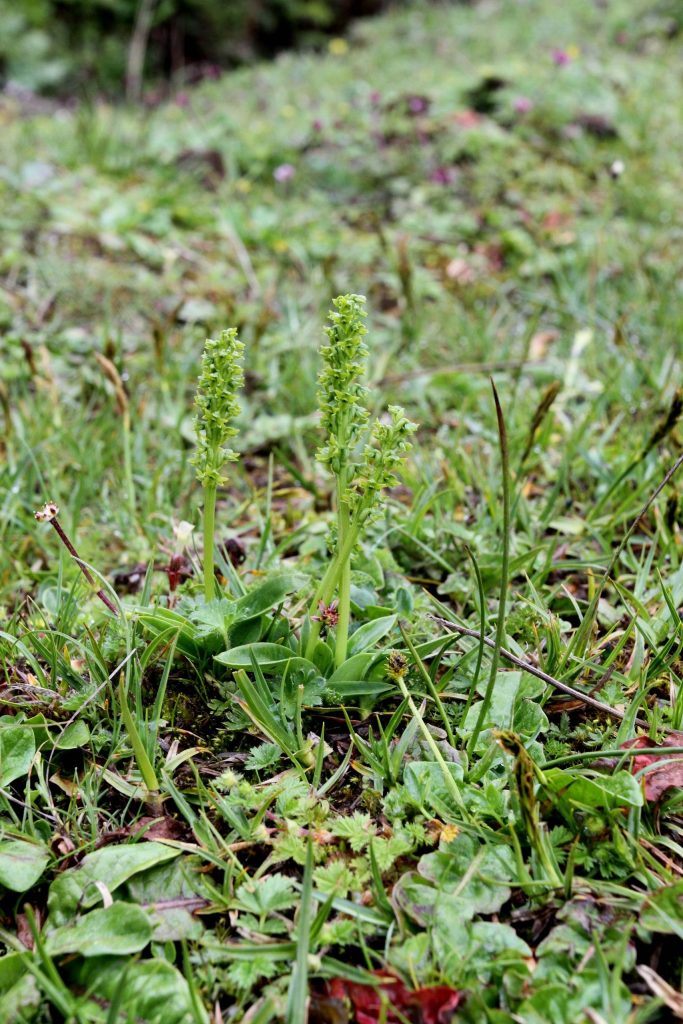
Herminium monophyllum (D.Don) P.F.Hunt & Summerh. is a small terrestrial orchid of the Himalaya and western China, recorded by GBIF from India, Nepal, Bhutan and China across some 59 occurrences. It is a plant of open alpine and subalpine turf, grassy slopes, moist meadows and the margins of scrub, generally between about 3000 and 4300 m. The individual photographed at Tsochenchen in Bhutan at around 3800 m in June, during the brief alpine flowering flush, reflects its preference for cool, humid grassland kept moist through the growing season.

The plant grows from small subterranean tubers and produces a slender erect stem. As the epithet monophyllum indicates, there is characteristically a single principal basal leaf (sometimes with a second much smaller one), which is oblong to lanceolate, sheathing at the base. The inflorescence is a slender, rather lax to dense terminal raceme of numerous tiny greenish or greenish-yellow flowers. Each flower has narrow, somewhat hooded sepals and petals and a small three-lobed labellum without a true spur, the whole giving the inflorescence a delicate, grass-like appearance typical of the genus, which is pollinated chiefly by small insects.

Herminium is a genus of small-flowered terrestrial orchids of tribe Orchideae, distinguished by its spurless or near-spurless labellum and tuberous habit. Herminium monophyllum is one of several closely similar Himalayan species and can be confused with its relatives without close examination. It is inconspicuous and easily overlooked, and although not formally assessed as threatened it is restricted to high-altitude grassland that is vulnerable to overgrazing and warming; like all orchids it is protected under CITES Appendix II.

Author: (D.Don) P.F.Hunt & Summerh. · Sources: POWO (Kew), GBIF, Flora of Bhutan, Flora of China, Pearce and Cribb Orchids of Bhutan, World Checklist of Orchidaceae

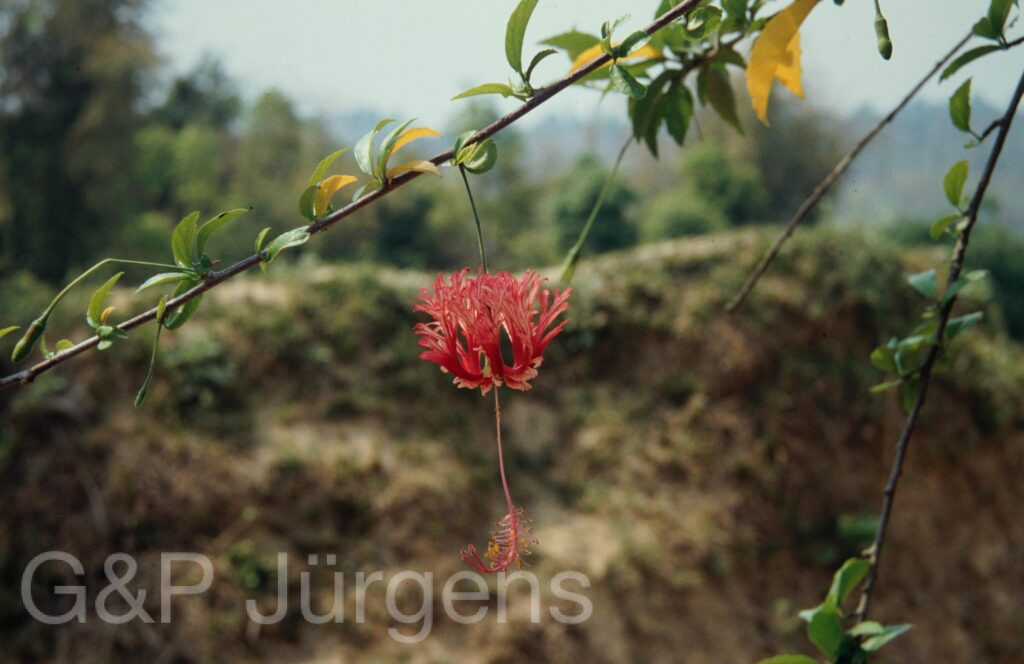
(Dyer) Hook.f.

Nepal 1994 17 ergebnis
Ost-Nepal Kandbari 490m April

Description

Hibiscus schizopetalus is native to coastal East Africa, particularly Kenya, Tanzania and Mozambique, but is now a pantropical ornamental, the GBIF dataset of some 2536 records spanning India, China, Hong Kong, Thailand, Indonesia, the Philippines, Japan, Fiji, French Polynesia, Réunion, and the Neotropics from Brazil and Colombia to Mexico, Costa Rica, Panama and Puerto Rico. In its introduced range it is grown as a garden and hedge shrub in warm lowland to lower-montane settings, escaping locally in disturbed and ruderal sites. The photographed plant from Khandbari in eastern Nepal at 490 m in April reflects this cultivated occurrence in the warm subtropical foothills, well outside its African origin.

It is an evergreen shrub reaching 2–3 m, with slender, often arching to pendulous glabrous branches. The leaves are alternate, ovate to elliptic, 4–7 cm long, with serrate margins, an acuminate apex and short petioles. The flowers are solitary, axillary and conspicuously pendulous on long jointed pedicels; the distinctive corolla consists of five deeply laciniate, recurved petals that are intricately fringed and pinnatifid, coloured pink to red, giving the species its common name fringed or coral hibiscus. The staminal column is long-exserted and pendent, bearing numerous anthers and a five-branched style with capitate stigmas. The fruit is a loculicidal capsule, though fruiting is sparse in cultivation.

Hibiscus schizopetalus belongs to section Lilibiscus of Hibiscus, allied to H. rosa-sinensis with which it readily hybridises and shares ornamental use. The deeply dissected, dangling flowers are an adaptation favouring sunbird and butterfly pollination in its native range. Widely propagated by cuttings, it is of no conservation concern as a cultivar, though wild African populations warrant attention.

Author: (Dyer) Hook.f. · Sources: POWO (Kew), GBIF, Flora of China Vol. 12, Flora of Tropical East Africa (Malvaceae), Flora of Nepal, Hibiscus: A Monograph

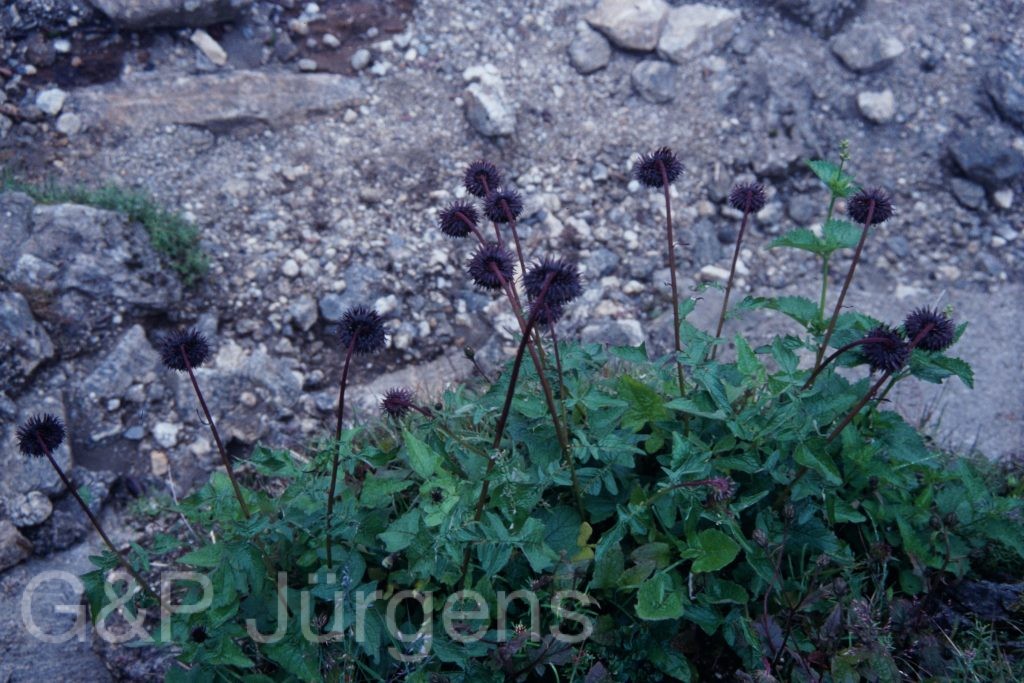
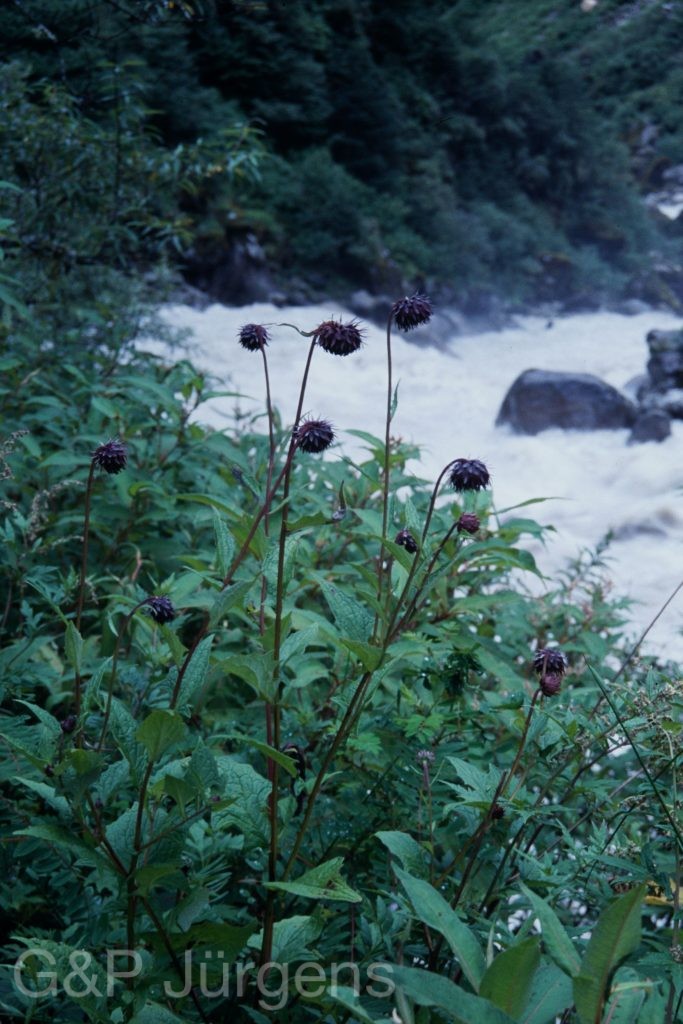
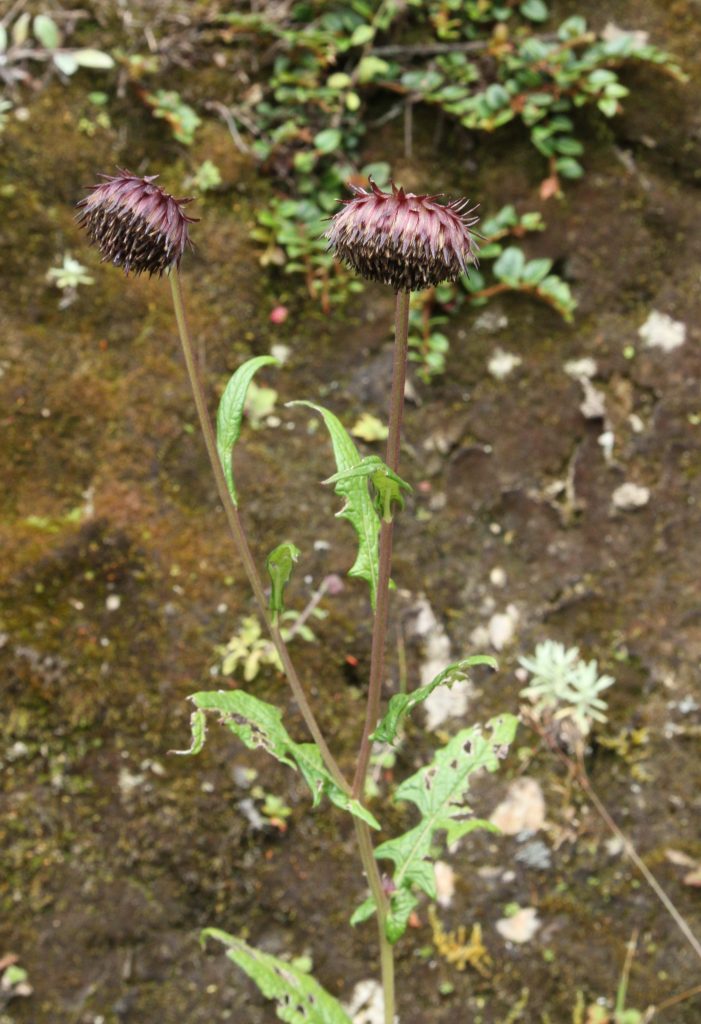
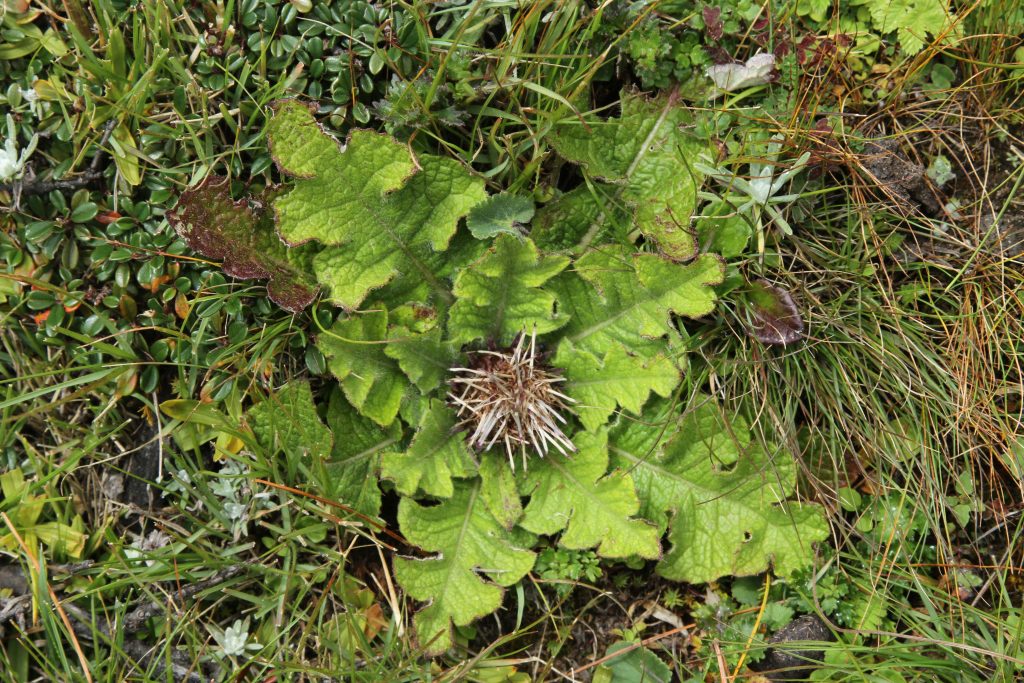
(DC.) Raab-Straube

Sikkim2003 103 P141
Sikkim below Dzongri 3900m 08.2003
Sikkim2003 408 P567
Sikkim below Dzongri 3900m 08.2003
Bhutan2012 493
Bhutan Pele-La 3000m, September

Description

Himalaiella auriculata is a perennial thistle-like composite of the temperate to subalpine zone of the eastern Himalaya, native to India, Nepal and China, with around 27 documented occurrences. It grows on open slopes, forest clearings, meadow margins and disturbed ground, broadly between about 3000 and 4000 m. The photographed plants were recorded below Dzongri in Sikkim at 3900 m in August and at the Pele-La in Bhutan at 3000 m in September, flowering in the late-monsoon and early-autumn period typical of the genus in the region. The name supplied, Himalaiella auriculata, is recorded by GBIF as a synonym, with the same epithet treated as the accepted name; the species was long placed in Saussurea as S. auriculata.

The species is an erect herb with a leafy, often winged stem arising from a perennial rootstock, the herbage thinly cobwebby-arachnoid. The leaves are elliptic to lanceolate, the basal narrowed to a petiole and the cauline sessile and conspicuously auriculate-clasping at the base, the auricles giving the epithet. The capitula are discoid, solitary or few in a loose terminal cluster, with an ovoid to campanulate involucre of imbricate, often purple-tipped phyllaries; the florets are all tubular and purple to mauve. The fruit is a glabrous cypsela bearing a double pappus, the inner bristles plumose, as is diagnostic of the alliance.

Himalaiella is a small Sino-Himalayan genus segregated from Saussurea (tribe Cardueae) on molecular and morphological grounds, characterised by the auriculate, decurrent leaves and feathery inner pappus. Restricted in range and represented by relatively few collections, it is a regional endemic of the eastern Himalaya whose populations warrant monitoring, though it has not been formally assessed.

Author: (DC.) Raab-Straube · Sources: POWO (Kew), GBIF, Flora of Bhutan, Flora of China, Saussurea monograph (Lipschitz)

(C.B.Clarke) Fujikawa & H.Ohba

Bhutan2012 256
Bhutan Shele-La, 4000m September

Description

Himalaiella yakla is a high-alpine thistle-like composite of the Eastern Himalaya, recorded from China and Nepal and extending into Bhutan, where it is very seldom collected, the aggregated databases holding only a handful of occurrences. It is a plant of the upper alpine zone, growing on open stony slopes, scree, rocky pastures and exposed ridges generally near and above 4000 m. The specimen illustrated was photographed at Shele-La in Bhutan at about 4000 m in September, its late-season flowering reflecting the short growing window of these cold, wind-swept high passes.

The plant is a perennial herb with a stout caudex and an erect, often somewhat woolly stem, frequently clothed in white arachnoid or floccose tomentum that mitigates intense alpine radiation and desiccation. The leaves are oblong to lanceolate, sessile or shortly petiolate, with toothed to pinnatifid, sometimes spinulose margins, green above and greyer beneath. The capitula are discoid, solitary or few, with an ovoid involucre of imbricate, often spine-tipped phyllaries. The florets are tubular, bisexual and purple to violet, and the achenes are crowned by a pappus of plumose or barbellate bristles in series, adapted to wind dispersal across open terrain.

The name appears in GBIF as a synonym, with Himalaiella yakla treated as the accepted name; the taxon was segregated from the large genus Saussurea, under which it long stood as Saussurea yakla, following molecular studies that resolved Himalaiella as a distinct Sino-Himalayan lineage. Its rarity, restricted high-elevation range and sensitivity to climatic shifts and grazing render it of biogeographic significance and best regarded as data-deficient pending targeted survey.

Author: (C.B.Clarke) Fujikawa & H.Ohba · Sources: POWO (Kew), GBIF, Flora of China, Flora of Bhutan, Saussurea and Himalaiella systematic studies, Compositae of the Himalaya

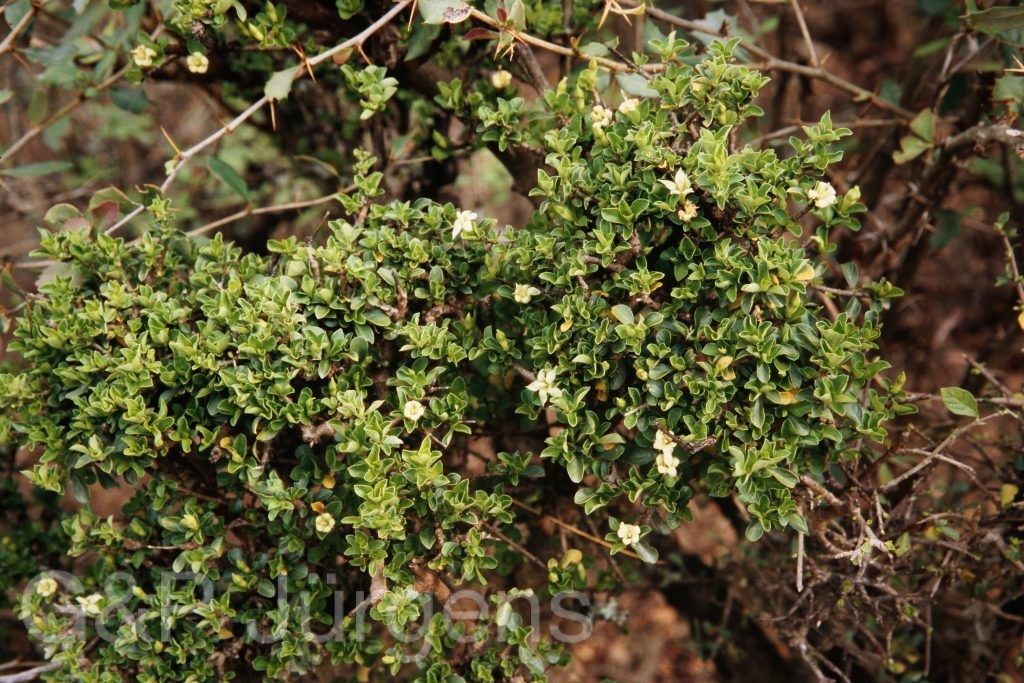
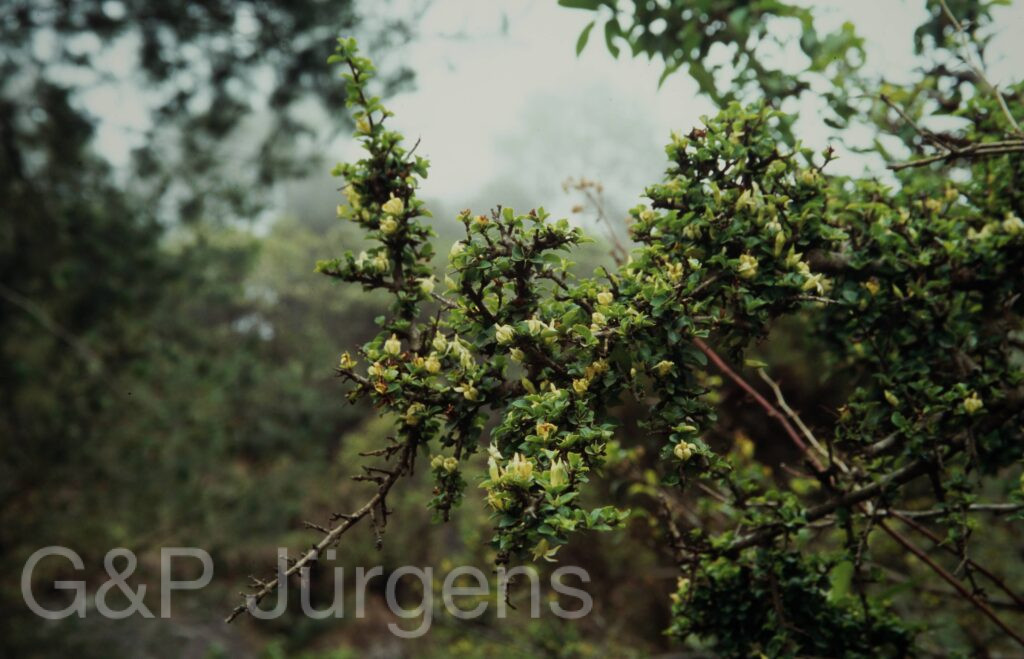
(Wall. ex Roxb.) T.Yamaz.

Bh2008 491 P760
Bhutan Samtengang, 2300m April
Nepal 2009 10 ergebnis
Nepal Helambu Sheno-Okrini 1900m, May

Description

Himalrandia tetrasperma is a spiny shrub of the Rubiaceae endemic to the Himalaya and its western foothills, recorded by GBIF (about 176 occurrences) from India, Nepal, Pakistan, Bhutan and Afghanistan. It is a plant of warm, often dry, open forest, scrub and rocky hillsides in the subtropical and lower temperate zone, frequently on sunny slopes and ravine sides. The illustrated material was gathered in Bhutan at Samtengang near 2300 m in April and in the Helambu region of Nepal at Sheno-Okrini around 1900 m in May, both flowering in spring, which is consistent with the genus producing its blossom on the bare or newly leafing wood of the dry season.

The plant is a much-branched, deciduous shrub whose short lateral shoots are modified into stout, woody spines, a distinctive armament for the family. The leaves are opposite or clustered on the dwarf shoots, small, obovate to elliptic, entire and glabrescent, with interpetiolar stipules. The flowers are solitary or in small fascicles, fragrant and white, with a short calyx and a salverform corolla of five spreading lobes opening from a slender tube. There are five stamens inserted in the throat and an inferior, bilocular ovary. The fruit is a small, fleshy to leathery berry, the epithet tetrasperma referring to the typically four-seeded fruit.

Himalrandia is a small genus segregated from the broadly circumscribed Randia, to which the species was long referred (as Randia tetrasperma); its placement among the Gardenieae has been confirmed by revision. As a hardy shrub of disturbed and semi-arid hill country it is locally common and not regarded as threatened, its fragrant flowers pollinated by insects and its berries dispersed by birds.

Author: (Wall. ex Roxb.) T.Yamaz. · Sources: POWO (Kew), GBIF, Flora of Pakistan, Flora of Bhutan, Annotated Checklist of the Flowering Plants of Nepal, Tirvengadum's studies of Asian Gardenieae (Rubiaceae)

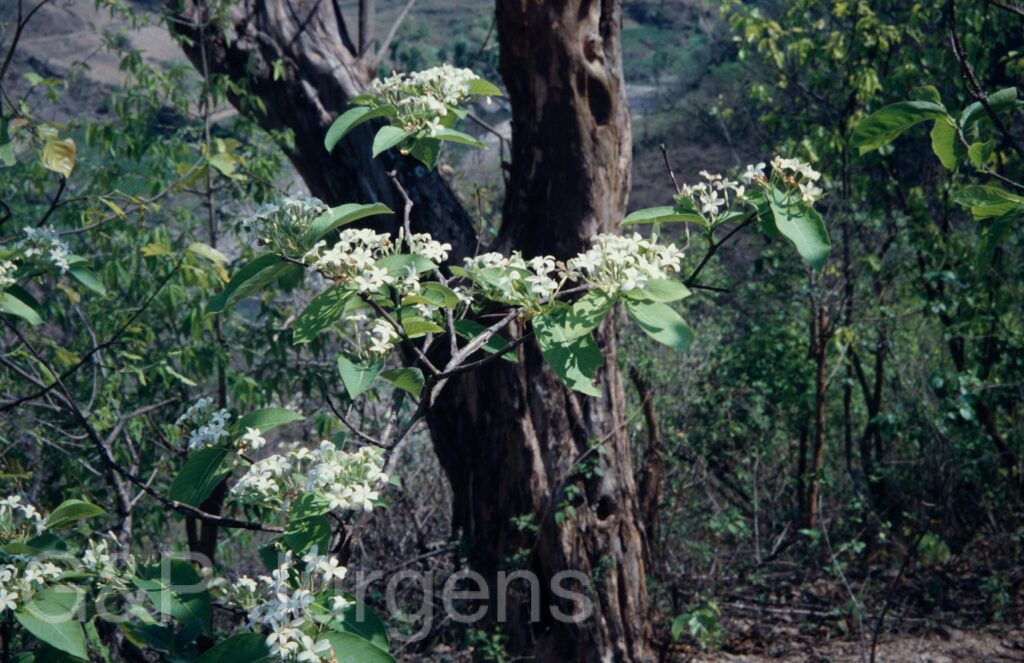
Wall. ex G.Don

Nepal 1994 329 ergebnis
Ost-Nepal Chainpur 1300m May 
Nepal 2001 503 ergebnis ergebnis
Nepal (Gorkha) Arkhet 720m, May

Description

Holarrhena pubescens is a widely distributed paleotropical shrub or small tree with one of the broadest ranges in this set, documented by over 3,000 GBIF records spanning the Indian subcontinent (India, Nepal, Bangladesh, Pakistan), Southeast Asia (Myanmar, Thailand, Laos, Vietnam, Cambodia, Malaysia), southern China and much of sub-Saharan Africa (Tanzania, Malawi, Mozambique, Zimbabwe, Zambia, South Africa, Kenya, Democratic Republic of the Congo). It is a plant of dry deciduous forest, savanna woodland, scrub and ravine margins, generally below about 1,300 m. The cited Nepalese plants, from Chainpur in the east at 1,300 m and from Arkhet in Gorkha at 720 m, both flowering in May, mark the upper Himalayan foothill edge of its altitudinal range.

The plant is a deciduous shrub to small tree exuding milky latex when cut. The leaves are opposite, simple, broadly elliptic to ovate, shortly petiolate, softly pubescent beneath and entire-margined. The flowers appear with or before the new leaves in dense terminal corymbose cymes; each is salverform with five white, fragrant, contorted petals on a slender tube, collectively giving a showy, jasmine-like display. The fruit is a pair of long, slender, pendulous cylindrical follicles, often spotted, splitting to release numerous flat seeds bearing an apical tuft of silky hairs adapted for wind dispersal.

The species is medicinally important: its bark and seeds (the drug "Kurchi") yield steroidal alkaloids such as conessine, long used against amoebic dysentery. It is the type-related species of the small Old World genus Holarrhena within tribe Malouetieae of subfamily Apocynoideae. Despite extensive harvesting for traditional medicine, its wide range and habitat tolerance keep it secure.

Author: Wall. ex G.Don · Sources: POWO (Kew), Flora of China Vol. 16, Flora of Pakistan, GBIF, Endress & Bruyns: A revised classification of the Apocynaceae