
(Wall. ex Roxb.) T.Yamaz.
Description
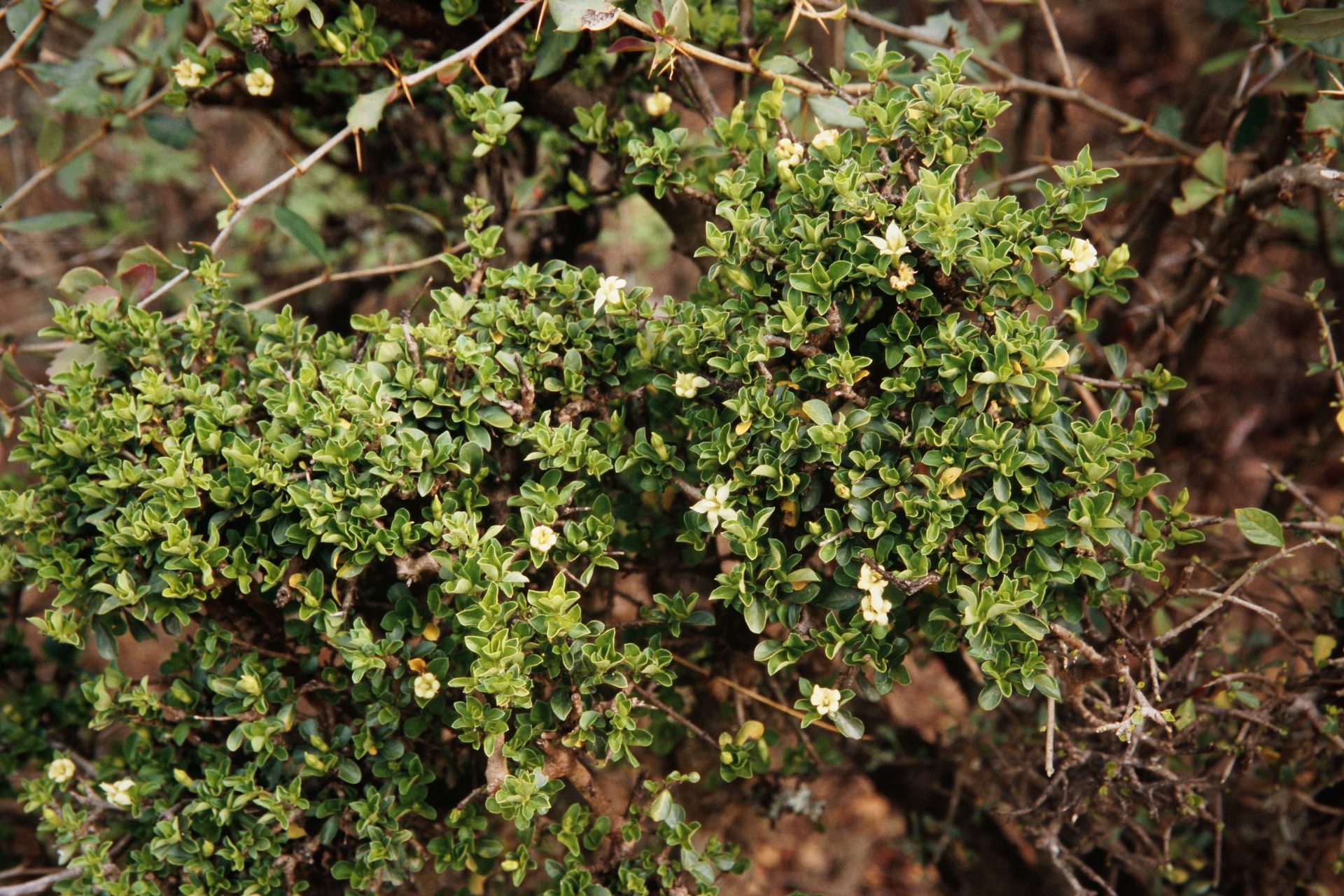
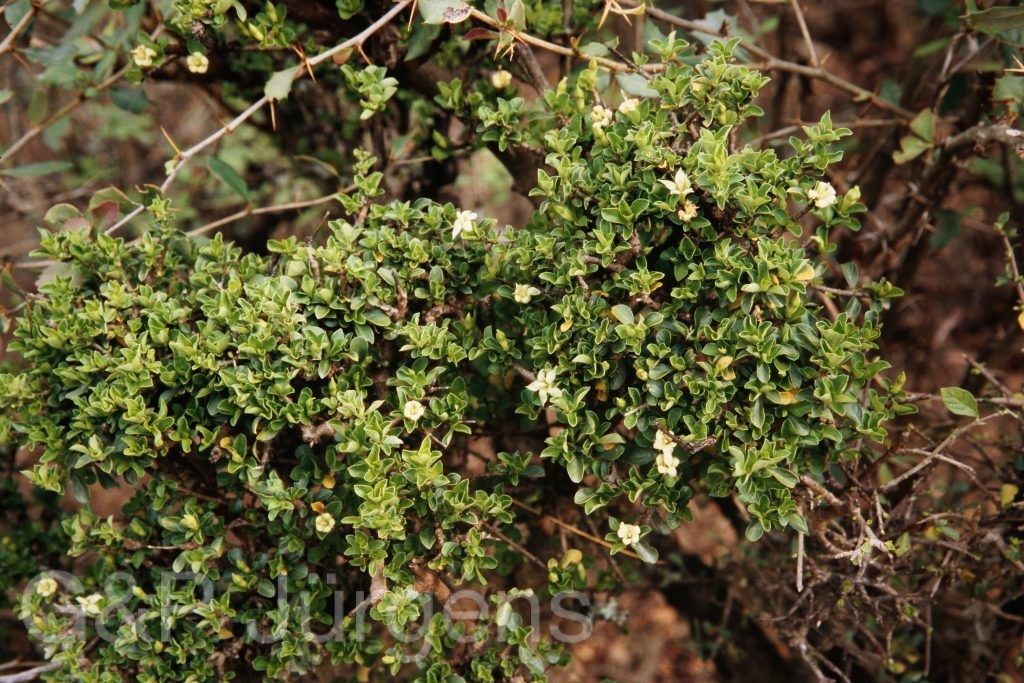
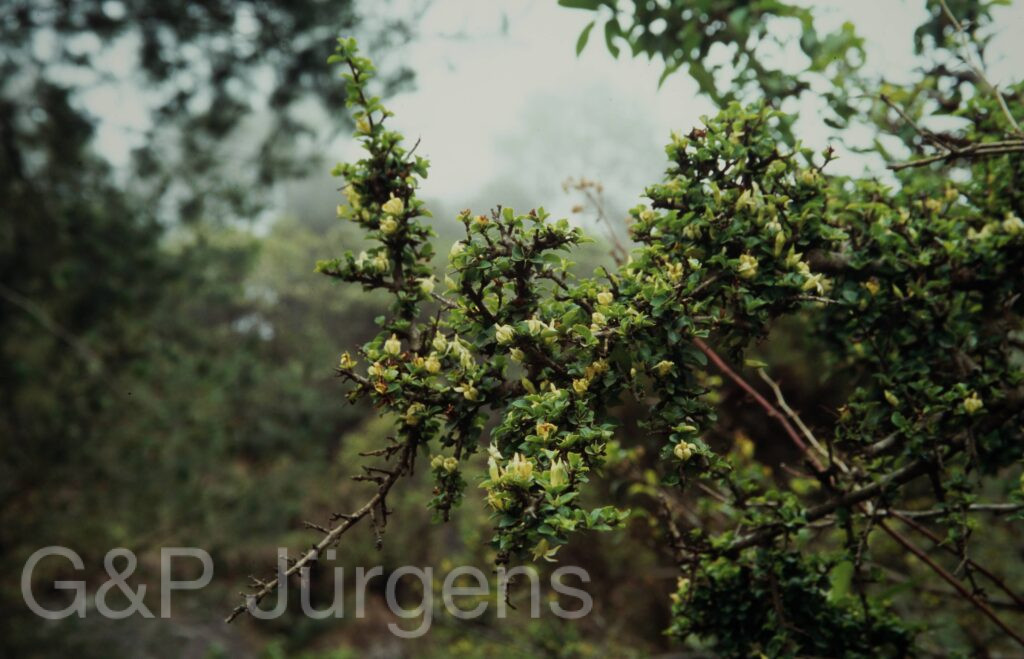
Himalrandia tetrasperma is a spiny shrub of the Rubiaceae endemic to the Himalaya and its western foothills, recorded by GBIF (about 176 occurrences) from India, Nepal, Pakistan, Bhutan and Afghanistan. It is a plant of warm, often dry, open forest, scrub and rocky hillsides in the subtropical and lower temperate zone, frequently on sunny slopes and ravine sides. The illustrated material was gathered in Bhutan at Samtengang near 2300 m in April and in the Helambu region of Nepal at Sheno-Okrini around 1900 m in May, both flowering in spring, which is consistent with the genus producing its blossom on the bare or newly leafing wood of the dry season.
The plant is a much-branched, deciduous shrub whose short lateral shoots are modified into stout, woody spines, a distinctive armament for the family. The leaves are opposite or clustered on the dwarf shoots, small, obovate to elliptic, entire and glabrescent, with interpetiolar stipules. The flowers are solitary or in small fascicles, fragrant and white, with a short calyx and a salverform corolla of five spreading lobes opening from a slender tube. There are five stamens inserted in the throat and an inferior, bilocular ovary. The fruit is a small, fleshy to leathery berry, the epithet tetrasperma referring to the typically four-seeded fruit.
Himalrandia is a small genus segregated from the broadly circumscribed Randia, to which the species was long referred (as Randia tetrasperma); its placement among the Gardenieae has been confirmed by revision. As a hardy shrub of disturbed and semi-arid hill country it is locally common and not regarded as threatened, its fragrant flowers pollinated by insects and its berries dispersed by birds.
Author: (Wall. ex Roxb.) T.Yamaz. · Sources: POWO (Kew), GBIF, Flora of Pakistan, Flora of Bhutan, Annotated Checklist of the Flowering Plants of Nepal, Tirvengadum's studies of Asian Gardenieae (Rubiaceae)