
Vahl
Description
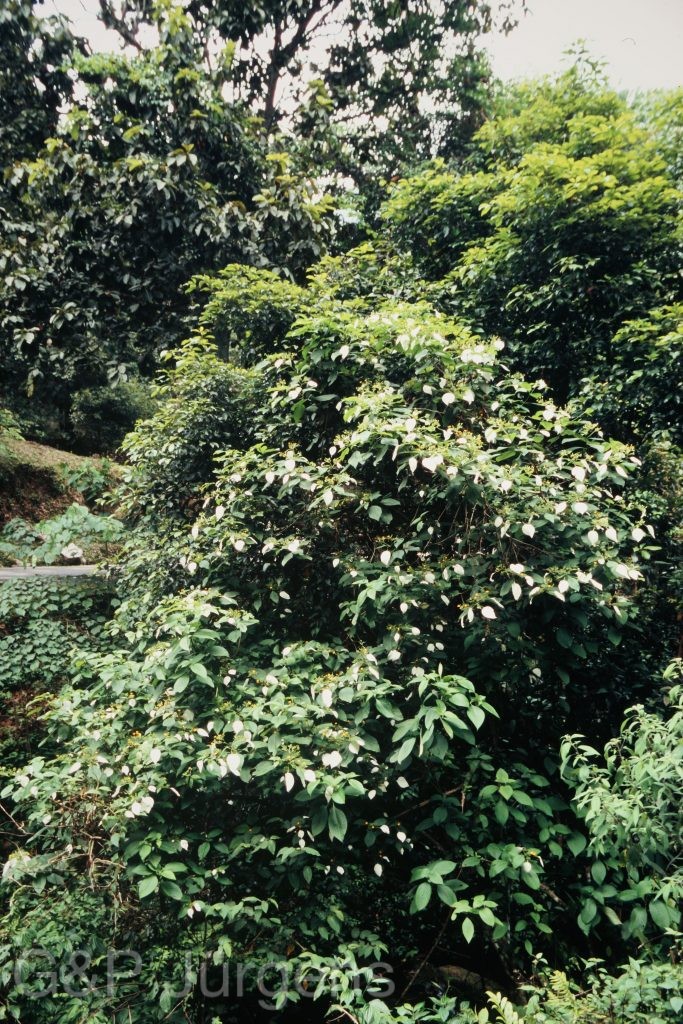
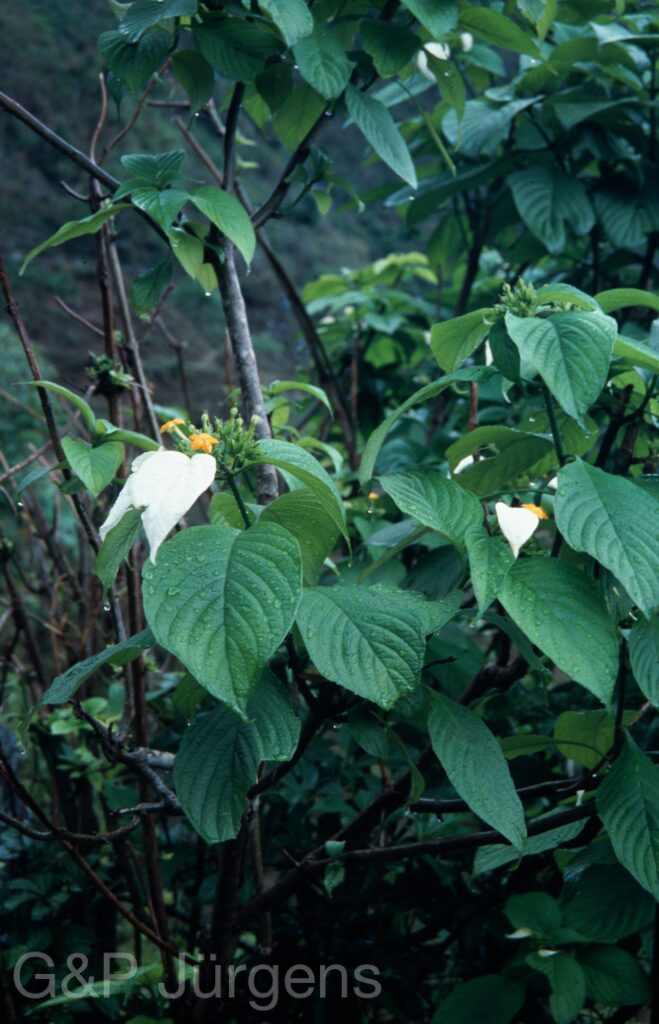
Mussaenda glabra is a widely distributed tropical to subtropical shrub or scrambling liana of Southeast Asia and the eastern Himalaya, documented from numerous countries including India, China, Myanmar, Thailand, Vietnam, Malaysia, Indonesia and Nepal across some 355 GBIF occurrences. The illustrated material was gathered at Punaka-Chu in Bhutan at 1600 m in June and at Gunda in Gorkha, Nepal at 1700 m in May. It grows in moist broad-leaved forest, along streamsides, thickets and forest margins from the lowlands up to about 1800 m, thriving in warm, humid, partly shaded situations.
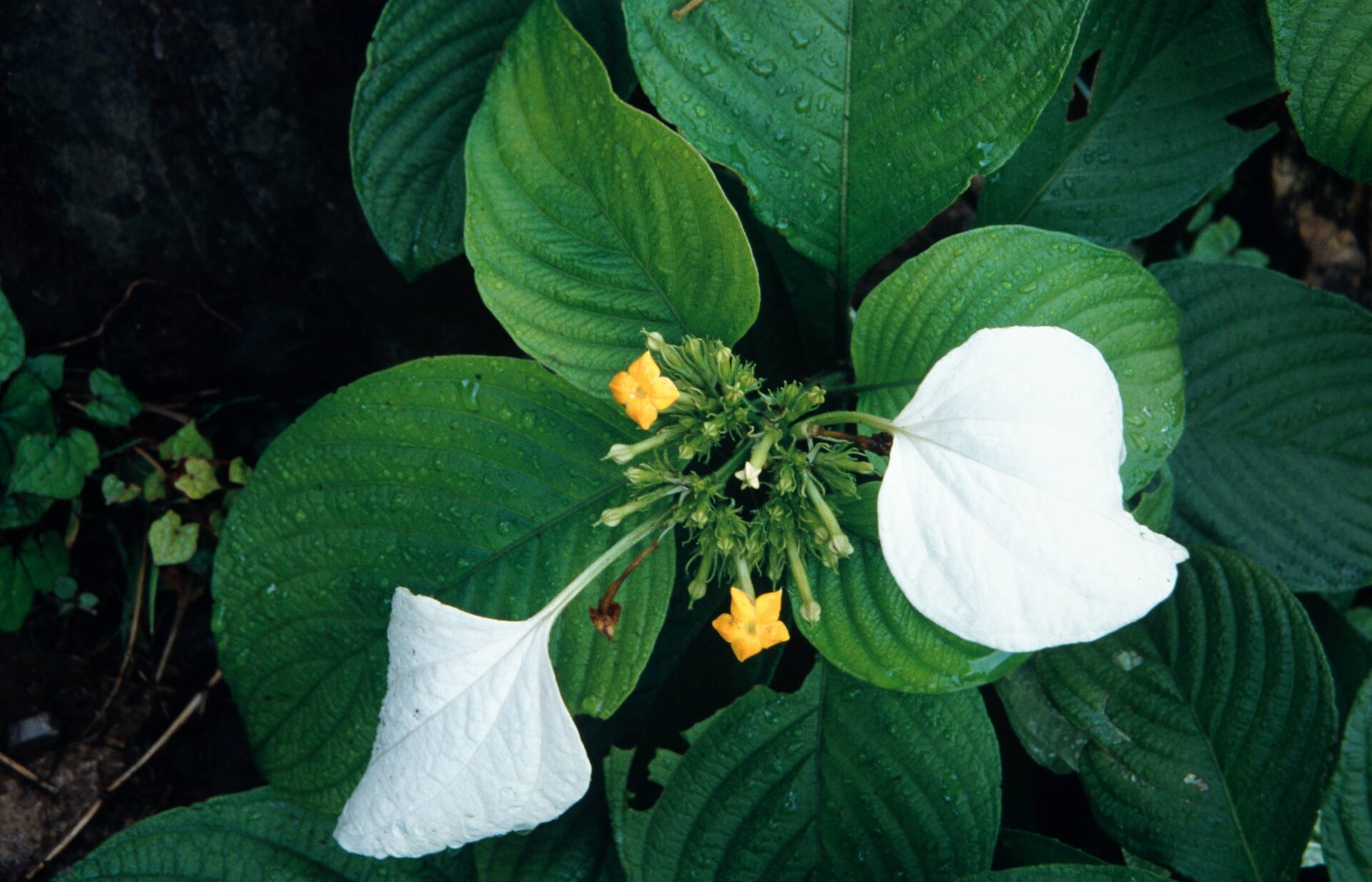
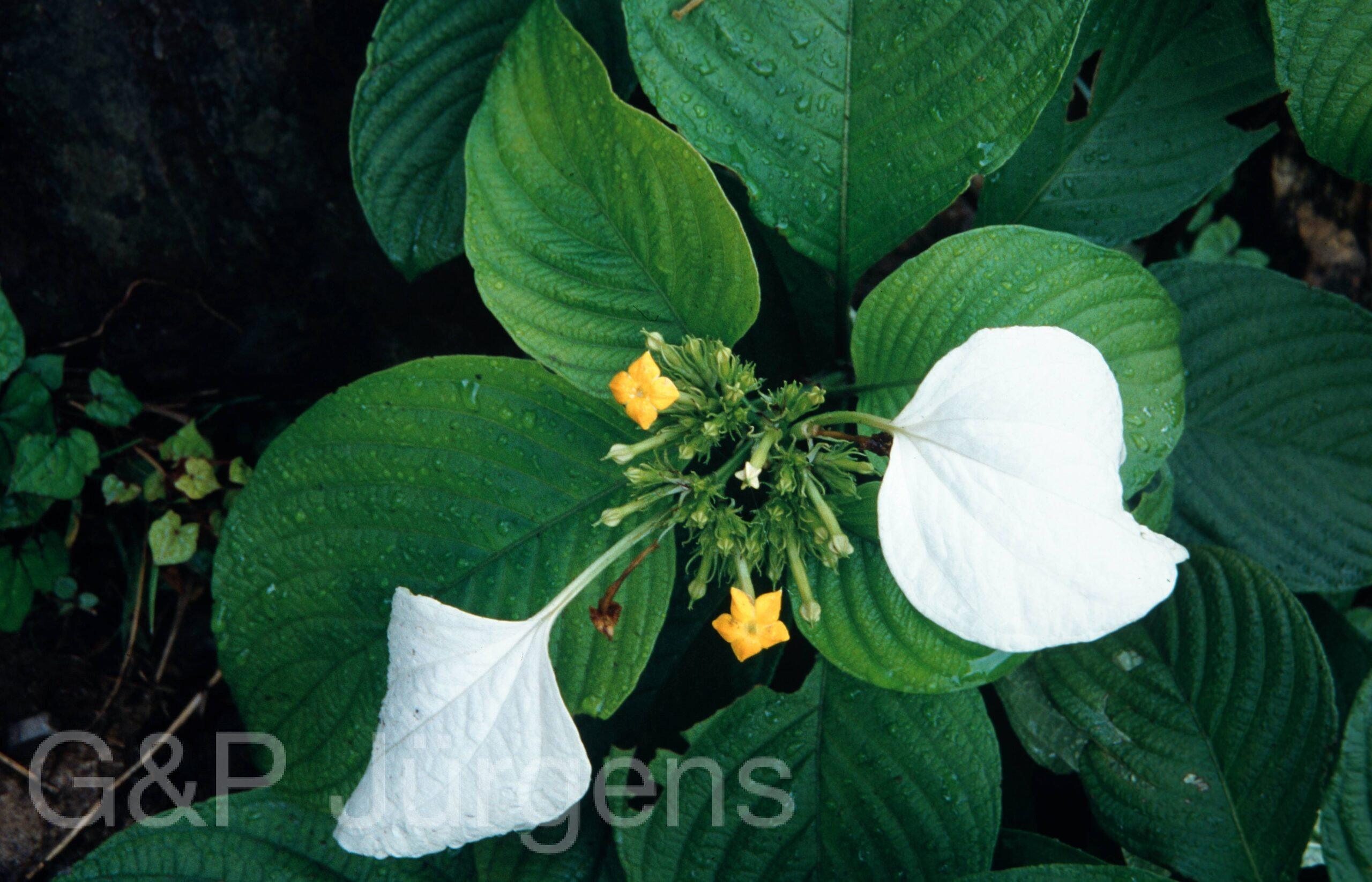
It is an evergreen shrub or woody climber with terete, often pubescent young branches. The leaves are opposite, ovate to elliptic, entire, acuminate at the apex, with interpetiolar stipules characteristic of the Rubiaceae. The inflorescence is a terminal cyme bearing tubular flowers with a five-lobed orange-yellow corolla; the diagnostic feature is the enlargement of a single calyx lobe in some flowers into a large, conspicuous, white, leaf-like petaloid bract (semaphyll) that advertises the inflorescence to pollinators. The fruit is a fleshy berry containing numerous minute seeds.
The genus Mussaenda is renowned for these showy expanded calyx lobes, an adaptation enhancing pollinator attraction in the shaded understory and a feature widely exploited in horticulture. The fleshy berries are dispersed by birds. With its broad range spanning continental and insular Asia, the species is of least concern, being common across much of its distribution, though dependent on the persistence of intact lowland and submontane forest.
Author: Vahl · Sources: POWO (Kew), GBIF, Flora of China, Flora of Bhutan, Flora of Nepal, Jayaweera – The Genus Mussaenda (Rubiaceae) revision