
Ghose

Description
Luculia grandifolia is a rare and poorly known shrub or small tree endemic to the eastern Himalayas, recorded from Bhutan, northeast India (Sikkim, Arunachal Pradesh), and central-eastern Nepal. Only 30 occurrences are documented on GBIF, making it one of the least collected species in the genus. It grows in moist, evergreen montane forests and along shaded ravines at elevations of 2,000–3,200 m, where it is associated with Rhododendron, Magnolia, and Lithocarpus in the upper warm-temperate to lower cloud-forest zone. The species favours humid, sheltered microsites on steep slopes with deep humus.
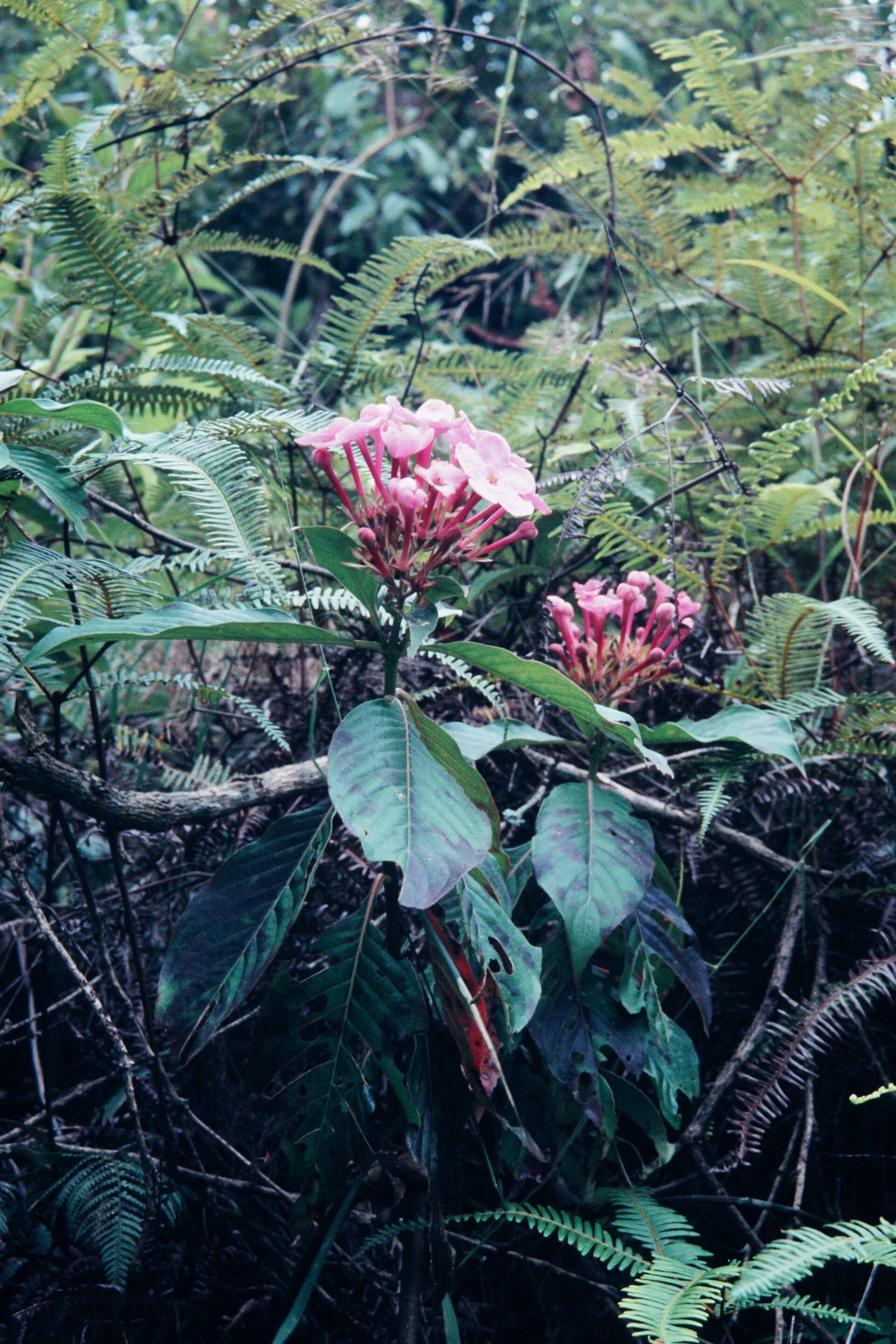
Luculia grandifolia is a semi-evergreen to evergreen shrub or small tree, 2–5 m tall, with stout, terete branches. The leaves are the largest in the genus, opposite, broadly elliptic to obovate, 15–30 cm long and 8–15 cm wide, coriaceous, with entire margins and prominent venation beneath; petioles are stout, 2–4 cm long. Stipules are interpetiolar, triangular, and caducous. The inflorescence is a terminal, dense, corymbose cyme bearing numerous fragrant flowers. Each flower has a salverform corolla, 2.5–3.5 cm long, with five spreading, rounded lobes; the colour ranges from white to pale pink. The calyx is five-lobed, with lobes often tinged reddish. The fruit is a septicidal capsule containing numerous small, winged seeds.
Luculia is a small genus of approximately five species restricted to the Sino-Himalayan region, all prized for their showy, sweetly fragrant flowers. Luculia grandifolia is distinguished from the more widely cultivated L. gratissima by its significantly larger leaves and more robust overall habit. The photographed specimen from Tiblung in Nepal at 2,810 m in October represents a late-season flowering event, consistent with the autumnal blooming period reported for the genus. Given its limited distribution, small population sizes, and dependence on undisturbed montane forest, L. grandifolia is of considerable conservation interest and would likely qualify as Vulnerable under IUCN criteria if formally assessed.
Author: Ghose · Sources: POWO (Kew), GBIF, Flora of Bhutan Vol. 2, Press et al.: Annotated Checklist of the Flowering Plants of Nepal (2000), Springate et al. (2015)