
(L.f.) W.H.Lewis
Description
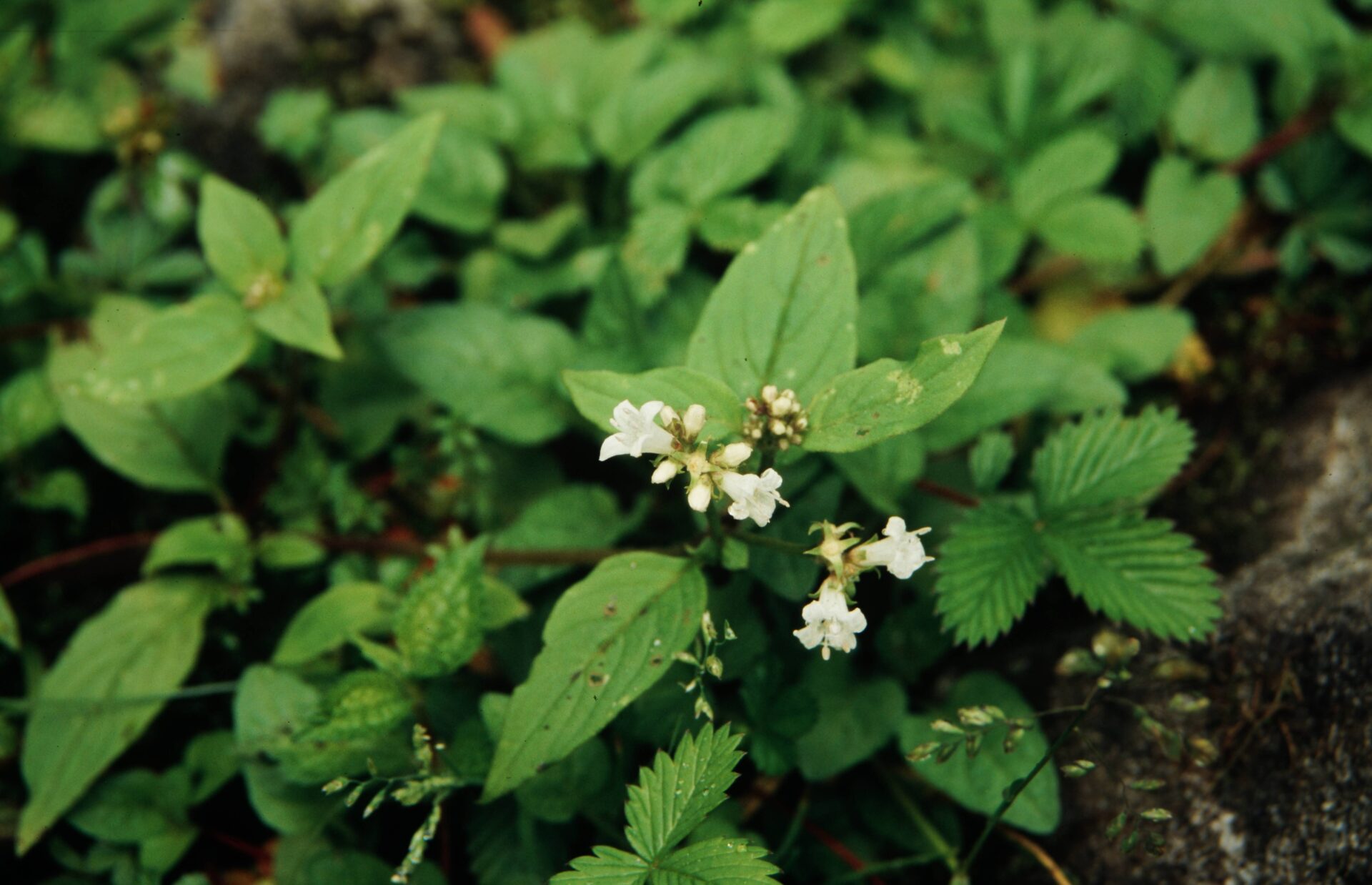
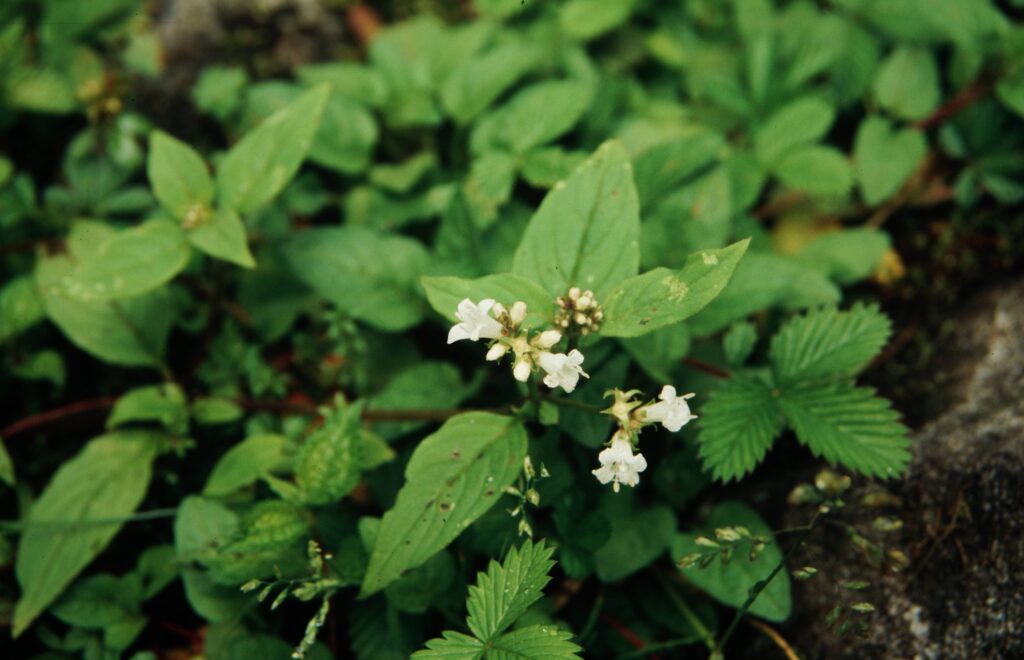
Neanotis hirsuta (L.f.) W.H.Lewis is a slender herbaceous member of the Rubiaceae with a remarkably broad Asian-Pacific distribution, recorded from India, Nepal, Bhutan, Pakistan and Sri Lanka eastwards through China, Taiwan, Japan and Korea, across Southeast Asia (Myanmar, Thailand, Vietnam, Malaysia, Indonesia, Philippines) to New Guinea and the Solomon Islands; with over 2,700 georeferenced occurrences it is among the more frequently collected species in this group. It grows in moist, shaded situations on forest floors, along streambanks, on damp rocks and trail margins and in disturbed grassy ground. The photographed plant from Ruigi-Chu in West Bengal at about 2,000 m in May reflects its presence in the humid mid-montane forests of the eastern Himalaya.
The species is a weak, creeping to ascending annual or short-lived perennial with slender, often hairy, four-angled stems that root at the lower nodes. The leaves are opposite, ovate to lanceolate, with interpetiolar stipules bearing fine bristles. Small flowers are borne in axillary and terminal clusters; each has a four-lobed calyx, a white to pale lilac funnelform corolla with four spreading lobes, four stamens and an inferior bilocular ovary. The fruit is a small didymous capsule that splits to release numerous minute angular seeds.
The genus Neanotis was segregated from Anotis and the broad Hedyotis–Oldenlandia complex by W. H. Lewis, and species delimitation within it remains intricate owing to subtle differences in habit and indumentum. Tolerant of disturbance, N. hirsuta often behaves as a pioneer of moist open ground and can be locally weedy. It is widespread and of no conservation concern.
Author: (L.f.) W.H.Lewis · Sources: POWO (Kew), Flora of China Vol. 19, Flora of Bhutan Vol. 2, GBIF, Lewis: Revision of the genus Neanotis (1966)