
H.J.P.Winkl
Description
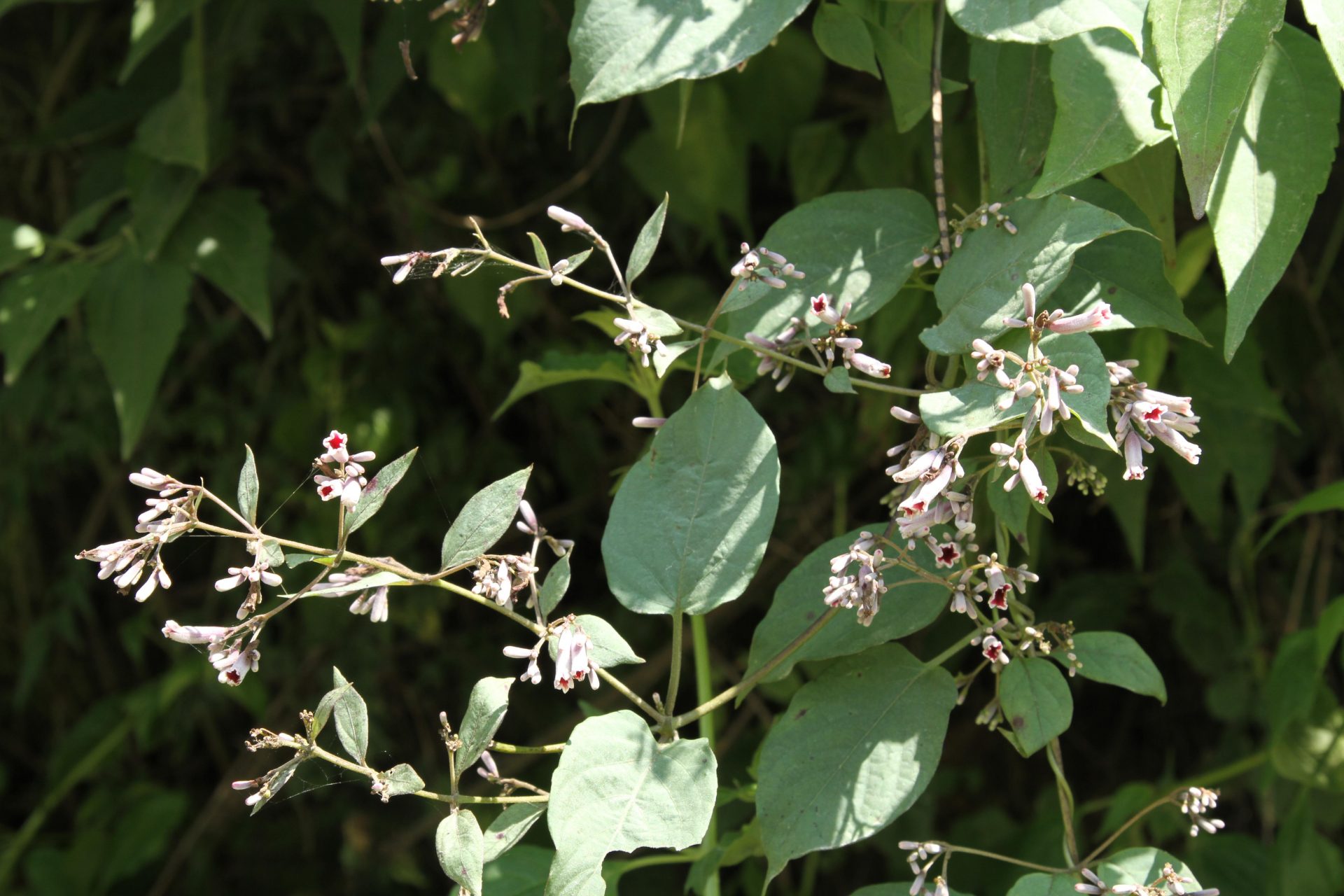
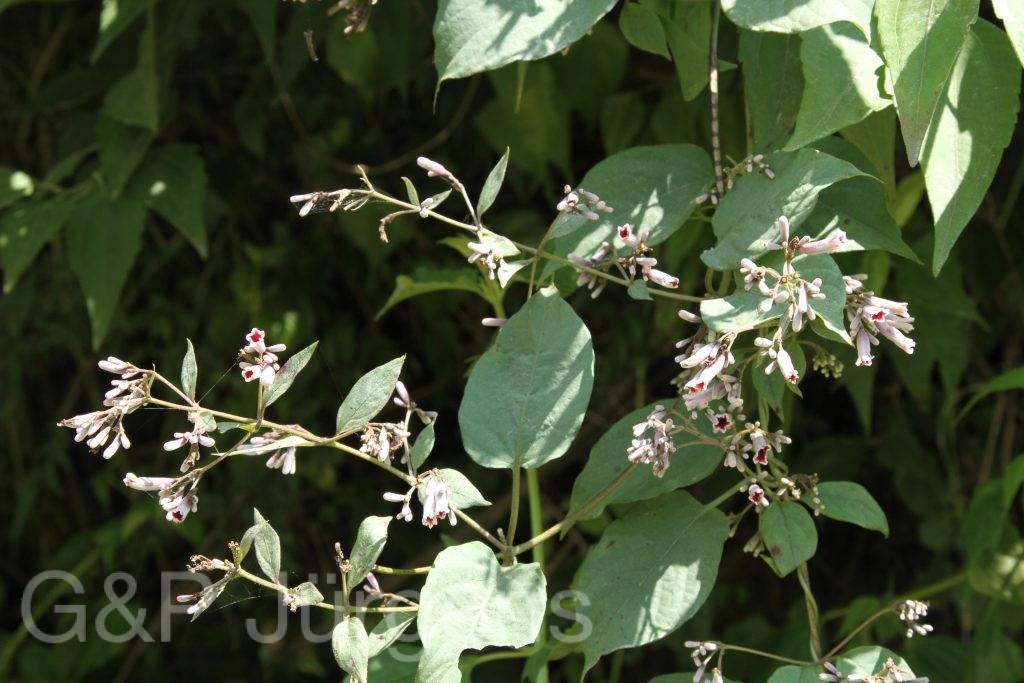
Leptodermis stapfiana H.J.P.Winkl. is a shrub of the Rubiaceae distributed through the central and eastern Himalaya and into adjacent China. GBIF records it from Nepal, Bhutan, India and China, with 76 georeferenced occurrences. The species favours warm to cool temperate slopes, forest margins, scrub and roadside thickets, typically on well-drained, often rocky ground. The illustrated plant from Trithangebe in Bhutan at 900 m, flowering in October, reflects its preference for the lower montane belt, where it can form conspicuous patches of bloom late in the growing season after the main monsoon.
The plant is an erect to spreading, much-branched shrub with slender, greyish, often finely pubescent branchlets. The leaves are opposite, small, ovate to lanceolate, entire, shortly petiolate, and subtended by triangular, aristate stipules characteristic of the genus. Flowers are sessile and clustered in the leaf axils and at the branch tips; the corolla is narrowly funnel-shaped, white to pale lilac or pinkish, with five (rarely four) spreading lobes that are valvate and crisped-pubescent within the throat. The species is typically heterostylous, and the fruit is a small dry capsule splitting into valves to release angular seeds enclosed in a delicate membranous testa, the feature that gives Leptodermis its name.
Leptodermis is a taxonomically difficult Sino-Himalayan genus in which species are separated largely by leaf size, calyx-lobe number and indumentum, and L. stapfiana sits within this radiation centred on the eastern Himalaya and southwest China. It is not regarded as threatened, but as a hardy, late-flowering nectar source it contributes to montane pollinator networks and to the structural diversity of Himalayan scrub vegetation.
Author: H.J.P.Winkl · Sources: POWO (Kew), GBIF, Flora of China Vol. 19, Flora of Bhutan Vol. 2, Flora of Nepal, Deb & Rout: Studies in Indian Leptodermis (Rubiaceae)