Tag:

Bhutan

Flowers of Bhutan — 1326 plant species documented across the Bhutanese Himalaya, from dense broadleaf and conifer forests to alpine scrub and meadows. Bhutan’s largely intact wilderness shelters an exceptional diversity of orchids, rhododendrons, primulas and Himalayan poppies, many of them regional endemics. Each species page includes a botanical description, distribution, habitat and flowering time, with the original photograph and its recorded altitude and locality.

Rubus ellipticus

by GP Jürgens

Kupcsok

Nepal 1994 53 ergebnis
Ost-Nepal Bhalukhob 
1800m April

Description

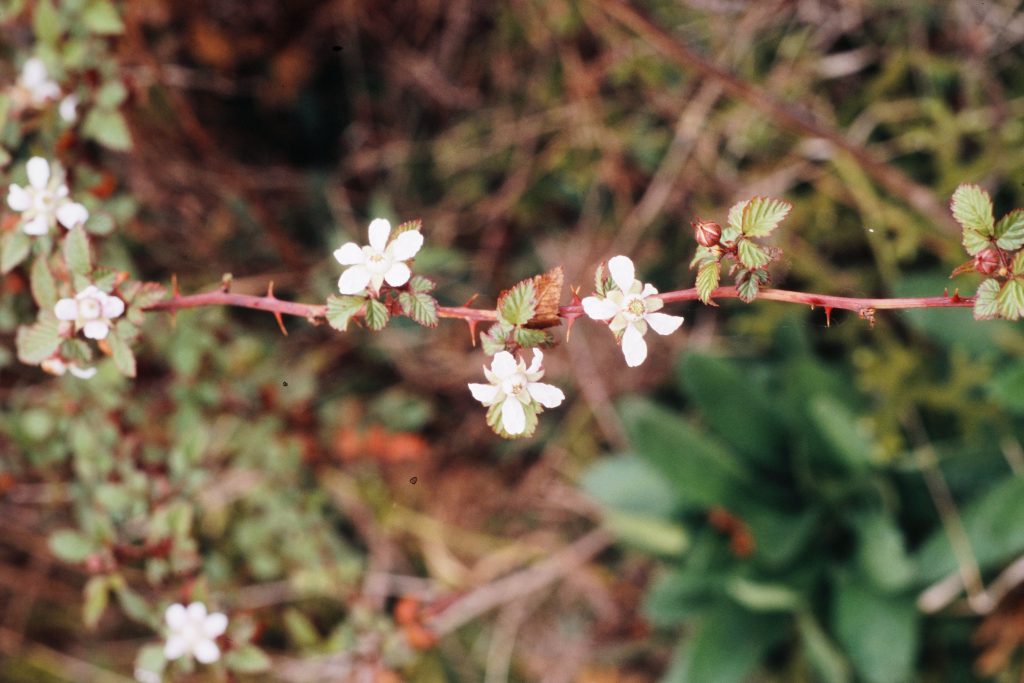
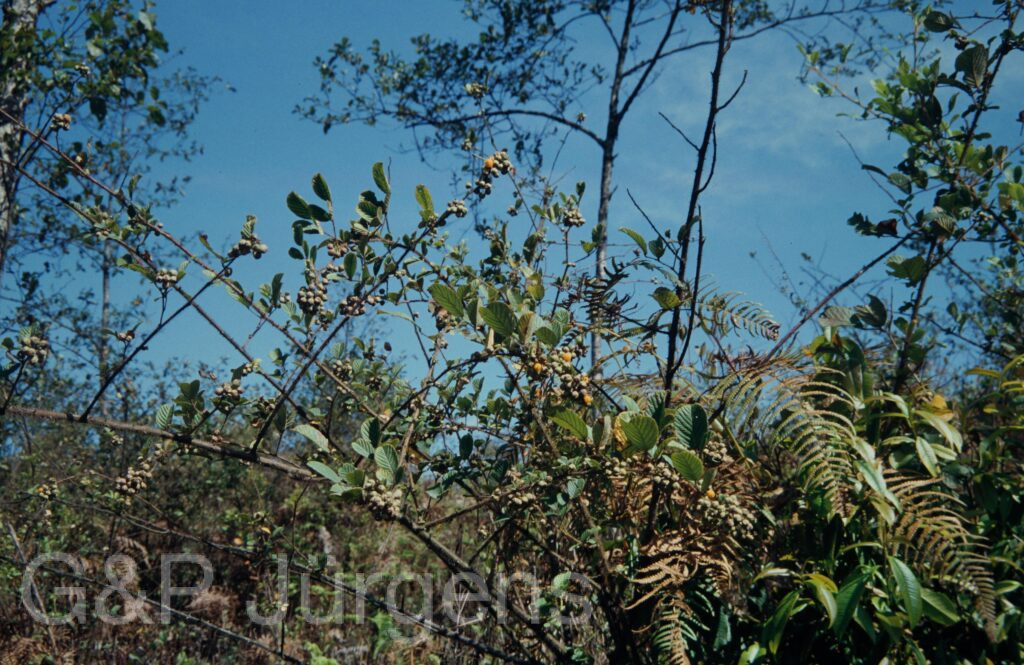
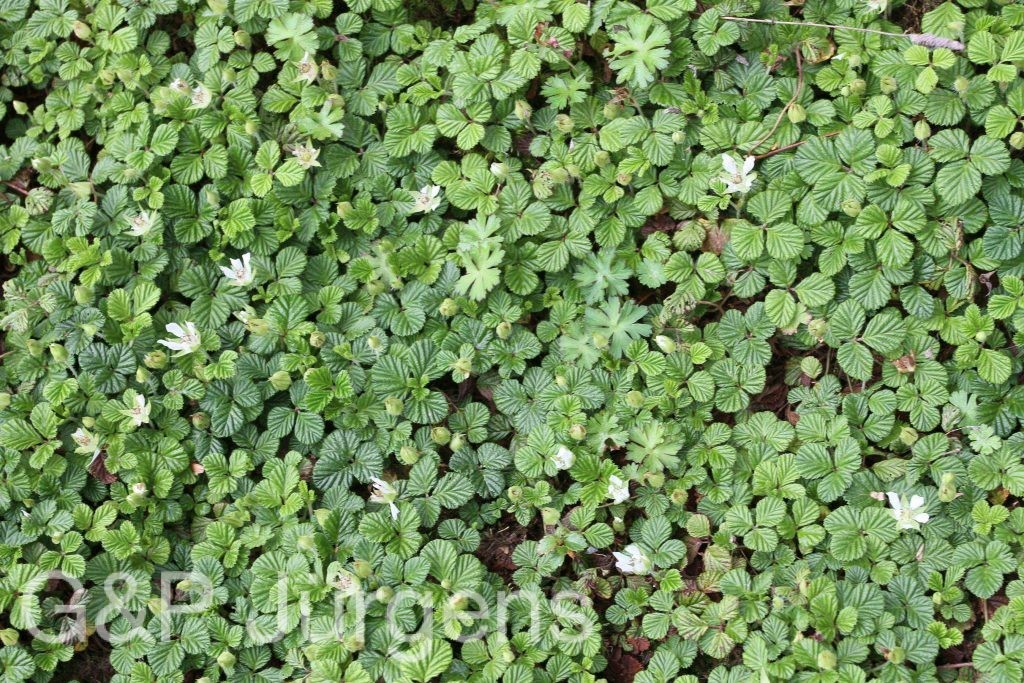
Rubus ellipticus, the yellow Himalayan raspberry, is native to South and East Asia and has become one of the most notoriously invasive of all brambles, with 3973 GBIF occurrences spanning its native range in China (CN), Taiwan (TW), India (IN), Nepal (NP), Bhutan (BT), Sri Lanka (LK), Thailand (TH), Vietnam (VN), Myanmar (MM), the Philippines (PH), Pakistan (PK) and Afghanistan (AF), together with extensive introduced populations in the United States (US, notably Hawaii), Australia (AU), New Zealand (NZ), Malawi (MW), Tanzania (TZ), Ecuador (EC), Costa Rica (CR) and Jamaica (JM). It forms dense thickets in forest margins, clearings, scrub, roadsides and disturbed ground from the lowlands to the lower montane zone. The figured plant was recorded at Bhalukhob in East-Nepal at about 1800 m in April.

It is a robust, scrambling, perennial shrub with biennial canes armed with stout recurved prickles and clothed in dense reddish bristly hairs. The leaves are pinnately trifoliolate, the leaflets elliptic to obovate, finely serrate, dark green and rugose above and densely greyish-tomentose beneath. The flowers are borne in dense terminal and axillary clusters, white, with five sepals and petals and numerous stamens. The aggregate fruit is a juicy, golden-yellow edible raspberry composed of numerous drupelets separating from the receptacle.

Rubus ellipticus belongs to the taxonomically complex subgenus Idaeobatus. Its palatable fruit and prolific seed production, aided by bird dispersal and vigorous vegetative spread, underpin its status as a serious invasive listed among the world's worst invasive species, displacing native vegetation in tropical island and montane ecosystems.

Author: Kupcsok · Sources: POWO (Kew), GBIF, Flora of China, Flora of Nepal, Flora of British India, IUCN Global Invasive Species Database, Monograph of the genus Rubus
Kurz

BhutanPG2011 91
Bhutan Chogcham, 3100m June

Sikkim 2006 162 ergebnis
India West-Bengal, Molley 3000m, May

Description

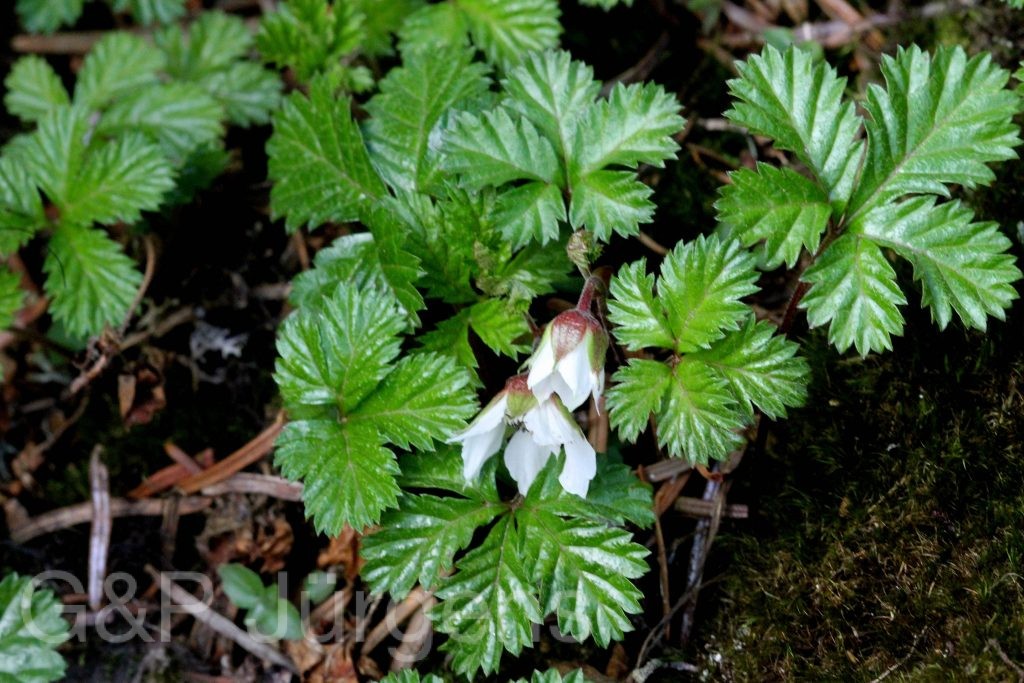
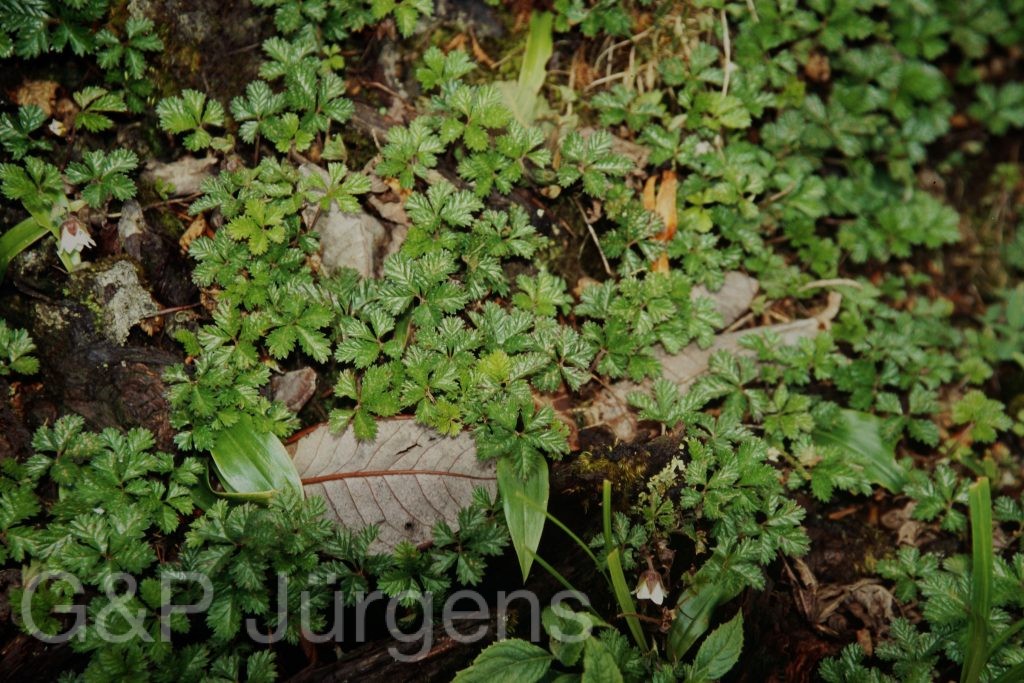
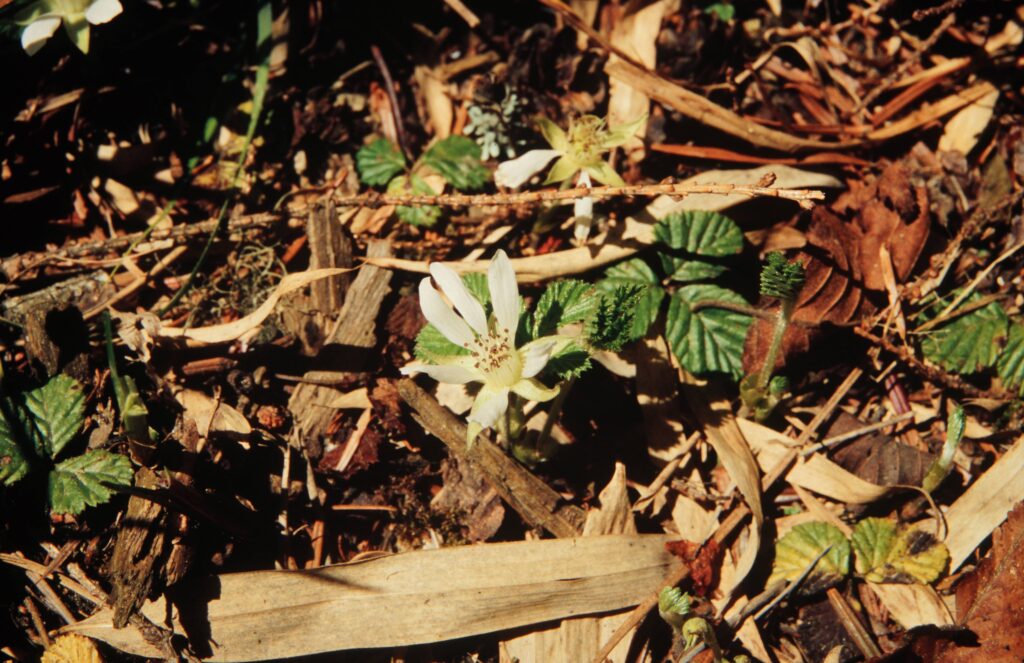
Rubus fockeanus is a diminutive, creeping bramble of the high mountains of Asia, ranging through China, Nepal, Bhutan, India, Afghanistan and Myanmar, with GBIF recording over 400 occurrences; the records from Great Britain and New Zealand represent introduced or cultivated material. It grows in damp alpine and subalpine meadows, mossy forest floors, streamsides and the margins of rhododendron scrub, broadly between 2500 and 4000 m. The two illustrated gatherings, from Chogcham in Bhutan at 3100 m in June and from Molley in West Bengal at 3000 m in May, are typical of its preference for cool, moist, sheltered montane ground.

Unlike the woody, arching brambles of the lowlands, R. fockeanus is a slender, herbaceous to subherbaceous perennial creeper, rooting at the nodes of prostrate stems to form mats, and unarmed or nearly so. The leaves are ternate (trifoliolate), with rounded, crenate-toothed leaflets. The flowers are small, solitary and white, with five petals, five sepals and numerous stamens surrounding an apocarpous gynoecium. The fruit is a small, red, aggregate drupelet cluster (an etaerio of drupelets) typical of Rubus, edible and dispersed by birds and mammals.

Within the immense and taxonomically intricate genus Rubus, this species belongs to a group of small, herbaceous, creeping alpine brambles (allied to subgenus Chamaebatus / Cylactis), distinguished by their ternate leaves, solitary flowers and matted habit. Widespread and locally common across the high Asian mountains, it is of no conservation concern and contributes to alpine ground cover and to the diet of montane fauna.

Author: Kurz · Sources: POWO (Kew), GBIF, Flora of Bhutan, Flora of China, Rubus monographic treatments

Rubus fragarioides

by GP Jürgens

Bertol.

Sikkim2011 234
Sikkim Yumthang 3700m, June
Bh09 281 P463
Bhutan Pele-La 2900m, June

Description

Rubus fragarioides is a dwarf, strawberry-like bramble of the Sino-Himalayan region, recorded from China, Nepal, India, Bhutan and Myanmar, with about 166 occurrence records mapping a range centred on the eastern Himalaya and adjacent western China. It grows in open coniferous and rhododendron forest, forest clearings, alpine meadow margins and mossy banks at upper-temperate to subalpine elevations. The photographed populations—at Yumthang in Sikkim at 3700 m and at Pele-La in Bhutan at 2900 m, both flowering in June—reflect its typical occurrence in cool, humid montane habitats.

Unlike the familiar cane-forming raspberries, this is a diminutive, almost herbaceous perennial spreading by slender creeping rhizomes and bearing only a low, scarcely woody aerial system. The leaves are usually simple to shallowly three-lobed or ternate, with a cordate base, doubly serrate margins and a wrinkled, sparsely hairy surface, recalling those of a strawberry, whence the epithet fragarioides. The flowers are solitary or few, with five spreading white petals, a leafy calyx and numerous stamens and carpels on a domed receptacle. The aggregate fruit is a small red drupelet-cluster, edible and dispersed by birds and small mammals.

Rubus is an enormous and taxonomically difficult genus complicated by hybridisation, polyploidy and apomixis; R. fragarioides, described by Bertoloni, belongs among the low-growing creeping species sometimes segregated in subgenus Chamaebatus. Its mat-forming habit aids soil stabilisation in fragile alpine clearings. Widespread within its montane belt, it is not considered threatened, though it depends on the persistence of intact subalpine forest.

Author: Bertol. · Sources: POWO (Kew), GBIF, Flora of China (Rosaceae), Annotated Checklist of the Flowering Plants of Nepal, Grierson & Long Flora of Bhutan, Focke's monograph Species Ruborum

P.J.Müll. & Timb.-Lagr.

Bh2008 39 G69
Bhutan Dochu-La, 3000m April
Bh2008 40 G68
Bhutan Dochu-La, 3000m April

Description

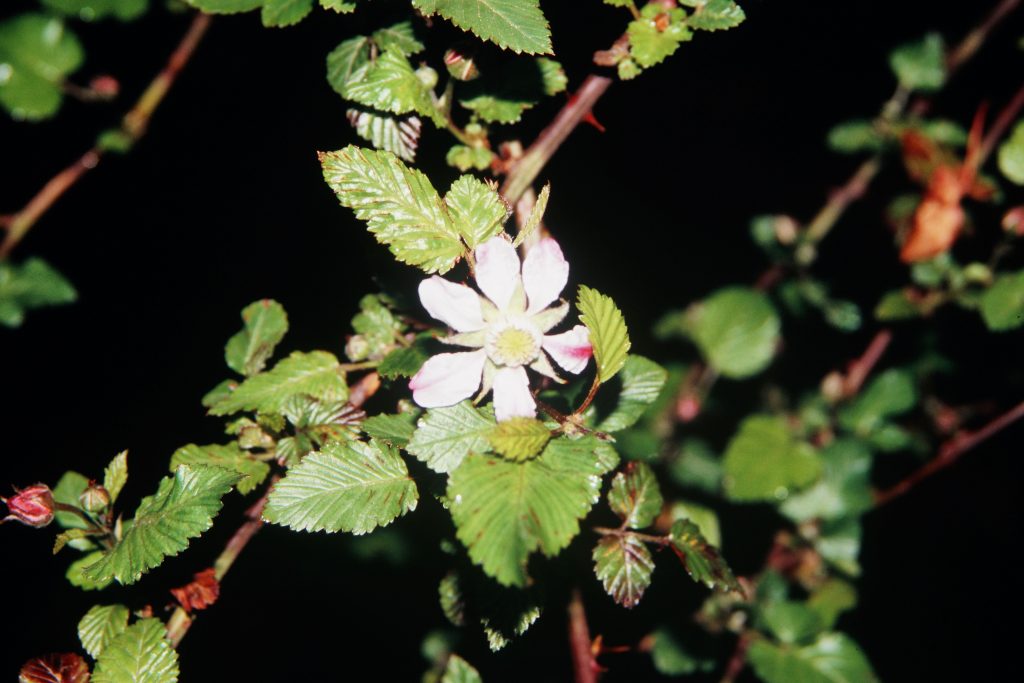
Rubus macilentus is a Himalayan bramble distributed across China, India, Nepal, Pakistan, Afghanistan and Bhutan, with about 341 GBIF occurrences (a few extralimital records reflecting cultivation or misattribution). It occupies forest margins, scrub, clearings and thickets along the temperate Himalaya, generally between roughly 2000 and 3500 m. The plant photographed at Dochu-La in western Bhutan at about 3000 m in April represents its typical setting in moist montane forest and shrubbery, flowering in spring when the white blossoms appear among the arching, prickly canes.

The species is a scrambling deciduous shrub with slender, often slightly glaucous biennial canes bearing scattered recurved prickles. The leaves are pinnately or ternately compound with three to five ovate, doubly serrate leaflets that are green above and paler, often thinly tomentose, beneath, the petioles and rachis armed with small prickles. The flowers are borne singly or in few-flowered cymes, with five spreading white petals, a tomentose calyx of reflexed sepals, and numerous stamens surrounding many carpels. The fruit is an aggregate of drupelets, ripening red to dark purple-black and detaching from the dry receptacle.

Rubus is a taxonomically complex, near-cosmopolitan genus in which apomixis, polyploidy and hybridisation generate many microspecies; the Himalayan brambles, including R. macilentus, are correspondingly difficult to delimit. The fleshy aggregate fruits are dispersed by birds and mammals, and the species contributes to successional scrub on disturbed and forest-edge ground. With a wide Himalayan distribution and ready colonisation of cleared habitats it is of least concern, and like other brambles it can play a pioneering role in regenerating montane vegetation.

Author: P.J.Müll. & Timb.-Lagr. · Sources: POWO (Kew), GBIF, Flora of China, Flora of Bhutan, Annotated Checklist of the Flowering Plants of Nepal, Kalkman's treatment of Rosaceae

D.Don

Garh 07 77 ergebnis
India Garhwal Sana at Mandakini 1750m, June

Description

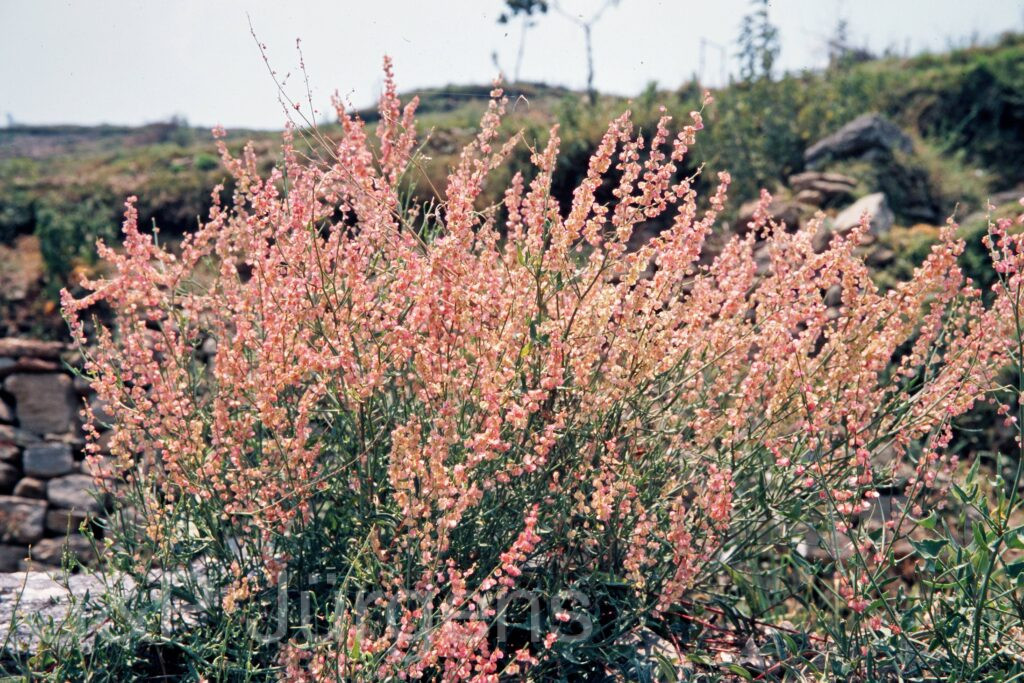
Rumex hastatus is a widespread sub-shrubby dock distributed across the Himalaya and adjacent uplands, with GBIF documenting some 756 occurrences spanning China, India, Pakistan, Nepal, Afghanistan, Bhutan and Myanmar, alongside scattered introduced records in New Zealand and North America that mark it as a casual alien beyond its native range. It is a colonist of dry, sunny, often disturbed ground: rocky banks, terraced field margins, road cuttings, riverine gravels and open hillsides, ranging from around 700 m to over 3000 m. The plant photographed at Sana on the Mandakini in Garhwal, India, at about 1750 m in June, represents a typical warm-temperate montane locality where the species forms conspicuous reddish-tinged stands on stony slopes.

Morphologically it is a much-branched, woody-based perennial or subshrub reaching 30 to 100 cm, the slender intricate branches glabrous and often reddish. The leaves are characteristically hastate, the small narrow blade bearing a pair of spreading basal lobes, hence the epithet; lower leaves may be obovate, and the foliage is somewhat fleshy and grey-green. As in all Rumex the stem is sheathed at the nodes by membranous ochreae. The inflorescence is a large, lax, much-branched terminal panicle of small dioecious or polygamous flowers. The fruiting perianth develops three enlarged, rounded, membranous and often rose-tinted inner valves (wings) without conspicuous tubercles, enclosing a small trigonous brown nutlet and aiding wind dispersal.

The species sits within Rumex subgenus Acetosa, the sorrels, distinguished by their hastate or sagittate leaves, sour oxalate-rich sap and unisexual flowers. R. hastatus is valued locally as a pot-herb and in traditional medicine, the acidic foliage used as a refreshing condiment and astringent. Ecologically it is a hardy pioneer of degraded and eroding substrates, tolerant of drought and grazing, which underlies both its abundance throughout the Himalayan foothills and its capacity to naturalise elsewhere. It is of no conservation concern, being common and adaptable across a broad altitudinal and geographic span.

Author: D.Don · Sources: POWO (Kew), GBIF, Flora of China Vol. 5, Flora of Pakistan, Flora of Nepal, Rechinger Monograph of Rumex

Wall.

Nepal 97 268 P552
Nepal Bagong-Khola 2700m April

Description

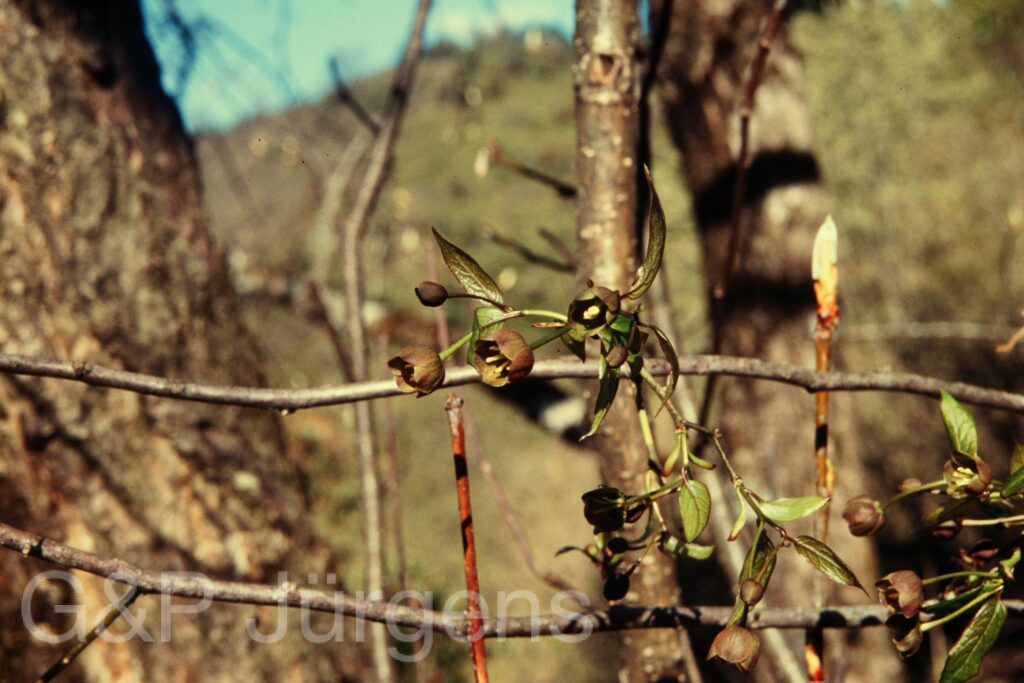
Sabia campanulata is a climbing shrub of the Himalaya and southwestern China, recorded from China, India, Nepal, Bhutan, Myanmar, Pakistan and Japan, with around 1019 georeferenced occurrences in GBIF. It grows in temperate broad-leaved and mixed forests, thicket margins, forest edges and along ravines, scrambling over shrubs and small trees on humid montane slopes. The photographed plant from the Bagong Khola in Nepal at 2700 m in April is typical of these cool mid-montane forest habitats, where the species flowers in spring as new growth emerges along streamside woodland.

It is a deciduous woody climber or scandent shrub with slender, somewhat flexuous branches. The leaves are alternate, simple, ovate to elliptic-oblong, entire-margined, acuminate at the apex and with a thin to slightly leathery texture, the venation pinnate and prominent beneath. The flowers are small and borne solitary or in few-flowered axillary clusters; the corolla is campanulate, as the epithet indicates, with five greenish to dull purple or yellowish petals, five sepals, and five stamens opposite the petals, set on a small fleshy disc. The fruit is a flattened, reniform to obovoid drupe, paired or solitary, ripening blue to bluish-black, with a single curved seed and a reticulate endocarp.

The genus Sabia gives its name to the small family Sabiaceae, an isolated lineage of the basal eudicots (Proteales sensu lato in some treatments) with no close affinities among other Himalayan woody climbers. Sabia campanulata is distinguished within the genus by its relatively large bell-shaped flowers. Its drupaceous, bird-dispersed fruits aid seed dispersal through forest. Locally distributed but not rare across its montane range, it is not regarded as threatened, though dependent on intact temperate forest.

Author: Wall. · Sources: POWO (Kew), GBIF, Flora of China Vol. 5, Flora of Bhutan Vol. 2, Flora of Nepal, A Revision of the Genus Sabia (Sabiaceae)

Andersson

BhutanPG2011 377
Bhutan Dur Tsa-Cho 3100m, June

Description

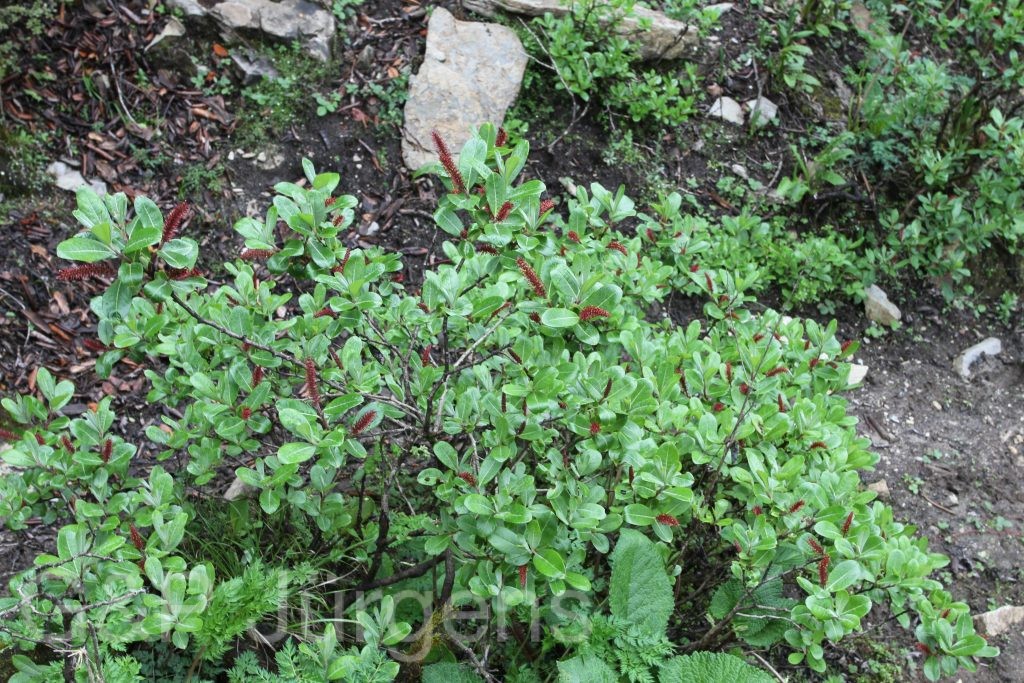
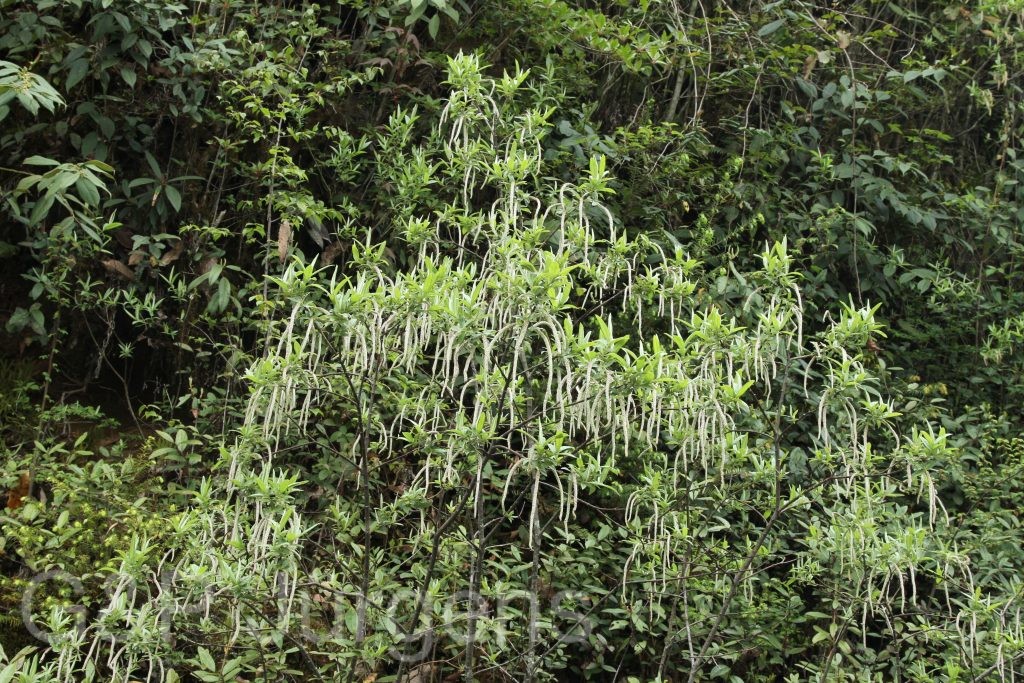
Salix daltoniana Andersson is a Himalayan willow ranging through China, Nepal, India and Bhutan, with about 399 GBIF occurrences. It is a riparian and montane species growing along streams, riverbanks, moist gullies and forest margins in the temperate and subalpine belts, generally between 2500 and 3800 m. It was recorded in central Bhutan at Dur Tsa-Cho near 3100 m in June, a typical streamside setting where willows form thickets along glacier-fed watercourses and contribute to bank stabilisation in the high valleys.

It is a shrub or small tree with slender, glabrous, often reddish-brown twigs. The leaves are alternate, lanceolate to oblong-lanceolate, acuminate, finely serrulate at the margin, green and glabrescent above and paler, somewhat glaucous beneath, with stipules variably developed on vigorous shoots. As in all willows the species is dioecious, the flowers arranged in erect catkins appearing with or slightly before the leaves; each tiny flower is subtended by a hairy bract and reduced to stamens or a single ovary with a nectary gland. The fruit is a small conical capsule splitting to release numerous minute seeds bearing long silky hairs for wind dispersal.

Salix is a vast, taxonomically difficult genus prone to hybridisation, and the Himalayan species including S. daltoniana have been the subject of repeated revision. Wind- and insect-pollinated and pioneering on unstable alluvium, the species plays an ecological role in colonising disturbed riverine ground and providing browse. It is not regarded as threatened, being widespread along Himalayan watercourses, though it is sensitive to changes in river hydrology and montane land use.

Author: Andersson · Sources: POWO (Kew), GBIF, Flora of China, Flora of Bhutan, Flora of Nepal, Salicaceae monograph (Skvortsov, Willows of the USSR and adjacent regions)

Wall. ex Andersson

Garh 07 395 2 ergebnis
India Garhwal Khiar Kutti 3950m, June

Description

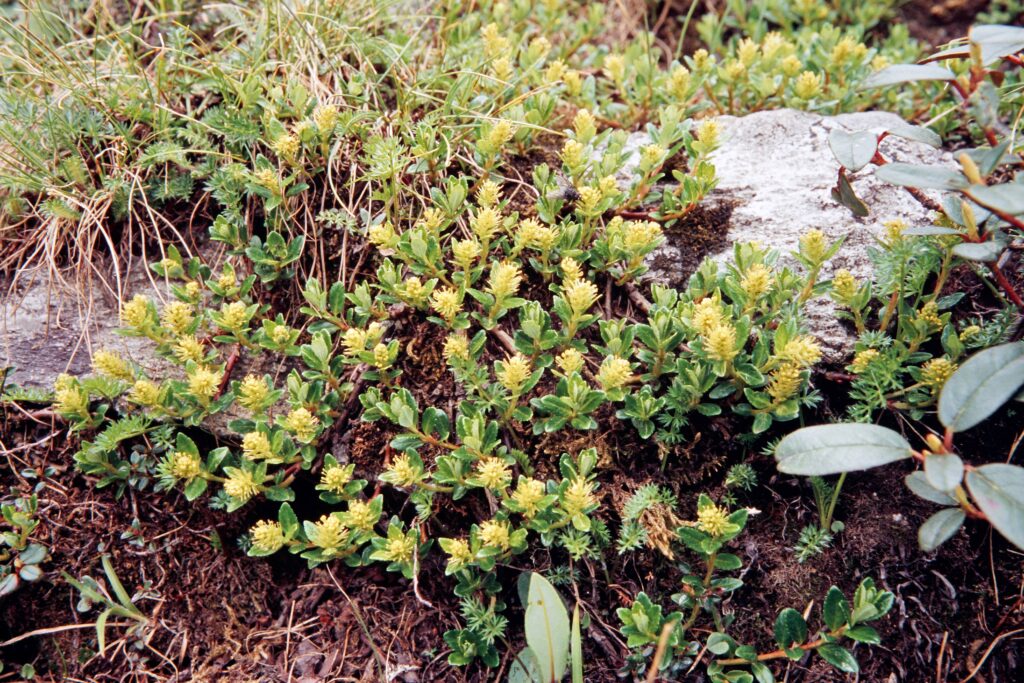
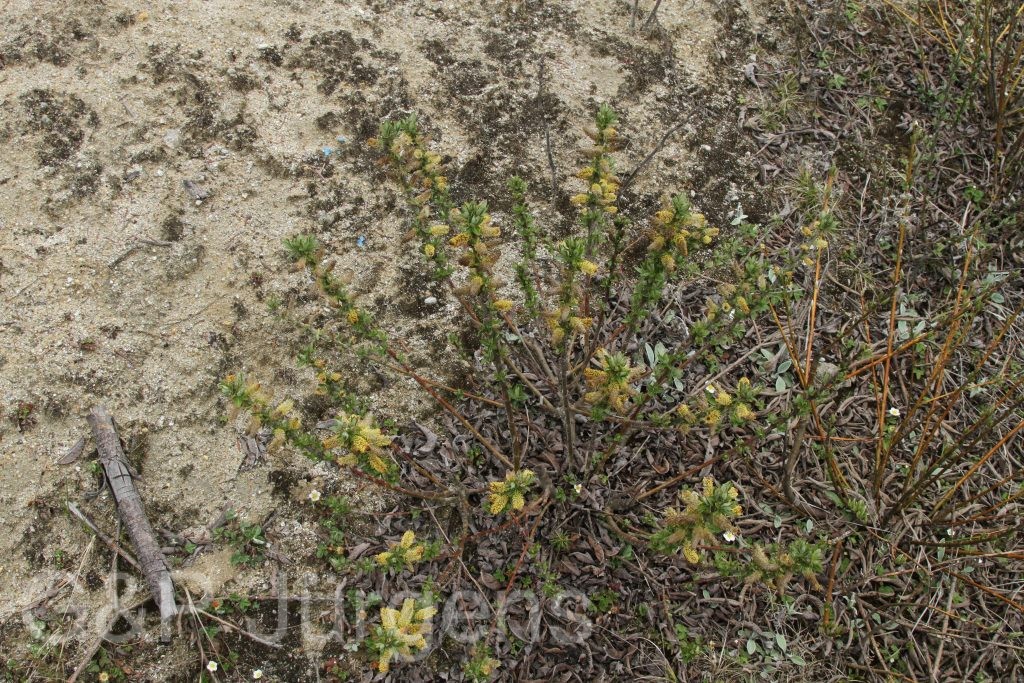
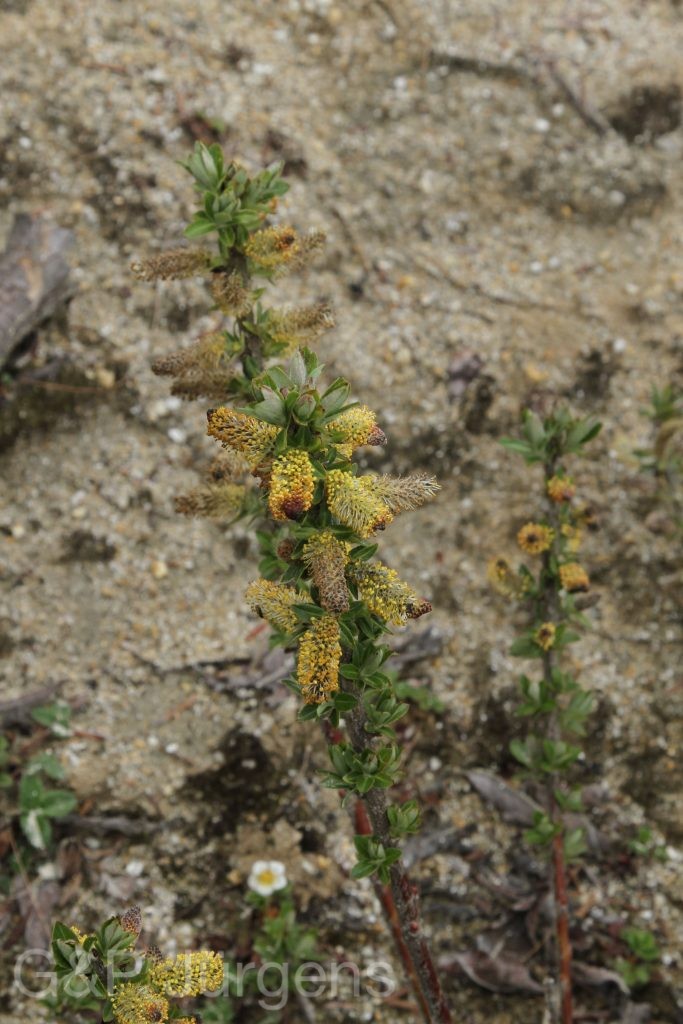
Salix lindleyana is a high-altitude dwarf willow distributed across the Himalayas from Pakistan through northern India, Nepal, and Bhutan to southwest China (Xizang, Yunnan) and northern Myanmar. GBIF records approximately 773 occurrences, concentrated in the alpine zones of the western and central Himalayas. The species is a characteristic element of subnival and alpine habitats at 3,500–5,200 m elevation, growing on moraines, scree slopes, stream margins, and moist alpine meadows. At Khiar Kutti in Garhwal at 3,950 m, it forms prostrate mats on gravelly substrates near glacial meltwater channels, flowering in June as the snowpack recedes and summer warmth permits a brief growing season.
Salix lindleyana is a prostrate, creeping deciduous shrub rarely exceeding 5–15 cm in height. Stems are slender, woody, rooting at the nodes, spreading laterally to form dense mats up to 1 m or more across. Leaves are small, elliptic to obovate, 5–15 mm long, entire or obscurely crenulate, glabrous at maturity, bright green above and slightly glaucous beneath. Catkins are terminal, erect, 1–3 cm long, appearing with or just after the leaves; male catkins bear stamens with purple-tipped filaments and yellow anthers, while female catkins develop into capsules 3–5 mm long containing minute, comose seeds that are dispersed by wind. The entire growth form is adapted to minimise exposure to desiccating alpine winds and to capture warmth from the ground surface.
Salix lindleyana is one of the highest-growing woody plants in the Himalayas and an important pioneer species in alpine and subnival ecosystems. Its prostrate, mat-forming habit stabilises loose substrates on moraines and scree slopes, facilitating soil development and subsequent colonisation by other alpine plants. The species is named after the English botanist John Lindley and was formally described by Andersson based on Wallich's Himalayan collections. It belongs to the section Chamaetia, a group of arctic-alpine dwarf willows, and is closely related to S. serpyllifolia of the European Alps — a biogeographical parallel reflecting Tertiary migration routes between the Alpine and Himalayan orogens.

Author: Wall. ex Andersson · Sources: POWO (Kew), GBIF, Flora of China Vol. 4, Flora of Pakistan Vol. 203, Polunin & Stainton: Flowers of the Himalaya (1984)

Hand.-Mazz. ex Enander

Bhutan2014 451
Bhutan Phobjika 2810m, May

Description

Salix salwinensis is a Sino-Himalayan willow distributed from SW China (the Salween, Mekong and upper Yangtze drainages, whence the epithet) through NE India, Nepal and Bhutan, GBIF recording some 92 occurrences across the eastern Himalaya and southwestern China. It is a shrub or small tree of high-montane and subalpine habitats, growing along streamsides, in damp thickets, at forest margins and on open slopes. The photographed plant from Phobjika in Bhutan at 2,810 m (May) reflects its occurrence in the cool temperate to subalpine belt, where willows form a conspicuous component of riparian and meadow-edge vegetation.

It is a deciduous, dioecious shrub or small tree with reddish-brown to purplish, glabrous young twigs. The leaves are oblong to oblanceolate or elliptic, acute, often glaucous beneath, with finely serrate or entire margins and a short petiole, the young foliage sometimes silky. As in all willows the flowers are reduced and borne in erect catkins appearing with or before the leaves; each flower is subtended by a hairy bract and lacks a perianth, the male with two stamens and the female with a single pistil bearing a basal nectary. The fruit is a small, two-valved capsule releasing numerous comose, wind-dispersed seeds.

Salix is a large and taxonomically intricate genus in which hybridisation and clinal variation blur species boundaries; the Himalayan willows in particular require careful study of catkin and leaf characters for identification. The dioecious, catkin-bearing, anemophilous and partly entomophilous flowers, the comose seeds and the capacity for vegetative regeneration are classic adaptations of the genus to dynamic, disturbed riparian habitats. The species is not considered threatened across its montane range.

Author: Hand.-Mazz. ex Enander · Sources: POWO (Kew), Flora of Bhutan Vol. 1, GBIF, Flora of China Vol. 4, Skvortsov: Willows of Russia and Adjacent Countries

Flod.

Bhutan2014 442
Bhutan Yatong-La 3200m, May
Bhutan2014 443
Bhutan Yatong-La 3200m, May

Description

Salix stomatophora is a Himalayan willow distributed across the high mountains of southwestern China (Xizang), Bhutan, Nepal and northern India, with GBIF recording roughly eighty occurrences from this region (records from the United States and Mexico reflect herbarium and cultivated material). It is a plant of the upper-montane to subalpine zone, occupying streamsides, moist forest margins, thickets and open slopes, generally between about 2800 and 3800 m. The individual photographed at Yatong-La in Bhutan at 3200 m, catkins emerging in May, is typical of these cool, humid Bhutan Himalayan habitats, where willows flush early in spring as snowmelt swells the mountain streams along which the species characteristically grows.

The plant is a shrub or small tree with slender, often reddish-brown to purplish young twigs that are glabrous or nearly so. The leaves are alternate, lanceolate to elliptic, acuminate, finely glandular-serrate at the margin, green above and conspicuously glaucous beneath, with prominent stomatal banding on the lower surface that gives the species its epithet (stomatophora, "bearing stomata"). As in all willows the plant is dioecious, the flowers borne in erect catkins appearing with or slightly before the leaves; each tiny flower subtended by a hairy bract, the staminate flowers with two stamens, the pistillate with a single ovary bearing a short style and notched stigmas. The fruit is a small, glabrous, two-valved capsule releasing minute, silky-tufted, wind-dispersed seeds.

Salix is a large, taxonomically difficult genus, and the Sino-Himalayan region harbours a rich assemblage of montane and alpine species whose delimitation rests heavily on leaf indumentum, stipule form and catkin and capsule characters. The pronounced glaucous, stomatiferous lower leaf surface of S. stomatophora is a key diagnostic trait. Note that this Himalayaflora page links the synonym S. bhutanensis, underscoring the nomenclatural fluidity common in the genus. Ecologically the species contributes to streambank stabilisation and provides early-season forage and pollen for emerging insects in high-altitude communities. With a wide if scattered Himalayan range it is not regarded as threatened, though localised populations depend on the integrity of subalpine riparian corridors.

Author: Flod. · Sources: POWO (Kew), GBIF, Flora of China Vol. 4, Flora of Bhutan Vol. 1 Part 1, Flora of Nepal, Salix (Salicaceae) of the Sino-Himalaya (K.S. Hao; A.K. Skvortsov, Willows of the World)