
Hand.-Mazz. ex Enander
Description
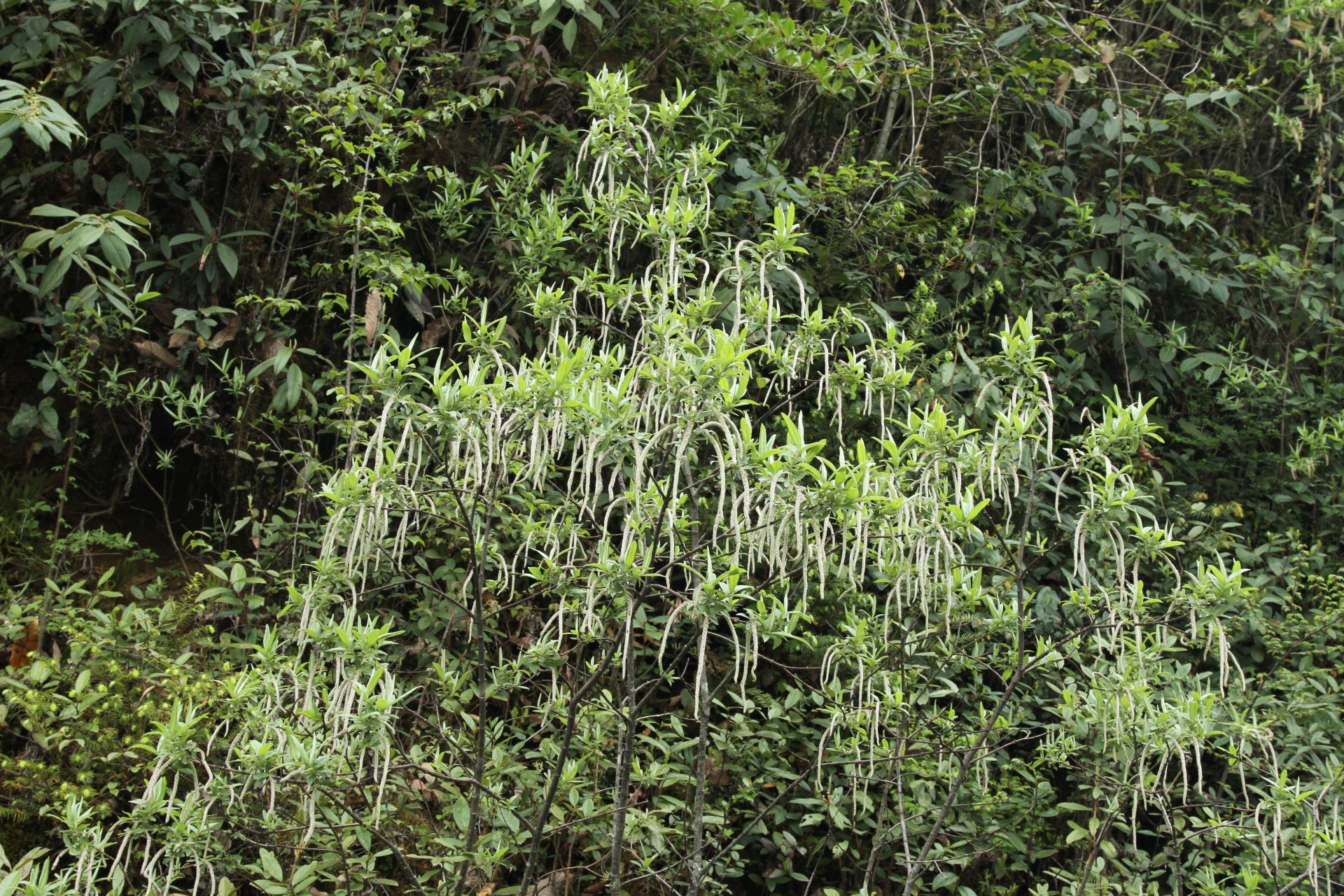
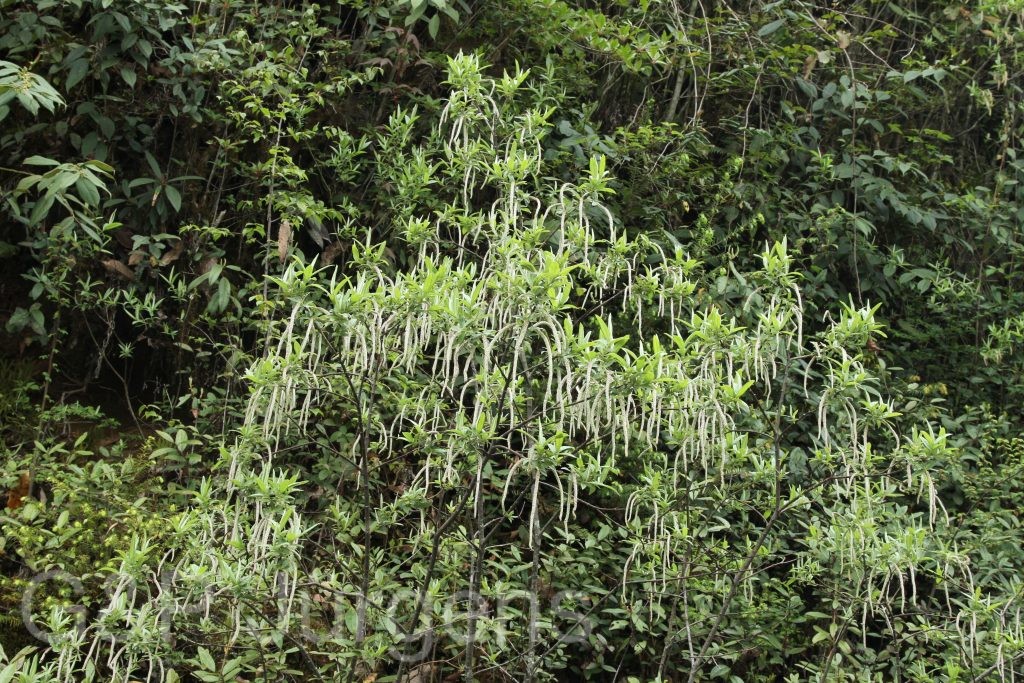
Salix salwinensis is a Sino-Himalayan willow distributed from SW China (the Salween, Mekong and upper Yangtze drainages, whence the epithet) through NE India, Nepal and Bhutan, GBIF recording some 92 occurrences across the eastern Himalaya and southwestern China. It is a shrub or small tree of high-montane and subalpine habitats, growing along streamsides, in damp thickets, at forest margins and on open slopes. The photographed plant from Phobjika in Bhutan at 2,810 m (May) reflects its occurrence in the cool temperate to subalpine belt, where willows form a conspicuous component of riparian and meadow-edge vegetation.
It is a deciduous, dioecious shrub or small tree with reddish-brown to purplish, glabrous young twigs. The leaves are oblong to oblanceolate or elliptic, acute, often glaucous beneath, with finely serrate or entire margins and a short petiole, the young foliage sometimes silky. As in all willows the flowers are reduced and borne in erect catkins appearing with or before the leaves; each flower is subtended by a hairy bract and lacks a perianth, the male with two stamens and the female with a single pistil bearing a basal nectary. The fruit is a small, two-valved capsule releasing numerous comose, wind-dispersed seeds.
Salix is a large and taxonomically intricate genus in which hybridisation and clinal variation blur species boundaries; the Himalayan willows in particular require careful study of catkin and leaf characters for identification. The dioecious, catkin-bearing, anemophilous and partly entomophilous flowers, the comose seeds and the capacity for vegetative regeneration are classic adaptations of the genus to dynamic, disturbed riparian habitats. The species is not considered threatened across its montane range.
Author: Hand.-Mazz. ex Enander · Sources: POWO (Kew), Flora of Bhutan Vol. 1, GBIF, Flora of China Vol. 4, Skvortsov: Willows of Russia and Adjacent Countries