
Andersson
Description
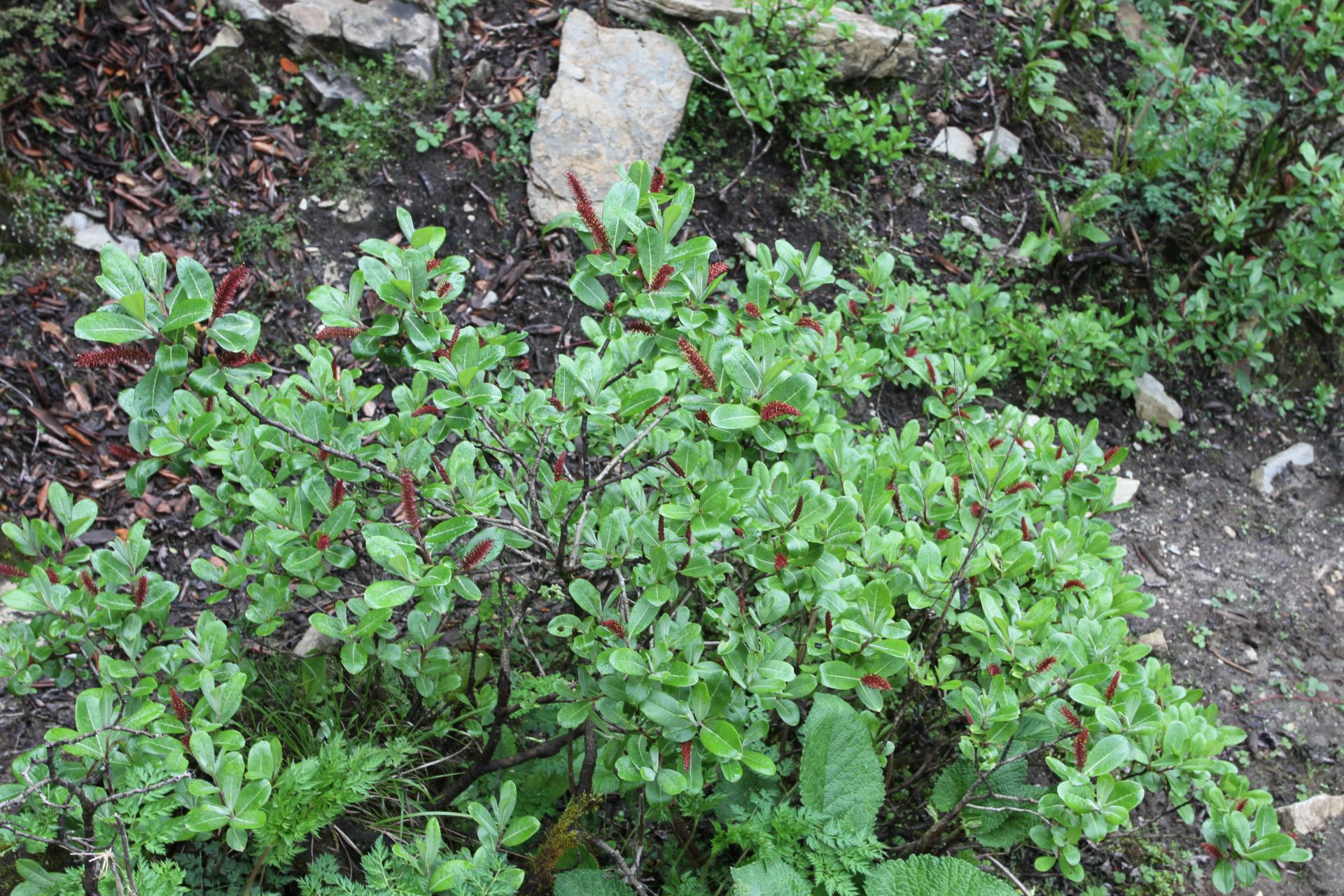
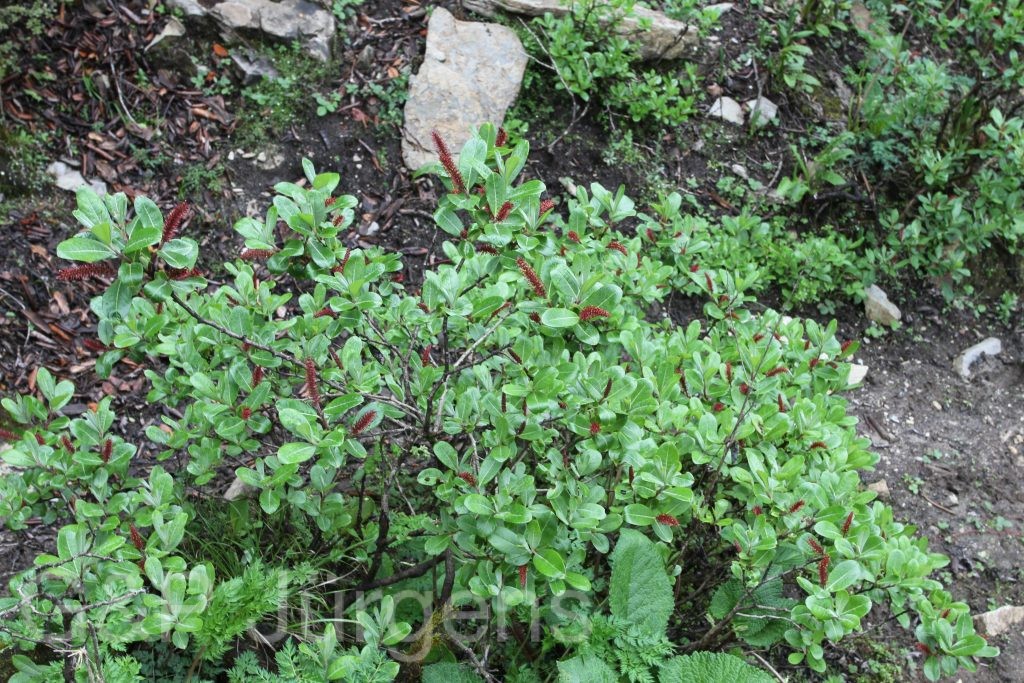
Salix daltoniana Andersson is a Himalayan willow ranging through China, Nepal, India and Bhutan, with about 399 GBIF occurrences. It is a riparian and montane species growing along streams, riverbanks, moist gullies and forest margins in the temperate and subalpine belts, generally between 2500 and 3800 m. It was recorded in central Bhutan at Dur Tsa-Cho near 3100 m in June, a typical streamside setting where willows form thickets along glacier-fed watercourses and contribute to bank stabilisation in the high valleys.
It is a shrub or small tree with slender, glabrous, often reddish-brown twigs. The leaves are alternate, lanceolate to oblong-lanceolate, acuminate, finely serrulate at the margin, green and glabrescent above and paler, somewhat glaucous beneath, with stipules variably developed on vigorous shoots. As in all willows the species is dioecious, the flowers arranged in erect catkins appearing with or slightly before the leaves; each tiny flower is subtended by a hairy bract and reduced to stamens or a single ovary with a nectary gland. The fruit is a small conical capsule splitting to release numerous minute seeds bearing long silky hairs for wind dispersal.
Salix is a vast, taxonomically difficult genus prone to hybridisation, and the Himalayan species including S. daltoniana have been the subject of repeated revision. Wind- and insect-pollinated and pioneering on unstable alluvium, the species plays an ecological role in colonising disturbed riverine ground and providing browse. It is not regarded as threatened, being widespread along Himalayan watercourses, though it is sensitive to changes in river hydrology and montane land use.
Author: Andersson · Sources: POWO (Kew), GBIF, Flora of China, Flora of Bhutan, Flora of Nepal, Salicaceae monograph (Skvortsov, Willows of the USSR and adjacent regions)