
Flod.
Description
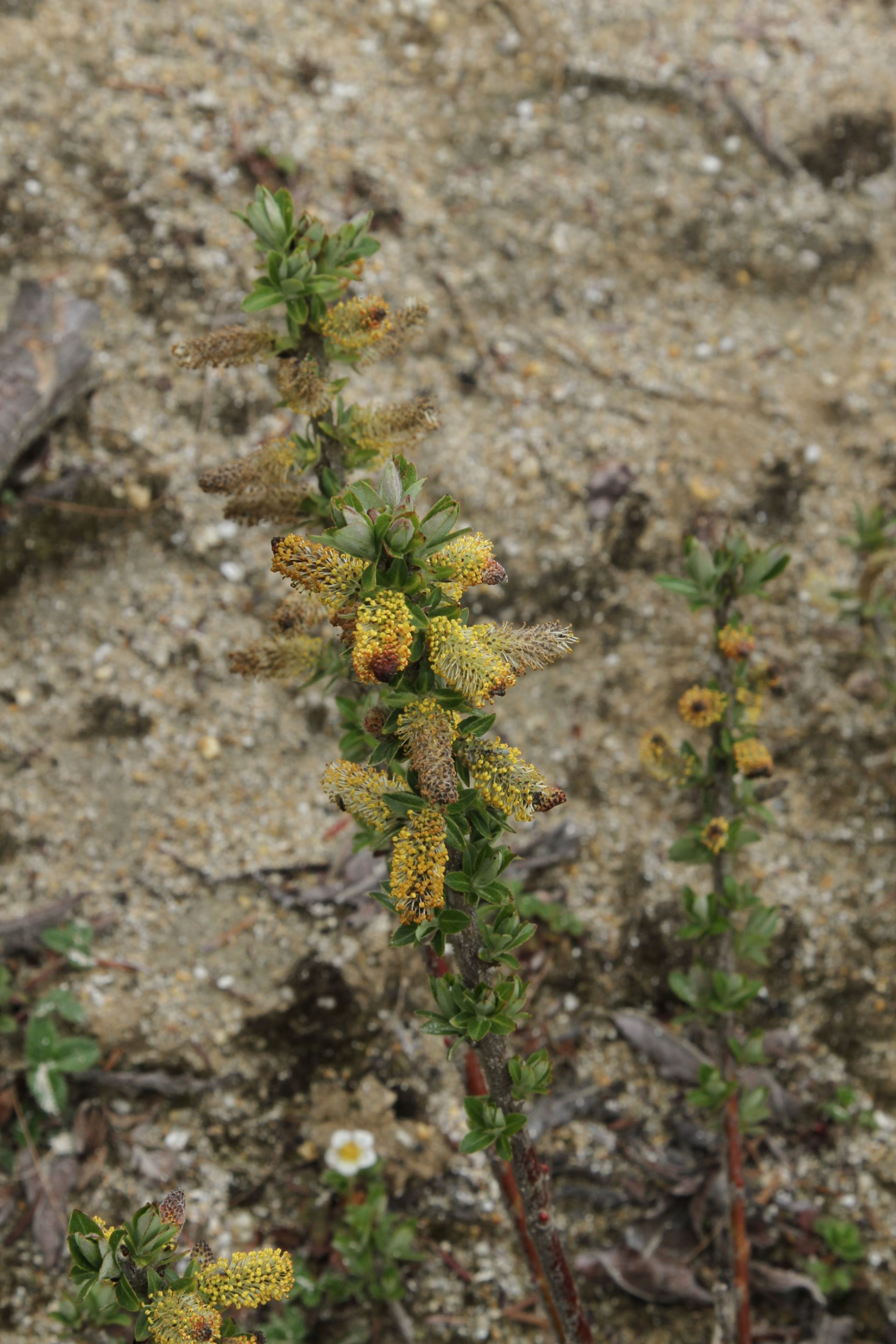
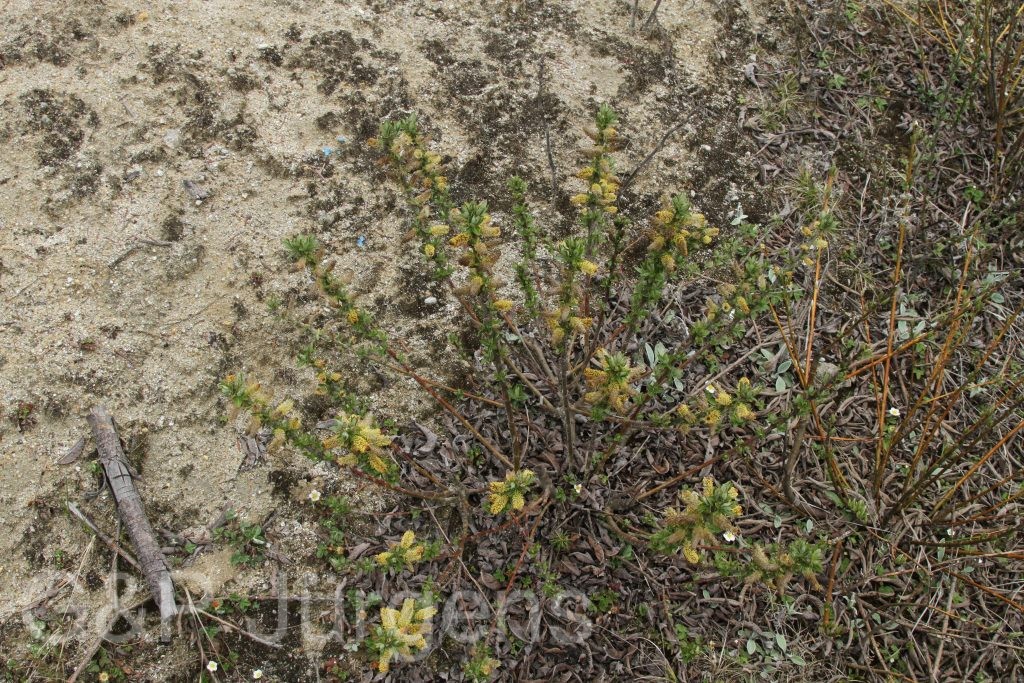
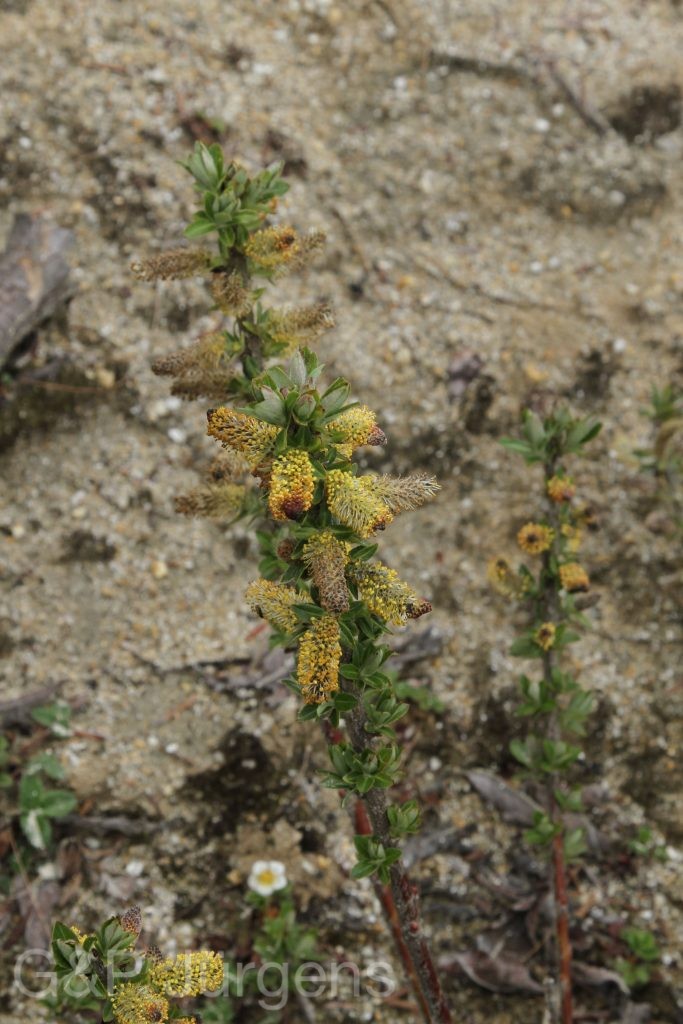
Salix stomatophora is a Himalayan willow distributed across the high mountains of southwestern China (Xizang), Bhutan, Nepal and northern India, with GBIF recording roughly eighty occurrences from this region (records from the United States and Mexico reflect herbarium and cultivated material). It is a plant of the upper-montane to subalpine zone, occupying streamsides, moist forest margins, thickets and open slopes, generally between about 2800 and 3800 m. The individual photographed at Yatong-La in Bhutan at 3200 m, catkins emerging in May, is typical of these cool, humid Bhutan Himalayan habitats, where willows flush early in spring as snowmelt swells the mountain streams along which the species characteristically grows.
The plant is a shrub or small tree with slender, often reddish-brown to purplish young twigs that are glabrous or nearly so. The leaves are alternate, lanceolate to elliptic, acuminate, finely glandular-serrate at the margin, green above and conspicuously glaucous beneath, with prominent stomatal banding on the lower surface that gives the species its epithet (stomatophora, "bearing stomata"). As in all willows the plant is dioecious, the flowers borne in erect catkins appearing with or slightly before the leaves; each tiny flower subtended by a hairy bract, the staminate flowers with two stamens, the pistillate with a single ovary bearing a short style and notched stigmas. The fruit is a small, glabrous, two-valved capsule releasing minute, silky-tufted, wind-dispersed seeds.
Salix is a large, taxonomically difficult genus, and the Sino-Himalayan region harbours a rich assemblage of montane and alpine species whose delimitation rests heavily on leaf indumentum, stipule form and catkin and capsule characters. The pronounced glaucous, stomatiferous lower leaf surface of S. stomatophora is a key diagnostic trait. Note that this Himalayaflora page links the synonym S. bhutanensis, underscoring the nomenclatural fluidity common in the genus. Ecologically the species contributes to streambank stabilisation and provides early-season forage and pollen for emerging insects in high-altitude communities. With a wide if scattered Himalayan range it is not regarded as threatened, though localised populations depend on the integrity of subalpine riparian corridors.
Author: Flod. · Sources: POWO (Kew), GBIF, Flora of China Vol. 4, Flora of Bhutan Vol. 1 Part 1, Flora of Nepal, Salix (Salicaceae) of the Sino-Himalaya (K.S. Hao; A.K. Skvortsov, Willows of the World)