
L.
Description
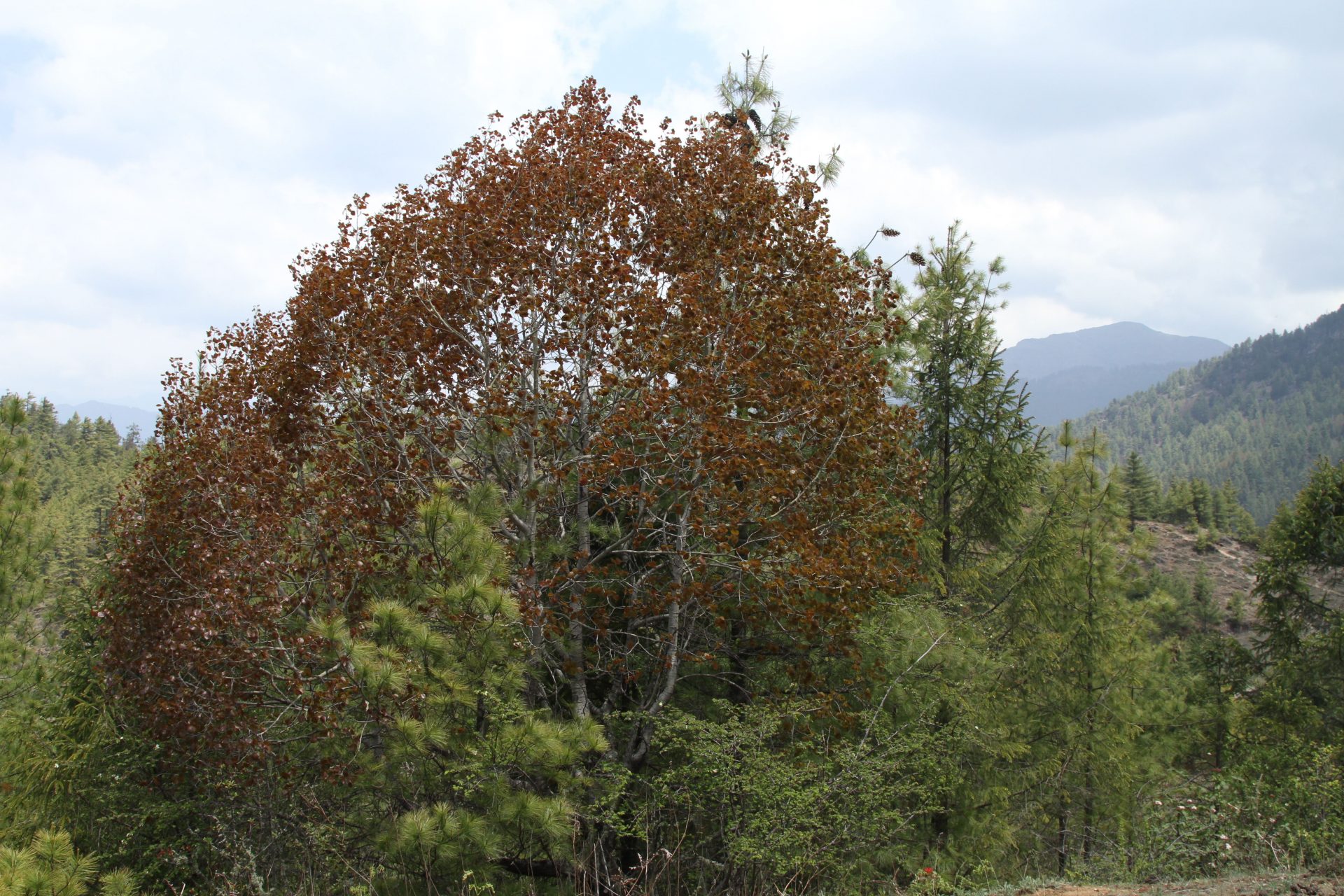
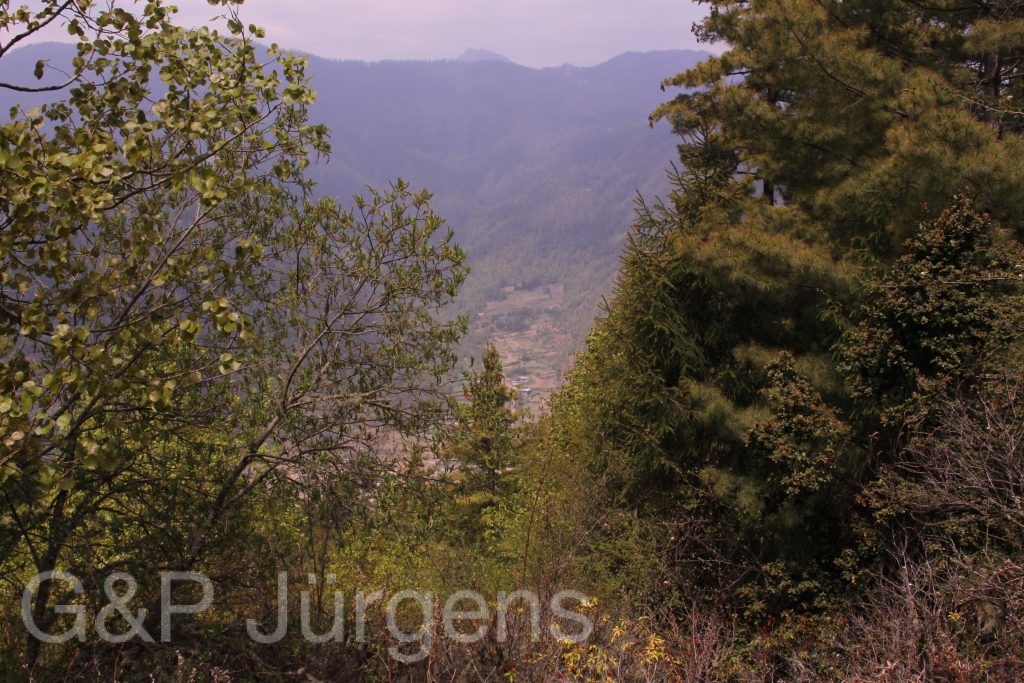
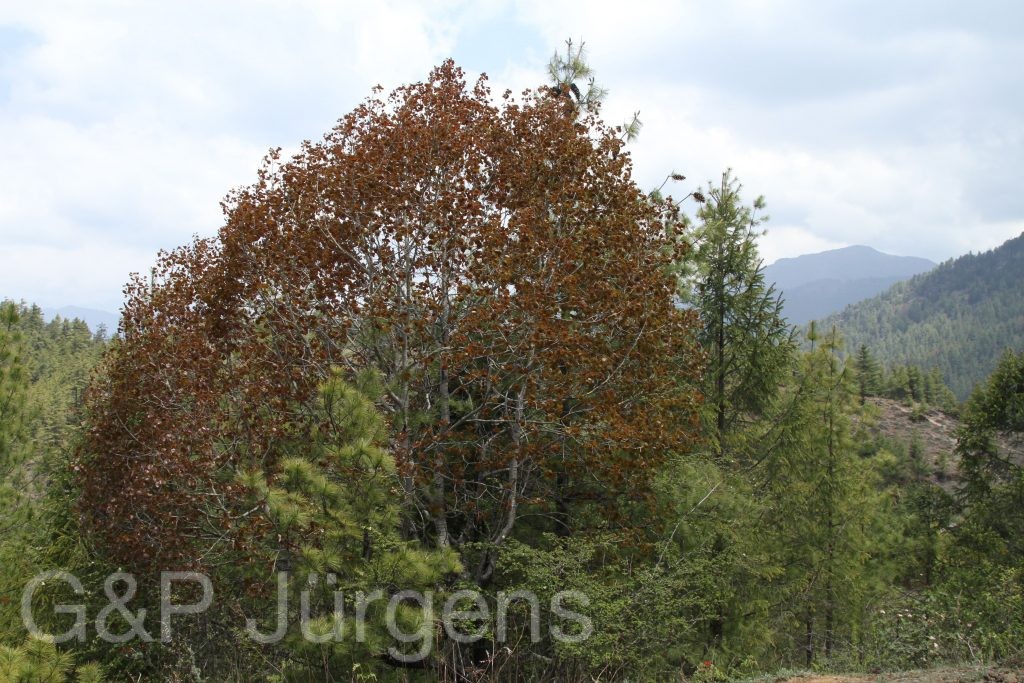
Populus tremula, the Eurasian aspen, is among the most widely distributed trees of the Northern Hemisphere, ranging across virtually all of Europe and temperate Asia, as the vast GBIF dataset of over 779,000 records from Sweden, France, Germany, Britain, Russia, China and beyond attests. In the Himalaya it reaches its southern Asian limit as a high-montane element, and the photographed tree from Bhutan's Chele-La at 3400 m in May represents this elevated outpost. It is a pioneer of disturbed ground, forest clearings, burnt areas, screes and woodland margins, tolerant of a wide range of soils and climates from boreal lowland to subalpine slopes, where it often forms clonal stands by root suckering.
It is a deciduous tree with smooth, greenish-grey bark, becoming furrowed at the base of old trunks. The alternate leaves are nearly orbicular to broadly ovate with a crenate to sinuate margin, borne on long, conspicuously laterally flattened petioles that allow the foliage to flutter in the slightest breeze, the trait giving the tree both its epithet tremula ("trembling") and its English name. Juvenile and sucker leaves are larger and more triangular. Like all poplars it is dioecious, the flowers borne in pendulous catkins that appear before the leaves; each flower subtended by a fringed bract, the males with numerous stamens, the females with a one-celled ovary. The fruit is a small capsule releasing cottony, plumed seeds dispersed by wind.
Aspen is a keystone pioneer species of immense ecological importance, supporting rich communities of insects, fungi and lichens and frequently forming genetically uniform clonal groves that can persist for centuries. Within Salicaceae it belongs to section Populus (the aspens and white poplars). Its presence in the eastern Himalaya illustrates the trans-Eurasian continuity of temperate forest floras; the species is of least conservation concern and is widely exploited for timber, pulp and matchwood.
Author: L. · Sources: POWO (Kew), GBIF, Flora of China Vol. 4, Flora of Bhutan Vol. 1, Flora of Pakistan, Eckenwalder's Conifers and Salicaceae Treatments