
Wall.
Description
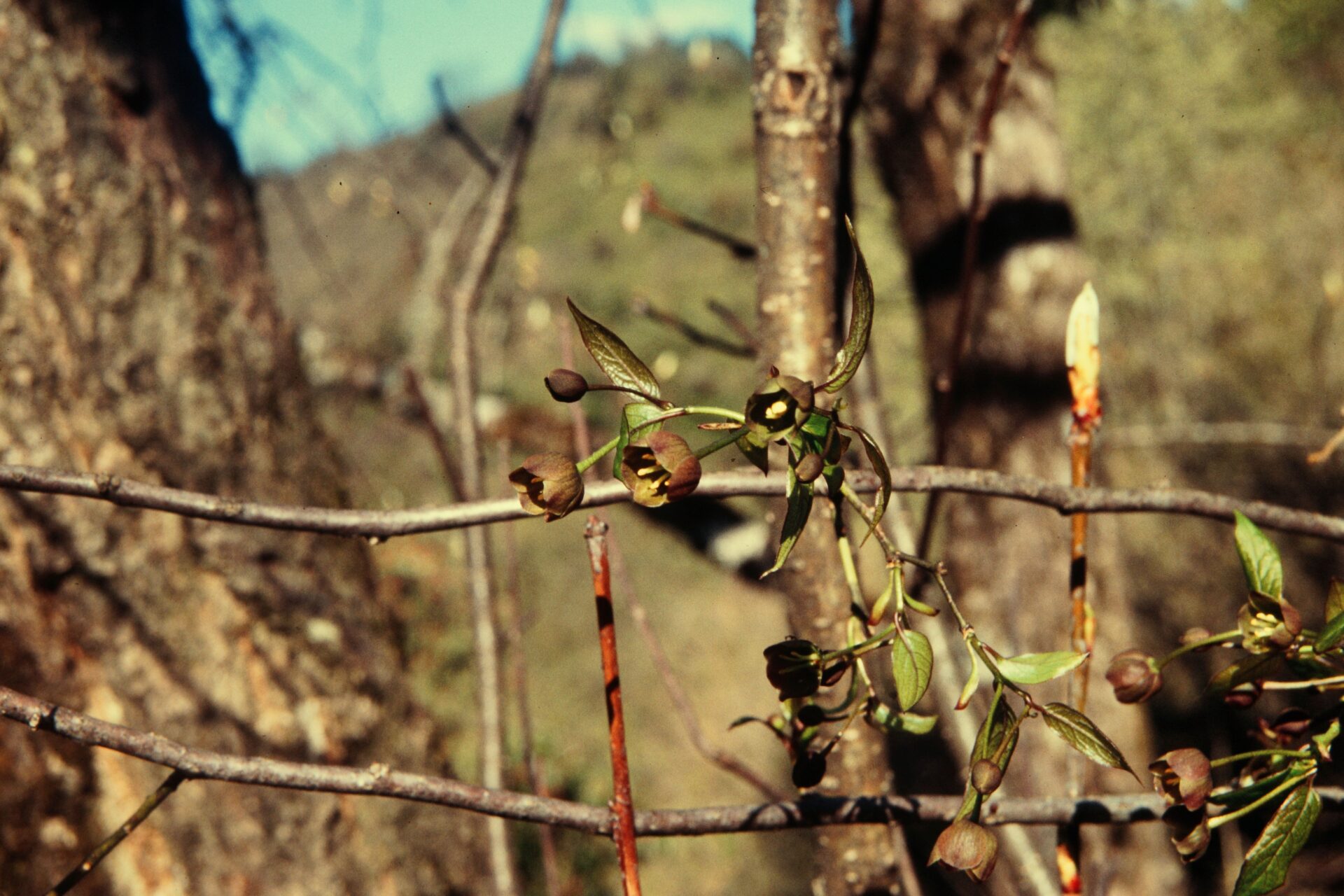
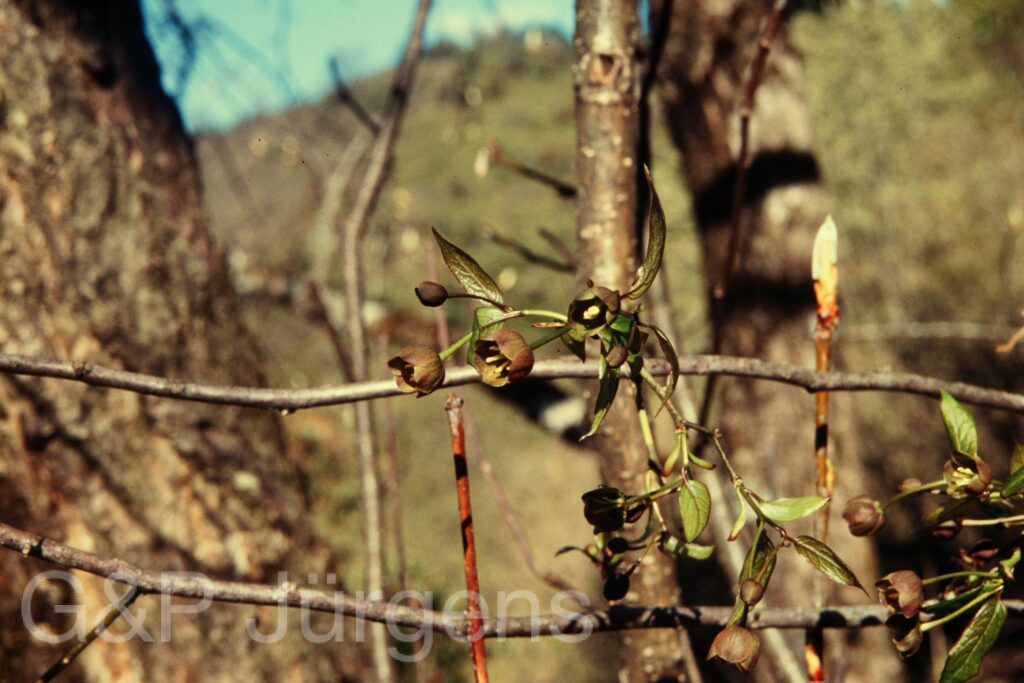
Sabia campanulata is a climbing shrub of the Himalaya and southwestern China, recorded from China, India, Nepal, Bhutan, Myanmar, Pakistan and Japan, with around 1019 georeferenced occurrences in GBIF. It grows in temperate broad-leaved and mixed forests, thicket margins, forest edges and along ravines, scrambling over shrubs and small trees on humid montane slopes. The photographed plant from the Bagong Khola in Nepal at 2700 m in April is typical of these cool mid-montane forest habitats, where the species flowers in spring as new growth emerges along streamside woodland.
It is a deciduous woody climber or scandent shrub with slender, somewhat flexuous branches. The leaves are alternate, simple, ovate to elliptic-oblong, entire-margined, acuminate at the apex and with a thin to slightly leathery texture, the venation pinnate and prominent beneath. The flowers are small and borne solitary or in few-flowered axillary clusters; the corolla is campanulate, as the epithet indicates, with five greenish to dull purple or yellowish petals, five sepals, and five stamens opposite the petals, set on a small fleshy disc. The fruit is a flattened, reniform to obovoid drupe, paired or solitary, ripening blue to bluish-black, with a single curved seed and a reticulate endocarp.
The genus Sabia gives its name to the small family Sabiaceae, an isolated lineage of the basal eudicots (Proteales sensu lato in some treatments) with no close affinities among other Himalayan woody climbers. Sabia campanulata is distinguished within the genus by its relatively large bell-shaped flowers. Its drupaceous, bird-dispersed fruits aid seed dispersal through forest. Locally distributed but not rare across its montane range, it is not regarded as threatened, though dependent on intact temperate forest.
Author: Wall. · Sources: POWO (Kew), GBIF, Flora of China Vol. 5, Flora of Bhutan Vol. 2, Flora of Nepal, A Revision of the Genus Sabia (Sabiaceae)