Tag:

Bhutan

Flowers of Bhutan — 1326 plant species documented across the Bhutanese Himalaya, from dense broadleaf and conifer forests to alpine scrub and meadows. Bhutan’s largely intact wilderness shelters an exceptional diversity of orchids, rhododendrons, primulas and Himalayan poppies, many of them regional endemics. Each species page includes a botanical description, distribution, habitat and flowering time, with the original photograph and its recorded altitude and locality.

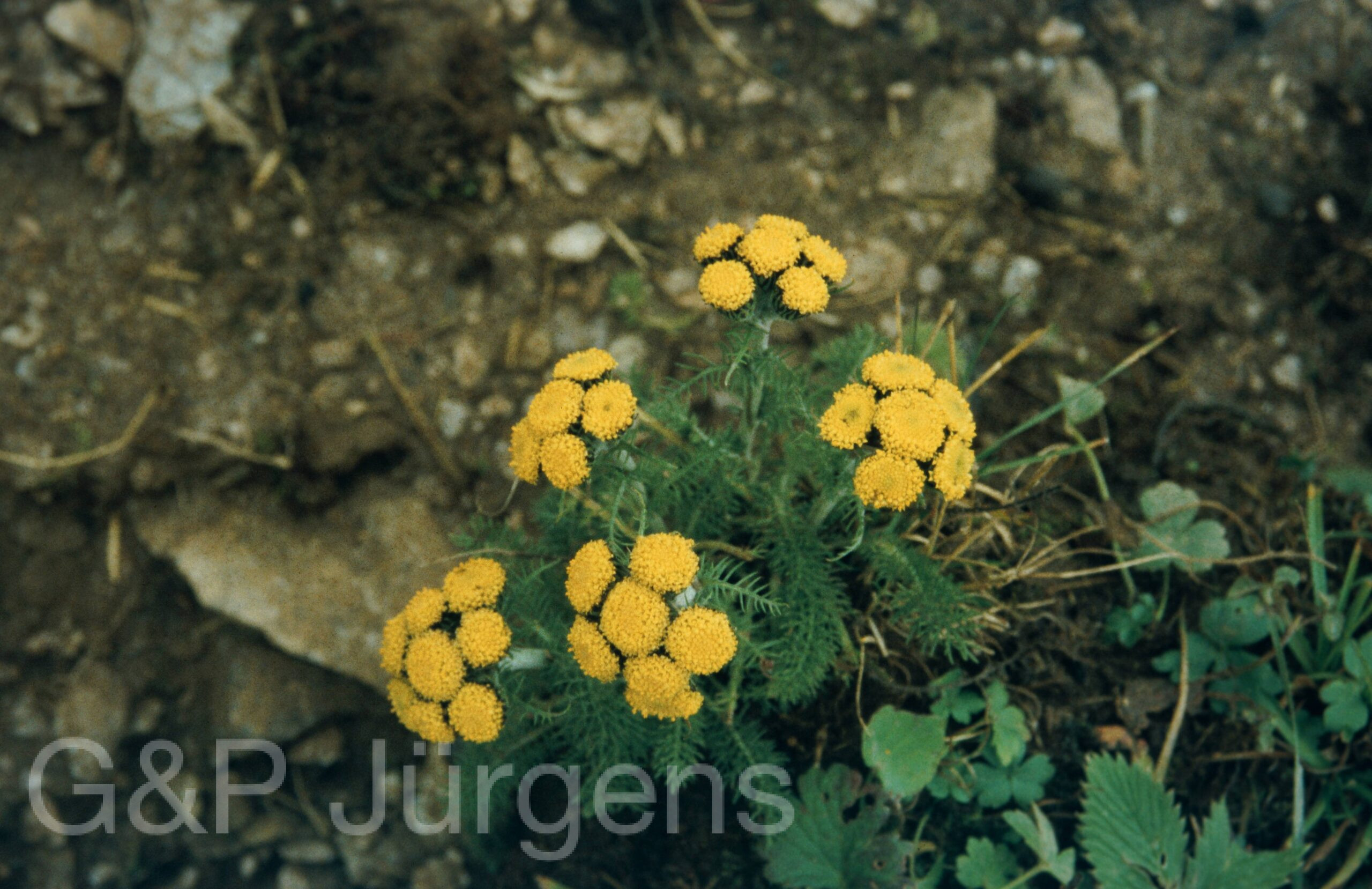
Ajania nubigena

by GP Jürgens

(Wall. ex DC.) Muldashev
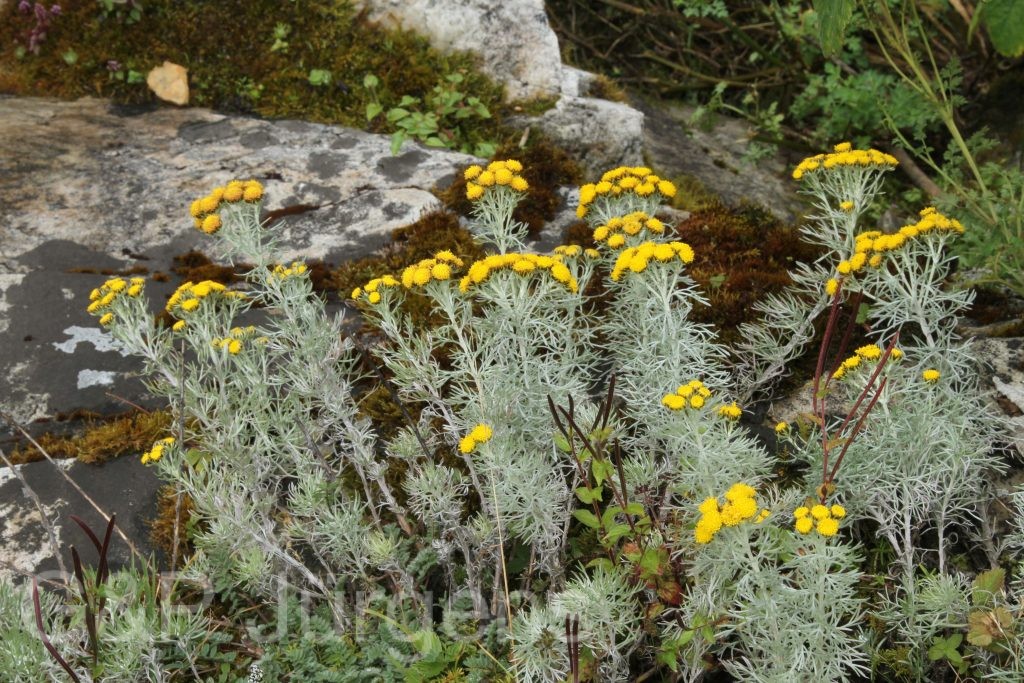
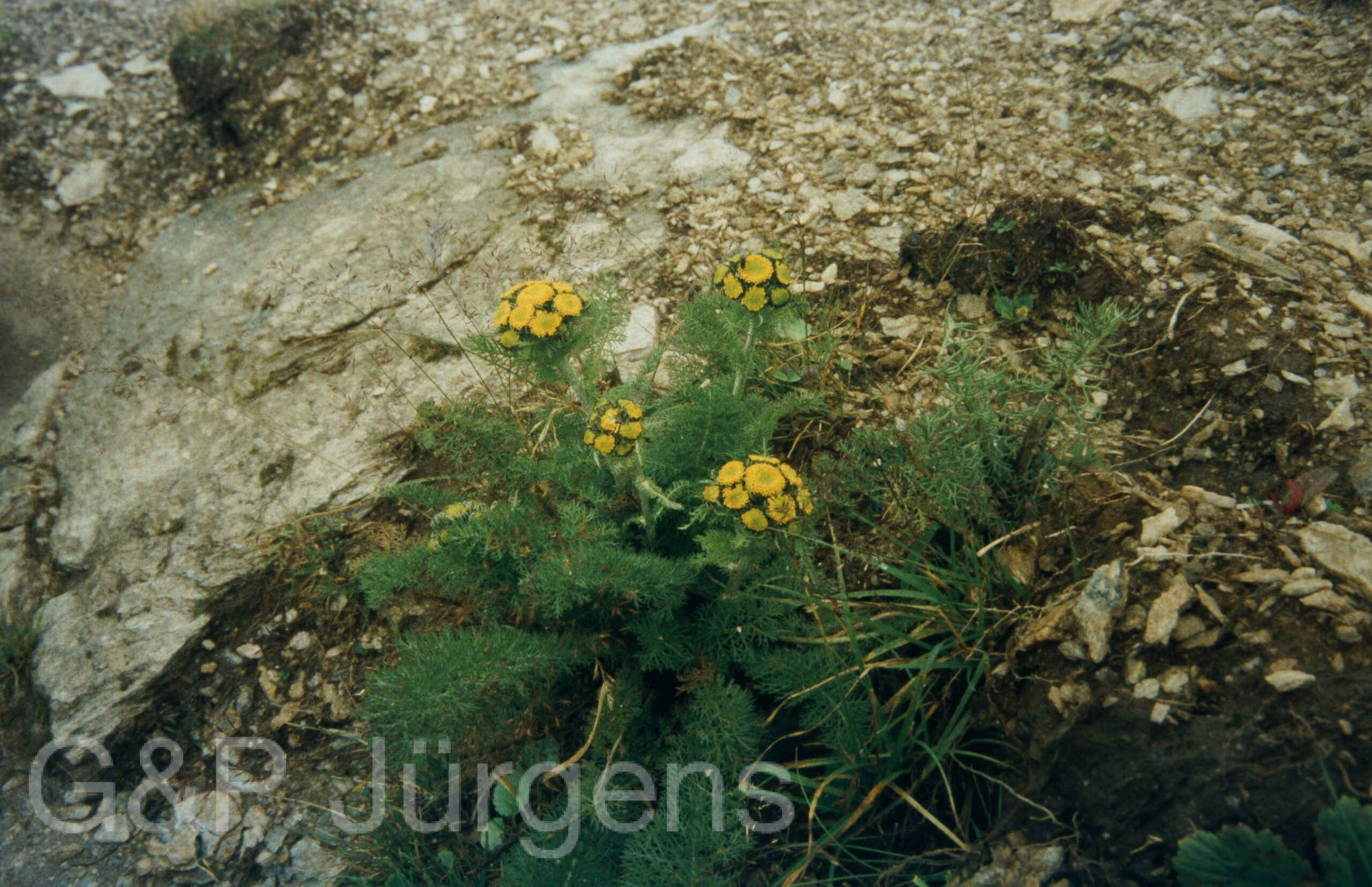
Bhutan2012 303
Bhutan Shale-La, 4300m September

Description

Ajania nubigena is a high-altitude aromatic composite of the Himalaya and Tibetan borderlands, recorded from Nepal, China (Tibet), India and Bhutan, with 266 georeferenced occurrences spanning the alpine zone of the main range. It grows on dry, stony alpine slopes, gravelly screes, rock crevices and exposed ridges, typically in the upper subalpine to alpine belt. It was photographed on the Shale-La in Bhutan at 4300 m and in Garhwal, India, at Patanathi at 3600 m, both in September, when its yellow heads flower amid the dry autumn alpine turf of these high passes.

It is a low, tufted, somewhat woody-based perennial subshrub or herb forming compact clumps, the stems and foliage clothed in dense grey to silvery appressed hairs that give a felted appearance and impart drought and frost tolerance. The leaves are small, alternate and pinnately or bipinnately dissected into narrow lobes, grey-tomentose especially beneath. The flower heads are small, discoid (lacking ray florets) and yellow, aggregated into dense terminal corymbs; each head has an involucre of imbricate, scarious-margined phyllaries and numerous tubular hermaphrodite and marginal female florets. The fruit is a small ribbed cypsela, usually lacking a pappus.

The genus Ajania, segregated from Chrysanthemum and Tanacetum within tribe Anthemideae, comprises mostly silvery-leaved, discoid-headed species of arid Central Asian and Himalayan uplands; the combination (Wall. ex DC.) Muldashev reflects this transfer. Its dense indumentum and dissected leaves are adaptations to the cold, dry, high-radiation alpine environment. Ecologically it is a xerophytic specialist of open stony ground, widespread within its altitudinal band and of no conservation concern.
Author: (Wall. ex DC.) Muldashev · Sources: POWO (Kew), GBIF, Flora of Bhutan, Flora of China, Anthemideae systematics (Bremer & Humphries monograph)
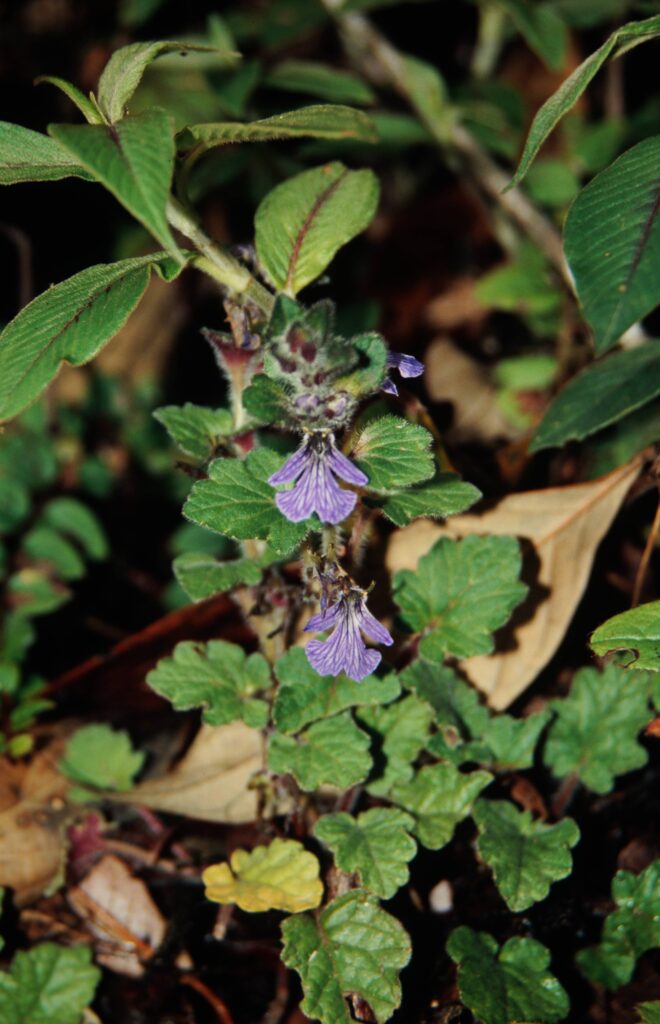
Ajuga lobata 

by G & P Jürgens

D.Don

Sikkim 2006 23 ergebnis
India West-Bengal Tonglu 3100m, May

Description

Ajuga lobata is an eastern Himalayan and Sino-Himalayan element distributed across Nepal, northern India, Bhutan, northern Myanmar and adjacent south-western China, with some 172 georeferenced occurrences documented. It is a plant of cool-temperate forest margins, mossy banks and open grassy slopes within the upper-montane to subalpine belt, typically between about 2400 and 3500 m. The population photographed at Tonglu (3100 m) on the Singalila ridge of West Bengal in May, flowering as the monsoon approaches, is characteristic: it favours humus-rich, freely draining soils in light shade beneath Rhododendron and oak.

It is a low, perennial, somewhat creeping herb arising from a slender rootstock, the quadrangular stems frequently decumbent at the base and rooting at the lower nodes before ascending. The leaves are opposite, ovate to obovate, the lamina conspicuously lobed or coarsely crenate-dentate, narrowed into a winged petiole and often tinged purplish beneath. Flowers are borne in axillary verticillasters forming a leafy terminal spike; the corolla is bluish to violet, two-lipped with a strongly reduced upper lip and a prominent, spreading three-lobed lower lip, the four didynamous stamens exserted. The fruit comprises four reticulate-rugose nutlets seated in the persistent campanulate calyx.

Within Ajuga (Ajugoideae) the species is distinguished by its markedly lobed leaves, a feature echoed in the epithet. Its montane distribution makes it a useful indicator of intact temperate forest ecosystems, and like many bugles it is visited by bees and serves as a minor nectar source. No conservation concern is presently recognised given its broad range, though it is locally restricted to suitable forest habitat.

Author: D.Don · Sources: POWO (Kew), GBIF, Flora of China Vol. 17, Flora of Bhutan Vol. 2, Flora of Nepal, A Revision of the Genus Ajuga (Labiatae)

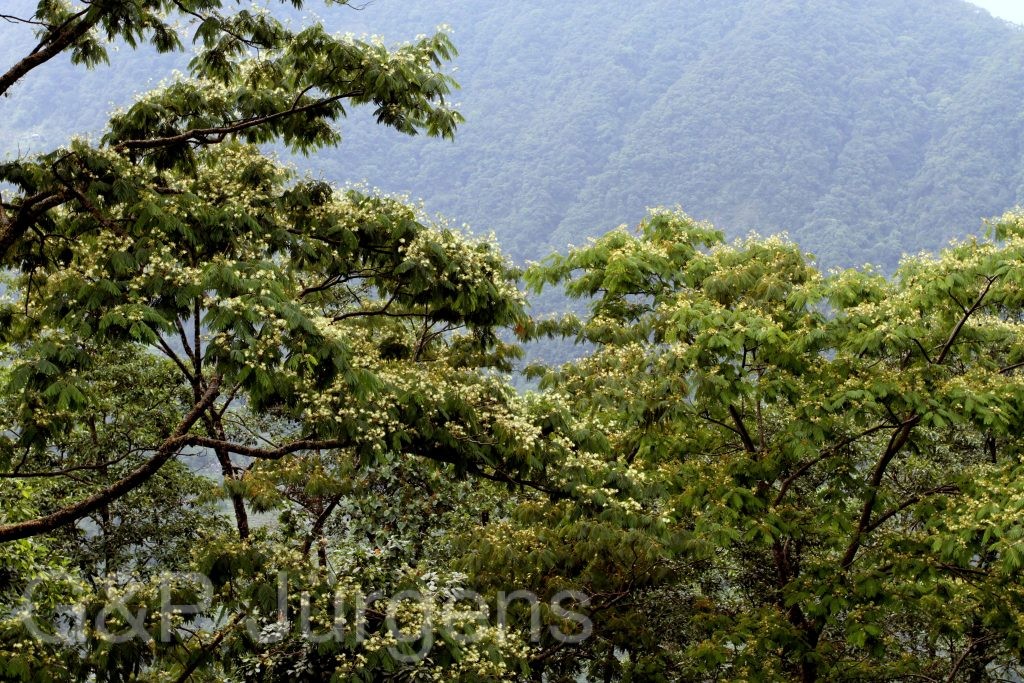
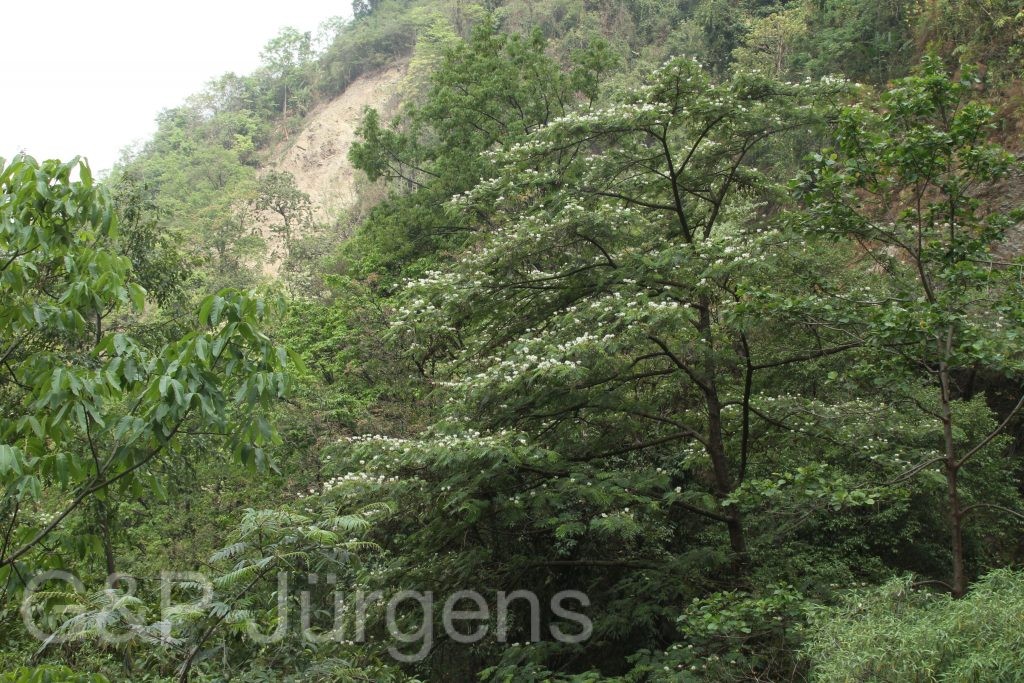
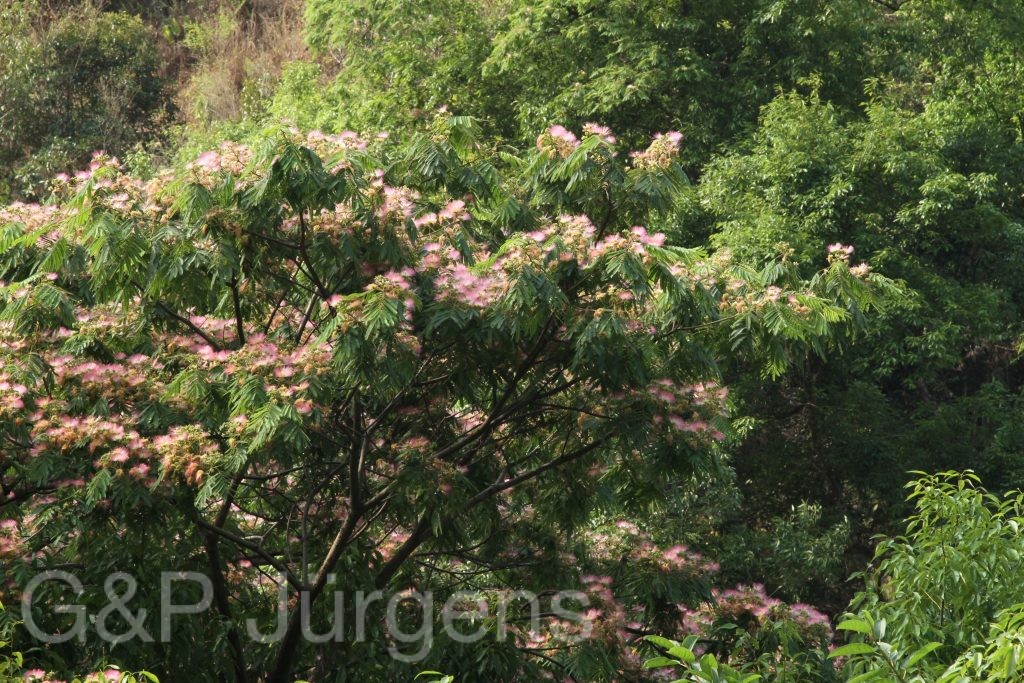
Durazz.

Bhutan2014 696
Bhutan Wangdi Phodrang 2000m, May
Bhutan2014 699
Bhutan Wangdi Phodrang 2000m, May

Description

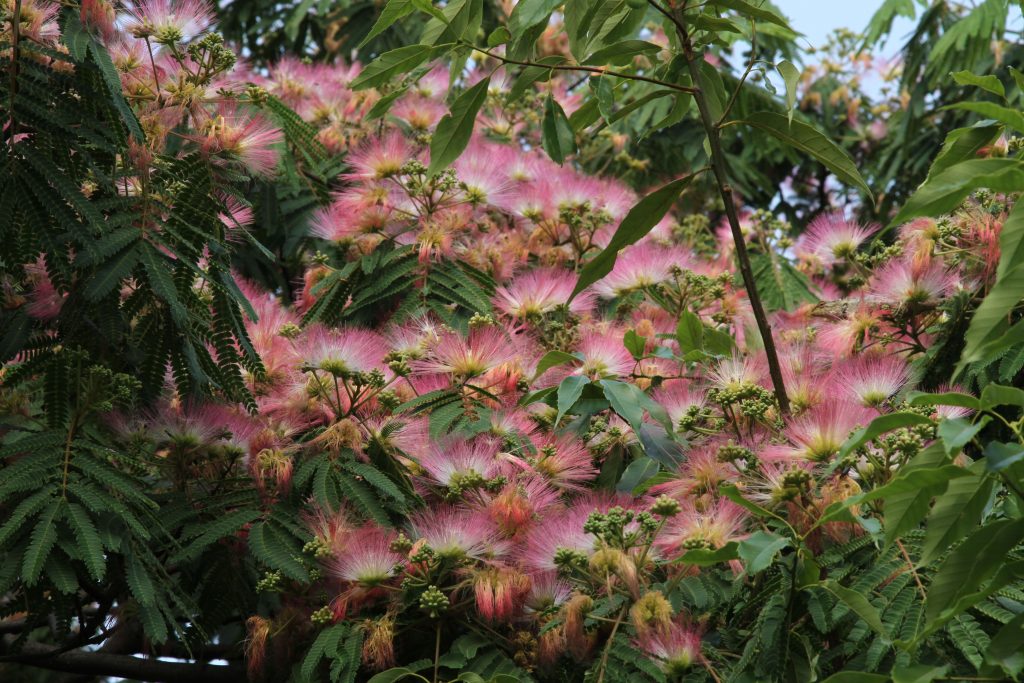
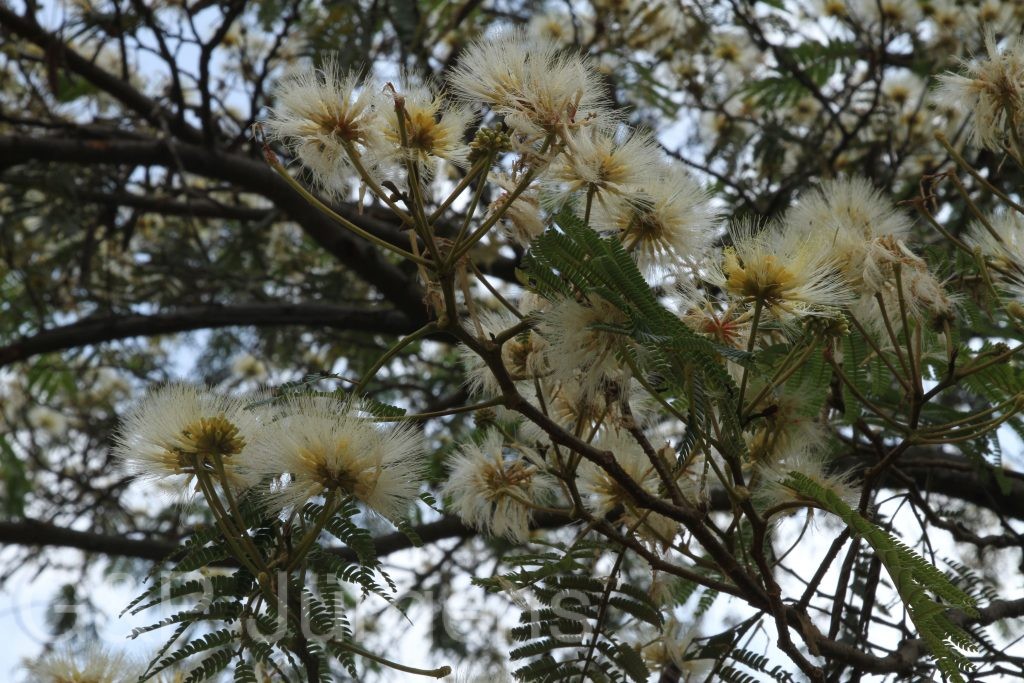
Albizia julibrissin, the silk tree or Persian silk tree, is a deciduous tree native from Iran and the Caucasus across to eastern Asia, now extensively planted and naturalised worldwide as shown by GBIF's more than 35000 occurrences spanning the United States, Korea, Japan, China, France, Turkey, Russia, Argentina, Italy and India among many others. In its Asian range it grows in warm-temperate broadleaf forest, open hillsides, valley margins and disturbed roadsides, from the lowlands to about 2500 m. The photographed tree from Wangdi Phodrang in Bhutan at 2000 m in May represents its occurrence in the warm inner Himalayan valleys, where it flowers in late spring and through the warm season.

It is a small, spreading tree with a broad, flat-topped, umbrella-like crown and smooth greenish-grey bark. The large, alternate leaves are bipinnate with numerous pinnae each bearing many small, oblong, asymmetric leaflets that fold together at night. The inflorescences are dense, hemispherical heads grouped in terminal panicles; the flowers are inconspicuous in their corollas but conspicuous through their numerous long, silky stamens, pink to deep rose distally and white below, giving a powder-puff effect. The fruit is a flat, papery, straw-coloured dehiscent legume containing several flattened seeds.

Albizia belongs to Fabaceae subfamily Caesalpinioideae (the mimosoid clade), characterised by actinomorphic flowers with showy stamens far exceeding the small petals. Nitrogen-fixing through root nodulation, fast-growing and widely cultivated as an ornamental, it has become invasive in parts of North America and elsewhere. Globally of Least Concern, it is valued horticulturally and ecologically as a pioneer of disturbed, well-drained, sunny sites.

Author: Durazz. · Sources: POWO (Kew), GBIF, Flora of China, Flora of Bhutan, Flora Iranica, Nielsen revision of Albizia and allied Mimosoideae

Albizia lebbeck

by GP Jürgens

(L.) Benth.

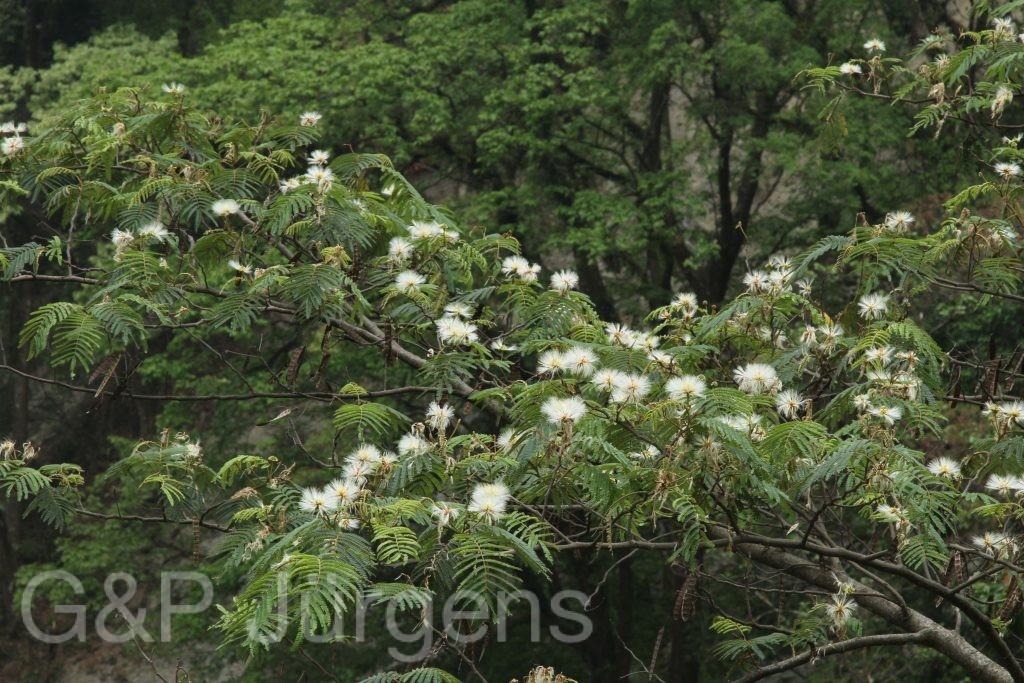
Bhutan2014 238
Bhutan Karu-Chu 1800m, May
Bhutan2014 240
Bhutan Karu-Chu 1800m, May

Description

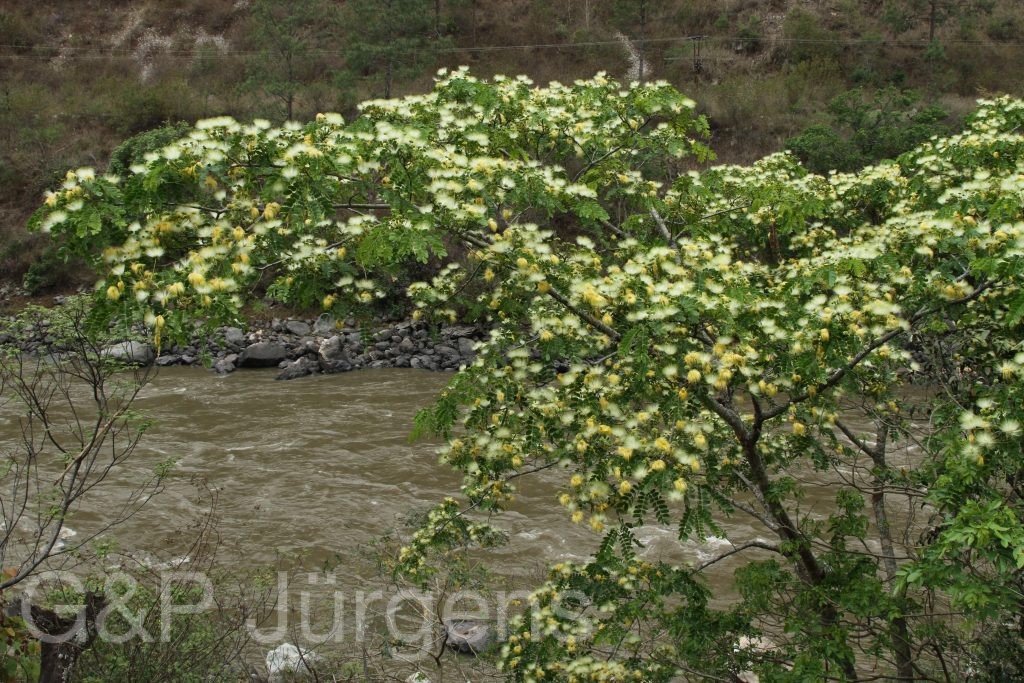
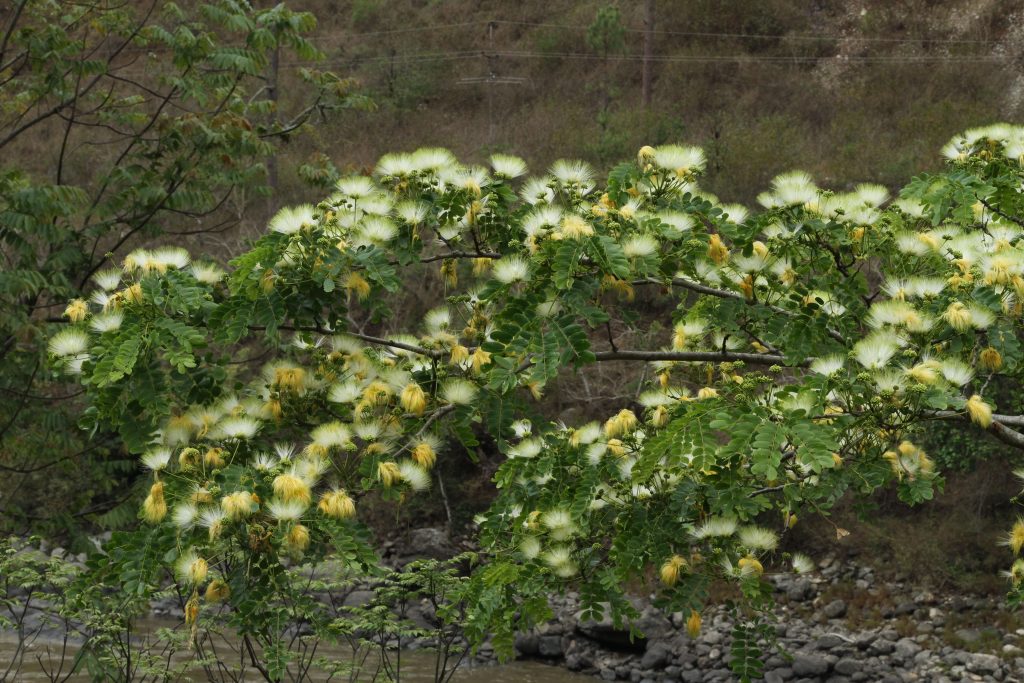
Albizia lebbeck is a fast-growing tropical tree native to the Indian subcontinent and tropical Asia but now pantropically naturalised, as its 13,114 GBIF occurrences from India, Australia, Brazil, Mexico, the United States, Madagascar, Nigeria and many other countries attest. It occupies open woodland, savanna, riverbanks, roadsides and disturbed ground from the lowlands to about 1800 m, and is widely planted for shade, timber and fodder. The photographed tree was recorded in Bhutan along the Karu-Chu at about 1800 m in May, near the upper limit of its altitudinal range in the warm Himalayan foothills.

It is a deciduous tree to 15-25 m with a spreading, flat-topped crown and grey, fissured bark. The leaves are bipinnate with 2-4 pairs of pinnae, each bearing 4-9 pairs of oblong, asymmetric leaflets, and a conspicuous gland on the petiole. The flowers are massed in showy, hemispherical axillary heads, each flower with a small calyx and corolla but numerous long, greenish-white to cream stamens fused below into a tube, giving a powder-puff appearance and a sweet fragrance. The fruit is a flat, straw-coloured, papery legume 15-30 cm long, persisting on the tree and rattling in the wind, containing several flattened seeds.

A member of the Fabaceae (subfamily Caesalpinioideae, mimosoid clade), Albizia lebbeck fixes nitrogen through root nodules and is valued in agroforestry, though it behaves as an invasive weed in parts of the Neotropics, Australia and Pacific islands. Pollination is by insects and birds attracted to the nectar-rich stamen brushes, and the buoyant pods aid wind and water dispersal. It is of least concern and globally abundant.

Author: (L.) Benth. · Sources: POWO (Kew), GBIF, Flora of British India, Flora of Bhutan, Nielsen Monograph of Asian Albizia

(L.f.) Benth.

Sikkim2011 12
India Sikkim Tista valley 1800m, June
Sikkim2011 13
India Sikkim Tista valley 1800m, June

Description

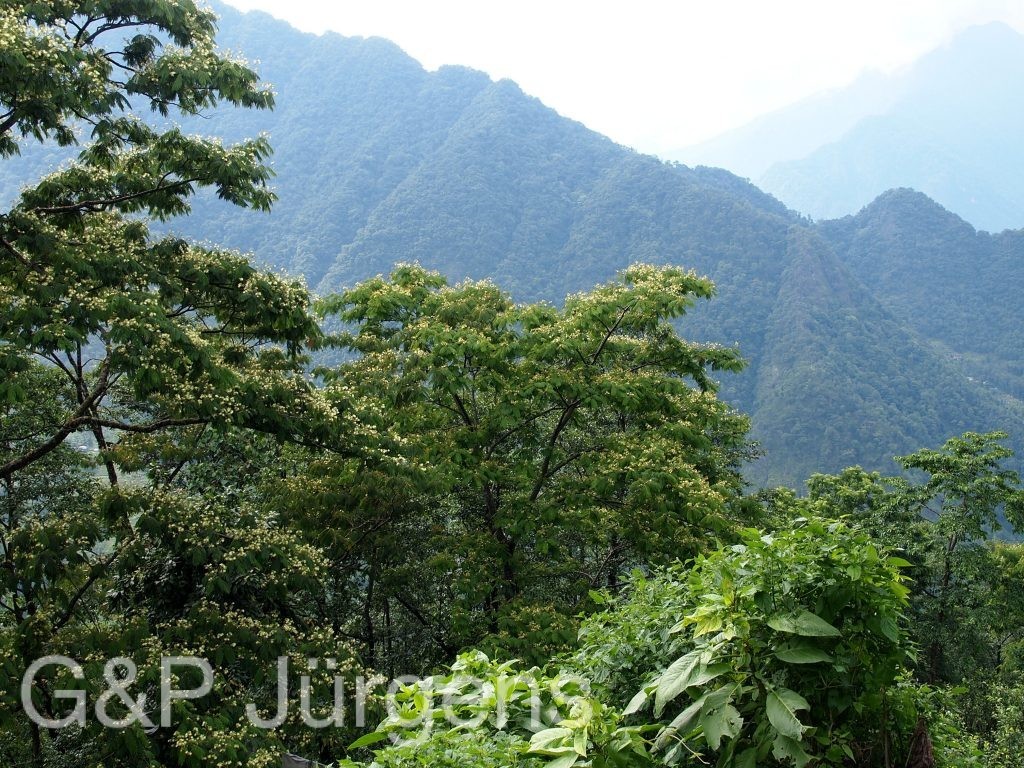
Albizia odoratissima is a deciduous tree of broadly tropical and subtropical distribution, ranging across the Indian subcontinent and continental Southeast Asia into southern China, with records from Nepal, Bangladesh, Myanmar, Thailand, Laos, Vietnam, Sri Lanka, Malaysia and Indonesia; it has been widely introduced elsewhere, including East Africa, Nigeria, Mozambique and the Americas, and is documented from over a thousand georeferenced collections. In the eastern Himalaya it ascends warm submontane forest, as in the Tista valley of Sikkim around 1800 m photographed in June, favouring moist deciduous and semi-evergreen forest, riverine slopes and forest margins.

The tree reaches 15-25 m, with a spreading crown, grey-brown bark and finely pubescent branchlets. The leaves are bipinnate, with 3-6 pairs of pinnae, each pinna bearing numerous small oblong-falcate leaflets oblique at the base; a gland sits on the petiole. The fragrant flowers are arranged in pedunculate globose heads grouped into terminal panicles, each with a small campanulate calyx, funnel-shaped corolla and numerous long, white to greenish-cream exserted stamens united below into a tube. The fruit is a flat, thin, oblong dehiscent legume, glabrous and reddish-brown.

A member of the mimosoid clade of Fabaceae, A. odoratissima was described as Mimosa odoratissima by the younger Linnaeus and transferred to Albizia by Bentham. It is valued as a nitrogen-fixing timber and fodder species and is widely planted for shade, agroforestry and reforestation, which accounts for its naturalised occurrences far beyond its native Asian range. Locally esteemed for its hard, durable wood, it remains common and is not regarded as threatened, though native populations are affected by selective logging and forest conversion.

Author: (L.f.) Benth. · Sources: POWO (Kew), GBIF, Flora of China, Flora of Bhutan, Flora of British India, Nielsen monograph of Asian Albizia (Mimosoideae)

Albizia sherriffii

by GP Jürgens

Baker f.

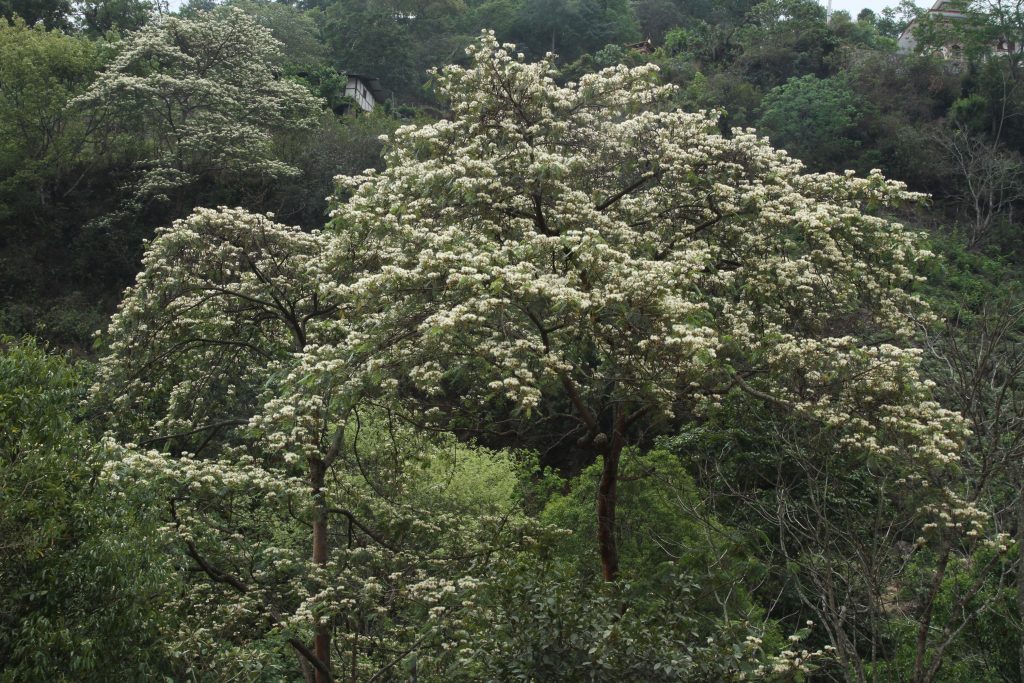
Bhutan2014 3
Bhutan Sandrup 750m, May
Bhutan2014 5
Bhutan Sandrup 750m, May
Bhutan2014 224
Bhutan Karu-Chu 1800m, May
Bhutan2014 229
Bhutan Karu-Chu 1800m, May

Description

Albizia sherriffii is a tree of the eastern Himalayan foothills and adjoining ranges, recorded from Bhutan, north-east India, Myanmar and southern China, with GBIF holding about 65 occurrences that indicate a fairly restricted distribution. It occurs in warm subtropical to lower-temperate broad-leaved forest and along forest margins and river valleys, broadly between 700 and 1800 m, where the monsoon climate is warm and humid. The two illustrated Bhutanese gatherings, from Sandrup at 750 m and Karu-Chu at 1800 m, both in May, bracket its elevational range and show its flowering at the onset of the rains.

It is a medium-sized to large deciduous tree with spreading branches and bipinnate leaves bearing several pairs of pinnae, each with numerous small, oblong leaflets, the foliage often subtended by a gland on the petiole as is characteristic of the genus. The flowers are grouped in capitate or umbellate heads and, as in Albizia generally, owe their showy appearance to the long, numerous, exserted stamens united below into a tube, the small corolla being inconspicuous. The fruit is a flat, oblong, dehiscent legume (pod) containing several compressed seeds.

Named for the plant collector George Sherriff, A. sherriffii belongs to the mimosoid legumes (Fabaceae subfamily Caesalpinioideae, mimosoid clade), within which Albizia is distinguished from Acacia and allied genera by its stamen and pod characters. As a relatively narrowly distributed Himalayan tree, it is potentially sensitive to lowland forest clearance, though it has not been formally assessed in detail.

Author: Baker f. · Sources: POWO (Kew), GBIF, Flora of Bhutan, Legumes of the World (Lewis et al.), Flora of China

Bureau & Franch.

Sikkim2011 29
Sikkim Lachen 2760m, June

Description

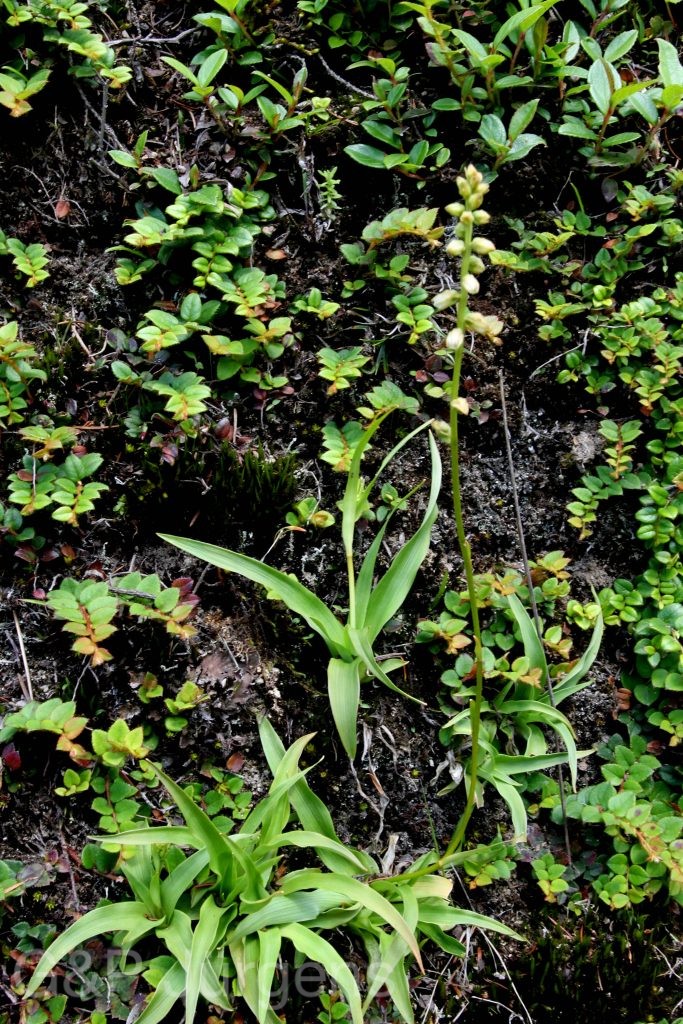
Aletris glabra is a rosette-forming perennial herb of the Nartheciaceae, distributed across the eastern Himalaya and East Asia. GBIF data (nearly 1,300 occurrences) confirm a native range spanning China, Taiwan, Korea, Japan, the Korean peninsula, India, Nepal and Bhutan. The species grows in moist, open habitats including subalpine and alpine meadows, grassy slopes, marshy ground, bog margins and forest clearings, typically in the temperate to subalpine belt. The collection from Lachen in northern Sikkim at 2,760 m in June reflects its occurrence in damp montane grassland and meadow flushes in the early summer flowering season.

The plant forms a basal rosette of narrowly lanceolate to linear, soft, grass-like leaves. From the centre arises a slender, erect flowering scape bearing a narrow, elongate raceme of small flowers. The flowers are campanulate to narrowly tubular, white to greenish-white, with six perianth lobes united below into a tube; unlike the mealy or warty-flowered relatives, the perianth of A. glabra is comparatively smooth, the epithet glabra denoting this glabrous character. There are six stamens inserted on the tube, and a superior to half-inferior, three-locular ovary. The fruit is a small, ovoid to ellipsoid loculicidal capsule containing numerous minute seeds.

The genus Aletris was long placed in the Liliaceae or Melanthiaceae but is now referred, with Narthecium, to the small monocot family Nartheciaceae within the Dioscoreales. The group is of phylogenetic interest as an early-diverging lineage of the order. As a plant of wet meadows and bog margins, A. glabra is an indicator of intact damp grassland; though widely distributed and secure overall, such wetland habitats are locally threatened by drainage and grazing.

Author: Bureau & Franch. · Sources: POWO (Kew), Flora of China Vol. 24, Flora of Bhutan Vol. 3, GBIF, Tamura: The Families and Genera of Vascular Plants – Nartheciaceae

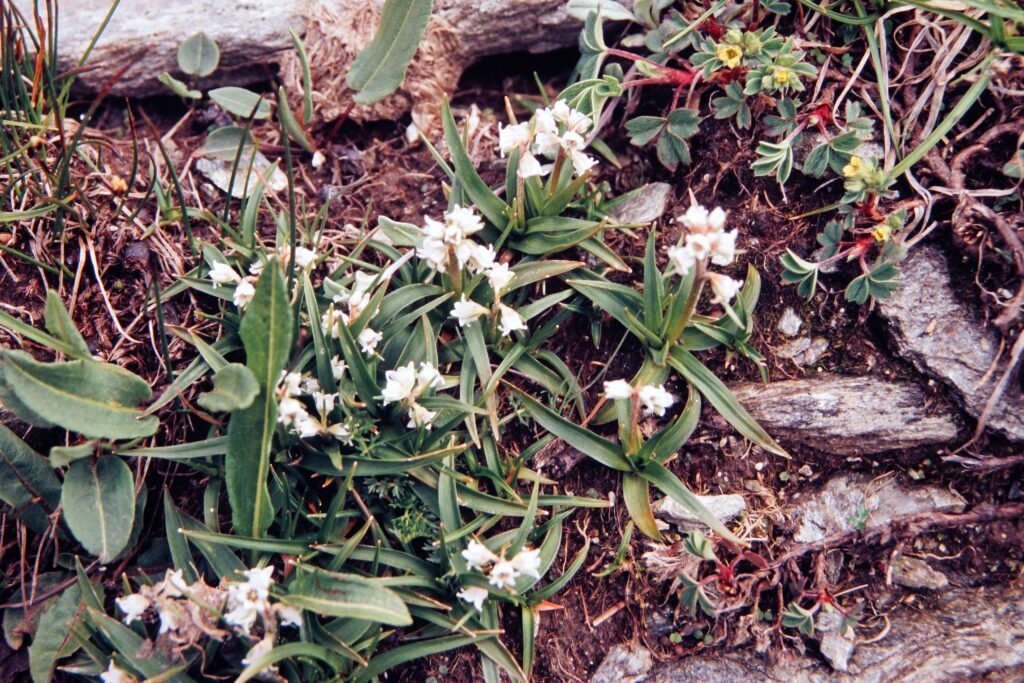
Bureau & Franch.

BhutanPG2011 71 ergebnis
Bhutan Menchuang, 2650m June

Description

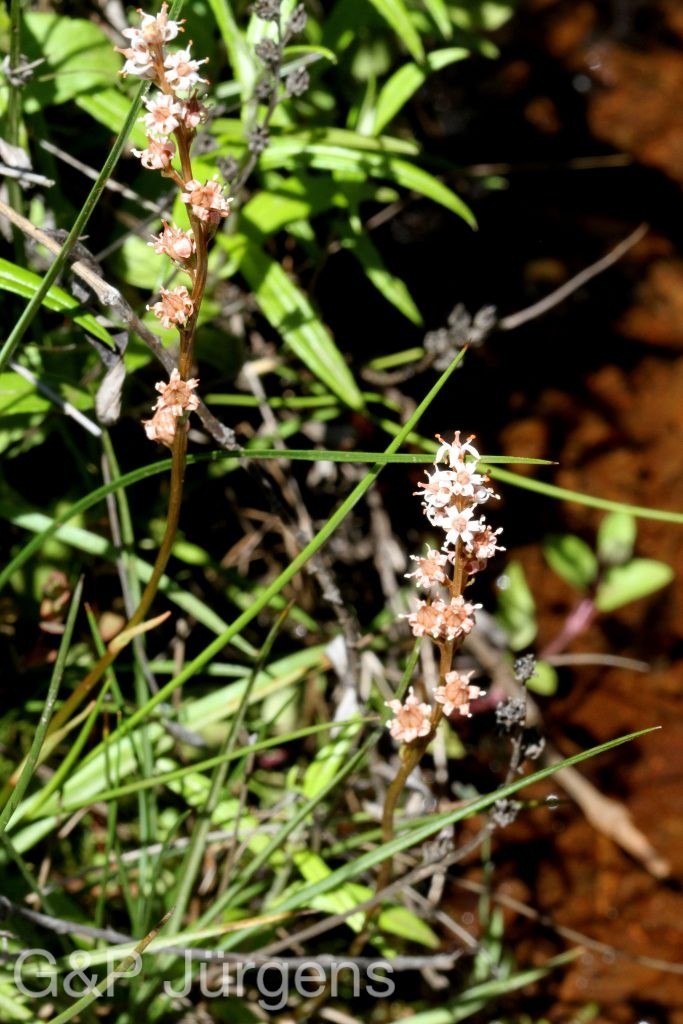
Aletris gracilis is a small, grass-like perennial of the Himalaya and southwest China, recorded by GBIF across some 214 occurrences from China, Nepal, Bhutan and India, an accepted species of cool, open mountain habitats. It grows in alpine and subalpine meadows, damp grassy slopes, forest clearings and the margins of streams and bogs, typically between about 2400 and 4000 m, favouring moist, acidic, peaty soils. The photographed plant from Menchuang in Bhutan at 2650 m, flowering in June, falls within the lower part of this range and at the onset of the monsoon, when the species sends up its slender flowering spikes among the short turf of damp open ground in the upper-temperate to subalpine zone.

The plant forms a basal rosette of narrow, linear to lanceolate, grass-like leaves arising from a short rhizome with fibrous roots. From the rosette rises a slender, erect, glandular-pubescent scape bearing a narrow terminal raceme of small, shortly pedicellate flowers. Each flower has a tubular to narrowly campanulate, six-lobed perianth that is conspicuously roughened or mealy-glandular on the outer surface, white to pale pink and persistent, enclosing six stamens with the filaments inserted on the perianth tube. The fruit is a small ovoid to ellipsoid capsule partly enclosed by the persistent perianth, releasing numerous minute seeds.

Aletris was long placed in the Liliaceae but is now referred to the small family Nartheciaceae within the order Dioscoreales, a placement supported by molecular and morphological evidence; the genus is disjunct between eastern Asia and eastern North America. A. gracilis belongs to the Asian, glandular-perianthed assemblage and is distinguished from relatives such as A. pauciflora by stature, leaf width and the texture of the perianth. Widespread across the eastern Himalaya and frequent in suitable bog and meadow habitats, it is of no particular conservation concern.

Author: Bureau & Franch. · Sources: POWO (Kew), GBIF, Flora of China Vol. 24, Flora of Bhutan Vol. 3, Flora of Nepal, Revision of Aletris (Nartheciaceae) by Huber and collaborators

(Klotzsch) Hand.-Mazz.

BhutanPG2011 136
Bhutan Tsochenchen, 3550m June
Garh 07 412 ergebnis
India Garhwal Khiar Kutti 4050m, June

Description

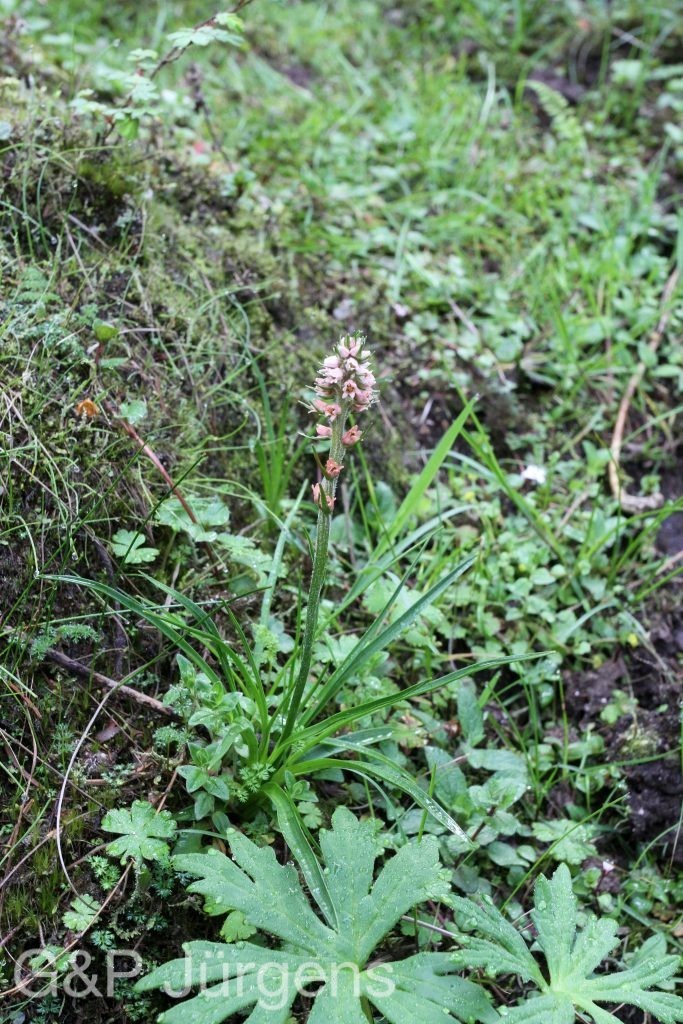
Aletris pauciflora is a small alpine colic-root distributed across the Himalaya and the south-eastern Tibetan plateau into south-western China, with GBIF records from China, Nepal, India, Bhutan, Myanmar, Bangladesh and Pakistan and a substantial 1,651 occurrences indicating it is locally common. It grows in open alpine and subalpine meadows, moist turf, peaty grassland and the margins of dwarf-shrub heath, generally between about 3,000 and 4,500 m. The two cited plants, from Tsochenchen in Bhutan at 3,550 m and from Khiar Kutti in Garhwal, India, at 4,050 m, both flowering in June, span its broad longitudinal range and confirm its early-summer anthesis across the high Himalayan grasslands.

The plant is a small tufted rhizomatous perennial herb. The leaves form a basal rosette and are narrowly lanceolate to linear, grass-like, with parallel venation. From the rosette rises a slender, usually scapose flowering stem bearing a short terminal raceme of few flowers (reflected in the epithet pauciflora). Each flower has a campanulate to urceolate, six-lobed perianth that is white to pinkish and characteristically mealy or roughened on the outer surface, with six included stamens and a superior to half-inferior ovary. The fruit is a small loculicidal capsule containing numerous minute seeds.

Aletris is now placed in the family Nartheciaceae within the monocot order Dioscoreales, a position established by molecular phylogenetics that removed it from the broadly circumscribed lily and Liliaceae groupings where it was traditionally placed. Several infraspecific variants of A. pauciflora have been recognised across its range. Widespread and abundant, it is of no conservation concern.

Author: (Klotzsch) Hand.-Mazz. · Sources: POWO (Kew), Flora of China Vol. 24, Flora of Bhutan Vol. 3, GBIF, Tamura: Nartheciaceae in The Families and Genera of Vascular Plants

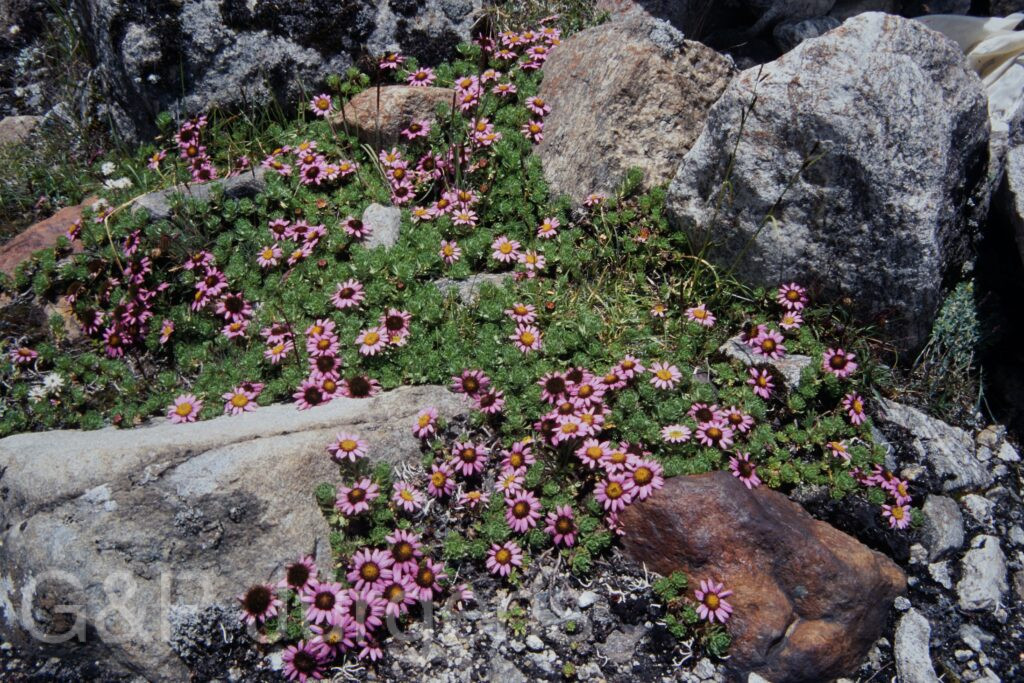
Allardia glabra

by GP Jürgens

Decne.

Sikkim2003 518 G720
Sikkim Yume Samdong 4700m August
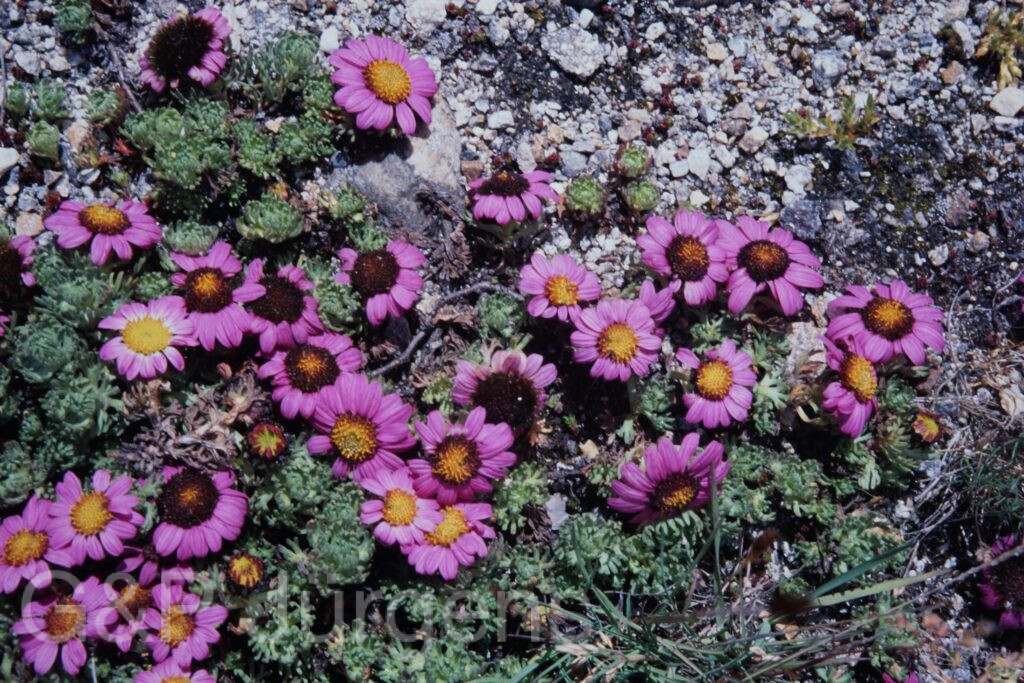
Sikkim2003 519 P724
Sikkim Yume Samdong 4700m August

Description

Allardia glabra is a high-alpine composite of the Himalaya and central Asia, distributed across Nepal, India, China, Pakistan, Tajikistan, Bhutan, Afghanistan and Kazakhstan, with GBIF documenting about 327 occurrences. It is a plant of the uppermost alpine and subnival zones, growing on screes, moraines, gravelly flats and stony slopes at very high elevations, commonly between about 4000 and 5500 m. The photographed material from Yume Samdong in northern Sikkim at 4700 m, flowering in August, is typical of its extreme habitat, where it forms low cushions or mats on bare, frost-disturbed ground near the limit of vascular plant life, taking advantage of the short, intense growing season of the high summer.

It is a dwarf, cushion- or mat-forming perennial arising from a branched, often stout caudex clothed in the persistent remains of old leaves. The leaves are small, crowded, spathulate to obovate and entire or shallowly lobed at the tip, and, as the epithet glabra indicates, relatively glabrous compared with the woolly indumentum of related species. The flower heads are solitary, sessile or shortly stalked, nestled among the foliage, and radiate, with an involucre of imbricate, often dark-margined bracts. The pistillate ray florets are pink to lilac or whitish, surrounding numerous yellow tubular disc florets. The fruit is a small, ribbed cypsela crowned by a short pappus.

Allardia is a small genus of about half a dozen species centred on the high mountains of central Asia and the Himalaya, long included within Waldheimia, under which name (Waldheimia glabra) this taxon is frequently encountered. Its cushion habit, reduced glabrous leaves and ground-hugging capitula are classic adaptations to cold, wind-exposed, high-radiation subnival environments. As a specialist of the highest vegetated ground it is of biogeographic interest and potentially sensitive to upward shifts of the climatic snowline, though its remoteness affords protection.

Author: Decne. · Sources: POWO (Kew), GBIF, Flora of China, Flora of Pakistan, Annotated Checklist of the Flowering Plants of Nepal, Podlech and Asteraceae monographic treatments of Allardia (Waldheimia)