
Bureau & Franch.
Description
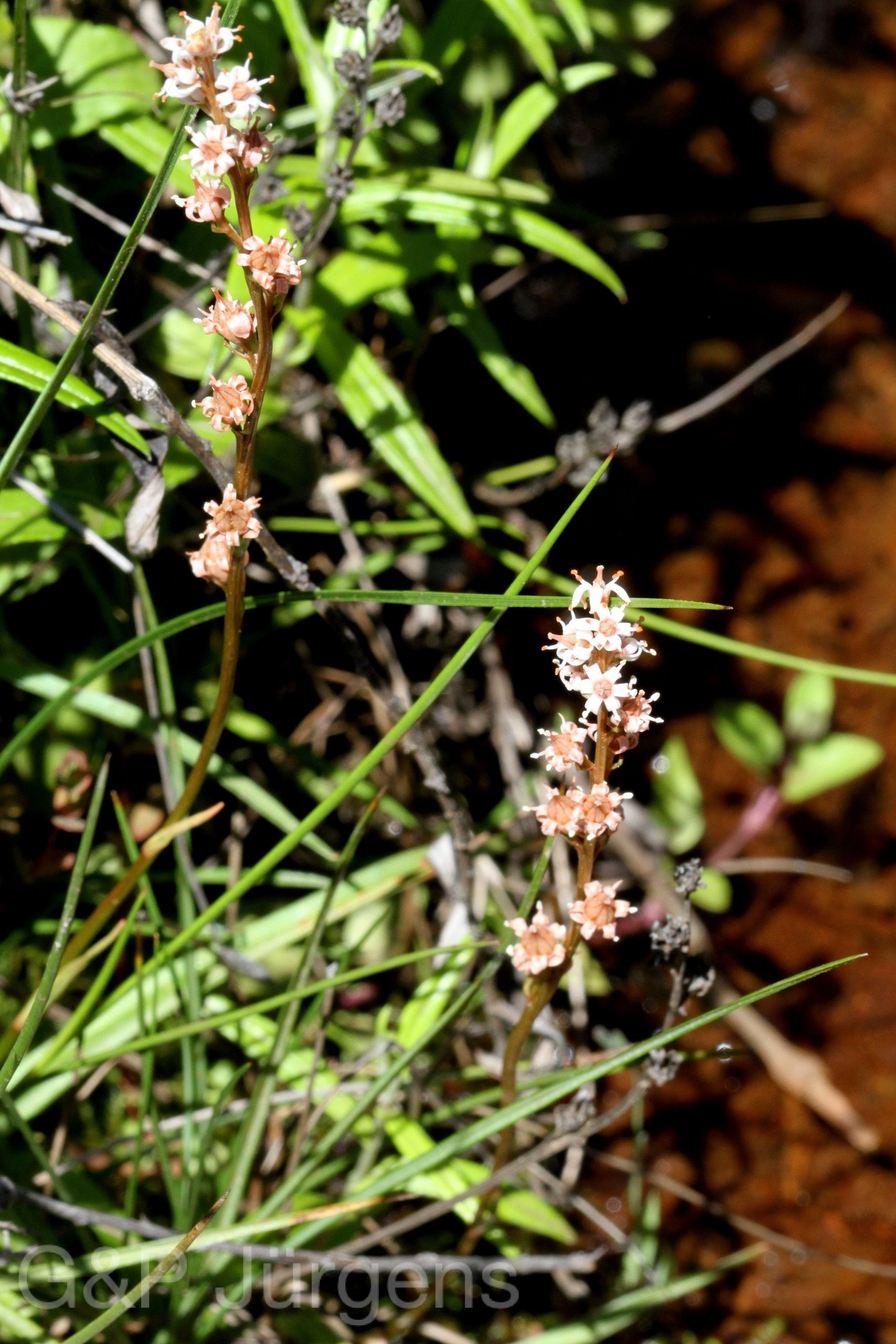
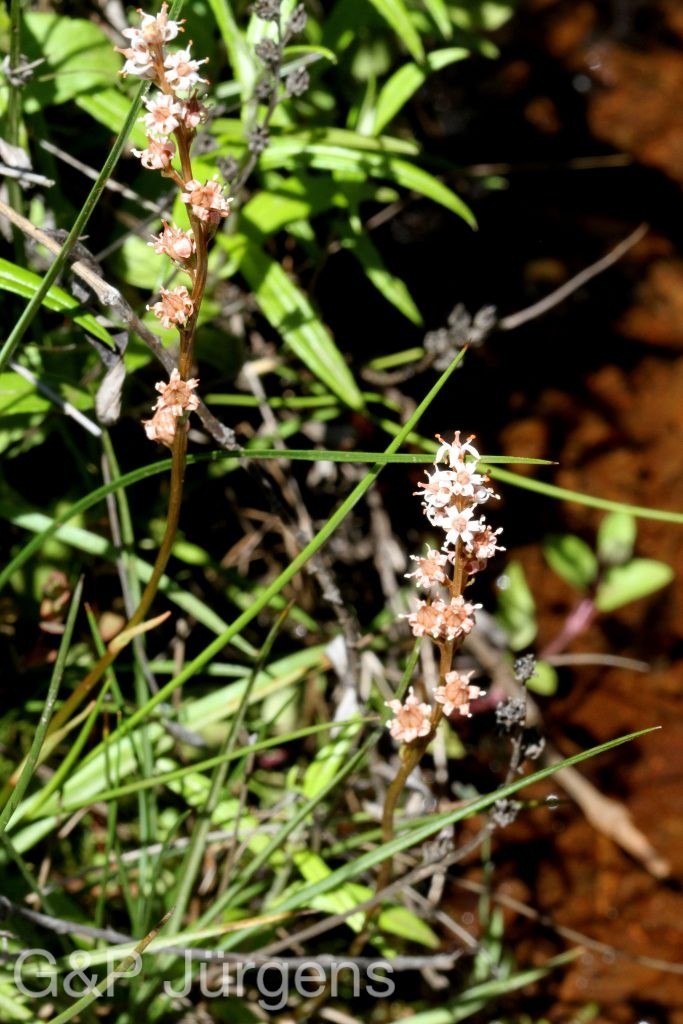
Aletris gracilis is a small, grass-like perennial of the Himalaya and southwest China, recorded by GBIF across some 214 occurrences from China, Nepal, Bhutan and India, an accepted species of cool, open mountain habitats. It grows in alpine and subalpine meadows, damp grassy slopes, forest clearings and the margins of streams and bogs, typically between about 2400 and 4000 m, favouring moist, acidic, peaty soils. The photographed plant from Menchuang in Bhutan at 2650 m, flowering in June, falls within the lower part of this range and at the onset of the monsoon, when the species sends up its slender flowering spikes among the short turf of damp open ground in the upper-temperate to subalpine zone.
The plant forms a basal rosette of narrow, linear to lanceolate, grass-like leaves arising from a short rhizome with fibrous roots. From the rosette rises a slender, erect, glandular-pubescent scape bearing a narrow terminal raceme of small, shortly pedicellate flowers. Each flower has a tubular to narrowly campanulate, six-lobed perianth that is conspicuously roughened or mealy-glandular on the outer surface, white to pale pink and persistent, enclosing six stamens with the filaments inserted on the perianth tube. The fruit is a small ovoid to ellipsoid capsule partly enclosed by the persistent perianth, releasing numerous minute seeds.
Aletris was long placed in the Liliaceae but is now referred to the small family Nartheciaceae within the order Dioscoreales, a placement supported by molecular and morphological evidence; the genus is disjunct between eastern Asia and eastern North America. A. gracilis belongs to the Asian, glandular-perianthed assemblage and is distinguished from relatives such as A. pauciflora by stature, leaf width and the texture of the perianth. Widespread across the eastern Himalaya and frequent in suitable bog and meadow habitats, it is of no particular conservation concern.
Author: Bureau & Franch. · Sources: POWO (Kew), GBIF, Flora of China Vol. 24, Flora of Bhutan Vol. 3, Flora of Nepal, Revision of Aletris (Nartheciaceae) by Huber and collaborators