Tag:

Bhutan

Flowers of Bhutan — 1326 plant species documented across the Bhutanese Himalaya, from dense broadleaf and conifer forests to alpine scrub and meadows. Bhutan’s largely intact wilderness shelters an exceptional diversity of orchids, rhododendrons, primulas and Himalayan poppies, many of them regional endemics. Each species page includes a botanical description, distribution, habitat and flowering time, with the original photograph and its recorded altitude and locality.

(DC.) Alv.Fern.

Garh 07 333 ergebnis
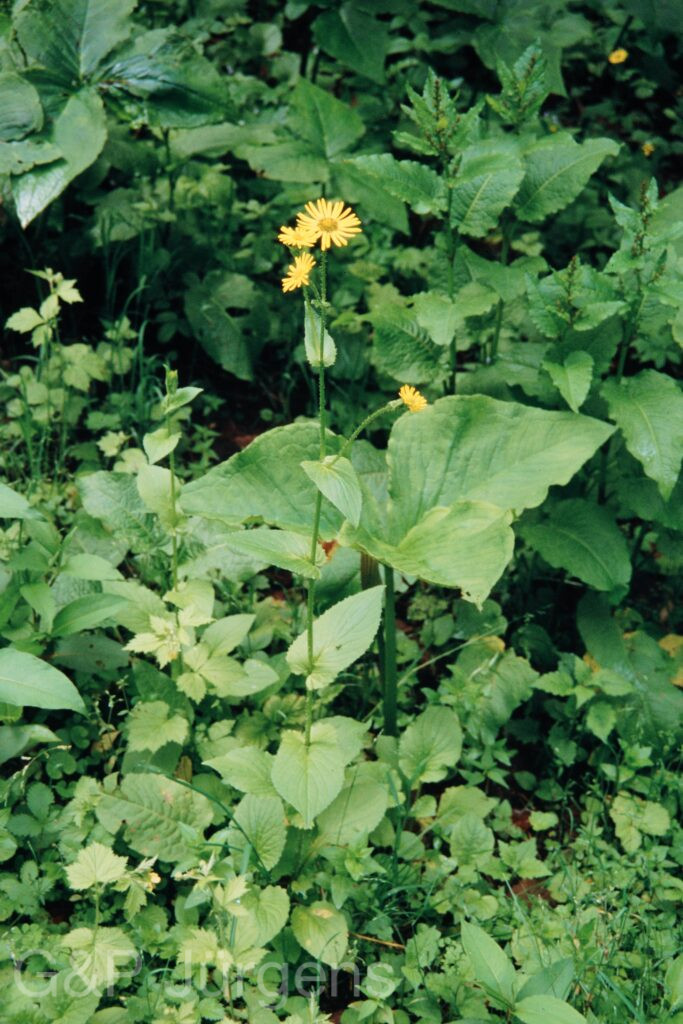
India Garhwal Mahji 2650m, June

Description

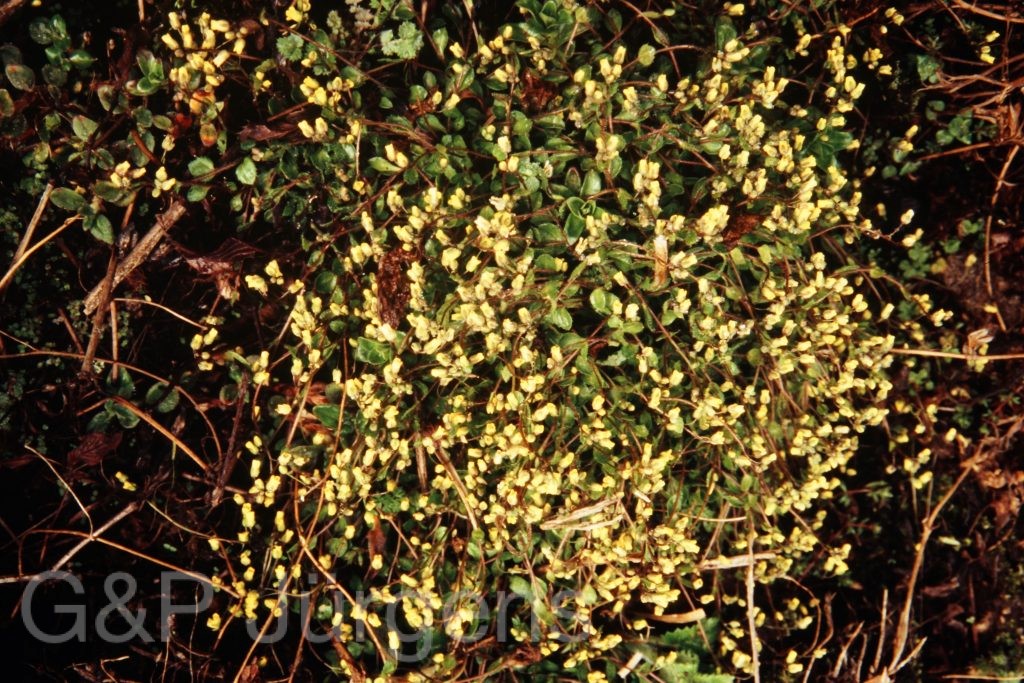
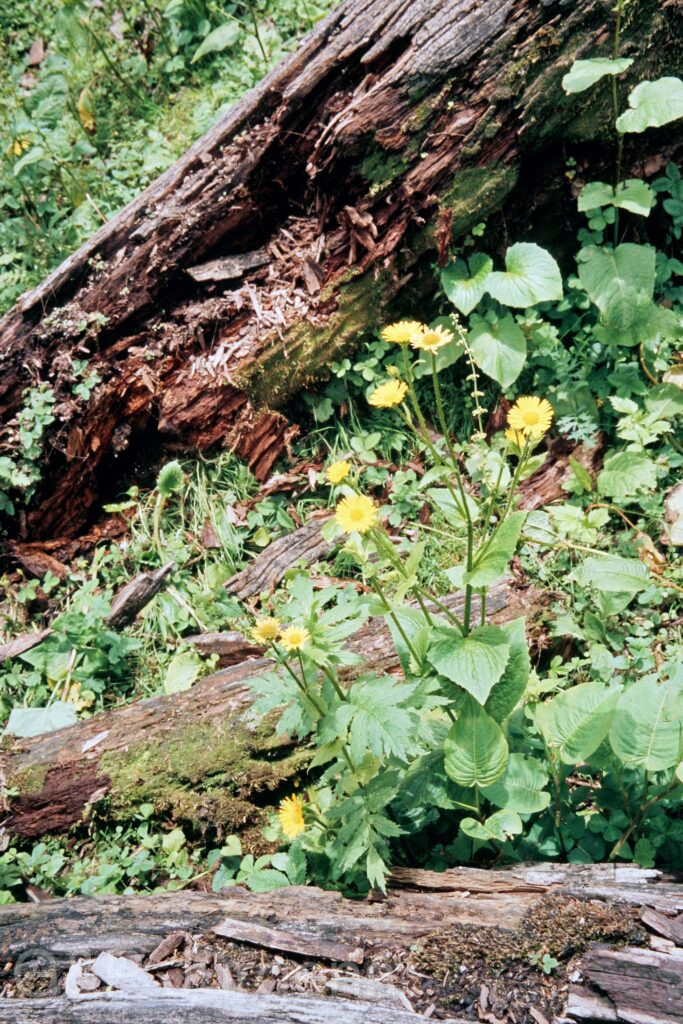
Doronicum kamaonense is a perennial herb of the temperate and subalpine Himalaya, distributed across India, Pakistan, Nepal, Bhutan and south-western China, with some 191 georeferenced occurrences documented in the GBIF network. It is a plant of moist alpine meadows, open grassy slopes, stream margins, the edges of birch and rhododendron scrub, and rocky pastures, typically occurring between about 2500 and 4000 m elevation. The plant photographed at Mahji in the Indian Garhwal Himalaya at 2650 m in June, when its golden flower heads coincide with the early monsoon flush of the high pastures, sits squarely within this favoured montane zone, where snowmelt keeps the substrate cool and humus-rich.

The species forms a short, ascending or erect stem 15–45 cm tall arising from a knotty, often shortly creeping rhizome bearing fibrous roots. The basal leaves are long-petiolate with ovate to cordate, crenate or sinuate-dentate blades, while the cauline leaves become sessile and clasping, reduced upwards. The stems and foliage are clothed in glandular and eglandular hairs. Flower heads are usually solitary, terminal and radiate, 3–5 cm across, subtended by a hemispherical involucre of narrow, acuminate, pubescent phyllaries. The bright yellow ray florets are ligulate and pistillate; the disc florets are tubular and hermaphrodite. The fruit is a ribbed cypsela, those of the ray often lacking a pappus while the disc achenes bear a pappus of barbellate bristles.

Within Doronicum, a Eurasian genus of the tribe Senecioneae, D. kamaonense belongs to the assemblage of Himalayan leopard's-banes that diversified along the great montane arc. Its combination of cordate basal leaves and typically single heads distinguishes it from related taxa, though intergrading populations and broad morphological plasticity have long complicated its circumscription. Like many high-altitude Senecioneae it is insect-pollinated and flowers with the brief alpine growing season. The species is widespread and locally common across its range and is not regarded as threatened, though grazing pressure and trampling locally affect meadow populations.

Author: (DC.) Alv.Fern. · Sources: POWO (Kew), GBIF, Flora of China Vol. 20-21, Flora of Bhutan Vol. 2, Flora of Pakistan, A Revision of the Genus Doronicum (Compositae)
DC.

Nepal 99 467 ergebnis
West-Nepal Churta-Khola 3200m, June

Description

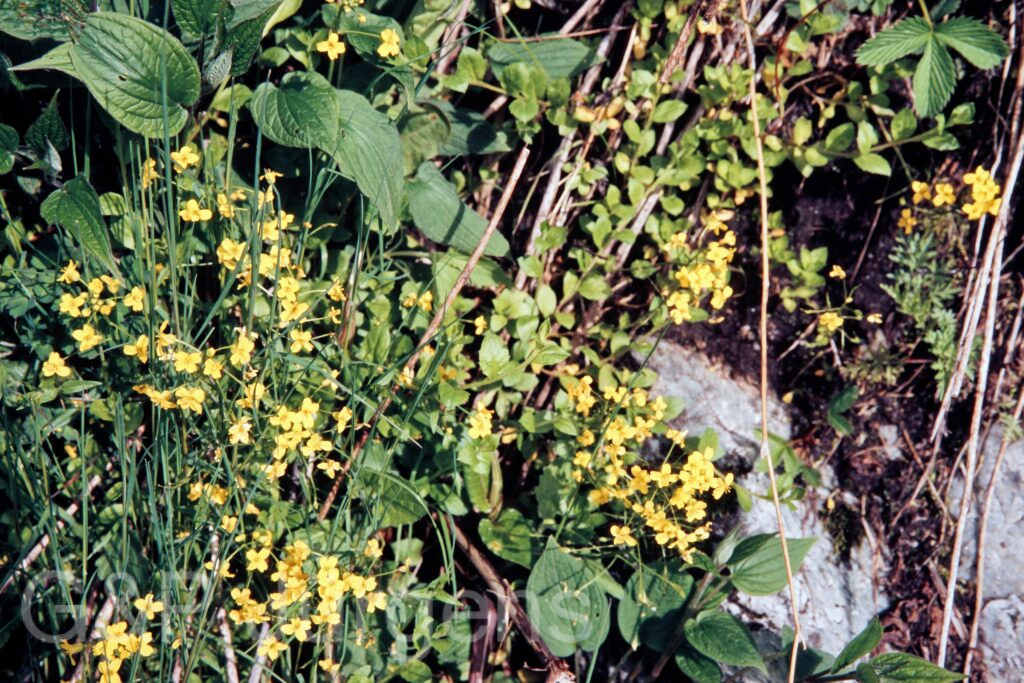
Doronicum roylei is a Himalayan leopard's-bane distributed from Pakistan and the Western Himalaya through India and Nepal into Bhutan, with GBIF recording 67 occurrences across PK, IN, NP and BT. It grows in subalpine and alpine meadows, on open grassy slopes, among shrubberies and along moist banks, broadly between about 3000 and 4200 m. The photographed plant was found in West Nepal at Churta-Khola near 3200 m, flowering in June. In the GBIF backbone the name is flagged as a SYNONYM, with Doronicum roylei itself given as the accepted name, so that binomial is retained here as the correct designation.

The species is a perennial herb arising from a short, often tuberous or knotty rhizome, with erect, simple or sparingly branched, glandular-hairy stems. The basal and lower leaves are petiolate, ovate to cordate and toothed, while the upper cauline leaves become sessile and amplexicaul, clasping the stem. The capitula are large, radiate and usually solitary (or few), with an involucre of narrow green phyllaries; the bright yellow ray florets are female and ligulate, surrounding numerous yellow, tubular, bisexual disc florets. The fruit is a cypsela, typically with a pappus of fine bristles on the disc florets, in the manner characteristic of the genus.

Doronicum is a genus of the tribe Senecioneae centred on the temperate mountains of Eurasia, with a notable Himalayan and Central Asian radiation. As a showy meadow composite it is a typical component of Himalayan summer-flowering alpine flora. It is locally common across its range and is not regarded as threatened, though grazing pressure affects accessible high pastures.

Author: DC. · Sources: POWO (Kew), GBIF, Flora of Pakistan, Annotated Checklist of the Flowering Plants of Nepal, Flora of China (Asteraceae: Senecioneae)

H.Hara 

BhutanPG2011 418
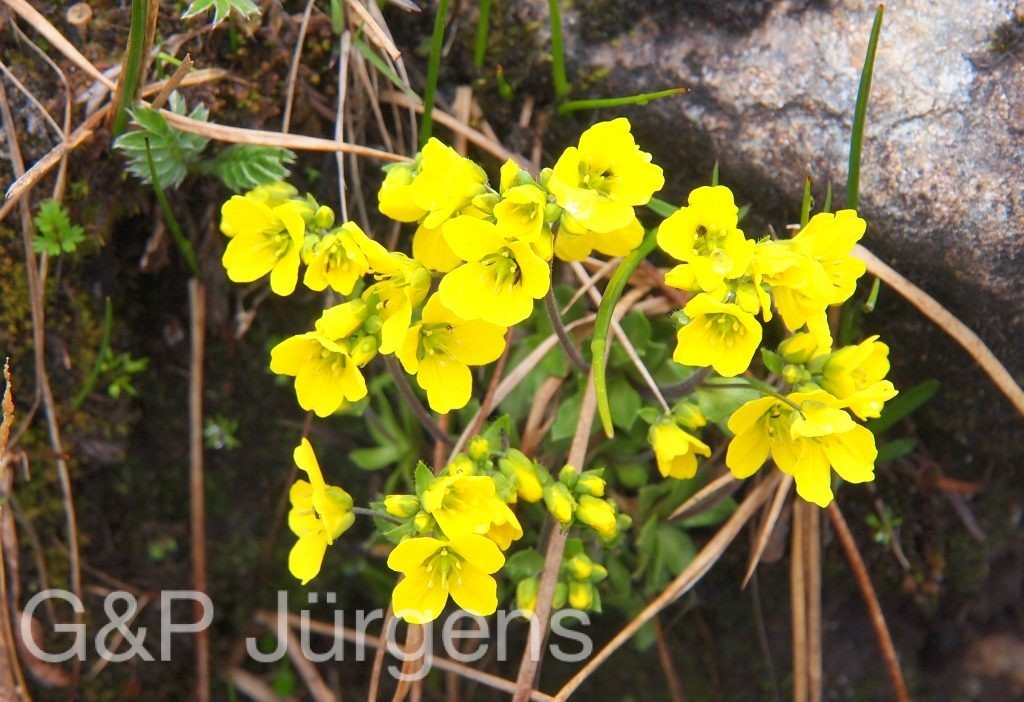
Bhutan Ludlow-Sherriff-Trail Warrtlang-La, 4400m June

Description

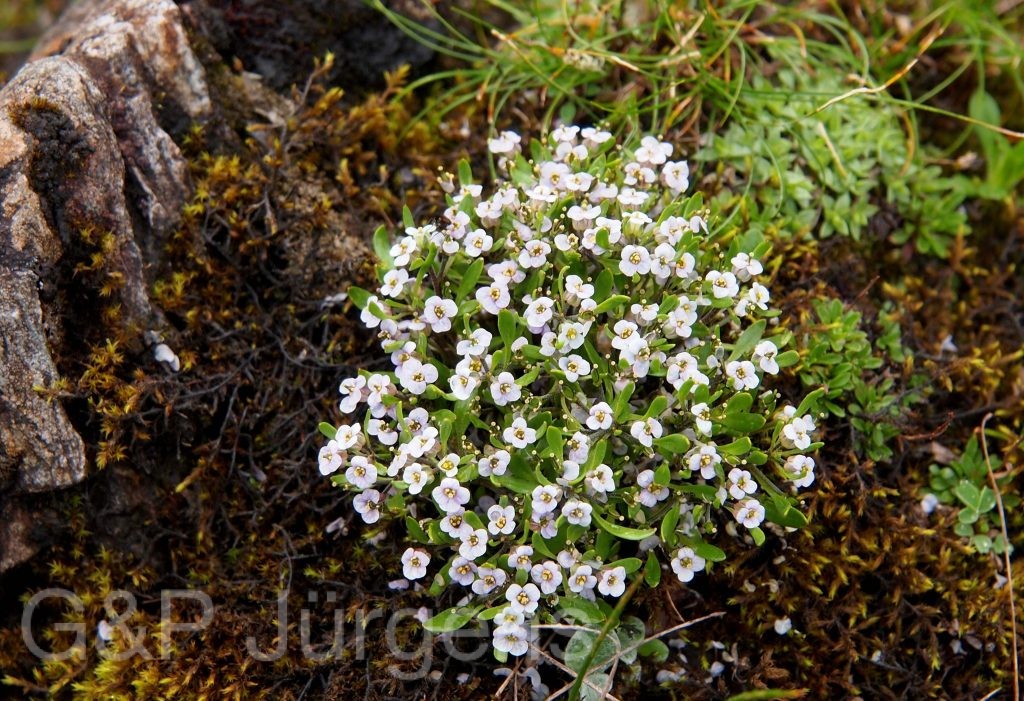
Draba bhutanica H.Hara is a narrowly distributed alpine crucifer recorded only from Bhutan and adjacent China (gbif_countries: BT, CN), with a mere 13 occurrences in GBIF, marking it as a rare Eastern Himalayan high-mountain endemic. It occupies the upper alpine zone, growing on open stony slopes, scree, gravelly ridges and rock crevices near the limits of vascular plant life. The image record from the Ludlow-Sherriff Trail at Warrtlang-La in Bhutan at 4400 m, in June, situates it in the early-summer high alpine, where short-statured perennials flower briefly after snowmelt on exposed, well-drained ground.

It is a small, low, tufted or cushion-forming perennial herb, typically clothed in the branched, stellate or forked trichomes characteristic of the genus, giving a greyish indumentum. The leaves are small, entire to slightly toothed, crowded into basal rosettes. The flowering scapes are short and bear few-flowered terminal racemes. The flowers conform to the cruciferous plan, with four sepals, four clawed yellow (or whitish) petals in a cross, and tetradynamous stamens. The fruit is a small silicula, ovate to elliptic and somewhat flattened, dehiscing by two valves to release several seeds.

Draba is a large, predominantly arctic-alpine genus, and its Sino-Himalayan species are taxonomically intricate; D. bhutanica has been associated with the segregate Chrysobraya, reflecting unsettled generic limits in the region. Its cushion habit and dense indumentum are classic adaptations to cold, high-radiation, desiccating alpine environments. Given its extremely restricted range and few records, the species is of considerable conservation and biogeographic interest as a Bhutanese alpine endemic.

Author: H.Hara · Sources: POWO (Kew), GBIF, Flora of China (Brassicaceae), Flora of Bhutan, Al-Shehbaz systematic studies of Himalayan Draba and Cruciferae

Hook.f. & Thomson

Bh09 156 G278
Bhutan Labana 4130m, June

Description

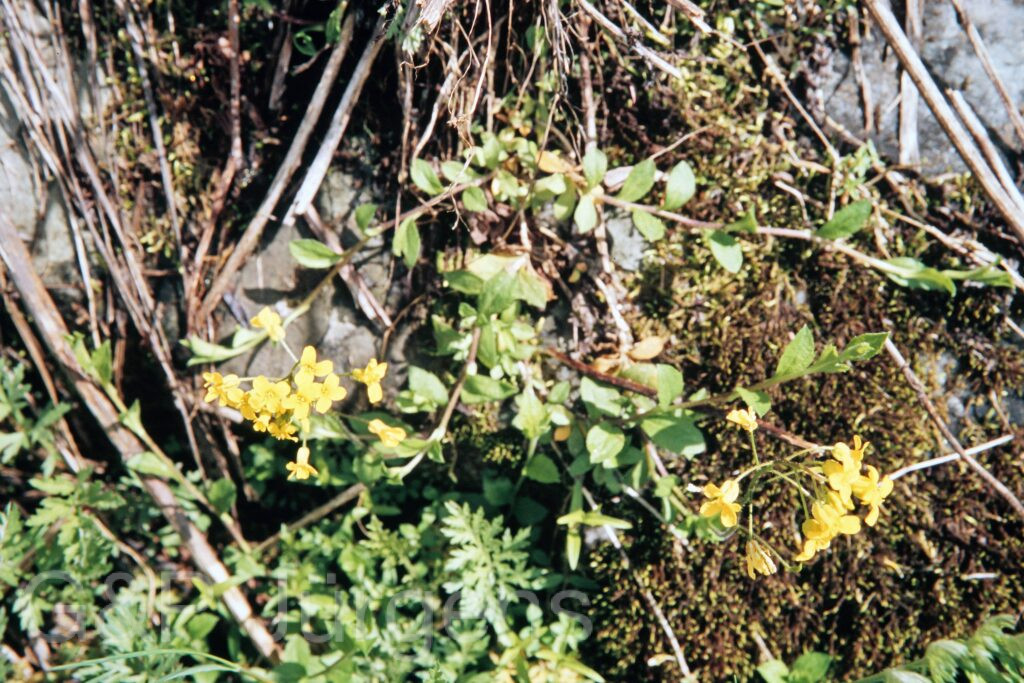
Draba gracillima is a slender alpine whitlow-grass of the Himalaya, distributed across the Indian Himalaya, Nepal, south-central China (Xizang) and Bhutan, with around one hundred and twenty-six GBIF records reflecting a continuous high-mountain range. It occupies alpine meadows, stony slopes, rock ledges, screes and crevices above the treeline, generally between about 3500 and 4500 m. The photographed plant from Labana in Bhutan at 4130 m, flowering in June, typifies its early-summer flowering and its preference for the open, well-drained mineral soils of the upper alpine zone.

The species is a slender, tufted perennial arising from a branched caudex and forming small basal rosettes of leaves, the lamina narrowly oblanceolate to spathulate and clothed, as is typical of Draba, in simple, forked and stellate hairs. The flowering stems are filiform and few-leaved, giving the plant its delicate, gracile appearance. The inflorescence is a lax raceme of small flowers with four free yellow (fading whitish) petals in the cruciferous arrangement and six tetradynamous stamens. The fruit is a small, flattened, lanceolate to elliptic silicula on a slender pedicel, dehiscing to release several seeds per locule.

Draba gracillima is an accepted species of the large genus Draba (Brassicaceae, tribe Arabideae), one of the most species-rich and taxonomically intricate genera of arctic and alpine regions, characterised by variable trichome morphology of diagnostic value. Its cushion-forming caudex, dense indumentum and short silicula are adaptations to cold, wind-exposed, high-radiation alpine habitats. The species is widespread and not regarded as threatened, although its specialised high-altitude niche is sensitive to climate-driven range shifts.

Author: Hook.f. & Thomson · Sources: POWO (Kew), GBIF, Flora of China, Flora of Bhutan, Jordal & Al-Shehbaz revision of Draba (Brassicaceae monograph)

O.E.Schulz

BhutanPG2011 656
Bhutan Thitha-Tso 4360m, July

Description

Draba oariocarpa is a high-alpine crucifer of the eastern Himalaya, known principally from Bhutan and adjoining areas, where GBIF holds only a single occurrence record, reflecting both its narrow distribution and its remote habitat. It is a plant of open alpine screes, stony slopes, moraines and frost-disturbed gravels of the upper alpine and subnival zones, generally above 4000 m. The photograph from the Thitha Tso in Bhutan at about 4360 m in July shows the species flowering in the brief high-summer window in its harsh, exposed lakeside scree habitat.

The plant is a small, tufted or cushion-forming perennial arising from a branched caudex topped by rosettes of leaves. The leaves are small, oblong to spathulate, entire or nearly so, and clothed in the stellate and simple hairs characteristic of the genus, giving a greyish, roughened texture. From the rosettes arise short, leafless or few-leaved scapes bearing a compact raceme of small flowers; these have four sepals and four yellow (sometimes fading whitish) petals in the cruciform arrangement typical of the Brassicaceae, with six stamens. The fruit, alluded to in the epithet oariocarpa (egg-fruited), is a small, ovate to elliptic, somewhat flattened silicula containing several seeds.

Draba is a very large, predominantly arctic-alpine genus of the Brassicaceae, taxonomically intricate owing to widespread polyploidy, apomixis and minor morphological differentiation, so that many narrowly defined species and synonyms have been described from the Himalaya and Tibet. The dwarf cushion habit and dense indumentum are classic adaptations to the cold, desiccating and intensely irradiated subnival environment. Given its apparently very restricted range and few documented collections, D. oariocarpa is poorly known and warrants further field assessment of its distribution and status.

Author: O.E.Schulz · Sources: POWO (Kew), GBIF, Flora of Bhutan, Flora of China, Annotated Checklist of the Flowering Plants of Nepal, Al-Shehbaz's systematic studies of Draba and the Brassicaceae

Royle

Description

Draba radicans is a high-alpine crucifer of the Himalayan chain, with GBIF documenting 55 occurrences from Nepal, India and Bhutan. It is a plant of the upper subalpine to alpine zone, growing among rocks, screes, moist turf and the margins of snowmelt flushes where competition from taller vegetation is slight. The image was taken at Dohdi-Tal in Garhwal, India, at about 3400 m in June, when receding snow exposes the open stony slopes and the rosettes come into flower at the start of the brief alpine growing season.

It is a small perennial herb forming low rosettes or loose mats from a slender taproot and branching caudex, the specific epithet radicans alluding to its tendency to root and spread at the base. The leaves are mostly basal, oblanceolate to spathulate, entire or obscurely toothed, and clothed in simple, forked and stellate hairs characteristic of the genus. The flowering stems are short and often leafless or few-leaved, bearing a short raceme of small flowers with four yellow (fading whitish) petals, four sepals and the tetradynamous stamens of the family. The fruit is a flattened, oblong to elliptic silicula on a short pedicel, containing several small seeds.

Draba (Brassicaceae) is one of the largest genera of arctic and alpine plants, with numerous narrowly distributed Himalayan species whose delimitation rests on trichome type and fruit shape. D. radicans is part of the diverse Himalayan alpine Draba assemblage, an element sensitive to climatic warming and the upward retreat of snowbeds. Though not formally assessed, its restriction to cold high-elevation habitats makes such alpine specialists of conservation interest as indicators of mountain ecosystem change.

Author: Royle · Sources: POWO (Kew), GBIF, Flora of Pakistan, Annotated Checklist of the Flowering Plants of Nepal, Jafri's Flora of West Pakistan (Brassicaceae), Schulz monograph of Draba

Sealy

BhutanPG2011 790 01 01
Bhutan Chele-La, 3800m July
BhutanPG2011 791 01 01
Bhutan Chele-La, 3800m July

Description

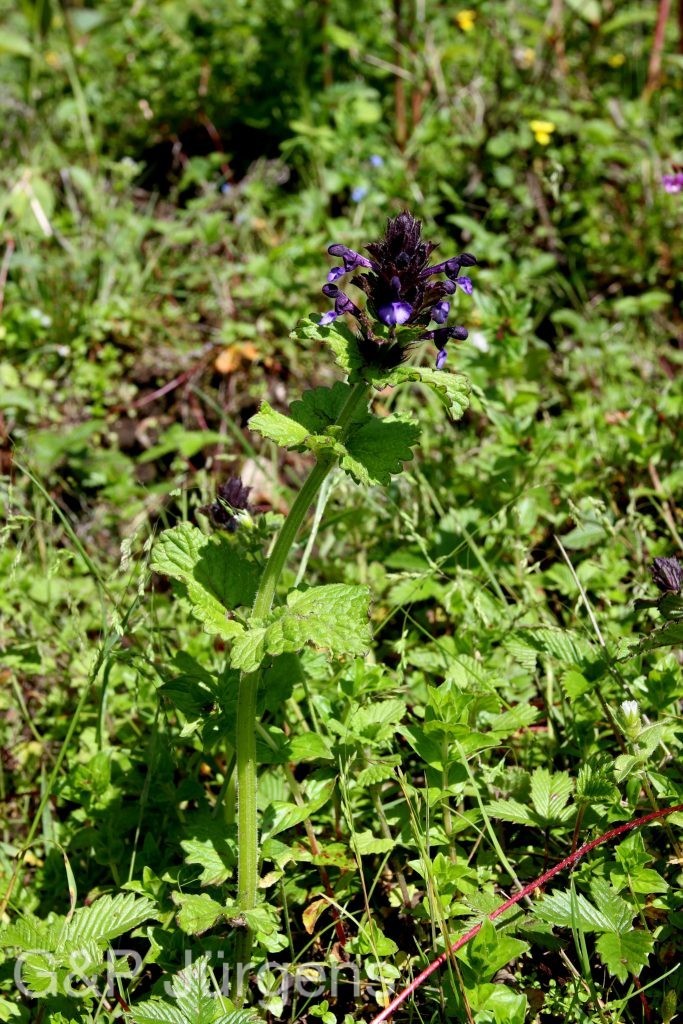
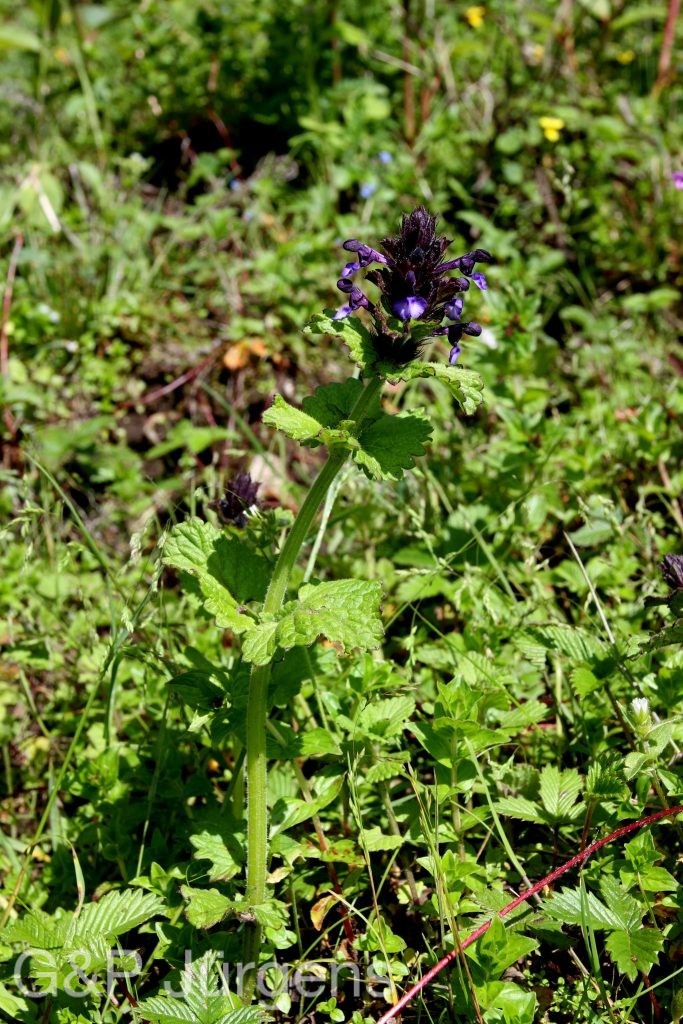
Dracocephalum wallichii is a Himalayan dragonhead recorded from India, China (Xizang), Nepal and Bhutan, with GBIF holding around 175 occurrences across the high eastern and central ranges. It is a plant of the alpine zone, growing on open stony slopes, gravelly meadows, scree and grassy banks typically between about 3500 and 4500 m. The photographed material from the Chele-La in western Bhutan at 3800 m, flowering in July, is characteristic: at this high pass the species blooms in the brief summer window after snowmelt, exploiting well-drained, sunny ground among the alpine turf and rock where competition from taller vegetation is limited.

It is a perennial herb with a woody rootstock giving rise to several erect or ascending quadrangular stems. The leaves are opposite, oblong to narrowly ovate, the margin crenate to incised, and often somewhat aromatic, as is general in the genus. The inflorescence is a dense, head-like to interrupted terminal spike of verticillasters subtended by conspicuous, often spine-toothed and ciliate floral bracts that are a notable feature of the species. Each flower has a tubular, two-lipped calyx and a strongly two-lipped corolla coloured blue to violet-purple, the hooded upper lip arching over the four didynamous stamens and the lower lip spreading and three-lobed as a landing platform for bees. The fruit comprises four smooth nutlets enclosed in the persistent calyx.

The species was described by Sealy and honours Nathaniel Wallich, an early collector of Himalayan plants. Dracocephalum is a genus of the temperate northern hemisphere centred on central Asia, well represented in alpine and steppe habitats; D. wallichii is one of its few truly Himalayan-alpine members and is distinguished by its bracteal armature and dense spike. Pollinated chiefly by bumblebees, it is a typical short-season alpine perennial, and being widespread in remote high terrain it is of no immediate conservation concern.

Author: Sealy · Sources: POWO (Kew), GBIF, Flora of China, Flora of Bhutan, Annotated Checklist of the Flowering Plants of Nepal, Budantsev revision of the genus Dracocephalum

Drosera peltata

by GP Jürgens

Thunb.

Sikkim2011 185
Sikkim Lachung 2600m, June
Nepal 99 996 ergebnis
West-Nepal Juphal 2550m, July

Description

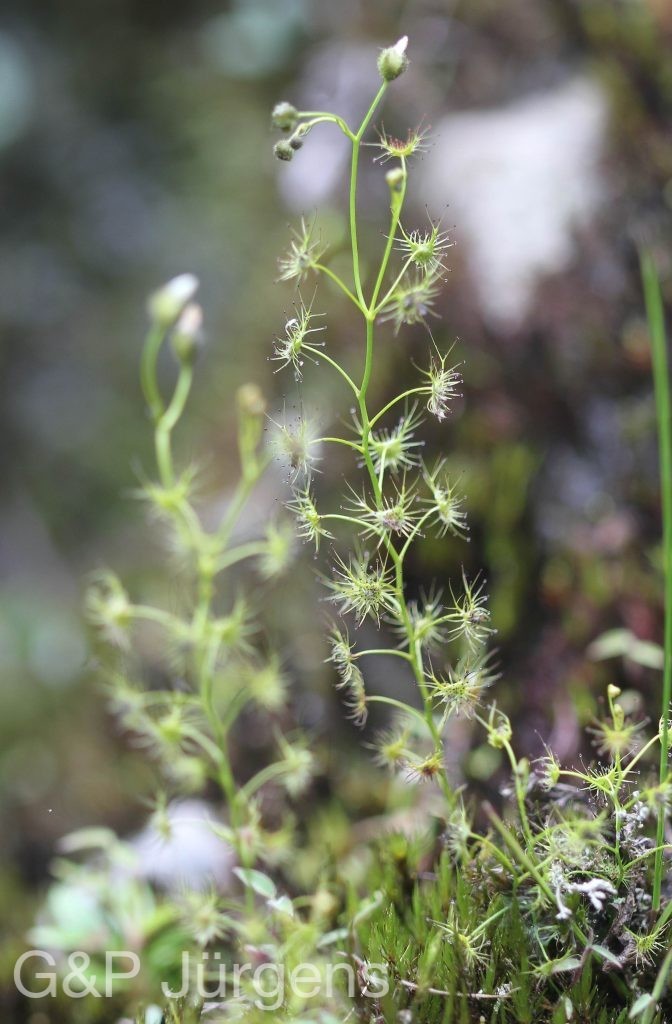
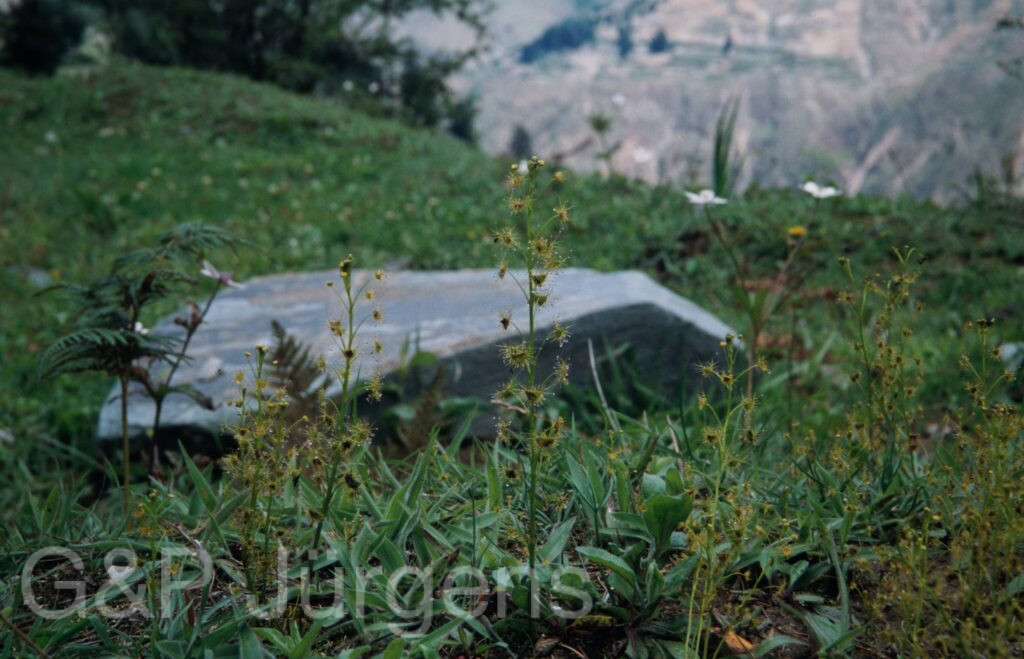
Drosera peltata is one of the most widely distributed of all sundews, a carnivorous herb ranging from Australia and New Zealand through East and Southeast Asia to the Himalaya, with GBIF holding an exceptional 32363 occurrences across Australia, China, Japan, India, Nepal, Thailand, Indonesia, the Philippines, Korea and many further countries. In the Himalaya it grows in open, wet, nutrient-poor situations: boggy grassland, mossy banks, seepage slopes, marshy meadows and damp roadside cuttings, generally between 1500 and 3000 m. The localities cited for the image, Lachung in Sikkim at about 2600 m in June and Juphal in West Nepal at around 2550 m in July, are typical mid-montane wet-meadow sites where the plant flowers during the early monsoon.

Unlike the rosette-forming sundews, D. peltata is an erect, often tuberous-rooted herb whose slender stem bears alternate, peltate to lunate leaves on long petioles. The leaf blades are crescent-shaped and clothed on their margins and upper surface with stalked glandular hairs (tentacles) tipped with glistening mucilaginous droplets that entrap small insects; the tentacles then bend inward and the leaf secretes enzymes to digest the prey. Basal rosette leaves may be present at germination but wither as the stem elongates. The inflorescence is a one-sided raceme of small white to pinkish five-merous flowers, opening in bright sunshine, and the fruit is a small capsule with numerous minute seeds.

Droseraceae are carnivorous, and the tuberous, stem-forming peltata complex constitutes a distinctive lineage within Drosera that has been variously subdivided into segregate species and subspecies by different authors, making it one of the more taxonomically contentious sundew groups. Insect capture supplies nitrogen and phosphorus otherwise scarce in the acidic, waterlogged soils it inhabits, and the underground tuber permits dormancy through dry or unfavourable seasons. Given its enormous geographic range the species as a whole is of no conservation concern, although individual Himalayan wetland populations are locally susceptible to drainage and habitat loss.

Author: Thunb. · Sources: POWO (Kew), GBIF, Flora of China Vol. 8, Flora of Bhutan Vol. 1, Flora of Nepal, Lowrie Carnivorous Plants of Australia Magnum Opus

Willd. ex Schult.

Bhutan2012 806 Kopie

Description

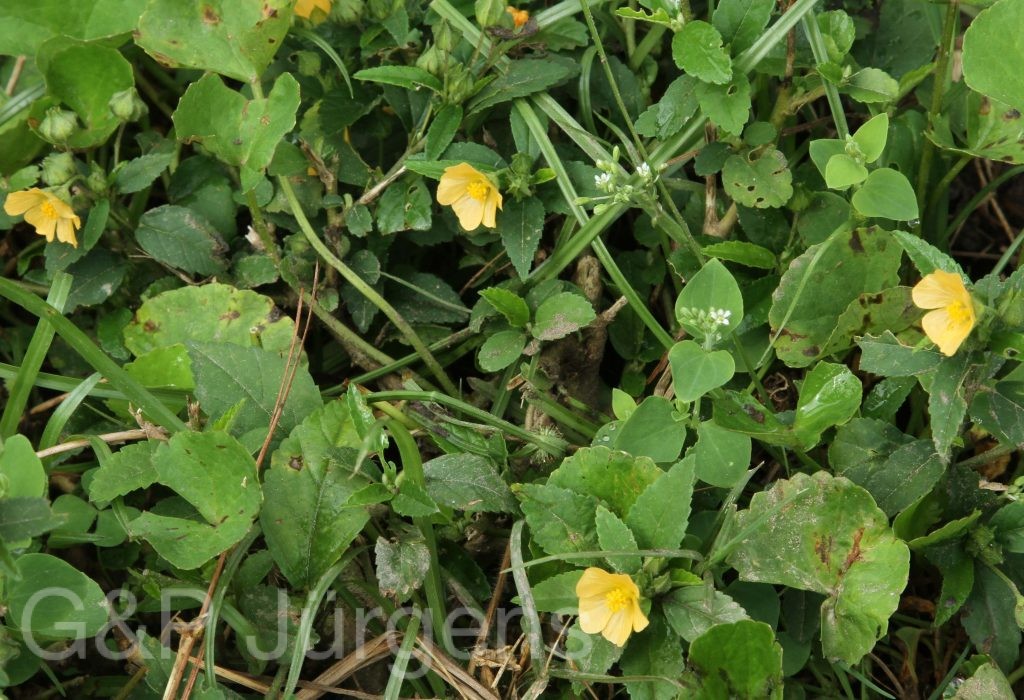
Drymaria cordata, the heartleaf or tropical chickweed, is a pantropical weed of Neotropical origin now naturalised throughout the warmer regions of the world, with nearly 14,000 GBIF occurrences spanning the Americas (United States, Brazil, Mexico, Colombia, Ecuador, Peru, Panama), Africa (South Africa, Cameroon, Tanzania, the Congo basin, Réunion), tropical Asia (Taiwan, China, India, Indonesia) and Australia and Papua New Guinea. It is a ubiquitous colonist of moist shaded ground – forest floors, plantations, gardens, roadsides and stream banks – from the lowlands into the lower hills, and in Bhutan, the source of the cited image, it occurs as a common weed of cultivated and disturbed warm-temperate sites.

It is a slender, straggling annual or short-lived perennial with weak, diffusely branched stems that root at the lower nodes and form loose tangles. The leaves are opposite, broadly ovate to orbicular-cordate, thin, three- to five-veined from the base, with small membranous stipules characteristic of the tribe. The flowers are tiny, borne in lax leafy-bracted cymes; each has five free green sepals, five deeply bifid white petals shorter than the sepals, few stamens and a superior ovary. The fruit is a small ovoid capsule splitting into three valves to release minute, tuberculate, horseshoe-shaped seeds, which together with glandular hairs aid epizoochorous dispersal.

Within Caryophyllaceae, Drymaria is allied to Stellaria but distinguished by its stipulate, broad cordate leaves and bifid petals. D. cordata is a notorious tropical agricultural weed, dispersed clinging to clothing, animals and soil, and is of management rather than conservation concern.

Author: Willd. ex Schult. · Sources: POWO (Kew), GBIF, Flora of China, Flora of Bhutan, Flora of Tropical East Africa, Duke monograph of Drymaria

(Roxb. ex DC.) Walp.

Nepal 97 52 P78
Nepal Mewa-Khola 1150m April
Nepal 97 53 P79
Nepal Mewa-Khola 1150m April
Nepal1992 77 P110 ergebnis
Nepal Sokathum1460m March 

Description

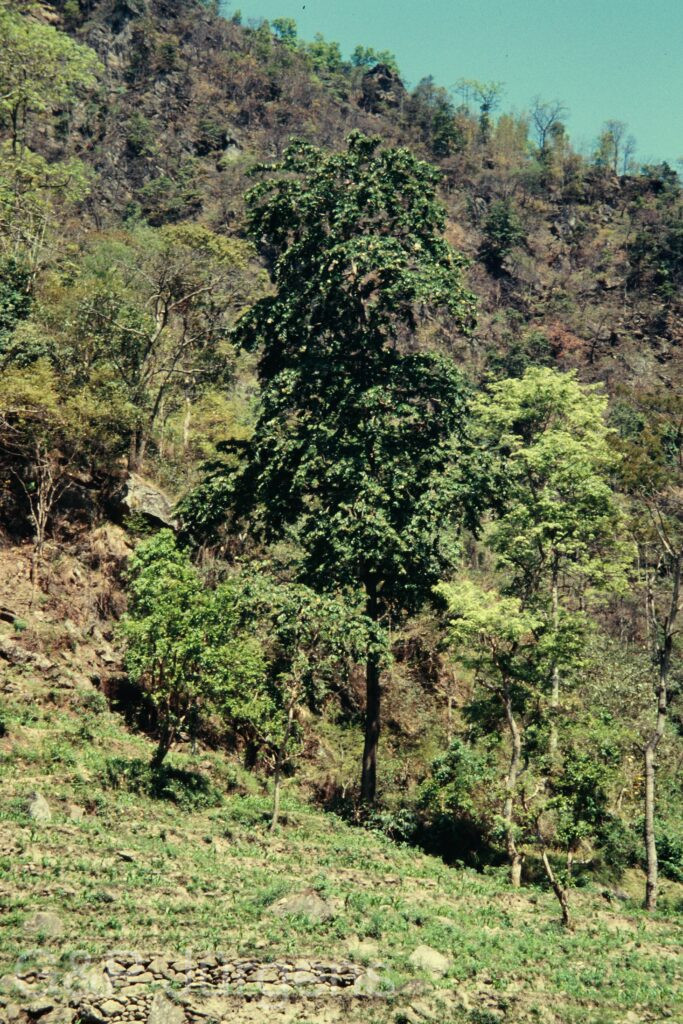
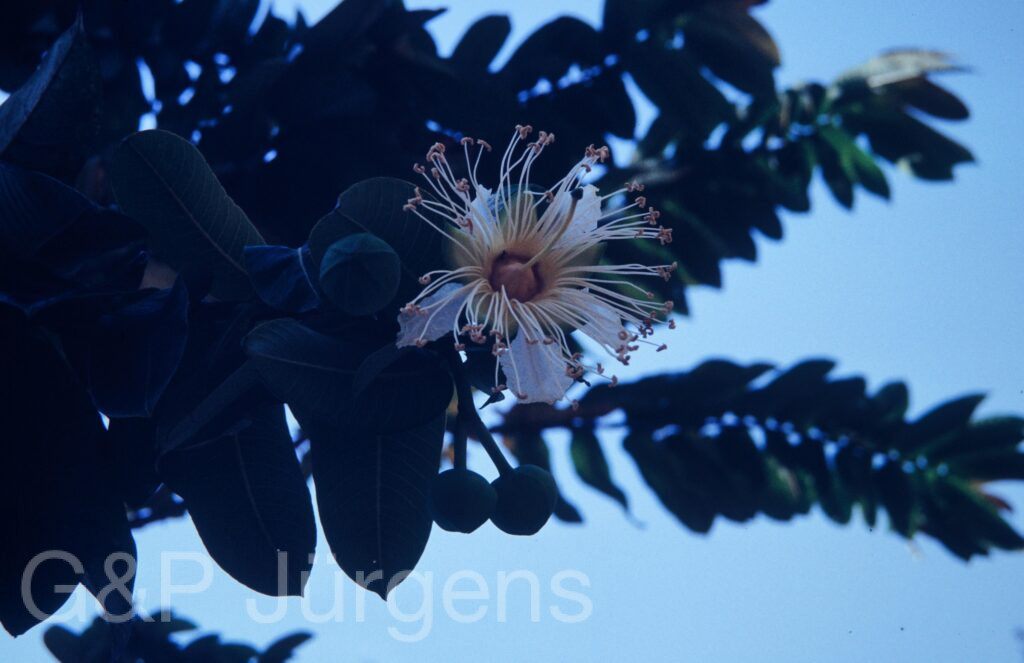
Duabanga grandiflora (Roxb. ex DC.) Walp. is a large, fast-growing evergreen tree of the Lythraceae distributed through the Indo-Himalayan and Southeast Asian tropics, native from India, Nepal, Bhutan and Bangladesh through Myanmar, Thailand, Laos, Vietnam, Malaysia and Indonesia into SW China, with around 712 georeferenced records and scattered introductions elsewhere. It is a characteristic tree of moist tropical and subtropical forest, particularly along rivers, in ravines and on alluvial flats, often a pioneer of streamside and secondary forest in regions of high rainfall. The photographed trees from Mewa-Khola at about 1,150 m in April and Sokathum at about 1,460 m in March in eastern Nepal lie at the upper, lower-montane end of its altitudinal range, which extends down into the lowland tropics.

It is a tall tree with a spreading crown and conspicuously horizontal, drooping branches. The leaves are opposite, large, oblong to oblong-lanceolate, leathery, with an obtuse to cordate base and entire margins, glabrous and prominently pinnately veined. The large, showy flowers are borne in few-flowered terminal cymes; each has a thick campanulate calyx of (four to) six fleshy lobes, white obovate petals, and very numerous stamens. The superior to half-inferior ovary develops into a hard, leathery, many-celled capsule that splits by valves to release abundant small seeds.

Duabanga is a small Indo-Malesian genus formerly segregated in its own family Duabangaceae but now placed within an enlarged Lythraceae. The night-opening flowers with their massed stamens are bat- and moth-pollinated, and the light, soft wood is locally used for boxes, matchwood and plywood. Widespread and often common as a riparian pioneer, the species is not considered threatened.

Author: (Roxb. ex DC.) Walp. · Sources: POWO (Kew), Flora of China Vol. 13, Flora of Bhutan Vol. 2, GBIF, Graham et al.: Phylogeny of Lythraceae (2005)