
(Roxb. ex DC.) Walp.

Description
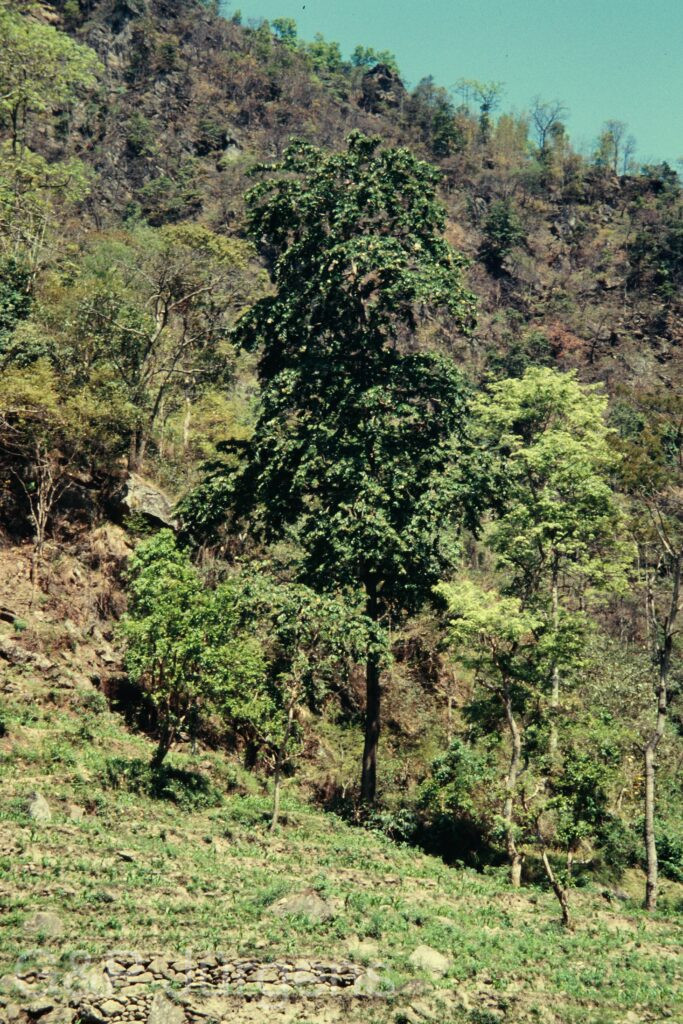
Duabanga grandiflora (Roxb. ex DC.) Walp. is a large, fast-growing evergreen tree of the Lythraceae distributed through the Indo-Himalayan and Southeast Asian tropics, native from India, Nepal, Bhutan and Bangladesh through Myanmar, Thailand, Laos, Vietnam, Malaysia and Indonesia into SW China, with around 712 georeferenced records and scattered introductions elsewhere. It is a characteristic tree of moist tropical and subtropical forest, particularly along rivers, in ravines and on alluvial flats, often a pioneer of streamside and secondary forest in regions of high rainfall. The photographed trees from Mewa-Khola at about 1,150 m in April and Sokathum at about 1,460 m in March in eastern Nepal lie at the upper, lower-montane end of its altitudinal range, which extends down into the lowland tropics.
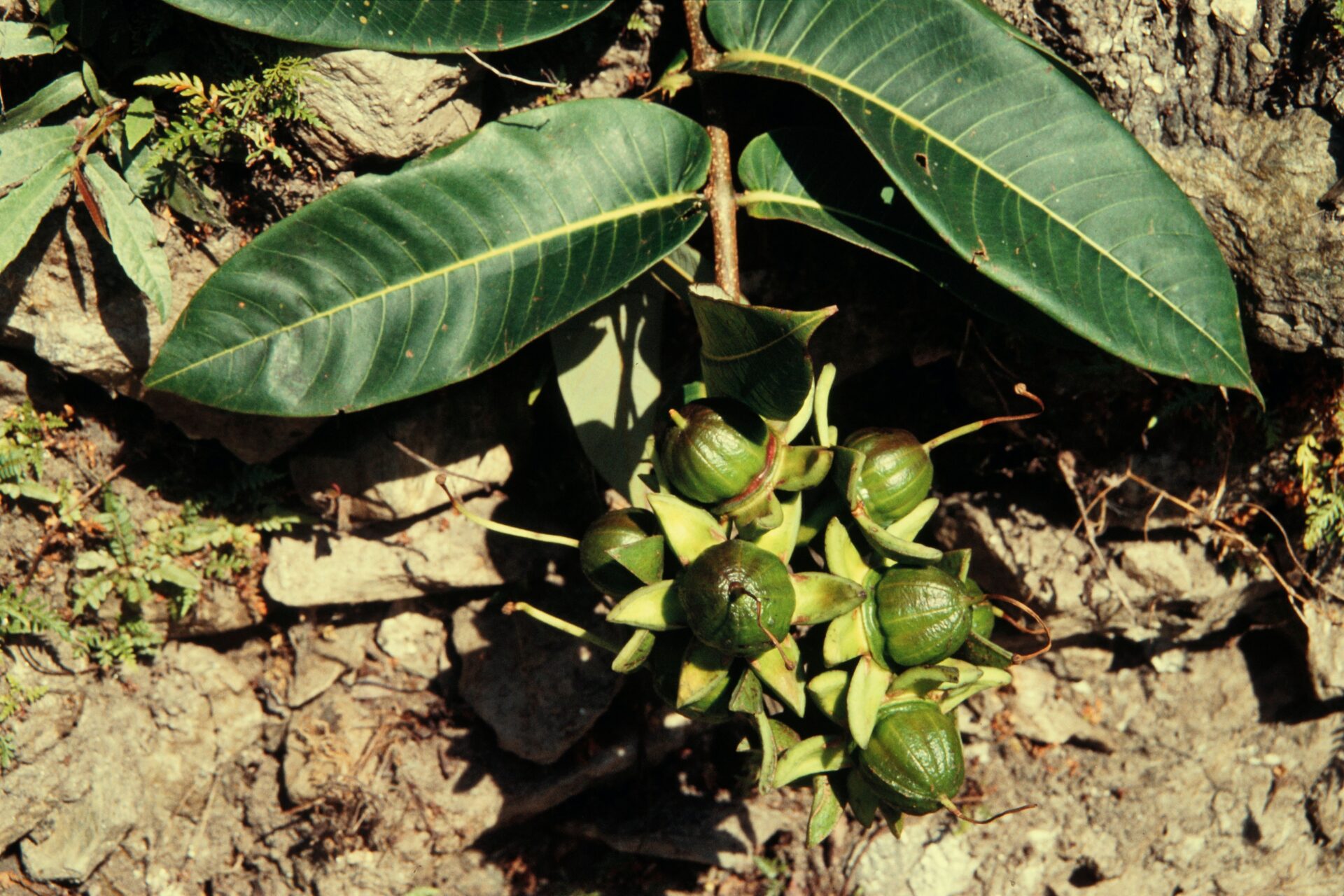
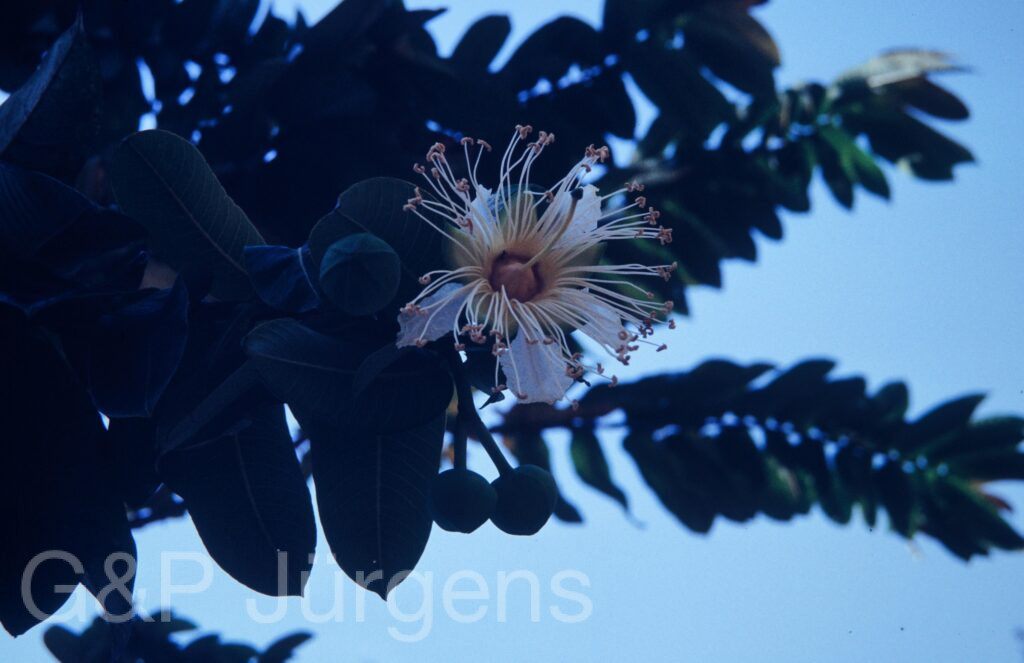
It is a tall tree with a spreading crown and conspicuously horizontal, drooping branches. The leaves are opposite, large, oblong to oblong-lanceolate, leathery, with an obtuse to cordate base and entire margins, glabrous and prominently pinnately veined. The large, showy flowers are borne in few-flowered terminal cymes; each has a thick campanulate calyx of (four to) six fleshy lobes, white obovate petals, and very numerous stamens. The superior to half-inferior ovary develops into a hard, leathery, many-celled capsule that splits by valves to release abundant small seeds.
Duabanga is a small Indo-Malesian genus formerly segregated in its own family Duabangaceae but now placed within an enlarged Lythraceae. The night-opening flowers with their massed stamens are bat- and moth-pollinated, and the light, soft wood is locally used for boxes, matchwood and plywood. Widespread and often common as a riparian pioneer, the species is not considered threatened.
Author: (Roxb. ex DC.) Walp. · Sources: POWO (Kew), Flora of China Vol. 13, Flora of Bhutan Vol. 2, GBIF, Graham et al.: Phylogeny of Lythraceae (2005)