
L.
Description
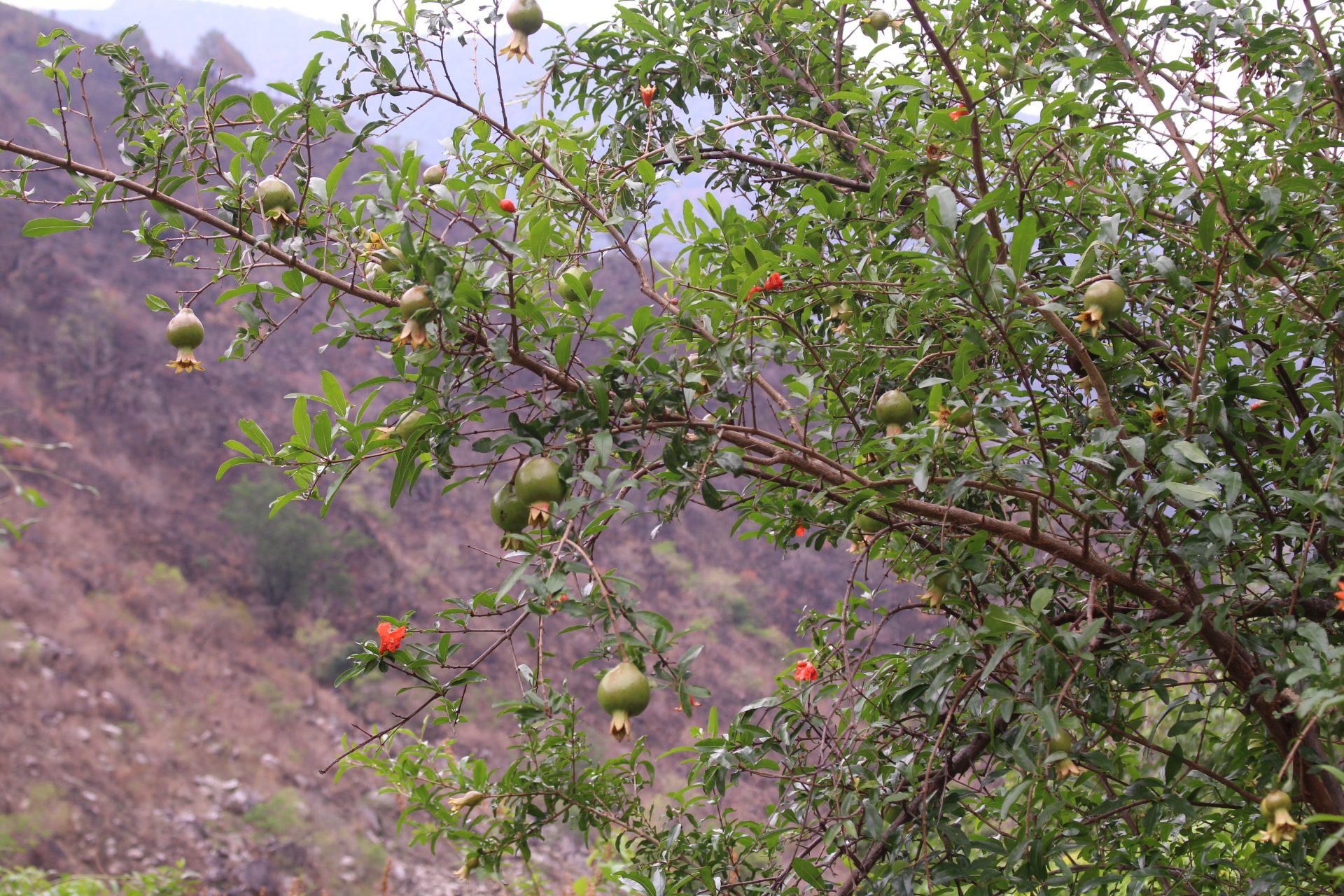
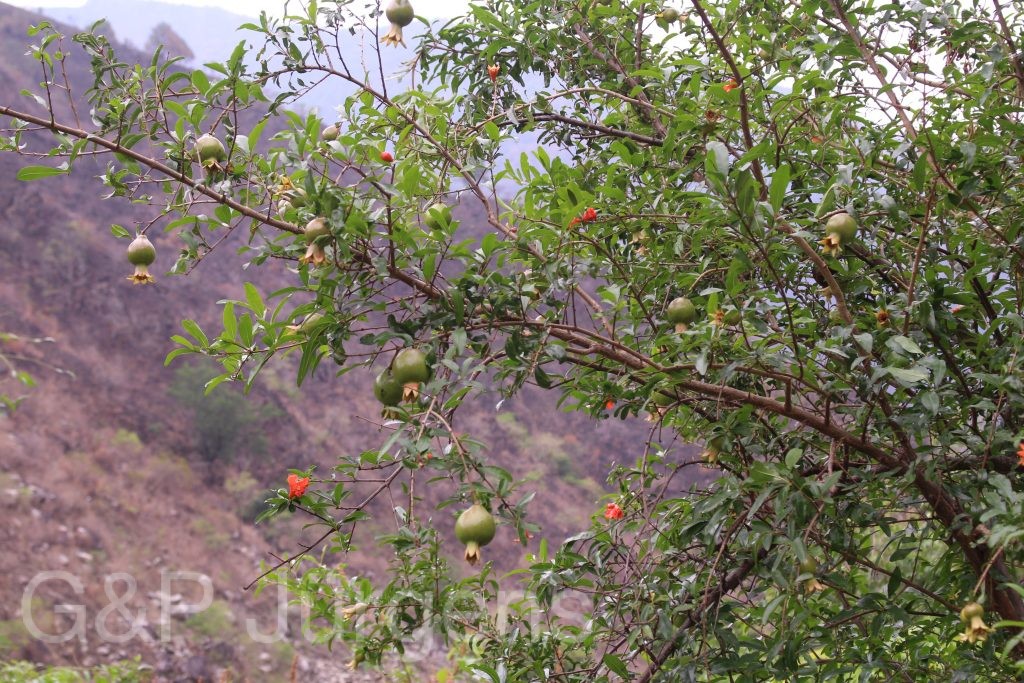
Punica granatum, the pomegranate, is a deciduous shrub or small tree native to the region from Iran and the Transcaucasus through Central Asia, now cultivated and naturalised worldwide; its 51453 GBIF occurrences span Mediterranean Europe, the Middle East, India, China, the Americas, Africa and Australia. It thrives in warm, semi-arid to subtropical climates on a wide range of soils, favouring sunny, well-drained sites, and tolerates drought and seasonal heat. The plant recorded at Kadi in Bhutan at 1600 m in May represents a cultivated or naturalised occurrence in the warm Himalayan valleys, flowering in late spring as temperatures rise.
The species is a much-branched shrub or small tree, often spinescent, with smooth grey bark and frequently angular young shoots. The leaves are opposite or subopposite, simple, entire, oblong to obovate, glossy and glabrous, often coppery when young. The showy flowers are solitary or clustered, with a thick, leathery, persistent campanulate hypanthium bearing 5-8 fleshy lobes and crumpled, bright scarlet to orange-red petals enclosing numerous stamens and an inferior ovary. The fruit is the distinctive balausta, a large, leathery-rinded berry crowned by the persistent calyx and partitioned internally into chambers packed with seeds enveloped in juicy, translucent, edible arils.
Long placed in its own family Punicaceae, Punica is now embedded within Lythraceae on molecular evidence, with the genus comprising only P. granatum and the Socotran P. protopunica. The pomegranate is among the most anciently cultivated fruit crops, valued for its edible arils, ornamental flowers and medicinal uses, and is widely grown across the warmer Himalayan foothills and adjacent plains.
Author: L. · Sources: POWO (Kew), GBIF, Flora of China Vol. 13, Flora of Bhutan Vol. 2, Flora of Nepal, Flora of Pakistan, Graham's revision of Lythraceae